advice, aha moment, Be the change, being a teacher, creativity, students

How to Unleash the Uncreative Children

image from icanread

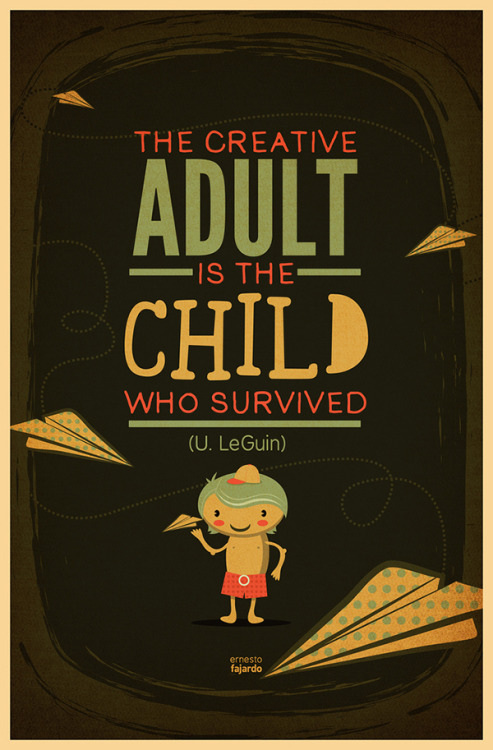
I was a dreadfully uncreative child.  Sure, I would draw trees, flowers, animals, but whenever someone told me to unleash my creativity, my heart sank and my page usually stayed empty.  Writing was slightly better, but I tended to stay on tangents so much that even I couldn’t tell my stories apart after awhile.  And singing?  While I loved to sing, I couldn’t just create something out of thin air no matter how hard I wanted to.  No, I would never be a jazz singer.

When I look back on my childhood I see that I was probably not alone.  Many of my friends weren’t explosively creative either and while these days when we have uncreative children we tend to blame our school system, I think it was just the way we were.  We didn’t know how to be creative so we weren’t.

I see this play out in my classroom as well.  I ask students to come up with whatever type of project they want and they go into a slight panic, not quite sure where to go with that much choice.  Or tell them to write a story about anything they want and some of them are so stuck in a writers block that they actually sit there frozen, never even lifting their pencils.  So what can be done with those kids that are stuck in a panic battled with creativity?  How can we unleash their potential?

  • Give them limited choice.  I think choice is one of the biggest gifts we can give to students, however, to some the  thought of free choice limits their imagination rather than urging them to create.  So give them some choices and then urge them forward.
  • Give them examples.  I know this sounds counter-intuitive to spark creativity but often some students simple need to see what is possible before they venture out on their own.  Sure, they may borrow ideas from what we show but in the end they still create.
  • Check in often.  While we tend to think of creativity as an adult-less venture, those kids that struggle with the process need check-ins and reassurance letting them know they are on the right track and help getting unstuck.
  • Celebrate the small risks.  We tend to look for the impressive but when it comes to some students, we need to celebrate even the little ventures into creativity.  Boost their self-esteem and let them know that what they are doing is right.
  • Praise, praise, praise.  As an uncreative child I always thought I was doing it wrong, if someone had told me I was doing it right, I would have had more faith in myself.  Often lack of creativity comes from the same place as lack of self-confidence.  Make sure it is not empty praise but rather specific and to the point.
  • Give options to collaborate.  I almost always give students the choice to have partners in projects simply because they spur each other on.
  • Break the mold of creativity.  We tend to only allow for creativity within certain subjects but why not open up all of our subjects to creative thought and exploration?  Some students will do better unleashing their genius within math than literacy.  Make room for them as well.
  • Be persistent.  I was almost allowed allowed to give up on projects as a child whenever they failed rather than see them through, and while we should know it is ok to abandon something, as teachers we should also encourage our reluctant students to push forward.  While it may not be the best creation, it is something, and that is always worth celebrating.
  • Highlight everyone.  Part of not being creative was that I knew who was considered creative in my class.  Those kids were given special attention every time.  I was never in the group therefore I quickly deduced that I was not creative.  Be careful that we don’t let our labels of students stymie them.

I am a passionate (female) 5th grade teacher in Wisconsin, USA, proud techy geek, and mass consumer of incredible books. Creator of the Global Read Aloud Project, Co-founder of EdCamp MadWI, and believer in all children. I have no awards or accolades except for the lightbulbs that go off in my students’ heads every day.  First book “Passionate Learners – Giving Our Classroom Back to Our Students Starting Today” will be released this March from Powerful Learning Press.   Follow me on Twitter @PernilleRipp.
being a teacher, being me, connections

A Not So Delusional Guide to Twitter

When I moved my blog from Blogger to WordPress last summer I mistakenly assumed that all posts would seamlessly transfer.  I have since found the error in my thinking and have decided to re-post some of my more discussed posts.  This post first appeared in May of 2011 but still rings true to me.

I have read so many posts on how to get on Twitter and get connected, many of them offer fantastic advice and yet some of them keep reiterating how it is all about following.  Follow one person, and then see who they follow, and then follow them, and soon you will be following so many people you will feel like the most popular kid in the school.  Except you don’t.  Instead you feel like the kid who came to prom only to take pictures of all the cool people there.  So I offer up these tips instead for those trying to figure out Twitter.

  1. Follow one person, or even 10 but then stop.  Let yourself process what Twitter is and how these people are using the tool.  Don’t mass follow, you will find enough people to follow, just take your time.
  2. Connect.  Once you have a couple of people you follow, reach out to them.  Tell them you are new, tell them your story, and comment on their blogs.  Open up about yourself, start a conversation, and give them a reason to connect back.
  3. Don’t give up.  Sometimes I felt like the biggest loser when it came to Twitter; no one thought I was witty, no one rt’ed my posts, until I realized that this is not what Twitter is about.  Twitter is about the connections (I know, I sound like a broken record) so it is not about the retweets or single comments but the dialogue you get involved in and the people you meet.
  4. Who cares about Klout?  I didn’t realize I had a klout number until my husband asked me what it was.  Then I had to look it up because that little number meant nothing to me; it still doesn’t.  If you are asking whether Twitter is worth your time you probably haven’t connected with the right people, so keep connecting.
  5. Don’t worry about the popular kids.  One thing for ongoing discussion has been the grades of popularity Twitter educators seem to have.  Sure there are people with massive followings, but guess what?  They are normal people and they probably have that many followers because they say some really great things and they are good at connecting with others.  It is okay to reach out to them as well, no one is off limits.
  6. Make it work for you.  Twitter is what Twitter does.  I constantly use Twitter in new ways that work for me.  For Twitter to truly become a useful tool for you, it has to fit your needs.  There is no wrong or right way to use it (although there may be better or worse ways).

So there you have it, my small piece of advice on how to get something out of Twitter.  Of course, you can follow as many people as you want, but think about what your true goal is: numbers or connections?  I, for one, count my connections just as much as I count my blessings.

Be the change, being a teacher, discipline, punishment, reflection, students

Put Your Name on the Board – A Tale of Why I Gave Up Classroom Discipline Systems

image from icanread

When I moved my blog from Blogger to WordPress last summer I mistakenly assumed that all posts would seamlessly transfer.  I have since found the error in my thinking and have decided to re-post some of my more discussed posts.  This post first appeared in June of 2011 but still rings true to me. 

Put your name on the board! Those words spoken in a very stern voice accompanied by a teacher look was enough to whip the toughest student into shape. Except when it didn’t which for me was enough times to make me wonder. Could my discipline systems really be thrown out and replaced with nothing? Would chaos then reign supreme?

If you had come by my room last year you would have seen them. Those sticks in the cups or the names on the boards with checks, sometimes double checks and plenty of stern looks to go around. I was doing exactly what I had been taught in school, exerting my control as the main authority figure and if students misbehaved, well, then there was some form of punishment. Oh don’t worry; there were plenty of rewards as well. If students didn’t move their stick or get their name on the board for a week then their name got entered into drawing for pizza with me. At the end of the month if they didn’t have their name in my book for not doing their homework, they could also enter their name, and then I would finally draw names and five lucky students would have pizza with me. Confused? I was! I could hardly keep check Of all those names, checks, and punishments.

However, last year I realized something after reading Alfie Kohn; I knew I had to change. By perpetually focusing negative energy on the same students, who, lets face it, are most often the ones having their name singled out somehow already, I was indeed just adding more to their self doubt. While I believe in discipline for all students, I also believe in compassion and that philosophy simply was not fitting in with my chosen system. So I did as many teachers may do; I threw it all out. However, instead of hunting for a new system, I decided to detox myself, start this year with no system for reward and punishment and instead strive to create a classroom community where students just know what the expectation is.

I was petrified that first month. I run a tough classroom in my expectations for my students and I know that if you do not set the tone those first weeks, it can be detrimental to the rest of the year. And yet I held strong in my conviction that even the more unruly students would eventually figure this out through repeated conversations and respect. And boy, did we talk. We talked about expectations, rules, how to speak to one another, and what to do when something goes wrong. A lot of the time, I just listened to these amazing students come up with solutions to problems, listened to them explain how they envisioned our classroom, how they wanted fourth grade to be. And I was in awe; these kids knew how to behave without me telling them over and over. And they certainly would figure it out without me alternating punishment and rewards.

So after the first month I started to breathe again. I let our new system flex itself and watched the students help keep the classroom stabile. Sure, there are times when I think ooh if I just had a way to “punish” it would fix this and this and then I realize that perhaps I just need to find some time to speak to that particular student. Now instead of an exasperated tone and a system to keep them in check, we discuss, we try to fix, and we reevaluate. I don’t run the classroom with a complicated system of checks and balances, rewards and punishments, but rather with an atmosphere of community, of belonging. Is it perfect? No, but neither am I, nor my students. I am just glad I believed in my own skills enough to realize that perhaps, just perhaps, my students would know how to behave without me rewarding them for it. Once again, they blew away all of my expectations.


being a teacher, reflection, Student-centered, technology, Uncategorized

It Is Not About the Gadgets – Why Every Teacher Should Have to Integrate Tech Into Their Classroom

image from icanread

When I moved my blog from Blogger to WordPress last summer I mistakenly assumed that all posts would seamlessly transfer.  I have since found the error in my thinking and have decided to re-post some of my more discussed posts.  This post first appeared in February of 2012 but still rings true to me. 

I once sat on an interview committee in which the candidate proudly proclaimed that to integrate technology her students would use word processors and publish their work in a monthly book.  My toes instantly curled.  It wasn’t so much that she had used the words “word processor” but rather that she thought tech integration meant to have students type on a computer and then publish their work, that that would make them ready for this century of jobs.  So a couple of things come to mind whenever we discuss tech integration in schools.

Students have often more seamlessly integrated technology into their lives than their teachers and didn’t even need to take a class on it.  We chalk this up to them being digital natives or because they have an interest in it.  Yet not all children are digital natives and most of them have had role models that show how to use the technology.  They also know that tech is valuable and can add to their lives rather than detract from something else.  And then there is the fearlessness, many students are simply not afraid to mess around with tech, but many adults are.  It is time for us to be role models in our own fearlessness.

Some teachers assume that clicking on a SmartBoard or having students type their papers mean that they are “integrating” tech.  This is one very limited usage of tech, in fact, it doesn’t really count as integration.  Better integration is when a student decides to film a video to show off learning rather than create a poster.  True integration is when students have ideas and fearlessness to use technology to show their learning as a natural extension of the classroom.  Not to type a paper.

There seems to be no urgency when it comes to actual technology integration into the classroom, but more of an urgency on how to buy the flashiest gadgets and then offer limited training or support.  How often do we hear about a district that has spent too much money on 30 SmartBoards, 100 iPads and how they will be placed in the hands of the students to enhance their learning?  How often do we then hear about the support they will offer their teachers or how those products will actually be used to enhance learning?  There seems to be an assumption that if you give it to teachers  they will use it effectively, which we all know is not true.  Some teachers might, but most will use it superficially and after a while the product will languish, unused, outdated, and just another relic of someone’s hastily thought out idea.

Some teachers feel that integrating technology is optional.  Integrating technology is no more optional than teaching how to use a pencil.  And while many may find that extreme, we cannot equip our students with the skills they need to be successful learners and teachers without teaching them to use technology properly.  Many schools see typing as a necessity but then cannot bring that view into how to stay safe on the internet, how to search properly on a computer, and myriads of other things that technology can offer us.  How to use computers effectively is now a life-skill and as teachers it is our job to equip students with these.

Teachers who have been labeled “techie” teachers are sometimes viewed as a one-trick pony, that is all they are passionate about and therefore they cannot possibly have an effective classroom.  I certainly am one of the techie-teachers in my district but many are surprised at how little we use tech on a day to day basis.  That is not to say we don’t use it, because we do, but we also do many other things.  In fact, using a tech tool is just one option my students have to show their learning.  What I do practice is fearlessness in tech usage and that I pass on to my students.  Not that they always need to use some sort of tool, we use our pencils more than a computer, but that they can effectively use whatever whenever they need to.

Teachers think they have a choice in their classroom.  I am sorry but the choice should not be teachers’ anymore; every school should have an effective technology integration curriculum to offer students the skills they need.  We do not have a choice in teaching literacy or math and should not be given one when it comes to technology.  This is not about what WE want the kids to know but what the KIDS need to know.


And I am sure I could continue the list, however, these are my main concerns.  We cannot afford to not focus on proper technology integration in our schools.  It is not about the gadgets, it is not about the typing, it is how to use technology tools fearlessly, respectfully, and effectively.  All things every teachers should be teaching, no excuses.

being a teacher, building community, classroom expectations, classroom setup, new year, Student-centered, Uncategorized

Back to School – January Edition

image from icanread

January comes at us like a lion it seems bringing students who were just getting used to being on break, miserably cold winter days where no sledding is allowed at school, and more assessments. Every year January always reminds me of the beginning of the year and last year I started to treat it as such.  Goodbye January humdrum, welcome January excitement.  So what will we be doing to battle the January blues?

  • Reassess our classroom rules.  Students get a little tired and a little more restless so it is the perfect opportunity for them to set new rules for the classroom.  They also know each other a lot better, particularly each others’ quirks, and so I find the conversation tends to go much deeper then it did in September.
  • Set up the classroom.  While I think our work space works really well, I am not the one constantly using it. Time to ask the students if things need to be moved around and then do it.  Also time for me to re-evaluate the room.
  • A heart to heart on work habits. While I ask the students to self-assess constantly throughout the year, we need to have some honest reflection on how they have been working independently.  I like to think of it as new year’s resolutions set with an eye on middle school.
  • Take stock of projects.  How have they been doing on projects, are they pushing themselves into new venues or are they sticking to much of the same old same old?  What are new ideas they can’t wait to try and how will they try them?
  • Re-introduce genius hour.  We took a break from genius hour in the last month or so because we have been too busy, but January is the perfect time to refocus on it, this time in science rather than social studies.  Students have been busy at work learning about landforms, now is the time for them to take charge of what they want to learn.
  • Have a classroom reading challenge.  The students have been excited about reading but January is typically the time they start to feel overwhelmed or bogged down.  Last year we did the classroom reading challenge and it really brought in a lot of excitement.  It is quite simple:  Every child sets a secret goal (they only share it with me) for how many books they will read in the month of January, the goal can include picture books, graphic novels, or chapter books.  We then reveal the total number of books we pledge to read on a bulletin board.  They then read as much as they can and report to me whenever they finish a book (paper on my desk), I print out a picture of the cover and add it to our huge bulletin board.  Nobody knows who read what or how many books they have each read but everybody is reading and if we meet our goal, we have a huge read-in party as a celebration with an author Skype call.  I cannot wait!
  • Re-do routines.  We have great routines but now is the time to re-assess, what do we still need to work on, what is no longer needed, what should we streamline?  Again, this discussion is student-led with input from me.
  • Throw some surprise challenges their way.  They have been working hard on our team challenges  throughout the year and now is the time to give them even more.  I am thinking the boat building challenge, as well as marshmallow catapults.  Oh, and I do believe we have to build some vinegar rockets as well.
  • Re-assess my own opinions.  Have I labeled students unknowingly, do I really know the child in front of me?  What are the priorities we need to have for their learning journey and what will I do to help them accomplish their goals?  Now is the time to reflect about each child.

What will you be doing to re-energize the classroom?