Reading Identity

Reading Was Never Meant to Compete

We talk about reading as if it is in a race. As if every time a kid picks up a phone instead of a book, reading has lost a point. And I understand why we frame it that way. The competition feels real. YouTube, social media, every platform built around the endless scroll, they are extraordinary at what they do. The additives of a phone and everything that comes with it, the brain chemistry they tap into, the way they are engineered to keep you coming back, it’s a losing race, we cannot compete with that.

But here is the thing. Reading was never supposed to compete.

It is not a faster, quieter version of TikTok. It is not trying to win your attention the way an algorithm does. Reading is its own thing entirely. And the moment we stop treating it like a competitor and start presenting it to kids as something categorically different, something that exists in a completely separate space from their devices, everything about the conversation changes.

Reading offers quiet. It offers balance in a world that is otherwise relentlessly loud. It offers the health benefits we know are real, focus, empathy, stress reduction, the slow building of an inner life that is completely our own. But more than any of that, it offers something increasingly rare: A place where we do not have to perform.

How often does that happen?

With a book, no one is watching. Well, unless you are reading in public, of course. There are no likes, no comments, no version of yourself being constructed for an audience. You get to just be with a story. Not be judged. Not worry about what anyone thinks. That is a selfish indulgence, and I mean that in the best way. In a world that is constantly asking us to consume, to engage, to spend more time on their platforms, reading quietly says: this is for me. Just me. And the way it restores me is something I can’t let go of.

Giving kids the gift of reading is one of the few things we can offer them that pushes back against all of of the consumption and production. Not by banning phones or lecturing about screen time. But by showing them that reading exists in a different category altogether.

If we want kids to see reading as its own thing and not as a lesser version of entertainment, we have to change how we talk about it.

Stop framing it as the alternative to screens. When we say “put down your phone and read,” we immediately set up a competition reading will lose. Instead, talk about reading as something you do for yourself, not something you do instead of something else.

Talk about the privacy of it. Kids live remarkably public lives, even at young ages. I don’t envy my own children in any way when I think of the type of teen years I had, I am so glad there were no cameras ready to record at any moment. The idea that reading is a space that belongs entirely to them, where no one can see what they are thinking or feeling or imagining, is genuinely powerful. Name that out loud.

Celebrate the selfish part. Reading is one of the few things in a child’s life that is purely for them. Not always to improve their grades, not just to make a teacher happy, not to perform for anyone. Let them hear you say that. Reading is something you do because it feels good and it is yours.

Model the quiet. Let kids see you read. Not as a lesson, but as something you genuinely want to do. When they see an adult choose a book, not to be productive but simply to be still for a while, that lands differently than any message we could ever deliver. This is yet another reason to make your reading life public in some way.

Connect it to who they already are. Reading identity is not built through assignments. It is built through the experience of finding a book that reflects something true about you, or takes you somewhere you wanted to go, or makes you feel something you could not name before. Our job is to help kids find those books and then get out of the way.

The algorithm wants our attention and it is so easy to fall into. Social media wants your engagement. Every platform is designed to want something from you.

Reading wants nothing. It just waits.

That is not a weakness. That is exactly what makes it worth protecting and worth giving to the young people in our lives as the gift it truly is.

Reading Identity

When a Child Says There Are No Good Books: A Tool for Conferring

All year I have been working with this one child.

A good reader. Bright. Funny. And yet he hates reading. Tells me there are no good books despite me bringing all my tricks. Book recommendations, book excitement, cheerleading and all of that.

And then I realized something.

It’s an ingrained habit now. A quick dismissal. Because if there are no good books then the work stops. The responsibility doesn’t sit with him. It sits with the circumstances surrounding him. There are no good books. What can you do?

So how do we break that pattern of dismissal?

Not with more recommendations. I’ve tried that. Not with more excitement or more cheerleading. I’ve tried that too.

I think we break it by handing the ownership back. Slowly. With small moves that ask something of the child rather than offering something to them. Moves that say I believe you can find your own way to a book. Let me show you what that might look like.

I put together a free conferring tool with 7 ideas for what to try. Not scripts. Not book lists. Just moves worth trying when you hear those words and I shared them on Instagram. I thought they would be worth sharing here too.

Link: When a Child Says There Are No Good Books — 7 Ideas to Try Now

The goal was never for them to need us to find the book.

It was for them to trust themselves enough to find it.

Reading Identity

When a Child Says They Hate Reading: What to Ask Next

It seems, no matter what I do, it still happens. Year after year.

I started this work in 2010 and the voices were smaller then. Present but quiet. Now, with passive consumerism, with the need to be constantly entertained, with the pressures of life growing for so many kids due to inequity, it seems to have grown to a cacophony of voices. Eagerly chanting. Even from my 1st graders. Before they had even fully learned to read, they would say it.

I hate reading.

I know I cannot be the only one.

So what do we do? How do we speak to them in a way that shows we are actually listening — and also that it doesn’t have to be this way?

I don’t think the answer is a better book recommendation. I don’t think it’s making reading more fun or more gamified or more rewarded. I think it starts with a question. The right question. One that treats what they said as information rather than a problem to solve.

I’ve been collecting those questions for a while now. The ones that seem to open something up rather than shut it down. The ones that get underneath the “I hate reading” to whatever is actually being said. And I posted them on Instagram, and it seems like I wasn’t the only one who needed ideas for this work.

So here, I put them together here as a free conferring tool, something you can print and keep in your folder for those moments when a child says the thing and you want to respond with more than a recommendation.

Download: When a Child Says They Hate Reading — What to Ask Next

It won’t fix everything. But it might start a different kind of conversation.

Reading, Reading Identity

Two Different Loses

What we track. And what we miss.

I keep thinking about the ones who came to us loving books.

You know the ones. The kids who wanted to tell you everything about what they were reading, who recommended titles before you could recommend them first, who couldn’t walk past a shelf without stopping. Somewhere between then and now, they faded into the wallpaper. They still sit in our rooms. They still do the things we ask. But the books? The books stopped mattering to them. Or maybe they stopped believing the books were for them. And somewhere along the way, we stopped noticing that the energy we had poured into them as readers had quietly drained away.

That’s the loss I want to talk about. Not the child who never loved reading — we see that child, we have some ideas for that child. I’m talking about the reader we already had. The one we thought we didn’t need to worry about anymore.

We have systems for the child who stops reading.

Logs. Conferences. Check-ins. We notice when the pages stop turning and we intervene. That system exists because we built it, and mostly it works.

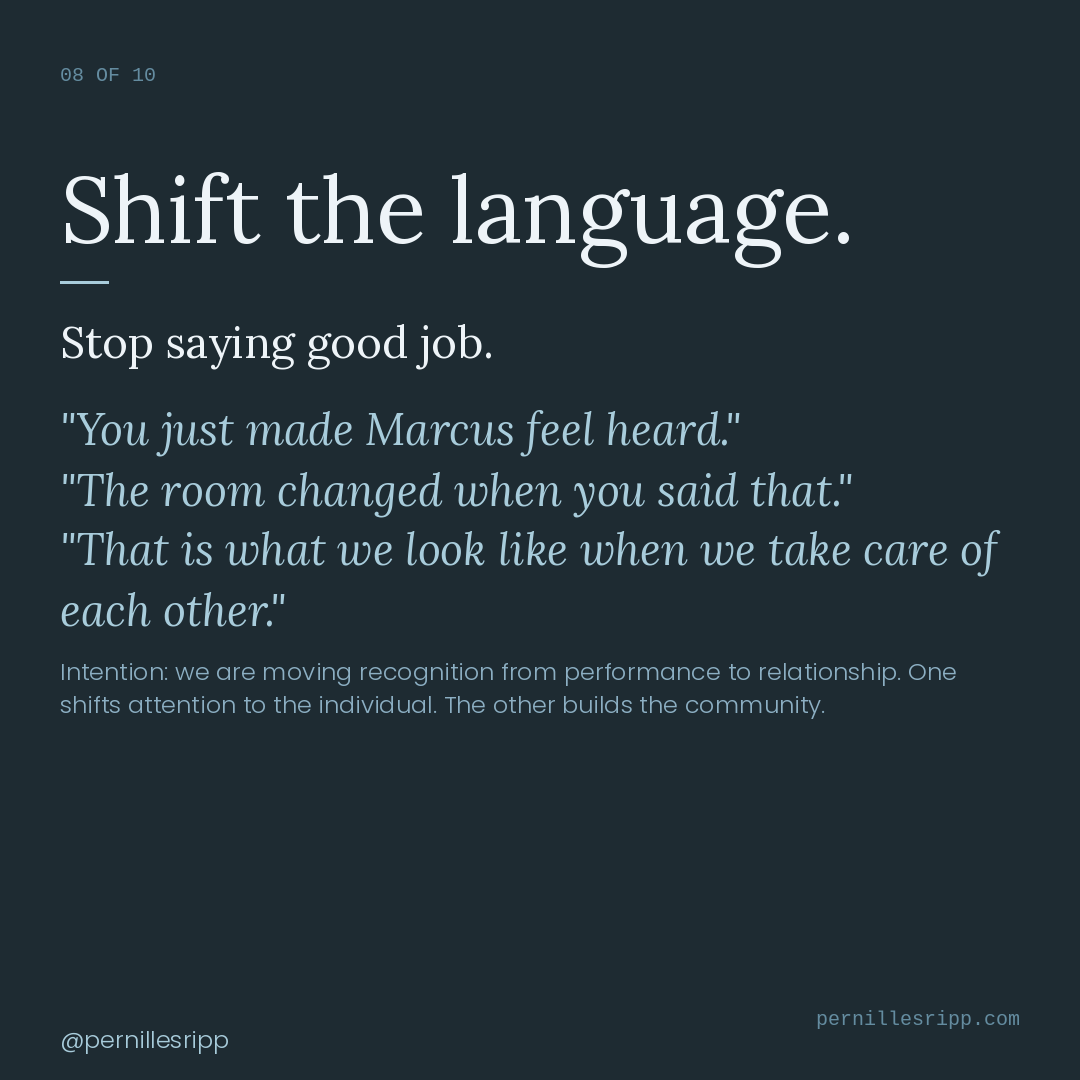
But there’s a second loss we almost never catch. The moment a child stops sharing their reading with us. Stops recommending. Stops bringing things to our desk. Stops starting conversations about books at all.

Those are not the same loss.

A child can still be reading every night and you can have no idea what their reading life actually looks like anymore. Because they stopped bringing it to you. And there was no system to catch that. No log for the conversation that didn’t happen. No conference protocol for the reader who went quiet.

We track whether they read. We don’t track whether they still want to bring it back to us.

And those are two different losses.

So why does it happen?

I don’t think it’s one moment. And I don’t think it’s about judgment, not usually. Most teachers I know aren’t dismissing the readers who go quiet. They’re just not getting to them. Because the curriculum needs covering. Because there’s an assessment coming. Because the things that get measured are the things that get time, and a quiet conversation about who a child is as a reader — what they’re choosing, what they’re abandoning, what they’re curious about — that conversation isn’t on anyone’s rubric.

And children notice.

Not in a conscious way. But they are always reading the room. And what the room tells them, slowly and consistently, is that their reading life — the one they own, the one they choose, the one that exists outside of any assignment — doesn’t need to be brought here anymore. Nobody is asking. Nobody has time. And so they stop thinking of themselves as people with a reading life worth talking about. They hand the agency back. Quietly. Without making a fuss.

And we let them. Because the system made it easy to let them.

That’s the loss I can’t stop thinking about. Not the reading. The sense of self that goes with it.

And yet. We are not helpless here.

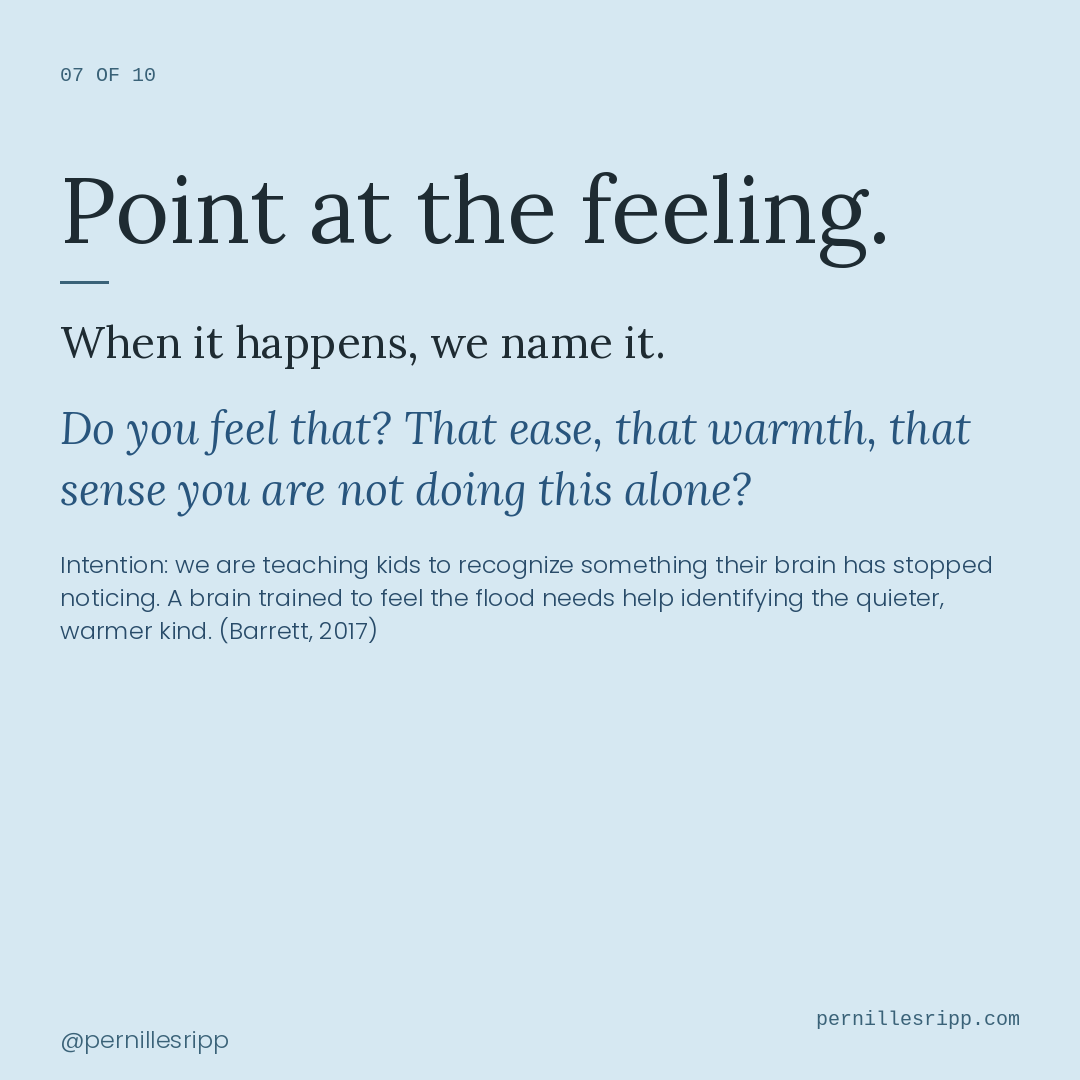
The first one is simple. Go first. Tell a child about a book you abandoned. Not a book you loved — one you put down and walked away from. Tell them why. This does something important: it lowers the stakes entirely. It says reading is a relationship between a reader and a book, not a performance for an adult. And it makes the conversation mutual. You went first. Now it’s safer for them.

The second move is harder because it requires resisting a very natural instinct. When a child does start to share, don’t evaluate. No “did you understand it?” No comprehension check disguised as curiosity. Just: “What was it like for you?” That question has no wrong answer. It hands the agency straight back to them. And children who have learned to be guarded around reading conversations will slowly start to open up when they realize there’s no trap waiting.

The third move costs nothing. Find a book that genuinely makes you think of a specific child — not because it’s at their level, not because it would be good for them, but because something about it just reminds you of them. Leave it on their desk. A small note: “made me think of you.” No expectation. No follow-up. No asking if they read it.

Just the book. And the message that you saw them.

That’s sometimes enough to make a child remember that they are a reader. That someone noticed. That it still matters.

We cannot get those years back. The ones where they loved books and we were too busy to notice when that changed.

But we are here now. And so are they.

That’s enough to start.

being a student, books, Reading, Reading Identity

Lessons in Genre—and in Failure

We have been studying genres in 3rd grade.

Something so simple, and yet such a powerful key to unlocking yourself as a reader. For some students, these classifications are crystal clear; they already have the language that wraps around them as readers. For others, the designations are murky at best—confusion between fiction and nonfiction (which I completely understand in this day and age), and even what it means for something to be a genre at all.

It’s also a practical challenge: how do we turn a messy classroom library into something students can actually navigate? Sorting books by genre is a powerful way for students to deepen their understanding of different types of texts and make the library itself more accessible. It is something I have believed in for years.

And so, we persisted in the work. We sorted texts and discussed what makes something realistic fiction, fantasy, horror, or nonfiction. What separates fantasy from a scary story? How do we know realistic fiction isn’t just fantasy in disguise? Their questions were legitimate, and they shaped the work we did.

To truly see their comprehension in action, we turned to our modest classroom library. Those who have followed my work from before my move to Denmark may remember my vast classroom collection—books spanning walls, even rooms. I left that library behind for the teacher who took over my classroom, knowing it would have more use in the United States than it would here.

But that also meant starting over.

Books in Denmark are expensive—often more than 200 kroner (around $20) even for an easy reader. Classroom libraries are not seen as a priority. School libraries aren’t either in some places. So building a collection has been slow, relying on goodwill finds, donations from our amazing librarian and some families, and a few contests won along the way. It is nothing impressive. It may never be. But it is real, and it reflects the reality of many educators.

And it is a place to start.

I teach two 3rd-grade classes in Danish: one I have been with since 1st grade, and another added this year. With my “old” class, the task was simple. After our genre lessons, I introduced the project: let’s sort and categorize our classroom library using the knowledge we now have. We decided on which genres and even subgenres we thought we would have, discussed their abbreviations and then launched into the process itself; I would hand them piles of books, they would sort them by the genre or format they believed they belonged to by creating piles on tables, I would create labels, and together we would shelve them.

It took two lessons, but by the end our classroom library was mostly sorted correctly, and the students were eager to dive back into books they had discovered along the way.

Buoyed by this success, I brought the same process to my new class. I knew they might need a little more guidance, but surely my well-planned lesson would be successful.

It was not.

It was frustrating, confusing, and messy—and through no fault of the children. They tried their very best to figure out what we were doing and to do it well, as they always do. But the pieces they needed simply weren’t there yet.

So I took time over the weekend to think it through and quickly recognized my mistakes. They needed far more scaffolding. They needed the work to stop feeling like a competition over who could get through the most books. They needed to lean on each other for guidance. They needed explicit permission, as always, to ask questions and to not be sure out loud.

On a day when I knew I had them for three periods in a row, I knew we could afford to get messy. I reintroduced the concept and explained the new plan.

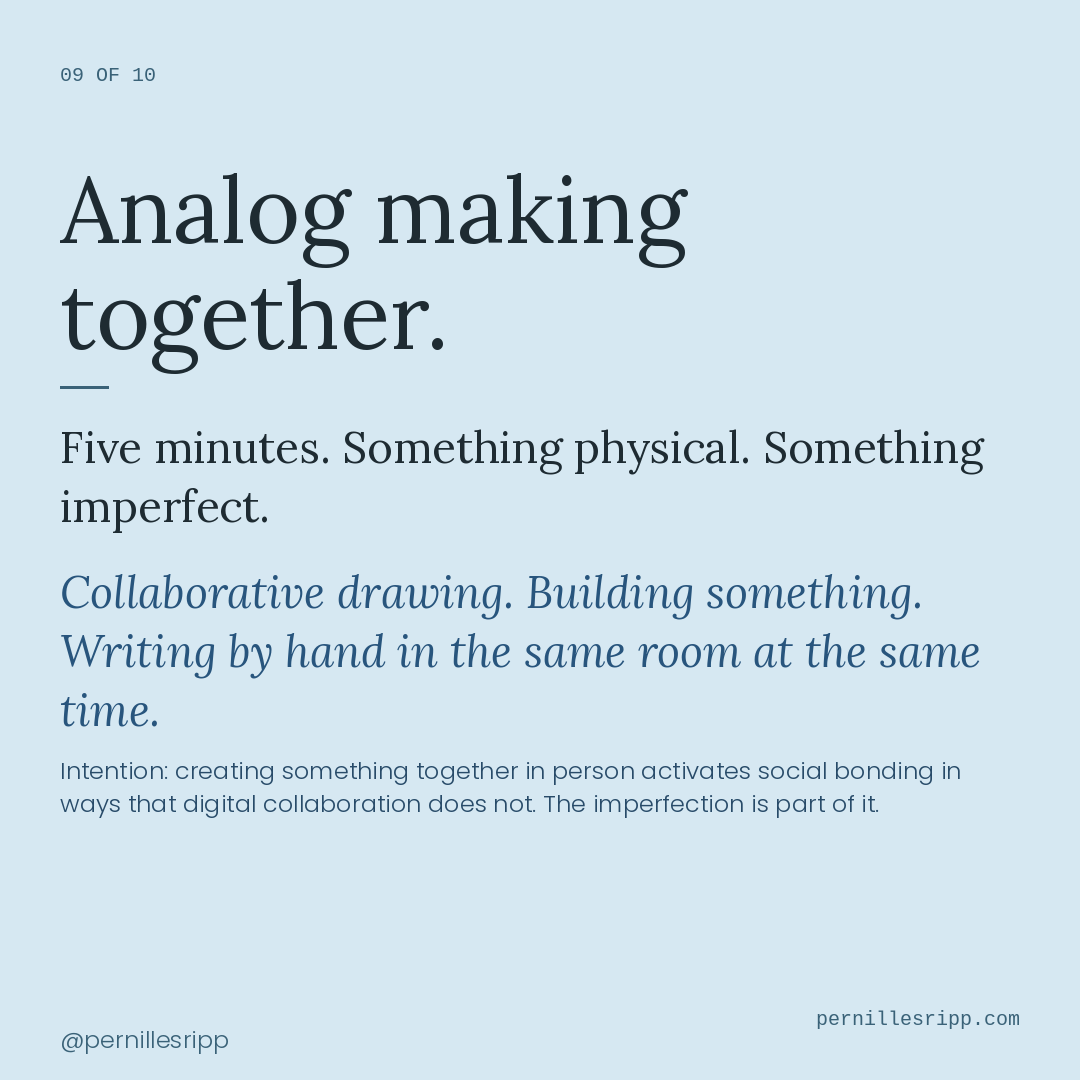
Two students, who seemed to have genre determination skills firmly in place, sat at the lead table. Their job was to decide whether a book was fiction or nonfiction and to venture a guess at its genre or format (graphic novels and comics were sorted onto their own shelf). They passed their books to three other students, who double-checked the decision and delivered them to the appropriate genre table. Each genre table was staffed by a student whose job was to agree—or disagree—and send the book back if needed.

I placed students based on their perceived strengths within a genre. Some worked alone. Some sat near related genres so they could support one another. And then we began.

At first, there was hesitation. Were they really sure that a certain book belonged in a certain genre? How could they even tell again?

But as the process continued, their confidence grew. Their decisions became more certain. Help was offered more freely. It was still messy. It was still a bit chaotic. But the process worked.

Not because I taught it better—but because I reconsidered my scaffolding. I reconsidered the conditions. I stepped away from my own attachment of feelings to a lesson—failure—and recognized that this, too, was success: realizing, once again, what didn’t work and adjusting the conditions., with the only failure being to not do it again.

In the end, this wasn’t really about genres, or even about sorting a classroom library the “right” way. It was about slowing down enough to notice where my teaching had raced ahead of my students, and choosing to meet them where they actually were. Understanding didn’t come from efficiency or speed, but from time, conversation, and the safety to be unsure out loud.

The messiness didn’t disappear when I changed the structure.

The noise didn’t go away.

But what did change was who carried the thinking. Students leaned on each other. They questioned, disagreed, and revised their ideas together. And in that space, comprehension began to take root.

We now have a tiny little classroom library, where the gaps in what we don’t have are stark, and yet the hope of finding books to read feels big. Students get to look at the bookstacks and decide which books to keep and which to let go.

It’s a small piece, but one that further cements their identity as readers—students who now know that if they understand the genres they enjoy, they can seek out those books first. Students who have taken a big step toward knowing who they are, and perhaps even more importantly, who they want to be as readers.

It may have taken longer than expected. It may have veered off course. But those hours spent were hours I know were worth it.

So for now, the reading continues.

Passionate Readers, Reading, Reading Identity

This Is the Work

This week, I was invited to sit down with with Dr. Sarah Sansbury, Leah Gregory, and Janette Derucki for the Can’t Shelve This podcast (releasing February 10th). The invitation was simple: come talk about reading culture. About what we actually do in our classrooms and schools that either invites children into reading or quietly pushes them away.

That kind of conversation is my favorite. Not because I have the answers, but because I am still in it. I am still trying to build something that works for the kids in front of me. Much like so many others, I wonder if what I am doing is actually making a difference.

And as we kept circling those ideas, this kept rising to the forefront for me:

We can’t make readers. But we can create the conditions where they might want to be.

That really is the work.

Not forcing reading.
Not rewards.
But building spaces where children feel safe enough, curious enough, and seen enough to want to read.

That’s the heart of it.

Because so often, when we talk about getting kids to read, the conversation turns to compliance. Comprehension work. Logs. Levels. Programs. Points. Prizes. Proving that you are reading. Proving that you understood. Proving that you are a reader to begin with. More minutes. More data. More pressure.

And yet, none of those things create readers. Not really.

They create performers.

If we want reading to matter, then the culture around reading has to matter. The environment has to say:

You belong here.
Your choices matter.
Your pace is respected.
Your identity is not up for negotiation.

But before we can build better conditions, we have to look honestly at what we already have. Do we even know what the reading culture is in our spaces or do we just assume?

So some questions I use to take the temperature:

  • Who is reading in my room? Only the kids who already love it?
  • What kinds of books are visible? Do they reflect the kids in front of me? Do they reflect the world?
  • What happens when a child says, “I hate reading”?
  • Is reading something they do, or something they only are told to do?
  • Are students trusted with their own reading decisions?
  • Do I celebrate growth, or just volume and level?
  • Who shapes our reading experience the most?
  • Do they even feel like readers? And how do I know?

And then we get to work.

So we go back to the basics, that are really not so simple after all.

We protect choice.

Not “choice within a level.”
Not “choice after you finish this.”
Just…choice.

Let students pick what they read, when they abandon a book, and what kind of reading feels meaningful.

Because identity grows in the places where we feel trusted.

We build book collections that reflect the world.

Keep adding. Keep weeding. Keep listening to what they reach for. And we fight to protect those choices.

We remove reading as a punishment or somethng that always has to be proven.

No logs.
No always answering questions.
No reading “to earn” something. If reading only happens because they have to, then they never get to discover that they might want to.

We talk about books like they matter. Because they do.

And we protect the time to read. We would never go to math class and not actually practice math, so why are we told to limit independent reading.

Share what you’re reading. Share when you are reading, when you are not. Tell them what reading helps you with.
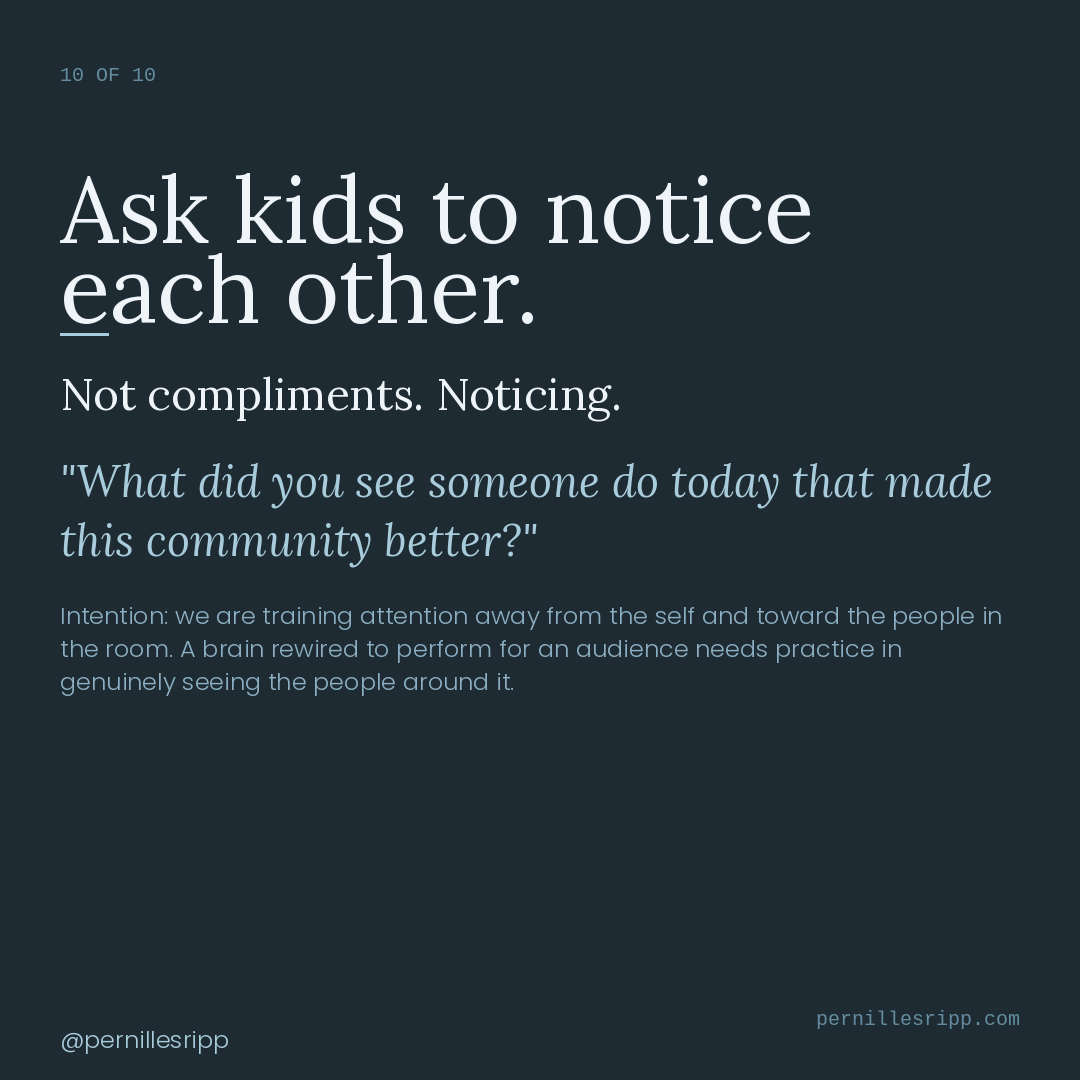
Let students share what they’re reading.
Have conversations, not quizzes. Protect independent reading time for all.

Make reading social, human, and alive.

And we make it safe to not be a reader yet.

Students need to know:
You are not behind.
You are not broken.
You are not failing.

You are becoming.

That is the only way they stay open long enough to grow.

It’s not flashy. It doesn’t come in a box. It doesn’t produce instant results.

But it honors students as readers in progress, not readers we are trying to manufacture.

Because the work is not about getting kids to read.

It’s about creating spaces where reading feels possible.

And then staying in that work, every single day. Even when the world tells you to stop. Especially then.