being a teacher, hidden rules, listen, Student-centered

Sometimes We Have to Break Our Rules

image from icanread

It’s 3:40 AM and Ida is inconsolable.  My normally calm, happy baby just will not stop crying; she is clearly miserable.  I have tried everything in the baby books; swaddling, ssshhing, feeding, rocking, singing, pacifier, but nothing, nothing works besides holding her in my arms.  So I do what I had promised myself not to do this time around, fall asleep with her on my chest, and finally we both get some much needed rest.

Why do I share this story?  Because sometimes doing the thing we had promised we would never do is exactly what we need to do in our classrooms to progress.  Sometimes we have to go against what we have read, go against what we have thought we would do, and simply figure out how we can help a child.  Because when that child clearly has needs we are not fulfilling and we stumble across some idea, or we realize that our procedures and policies simply do not work, well then, we have to break those rules.

In the end; helping all children succeed is what we were put into our classrooms for.  Even if that means sometimes doing things we never thought we would do.  And I am ok with that.

being a teacher, classroom management, discipline, punishment

Red Cup, Green Cup, I Even Had a Blue Cup – Why I Threw Out My Sticks in A Cup

image from icanread

I remember the first time I displayed my classroom management cups; I was so proud.  Although the idea was not my own, far from it, I felt that here was something I could embrace, here was something I could stand behind and really make my own.  My old system of putting names on the board had proven to be too complicated, I had given up on it and so had searched for something new.  Inspiration struck in another classroom and I too had gone to Target and purchased my cups; big fancy tropical drink cups.

The system was so easy; a stick with your name on it starts out in green, when you misbehave you move it to yellow – warning! – and then when you disobey again you move into red.  But that wasn’t enough, oh no, I needed another level of bad, another level of punishment; enter the blue cup!  The blue cup was an immediate phone call home to parents.  It didn’t matter what we were doing,  blue infractions meant stop the class and make that phone call in front of all of the class to tell your parents just why you were calling home.  Proponents of in-class embarrassment can clap their hands with glee here.  It was great!  Not only did I get to call students out in front of their classmates to move their stick,  I also got to have the cloud of warning hanging over them all day, and that stick of theirs could never move backwards in a day, only forward so the whole class knew exactly who had been bad that day with absolutely no chance to redeem themselves, power to the teacher!

With some kids the system was great, they misbehaved so often I didn’t even have to speak the words, we had a hand motion and a certain look that told them exactly what they needed to do.  Move that stick or else!  Or else… or else I publicly humiliate you in front of your peers, or else I make sure that if your day didn’t start out poor it is now guaranteed to be.  Or else I call you out for any little thing because I am so focused on you now with that stick in the yellow cup.  Those cups were central to the power in the room.  Their placement was at the front of the class right by the white board where everybody could see them.  No slinking to the back to move your stick, oh no, get up here and do it.

So what were these stick moving infractions because they must have been bad, right?  Well, to the teacher I was then, where it all had to do with keeping the control, they were definite deal breakers.  They were kids speaking out of turn, blurting out, or not paying attention.  Kids coming in late from recess or not having their supplies ready after they had been asked.  How about leaving your homework at home and then forgetting to come in during recess to do it.  Or if I was in a bad mood it might be a snarky comment or the attempt at a joke; move your stick!  You see, there was no rhyme or reason, some days it was easy to move your stick, other days I let things slide because I was in a better mood.  And yes, some kids moved their sticks more than others because they just couldn’t sit still, because they just couldn’t get it together, because they were that kid that just keeps getting in trouble because we are so focused on them and their misbehavior.  Poor kids.

So  I stopped when I realized, too late, how much damage this system had created.  Students had relinquished the power to me, sure, but it was because of fear not out of  respect.  They knew I was the boss because I made sure they were at the edge of their seats hoping to not be called to the front.  I had created the type of classroom I swore I would never teach in and it had all been so easy.  I knew I had to change when I saw their self-esteem suffer.  I knew I had to change when it was the same kid day in and day out moving that stick.  I knew I had to change when those parents didn’t answer the phone call because they knew it was not good news.  I knew I had to change when I couldn’t recognize the teacher I saw in the mirror.  So I threw out the cups, threw out the sticks, took a deep breath and swore off all systems.  No more sticks, no more calling out, no more cups.  And guess what…the kids behaved.  The kids started to have more fun, to show respect, to pay attention.  Was it perfect?  Of course not, this is real life not a movie.  But by throwing out the cups we shifted the power to be more balanced.  The room became theirs again and I got to fulfill the role as teacher, not just punisher.  I got to show the kids that I loved my job and more importantly that I loved having them in my life and that will always be more important that a cup and a stick.   I have never looked back.

Be the change, being a teacher, choices

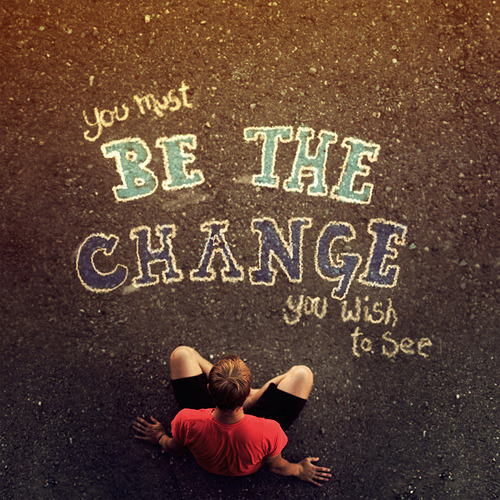
Find Your Change

image from Case&Co

I write a lot about change, after all, in education how can you not?  Change does appear to be the constant every year and this year is no different.  However, the change I love to focus on is the personal change; the one where we know that something has to be different for us to keep on going.  The change that tells us that we will burn out in teaching if we don’t act now.  So the one question I seem to get the most is; how do you change?

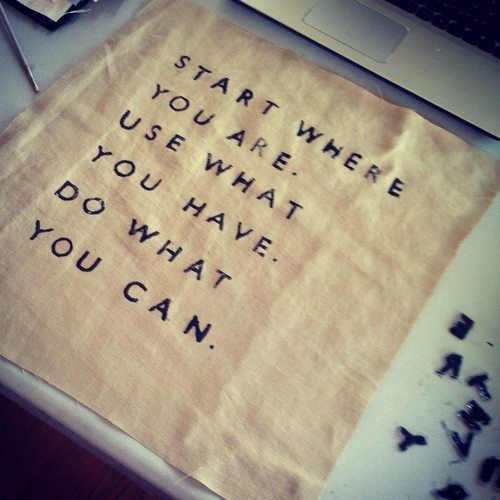
The answer for me is; start where you are.  Take stock of what it is that makes you tick and what makes you stop.  What burns you out and what do you have power over?  There are many things that wear my soul down that I cannot control so I try to focus on those that I can; homework, grades, punishment, ways I present information, community, and so on.  And then I focus in on a few that I need to change right now.  I do not marry an idea, I date i,t and year after year it may get transformed – the change may change, and I am at peace with that.

I also don’t buy into a lot of programs.  I already have enough to memorize with the curriculum I have to teach so I look for natural changes; those that speak to me, that I know are authentic to me, nor purchased and packaged in a sleek form.  I have tried to implement many programs in my classroom, Tribes anyone, only to watch them disappear because I don’t remember what the main components are.  So my change is my program and therefore not prescriptive, it works for me in that moment, in that year, and I believe those are the best types of changes.

So this year, as I sit on maternity leave and wait for the calendar to show November 5th, I think of changes I may implement this year.  There are many I can think of but none that I know for sure, after all, how can I know what to change when I don’t know what will work with this amazing group of students?  And yet, the need for change is there, I can’t wait to blog about it.

Be the change, being a teacher, choices

We Make Kids Hate School

image from icanread

I think it is time I take responsibility for the damage I can do.  Most definitely for the damage I have done to those kids that came to me loving school who  left my room changed.  Those kids that thought they were good at math until my long-winded lectures and explanations confused more than clarified, and in the end they did not know whether to ask for help or just pretend that they got it.  I changed my teaching because of the damage I had done.  I still change my teaching hoping that the students I teach will not leave my room hating school, but loving it instead, seeing it as the ultimate learning challenge to be embraced and celebrated.  Not scorned, survived, or floated through.

So how do we make children hate school so much?  I teach 5th grade and by that time certain subjects have already become hated for most kids.  Math tops the list but social studies comes in a close second.  Most love recess (which so doesn’t count), art, reading (not often writing) and science.  PE is up there and as is music for the girls.  But math and social studies, yikes.  I think of how I used to teach math; lecturing at the students with hardly any time to actually apply.  I thought they could go home and “practice” on their own time.  Often we had so much to get through that questions were not always answered thoroughly and discussion was certainly discouraged; can’t you see we have a lot to do here? Social studies belonged to the textbook, to spice things up we would share the reading aloud of the text and I would try to catch students not paying attention so I could point out that they were not paying attention.  Nothing beats a good old fashioned public embarrassment routine.  By the time I was done with them in 4th grade they knew how to follow along in a textbook and fill out worksheets really well.  Too bad the incredibly fascinating history we had just read about got buried in the disgust.

So what is so different now?  Well, I don’t talk as much.  That’s huge.  In math I prepare just what is important, then showcase it, and we discuss, answer questions, and practice as we go.  Time is given to finish pages in class and I never feel I have to assign it all if need be.  If a students asks one of those questions that are just too hard to miss out on, we explore it and deal with the time constraint later. We pull out manipulatives and whiteboards whenever we can.  We work together when desired and we move around when it makes sense.  I stress that not all concepts are meant to be conquered that day and that the most important thing is growth; no longer rote memorization but application and deeper meaning.  We discuss the similarities between concepts and how they are connected; I hope students see the red thread that runs through our year and why things are presented in this order.

Social studies starts much the same way; I don’t talk as much!  And I no longer fool myself into believing that reading round robin style counts as interaction.  Instead, the massive text book is used as a spring board for discussion.  We find the key concepts and then we set off through projects to explore them.  Students have choice in how they explore and often in what they explore within a topic.  History is brought up to the now as we discuss the parallels we can see between the past and the present.  Student questions are invited and we debate whether we would have proceeded the same way or anything else that needs to be debated.  Student voice is as important as my own and so is their understanding of why we are where we are now in the world, how we got there, and that doesn’t come through rote memorization either.

So while not every kid that leaves my room falls back in love with school – sometimes the damage takes years to undo – I try to put them back on the path.  I take responsibility for my own actions as a teacher and realize the damage I can do.  I go to school every day with the mission for kids to love learning and to show my own curiosity and be a rolemodel for loving school.  I go to school knowing that I can be the difference between love and hate and between further success in school or not.  I hope everyone takes that responsibility.

behavior, being a teacher, community, new year

We Should Act Like Our Students

image from icanread

You can feel it when you enter.  It hangs around you like a fog, enveloping you wherever you go, emphasizing the true nature of the school from your eyes.  Climate, and particularly a bad one, surrounds you when you enter into a school and can quickly soak its way into any perception otherwise presented. It doesn’t matter how many smiles you get, if a school is suffering from a lack of community, those smiles will not be able to mask it.

We spend so much time and thought in how we will build the community in our classrooms, perhaps even in our grade level, and yet where is our thought to how we will build community in our school for the staff?  At my school, we have new staff every year, and sometimes quite a bit, yet we assume that the community we have created in years past will just flow into the new year and welcome the new staff. What a strange notion!  We know as professionals that community must be nourished and preserved throughout the year and that every year we start anew.  So why does this not carry over into our staff development?  In fact, often in schools we act the opposite of how we expect our students to act.

We ask our students to work in groups, yet often close our own doors during collaboration time.

We ask our students to branch out and meet new people, yet we often stick to the same familiar faces, making it hard for anyone new to feel like they belong.

 We ask our students to discuss problems face-to-face, dialogue about issues, and come to an amicable agreement, yet we often speak ill of one another and shy away from conflict or confrontation.

We ask our students to work with new people and not always pick their best friends, yet we sit with those we know at our staff meetings and try to get into each others groups.

We ask our students to trust us as professionals, yet we don’t extend that trust to all of those we work with.

We ask our students to actively listen when we speak, yet we often bring work into meetings or have side conversations when someone speaks.

We ask our students to be up for the challenge, to embrace change, yet we roll our eyes and fight change whenever we can unless we are the ones wanting to do it.

We say this is a bully free zone, yet sometimes the bullies can be found amongst the teachers.

So we must focus on community and not just within our rooms.  We must act more like our students.

advice, Be the change, being a teacher, education reform, new year

Who Is to Blame? Who Cares…

image from icanread

In the ever expanding debate on the state of education, it seems a lot of blame is passed around.  Teachers blame parents, parents blame teachers, public schools blame society, charter schools blame public schools, and politicians, well they seem to blame everybody.  Not a day goes by without another blaring headline of one side versus the other and frankly I am sick of it.  I know there is blame to be passed, I know there is blame to be had, but in the end, who really cares?

Blame doesn’t do us any good.  Blame doesn’t fix the problem.  Yes, I can lament the fact that not all of my students have the same socioeconomic background, the same level of parent commitment, heck, I can get upset about their varying degrees of pre-school involvement, but at the end of my teaching day, none of it matters.  What matters is what I do now.  What matters is how I work with the students, with all of their background, and how we keep them successful from there.  Blame is great to discuss, it can get us all riled up, it can get us more invested in the debate, but really it takes our focus off of where it should be – what we can do in education with the students we have.

So this year, I am going to try to step out of the blame game.  Yes, I know there are many ills in our public schools and society in general.  Yes, I know poverty is a major factor in many students’ lives.  Yes, I know that I cannot control what happens outside of school or what happened before they became my students but I can control the now.  I can play a part in what happens starting September 4th and for a whole school year within the walls of our classroom.  I can focus on the students as I have them, rather than the blame I would like to assign.  I am going to take my energy off of blaming and place it back with my students.  I will continue to work and fight for change.  I will continue to be a voice in the debate.  But I will not continue to just pass the blame and do nothing.  Are you with me?