being a teacher, new teacher, students

Getting Ready to Student Teach; Just a Little Advice

Wordle: student teacher
I am one of the lucky few that got a job at the school I student-taught at, something that I had hoped and wished for over several years.  My desire to be at this school was multi-faceted; excellent staff, a dedicated district, and a diverse student population.  So the day I received the phone call that, indeed, a 4th grade job was mine, I was over the moon.  And yet, this didn’t just happen purely because I was lucky, I had put in a lot of work to put myself in this dream position so I want to share a bit of advice for those new student teachers or those soon to be.

  • Research your school.  The school you student-teach at should be a school that you would like to work at.   Do you homework, meet the teachers and figure out the school’s presence in the community.  I had known for several years that West Middleton was where I really wanted to be so I also did practicums here, thus establishing a relationship 2 years before student-teaching started.  It was through the relationships that I found my mentor teacher and classroom I would be in for 6 months.
  • Get to know your teacher before you start.  I met with my incredible mentor, Kathy, before my placement was settled to make sure we would mesh.  I wanted to really be in a community of learning that I would grow and be challenged in and also with someone who I would form a relationship with.  While you certainly don’t have to be become life-long friends, you do have to like each other otherwise the kids will notice and learning will be disrupted.
  • Treat it with respect.  The first time I met Kathy I called her Ms. Hiteman; we were not friends and I did not feel that I had earned the right to call her by her first name.  This means something, so even if your initial contact is through email, use their last name and title, then when they tell you to use your first name you know they feel ok with that.  This goes for anyone you meet, take a cue from those around you and treat them with respect.  You never know who will be your next boss, interviewer or team mate.
  • Be passionate.  Being a student-teacher is hard work but you have to be excited.  These are the big leagues; you finally get to do what you have been training for and hopefully in a setting that suits you.  Be excited to come to school and it spreads to others, trust me people notice when you bring passion to the table and even new ideas.
  • Clear your schedule as much as possible.  Student-teaching needs to be your job, and yes this is coming from someone who worked full-time with an 18 credit load through college.  I still worked during student-teaching but it was on the weekends.  You may not be getting paid to student-teach but you should treat it like a job; this is an investment in your future and you need to be available for all of the extra work that teachers do even during summer if you student-teach in the fall.
  • Have a personality but don’t let it overtake you.  Don’t be bland, be nice, speak your mind, but do it with respect.  You do not know the school as well those who work here so bring your personality in but know when to put a lid on it.
  • Be invested.  Take the time to get to know the students, treat them like they are yours, because they are, and grow with them.  The mark of a great teacher is someone who forms a connection, so be great.  And this isn’t limited to just the students; get to know everyone, they will also be the ones deciding whether or not you fit into their school and believe me , word travels fast.
  • Reach out to others.  You may just be with one teacher through your whole process but establish relationships with others in the building, ask  them if you can go to their room to observe, volunteer for committees, and establish a relationship with the principal.  I was able to get a written recommendation form mine because I reached out and asked him to observe me.
  • Take initiative.  When I student-taught I took initiative to create new math reviews, graph data for assessment purposes and learn more abut the math resource position.  All of this ultimately led me to land a maternity leave position as a math resource teacher which then led me to my classroom job.  Had I been a wallflower and not done these extra things none of that would have happened.
  • Be yourself.  While this is a long job interview you cannot fake your personality.  Stay out of drama, again be nice to everyone, and be deeply interested in the school.  If your personality does not fit with the school culture at least now you know.  Be critical of what you bring to the table and know when to look inward rather than out.
  • Listen to the advice you are given and then actually use it.  I was not a great teacher when I student-taught and I knew it.  Be humble and take the advice that others so diligently give you; this is your chance to really grow.  Know when to ask for help and know when to change something.  Listen when someone speaks and know that it is not easy for them to point out flaws, but this is how you will  grow.  Ultimately knowing how to listen and take criticism is a life-skill you will need the rest of your career as well.


being a teacher, Critical thinking, get out of the way, student driven, Student-centered

Some Thoughts on Collaboration and Student Choice

Battle Hymn of the Tiger MotherImage via Wikipedia

I started out on this student-centered journey knowing  that I had to offer my students more time for true collaboration, not just teacher-chosen ones, as well as give them control in the classroom.  I started out dreaming not quite sure what it would look like, what the products would be and whether the  learning would even be enhanced or would suffer.

Now 19 months into the journey, I have made some humbling realizations:

  • Not all units lend themselves well to choice but it is doable.  It can be a challenge to cover the material you feel you need to cover in a textbook for example, but you can.  I have spent many nights thinking up how I could possibly engage my students in this without just lecturing and it takes time.  That time is well spent though when you see the students light up at what they will be doing.
  • It also gets easier.  After a while your brain switches from “How will I present this” to “How will the students work with this?”  It is a subtle difference and you create a toolbox of ways.  Also, if you include students in the planning process you have many more ideas, so that’s leads me to:
  • Include the students!  When I have been stumped over how to make a unit more engaging I have brought it to those it will effect the most; the kids.  It does not have to be a long conversation but just a brainstorm.  It is amazing to see what they come up with.
  • Trust the students.  There have been combinations of students that I have shuddered at inwardly and in the end they created beautiful projects.  There have also been combinations where we needed to have some serious reflection on whether or not it worked.  The big thing is including the students that it involves, don’t just make the decision that a partnership doesn’t work.  We are too quick to decide what collaboration looks like, let the students in.
  • Be honest with the students.  I have very high expectations for projects and I have called students out on poor work quality.  There is a way to do this though without creating a “Battle Hymn of the Tiger Mother” scenario.  Ask them to evaluate their own work, it doesn’t even have to be done, and have them take time to reflect.  Point out what you see as a possibly gap and help them out.  Not all students can just create at the drop of a hat.
  • Scaffolding at various levels.  Some students just need an idea and they fly, others need hand holding and even a cheer or two before they get off the ground, and some are just too boxed in to even know where to start.  Get to know your students and their work style, scaffolding at its best simply.  Invest the time in relationship building and you will see direct results in their output.  
  • It will not always work.  I have had some epic ideas that turned out absolutely ludicrous.  Or ideas that got to be so complicated that the students lost interest.  There have been times where it hasn’t been a fun , engaging work environment or where a project has taken too long and the interest level is near zero. That happens.  And yet I don’t give up, I keep going because I see how invested the students are.  I see how excited they get to use their hands and their minds, to explore on their own with guidance from me, to learn from each other.  

So to choose and to have a voice are the dreams I have for my students.  I see how invested they get in their own education, and that is something lecturing can never do for them in my room.  Education no longer is something done to them, it is something they take a part in, they own and manipulate.  We always talk about how we are shaping the future but the future doesn’t just include absorbing information froma main source, it means taking that information and using it to bridge new things.  To manipulate learning, to shape and form new ideas.  And that is what student-centered learning does for me.

    being a teacher, challenge, ideas

    A Couple of Ideas Before Break

    Image from here

    March in the US means spring break is fast approaching and so are the students yearning for vacation.  So what is a teacher to do when the learning cannot stop and neither can the teaching.  Well I created some projects that yes, cover the standards, and also keep my students on their toes.

    • The Grand Canyon Challenge.  I have wanted to incorporate Google SKetch Up for along time in my classroom and now finally have a chance.  In this extension for a landforms science activity students have become structural engineers that have to get a large crate from one side of the Grand Canyon to the other every day of the year.  There are limitations of course, such as a no fly zone, and the students have to ultimately sketch their concept in Sketch Up.  I revealed this today and the kids were stumped and excited.  Final product:  3-D sketch to be judged by my husband and presented to the class.
    • The Slavery Research Project Prezi.  Prezi is another tool I have wanted to show my 5th graders and this delving into slavery comes as integrated social studies and reading activity.  We have been reading “Jump Ship to Freedom” and the students asked, yes asked, whether they could do research on issues surrounding slavery.  So for the last 2 weeks the students have been very hard at work researching (nice way to discuss Sweetsearch and other internet searching tips) as well as creating their Prezi and their presentations.  Final product: students present their research and are videotaped so they can critique themselves.
    • The Superheroes Writing Project.  Stumbled upon this brilliant idea from TES and then adapted it for my own use.  We have been discussing authors’ tools and this exploration of superheroes through comic-books gives us a chance to really work on creating a character, creating a setting and a plot development.  I have never had students complain to me before about not having enough writing time, now they do.  Final product:  Superhero and villain dossier, detailed setting description as well as mini plot development with illustrations if they choose.
    • Readers Theatre.  We have 1st grade buddies that we do a lot of fun projects with and this month we are working on readers theatre with them.  In the end students will film their productions and perform for each other, the filming is for their parents to see.  Natural way to practice fluency and expression at all reading abilities.
    • Mini projects in general.  I am trying to come up with more movement in my classroom right now as well as mini challenges.  Students are currently bringing in spaghetti, marshmallows and toilet-paper tubes for some mini challenges we will be doing as well.  

    We are finishing up several units before spring break affording us the ability to come back and get immersed in new stuff.  I do like to wrap it up a bit before break because after it the year just seems to disappear.

    A couple of notes:

    • I am sharing my superhero lesson plan but it is a work in progress and I am adding to it as I teach it.
    • Prezi cannot be used without email addresses so I have students use my account for it, however, if they have emails you can give them individual accounts for free.
    • Google Sketch Up does give out free educator licenses for their Pro version, which is awesome, so take advantage of that!
    • Many of my ideas come from the people I am connected with; my inspirational husband and my PLN so thank you.
    being a teacher, choices, word choice

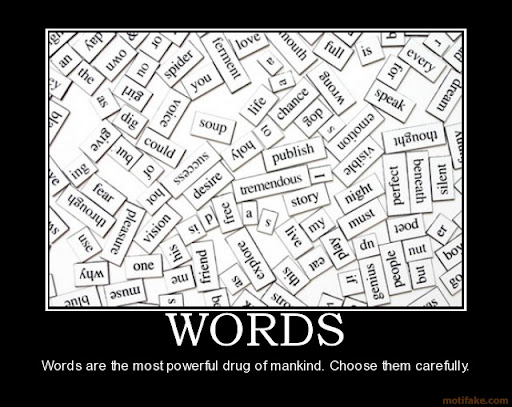
    Our Limited Words

    Image from here


    One of my dear friends posted this as her Facebook status last night, I immediately asked her if I could post it on my blog as well.  Thank you Amy.


    “For whatever reason, I keep losing things!!  I will walk around the classroom, put down a coffee cup or teacher’s manual absentmindedly and then have to search for it.  One of my students recently made an interesting comment as I was walking in circles looking for my misplaced items.  She told me that if our steps were numbered, and if we were only given a limited number of them in our lifetime, then we wouldn’t want to waste them.  I guess my walking in circles made her think I was wasting my precious steps!  She didn’t have a solution for me, but she did make me stop and think.

    Although she spoke of steps, I thought of words…What if we were only given a limited number of words in our lifetime?  Do we choose them carefully?  Do we use our words to encourage those around us…inspire our family, friends, and students…brighten someone’s day?  Or do we use words that could hurt others without intending to do so?


    I know I will waste words now and again, but I plan on trying my best to use them wisely from here on out…just in case my student is correct and they are limited.”

    being a teacher, thank

    Have You Told Them Thanks Yet?

    Image from here 

    Today with 15 minutes left before the end of the day, as my students were packing their things, writing in their assignment notebook, I cleared my throat and told them I would like to make an announcement.  With 23 sets of eyes on me, all waiting for something cool to come out of my mouth, I stammered, “I would like to tell you something…”  Silence.  I kept going, “Every day, I tell my husband when he asks about my day about you.  Every day I tell my husband how I have the nicest kids, the kids that make me so proud.  I share the funny stories, the things you accomplish and the community we share.  Every day I tell him that.  But I don’t tell you and I should.  So thank you for being that class that I can tell people about.  Thank you for being that class where I can step out of the room for a moment and know that you continue to work without me there.  For helping each other, for staying engaged and focused and for thinking school is not boring.”    And then I stopped because I got emotional as pregnant women tend to do.  And the kids smiled and I told them it was time to go and so they did.

    Have you taken the time to tell your students how they make you feel?

    being a teacher, classroom management, Student-centered

    Surprise; The Biggest Obstacle in The Classroom Isn’t Your Students

    Image from here 

    Nor is it what happens to them outside of the classroom… it is you.  Perhaps a simplistic view of the world but think about it for a moment; how much does our mood affect the moods of our students?  How much does our body movement, our choice of words and even our inflection affect those we are surrounded by?  And that doesn’t even mention the choices we make as far as how the classroom is run and what type of curriculum we teach.  So while there are many outside factors that do play a significant role in how a student performs in school, the one consistent factor is you and how you choose to be with your students.

    Every day you have control over:

    • The expression on your face
    • The tone of your voice
    • The words you use
    • Your body  language and its hidden signals
    • Who you give attention to
    • How you give attention
    • How do you get attention
    • How much control you cling to
    • The respect you give
    • How you speak to other people in front of your students
    • How disruptions and unexpected events are handled
    • How curriculum is taught
    • How much choice your students have
    • How you handle students who fail to meet expectations
    • How you handle students who are distracted
    • Anything that has to do with the flow of your classroom

    And the list could continue.  Think about all those choices.  Think about the effect each one of them can possibly have on a student and then think of what you can change.  We do have a lot of power.