being a teacher, reflection, Student-centered, technology, Uncategorized

It Is Not About the Gadgets – Why Every Teacher Should Have to Integrate Tech Into Their Classroom

image from icanread

When I moved my blog from Blogger to WordPress last summer I mistakenly assumed that all posts would seamlessly transfer.  I have since found the error in my thinking and have decided to re-post some of my more discussed posts.  This post first appeared in February of 2012 but still rings true to me. 

I once sat on an interview committee in which the candidate proudly proclaimed that to integrate technology her students would use word processors and publish their work in a monthly book.  My toes instantly curled.  It wasn’t so much that she had used the words “word processor” but rather that she thought tech integration meant to have students type on a computer and then publish their work, that that would make them ready for this century of jobs.  So a couple of things come to mind whenever we discuss tech integration in schools.

Students have often more seamlessly integrated technology into their lives than their teachers and didn’t even need to take a class on it.  We chalk this up to them being digital natives or because they have an interest in it.  Yet not all children are digital natives and most of them have had role models that show how to use the technology.  They also know that tech is valuable and can add to their lives rather than detract from something else.  And then there is the fearlessness, many students are simply not afraid to mess around with tech, but many adults are.  It is time for us to be role models in our own fearlessness.

Some teachers assume that clicking on a SmartBoard or having students type their papers mean that they are “integrating” tech.  This is one very limited usage of tech, in fact, it doesn’t really count as integration.  Better integration is when a student decides to film a video to show off learning rather than create a poster.  True integration is when students have ideas and fearlessness to use technology to show their learning as a natural extension of the classroom.  Not to type a paper.

There seems to be no urgency when it comes to actual technology integration into the classroom, but more of an urgency on how to buy the flashiest gadgets and then offer limited training or support.  How often do we hear about a district that has spent too much money on 30 SmartBoards, 100 iPads and how they will be placed in the hands of the students to enhance their learning?  How often do we then hear about the support they will offer their teachers or how those products will actually be used to enhance learning?  There seems to be an assumption that if you give it to teachers  they will use it effectively, which we all know is not true.  Some teachers might, but most will use it superficially and after a while the product will languish, unused, outdated, and just another relic of someone’s hastily thought out idea.

Some teachers feel that integrating technology is optional.  Integrating technology is no more optional than teaching how to use a pencil.  And while many may find that extreme, we cannot equip our students with the skills they need to be successful learners and teachers without teaching them to use technology properly.  Many schools see typing as a necessity but then cannot bring that view into how to stay safe on the internet, how to search properly on a computer, and myriads of other things that technology can offer us.  How to use computers effectively is now a life-skill and as teachers it is our job to equip students with these.

Teachers who have been labeled “techie” teachers are sometimes viewed as a one-trick pony, that is all they are passionate about and therefore they cannot possibly have an effective classroom.  I certainly am one of the techie-teachers in my district but many are surprised at how little we use tech on a day to day basis.  That is not to say we don’t use it, because we do, but we also do many other things.  In fact, using a tech tool is just one option my students have to show their learning.  What I do practice is fearlessness in tech usage and that I pass on to my students.  Not that they always need to use some sort of tool, we use our pencils more than a computer, but that they can effectively use whatever whenever they need to.

Teachers think they have a choice in their classroom.  I am sorry but the choice should not be teachers’ anymore; every school should have an effective technology integration curriculum to offer students the skills they need.  We do not have a choice in teaching literacy or math and should not be given one when it comes to technology.  This is not about what WE want the kids to know but what the KIDS need to know.


And I am sure I could continue the list, however, these are my main concerns.  We cannot afford to not focus on proper technology integration in our schools.  It is not about the gadgets, it is not about the typing, it is how to use technology tools fearlessly, respectfully, and effectively.  All things every teachers should be teaching, no excuses.
blogging, Student-centered, students

10 + 1 Steps to Meaningful Student Blogging

IMG_2138Last summer, I had the pleasure of guest blogging for Middle Web and chose to do it on student blogging.  While I had started with a 14 step plan, I was able to revamp it a bit and bring it down to 11 steps.  Since then many educators have asked how to best get started with blogging, so I bring to you a re-posting of this popular post.

Four years ago I started blogging with my 4th grade students on a whim. I knew three things at the start: I wanted to get them connected with each other; I wanted to give them a voice, and I knew I had to change the way they wrote. So I started blogging with them – fumbling my way through the how to and the when to.

What I had no way of knowing was how blogging would change the way I taught, how blogging would give my students a way to speak to the world, and how blogs would make it possible for them to create lasting global connections with other children.

Blogging has since become an integral part of my classroom. It’s a way for me to check the emotional temperature of my kids and a way for them to add their voice to the continuing education debate and reach out to other communities.  We no longer just wonder how things are done in other countries. We blog and ask questions and get our answers.

So when I meet with any teacher who wonders how to lower the walls of their classroom and create more authentic learning opportunities, my first advice is to get students blogging.

If they’re interested, I share these steps. They grow out of my own experience working with upper elementary-aged kids, and I believe they can help any middle grades teacher successfully launch a blogging program and integrate it into the daily learning experience.

10 + 1 Steps to Meaningful Student Blogging

Here’s the checklist I follow myself at the beginning of each year, before I unleash my (now) 5th grade students’ voices to the world:

1. Figure out your why

You have to reflect on why it is you want to have students blog. Is it to make connections, for technology integration, to give your students a voice, or for some other reason? If you know the why it is much easier to get students excited about the blogging experience. I don’t feel that blogging should be just to show off student work; it can be something much bigger than that.  So figure out your reasons why before you move on to the how.

2. Pick your platform

I use Kidblog because of its accessibility, its wonderful safety features, and the ease with which I can adapt it to fit our purpose. While some feel (as a result of recent changes) that Kidblog is geared more toward early elementary students, I disagree. But it’s not the only safe and easy-to-use option: Edublogs is another popular student blogging platform that also comes highly recommended.

3. Get your permissions

Check with your principal, your tech coordinator, and finally get parent permission. You need to be prepared to explain and justify what you are doing — and be transparent throughout the conversation — to receive ultimate support for this endeavor. Student online safety is a predictable concern, and it’s much easier to be proactive, seek out these conversations, and present evidence that safety is easily assured and the learning rewards are significant.

I’ve created my own permission slip to ensure that parents feel well informed as they make their decision about whether to let their child blog. And I have yet to have a parent say no.

4. Blogging versus writing

I always introduce blogging by discussing how it is similar and different to writing. Students often get what blogs are but not necessarily how they can use one themselves. So I showcase my own professional blog and other students’ blogs to get them excited about the adventure they are about go on. We discuss what we can blog about, how long a post should be (as a minimum), and what to do about spelling and grammar. These discussions lead to heightened awareness of what is appropriate for a blog post and what isn’t and will also lead to the next step.

5. Discuss safety!

Before students ever log into their blog accounts for the first time, you have to discuss safety. I use the analogy of “Why the Internet is Like the Mall” to get students to really think about their online behavior and what they post. This is an in-depth discussion that covers many aspects of internet behavior, not just those that are specific to blogging. This is also not just a beginning-of-the-year conversation, but an all-the-time conversation.

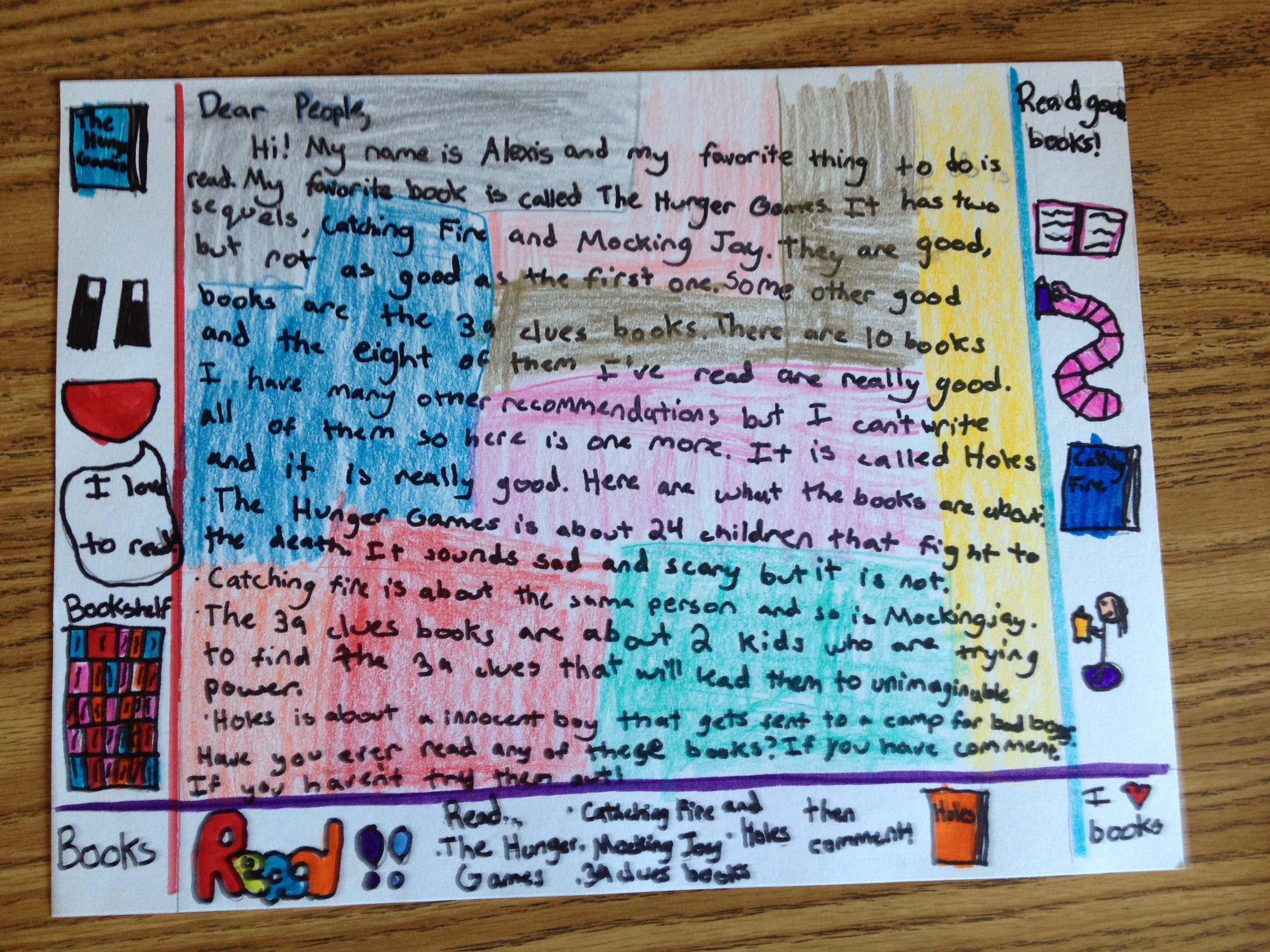
6. Do a paper blog

Starting out on paper is a great way to introduce students to blogging and how they can add their own personal voice and flair. (It’s an idea I got from Karen McMillan.) By creating and personalizing a paper copy of their dream blog, my students have a tangible piece to work with while we learn the ins and outs of style, substance and safety. Once all of the paper blogs are done, students spend a class period leaving post-it comments on each other’s blogs as well as responding to the comments they themselves receive. This is a natural progression toward our next step . . .

7. Discuss commenting

For blogging to be effective, students need to know how to make good comments. Commenting on other blogs is one important way to grow an audience for your own blog. And when people comment on what you have written, you need to be prepared to respond with follow-up comments of your own. So we discuss how to create a dialogue in comments, how to thank people, and also how to give constructive feedback. We set up parameters for our posts and our comments in order to uphold a high standard of writing and we discover how commenting can (and should) become a conversation. We even act out comments from our post-its to see if they work well as conversation starters or act as dead ends.  Students quickly realize the power of a comment.

8. Start small

When students are finally ready to blog, have them introduce themselves.  That way, as your class starts to reach out to others (because ultimately blogging is about connections), students can showcase themselves and thus spark a conversation.

9. Connect with others.

Use quadblogging or a project like The Global Read Aloud to get students connected – or simply reach out to one or two other classes (preferably far away from you) to establish a blogging relationship. Once you get started, teachers can go on Twitter and use the hashtag#comments4kids to get comments for your students. Kidblog also has a wonderful feature called “Blogroll” where you can build a list of links to other blogs you like to follow in the margin of your own blog. My students use this all year as they check in with classes from around the world.

This is what gets the kids excited about blogging — it’s not just that they get to read other posts, they are able to establish a personal connection with other kids in faraway places, maintain that relationship throughout the year, and learn a lot about life in other parts of the globe.

10. Make it their own

Students need to feel genuine ownership of their blogs. I ask them for ideas of what to blog about; I give them free artistic rein over their posts, and I give them time to explore the blog’s tools and capabilities. This is what gives students ownership and has them take pride in their blogging. If it is truly their voice being heard in whatever fashion they want to present it, then they are eager to show it off.

Blogging has to be authentic for it to work. I don’t correct their grammar and spelling. I don’t require editorial changes unless something is likely to lead to hurt feelings or misunderstandings. I will ask them to add more or to explain further, but I give them the time to do so. I also challenge them with a weekly blogging challenge and then find time to do it in school. (Ideas for the challenge come from students or things I wonder about myself.)

11. Give it time

Great blogging and great connections don’t happen overnight, so give it time. Let the students develop as bloggers, celebrate their successes, and map their connections. Truly celebrate the blogging they do and spend time on it class. Encourage blogging but don’t make it an assignment to just get done. Treat it as an integral part of your classroom and watch it become one. Blogging is not just about writing, it is about bringing the world in and making it a little bit smaller.

In the end, blogging should not be a burden in your already full day. Students should love blogging, not see it as a chore (which is also why I never grade my students’ blogs) and they should be eager to express themselves and expand their worlds.

If you are ever in need of someone to connect to or ask questions, please reach out to me @pernilleripp on Twitter. I will gladly help. After all, blogging is about expanding our own comfort zones and creating authentic, global collaboration.

being a teacher, building community, classroom expectations, classroom setup, new year, Student-centered, Uncategorized

Back to School – January Edition

image from icanread

January comes at us like a lion it seems bringing students who were just getting used to being on break, miserably cold winter days where no sledding is allowed at school, and more assessments. Every year January always reminds me of the beginning of the year and last year I started to treat it as such.  Goodbye January humdrum, welcome January excitement.  So what will we be doing to battle the January blues?

  • Reassess our classroom rules.  Students get a little tired and a little more restless so it is the perfect opportunity for them to set new rules for the classroom.  They also know each other a lot better, particularly each others’ quirks, and so I find the conversation tends to go much deeper then it did in September.
  • Set up the classroom.  While I think our work space works really well, I am not the one constantly using it. Time to ask the students if things need to be moved around and then do it.  Also time for me to re-evaluate the room.
  • A heart to heart on work habits. While I ask the students to self-assess constantly throughout the year, we need to have some honest reflection on how they have been working independently.  I like to think of it as new year’s resolutions set with an eye on middle school.
  • Take stock of projects.  How have they been doing on projects, are they pushing themselves into new venues or are they sticking to much of the same old same old?  What are new ideas they can’t wait to try and how will they try them?
  • Re-introduce genius hour.  We took a break from genius hour in the last month or so because we have been too busy, but January is the perfect time to refocus on it, this time in science rather than social studies.  Students have been busy at work learning about landforms, now is the time for them to take charge of what they want to learn.
  • Have a classroom reading challenge.  The students have been excited about reading but January is typically the time they start to feel overwhelmed or bogged down.  Last year we did the classroom reading challenge and it really brought in a lot of excitement.  It is quite simple:  Every child sets a secret goal (they only share it with me) for how many books they will read in the month of January, the goal can include picture books, graphic novels, or chapter books.  We then reveal the total number of books we pledge to read on a bulletin board.  They then read as much as they can and report to me whenever they finish a book (paper on my desk), I print out a picture of the cover and add it to our huge bulletin board.  Nobody knows who read what or how many books they have each read but everybody is reading and if we meet our goal, we have a huge read-in party as a celebration with an author Skype call.  I cannot wait!
  • Re-do routines.  We have great routines but now is the time to re-assess, what do we still need to work on, what is no longer needed, what should we streamline?  Again, this discussion is student-led with input from me.
  • Throw some surprise challenges their way.  They have been working hard on our team challenges  throughout the year and now is the time to give them even more.  I am thinking the boat building challenge, as well as marshmallow catapults.  Oh, and I do believe we have to build some vinegar rockets as well.
  • Re-assess my own opinions.  Have I labeled students unknowingly, do I really know the child in front of me?  What are the priorities we need to have for their learning journey and what will I do to help them accomplish their goals?  Now is the time to reflect about each child.

What will you be doing to re-energize the classroom?

being a teacher, reflection, Student-centered

Are the Boys Welcome in Your Room?

One thing I love about being hospitalized (the little baby is trying to make her appearance 10 weeks early) is that I get to speak to all of the incredible nurses that take care of me.  Once they find out I am a teacher the conversations always get even better and today was no different.  We discussed the topic of boys in the elementary classroom, and particularly how female teachers can create boy inviting classrooms.  As this is something near and dear to me, I thought I would offer up a few ideas of how to get boys to feel welcome in our classrooms, or any kid really.

  • Realize the damage of cute.  Angela Watson had a great post that started a huge debate on whether classrooms should be cute or not.  While I don’t mind cute at all I do try to look at classroom decor from a boy’s perspective.  Most boys tend to not love polka dots, pink, cute little animals, and many other cutesy features we spread all over our rooms.  We may find it welcoming and others may not want to be seen in it.  So consider your entire population, not just what you think will brighten up your room.
  • Give them room.  I think we forget that many boys, and many girls (my own daughter included) need lots of room.  Find extra space in your classroom by getting rid of unnecessary clutter.
  • Give them choice for work space.  I swear the moment I let my students pick their work space, I saw their attention shoot through the roof.  Why?  Many of my students prefer working on the floor or in a chair by themselves not touching anyone else.  So give the students room to spread out so they can find their best work space.
  • Have books for boys.  This is huge.  Boys need to be able to find themselves in your classroom library.  I had never considered this until I looked at how many animal books, pink covered books, and friendship books I had collected versus sports, action, or fantasy.  I am not trying to say boys only read these things, but make sure you have books that anyone can gravitate to.
  • Read aloud books with male protagonists.  I change sex of the protagonist every book.  So while we started with “Out of My Mind” by Sharon Draper following the courageous Melody,  we are now reading “The False Prince” by Jenifer Nielsen, sucked into the heroics of Sage.  Keep it balanced for all students to find something to relate to.
  • Tap into the male energy.  I often run my ideas for lesson plans or projects to see if my husband would have wanted it to do it when he was in 5th grade and he never disappoints.  I am always reminded to add more options for the kids, to listen to their opinion, and to make it more hands on.  Engagement for all seems to go up as the students get more involved.
  • Realize your own angle.  Whether you are a male or female teacher realize that you bring in a view of how you want things to be taught, and then realize that it is not the same for everyone.  I fight this every day.  I love learning in a certain way bt many of my students do not, so choice, voice, and passion becomes central tangents in our classroom.
  • Challenge what you know.  For every time I think competition will motivate  a boy, another boy proves me wrong.  For every time I think a quiet contemplation and reflection will motivate a girl, another girl proves me wrong.  I may think I know how to appeal to children based on their gender but that’s not it at all.  In the end, I realize that it is not that I set up my classroom to be female centered on purpose but it is what I know.  We have to create environments where all students are welcome and make sure we don’t create rooms where students feel like guest rather than members.

What other ideas can you add?

Be the change, being a teacher, being me, reflection, Student-centered, testing

Why I Will Not Refuse to Give the Tests

image from icanread

I was told this week to just refuse to give standardized tests.  Just like that.  And while the person who told me probably meant well in their statement, I don’t think they realize how big of an action that would be.  I have long blogged about how standardized testing such as the WKCE here is Wisconsin is not an accurate measurement of what a student really knows, but rather a snapshot of that very moment they took the test.  I have also been vocal in my opposition to what that data sometime is used for and how we end up labeling students, teachers, schools, and entire districts on a meaningless measure that does little to emulate what we really do in our classroom.  And sure, I have dreamed of refusing to simple administer it in my room.  But that’s it, a dream, because in reality it probably wouldn’t do much for anyone but me.

If I were to refuse administering these state mandated tests, I would get in trouble.  That is an absolute guarantee.  And while I have never been one to shy away from too much controversy, the kind of trouble this time would be much bigger than a write up.  I could even lose my job for failing to do my duties.  To some that may not seem like a big deal, after all, I should be standing up for my students and their rights, my own opinions, I should protect those children that I teach from the tests.  But my job is vital to my own children.  My job is our health insurance.  My job gives us just enough money so that we can pay our bills.  I wish my husband had a huge paying job, he doesn’t, and so we are a very dependent two income family.  So losing my job refusing tests just isn’t something I can rationally do and in a sense, I am not sure I should be the one refusing the tests anyway.

Teachers can try to change education as much as we want.  Many do.  We write, we speak out, we try things in our own classrooms that we hope will spread to others.  We stand up for what we believe in, we spread our message.  But in the end we are just the teachers.  The real change must come from outside the classroom, from school administration, from school boards, from government, but they will not change until one group speaks out:  parents.  The real change must come from parents.  The real opposition must come from those who entrust their children to us.  They are the ones that can decide whether a test is harmful or inaccurate.  They are the ones that can choose to opt out.   I am not the one that decides whether testing  will harm a child or not, I can have my opinions sure, but in the end the decision does not rest with me and as long as parents willingly have their children tested then my job is to test them.

So while I can dream of refusing to test my students it will only stay a dream until the parents whose children I get to teach are the ones that decide that things should change.  We may think as teachers that it is only our responsibility to speak up and that if we don’t then no one else will.  This is not true anymore.  We may be the ones that start the conversation but others have to join the fight.  Whatever they believe in.  So when I am told I should simply refuse, I hope others see how it is not that easy.  How my refusal will do little for my students and only harm to my own family.  And while I would sacrifice my life for my students if I ever had to, I will not sacrifice my job in a non-lethal situation.  I will not sacrifice the life of my own children for something that many others do not see as a big deal.  Would you?


Be the change, reflection, Student-centered

Don’t Take a Break from Learning Just Because It’s the Holidays

image from icanread

I can almost smell Thanksgiving.  The turkey roasting, the cinnamon rolls, the pie.  I think my students can to.  Their energy has increased exponentially these last few days as we get ready for a 5 day break next week.  They are so eager to be on break, they are so eager to do something other than school.  When they come back it will be December and all teachers know how December goes.  It feels like you are holding a simmering volcano in your hands at time as the kids try so hard to focus.

In the past, I would yell a little louder.  I would tighten the reins of control.  I would punish and then I would hold the great reward, our holiday party, as the big fat carrot on the stick.  I would cajole, I would practically beg.  “Hang with me!  We have to get this done!  Stay focused so we can all get a break!”  But not anymore.

Now I notice the energy as it climbs and then I work with it.  Sure, it means I am exhausted by the end of the day.  Sure it means that I am using every single brain cell to try to come up with ways to use their energy for good.  Sure, it still sometimes blows up in my face.  But in our room the holidays don’t mean we take a break from learning, we just change what we do.

So now I create more hands-on learning opportunities.  We have been immersed in the world of exploration and I have asked the students to figure out what they want to do with all of their knowledge.  During December I don’t want to feed them the project, I want them to use their energy to come up with something amazing.

Now I recognize the holidays instead of pretending they are not happening.  We listen to holiday music (I sneak in Danish Christmas songs to their befuddlement).  We take part in the awesome holiday card exchange run by my talented friend Jen Wagner.  I tell them about my holiday traditions and they share theirs on our blogs.  We read picture books, we learn about other cultures.  The holidays aren’t something to hide from, they are something to embrace!

We do more challenges.   We just did the spaghetti and marshmallow tower challenge, we just had our flipstick olympics.  Next up comes marshmallow catapults and the toilet paper roll challenge.  They are still learning even if it is not all dictated by my curriculum.

We read more.  All of the craziness can be too much if we try to keep it going, so we make sure to have our down time too.  The students and I all need the calmness of the read aloud (even if it is a super exciting one) to give us all a breather.  And we don’t mess with our independent reading time, that is sacred, no matter what.

We give back when we can.  We write letters to Helping Hands, we make extra holiday cards for the nursing home across the street, we have extra time with our first grade buddies.  We try to give back because we get so much throughout the year.

So instead of getting angry, work with the energy that has arisen during this exciting time for students.  Use it to your advantage.  Create learning opportunities that they will remember.  Challenge them, push them, and have fun with it.  The holidays are all about love, laughter, and great times.  Bring that into the classroom in whatever you do.