classroom management, hidden rules, Student-centered

How We Became that Room

“…And if you walk into our room you may be surprised at the noise and the mess, but to me that means the students are engaged.”  So ended an elementary teacher’s presentation to my class on classroom management and I was horrified.  Noise?  Mess?  Not this teacher!  I was going to run my classroom like a machine.  Those kids would know routines for everything, even down to when they could sharpen their pencil, and they would love me for it because that was part of my expectations as well.  Equipped with all of my Harry Wong ideas, I was ready to whip these kids into shape and they would be so thankful.  After all, how could anyone possibly learn in noise or out of their desks?  

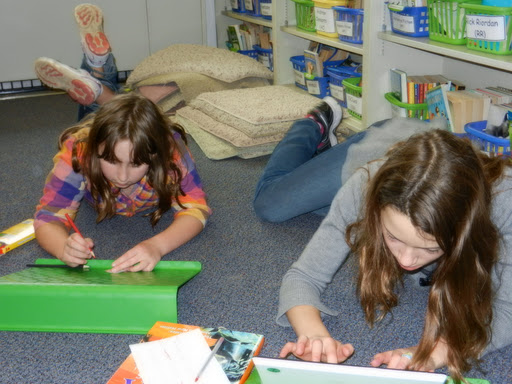
Now some years later I look around our room and we are that classroom.  The one you can hear coming down the hallway, the one where students are splayed out on the floor, discussing, laughing and gosh golly sharpening their pencils whenever they like.  There are no laminated rule posters hanging on our walls, there are no reminders of how to get their stuff or how to come into the classroom.  There are no sticks to move or stars to give.  Just a classroom being run with the students and by the students.  To the untrained eye it may seem chaotic.  After all students crave routines, even in their classrooms.  But if you look closer, you will notice they are there.  Students get to work and stay focused, they treat each other with respect.  They tell me in the morning when they forgot to do their homework and they ask to work on it during recess or to get it to me the next day.  They have their things organized, they know when I need their attention, and they know how to treat each other.  Behold, the managed classroom without the overt rules.  

I did not start this way, in fact, I am not sure any new teacher should.  As a new teacher it is so important that you discover who you are as a teacher, that you discover your own best practices and then start to question them.  Question the ideas you are taught and see how they fit into your vision.  I was taught that I should post the rules of my classroom so that the students would be continually reminded of what the expectations were.  Except I like clean walls, and I don’t think students need constant reminders.  Down came the posters and my room somehow got uncluttered.  I was taught that I had to be the ultimate authority in the classroom or it would turn into Lord of the Flies, except I found out that by sharing the authority I created autonomous learners that were much more engaged.  I was taught that students would learn better if they were rewarded with stickers or A + but found that we didn’t need the extrinsic motivation if the learning was worth it.  How did I learn all of this?  By watching my students and questioning my own practices and then trying it.  I was terrified the first year I threw out the rules.  When I told my students there would be no rewards and no punishment I thought I would have a riot on my hands, kids who refused to work, homework that would be weeks late, and instead?  No change.   In fact, the kids shrugged, no big deal, they knew they had to get to work.  
So this year I did the unthinkable; I didn’t tell the kids the rules.  I instead asked them what the routines should be and what type of classroom they envisioned.  They discussed without much of my input and that was it.  We didn’t make a poster, we didn’t all pledge to follow the rules, we moved on to more exciting things.  Now students live up  to the they expectations set and they help each other work well in the classroom.  If a day is louder than normal, then I know we need to get out of our desks and I adapt our learning to their moods.  By being clued in to what their behavior is telling me, we have a lot smoother days because I am not trying to squeeze them into my box of expectations.  They are in the truest sense of the word active learning and teaching participants.
So how can you make this work for you?  Start to question what you have been taught.  Question those tips and tricks you were given that didn’t seem natural to you.  Ask yourself how do you learn best and then ask everyone else you meet.  The answers may surprise you.  Ask the students; their voice is the most important one in the room.  Yes, that’s right; their voice, not yours.  Create a space where the students feel comfortable, welcome, and have ownership.  Show them you trust them to make great decisions and then give them an opportunity to do so.  Change your curriculum to fit their needs and get them moving; long periods of stationary work lead to restless bodies which means their minds have long since wandered off.  Have i fit their age; I teach 5th graders so I can expect a lot more autonomy than I can from a roomful of kindergartners, but even our youngest students can own the room.  And most importantly; believe in your students.  Believe that they have buy-in in the room, believe that they care about it, and then give them a learning experience that they actually do want to care about.  Tear down the authority between you and them and give them a chance to prove you wrong.  Give them a chance to show that they can work without the overt rules, that they can set the expectations, that they can rise to the occasion.

attention, choices, Student-centered

How Do You Get Kids to Pay Attention?

I see a lot of articles discussing how to get the attention of students and am continually amazed at what these advice pieces seem to miss.  Often the advice includes asking questions, which I agree with if they are the right kind of questions; please don’t ask them what page you are on, that does not count as a great question.  It also includes giving students an incentive “The first 5 kids to buckle down will get to pick what we do next!” Or even to have a vote on something totally irrelevant to snap them out of their boredom; “Raise your hand if you like Christmas!’ 

It is not that I am better knowing, but I shake my hand at all that is missed through these suggestions.  How about instead of bribing or tricking students into pay attention, we offer them learning opportunities that they actually want to pay attention to!

I know most of us are under guidelines for what we need to teach, but, a lot of us also have a choice in how we teach that.  How about we transfer the choice to the students?  How about rather than telling them what to do, we explore it with them, thus creating natural buy-in.  Now I am part of a scripted math program as well and there the rigidity is more noticeable.  Instead of bribing the kids, we work hard and then we get to do more in-depth explorations.  I change it up often, even if it just means having the students move around and we do a lot of $2 whiteboard activities that involves all of the students rather than me standing up in front talking.

The point is; if we want students to pay attention, make it worth their time.  We cannot keep expecting them to pay attention just because we want them to.  Just because we were forced to pay attention in class doesn’t mean we should do the same thing to our students.  It is our chance to not do school to them as it was done to us.  Take it.

being a teacher, student driven, Student-centered

Keep the Focus as the Break Nears

We are all a little antsy and just a little busy as the holidays draw nearer.  To keep the focus in school and still have some fun here are some things we have been doing in my room.

  • Start a lunch time book club.  All three 5th grade teachers did this so that the students had some choice in book.  We meet once a week to eat and discuss the latest chapters.  I love the extra connections being created between classes.
  • Get up and move.  We have increased our dance breaks as the break gets closer.  Except now we tend to listen to holiday music from around the world, nothing like “Julebal i Nisseland” to get their bodies moving.
  • Participate in something global.  we are doing the holiday card exchange this year and the students are so excited to see the mail we are getting.  They are also learning about other parts of the country and world through the letters. The cost: 30 stamps!
  • Take the time to appreciate.  We don’t have a lot of time but I try to tell the kids either face-to-face or via post it note how much I appreciate specific things about them.  It starts a wave of appreciation which boosts morale.
  • Keep busy.  The less we have to do, the more we can focus on the upcming break.  So we keep working to reach our deadlines and the reward is no homework over break.
  • Mix it up.  Our schedule has been a little more flexible to fit our moods more these weeks.  So if the kids are super antsy we get out of our seats and learn in a different way.  This is not the time to force them them to sit still and listen (is it ever?).
  • Have some fun.  I love to show educational videos when we have minutes left at the end of the day or during transitions.  This week we started watching crack us up videos as well to get us in the spirit.  George Couros shared this video to my students’ delight.
  • Relax – it might not all get done.  Teachers seem to get more controlling and more frantic the closer break gets.  The exact opposite should happen.  get excited with the kids, set the tempo and then have some fun.  Learning is meant to be fun, so do your part.
  • Let them choose.  Buy in is much larger when the students get choice.  I scrapped my original social studies project this week so that the kids could work on something of their choice.  They get to work right away and stay focused through the whole period.

What do you do to keep students working and have some fun?

Student-centered, Wonder

An Hour of Wonder

 Innovation Day is something my students have already started asking me about.  This fantastic day, also known as FedEx Day, is a day set aside for the students to explore whatever they choose, create something and then deliver a presentation.  However, Innovation Day will not be until the end of the year.  So welcome Hour of Wonder instead.

Hour of wonder is rather simple; the students get one whole hour to explore whatever they have been wondering about tied to a certain unit, within that hour they must create something and then present it the following day..  We were studying the European explorers and they had quite the list of questions, this therefore wrapped up our unit much better than any test could.

So how did it go?  Brilliantly.  The students were engaged and teaching each other new information.  Two boys discovered that James Cooke was the first European in Australia and in Antarctica and they thought that was really neat.  Others built ship models, created posters about other people and whatever else they had wondered about.  I had supplied construction paper, anything else the students had to figure out themselves.

Innovation Day can be harder to fit into your schedule but Hour of Wonder is not.  Think of all those hours leading up to vacations or disrupted blocks because of assemblies or something else.  Why not turn those over to the students?  Have them explore what they are curious about and then share it with the class; you will not be disappointed.

PS:  Little prep went into this.  I revealed the project Wednesday, they brainstormed and then did it on Thursday.  They didn’t need approval or anything like that.

Pete decided to create a stop motion video 

being a teacher, communication, grades, parents, Student-centered

Why the Report Card Should Be Getting an F

Several days ago I quickly jotted down thoughts on how one of the major components of education; the report card, may just be becoming obsolete. Immediately the discussion that followed was one that spurred me to think a little deeper on this institution, particularly as I approach the deadline for writing 25 of my own.

The report card used to be useful. Before the age of Internet and faster communication with parents, the report card was the communicator of success or lack of it from school. We have all heard the stories of what happened when a bad report card was brought home and can probably remember our own anticipation or dread when it was handed to us. This was it; the ultimate report on how hard we had worked, how much we knew, and how much we cared about school. The was no conversation, no goals, just grades and teachers recited missives which on mine included the usual, “Pernille should really try to apply herself more.”. Whatever in the world that means.

Yet now, faced with the ever-evolving tools for communication and also teachers own increased visibility and feedback giving, it seems it has lost its purpose. That is if its purpose was to report how the child is doing academically.  Instead many teachers have running grades online; which I don’t actually think is necessarily progress either, or feedback is given to the students or sent home regularly.  In my own classroom, I meet with students regularly setting goals and discussing how they are doing, not even handing them a letter grade but rather feedback and meaningful conversation.  This does get communicated to parents as well either through email, phone calls, or even small meetings.  Conferences also act as a communicator of progress and goals.  I may be in the minority of how I handle progress in my classroom, but I think I am in the growing minority.  So why also do a report card?  It seems to be a duplication of all of the work we already do although it does provide an easy out for those who choose not to communicate throughout the semester.

So if the report card’s purpose is solely to communicate to parents how their child is doing, there are certainly other alternatives.  How about a weekly email or note, penned by the student?  Or a shared Google doc where parents and students can add notes and questions?  Conversations can be recorded using a Livescribe pen and emailed to parents as well, which also creates another record.  In my team we already send home unit math scores breaking down each skill the student has been practicing.  Writing assignments are handed back with a rubric attached and comments on them.  To me, it seems that we already do all of the reporting that is duplicated for the report card.  What about a report card created by students?  I often wonder what they would put weight on and choose to report, and also how it would look.  Either way I think it is time for a change, do you?

So is it time for the report card to disappear or at the very least lose its formality?  Is it time for it to no longer be the final product and instead be a piece of information in a long line of information.  Should we hand back the power of goal communication to the students so that they can take more charge of their education?  I would love to hear your thoughts.

discussion, homework, no homework, Student-centered

From the Mouths of Babes – My Students Discuss Homework

Thanks to a wonderful Time For Kids article this week, my students engaged in a 30 minute discussion on whether or not teachers should assign homework (we ran out of time or it could have gone longer).  I started out taping the discussion, hoping to share it, but the camera stifled them, so I turned it off and instead just listened and asked a couple of questions.  And the result?  Well, it was mixed.

Many students believed that homework was a necessary evil at first, and by that I mean, they think they should be assigned it so they can learn responsibility.  However, when I asked them whether they could be taught responsibility in a different manner they all agreed they already were responsible in school.  After that they started changing their mind.  Some highlights for me were:

  • We already work our hardest at school and deserve to be done with school when the bell rings.
  • We are tired when we get home so homework does not represent our best work.
  • Some times our parents cannot help us and we end up more confused.
  • Teachers do not own our time outside of school, but why do they think they do?  They can’t for example order us to go to Target.
  • I want to have a life outside of school and pursue my activities.
  • It is ok to have homework during the week but never during the weekend or during holidays.
  • If a student works hard during the day and is responsible, they should be able to not have homework after school.
  • It is ok to assign reading and special projects but they have to be super fun and have student choice.
  • Homework does not teach us responsibility but instead teaches us to get it done fast.
  • Homework should not be graded since it is just practice. 
  • Homework should be assigned because school has to come first and that is our job.
I love the level of thinking I am seeing in these students as they develop their discussion habits. They are figuring out when to speak and reacting to each other’s comments.  I also love how they are evaluating the world and learning to speak their minds.  I believe the camera stifled them because some were nervous in stating their opinion, after all, they are only 5th graders, what do they know?