Be the change, being a teacher, discipline, punishment, reflection, students

Put Your Name on the Board – A Tale of Why I Gave Up Classroom Discipline Systems

image from icanread

When I moved my blog from Blogger to WordPress last summer I mistakenly assumed that all posts would seamlessly transfer.  I have since found the error in my thinking and have decided to re-post some of my more discussed posts.  This post first appeared in June of 2011 but still rings true to me. 

Put your name on the board! Those words spoken in a very stern voice accompanied by a teacher look was enough to whip the toughest student into shape. Except when it didn’t which for me was enough times to make me wonder. Could my discipline systems really be thrown out and replaced with nothing? Would chaos then reign supreme?

If you had come by my room last year you would have seen them. Those sticks in the cups or the names on the boards with checks, sometimes double checks and plenty of stern looks to go around. I was doing exactly what I had been taught in school, exerting my control as the main authority figure and if students misbehaved, well, then there was some form of punishment. Oh don’t worry; there were plenty of rewards as well. If students didn’t move their stick or get their name on the board for a week then their name got entered into drawing for pizza with me. At the end of the month if they didn’t have their name in my book for not doing their homework, they could also enter their name, and then I would finally draw names and five lucky students would have pizza with me. Confused? I was! I could hardly keep check Of all those names, checks, and punishments.

However, last year I realized something after reading Alfie Kohn; I knew I had to change. By perpetually focusing negative energy on the same students, who, lets face it, are most often the ones having their name singled out somehow already, I was indeed just adding more to their self doubt. While I believe in discipline for all students, I also believe in compassion and that philosophy simply was not fitting in with my chosen system. So I did as many teachers may do; I threw it all out. However, instead of hunting for a new system, I decided to detox myself, start this year with no system for reward and punishment and instead strive to create a classroom community where students just know what the expectation is.

I was petrified that first month. I run a tough classroom in my expectations for my students and I know that if you do not set the tone those first weeks, it can be detrimental to the rest of the year. And yet I held strong in my conviction that even the more unruly students would eventually figure this out through repeated conversations and respect. And boy, did we talk. We talked about expectations, rules, how to speak to one another, and what to do when something goes wrong. A lot of the time, I just listened to these amazing students come up with solutions to problems, listened to them explain how they envisioned our classroom, how they wanted fourth grade to be. And I was in awe; these kids knew how to behave without me telling them over and over. And they certainly would figure it out without me alternating punishment and rewards.

So after the first month I started to breathe again. I let our new system flex itself and watched the students help keep the classroom stabile. Sure, there are times when I think ooh if I just had a way to “punish” it would fix this and this and then I realize that perhaps I just need to find some time to speak to that particular student. Now instead of an exasperated tone and a system to keep them in check, we discuss, we try to fix, and we reevaluate. I don’t run the classroom with a complicated system of checks and balances, rewards and punishments, but rather with an atmosphere of community, of belonging. Is it perfect? No, but neither am I, nor my students. I am just glad I believed in my own skills enough to realize that perhaps, just perhaps, my students would know how to behave without me rewarding them for it. Once again, they blew away all of my expectations.


blogging, Student-centered, students

10 + 1 Steps to Meaningful Student Blogging

IMG_2138Last summer, I had the pleasure of guest blogging for Middle Web and chose to do it on student blogging.  While I had started with a 14 step plan, I was able to revamp it a bit and bring it down to 11 steps.  Since then many educators have asked how to best get started with blogging, so I bring to you a re-posting of this popular post.

Four years ago I started blogging with my 4th grade students on a whim. I knew three things at the start: I wanted to get them connected with each other; I wanted to give them a voice, and I knew I had to change the way they wrote. So I started blogging with them – fumbling my way through the how to and the when to.

What I had no way of knowing was how blogging would change the way I taught, how blogging would give my students a way to speak to the world, and how blogs would make it possible for them to create lasting global connections with other children.

Blogging has since become an integral part of my classroom. It’s a way for me to check the emotional temperature of my kids and a way for them to add their voice to the continuing education debate and reach out to other communities.  We no longer just wonder how things are done in other countries. We blog and ask questions and get our answers.

So when I meet with any teacher who wonders how to lower the walls of their classroom and create more authentic learning opportunities, my first advice is to get students blogging.

If they’re interested, I share these steps. They grow out of my own experience working with upper elementary-aged kids, and I believe they can help any middle grades teacher successfully launch a blogging program and integrate it into the daily learning experience.

10 + 1 Steps to Meaningful Student Blogging

Here’s the checklist I follow myself at the beginning of each year, before I unleash my (now) 5th grade students’ voices to the world:

1. Figure out your why

You have to reflect on why it is you want to have students blog. Is it to make connections, for technology integration, to give your students a voice, or for some other reason? If you know the why it is much easier to get students excited about the blogging experience. I don’t feel that blogging should be just to show off student work; it can be something much bigger than that.  So figure out your reasons why before you move on to the how.

2. Pick your platform

I use Kidblog because of its accessibility, its wonderful safety features, and the ease with which I can adapt it to fit our purpose. While some feel (as a result of recent changes) that Kidblog is geared more toward early elementary students, I disagree. But it’s not the only safe and easy-to-use option: Edublogs is another popular student blogging platform that also comes highly recommended.

3. Get your permissions

Check with your principal, your tech coordinator, and finally get parent permission. You need to be prepared to explain and justify what you are doing — and be transparent throughout the conversation — to receive ultimate support for this endeavor. Student online safety is a predictable concern, and it’s much easier to be proactive, seek out these conversations, and present evidence that safety is easily assured and the learning rewards are significant.

I’ve created my own permission slip to ensure that parents feel well informed as they make their decision about whether to let their child blog. And I have yet to have a parent say no.

4. Blogging versus writing

I always introduce blogging by discussing how it is similar and different to writing. Students often get what blogs are but not necessarily how they can use one themselves. So I showcase my own professional blog and other students’ blogs to get them excited about the adventure they are about go on. We discuss what we can blog about, how long a post should be (as a minimum), and what to do about spelling and grammar. These discussions lead to heightened awareness of what is appropriate for a blog post and what isn’t and will also lead to the next step.

5. Discuss safety!

Before students ever log into their blog accounts for the first time, you have to discuss safety. I use the analogy of “Why the Internet is Like the Mall” to get students to really think about their online behavior and what they post. This is an in-depth discussion that covers many aspects of internet behavior, not just those that are specific to blogging. This is also not just a beginning-of-the-year conversation, but an all-the-time conversation.

6. Do a paper blog

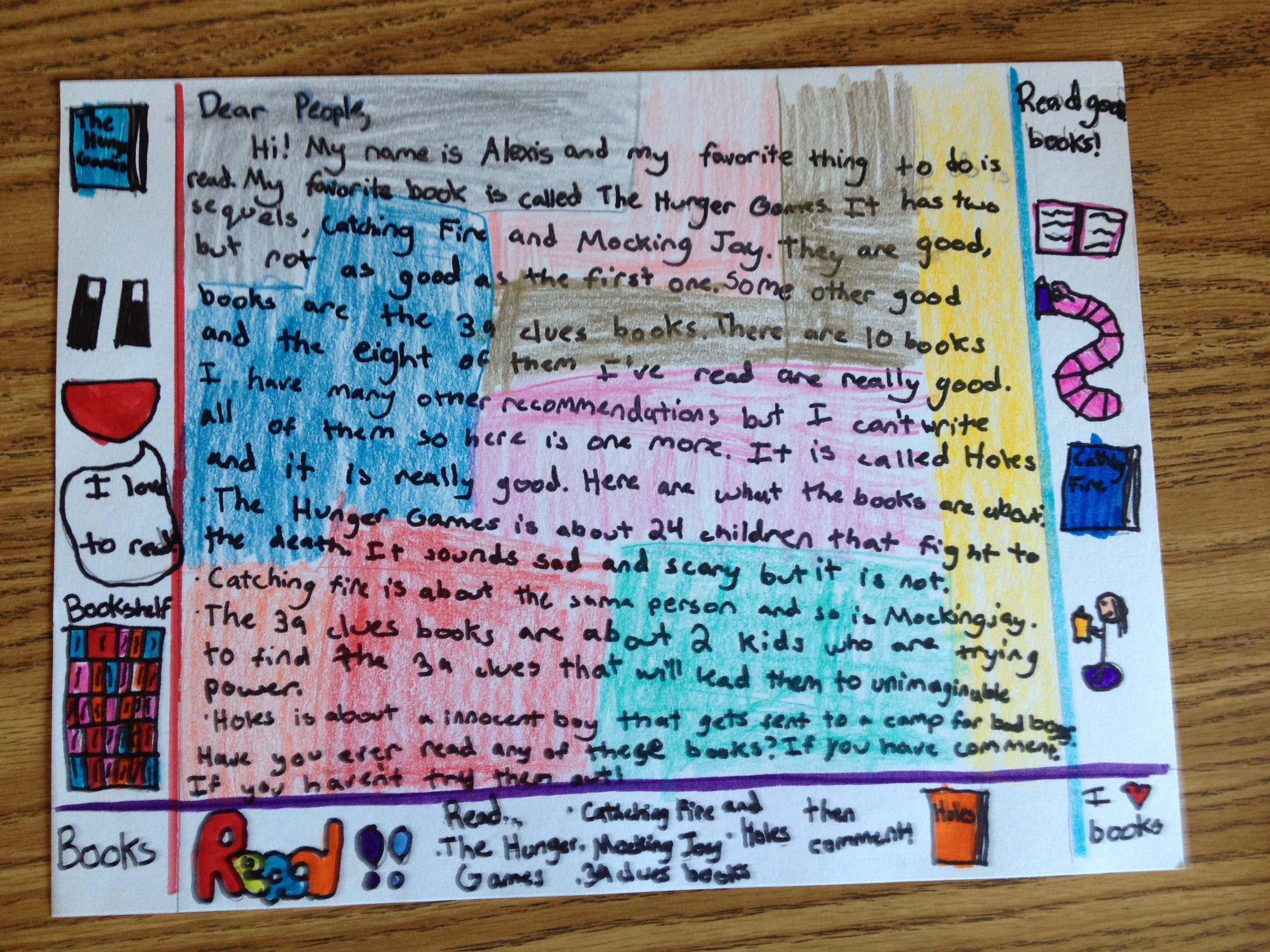
Starting out on paper is a great way to introduce students to blogging and how they can add their own personal voice and flair. (It’s an idea I got from Karen McMillan.) By creating and personalizing a paper copy of their dream blog, my students have a tangible piece to work with while we learn the ins and outs of style, substance and safety. Once all of the paper blogs are done, students spend a class period leaving post-it comments on each other’s blogs as well as responding to the comments they themselves receive. This is a natural progression toward our next step . . .

7. Discuss commenting

For blogging to be effective, students need to know how to make good comments. Commenting on other blogs is one important way to grow an audience for your own blog. And when people comment on what you have written, you need to be prepared to respond with follow-up comments of your own. So we discuss how to create a dialogue in comments, how to thank people, and also how to give constructive feedback. We set up parameters for our posts and our comments in order to uphold a high standard of writing and we discover how commenting can (and should) become a conversation. We even act out comments from our post-its to see if they work well as conversation starters or act as dead ends.  Students quickly realize the power of a comment.

8. Start small

When students are finally ready to blog, have them introduce themselves.  That way, as your class starts to reach out to others (because ultimately blogging is about connections), students can showcase themselves and thus spark a conversation.

9. Connect with others.

Use quadblogging or a project like The Global Read Aloud to get students connected – or simply reach out to one or two other classes (preferably far away from you) to establish a blogging relationship. Once you get started, teachers can go on Twitter and use the hashtag#comments4kids to get comments for your students. Kidblog also has a wonderful feature called “Blogroll” where you can build a list of links to other blogs you like to follow in the margin of your own blog. My students use this all year as they check in with classes from around the world.

This is what gets the kids excited about blogging — it’s not just that they get to read other posts, they are able to establish a personal connection with other kids in faraway places, maintain that relationship throughout the year, and learn a lot about life in other parts of the globe.

10. Make it their own

Students need to feel genuine ownership of their blogs. I ask them for ideas of what to blog about; I give them free artistic rein over their posts, and I give them time to explore the blog’s tools and capabilities. This is what gives students ownership and has them take pride in their blogging. If it is truly their voice being heard in whatever fashion they want to present it, then they are eager to show it off.

Blogging has to be authentic for it to work. I don’t correct their grammar and spelling. I don’t require editorial changes unless something is likely to lead to hurt feelings or misunderstandings. I will ask them to add more or to explain further, but I give them the time to do so. I also challenge them with a weekly blogging challenge and then find time to do it in school. (Ideas for the challenge come from students or things I wonder about myself.)

11. Give it time

Great blogging and great connections don’t happen overnight, so give it time. Let the students develop as bloggers, celebrate their successes, and map their connections. Truly celebrate the blogging they do and spend time on it class. Encourage blogging but don’t make it an assignment to just get done. Treat it as an integral part of your classroom and watch it become one. Blogging is not just about writing, it is about bringing the world in and making it a little bit smaller.

In the end, blogging should not be a burden in your already full day. Students should love blogging, not see it as a chore (which is also why I never grade my students’ blogs) and they should be eager to express themselves and expand their worlds.

If you are ever in need of someone to connect to or ask questions, please reach out to me @pernilleripp on Twitter. I will gladly help. After all, blogging is about expanding our own comfort zones and creating authentic, global collaboration.
students

I Celebrate the Steps in the Journey

image from icanread

All year he has been working on turning work in.  You know the kid, he has it done but it somehow never makes it into your hands until hours later.  Or he has it done but can’t seem to find it, but then finds it a week later stuck to another piece of paper.  The sheepish grin, the mumbled excuse.  The confused look when I say I haven’t received it.  Yes, it still counts, yes, I believe you when you say it’s done, yes, you still need to get it done.I celebrate this kid today.

She has been using her time well but can never seem to finish.  She leaves her books behind and then mumbles apologies when she gets there in the morning.  She intends to finish but life seems to get in the way.  She gets it but then she didn’t.  I celebrate that kid today.

Not for their lack of completion.  Not for their lack of organization.  Not for their lack of “just do it-ness.”  But for the steps they have taken toward their goal.  That girl never used to let me know it wasn’t done.  That boy never realized it wasn’t done until I told him before.  But now?  They have taken steps to own the problem.  They have taken steps to fix it.  While they have not reached their goal, they are working on it.  And that is something I intend to celebrate.

Every journey starts with a step.  Too often we forget to cheer the kids on who are trying their hardest, sure, they may not be there yet, but it is still important for them to see we notice the effort, we notice their motivation, we notice their change.  While I will break out the big celebration when they have accomplished their goal a quick compliment or thumbs up will only make their journey smoother.  Sometimes all a kid needs is just another push, another reminder, and another smile.  Yes, I see your change.  Yes, I see you try.  Yes, it matters and so do you.

students, technology

13 New to Me Free Tech Tools I Can’t Wait to Use

I had the pleasure of being at SLATE (technology conference here in Wisconsin) the last two days, and beside the wonderful people I got to connect and re-connect with, there was also one session that made me terribly excited. And while I am not usually one to share tech tools, these are all pretty easy, free and fantastic.  All of this come courtesy of Mickey Chavannes @mchavannes.

Doceri – This is an iPad app that students can use to take pictures and then annotate it through their voice or drawing.  You can then upload it to YoutTube for later viewing.  

Way I would use it:  What a great way to assess students in anything!  Particularly when you have a lot of students that you need to speak to.

Peanutgallery – I had forgotten about this Chrome extension one but it is a way for students to narrate over already made black and white films.

Way I would use it:  Besides just being fun I think this would be great to check for student inference and comprehension.  can they create an accurate narration to fit the movie by picking up on the clues?

Tripline – This tool creates a moveable map using Google Maps where you can plot points with text or pictures along the way for the students to read.  

Way I would use it:  Book trips!  Westward Expansion!  Explorer routes!  How awesome would this be to plot the voyages of Christopher Columbus by students?

Clipular – Another Chrome store extension,  basically a screenshot creator, however it also creates a URL citation for you.

Way I would use it:  I hate not having a easy way to do screenshots on my school PC, problem solved!

Awesome screenshot – Another screenshot capturer tool but this one is a bit more fancy.  You can snap and annotate, embed image, any document and then annotate on top of it, through an easy drag and drop.  And it can also be saved into your Google Drive for later viewing.

Way I would use it:  I would have students use this for assessment of their understanding as well as in their projects.

Little Birdtales – Great digital storytelling tool that can be used K-12 (just have students get past the cutesy look).  Students can draw a picture, write on a picture, narrate a picture – and can then share their creation with others.

Way I would use it:  For storytelling of course, but also to listen to student fluency and expression as they narrate their own work.  Or expand it outside of literacy and have them use it for a science project or social studies exploration.

Videonot.es – Allows you to put video on one side and notes on other side of screen – great way to explain what is happening or post questions right in a video.

Way I would use it:  For when I am out of the building to get students through more detailed information, or even for sick students.  If you flip your classroom or lesson this may be a very usueful tool as well.

Audioboo – A way to do a jazzed up podcast, you can put an image on it and then narrate that image.

Way I would use it:  Book reviews for future readers!  Just put in the cover image and have students leave their recommendation for others to hear.   

Clearly – A great Chrome extension that cleans up a webpage so it is just the actual content you want students to see, even better – you can print a nice clean copy right from it.

Way I would use it:  Whenever I need to print articles from the web, no more adds, comments, or any other unnecessary items on a page.

Thinglink – Take a picture, add pinpoints to it and then it explains what the different spots are.  You can even add in picture or video.

Way I would use it:  For students to explain the significance of a picture of a person or an event.

Safeshare.tv – Paste a Youtube link and it cleans it up for you – no ads or other videos.

Ways I would use it:  Any time I show a video in the classroom, no more inappropriate ads or suggested videos.

Movenote  Create an interactive Powerpoint with video and notes, you can add chapters to it so students can view the part they need and links to quizzes in a Google form.

Ways I would use it:  Again, this would be great if I am out of the building, or when students create their projects where I ask them to have an assessment component ingrained.  This way they could quiz the other students right then.

TLDR –  (Stands for Too Long  Didn’t Read) – Another Chrome extension that creates a summary for you of whatever you highlight on a page – yes really!  I even checked it in Danish and it works for foreign langues as well.  

Ways I would use it:  For my beginning readers or ELL students that need a shorter version of the same text as everyone else, this will be a must use.  

And finally the coolest idea shared that I want to do:  Tech Ninjas!  Creating your very own geek squad comprised of techy students that can troubleshoot many problems that may arise with tech in your school.  So instead of creating a tech help ticket, teachers search for a Tech Ninja instead.  I think this is just sheer brilliance, and although it was meant for middle school and up, I wonder if some of my 5th graders wouldn’t be able to do this too.


reflection, students

Even in My Room They Still Hate School

image from icanread

I go to work with a mission: I want students to love school.  I want them to want to come to school.  I want them to be excited about learning.  I think most teachers do.  So I stopped punishing, I stopped rewarding, I gave up as much homework as I could, I gave up grades and all of the tests I could.  I made it student-centered and student-led.  I gave them back the classroom.  And yet…some kids still hate school.  How do I know?  Because they told me.

I always end the trimester asking them for their opinion.  What should I change?  What did they love?  What do they never want to do again?  They always give me honest feedback and I take it to heart, changing the second trimester based on their feedback.  Does it sometimes hurt to read?  Absolutely.  Being told that a child hates school hurts.  And yet, it also tells me how much I am up against.

I am not the only factor in creating a love of school.  I can only do so much.  I can take the time I have control over and try to make it the best possible, but I cannot work miracles, even if I want to.  School is still school and no matter what you do there will always be kids that hate it.  Does that mean that our schools are broken?  Perhaps.  Does that mean that we are not reaching every kid?  Yeah, probably.  Does that mean that we still have to change the way school is done in most districts?  Absolutely.  Does it mean I am a terrible teacher?  Maybe for that kid.

But when a child tells us they hate school they are also telling us that they hope we will do something about it.  They are also trusting us with their words.  They are giving us another chance to make it better, to re-engage them, to work harder.  And they are giving us a chance to start a discussion, simply by asking them “Why?”

So on Monday, I get to ask why and then I get to listen.  Because that’s how we change school, we listen to the kids and we start a discussion.  Yes, the truth hurts, but it is no use to hide from it, even if it is not all your fault.

Be the change, building community, challenge, Student-centered, students

Hey, It’s Ok To Go Outside the Curriculum Once in a While

IMG_2810

I have felt like a new teacher this year.  Chalk it up to 27 students with a crazy range of learning needs, new program implementations, and just an insane amount of meetings to make sure everyone is on the same page.  We also have a new block schedule to implement, which has been amazing in some ways and limiting in others.  Most nights I work 2 or 3 extra hours at home making up for the time I don’t get in school.   While I love this year, it has also been a crazy one and every day I feel the curriculum pressing down on me urging me forward, to just get it done.

So why on Friday, with the pressure of everything we need to get through, did I have my students do the spaghetti and marshmallow tower challenge, swallowing up 40 minutes of our day?  Why “stop” the curriculum so the kids could have a team challenge?  Haven’t we already built community?

I did it because the kids need it.  They need to continue working in new teams.  They need to be challenged.  They need to think differently and deal directly with failure (there were epic attempts!).  And if you look closely, you would have seen how it absolutely was curriculum, even if FOSS science had not mandated it.  The students worked with design, creating a standard prototype and then testing their theory, adjusting along the way.  They changed and tried to control the different variables and engaged in deep on-the-spot thinking to ensure success.  In fact, as I looked up the Common Core standards for speaking and listening, I couldn’t believe how many of them we had covered.

Yet it’s bigger than that.  I made the teams so that kids who would not pick each other worked together.  I told them they would more than likely fail (based on previous years’ experience) and it was what they did with that failing moment that mattered.  The spirit of living up to expectations swallowed the room and carried the children home.  They did it together, and even though there was a winning team all of the kids celebrated and laughed about it.

We may think that when we leave the confines of our curriculum, we are breaking the rules or not teaching.  And sure there are times when the educational value can be hard to uncover.  But if the challenges are right, we are teaching the children more than some lessons do.  It takes courage to step outside the boundaries, but do it right, and the pay off will be immense.  My students left asking when they would do the next challenge, I told them “Soon!” and I meant it.  We have to think outside the lines of our own rush and needs to keep those kids challenged and engaged.

I am a passionate (female) 5th grade teacher in Wisconsin, USA, proud techy geek, and mass consumer of incredible books. Creator of the Global Read Aloud Project, Co-founder of EdCamp MadWI, and believer in all children. I have no awards or accolades except for the lightbulbs that go off in my students’ heads every day.  First book “Passionate Learners – Giving Our Classroom Back to Our Students Starting Today” will be released this fall from PLPress.   Follow me on Twitter @PernilleRipp.