So I am sorry Mr. Governor, I hate to disappoint, I know you would like me to be a union thug, I know you would really like me to be a “bad” teacher so that I may be fixed. I know you would like to blame the troubles of Wisconsin on me and my actions, but I will not stand for it. I will not sink to your expected level, I will not politicize my classroom, I will not preach to my students about the wrongs of the government, but instead teach them about democracy; the history of Wisconsin, and how we fought to set up a state that heard all of its people. All of its people. Not just the rich or those in power at the moment. All of its people, the minorities, the laypeople, and yes, even the unionists. So please stop with your mudslinging and your “saving.” Please stop with your demoralizing demeanor and your fancy ideas of how to save education in our proud state. Please stop with your talk of shared sacrifice since all of the people of Wisconsin have done nothing but sacrifice for the last many years. So Mr. Governor, once more I apologize for not making your job any easier. For not painting a larger bulls-eye on my back, for not stooping to a level where I deserve to be called an enemy, a thug, and a horrible person. Your mission would have been much easier if I did.
Kids Shouldn’t Feel Like Tourists: How Every Classroom Should Be a Tribe
![]() |
| Taken today – oh what a beautiful flag |
“I feel like I belong.” My little brother turns to me as we walk through the Copenhagen aiport minutes after landing. We are indeed home, even if just for a short while, but I immidiately got what he meant. I belong to the same tribe he does; the Danes, and with that comes certain hidden knowledge, requirements and social norms that normal tourists simply will not be a part of. This is all unravled to us as we are raised; how to speak to elders, how to dress, how to survive in a culture which is very liberal but has heightened politeness and manners standards. The manual for being a Dane has not been written, and indeed, it changes as the population changes, and yet there is a “Daneness” that I recognize. We are indeed tribe members and not just by looks – in fact not all Danes are blonde like I am – but by culture and behavior. We are members because we know how to be and the society lets us be, with only a few perplexed comments on our Americanness (13 years abroad will do that for you).
This is much like our classrooms. We set them up to be inclusive and welcoming to our students but do we set them up as a tribe? (And I am not referring to the Tribes program here). A tribe would mean that every person involved in the classroom felt like they belong and understood the hidden language of the classroom. A tribe means safety for all of the people wherever they venture in the room and also that they will be protected by other students outside of our territory. A tribe is bigger than just being a class. All of this is certainly something I strive for every year so I mulled about this all day and reached the following conclusions. To be a tribe we must
- Recognize that we are an entity, that yes we are part of something bigger in the school, but also see that we are our own unit contained within the walls of our classroom.
- Realize that we are unique. There are other similar classrooms but this actual composition cannot be replicated anywhere else and this is something to celebrate.
- Determine our culture. What do we value, what do we see as proper behavior and how do we act amongst each other? These are all vital for a tribe to feel togetherness and should not be set by the teacher. For real understanding, appreciation, and cooperation it has to be set up together. A tribe may have a leader but it is still a regular person who holds that position.
- Determine our hidden language. Discuss the assumptions we bring into the classroom, set expectations and explore pitfalls. Unspoken assumptions in particular can be devastating for a classroom and need to be discussed openly so that all involved people have a real chance of ownership and understanding.
- Allow change. A tribe should not stay the same all year, it should move and fluctuate as the classroom moves much like a country’s culture. What should remain though is the sense of belonging of understanding the classroom culture and being able to navigate it all successfully without feeling like a tourist.
Being a tribe is so much more than being just a classroom, even a really good one. It allows students to lose inhibitions (and the teacher too) and to revel in a meaningful learning environment. No longer just visiting for the year in the teacher’s classroom but actually building the foundation of it and then actively maintaining it throughout the year so that ever person who walks into the room can exclaim, “I belong.”
This goes beyond just building community and rightfully so and will therefore take top priority in the coming year for me. What about you?
So You Want to Integrate Technology – Now What?
Technology Is Not Technology (Photo credit: lgb06)I have been given a new label this year, I am now the “techy teacher.” This label brings many odd and interesting conversations with it, most often involving how to integrate technology into a classroom. So for all of those just getting started, who perhaps are ready to move beyond use computers as research engines and typewriters, here is a little advice from someone who has been there:
- Decide on time. Ask yourself, and be honest, how much time do you really want to spend on technology in your day? If the answer is as little as possible then perhaps this is not the year. If the answer is some, then do read on.
- Figure out the “Why.” What are you aiming to do with the technology? What are the goals for integration? Is it to connet with others then Skype or blogging might be a great thing to learn about. Is it to give students different project options then perhaps Animoto or Glogster are your venues. Is it to give yourself more professional development then Twitter is a must.
- Do your research. Reach out to others (through Twitter perhaps) and ask them what they use. Google your needs, look at reviews, and then decide whether it is a good fit for you or not. There are so many websites and blogs out there that do all the work for you, Richard Byrne’s Free Technology for Teachers is a great place to begin!
- Chose a few. While there are so many things out there technologically speaking it is best to choose a few to focus on. I thought I was going to integrate many things the last year and it honestly just got too time consuming. So align the technology with your goal (see number 2) and get ready to mess with it, and…
- Play. Technology needs to be pretty self-explanatory and I better be able to figure it out within a short amount of time. If it is something I am showing/using with my students then I better have it figured out within 5 minutes or so. If it is for my own personal use, I give it 30 minutes but after that, no thanks. Play with it, walk through it as your students will and learn a little about it. Often this gets me more excited to use it.
- Again – how will you use it? Now that you have decided on what to use, ask again whether this will work for your educational goal. I love the idea of VoiceThread but found it too cumbersome for the presentation format so I went a different route. Just because it is technology does not mean it is helpful.
- Stick with it. The first couple of times I introduced new technology to my students I was a little bit apprehensive, after all, these were 4th graders I was asking to do the work. And yet, they got it. The beauty of technology integration also is that if one students gets it then they can also help you teach it to others.
- Embrace failure. Go into this adventure knowing that things will break, signals will fail, and computers will crash. Have a back up plan in mind that still accomplishes the same goal. We have had missed Skype opportunities, blocked websites and overall disasters on our hands, but always managed to laugh about it and move on. Don’t waste your time lamenting lost technology.
- Be courageous. So what if you are the only one at your school trying this out; be the one who tries new things. No one at my school was blogging before I started and now all of the 5th grade tried it as well. You never know who will be inspired by you trying something out.
- Make it worthwhile. I do not believe in tech for tech’s sake. I only use it to further our learning goals and to broaden my students’ horizon, so use it in the right sense. Students will respond and be engaged if they understand and see the genuine purpose, they will quickly lose interest if it does not further your purpose. Remember technology is not always the answer to every lesson, sometimes whipping out paper and pen can produce the same (and sometimes better) results. So make sure you use it when it fits, not because you feel you have to.

My Other Baby – The Global Read Aloud Project
This year it is back and better than before. On September 14th I am excited to kick off the 2nd annual Global Read Aloud with more than 100 participating classrooms signed up so far. This year promises to bring some of the same and something different. A huge difference is that there will be two books this year; one geared for older students (Tuck Everlasting) and one for younger kids (book yet to be determined). I have also opened it up to more collaborators and co-authors as well as set up a Google group for us to connect. It will be more streamlined and easier to participate for everyone and I will have an easier time keeping my cool. But what stays is the same is the purpose; the connection. I don’t care how much participants get involved, I just want them to have a venue for reaching out to others to share this experience with. So please consider joining us as we venture into another try, check it out, spread the word, let me know if you have any questions. We would love for you to join us as we connect the world through one book.
It’s Only Been a Year – Happy Blogday to Me
A year ago, yesterday, I started this blog with a very simple goal in mind; write. On the urgings of my incredible husband who thought I had a story to tell, I ventured into blogging with no plan other than to keep it honest and reflective. Now as my first milestone in the blogging world passed, I am grateful for his insistence. To say that writing this blog has been life changing is not giving it enough credit. Rather than bore you with all of the details of how my life has been changed, I will only highlight a few things. So blogging stopped me from:
Wasting away with my ideas. Who knew there were others out there on a journey similar to mine? For those people who have cheered me on, thank you. And for those people who have questioned, dissed, and torn me apart – thank you as well. Through constant questioning I have been able to refine, reflect, and realize that I am a human being that makes mistakes and sometimes has bad ideas. What a gift that is.
Being dishonest. I couldn’t just write about how I was going to change my teaching and my life, I actually had to do it. Putting my thoughts out in public meant accountability, I want to make sure I actually do all of the things I so proudly exclaim. So if you ever stop by my classroom, yes,it does actually run the way I write about.
Becoming stagnant. If I didn’t change, I wouldn’t have anything to write about, I can just imagine a blog detailing how I am still doing the same thing every day. This has been a journey of teaching and I can see the growth when I reflect.
Being anonymous. It is much easier to hide behind the anonymous label when I reach out but having this blog has offed me a “new” identity and one that I am very proud of. Being an introvert in an extroverts body has certainly led to a lot of awkwardness but I get now how my kids feel when I put them on the spot as well. If we can’t do it comfortably, why should our students?
Quitting teaching. Last year I was ready to quit. I didn’t have my purpose, I didn’t have the drive, and I certainly didn’t feel the passion. Now? I want to change the world, I want to reach all of my students, I want to grown with them and learn from them.
So thank you people, thank you Brandon, thank you to the haters and the believers. Who knows how long my blogging journey will last, but for now I am grateful for the year I have conquered. There have been tears, laugher, many questions and lots of brutal honesty, the next year can only get better (and more honest).
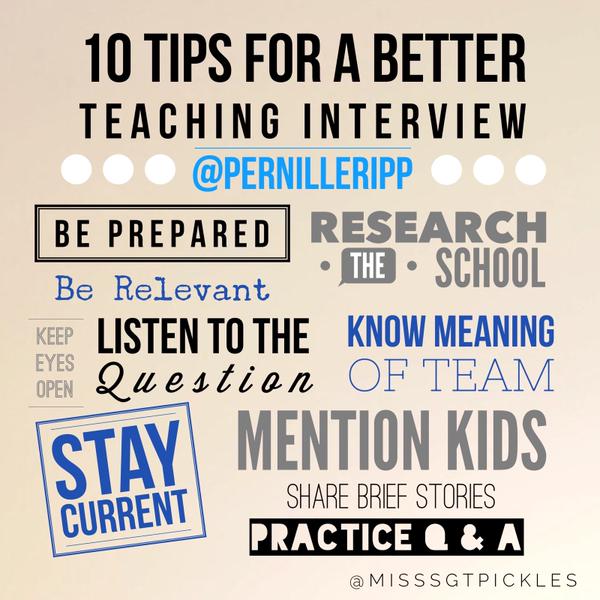
So You Want a Teaching Job – 10 Tips for a Better Interview

Every year, even as a rookie teacher, I have had the extreme privilege of sitting in on interviews for both teaching and specialist positions. Every time I have been amazed at the quality of candidates that are available to us but also stumped once in a while when a candidate just isn’t all that prepared. So why not offer up some tips for anyone trying to land that sometime elusive teaching job?
- Be prepared. Yes, I know this sounds like an “of course” but there have been times where I have wondered whether the person even knew where they were interviewing or what they were interviewing for. So prepare for this like you would your first day of teaching.
- Be relevant. Many schools like to see something you have made, whether you bring artifacts, a video, or a link to something. Make sure that the things you bring to show are current and fit the job. If the things you bring have nothing to do with the position you are interviewing for, then don’t bring it. If it fits with the interview bring it up during it, don’t just let it lie in front of you.
- Listen to the question. Teachers tend to like to talk and sometimes we are not the best listeners, this is the time to tune in. Really listen to the question being asked and then answer it. This is not the time to stray off topic or think you know what the question is before it has been completed. You can always ask for them to repeat it.
- Stay current. I was expecting my first child my first year of teaching but that did not stop me from taking classes nor reading books. There simply is no excuse these days to not participate in professional development,so be active in your professional development. Take a class, read books, get connected, do something that shows that teaching is passion, not just a job.
- Research the school. Most schools have websites that provide a description for you to read and then use. We want to know why you want to work for this specific school, not why you want to be a teacher. Make us feel wanted.
- Mention kids. Another “duh” but there have been interviews where the person never mentioned kids or their desire to work with them, that sends up a major red flag.
- Figure out what “team” means. I have never heard of an job that didn’t require someone to work as part of a team, so come up with a great description of what being a team player means to you and make sure it doesn’t just talk about how much you will bring to the team, what will the team bring to you?
- Keep your eyes open. I know nerves can get in the way but if you speak with your eyes semi-closed now is the time to open them up and look at people. This goes for smiling and any other body language that says you are eager, passionate, and with it.
- Share stories but keep them brief. I like hearing about past experiences but only if that story is 100% relevant and brief. So stay on point and share, but not to every question.
- Practice your answers and questions. If you google “teacher interview questions” you will find enough questions to give you a baseline for what to expect. Think your answers through and figure out questions you want to ask as well. It shows you care, that you are motivated, and that this job matters to you.
Of course, there are experts out there that know way more about this than me but this is what i would tell my friends who are interviewing. So good luck to all of those seeking jobs.
After some thought it is now time to add the one I forgot:
11. Google yourself! If you are a new teacher with an online identity; wahoo! However, google yourself before the interview to see what a prospective employer might see and then set up some privacy settings if you don’t like what they find. Results of your awesome blog or schooling is great, pictures of you drinking on Facebook is not.
12. And finally, be excited, be humble, and have questions that you want to ask at the end. I have always asked; What are you hoping to find in a candidate?” because ti allows the interview team to tell you their vision. Remember you are looking for a great fit as well, not just a job.