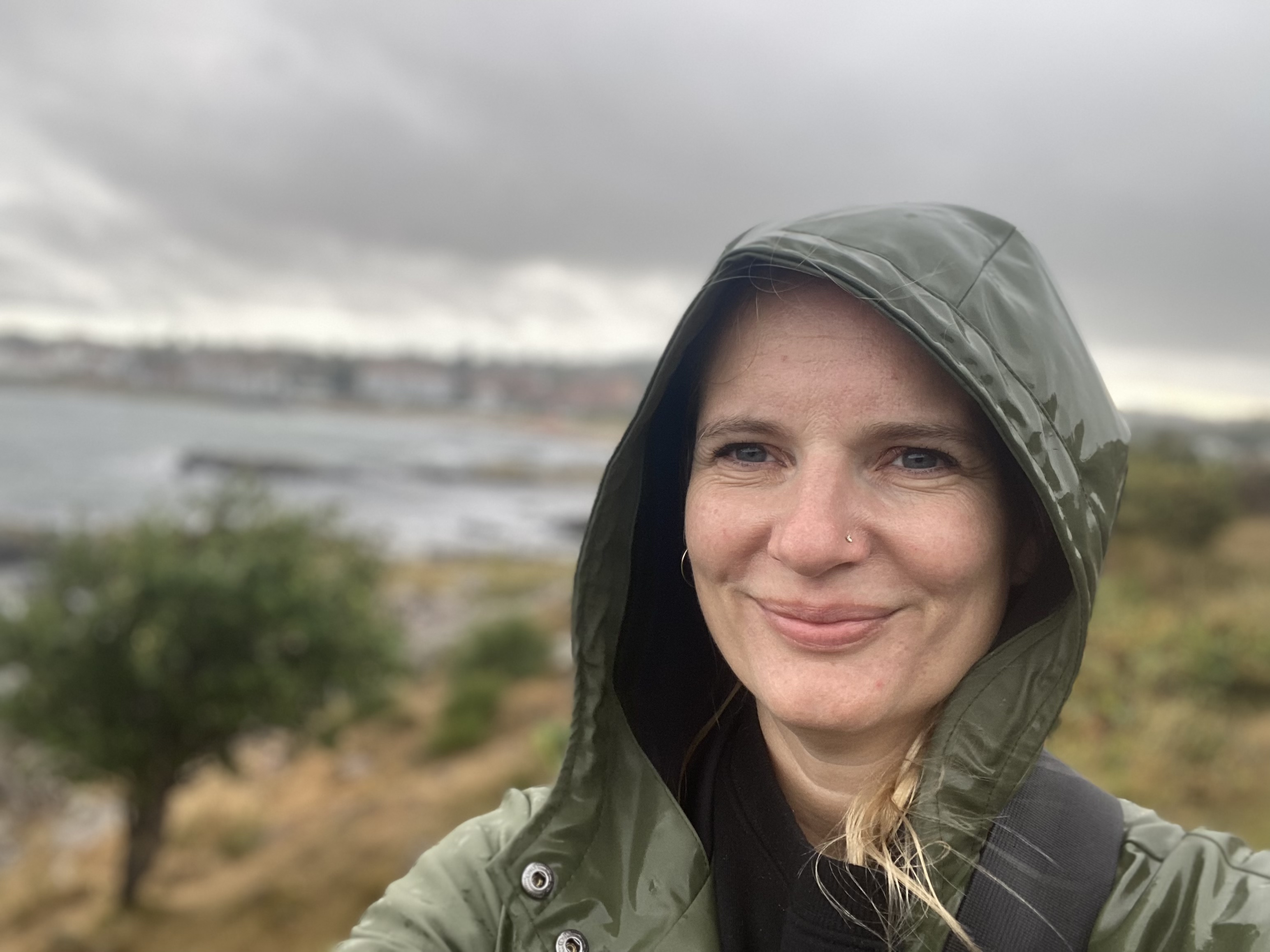
being me

On Moving Home 24 Years Later

It has been three weeks since we landed in Denmark, the country of my birth that I left 24 years ago for the US. Twenty one days of an absolute whirlwind of getting our kids enrolled in school, starting my new job, moving into our temporary apartment, buying furniture, battling jet lag, doing all of the documentation for my husband’s residence application, findings doctors and dentists, buying a broken car that we didn’t think was defective , and all of the many daily things that we do as parents to ensure that our four children feel like they are settled as well. Three weeks of the craziest to-do list I have ever worked through as an adult.

And I suppose that today the dust settled just enough for me to take a moment and take it all in, to surrender not to the to-do but to the to-be and while there has been so much joy surrounding this decision to uproot our entire lives to pursue a better future, today the sadness also hit me. Not just for those I left behind, who I miss so dearly, but for the me that I left behind as well.

I am not a teacher currently, couldn’t even get an interview when I tried. I am no one’s expert. I am no one’s close friend or confidante. Beyond the scope of my family, no one relies upon me to be in their immediate vicinity and help. I am not a go-to person for those I work with or trusted yet.

Because here in Denmark I am just Pernille. Just a Dane that moved away and now came back. Not a facilitator, coach, or expert in anything.


Just Pernille who doesn’t know how to do her job and has so much to learn. No one emails to collaborate. No invitations to go teach others. No opportunities to write, to learn, to grow besides the ones I carve out for myself.

You would think it might be freeing but it turns out it is really lonely. It feels scary. It feels like I have completely left so much of what I held valuable within my identity behind and have no idea whether I will ever get to be that again. And I miss it. A lot. More than I thought.

And so I think of the students in our care who show up new to us. Who perhaps also left so much behind with the previous teachers that they had meticulously built, who had a place and a space in their previous years that we know nothing of. Who are hoping we see their value, who are hoping we see their need to be seen. To be known. To be something more than just another kid we teach. How do we create opportunities for them to be known? How do we create opportunities for them not to feel less than but instead continue to build on the momentum they had?

We start with conversations and invitations. We listen more than we speak. We offer opportunities for genuine collaboration and for them to show off what they already are and what they already can do. And we ask questions about them and we offer opportunities for them to fill in the blanks on the questions we don’t even know to ask. And we plan for it because it cannot be left to chance.

Because starting over may be freeing in so many ways but it is also exhausting, even embarrassing at times when you don’t know how to act, when your sense of self is based upon things that are no longer present.

And so we sit together in the messiness of not knowing each other and recognize the power of the moment. We slow down enough so that we remember why we came together in the first place; not just to teach, but to learn. About the world, about ourselves, about each other.

And we give ourselves grace. We embrace all of the moments and all of the emotions. And we breathe and plan and adjust and readjust and hopefully inch by inch, or should it be centimeter by centimeter, we grow into this brave new world and continue our journey. Even if it feels overwhelming right now.

I know we made the right decision for our children to move home, not just for their future, but for their now. I hope it was also the right decision for us, their adults, I hope I find a place to fit in again. I hope I can be Pernille, someone who means something more, again.
being a teacher, building community, writing

Using Improv to Boost Narrative Writing with Students

When I speak to children about their writing a few complaints often come up; I have no ideas, I get stuck, I hate writing, and my stories are boring. I get their frustration, I feel the same way as I stare at my computer and try to be creative. Writing is often seen as a solitary quiet thing by kids, something meant only to be shared with a demanding adult that does not matter, does not entertain, and does not serve a purpose beyond getting it done for school. Despite being constantly immersed in communicating with one another, writing is often seen as something that will never be used and therefore not worth any real investment.

Knowing this, I wanted to change the way we do writing and tr to bust it out of its solitary quiet ways (not saying there is anything wrong with that, that’s my preferred way of writing). Enter writing groups, story teling kits, and improv.

Writing groups are fairly easily explained; students select a few peers to be a part of their writing team and we build in time throughout our class for them to meet, read each other’s work, be a sounding board and offer up encouragement and feedback. These require more planned setup in the beginning of the year as students often don’t know many people beyond their chosen peers. I will often watch how kids interact for a few weeks and then create some loose groups. It is also a good idea for kids to interview each other to see if they will be a good match. If students don’t want to partner or team with anyone, then they can team with me.

Storytelling kits or loose parts and their use I have written about previously, I love the soft start they allow kids to have into writing and also how it reminds us that writing is really storytelling.

Improv is also fairly easy to explain. Using known exercises to generate ideas and dive deeper into their stories, there are many ways to get kids to think beyond a basic storyline and consider how they want their story to unfold and also how they want it to be understood by their audience. But which exercises or improv games work well?

For generating story ideas:

  • One Word at a Time – In a partnership or more, you each offer one word at a time to build a story that makes sense. You have to create a mood and a climax in the story, which makes it even harder.
  • What Happens Next? One student acts out an action determined by group members, once they feel they have finished that action (such as walking in the woods) they ask “What happens next?” as a way to continue the story, the idea is to build out a story as coherently as possibly. You can offer up starting actions to all groups and then have them share in the end where they ended up, it is a great way to help students remember that the same beginning can leading many different directions.
  • Genre Circle – a game that focuses on listing all of the different associations with whatever genre is presented. This is also a great game to re-introduce book genres for students. When kids are stuck trying to think of what type of story they want to write, this game can be used to get them to think of what types of elements they are drawn to writing about.

For adding details and building out scenes

  • I Am a Tree – a game where one person stands in the middle, strikes a pose, and declares “I am a tree” – the rest of the group then jumps in striking poses by adding details in order to set the stage for the story.
  • Advance & Expand – A great game for creating a concrete understanding of when to zoom in or out in a story. This is a skill many students need help with and so having someone else “control” when to fast-forward or when to slow down is helpful. You can use this game with drafts, asking their writing partner to either tell them to expand or advance certain sections, or you can act it out.
  • Genre replay – Starting out with their story idea, students play out or share the scene they have written, then they replay it our rewrite it using a different genre. How would the beginning of their story sound if it was written like a murder mystery, a love story, or a horror story?
  • Character circle – a great game to help with coming gup with characters and fleshing out their characteristics, if you know your character well you can determine how they would navigate the given situation you have placed them in. The writer is in the middle of the group and the group shouts out different names, the writer selects one they like, then the group starts to shout out different characteristics, they can be outward or inward characteristics and together you build the character. There are many other games as well that can be used for this.

For building confidence and community:

  • Gibberish – a game for those who don’t mind being a little silly, it gets easier once you do it together. At first, you walk around pointing to things and naming them correctly, then next round you point to things but say incorrect names for them then, then third round you make up gibberish names, 4th round you try to teach others the gibberish name for the thing you are pointing to and explain what it does all in gibberish. You can also have students tell jokes or stories all in gibberish as a way to understand story structure – how can they build suspense for example all in gibberish? There are a lot of games that involve gibberish and they are great for when kids feel like they do not have the right words or stories to tell.
  • 8-Beat Story -A narrative circle game where each person moves the story along based on the following story structures: Once upon a time, and every day, until one day, and because of that, and because of that (again), and because of that (again again), until finally, and ever since then…. – Start with an initial action and then add on using the prompts. Great for trying out story starters and building confidence in storytelling abilities, as well as thinking of story structures.

So there you have it, a few further ideas to help kids sink into writing, get more physical, build community and also dive into storytelling. The world of improv has a million ideas that can easily be adapted into your writing and speaking instruction, hopefully, this offered you up a few places to start.

I am excited to be heading out on the road again to be with other educators in-district or at conferences while continuing my virtual consulting and speaking as well. Whereas I am physically located in Denmark now, I can still offer virtual and in-person work.  If you would like me to be a part of your professional development, please reach out. I am here to help. For a lot more posts, resources, live and recorded professional development, please join my Patreon community where most of my sharing takes place these days.