advice, aha moment, Be the change, being a teacher, creativity, students

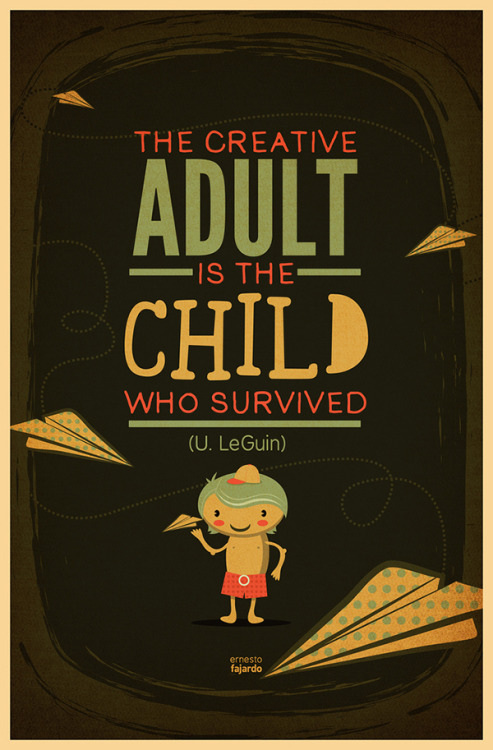
How to Unleash the Uncreative Children

image from icanread

I was a dreadfully uncreative child.  Sure, I would draw trees, flowers, animals, but whenever someone told me to unleash my creativity, my heart sank and my page usually stayed empty.  Writing was slightly better, but I tended to stay on tangents so much that even I couldn’t tell my stories apart after awhile.  And singing?  While I loved to sing, I couldn’t just create something out of thin air no matter how hard I wanted to.  No, I would never be a jazz singer.

When I look back on my childhood I see that I was probably not alone.  Many of my friends weren’t explosively creative either and while these days when we have uncreative children we tend to blame our school system, I think it was just the way we were.  We didn’t know how to be creative so we weren’t.

I see this play out in my classroom as well.  I ask students to come up with whatever type of project they want and they go into a slight panic, not quite sure where to go with that much choice.  Or tell them to write a story about anything they want and some of them are so stuck in a writers block that they actually sit there frozen, never even lifting their pencils.  So what can be done with those kids that are stuck in a panic battled with creativity?  How can we unleash their potential?

  • Give them limited choice.  I think choice is one of the biggest gifts we can give to students, however, to some the  thought of free choice limits their imagination rather than urging them to create.  So give them some choices and then urge them forward.
  • Give them examples.  I know this sounds counter-intuitive to spark creativity but often some students simple need to see what is possible before they venture out on their own.  Sure, they may borrow ideas from what we show but in the end they still create.
  • Check in often.  While we tend to think of creativity as an adult-less venture, those kids that struggle with the process need check-ins and reassurance letting them know they are on the right track and help getting unstuck.
  • Celebrate the small risks.  We tend to look for the impressive but when it comes to some students, we need to celebrate even the little ventures into creativity.  Boost their self-esteem and let them know that what they are doing is right.
  • Praise, praise, praise.  As an uncreative child I always thought I was doing it wrong, if someone had told me I was doing it right, I would have had more faith in myself.  Often lack of creativity comes from the same place as lack of self-confidence.  Make sure it is not empty praise but rather specific and to the point.
  • Give options to collaborate.  I almost always give students the choice to have partners in projects simply because they spur each other on.
  • Break the mold of creativity.  We tend to only allow for creativity within certain subjects but why not open up all of our subjects to creative thought and exploration?  Some students will do better unleashing their genius within math than literacy.  Make room for them as well.
  • Be persistent.  I was almost allowed allowed to give up on projects as a child whenever they failed rather than see them through, and while we should know it is ok to abandon something, as teachers we should also encourage our reluctant students to push forward.  While it may not be the best creation, it is something, and that is always worth celebrating.
  • Highlight everyone.  Part of not being creative was that I knew who was considered creative in my class.  Those kids were given special attention every time.  I was never in the group therefore I quickly deduced that I was not creative.  Be careful that we don’t let our labels of students stymie them.

I am a passionate (female) 5th grade teacher in Wisconsin, USA, proud techy geek, and mass consumer of incredible books. Creator of the Global Read Aloud Project, Co-founder of EdCamp MadWI, and believer in all children. I have no awards or accolades except for the lightbulbs that go off in my students’ heads every day.  First book “Passionate Learners – Giving Our Classroom Back to Our Students Starting Today” will be released this March from Powerful Learning Press.   Follow me on Twitter @PernilleRipp.

Reading, reflection

Where to Find Your Next Great Read – Some Ideas

image from icanread

Your library is amazing… words I never thought I would hear about my own classroom library.  And while I don’t think we are quite at the amazing level, my classroom library is a lot better than it used to be.  Not perfect by any means, but it now has books students want to read, filed in a way that ensures they can somewhat find them.  If I had my way my entire classroom would be a library but than is another post.

A question I often get is how do you know which boks to read?  How do you know which book to get for the classroom?  How will I ever start building my own amazing library.  So here are a few ideas:

  • Ask the kids!  Want to know what the kids are reading, ask them and then make a list somewhere.  I have mine on Amazion as a wishlist and whenever a giftcard pops into my hands, click, more books that the kids are reading.
  • Read the blogs!  Between the Nerdybookclub and so many of its authors I am constantly finding books to buy/read/pass on.  Others are out there reading and reviewing so start finding them.
  • Join #Titletalk – this monthly Twitter chat devoted to different aspects of reading always creates an abundance of must have books for me.  This is the most expensive Twitter talk you will ever participate in.
  • Ask your librarian.  My librarian, Deb Dagitz, knows a lot about books so I have no qualms asking her for recommendation.  In fact, she will also hand me books to read unsolicited which always turn out to be amazing.
  • Pay attention.  I am always asking students outside of my classroom what they are reading (annoying habit I am sure) and also paying attention to children reading in general.  A lot can be learned simply by looking at what is being read in the outside world.
  • Read yourself.  I love to read and I particularly love to read books for my classroom.  I often pick up new books on a whim and then they lead me to another book and another.  In fact to have a passionate reading classroom, you have to be a passionate reader yourself.
  • Ask other teachers.  I think we forget all of the amazing teachers at our own schools.  These teachers are also trying to build incredible libraries and may just have the book you have to have as well.  So start a conversation at lunch, staff meetings, or in the hallway.
  • Browse the book stores.  Whether local or a chain, get to know your book stores and their departments.  I love seeing what strangers recommend or what they are putting on display.
  • Read the lists.  Many websites do end of the year best books lists so be inspired by them.  I have already turned to the crowd-sourced one from Goodreads a few times, as well as the one determined by Amazon.
  • Watch the awards.  I didn’t get to watch the ALA’s with my students as planned so I cheered from my livingroom when Flora & Ulysses took home the Newbery.  Look back at past year’s winners and start to add them to your reading list, there is a reason these books are winning awards.

Where do you find your next read?

I am a passionate (female) 5th grade teacher in Wisconsin, USA, proud techy geek, and mass consumer of incredible books. Creator of the Global Read Aloud Project, Co-founder of EdCamp MadWI, and believer in all children. I have no awards or accolades except for the lightbulbs that go off in my students’ heads every day.  First book “Passionate Learners – Giving Our Classroom Back to Our Students Starting Today” will be released this March from Powerful Learning Press.   Follow me on Twitter @PernilleRipp.

This post was sponsored by Grammerly. “I use Grammarly’s Plagiarism Checker because even amazing students can sometimes run out of ideas.”

Be the change, reflection, Student-centered

Why Our Past Should Stay in the Past

image from icanread

I thought by now I would have it all figured out.  That my lesson plans would almost write themselves.  That by January I would be planned until May.  I thought by now it would be a routine.  As easy as riding a bike.  As easy as following a recipe.  I thought by now teaching would just be another thing to cross off my to-do list of things I was done with for the day.  I was wrong.  And I am glad.

I used to let the past define me.  If I had done something the year before then I certainly was going to do it again the following year.  After all, I had put so much time into learning about it.  I had put so much time into thinking, creating, and then implementing the lesson.  And it had worked, sometimes with great success.  Yet, whenever I pull something out of a file cabinet (whether literal or the one in my head)  it never seems to quite fit the kids I work with now.  It never seems to garner as much excitement as it did the first time.  It never seems to be as much fun to teach.  It still works, but it is not enough for me anymore.

So I have learned  that my past lessons may support me and give me a place to start, but they should not dictate what I do in the future.  The ideas I may have are still worthwhile  but they should be nourished and pushed to grow to fit my current students, not the ones I had the year before.  Students don’t mind the same material, but I think they mind when it is taught the same way as the year before.  They want to feel our excitement and let it feed theirs.  They want to know that we are teaching to them and not just a nameless group of kids.  They want to feel special, as much as I hate using that term.  And I’m ok with that.  After all, it is the change and the quest for the perfect lesson that keeps me coming back day after day, year after year.

I am a passionate (female) 5th grade teacher in Wisconsin, USA, proud techy geek, and mass consumer of incredible books. Creator of the Global Read Aloud Project, Co-founder of EdCamp MadWI, and believer in all children. I have no awards or accolades except for the lightbulbs that go off in my students’ heads every day.  First book “Passionate Learners – Giving Our Classroom Back to Our Students Starting Today” will be released this March from Powerful Learning Press.   Follow me on Twitter @PernilleRipp.
 

Be the change, Student-centered

How About a Little Change?

image from icanread

I seem to write about big changes a lot.  You know the kind that changes the way you teach, how school is done, and how students function in your classroom.  And while I love my big changes (I would never go back) I also know that it can be kind of hard to do some of these big changes all at once or even at all.  Sometimes policies stand in our way, other times it is our own courage that is lacking, or our preconceived notion of what students will be able to handle.  And yet, you want to change, but just not in a big way (yet…) so how about some little changes to get you started?

Instead of getting rid of all homework how about eliminating it in one subject?  While I am proponent of not assigning any, even I sometimes have to.  So a way to change the way you do homework is to just not give it in one subject.  Check in with students during class and eliminate the thing you were going to use to check in on what they knew.  Try it, see if you like it, and then see if you try more subjects.

Instead of doing all project-based, how about converting one topic?  Project-based learning can be really daunting if you are looking to transform your entire curriculum to hands-on learning, so how about you start with just one segment of your curriculum?  How about the next social studies project?  Or adding in some science?  Get your feet wet, and those of your students, and then see if you can do it again.

Instead of getting rid of grades how about asking your students to set them with you?  This is a great way to work within policies that mandate you give grades. Doing it together with students starts a learning dialogue and creates ownership.  When they get to set, discuss, and defend their own grade they reach a deeper understanding of their own knowledge and needs.

Instead of a whole day of innovation how about one hour?  I am a huge proponent of Innovation Day but also understand how it can seem overwhelming or doomed to fail by some (yet trust me it is worth it).  If you are not sure how a whole day of letting students create will look like, try Genius Hour first.  This one hour innovation is a great way to get students into a creation groove and also allows you to iron out any misunderstandings.

Instead of connecting your students with the world how about connecting them with one class?  We often feel like our students should be engaged in a global conversation, and yet, that can be a lot to set up, oversee and maintain.  So rather than focusing on the whole world, how about focusing on just one deep connection with another class?  I have often found that a focused connection is more meaningful than many superficial ones.

Instead of an hour of project time how about just 10 minutes?  My students and I like to do projects.  The students lesson plan with me while making sure we cover everything we need to (and then some) and then they get to work on their projects.  But if this seems like it would be frightening or you are not sure that your students could handle a whole hour of self-directed work then give them 10 minutes at the end of class.  This way you can support in a concentrated dosage and students still get to work on something more hands-on.  As you get more comfortable you can expand the time.

There are so many things we can change to create more student-centered learning environments.  All it takes is one small step in the right direction and you have started on your path to change.

Be the change, discipline, punishment, students

So I Gave Up Punishment and My Students Still Behaved

image from icanread

When I moved my blog from Blogger to WordPress last summer I mistakenly assumed that all posts would seamlessly transfer.  I have since found the error in my thinking and have decided to re-post some of my more discussed posts.  This post first appeared in June of 2011  but still rings true to me.

Three years ago I gave up my inane punishment plans.  Out went the sticks, the cups, the posters, the pointed fingers and definitely the lost recesses.  No more check-marks, or charts to explain what that check-mark meant, no more raised voice telling a child they better behave or else.  Some thought I was crazy, I thought I was crazy, and yet, here I am now a complete convert.  So what happened?

Well, a lot of conversations.  If just one child was off that day, disruptive, disrespectful and so on, it was usually handled through a quiet conversation off to the side or in their ear.  Sometimes we went in the hallway.  I tried to limit the times I called out their names and I spoke to them as human beings.  No more teacher from the top, I am going to get you if you don’t listen, but rather, “Do you see what your behavior is doing for your learning?”  Believe it or not, framed in a way where they understood what the loss was = the learning, there was better behavior or at least an attempt to behave.  And that was a central part of my plan; make the learning something they didn’t want to miss.  Most kids do not want to miss recess because they have a lot of fun and hang out with their friends, which is why it is such a favored punishment.  Hit them where it hurst kind of thing.  So I decided to make my classroom fun, exciting, and collaborative.  That meant that students actually wanted to participate and not miss out.

Sometimes my whole class was off; jumpy, jiggly, or falling asleep.  In the past I would have yelled, droned on, and probably lectured about the importance of school.  No surprise there that usually didn’t work at all.  So then I would just get mad, tighten the reins and exert my control.  Yeah, didn’t work so well.  Now I instead change my teaching and learning.  While we may have had certain activities planned for that day they are modified to require movement and discussion or totally changed if I can.  The learning goals usually stays the same, the method of delivering them doesn’t.  Often this takes care of a lot of behavior that would have led to a check-mark before.  And I think that is central to this whole thing; bad behavior often comes from disengagement and boredom.  So when we change our classrooms to give students more outlet for their energy, bad behavior reduces.  My worst days were the days that I hadn’t considered my students needs enough, the days were there was too much sitting down and not enough choice.

In the beginning it was hard.  I so instinctually wanted to say “Move your stick!” that I actually had to grind my teeth.  With time it got easier.  The students knew when they were misbehaving because we discussed it.  If the whole class or a majority of students were off we had a class meeting.  Sounds like a lot of time spent on talking?  Yes, but I would have been spending the same time yelling at the kids and doling out punishment.  The kids got used to it and many of them relished the fact that they were given a voice in their behavior and how to fix it, rather than a dictation from me.  Kids started keeping each other in line as well, asking others to be quiet when need be or to work more focused.  They knew what the expectations were for the different learning settings because we had set them together.  This was our classroom, not mine.

So did it work?  Absolutely, I would never go back.  I don’t take away recess but have it reserved to work with the kids that need it, I make fewer phone calls home, and I rarely send a kid to the office.  I am sure there are tougher classes out there than mine, but this is your every day average American elementary class.  We have the talkers, the interrupters, the disrespectful, the fighters, and the sleepers.  And it works for them as well.  The kids feel part of something big, and they let me know on  just how much it means to them.  They relish the voice they have, even when it comes to their own consequences.  They relish that rewards are no longer personal but rather classroom-wide whenever I feel like it.  Kids are not singled out for horrible behavior and so I don’t have “that kid” that everyone knows will get in trouble.  Instead we are all there as learners being rewarded through our community rather than punished.  I remember the relief I felt when I placed my old punishment cups in the staff lounge and finally let go of my old ways.  To this day I  hope no one picked them up.


aha moment, being me, reflection

10 + 1 Lessons I Learned the Hard Way

When I moved my blog from Blogger to WordPress last summer I mistakenly assumed that all posts would seamlessly transfer.  I have since found the error in my thinking and have decided to re-post some of my more discussed posts.  This post first appeared in October of 2011 but still rings true to me, in fact, I think this list could be much longer now so I have updated the post a little.

image from etsy
 

Sometimes life smacks you in the face and makes you change your ways for the better.  Fortunately in education, this happens quite a bit, unfortunately it is not always in the most pleasant way.  I present a list of my lessons I learned the hard way.

  1. You may be really excited about something but that does not mean anyone else will be.  I joined Twitter more than 3 years  ago and I have yet to convince anyone close to me of its value.  It is not that they don’t want to understand, they do, but they just don’t have the time or see the need to join.  I remain undeterred in my plug for Twitter but at the same time also realize that perhaps they just don’t want to join, and I am ok with that.  I then just find other ways to share all of the amazing things I learn via Twitter.
  2. When you make a lot of changes, not everyone will think they are great.  I have changed many things in my classroom and while I see all of the amazing benefits, not everyone does.  I have many critics and my skin has grown a lot thicker, and yet, ouch.
  3. Not everyone wants to hear your opinion, even if you think it s a good one.  Enough said.
  4. Not all parents want less homework.  I thought every parent would stand up and cheer at my decision to nearly eliminate homework, but no, some want a lot of homework for their children for various reasons.  I now encourage open dialogue on it and help out where I can.
  5. Lecturing does not engage – and neither does raising your voice and scolding the kids when they tune out.  I figured this one out after 2 years of teaching with glazed over eyes and less than enthusiastic students.  Now I look back at those two first years and shudder.
  6. Rewards diminish the learning.  I used to be a rewards fanatic but realized that kids focused more on which sticker they got then the feedback I gave them.  I also created a class divide in my room with the have’s and the have not’s.  If only I could tell all of those kids that I am sorry for what I did.
  7. When you think everything is going great, you are about to crash.  I don’t know how many times I have been on a teaching high only to crash and burn wickedly.  Life changes quickly, so enjoy the “high” while you can.
  8. Putting your thoughts on a blog means many people know how you feel.   Some will cheer, some will challenge, and some will just downright criticize.  Either way, you have to take the good with the bad; it is all part of developing your voice.
  9. Even the best classroom can have a bad day.  I used to beat myself up wondering what went wrong when the day fell apart.  Then I realized that sometimes there is just nothing to do it about it that day, what matters is that you start over the next day.
  10. I am not always right, even if I really, really want to be.  I have some pretty strong opinions and fortunately for me, sometimes they change.  That means I have had to apologize to people, publicly state the change and eat crow in a number of ways.  This is a not a bad thing, but a human thing.
  11. I am not the only teacher in the room.  I thought I was the ultimate authority on everything in my room, and loved to share my vast knowledge with those empty vessels that were my kids.  What a rude awakening when I realized that my students are not blank slates.  Now I remind myself daily to step aside and let them explore and teach each other and me.