new teacher, new year, preparation

So You Got the Teaching Job – Now What?

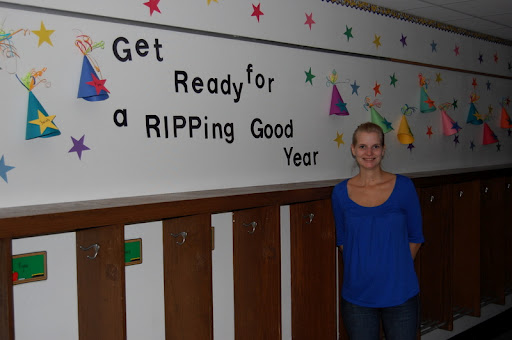
Me in front of my very first welcome wall

As summer continues to lull us into long days filled with ice cream, books for fun, and nights spent on a porch, I can’t help but think back to the first summer as a teacher.  That summer when I had made it through those grueling interviews, where I had finally landed my dream job and I now stood facing an empty classroom, slightly panicked, but oh so very excited.  I remember the joy.  I remember the delight.  And boy, do I remember thinking, “Now what?”

Don’t get me wrong, I had read Harry Wong’s book, I had substituted, I had even taught summer school, and yet, it just wasn’t enough.  I had no idea where to go from there, so to all those new teachers, with all those new jobs, I offer you my advice.

  • Reach out!  Remember that interview team you sat across trying to connect with, well, now is the time to make the actual connection.  So email them, find them on Twitter, Google them, but do something and reach out.  Set up a time to meet whether formally or informally.  Don’t wait until the first day of school there will be so many others to connect with then.
  • Ask questions.  When you reach out, ask questions about curriculum, ask questions about school quirks.  Truly there is no such thing as a dumb question in this matter.  I still remember my long list and just how gracious my team members were to me.
  • Ask for resources.  Don’t re-invent the wheel with every single piece of paper.  I created so much on my own that first summer until I found out how much of this stuff my team already had made that was much better than my stuff.  Bring your ideas to the table but also ask to use some of theirs.  There will plenty of stuff to do on your own.
  • Do your homework.  However, do figure out what you can on your own too.  Things like math curriculum and other major district decisions can probably be discovered through a quick website search.  That way you can get to those things that are a little more complicated then that.
  • Start dreaming about your room.  Your room is really important, it signals to the world what type of teacher you are and what your educational philosophy is.  Where do the desks face?  Do you have a desk yourself?  Are there posters or will you have students take over the walls?  All of these seemingly innocent room questions are actually pretty major things to consider.
  • Take classes.  Again, this may be something a teammate tells you, but see if there are classes you need to take.  This year my district is implementing the writing workshop and we are all encouraged to take a 2 day class on it, my new team mate knows this because I told him.
  • Reflect.  Now that you have the job; what is your primary goal for your first year (and please don’t say survive – teaching shouldn’t be about survival but about thriving)?  What do you hope to pass on to all of those kids, your teammates, your school and yourself?  Where do you want to see yourself next year?
  • Stop with the prep work.  I made so many copies and spent so much time laminating my first year, why?  I am not sure.  It seemed like a full-time job some times but I was so sure that everything needed to be protected and copied, crazy really.  So figure out what is important to you, take stock of what you will be doing in your prep time, and ask yourself this; “Does it really need to be laminated?”
  • Enjoy!  There is no time like the one you are in, all fresh and ready for those first students.  So get yourself psyched up, because it is truly a memorable experience.  Allow yourself to trust yourself.  Allow yourself to feel like you have something valuable to add.  And finally, allow yourself to be just a little bit freaked out.  You cannot prepare for everything but you got the job because you are capable, so trust that.

classroom setup, new year

The Secrets of Your Classroom – What Your Set Up Says About You

image from icanread

I finally made it into school today and saw to my amazement that all of my furniture had been moved back in, the floors were waxed, and now all of those boxes were ready to be unpacked.   I couldn’t help but be excited, and then I realized that I am hugely pregnant, and didn’t even know if I could stand up for the time it would take me to set it up.  So what is a girl to do?  Try anyway.  As I unpacked, arranged, and dreamt a little of the new year, I realized once again how much the way we set up our classroom reflects our educational philosophy.  How much those seemingly innocent decisions of table placement, wall decorations and so on really reveal to the world.  So these are the questions I asked myself

  • To desk or not to desk?  I was offered the granddaddy of desks this year; huge, sleek, brand new and I turned it down gladly.  last year I decided to go deskless and I have never looked back.  Instead I have a table for my computer and planner, one where I can meet with kids but it is tucked into the corner, somewhere where I don’t get drawn behind, isolating myself from the kids.
  • Tables or desks?  I used to have small desks that we would scoot together to create pods, now I am fortunate enough to just have big tables for the kids to use.  They move their chairs as they see fit to work with the lesson and I don’t ask questions when they do.  They just pick up their pencil can and go.
  • What’s on your walls?  I used to have all of those awesome posters with the animals saying cute motivational things plastered all over my walls.  That way wherever you looked you would be motivated to hang in there, work hard, and make great decisions.  I took them down two years ago and now have three posters hanging; a world map to push pin our connections, a top ten of my room created by former students, and a calendar.  Everything else we add as we go.  
  • Are you in the room?  Those kids become part of my family so I have framed pictures in my room of newspaper articles from former years, all of the kids I have ever taught, two fantastic student art pieces that still choke me up and two quotes from the Little Prince.  These mean more to me than motivational poster ever will and show the kids who I am, that is so important.
  • Which way do your desks face?  My former students told me they didn’t want to face the Smartboard but rather the whiteboard because we used that much more.  So this year that is exactly how they face.  However, once again, the students can move about as they like so in all honesty I am not too bothered how they face.  I don’t need to be the center of attention so the desks don’t need to face me so I can lecture.
  • Other areas?  Are there places for the students to work that doesn’t include their desks?  I used to have cushy bean bags and comfy chairs but lost them all to fire code.  Now we have carpet squares, random chairs from my house, a big reading carpet, two stand up desks and lap desks that the students can use whenever they want.  I don’t ask questions, if they need them, they use them.
  • Sign in and out.  Some teachers ask students to sign out when they go to the bathroom etc.  I don’t, instead they put the pass on their desk so in case of a fire drill I know where they are.
  • Can they get what they need?  I used to hide all of my extra supplies and would get really upset if students dared ask for a pencil.  Now, I have bins of stuff they may need which they can grab and they know to just ask if they need something that isn’t out.  My goodness, who hasn’t ever needed an eraser?
  • Where are those rules?  Anyone who walks in will notice there is no class constitution, no rules, no what happens when… posters in our room.  Expectations are discussed by the students and changed as needed.  With only 20% of the walls up for use due to fire code I am not wasting that space on rules.
  • Where’s the tech?  I am fortunate to have a 4-in-1 computer set up for students, but we also have some flip video cameras, headphones, microphones, and camera for them to use.  Do you hide it or can students just use it?  What is your level of trust with technology and putting it in the hands of students?

By no means a final list but things that flashed through my head today as I unpacked.  What did I miss?

assessment, feedback, No grades, Student-centered

How Do You Assess Without Grades? 5 Tips to Ease the Transition

Two great questions came my way yesterday in regard to assessing without grades and then communicating that information.  We are so used to the ease of a letter grade that gets recorded in a book, averaged out and then translated into a letter, that moving away from that can be daunting and just a bit overwhelming.  So two years into my process I thought I would share some tips I learned the hard way.

  1. Discover your goal.
  2.  Whether they are based on district standards, common core, school outcomes, or even those listed in the curriculum, figure out what the goal is for each thing you teach.  These can be large or small (don’t do too many small ones though, trust me) and then figure out what the outcome should be.  Everything you do should have a learning goal because without that there is no point to the lesson.

  3. Determine the product.  What does it look like when students have accomplished the goal?  What is finished?  What is just another stepping stone?  How will students show that they have mastered the goal?  I love to have this discussion with my students, they have amazing ideas for this.
  4. Determine assessment.  Will it be written feedback?  Will it be a rubric?  Will it be a conversation – great tip; record these with a Livescribe pen and you have it for later!  Once again, ask the students, what type of assessment will help them?  How do they learn best?
  5. Keep a record.  This has been my biggest hurdle.  I have had charts, Google Docs, grade book notes, relied on my faulty brain, and yikes.  This year I am bringing my iPad in and using Evernote to keep track of it all.  Students will each have a portfolio in Evernote with conversations, pictures of work, links to blog posts, as well as videotaped events.  This way, everything will be at my fingertips when needed.  
  6. Communicate!  Assessment is not helpful if kept to yourself so have the conversations with students, take the time, write things down, communicate with parents.  All of these things need to be taken care of for this to work.  The allure of letter grades is just that; the ease of communication, nevermind that they can mean a million different things.  So when you step away from those make sure you replace that with communication.  Give students ownership of their goals and have them write a status report home, send an email, make a phone call.  Something.  Everybody should know where they are at and where they are headed throughout the year.

My 5 biggest tips for today and something I continue to work on.  Whatever your system is, take the time to reflect upon it, refine it, and make it work for you.  Ultimately stepping away from letter grades should lead to a deeper form of assessment, not a larger headache, but for that you have to have systems in place.

grades, no homework, rewards

I Need to Let Go, But Not of Everything

With the babies arriving any day now according to the doctor I have been mentally preparing to let go of my classroom, at least for the first two months of school.  This task is proving much harder than I ever envisioned.  Don’t get me wrong, trying to mentally prepare for twins is strenuous, but letting go of how I set up my room and community, yikes.

Those first two months are vital, ask any teacher and they will tell you just how much they matter, and yet I have to forget about that.  I have to trust my sub, who by the way is brilliant, but still…how will they know how fantastic 5th grade will be?  How will they know what my expectations are?  How will they know the kind of classroom I envision?  I swallow my fears and focus on the positive; the babies, the new life awaiting all of us and I realize I have had to let go.  I have had to let go of how the curriculum is taught, how their day to day lives will be, how the sub will treat them and build community with them.  I have to let go.

Yet, there are three things I cannot let go of, 3 things that I refuse to lose control over, as I reiterate to my sub just how important these are.

  1. Limited homework.
  2. No rewards/no punishment.
  3. No grades.

Is there more, well of course, but these 3 things are deal breakers, pillars of my philosophy, the things that cannot be sacrificed whoever is teaching.  And I need the students and parents to know that from day one, not day 40 as I venture into the room.  I need the parents to feel comfortable with the why behind these decisions and I need the students to know what is expected of them.  I need them to know that they set the rules, that we work together, not that learning will be forced with a carrot and stick method.  I need them them to know that work will be at school and they should see very little outside work if they spend their time wisely.  I need to get them ready to set goals, think about their learning and take control of it.  So those 3 things, those I am not letting go of.

Be the change

We Cannot All Be the Best

Be the example!  Set the bar high so others will rise to it!  We want to be a beacon school!  How often do we hear all of these statements in education.  Be the best teacher you can be…Be the one others want to emulate…Be the best school…the best team…the best everything.  And yet, we cannot all be the best. The whole notion of the term “best” automatically excludes most of us.

So instead of striving to be THE best, how about we strive to be better?  To change things?  To inspire others?  To motivate? To set grand examples while still learning from others?  The truth is if we were all beacon schools no one would be able to see us from the glare.  So shine bright yes, but that doesn’t mean you have to shine the brightest because then all you do is blind others.  

being me, help

It Is Those Little Things

image from icanread

I wake up and spot it right away; my phone plugged in charging next to the bed.  Not a big thing, just one of those little things.  I get downstairs, which takes a while this pregnant, and again; a cup of tea sitting there.  My husband may have left for the day but the reminders of his presence stays.  It’s those little things that make me smile.  Those things that take maybe 30 seconds or a few minutes but that carry me through the day; I am loved.

At school, I fill the copier with paper.  I sort the recycled paper and bring scraps back for the kids.  I clean the sink, turn off the lights, change a dried out printer cartridge.  None of it is in my job description but it is those little things that make others have an easier day.  I greet everyone I meet with a smile, I stand and listen while looking someone in the eye.  I email out a website that another grade may be able to use.  Those little things that help, those little things that show others concern.  I don’t make it a priority, I have enough of those, but I make it a part of my day, i take the time, invest it and move on.

Imagine if we all did little things every day.  If instead of hurrying through the day, concerned only about the happenings within our walls, within our brain, we took those seconds and did a little thing?  Imagine the example it would set for the kids, for each other, imagine what school would feel like?