
aha moment, assumptions, Be the change, being me, Passion

5 Things I Learned to Say That Changed the Way I Taught

I-no-longer-strive-for

There are many things that we can change as educators.  We can all embark on major journeys toward bettering our lives, the lives of our students, and the effect we have on others.  Often those big journeys start when we hit frustration, mine certainly did.  And yet those big journey of change are not the only journeys we can take.  Every day we make a choice as to how we effect those that surround us.  We make a choice as to how we will teach, how we will react.  There are many changes that will change our lives, these are some of my simplest and most important.

I learned to say, “I’m sorry.”  Apologizing to students, and not just for the big things changed my relationship with them.  Now when I accidentally call out a wrong kid, I apologize rather than make an excuse.  When I screw up, I admit it.  When I inadvertently hurt a child’s feeling, which does happen, I apologize.  I don’t try to explain my way out of it, a quick statement is all it takes, but the power of “I’m sorry” cannot be underestimated.  Those words share the story of how we view our students.  They are human beings that deserve respect.

I learned to say, “Let me check.”  I used to know I was right.  I used to know that whatever a child said about already turned in homework, sent emails, or other obligations was a lie.  Until I realized that I was in the wrong and that even if I think I am right, it is better to check first.  Check the pile of paper.  Check my email.  Check my file.  Whatever it may, they check and I check, no lost pride, no hurt relationship.

I learned to laugh at myself.  When you teach you will make stupid mistakes that make you look like a fool.  You are bound to trip and fall, you are bound to  say things that can be misunderstood, you are bound to do something that you would giggle at if it happened to others.  Laughing at yourself with the students is powerful.  Showing students my inner dork, which I tried to suppress at all cost for so many years, has allowed them to fly their flags.  They know when I am serious, but they also know how much I love to laugh, even at myself.

I learned to say, “Ok.”  Ok to sit there, ok to turn it in that way, ok to explore this, ok to read that book, ok to have that conversation.  OK to try, ok to fail.  I learned to say ok to new adventures and epic attempts.  I learned to say when I realized I couldn’t say yes to anything more, and ok when I could.  I learned to say ok when a lesson failed, I learned to say ok when a child told me they tried.  This simple word, these two letters, have allowed me to let go of so much.  I no longer strive for perfection, but for authenticity.  The latter is so much more interesting.  “Ok” taught me that.

I learned to say, “You matter,” but more importantly I learned to show it.  I learned to look at my students when they speak to me, to stop what I am doing and listen.  I learned to read between the lines, to dig a little deeper.  I learned to say yes to lunch, to stop and talk, I learned to tell stupid jokes to break the ice.  I learned the language of my students, whether spoken or unspoken, and I learned to teach with my whole heart, with all of me.

What have you learned to say that changed you?

I am a passionate teacher in Oregon, Wisconsin, USA,  who has taught 4th, 5th, and 7th grade.  Proud techy geek, and mass consumer of incredible books. Creator of the Global Read Aloud Project, Co-founder of EdCamp MadWI, and believer in all children. I have no awards or accolades except for the lightbulbs that go off in my students’ heads every day.  First book “Passionate Learners – Giving Our Classrooms Back to Our Students” can be purchased now from Powerful Learning Press.   Second book“Empowered Schools, Empowered Students – Creating Connected and Invested Learners” is out now from Corwin Press.  Follow me on Twitter @PernilleRipp.

aha moment, assessment, assumptions, Be the change, being a teacher

You Can’t Just Do It To Them

image from icanread

“Remember, whatever I ask you to do, I ask myself to do too.”

This is how almost any assignment is handed out in my classes.  Not to make the students feel better.  Not to make them embrace the assignment more quickly.  No, it is really quite simple; I have done the assignment already.   I have spent time doing the exact same thing, following the same directions, looked at the assessment and pondered how I would do.  Not when I was their age, not when I was in college, not even last year.  No the assignment I am asking them to do, I have done in the past few days as well as I prepared.

Why is this important?  Because every day we ask students to spend their time, whether in class or after school, doing work for us to show their mastery, to practice their skills, to help them grow.  Yet often these assignments are ones that we have never experienced ourselves.  Ones that we may have used to much success before.  Or ones that we got from an amazing source. Yet, we don’t know what it feels to actually do it.  And that creates a problem based on assumptions.  We assume we know how much time it will take.  We assume we know how hard it is.  We assume our directions are clear.  We assume the assessment is fair.  All of those assumptions add up to nothing good.

I started doing my own assignments a few years back.  I didn’t get why my students groaned so much when a new project was handed out.  I didn’t get why I would get emails from parents stating how many hours their children had spent.  Whether it was book report dioramas, grammar packets, or even just outside reading, I assumed I knew what it was like to do them because I had gone to school once too.  On a whim one night, after a particular groan-filled day, I did one of my grammar packets.  9 pages, front to back copied, neatly stapled to teach me all about proper nouns versus common nouns.  45 minutes later, I threw it in the trash.  How many times could I write the same answer over and over or be asked the same thing?  Yikes.  The next day I apologized to my students and we found other ways to do grammar.

So now, I live by a simple rule.  Whatever I ask my students to do I have to do as well.  So if they have to write an assignment, I write it too.  If they have to read outside of school every night, I do too.  I discuss my struggles and problems that I encounter hoping they will feel more confident to try something new.  I tell them when I stop reading and I recommit in front of them, I tell them when I don’t feel like doing any work but now I have to.  My students will not learn from having a perfect teacher, they need someone that they can relate to, even if our years push us apart.

I know that I am not 12 years old and that I have an easier time doing their work.  That only cements my resolve to do every assignment.  If it takes me 30 minutes to write a great constructed response, then imagine how long it can take for a student?

We cannot keep forcing our ideas on kids without experiencing them ourselves.  So commit; whatever your students have to do, make yourself go through it.  Trust me, the things you will change will surprise you.  Be a learner, just like them, and tell them that you know what it feels like.  But don’t just say it, do it and mean it.

I am a passionate teacher in Oregon, Wisconsin, USA,  who has taught 4th, 5th, and 7th grade.  Proud techy geek, and mass consumer of incredible books. Creator of the Global Read Aloud Project, Co-founder of EdCamp MadWI, and believer in all children. I have no awards or accolades except for the lightbulbs that go off in my students’ heads every day.  First book “Passionate Learners – Giving Our Classrooms Back to Our Students” can be purchased now from Powerful Learning Press.   Second book“Empowered Schools, Empowered Students – Creating Connected and Invested Learners” is out now from Corwin Press.  Follow me on Twitter @PernilleRipp.

aha moment, Be the change, being a teacher, change, inspiration

You Don’t Have to Throw Everything Out to Be Innovative

Innovation-should-not-be

I almost felt guilty walking to the cabinet.  I almost felt as if I would get busted, as if someone would burst through the door wagging their finger and raising an eyebrow.  Touting me as a phony because am I not “one of those” educators that are supposed to be innovative?  One of those that is constantly trying something new and crazy?  One of those that tells everyone to just take a chance and make a change?  Well I am (sometimes), but I am also human.  And on this day I went to the cabinet to fetch an old lesson, something I knew would work, something that I could use again.  Something that I would probably tweak to fit my new students, but not majorly overhaul, and honestly I felt relieved.

We often confuse great teaching with constant innovation.  We think that to reach all of our students in the best way possible, we must constantly change.  we must never rest.  We must never reuse.  Yet, we forget that we are dealing with children that crave routine.  Children that yes can be creative and curious but at the same time also need some predictability.  Children that can get exhausted when we are constantly trying new things and asking them to discard the old to embrace the new.

And let’s not forget about ourselves.  The job we have is demanding, and we must constantly search for new solutions, yet we forget to give ourselves a break.  There is nothing wrong with using something that has worked before, as long as we make it better each time we use it.  There is nothing wrong with trying something we have tried before.  There is nothing wrong with pulling out old lessons.  Innovation should not be confused with discarding every thing we have tried.  There is beauty in the old, in the tried.  There is beauty when a teacher has experience.  Allow yourself that moment.

So do embrace the old when it works.  Fly the flag of your past lessons that have soared.  Don’t get stuck, but allow yourself to rest in familiarity as well.  Great things come from ideas we have tried on before.  Don’t think you have to constantly change to be a change-maker.

I am a passionate teacher in Oregon, Wisconsin, USA,  who has taught 4th, 5th, and 7th grade.  Proud techy geek, and mass consumer of incredible books. Creator of the Global Read Aloud Project, Co-founder of EdCamp MadWI, and believer in all children. I have no awards or accolades except for the lightbulbs that go off in my students’ heads every day.  First book “Passionate Learners – Giving Our Classrooms Back to Our Students” can be purchased now from Powerful Learning Press.   Second book“Empowered Schools, Empowered Students – Creating Connected and Invested Learners” is out now from Corwin Press.  Follow me on Twitter @PernilleRipp.

aha moment, student choice, student voice

These 5 Minutes Will Make a Difference

I find myself looking at the clock more and more.  Call it the constraint of 45 minute class periods.  Call it the middle school urgency that seems to haunt my every move.  That clock on the wall; yeah, it seems to be always leering.  Yet lately it has been taking on a new role for me; no longer the reminder of how little time I have left to help these students grow, but now a reminder of how much time we still have.  How much time we still have to talk.  How much time we still have to share.  How much time we still have to teach each other.

Why this change in perspective?  I have just started giving my students 5 minutes.  5 minutes to discuss.  5 minutes to figure out.  5 minutes to prepare.  It is indeed quite impressive how much can be accomplished in just 5 minutes.

5 minutes before the quiz, they review with each other.  5 minutes before the assessment, they speak to one another and compare notes.  5 minutes before the share with class, they share with a friend.  Giving them those 5 minute means that my students are more confident, are less rushed, are more ready.  Giving them those 5 minutes mean that I am forced to slow down and let them think, let them digest the learning, frame in their own words and then support each other.

I have no research to back me up.  I have no test scores to show the difference, but what I see in front of me has sold me.  Students who are ready.  Students who are willing.  Students with more confidence in their abilities.  we are moving toward becoming a community of teachers, not just learners, 5 minutes a day.

I am a passionate teacher in Oregon, Wisconsin, USA,  who has taught 4th, 5th, and 7th grade.  Proud techy geek, and mass consumer of incredible books. Creator of the Global Read Aloud Project, Co-founder of EdCamp MadWI, and believer in all children. I have no awards or accolades except for the lightbulbs that go off in my students’ heads every day.  First book “Passionate Learners – Giving Our Classrooms Back to Our Students” can be purchased now from Powerful Learning Press.   Second book“Empowered Schools, Empowered Students – Creating Connected and Invested Learners” is out now from Corwin Press.  Follow me on Twitter @PernilleRipp.
aha moment, Be the change, punishment

Instead of Punishment

image from icanread

He was waiting for me to yell at him.

To unleash my words of destruction, let it fall over his deaf ears, while he would continue to stare defiantly at me.

His chin was ready to catch my words, deflect them even if need be.  His shoulders back, proud of what he had done even  if it had broken more than three school rules.

I cleared my throat.  he stood up taller.

Then I asked, “Why?”

A look of uncertain flashed through his yes but then quickly disappeared.

“Because I could.  because I wanted to.  Why?  What are you going to do about it?”

“This isn’t like you,” I said.  “This isn’t the kid I know.  This isn’t the kid that is proving everybody wrong.”

His shoulders slumped a tiny bit and I knew there was a chance we could talk.

I have yet to punish a child into behaving.  Don’t get me wrong, I tried for several years to punish all of them into being good.

I punished them with grades.  I punished them with referrals, with shouting, with lost recesses and lost privileges.  I punished them with phone calls home, meetings, and stern look upon stern look.  Sometimes they straightened out for a bit, if I yelled loud enough.  Other times they just got more certain of their path of destruction, smarter about the damage they inflicted.

I stopped punishing four years ago and started asking “Why?” instead.  It wasn’t a miracle word, nor did it fix everything, but it planted a seed.  A seed that can grow into a conversation.  A seed that can blossom into trust, into community, into a deeper understanding.

I grew weary of punishment because it didn’t change the kid.  It just made them more stubborn in their ways, it made them hate school, it made them hate me.  I became a part of the problem rather than part of the solution.  Sometimes I was the problem and I was the reason they were behaving so destructively.

Now, when a child has rough day, a rough month, or even a  rough year, I first look inward.  What am I doing to add more to the problem?  What am I doing that fuels it?  Then I reach out to the child; how can this be solved, what is really going on?  I keep asking why until I find something that we can use to move forward.  I am not there to fix a kid, I can’t fix anyone, but I am there to help them help themselves.  I am here to help them grow.  Punishment will never do that.

PS:  Today, Zach, one of my incredible students posted this on his blog, I swear he read my mind

In my opinion, a good teacher needs to have three very important qualities. First of all, a teacher needs to be able to put situations into a student’s perspective. A teacher should be able to think “How would a student react to kid/teacher points?” or “Would my class enjoy this project?”  or think similar thoughts. Sometimes, just putting something into a student’s eyes is the best way to solve it. Second, a teacher should be able to think ahead. You can’t plan a project if you don’t have enough time to do the project! A teacher should be able to think ahead and make a plan about what they will do each day in advance. Lastly, but certainly not least, a teacher should always ask “Why?”. Sometimes, teachers just assume that a student is not behaving without thinking about the condition. What if the student is having troubles at home so the student can’t get that homework assignment done. Or, what if the student is having a headache, so he can’t focus on his book. My one piece of advice is “Never assume a student is willingly misbehaving.”

So there you have it

I am a passionate (female) 5th grade teacher in Wisconsin, USA, proud techy geek, and mass consumer of incredible books. Creator of the Global Read Aloud Project, Co-founder of EdCamp MadWI, and believer in all children. I have no awards or accolades except for the lightbulbs that go off in my students’ heads every day.  First book “Passionate Learners – Giving Our Classroom Back to Our Students Starting Today” can be pre-bought now from Powerful Learning Press.   Follow me on Twitter @PernilleRipp.
advice, aha moment, Be the change, being a teacher, creativity, students

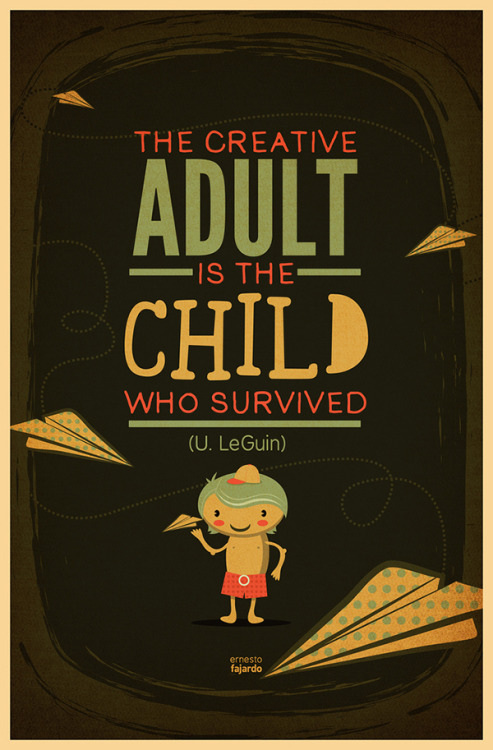
How to Unleash the Uncreative Children

image from icanread

I was a dreadfully uncreative child.  Sure, I would draw trees, flowers, animals, but whenever someone told me to unleash my creativity, my heart sank and my page usually stayed empty.  Writing was slightly better, but I tended to stay on tangents so much that even I couldn’t tell my stories apart after awhile.  And singing?  While I loved to sing, I couldn’t just create something out of thin air no matter how hard I wanted to.  No, I would never be a jazz singer.

When I look back on my childhood I see that I was probably not alone.  Many of my friends weren’t explosively creative either and while these days when we have uncreative children we tend to blame our school system, I think it was just the way we were.  We didn’t know how to be creative so we weren’t.

I see this play out in my classroom as well.  I ask students to come up with whatever type of project they want and they go into a slight panic, not quite sure where to go with that much choice.  Or tell them to write a story about anything they want and some of them are so stuck in a writers block that they actually sit there frozen, never even lifting their pencils.  So what can be done with those kids that are stuck in a panic battled with creativity?  How can we unleash their potential?

  • Give them limited choice.  I think choice is one of the biggest gifts we can give to students, however, to some the  thought of free choice limits their imagination rather than urging them to create.  So give them some choices and then urge them forward.
  • Give them examples.  I know this sounds counter-intuitive to spark creativity but often some students simple need to see what is possible before they venture out on their own.  Sure, they may borrow ideas from what we show but in the end they still create.
  • Check in often.  While we tend to think of creativity as an adult-less venture, those kids that struggle with the process need check-ins and reassurance letting them know they are on the right track and help getting unstuck.
  • Celebrate the small risks.  We tend to look for the impressive but when it comes to some students, we need to celebrate even the little ventures into creativity.  Boost their self-esteem and let them know that what they are doing is right.
  • Praise, praise, praise.  As an uncreative child I always thought I was doing it wrong, if someone had told me I was doing it right, I would have had more faith in myself.  Often lack of creativity comes from the same place as lack of self-confidence.  Make sure it is not empty praise but rather specific and to the point.
  • Give options to collaborate.  I almost always give students the choice to have partners in projects simply because they spur each other on.
  • Break the mold of creativity.  We tend to only allow for creativity within certain subjects but why not open up all of our subjects to creative thought and exploration?  Some students will do better unleashing their genius within math than literacy.  Make room for them as well.
  • Be persistent.  I was almost allowed allowed to give up on projects as a child whenever they failed rather than see them through, and while we should know it is ok to abandon something, as teachers we should also encourage our reluctant students to push forward.  While it may not be the best creation, it is something, and that is always worth celebrating.
  • Highlight everyone.  Part of not being creative was that I knew who was considered creative in my class.  Those kids were given special attention every time.  I was never in the group therefore I quickly deduced that I was not creative.  Be careful that we don’t let our labels of students stymie them.

I am a passionate (female) 5th grade teacher in Wisconsin, USA, proud techy geek, and mass consumer of incredible books. Creator of the Global Read Aloud Project, Co-founder of EdCamp MadWI, and believer in all children. I have no awards or accolades except for the lightbulbs that go off in my students’ heads every day.  First book “Passionate Learners – Giving Our Classroom Back to Our Students Starting Today” will be released this March from Powerful Learning Press.   Follow me on Twitter @PernilleRipp.