aha moment, being me

The Things I Will Never Have To Do

Today, I read this post from a teacher that I admire so much; Jess Lifshitz.  And while my post is nowhere as eloquent as hers, I cannot help but echo her statement as I reflect upon my own privilege.

I was born a white child to an almost single mother.  We were not middle class but we were not poor either.  I never went hungry, nor did I have a tough childhood.  I never had to worry about where we would sleep or whether or not we would have heat.  The closest I come to having any type of experience where I was the different one was when I was taught English as a first grader in an inner city school in San Francisco.  And even those memories are fleeting.  I was a perfectly ordinary child with a proud mother that taught me to fight fiercely for what I believe in.

I moved to America when I was 18 not because we had to flee our country, or because we needed a new start, but because opportunity knocked and we took it.  I have lived a lucky life so far and I know it because there are so many things I have never had to do.

I have never had to teach my children about the prejudice they will face because of their skin color.

I have never had to tell my children to act less of what they are because others may judge them.

I have never had to wonder whether I am being judged for who I am or what I look like.  Now when it really counts.

I have hardly ever been in the minority.

I have never had to be afraid to hold the hand of my husband or worry how others may judge our love.

I have never had to worry about having a bad day because an entire subset of people may be judged on my actions.

I have never had to be afraid for how my students’ parents will react to me, my background, or my culture.

I have never had to be scared to lose my house, feed my children, or somehow lose the stability we call our life because we have resources available to us that I sometimes take for granted.

There are so many things I could list for what I have never had to do, that are a daily part of so many lives, but in all honesty, it is really messed up to have that much privilege and be unaware of it in our daily life.

And so I have learned to keep my mouth shut when others share about their experiences.  To not say that I understand when I don’t, to not pretend I know what it feels like to be poor, a different skin color, live a different life, or any of the things that I have never had to experience.  I don’t know and I will never know.  And I have to embrace that.  We all do.

But today I was reminded of what I can do, and that is to listen, to learn, to try to understand how I can make a difference even though I will never share those experiences.  To figure out where I fit into the problem and then fix my part as much as I can.  Sometimes we get caught up in the minutia of life that we forget to see the inherent privilege so many of us have.   Yet, that privilege is the very thing we should remember.  And then realize that we play a part in all of this even when we don’t see it.

I am a passionate teacher in Oregon, Wisconsin, USA but originally from Denmark,  who has taught 4th, 5th, and 7th grade.  Proud techy geek, and mass consumer of incredible books. Creator of the Global Read Aloud Project, Co-founder of EdCamp MadWI, and believer in all children.  The second edition of my first book Passionate Learners – How to Engage and Empower Your Students” is available for pre-order now.   Second book“Empowered Schools, Empowered Students – Creating Connected and Invested Learners” is out now from Corwin Press.  Join our Passionate Learners community on Facebook and follow me on Twitter @PernilleRipp.

aha moment, Be the change, being a teacher, being me, MIEExpert15, Passion, student voice

This Is For the Kids

This is for the kids who made me cry.  Who wore me out, who tore me down.  This is for the kids who wondered why.   Who dared to speak, who dared to question.  This is for the kids that didn’t give up, that saw something in me I would have never seen myself.  Who questioned persistently, who had the audacity to say they were bored.  And who never ever thought that school should be about the teachers and not about the kids.

Those kids that may be “hard” to teach.  Those kids that are definitely hard to reach.  Those kids with their chips, their baggage, their grudges.  Who couldn’t think that this was what school was meant to be, who didn’t believe that it couldn’t get better.  Who pushed me and pulled me, who got angry at times.  This is for you kids, and I hope you know who you are, because without your courage to speak up, I wouldn’t write.  I wouldn’t speak, and I wouldn’t be a better teacher.

So this is for the kids who dared to dream that being a student in our schools could be more than it was.  Who through their defiance shattered my illusion that I was a good teacher and drove me to become better.  This is for you, for all of you, who instead of giving up, got angry, who instead of fitting in, stuck out.  You gave me the reason to change.  Thank you for being those kids to me.

I am a passionate teacher in Oregon, Wisconsin, USA but originally from Denmark,  who has taught 4th, 5th, and 7th grade.  Proud techy geek, and mass consumer of incredible books. Creator of the Global Read Aloud Project, Co-founder of EdCamp MadWI, and believer in all children.  The second edition of my first book Passionate Learners – How to Engage and Empower Your Students” is available for pre-order now.   Second book“Empowered Schools, Empowered Students – Creating Connected and Invested Learners” is out now from Corwin Press.  Join our Passionate Learners community on Facebook and follow me on Twitter @PernilleRipp.

aha moment, Be the change, being me, books

3 Education Books that Made Me Who I Am

Once in a while a book comes along that changes you to the very core.  Whether it is that it challenges you, gives you courage, or provides you solace, I am so thankful for these books and the way they changed me.

The Homework Myth: Why Our Kids Get Too Much of a Bad Thing

When I read The Homework Myth by Alfie Kohn, I was shocked.  Here, finally, was the research that I needed to find the courage to get rid of homework.  Proving that my crazy idea was not crazy but actually had validity.  If you have been questioning your homework practice at all, or wondering what to do as a parent, this is the book.  Or even if you believe very much in homework, read this book to see what new thoughts you may have.  I promise you it will be worth your time.

From Goodreads:

Death and taxes come later; what seems inevitable for children is the idea that, after spending the day at school, they must then complete more academic assignments at home. The predictable results: stress and conflict, frustration and exhaustion. Parents respond by reassuring themselves that at least the benefits outweigh the costs. But what if they don’t? In The Homework Myth, nationally known educator and parenting expert Alfie Kohn systematically examines the usual defenses of homework–that it promotes higher achievement, “reinforces” learning, and teaches study skills and responsibility. None of these assumptions, he shows, actually passes the test of research, logic, or experience. So why do we continue to administer this modern cod liver oil–or even demand a larger dose? Kohn’s incisive analysis reveals how a mistrust of children, a set of misconceptions about learning, and a misguided focus on competitiveness have all left our kids with less free time and our families with more conflict. Pointing to parents who have fought back–and schools that have proved educational excellence is possible without homework–Kohn shows how we can rethink what happens during and after school in order to rescue our families and our children’s love of learning.

Awakened: Change Your Mindset to Transform Your Teaching

Sometimes you wonder if the universe is somehow intervening when serendipitous things occur.  When my job was getting hard to do due to bullying at work and being surrounded by a lot of negativity, Angela Watson, whose blog I followed, asked for guest reviewers for her new book at the time.  I signed up and crossed my fingers, thinking there was no way she would pick me because she had no idea who I was and my blog certainly did not have a large readership.  A few weeks later, Awakened – Change Your Mindset to Transform Your Teaching arrived in the mail.  This book gave me concrete tools to deal with all of the negativity that was surrounding me, it allowed me to feel the way I felt, but at the same time also move away from that dark place.  This book changed my emotional toolbox of how to deal with life, particularly in the vulnerable;e state as a teacher.  Now, 4 years later, I still use the methods and tips that Angela Watson gave to me in this book.  I am telling you, it works, and it has saved me so many times when my day has been really tough.

From Goodreads:

Do the never-ending pressures of teaching drain you emotionally?
Is a lack of resources and support stealing your enthusiasm?
Are the small daily hassles adding up and overwhelming you?

Effective teaching requires serious mental fortitude. This book will empower you to develop the resilient, flexible, positive mindset you need to:

-Consciously challenge the negative thoughts that discourage you
-Raise your tolerance for frustration so you become less ‘disturbable’
-Live beyond your feelings to stay motivated when you don’t see results
-Change your perception of setbacks so they feel less stressful
-Let go of unrealistic expectations, standards, and comparisons
-Realize a sense of accomplishment in a job that’s truly never done

Awakened provides simple steps to help you feel peaceful and energized, no matter what’s happening around you. Drawing upon principles of stress management, cognitive behavioral therapy, spiritual truths, and personal experiences, Awakened helps you develop thought habits that produce an unshakeable sense of contentment, motivation, and purpose. Learn how to renew your mind and take a fresh approach to the challenges of teaching!
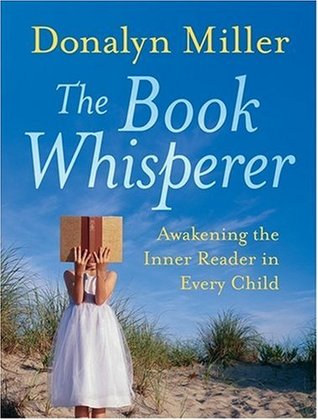
The Book Whisperer: Awakening the Inner Reader in Every Child

I wonder if Donalyn Miller has ever found out how many teachers her book The Book Whisperer – Awakening the Inner Reader in Every Child has helped.  How many teachers have found the courage to finally create environments where students thrive as readers?  Where what we do as teachers helps our students rather than harms them.  I read this as a 4th grade teacher and yet now as a 7th the words of this book ring true even more.  Kids need room to read.  Kids need teachers that care/   Kid needs a chance to fall in love with reading and Donalyn Miller shows us how.  It changed the way I taught literacy and continues to influence me to this day.

From Goodreads:

Known for her popular blog, “The Book Whisperer,” Donalyn Miller is a dedicated teacher who says she has yet to meet a child she couldn’t turn into a reader. Her approach, however, is not conventional. Miller dispenses with the more traditional reading instruction of book reports and comprehension worksheets in favor of embracing students’ choices in books and independent reading. Her zeal for reading is infections and inspiring –and the results are remarkable. No matter how far behind Miller’s students may be when they enter her 6th grade classroom, her students read an average of 40 books a year, achieve high scores on standardized tests, and internalize a love for books and reading that lasts long after they’ve left her class. Travel alongside the author as she leads her students to discover the ample rewards of reading and literature. Her secrets include:

Affirming the reader in every student
Supporting students’ reading choices
Carving out extra reading time
Modeling authentic reading behaviors
Discarding time-worn reading assignments
Developing a classroom library with high-interest books

Rich with classroom examples and practical advice and stitched together with the thread of Miller’s passionate voice, this book will help teachers support students of all levels on their path to reading success and points a way out of the nation’s literacy crisis. The book also includes an invaluable list of books that students most enjoy reading.

While these books have already shaped me there are two more books that I would like to highlight here.
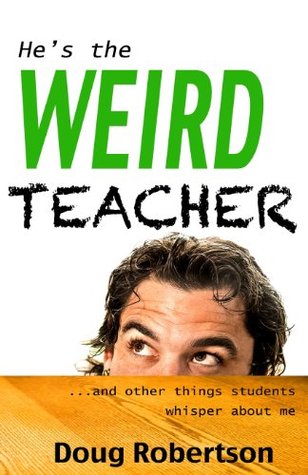
He's the Weird Teacher

I had the chance to meet “The Weird Teacher” himself, Doug Robertson, this week and was so impressed by the care, the energy, and the passion that he brought to changing education that I went home and ordered his book.  I didn’t even ask my school to purchase it for me because I wanted to read it now.  So while I cannot talk about how it has changed me, I have a feeling after meeting Doug, that the book will change me.  So I will do a preemptive recommendation of He’s the Weird Teacher…And Other Things Students Whisper About Me by Doug Robertson.  I will let you know what it does for me.

From Goodreads:

Doug Robertson takes all the creative energy and zany antics he uses to inspire the students in his classroom and has channeled it into a fun to read, irreverent, but deeply meaningful guide to teaching.

And finally, I have to share the story of my own book that is coming out on September 22nd.  It is a practical guide on how to empower, innovate, and create classrooms that our students actually want to be a part of.  The 2nd edition of my book Passionate Learners – How to Engage and Empower Your Students is meant for any teachers looking to make a change.  It is meant for the teacher that sees that education can be done better, that we are losing students every day in our classroom and we have to do something about it before it is too late.  It is meant to inspire but even more importantly also to provide the “How”; how do we actually create passionate learners (and teachers!)?  I hope this book will help others as much as the previously mentioned books have helped me.

From Goodreads:

Would you want to be a student in your own classroom? In Passionate Learners: How to Engage and Empower Your Students, author Pernille Ripp challenges both novice and seasoned teachers to create a positive, interactive learning environment where students drive their own academic achievement. You’ll discover how to make fundamental changes to your classroom so learning becomes an exciting challenge rather than a frustrating ordeal. Based on the author’s personal experience of transforming her approach to teaching, this book outlines how to:

• Build a working relationship with your students based on mutual trust, respect, and appreciation.

• Be attentive to your students’ needs and share ownership of the classroom with them.

• Break out of the vicious cycle of punishment and reward to control student behaviour.

• Use innovative and creative lesson plans to get your students to become more engaged and intellectually-invested learners, while still meeting your state standards.

• Limit homework and traditional grading so that your students can make the most of their learning experiences without unnecessary stress.

New to the second edition, you’ll find practical tools, such as teacher and student reflection sheets, parent questionnaires, and parent conference tools–available in the book and as eResources on our website (http://www.routledge.com/9781138916920)―to help you build your own classroom of passionate learners.

So which books made you who you are?

I am a passionate teacher in Oregon, Wisconsin, USA but originally from Denmark,  who has taught 4th, 5th, and 7th grade.  Proud techy geek, and mass consumer of incredible books. Creator of the Global Read Aloud Project, Co-founder of EdCamp MadWI, and believer in all children.  The second edition of my first book Passionate Learners – How to Engage and Empower Your Students” is available for pre-order now.   Second book“Empowered Schools, Empowered Students – Creating Connected and Invested Learners” is out now from Corwin Press.  Join our Passionate Learners community on Facebook and follow me on Twitter @PernilleRipp.

aha moment, Be the change, being a teacher, ideas, Passion, student voice

How Dare You Teach Our Students to Speak Up?!

I used to be afraid of what the next year’s teachers thought.  Of how I would be judged.  Of how they would roll their eyes when I spoke of the dreams I had for my students, of the voice I was trying to give them.  Of how they questioned everything I did.  I still remember the day I was told that I was not helping students, but hurting them instead, and how dared I tell students to question the every education we were providing.

And so I stopped.  For a few days any way as I licked my wounds and cried at home.  Because how I had become that teacher that instigated, disrupted, and told students that if their education was not working for them then they had to speak up.  How had I become a teacher who told students to question?

But my students didn’t.  They still questioned me, stopping me and asking what the purpose of something was, asking if they could do it in a different way, if they could change, break, create, or even skip.  And in their fight for a better education I realized that no matter what the next year’s teachers had thought, I had to support that fight.  That my students had the right to create a ruckus when the education being given to them was not working,

So instead of telling them to just speak up and question, I taught them to do it kindly but persistently.  That there were ways they could ask their questions without being seen as dissenters. at all times  That they had a right to ask and that they needed to involve themselves in the education that was happening to them.  They had a right to an education that would work for them.

And within the courage of my students, I found my own courage.  Reclaimed it and held my head up high again.  Because the question should not have been why I dared to have students question their own education, but instead how I dared being an educator that didn’t…  Where is your courage?

PS:  In my district now this does not happen, next year’s teachers are some of the biggest supporters of student voice that I have ever met.

I am a passionate teacher in Oregon, Wisconsin, USA but originally from Denmark,  who has taught 4th, 5th, and 7th grade.  Proud techy geek, and mass consumer of incredible books. Creator of the Global Read Aloud Project, Co-founder of EdCamp MadWI, and believer in all children.  The second edition of my first book Passionate Learners – How to Engage and Empower Your Students” is available for pre-order now.   Second book“Empowered Schools, Empowered Students – Creating Connected and Invested Learners” is out now from Corwin Press.  Join our Passionate Learners community on Facebook and follow me on Twitter @PernilleRipp.

aha moment, being me, conferences, PLN

10 Tips for Going to A Conference All By Yourself

This is the summer of a lot of firsts for me; first time going to ISTE and many other conferences, first time going to certain states like Utah, first time doing an Ignite, first time going to NerdCamp (finally!) first time getting an award, and first time doing a lot of travelling by myself.  So as I have been preparing to hit the road, I figured I cannot be the only one that is traveling to conferences by themselves this summer and thus needs some help on how to make the best of it.  Behold, Pernille’s 10 travel tips for going to a conference all by yourself…

Make connections beforehand.  If you are on Twitter, start following the hashtag of the conference and see who else will be there.  I also know there are Facebook groups for some larger conferences and I have been joining some of those, just to make connections.  Even if you are not into social media, Google the conference and see what comes up.  I also try to scope out what type of social event there will be available to you beforehand so that you can go and meet people.  No one should have to go through a conference by themselves.

Figure out your goal.  The first conference I went to I tried to do it all; go to as many sessions as possible, meet new people, make meaningful connections, check out new products!  And I was exhausted.  So this summer it is all about meeting people.  Yes, I want to learn, yes I want to see the new products, but I am focusing in one thing rather than all of them so that I can allow myself to take a break.  Don’t try to do it all, do as much as you can and be excited about how much you accomplish.

Pack what you feel the most comfortable in.  I like to dress up when I present, it is a professional respect thing for me, as well as something that gives me confidence when I have to speak.  Even if I am not presenting, I look pulled together but always comfortable.  Very rarely do I wear heels if I can wear sandals in summer, and I always dress in layers.  Who wants to be cold all day?  So find out what you feel your best you in and then see if that will work for you, if you are going to meet people, make sure you feel confident when you do.

Pre-brainstorm opening questions.  I can be shy at times, particularly in large groups or when people tell me they have read my blog or my books.  So while this may sound stupid, and I probably shouldn’t admit to this, I purposefully go through and think up questions that I can ask any person I meet.  I am, after all, traveling to connect and meet with people and want to make sure that I can spark up a conversation.

Go up to people.  This is something I have had to really work on, but it is important to learn how to introduce yourself to others.  I have had too many missed opportunities where I had hoped to meet someone and I never felt the right moment came for me to go up to them.  Later I was bummed I had missed the opportunity because of my own fear.  So make sure you create that moment, which leads me to my next point…

Practice being brave.  This is something I remind myself of every time I go a new place.  I love meeting new people but can have a hard time initializing a brand new connection.  I have told myself I have to practice every time I travel, every time I have the chance, and meet at least 5 new people.  I set a small goal so I can accomplish it but also make it big enough for me to get in the habit of going up to people.  Some of the best conversations I have had has been with complete strangers that I introduced myself too.  It took bravery and that is something we could all use practice in.

Print a business card.  I laughed the first time someone told me this, (what does a teacher need a business card for?), and then I went to my first conference.  Aha!  When you meet someone new and you want to exchange information that business card becomes your new best friend.  The best part was my husband’s tip of using one of the free websites where all you have to pay for is shipping.  I got 250 cards for $5 and I am bringing them all.

Plan down time.  While I love the learning and connecting that happens at conferences, my brain can only take so much.  So don’t overbook yourself, schedule in for down time where you will sit, eat, and do whatever it is you need to do to feel like this is still a good time.  Going to conferences should be a great experience, not a hassle, nor a stressor.

Bring a book (or five).  Or whatever it is that lets you completely relax by yourself.  I read any time I can and know I will be traveling with a lot of books.  Yes, they weigh a lot but the fact that I can pull out a book at any time and escape a little bit makes a world of difference for me.

Be a nice human being. Unfortunately sometimes going to a conference means that some people forget to be nice, or completely forget to be professional.  We are all busy, we all have places to be, and yes, we probably have many people we would love to be speaking to.  But be nice.  Be kind to the people that speak to you.  Help others.  Look for people who are alone or seem like they don’t know what they are doing, after all, that person may be me.

Represent.  I tell my students this whenever they leave our classroom and the word carries us out into the world.  Remember, you are not just there representing yourself, you are representing your entire school community and your family.  I go to conferences to share the words of my students, to help them change the way education is done to kids all around the world.  That is not something I take lightly and so I behave appropriately.  I have heard crazy stories of conference after parties, and I certainly have no intention of becoming part of those stories.

What else would you add to those traveling to conferences by themselves?

PS:  To see where I am traveling to, go here – hopefully our paths will cross this summer.

I am a passionate teacher in Oregon, Wisconsin, USA but originally from Denmark,  who has taught 4th, 5th, and 7th grade.  Proud techy geek, and mass consumer of incredible books. Creator of the Global Read Aloud Project, Co-founder of EdCamp MadWI, and believer in all children.  The second edition of my first book Passionate Learners – How to Engage and Empower Your Students” is available for pre-order now.   Second book“Empowered Schools, Empowered Students – Creating Connected and Invested Learners” is out now from Corwin Press.  Join our Passionate Learners community on Facebook and follow me on Twitter @PernilleRipp.

aha moment, classroom management, rewards, students

Before You Hand Out Those Rewards – 4 Questions to Ask Yourself

I have been reward and punishment free for 5 years in my classroom.  I have loved it and yet rewards seem to still crop up every year, typically through school-wide initiatives or team decisions.  Because I try to be a team player, I go with it as much as I can, and yet, the voice inside of me still screams that for most students, extrinsic tangible rewards do not help.  Sure there are a few kids who may become more motivated because of a reward, but I have yet to see a child really change their behavior because of an extrinsic reward system.  And while praise also falls into the extrinsic reward category, this post is about the “stuff” we give kids, not our words.  So if you are not quite sure whether to give up rewards or not, please ask yourself the following questions.

1.  Will the rewards only go to certain kids?

Rewards have always, in my opinion, been the surest way to create a divided community within a classroom.  A community where there are those that get and those that don’t.  I really tried to make sure that all of my students had lunch with me, which was one of the rewards they could earn, and yet there were always kids that didn’t make it, at least not legitimately.  Those kids that seemed to slip through the cracks when I was handing out points, or tickets, or money or whatever it was I was handing out, and not because they weren’t well-behaved, but because they were quiet, that child that seems to slide through our day and does ok on everything, they tended to not get the rewards because of their middle of the road-ness.  I tried keeping track but that created more work. And the kids that typically were misbehaved, well, I had to go out of my way to make sure they were rewarded too but they were rewarded for  things like doing some work or staying in the classroom.  I remember how other students felt about those types of rewards being handed out and that inherent feeling of it being unfair. In the end, handing out individual rewards did little to create a deep community and so it was easy for me to give it up.

2.  Have you seen long-term changes as a result of giving extrinsic rewards?

I haven’t.  I have seen students willing to do something in the short-term to earn that thing they want but I have never seen long-lasting changes, unless the reward was increased over time.  So while the child’s behavior changed a small amount, the reward grew significantly until we couldn’t increase it anymore.  Then the child typically reverted to their old ways or even got worse.  I think when we spend more n a child earning something rather than the relationship we are building, then we are investing our time poorly.

3.  Will the rewards increase or devalue the learning?

I have found that when we tie anything academically into rewards, that becomes the focus, not the learning or the growth that students have shown.  When we reward students when they do their homework, do well on a test, or complete a project, we are telling them that the learning they just did is not the main focus but the completion of something is.  We are also telling them that they must get something tangible whenever they finish something, which is not at all the reality of our world. When we tie in rewards with learning we can create a cycle of “Gimme” which should not be our intention as teachers.

4.  Will students actually care?

Most of my students didn’t care one bit about the rewards that were handed out.  They shrugged when I handed them a ticket to pick a prize, or left the prize at school, some even traded their token cash away.  I remember being angry when I saw the prizes left behind, but later realized that because it was just another small thing, it didn’t mean anything to them. And why should it?  Most of our students are bombarded with trinkets and disposable things wherever they go.

What did matter to my students was the time we spent together and what we did during that time.  Not what reward they would get from me.  So I gave up rewarding the individual students and started celebrating more with the whole class.  I gave out more compliments.  I had more individual conversations to talk about behavior.  I started noticing more of what my kids needed and tried to give them that, rather than just dole out punishment or hand out a reward.

For me giving up tangible rewards (and punishment) was one of the best decisions I made.  Students don’t expect something other than learning when we are together, they don’t have the same sense of entitlement I saw at times, and they don’t have the threat of not being rewarded hanging over their head.  Bottom-line; giving up individual extrinsic rewards meant that I could focus on the child in front of me, rather than the systems I had in place.   What do you think?

To read more about my journey away from awards and punishment, click here

I also highly recommend reading Alfie Kohn’s book

I am a passionate teacher in Oregon, Wisconsin, USA but originally from Denmark,  who has taught 4th, 5th, and 7th grade.  Proud techy geek, and mass consumer of incredible books. Creator of the Global Read Aloud Project, Co-founder of EdCamp MadWI, and believer in all children.  The second edition of my first book Passionate Learners – How to Engage and Empower Your Students” is available for pre-order now.   Second book“Empowered Schools, Empowered Students – Creating Connected and Invested Learners” is out now from Corwin Press.  Join our Passionate Learners community on Facebook and follow me on Twitter @PernilleRipp.