Be the change, classroom management, punishment, reflection, Student-centered, students

Do We Really Need the Public Call Out?

When I moved this blog to WordPress some posts did not survive, so in an effort to move some of my favorite posts with me, I will be republishing them here.  This one was first written in April, 2011.

“Joe, you need to pay attention!”

“Sit up, Peter!”

“Lisa, what happened there?”

 All day and every day, we use our students names when they are off task, when they are fiddling, sleeping, or simply not performing to the high standard we have set for them.  We see something out of sorts, judge their action, find them guilty, and deliver the verdict all within a few seconds.    As our lesson continues, we don’t always have the time to dig deep so we assume instead that we know why they are fiddling, why they are not paying attention, and so we correct, coerce, call out their names until they are with us again.  

Their names.  Something that is so intricately linked with who they are as a budding person.  Their names so linked with their identities.  And yet we use them to our advantage, without a second thought as a way to maintain control, as a way to punish. 

This week I asked my students to finish the sentence: “Being a good teacher means…” and what Nathan wrote really made me think: “Don’t yell out the kids name that does something wrong.”  At first, I scoffed at this notion, after all, what else are we supposed to do as teachers when our students are off task?  Calling out their names is one of the most efficient ways to re-direct them quickly.  And yet, as I thought about it more, I understood his thoughts.  Calling out a student’s name in front of the whole class means that the whole class knows that the student is not doing what they ought to.  Some teachers use it specifically for that purpose; the public enforcement of expectations.  And yet, calling out a name means that what one student is doing (or not doing) becomes the focus of the entire class.  Yes, you achieve your goal of attention redirection, but you are directing everyone elses’ attention to that child without fully knowing what is going on.  So I make it my mission to reduce the public negative call out.  

So what can I do instead, because we all know, there are times when even the most attentive student gets off-track and I would otherwise use their name to re-direct right away,  

I could take a breath, hesitate, and see if another strategy can grant the same outcome.  Can I redirect them silently?  Can I signal them?  Can I tap them on their shoulder, or pass by their work area?  Do I need to shout out their name?

I could also re-evaluate, do a quick scan of the room, is this the only child off-task?  Is the whole class really not interested anymore? Did I speak too long, do we need a break or to do something student-directed or hands-on?

Yet, sometimes, it is not me or the students that are the problem.   I am reminded that my students live full lives that sometimes interfere with our school day.  This is when I take the time to stop and talk and ask if everything is alright, is there anything I need to know?  Sometimes they are just so excited about something happening that they cannot focus, other times it is lack of sleep, of food, or they are distracted by life situations.  Sometimes, they will just tell you they are having an off day.  That is alright too, after all, we all have off days.

This isn’t a perfect system, nor is it intended to be.  It is rather one more step in learning how to be a better teacher, one that doesn’t cause embarrassment for the students because I don’t need to embarrass them into behaving.  One that takes the time to figure out the real reason behind distractions and then works with the student rather than just dolling out punishment.

So once again, my students teach me how to be a better teacher.  I should be using their names wisely, reserving the public call out for when it is truly necessary.  Nathan taught me that and for that I am thankful.  He had enough courage to tell his teacher the wrong of her ways, and lead me to deeper reflection.  When we ask our students questions, we may not like the answer, but there is always a great reason for that answer.  A reason that should not be taken lightly, but rather explored, reflected upon and then acted upon.

I am a passionate  teacher in Wisconsin, USA,  who has taught 4, 5th, and 7th grade.  Proud techy geek, and mass consumer of incredible books. Creator of the Global Read Aloud Project, Co-founder of EdCamp MadWI, and believer in all children. I have no awards or accolades except for the lightbulbs that go off in my students’ heads every day.  First book “Passionate Learners – Giving Our Classrooms Back to Our Students” can be purchased now from Powerful Learning Press.   Second book“Empowered Schools, Empowered Students – Creating Connected and Invested Learners” can be pre-ordered from Corwin Press now.  Follow me on Twitter @PernilleRipp.
Be the change, being me, classroom management, reflection

I Do Not Manage

When I moved this blog to WordPress some posts did not survive, so in an effort to move some of my favorite posts with me, I will be republishing them here.  This one first appeared in March, 2011.

I am sick of the word “manage” as in “classroom management” or even better how do you “manage” your students?

Well, I don’t manage them.  I teach them, guide them, and learn along with them.  I do not come to school intent on herding cattle but rather helping young minds develop their knowledge, as well as their desires to become more knowledgeable.  I do not manage my classroom, but instead I collaborate with students to set up perimeters for us to function at our best, be our best, and want to stay that way.  I do not manage their desires to learn or become better citizens; I nourish it, sometimes light it, but always, always maintain it.

I do not manage to get through my day, I flourish through it, loving the trials, the ups and downs, the wondrous moments that come with teaching.  I do not manage my life or my curriculum, I live it, love it, and will continue to push myself as a teacher, a human being.

I am not a manager, I am a teacher, and I would like to stay that way.

I am a passionate  teacher in Wisconsin, USA,  who has taught 4, 5th, and 7th grade.  Proud techy geek, and mass consumer of incredible books. Creator of the Global Read Aloud Project, Co-founder of EdCamp MadWI, and believer in all children. I have no awards or accolades except for the lightbulbs that go off in my students’ heads every day.  First book “Passionate Learners – Giving Our Classrooms Back to Our Students” can be purchased now from Powerful Learning Press.   Second book“Empowered Schools, Empowered Students – Creating Connected and Invested Learners” can be pre-ordered from Corwin Press now.  Follow me on Twitter @PernilleRipp.
Be the change, being me, new year, rewards

Confessions of a Former Rewards Addict

When I moved this blog to WordPress some posts did not survive, so in an effort to move some of my favorite posts with me, I will be republishing them here.  This one was from 2010, as I first started my in my no rewards classroom.

I admit it.  Gold stars, super duper stickers, sticks, names on the board; I have done it all.  And when one reward system failed, another one took over.  Never one to sit and reflect that perhaps it was the system that was faulty and not just that the students grew tired of it.  After all, that carrot at the end of the stck was essential to my teaching success.  Those stickers meant I cared.  That Awesome board where A+ work was proudly displayed gave students something to strive for.  That certificate if you got an A on your math test meant that you were smart and that other students should look up to you.  Right?  Wrong again.

Oh, I thought I was clever.  I thought I knew how to motivate students and after all, what could a little reward do that would possibly hurt the child?  Well, after reading Alfie Kohn’s book “Punished by Rewards,” I realize just how wrong I have been.  Those papers on the awesome board did nothing to improve unity in my room.  Instead they acted as the great divide, highlighting the students that could from those that could not.  Those stickers I doled out for anything above 90%; not a cheerful way to celebrate achievement, but rather a glaring marker showing which students did the best in the room.  Those great “You did it” award certificates stapled to their math tests, not great posters of pride but instantaneous feedback on where a students falls within the grade hierarchy.  And yes, the students knew exactly where they fell within the classroom.

So this year I am throwing it all out.  Well, most of it anyway, I do like those stickers and will use them for good rather than evil.  And I am petrified.  After all, this is how I was taught to teach.  If a student does something good they should be rewarded and nothing says “Great job! I can tell you worked so hard” better than a smiley face sticker.  Except when it doesn’t.   A smiley face sticker says; “If you work hard, you will get a smiley face sticker.”  And when in life does that ever happen?  This year, I plan on talking to my students even more.  Telling them what was great, asking them what they thought was great and then peeling apart things that didn’t quite get there and figure out what went wrong.  We shall learn from our supposed mistakes, those will be our rewards.

So while I am excited for this new no-reward agenda, I do shudder a little bit at the implication it has.  No longer will I be the cool teacher with the Awesome board, the one you get to have pizza with if your stick doesn’t get moved, the one that doles out classroom parties as if they were clean socks.  Instead, I will be the one that shouts the praise the loudest to every kid.  The one that talks to all my students and highlights all the things they did right.  The one that creates more work for herself because talking rather than just placing a sticker takes more time, more effort, more thought.  And I can’t wait.  Will you join me?

H/T to this post from George Couros “The Impact of Awards”

I am a passionate  teacher in Wisconsin, USA,  who has taught 4, 5th, and 7th grade.  Proud techy geek, and mass consumer of incredible books. Creator of the Global Read Aloud Project, Co-founder of EdCamp MadWI, and believer in all children. I have no awards or accolades except for the lightbulbs that go off in my students’ heads every day.  First book “Passionate Learners – Giving Our Classrooms Back to Our Students” can be purchased now from Powerful Learning Press.   Second book“Empowered Schools, Empowered Students – Creating Connected and Invested Learners” can be pre-ordered from Corwin Press now.  Follow me on Twitter @PernilleRipp.

Be the change, Student-centered, writing

So How Do We Create Passionate Writers?

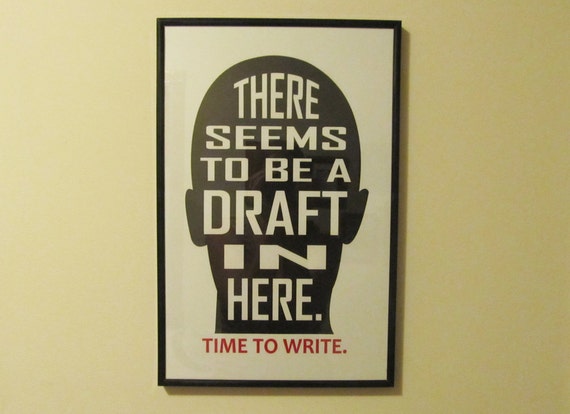
image from etsy

I started my reading transformation 2 years ago, realizing that I needed to create a sense of urgency and passion regarding books in my classroom.  I knew I should focus on writing, I knew I should dedicate more time to it, more energy to it, and yet… I just didn’t know where to begin.  It wasn’t that I was a bad writing teacher, after all, my students write a lot and often, but my passion just wasn’t there, in the classroom to urge the student so push themselves further.  To really find themselves as writers.  Yet, here I sit, the author of two books, a blog that is read by a global audience, and barely was that transferring into my classroom.  So where was the disconnect.  Why did I not turn my students into passionate writers as well as readers?

I knew I had obstacles; a determined curriculum that had us on a breakneck pace.  Students at such varying degrees of ability that there didn’t seem to be a middle ground.  Things that had to be taught no matter what.  And time, never forget time, and just how little we have of it. But still, there has to be a way, within our prescribed curriculums to create excitement and urgency in the craft of writing.  There had to be others who had better ideas.

So I turned to Voxer, I have a group there with people I really respect, and they started sharing their ideas.  So thank you group, here are some of the highlights for how we can create passionate writers:

Choice in process.  We cannot underestimate the power of choice in our writing curriculum and what it means for students to be able to explore their own true writing style.  Yet, within a prescribed curriculum, it can seem as if there is no choice.  I have found though that I can give students choice of how they write, greater engagement occurs.  Sure there is a process, but that process may look different from child to child based on what they prefer.  Some will want to type right away, some will stick to a pencil.  I have even had students dictate stories to others or to a Livescribe pen.  Let them discover how they write best and accomodate as much as you can, then at least they can focus on the writing, not the process,

Choice in topic.  Even within a curriculum that tells me what students should be creating, there are many ways to add choice in topic.  If the area of focus is argumentative essay, don’t limit what the students can write about.  Help them discover something they are passionate about and help them explore.

Choice in audience.  This was a great point brought up by Chris Wejr and something I had not considered.  I always assume that students want to share their work with as big of an audience as possible, but this may be far from the truth.  Students may want to only share with me or a trusted friend.  Students may want to publish it for the whole world to see.  What we need to do as teachers is figure out what each child would like and then honor that.  I would not have wanted the whole world to see my writing as a 13 year old, I bet I have students who don’t either.

Choice in partner.  I often have students write together but when I pair kids up I can sometimes stop their writing process.  Writing can be very personal, so I often think of what type of writing is occuring and match that to the relationship students need with their partner.  Sometimes having your most trusted friend as your writing partner can be a very good thing.

Authentic purposes.  Last year I was able to find more authentic purpose in our writing, so when we wrote our op eds, they were for the newspaper to be published, not just me.  When we wrote a non-fiction picture book, they were for our 1st grade buddies.  When students had a genuine audience and purpose for their writing, they felt more in control because they understood what the task at hand was.  They knew they had to write succinctly for the newspaper to publish their words, they knew they had to find an accessible voice for their 1st graders.

Passion.  Once again, we have to invest ourselves into writing, whether it be through modeling, discussion, or general excitement. Much like we share our passion for reading by thrusting books into the hands of students for them to have an incredible reading experience, what if we did the same with great writing emphasizing how spectacular it is?  What is we start telling students that we thought of them when we read something because it reminded us of their writing?

Minimizing our critique.  While I believe we have to teach students to be better writers, I think sometimes our eagerness to help can stymie the process.   So figuring out what the best process is for each child to support their growth without killing them with corrections.  Sometimes it is okay to just write for the sake of writing.  Sometimes it is even ok to share uneditied writing just to show off our ideas.  Not all writing has to be finished or polished.

Spontaneity.  This great point was brought up by Ben Gilpin and I couldn’t agree more.  We should look for the moments in our everyday where we are inspired to write and that does not just need to be within writing time.  I get ideas to write all of the time and then try to find the time to actually jot down my thoughts.  What if we created environments where journaling and small moment writing was a natural part of our day?

Sharing our writing life.  I tell my students all the time about the things I write, but how often do I show them?  How often do I write in front of them?  How often do I stop and write in the middle of the day because inspiration strikes me?  I think much like we showcase our books reads to create a reading community, we have to showcase our writing too.

What other ideas do you have?  What did I miss?

I am a passionate  teacher in Wisconsin, USA,  who has taught 4, 5th, and 7th grade.  Proud techy geek, and mass consumer of incredible books. Creator of the Global Read Aloud Project, Co-founder of EdCamp MadWI, and believer in all children. I have no awards or accolades except for the lightbulbs that go off in my students’ heads every day.  First book “Passionate Learners – Giving Our Classrooms Back to Our Students” can be purchased now from Powerful Learning Press.   Second book“Empowered Schools, Empowered Students – Creating Connected and Invested Learners” can be pre-ordered from Corwin Press now.  Follow me on Twitter @PernilleRipp.

Be the change, being a teacher, being me, new year, reflection, Uncategorized

Stop Labeling Different – It’s Time to Stop Teacher Bullying

image from icanread

I took a deep breath before I hit “publish” on my post “When Teachers Bully Teachers.”  I had decided that it was time to stand publicly behind the story, to claim my words, to face my fears, and yet with my fingers hovering over the button,  I couldn’t help but be afraid.  Afraid that nasty comments would follow, afraid that people would shun me, afraid that it would start all over again.

Within minutes the comments started coming.  At first, I opened each one with trepidation; would this be the comment that told me I was full of it?  That I had done it to myself?  That surely I deserved the treatment I had gotten?  Instead, it was story upon story of teachers sharing their experience, of teachers saying it had happened to them.  Then my inbox started filling up with private reach outs, then Facebook.  As I closed my computer that morning, I looked at Brandon and said, “There are so many of us and I thought it was just me.”

Teachers bullying teachers is real.  Principals bullying teachers is real.  Within our communities, where we try to teach children how to act as adults, there are many adults not living the words they teach.  Some are doing it on purpose like in my situation, others may not know the damage they are doing.  But it needs to end.  For me, hitting publish was the first step, but now I see that there is so much more must be done.

If you are being bullied:

  • Know you are not alone, unfortunately.  Look at my post and all of the comments it got. This is important, you are not alone, you are not the worst teacher in the world, you are not a horrible person, you do not deserve this.
  • Stop labeling yourself.  I was so good at coming up with excuses for why this was happening to me that I only made it worse.  I kept thinking how I was doing this to myself and it was all my own fault.  No one deserves to be treated poorly, not even someone who does things a little bit different or has a strong opinion.
  • Share your story and speak up.  Even if you are not ready to confront your bully, share your story with someone; an administrator, a colleague, the whole world like I did.  Reclaim your story to stop the process.
  • Then stand up for yourself or find a way out.  There are two ways to fix the situation because suffering through it is not one.  One is to confront your bully and try to put an end to the situation, however, when I tried to do this it didn’t do much.  SO then know it is okay to leave, to find another job, a better situation.  You are not a coward, nor are your running away.  You are saving your soul and that is important.
  • Make peace with yourself.  I still worry about what I did but it is time to let it go.  With each moment this summer I am allowing myself to put the past in the past.  We have to forgive ourselves and allow ourselves to heal.

To stop bullying at your school:

  • Be welcoming.  So much can be said for reaching out to new staff.  A friendly hello and introduction can go a long way, but don’t just do it in the beginning of the year, keep checking in.  Keep reaching out and making sure every person in the building feels they have someone to speak to.
  • Reach out to everyone.  Sure, my bullying started my first year, but there are others that have said it started later.  So make it your mission to make new connections every year, even with current staff, you never know who might be feeling lonely.
  • Be a nice person.  I know many of us assume we always are, but this is something we should all focus on.  Be nice, be kind, be open, be inviting.  Don’t put others down just because you disagree with them.
  • Don’t believe the talk.  I know many teachers at my old school were swayed by powerful words about me.  Instead, dismiss the talk completely or seek out the person who is being talked about to hear their story.  One teacher did that with me and it made a huge difference in how I saw her and our relationship.
  • Stop labeling different.  Too often the people we ostracize are those doing things differently.  Don’t be afraid of change, or at the very least, ask questions!  If someone has made a change in how they teach there is probably a reason for it, so ask them why, dig around a little bit, be open to new ideas.
  • Recognize your own behavior.  Too often we don’t see what we do as malicious or even bullying, but we need to be honest here.  How often have we slandered?  How often have we snickered?  How often have we excluded?  Take stock of yourself and see how you need to change.
  • Follow your own classroom rules.  We had one rule in our room, “Represent.” Whatever your rules are, make sure that you are following them too.  If the kids can do it, so can we.

We must say, “No more!” and share our stories.  Don’t be afraid like I was, don’t suffer in silence.  As a close colleague of mine told me when she read it, “I guess I knew you struggled, but I just never knew how severe it was.”  And that was my mistake.  I should have gone to administration with the union, or I should have gone higher up.  I should have stood up, but in the moment it was too hard, too scary, and so I kept my head down and suffered through it.  I will never make that mistake again.  Please help me stop the bullying.

I am a passionate  teacher in Wisconsin, USA,  who has taught 4, 5th, and 7th grade.  Proud techy geek, and mass consumer of incredible books. Creator of the Global Read Aloud Project, Co-founder of EdCamp MadWI, and believer in all children. I have no awards or accolades except for the lightbulbs that go off in my students’ heads every day.  First book “Passionate Learners – Giving Our Classrooms Back to Our Students” can be purchased now from Powerful Learning Press.   Second book“Empowered Schools, Empowered Students – Creating Connected and Invested Learners” can be pre-ordered from Corwin Press now.  Follow me on Twitter @PernilleRipp.

Be the change, being me, books, Student-centered

Oh Yes, I Wrote Another Book…

1532117_613725632010387_1673765340_n

People often ask me where I find the time to do what I do, and honestly, it is not that I have a magic wand.  I multi-task a lot, sometimes I am over-connected and need to find a better balance, sometimes it is late at night when I can’t sleep, and at one time it was sitting next to a little, tiny baby growing in the NICU.

My second book, published by Corwin, is coming out in September, and it was written in that little room, in the NICU at Meriter Hospital in Madison, Wisconsin.  I filled it with the hopes for Augustine and the type of school I wish for her when she gets to be 5.  I filled it with the dreams I have for the schools I work at, for the teachers I learn with, for the students I teach.  And so my second book is filled with empowerment.  A plea to transform our schools from top-down decision machines, to environments where there are many leaders, many ideas, and staff, as well as students, that feel that they are in control of their educational journey.

Much like my first book, “Passionate Learners – Giving Our Classrooms Back to Our Students,” this book is meant to be an idea book, a book that gives you things you can do right now to change your environment.  A book that will give you hope, hopefully strengthen your vision of what a learning environment can look like, and re-ignite your feeling of power in education.

So this book, “Empowered Schools, Empowered Students – Creating Connected and Invested Learners,” will hopefully end up on your to-read list.  It will hopefully change the way we do school, no longer relying on our old methods, but instead embracing all of the stakeholders, including the students, when we discuss what school should be like.  I hope together we make that change, not just for ourselves, but for all the kids we work with.  Just like Augustine at 6 months is realizing her own potential, we need to make sure that our schools support all students and all staff to leave their mark and change the world.

CCES-Ripp


To pre-order your copy, please go here.

I am a passionate  teacher in Wisconsin, USA,  who has taught 4, 5th, and 7th grade.  Proud techy geek, and mass consumer of incredible books. Creator of the Global Read Aloud Project, Co-founder of EdCamp MadWI, and believer in all children. I have no awards or accolades except for the lightbulbs that go off in my students’ heads every day.  First book “Passionate Learners – Giving Our Classrooms Back to Our Students” can be purchased now from Powerful Learning Press.   Second book“Empowered Schools, Empowered Students – Creating Connected and Invested Learners” can be pre-ordered from Corwin Press now.  Follow me on Twitter @PernilleRipp.