 |
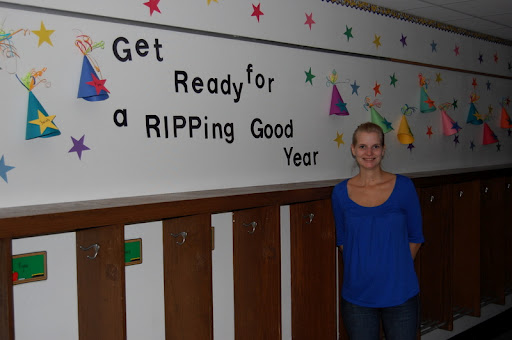
| Me in front of my very first welcome wall |
As summer continues to lull us into long days filled with ice cream, books for fun, and nights spent on a porch, I can’t help but think back to the first summer as a teacher. That summer when I had made it through those grueling interviews, where I had finally landed my dream job and I now stood facing an empty classroom, slightly panicked, but oh so very excited. I remember the joy. I remember the delight. And boy, do I remember thinking, “Now what?”
Don’t get me wrong, I had read Harry Wong’s book, I had substituted, I had even taught summer school, and yet, it just wasn’t enough. I had no idea where to go from there, so to all those new teachers, with all those new jobs, I offer you my advice.
- Reach out! Remember that interview team you sat across trying to connect with, well, now is the time to make the actual connection. So email them, find them on Twitter, Google them, but do something and reach out. Set up a time to meet whether formally or informally. Don’t wait until the first day of school there will be so many others to connect with then.
- Ask questions. When you reach out, ask questions about curriculum, ask questions about school quirks. Truly there is no such thing as a dumb question in this matter. I still remember my long list and just how gracious my team members were to me.
- Ask for resources. Don’t re-invent the wheel with every single piece of paper. I created so much on my own that first summer until I found out how much of this stuff my team already had made that was much better than my stuff. Bring your ideas to the table but also ask to use some of theirs. There will plenty of stuff to do on your own.
- Do your homework. However, do figure out what you can on your own too. Things like math curriculum and other major district decisions can probably be discovered through a quick website search. That way you can get to those things that are a little more complicated then that.
- Start dreaming about your room. Your room is really important, it signals to the world what type of teacher you are and what your educational philosophy is. Where do the desks face? Do you have a desk yourself? Are there posters or will you have students take over the walls? All of these seemingly innocent room questions are actually pretty major things to consider.
- Take classes. Again, this may be something a teammate tells you, but see if there are classes you need to take. This year my district is implementing the writing workshop and we are all encouraged to take a 2 day class on it, my new team mate knows this because I told him.
- Reflect. Now that you have the job; what is your primary goal for your first year (and please don’t say survive – teaching shouldn’t be about survival but about thriving)? What do you hope to pass on to all of those kids, your teammates, your school and yourself? Where do you want to see yourself next year?
- Stop with the prep work. I made so many copies and spent so much time laminating my first year, why? I am not sure. It seemed like a full-time job some times but I was so sure that everything needed to be protected and copied, crazy really. So figure out what is important to you, take stock of what you will be doing in your prep time, and ask yourself this; “Does it really need to be laminated?”
- Enjoy! There is no time like the one you are in, all fresh and ready for those first students. So get yourself psyched up, because it is truly a memorable experience. Allow yourself to trust yourself. Allow yourself to feel like you have something valuable to add. And finally, allow yourself to be just a little bit freaked out. You cannot prepare for everything but you got the job because you are capable, so trust that.

 Pernille Ripp