reflection

When We Cut Science and Social Studies

Currently my district is proposing a new elementary schedule and while it has some great ideas in it, one things saddens me to no end; social studies and science would only get 30 minutes for one of them every day.  So when I had the chance to tell the school board president how I felt about the proposal, this is what I wrote to her:

The sample schedule being proposed, while its intentions are noble, I believe it is detrimental to our students’ development as knowledgeable global citizens.  As the world around us grows more test obsessed, our students have indeed become just numbers on a data wall.  We no longer discuss their passions, we discuss their deficits and how we will test them some more to bring them up to speed.  Yet the world does not create jobs for people who are only strong in reading and math, or even for students that are very good at taking tests.  It creates lives for people who are curious and knowledgeable in many things, that want to be a part of something larger than themselves. Yes, reading and writing are foundations upon which we rest all of our other curriculum, but science is curiosity and social studies is awareness in its truest sense; knowing ones place and where one fits into the world.  When we diminish our time in these subjects we are taking away the chance for students to discover themselves and their passion. We lose further sight of what school is intended to be; a place to cultivate ones interests, become well-rounded, and for learning to become a passion.  We cannot selectively focus on things that will be tested at the expense of things that will not.  I fear we will lose students interest and dedication if we go along with this schedule.  There will not be much room to explore, discuss, or even question things that fall outside of our scripted math, reading, and writing programs.  School continues then to be a necessary evil that all students must survive.  And that will show up in our tests.

I have done my part, now I can only hope that they listen.
Be the change, reflection

The 4 Education Trends I Hope Stay in 2012

2012 is coming to a close and along with it, I hope certain trends in education also fade out of our memories.  While these may seem innocent enough, I think it is time we make a conscious effort to truly leave them behind.

  • Teacher bashing.  While most people think teacher bashing only happens outside of education, I think it is time we admit how much teacher bashing happens within our own school walls.  We have enough outside sources that fight us all, it is time we stop the in-fighting among ourselves.
  • Automatically viewing all changes negatively.  While I know not all changes are created equal, I think it is important we give change a chance, or at least reserve our judgment until we have heard the full idea.  Then we can form educated opinions and work from there.
  • Sharing just how overwhelmed we are at every chance.  While venting is healthy, I think when it is all we are focused on it loses its helpfulness.  Then we are not releasing our worries but just magnifying them.  And yes, I know that being a teacher is super hard right now, I am right there with everyone, but I find when I talk about it all the time that is all I feel and what good does that do?  Now sharing our frustrations in an effort to get help, new ideas, or work through – that I can stand behind.
  • And finally, and this is the one I have to work on in particular, thinking we cannot change anything because we are only teachers.  We are stronger than we think and together we can make a difference not only for us as educators, but also for our students.  I will continue to fight for the right kind of change every chance I get, I will continue to fight from within, I will continue to stand up to the testing obsessed system because my students deserve it.

If you had not had a chance to read George Couros’ post “3 Ideas That Will Not Change Schools” please do, this post was definitely inspired by that.

No grades, reflection

Standards Based Report Cards; Wolves in Sheep’s Clothing?

My district switched to Standards Based Report Cards this year and at first I felt happy; after all, we were stepping away from letter grades and toward feedback based narratives, right?  Wrong.  After having sent out my first set in December, I once again realize the failure of report cards, even if they are standards based.  So while there may be some positives; they are supposed to be broader skills, narrative missives rather than just percentages, and we finally all have the same report card, I still see some massive red flags:

  • You have to speak educationalese to understand them.  Phrases such as, “Uses decoding skills, uses comprehension strategies, and recognizes and uses different genre and text features while reading” now abound on our report card without any proper explanation of what they mean.  I felt compelled to write an explanation letter with each report card so that parents and students may actually have an idea of what it is they are being graded on.  If I am doing a narrative letter, then why in the world am I also doing a report card?
  • Numbers get converted to letter grades.  We may urge parents to not think of a “4” as an “A+” but let’s face it, they do.  My students did it the first day they got them and they will continue to do so no matter how many times I tell them not to.  The only difference is that now everybody wants 4’s rather than A +’s.
  • We are still quantifying some learning,  even though you really can’t.  I have to break down whether my students ask appropriate questions or follow multi-step directions into a grade, are they truly two grade levels above in their direction following or are they just at a 5th grade level? My head was spinning by the end of it.  
  • Learning that is supposed to be differentiated is not graded differently.  So a child with special needs is graded the same way as a child without.  That way we can ensure that all kids that struggle know that although they have worked very hard and have progressed, they will never be where their peers are.  Take that you struggling learner!
  • We don’t offer learning opportunities where children can prove they are accomplished.  I have to follow a scripted math, science, social studies, and writing program.  This is all crammed into very short amounts of time.  Within that time I have to get through the lesson and then somehow leave time for enrichment so that my students can show me just how “accomplished” they are to get a 4.  That doesn’t always happen.  So although I strive to do project-based learning, I still have to get through my curriculum, and that does not allow for deeper exploration   You may be accomplished in science, but I will probably never find out if I just follow the curriculum.
  • We expect kids to learn at the same pace so we can evaluate at the same time.  We forget that children gravitate toward different subjects, learn at different paces, and learn in different ways, and yet we grade them the same.  What is our obsession with numbers and data?  We test them just so we know what they supposedly know and if they do poorly then we have to teach them how to test better.  That is sheer insanity to me.  To have a single standard you have to decide that there is only one way to learn, and we know that to be false.  When we don’t provide students with multiple opportunities to show us that they know we are not doing our job.  Or at least I am not.  
  • It is still not narrative.  Standards based report cards offer us four grading options; 1, 2, 3, and 4, and yet still leaves the recipient wondering what they need to work on.  Sure they may have received a “2” in summarizing but that “2” does not tell them what they need to work on; the teacher does hopefully through goal setting with the student.  I itched to add comments to every single box to explain exactly what the child should work on, but I didn’t, because it defeats the purpose of a quick way to show learning.  I will always feel that report cards are obsolete in a classroom where feedback is continually given and goals are set along with te student.  Having moved to standards based report cards only solidifies that opinion.

What do you think?  Are standards based report cards better than traditional report cards?  Am I missing the point of them or being too harsh?  Are they just lipstick on a pig?I would love to have a discussion regarding this.

Be the change, no homework, reflection

No Homework – 2 Years Later

Two years ago, I decided I had had enough of taking my students’ time outside of school.  Two years ago I decided that I had had enough with worksheets, meaningless extra assignments, and sending work home with kids well knowing that they probably could not do it.  I had had enough of giving kids zeroes and A’s never quite knowing who had done the work or whether they truly “got” it.  So I stopped assigning home work  or at least tried to.  You see, stopping homework in out test obsessed, common core aligned  standards based education is not that easy.  It looks great on paper and I wish I could say that my students have no homework, but it is not quite true.  They have limited homework because there are some things I cannot get around.  So here are some lessons I have learned in the last 2 years:
  • Common core aligned does not mean more focused, it usually means more pages to get through.  Our math curriculum went from averaging 3 pages a lesson to 5 – I now rush through them so that students can have some work time in class and I can reteach the concepts I need with small groups but I am sad to say there is almost always math homework at the end of the day.  And don’t even get me started on the crazy amount of pages in Lucy Calkins stuff.
  • We don’t have enough time to read.  I used to have a luxurious 30 minutes of independent reading built into my day where students actually just read.  I would confer with small groups, read one on one with students and move about leisurely discussing strategies with them.  Now we have to have guided lessons, small groups, write about our reading and one-on-one discussions within 45 minutes.  I am lucky if my kids get 15 minutes of pure reading time so every week I ask them to read 210 minutes throughout the week.  I don’t care what they read, as long as they read, and no, they do not have a log to fill out, we have the honor system.
  • Kids will struggle with getting things done in time even when you give them classtime.  We do spelling as our morning work so every day students have 10 minutes to work on it with being due on Friday.  For most students this is no problem and they finish by Wednesday  but those that have a hard time focusing, getting started, staying motivated; they still end up with late work.    And not just for spelling, when I give students in-class time to finish science responses, do social studies projects and so forth, there are always some that struggle with deadlines.  Every week I have this in my classroom and I am still not sure what to do about it.  
  • Taking recess is still against my beliefs.  I very, very, very rarely ask a student to stay in during recess and if I do it is to discuss something behaviorally with them.  However, once in a while a child gets so behind, so lackadaisical about getting work done and using their time wisely that they have to stay in.  So far this year it has happened once and only after I had given the child a whole week to finish the work outside of school.  Once they were done with the work though; out they go.
  • Some parents will want more work, some parents will want less.  To no fail some always feel I don’t give their kids enough work to practice their skills or get them ready for middle school, while others still think it is too much.  There is no magical way of making everybody happy, but only contuing to communicate what we are doing and why.  
  • I still believe homework is unnecessary but boy it can be hard to get rid of.   Our curriculum is written to be extremely difficult to get through in a regular school day so I battle this every day.  But it gets better every year as I get wiser and smarter about how my students can accomplish their learning goals and show me they have mastered something.  I do not use worksheets outside of class and we do much more project based learning with student and teacher determined learning goals.  

I have never lost my belief that homework should be banned in school and as I continue to work through my new curriculum, I maintain that belief. I do not believe that homework is the only way to teach students time management, responsibility, and to show me they have learned something.  There are many ways to do that, but to do it well you have to tear apart your curriculum, tear apart your expectations of what a finished product looks like, and tear apart what you think students can accomplish.

If you are looking at going no homework but unsure of what to do, reach out, I will gladly help if I can.  

Be the change, reflection

Remember That Kid and His Big Dream

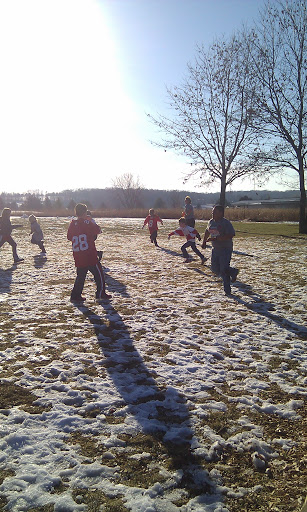
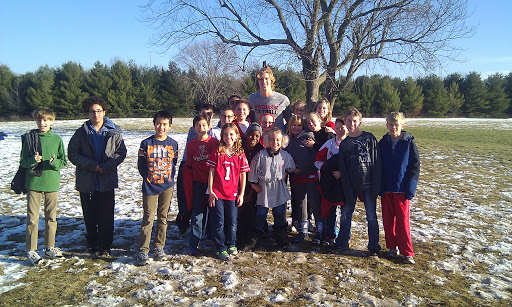
Lat Friday, the day of the awful shootings in Connecticut  something quite magical was happening in my classroom.  As teachers, this is one of the biggest oxymorons we face; the world may be tragic but inside our walls we have children jumping up and down out of joy.  My students did not know what was going on somewhere else in a school similar to ours, all they knew was that Joel Stave, a quarterback for the Badgers was coming to visit them.

Remember that kid and his big dream?  Well, because of you he received letters from 3 football players all urging him to continue to push himself and the ultimate prize; the visit.  To see his face light up when he got to play football with Joel actually brought tears to my eyes.  
As teachers we do everything we can to support our students, to help them believe in themselves, and to push them further, but this one?  This one I could not have pulled off if it wasn’t for other teachers that care as much as I do, three of them being Nete Schmidt, John Sterner, and Jason Bretzmann.  I promise to pay it forward.
Friday evening I wrote this letter to Joel to make sure he knew what a difference he made:
Hi Joel,

I cannot quite find the words to describe how much your visit meant to my class on Friday.  This will be the moment they remember about 5th grade.  All weekend I have received emails from parents thanking me and telling me how incredibly excited their kid was.  
Friday, with the terrible shooting in Connecticut  was a very hard day to be a teacher.  We all knew, but had to hide it from our students.  The school was actually in lock down mode when you got there and no kids were allowed on the computers as we tried to shield them from the news.  Your visit meant that my kids had the best day possible and for that I will ever be grateful.
I spoke to your student manager about how big of a deal you coming was and he commented that he forgets how much people look up to you because he sees you on a regular basis. To my kids, you are the biggest role model they have ever met and the way you were with them showed your genuine heart.  Perhaps when you retire from football you should consider becoming a teacher – it is horribly paid in money, but soulfilling in experiences.
Whatever happens to you, you should know that you matter.  And how you are matters.  Thank you for taking time out to see us.  Best of luck to you, you will have 20 diehard fans rooting for you in the Rosebowl.

Thank you everyone; you matter.


Be the change, reflection

We Are A Broken Nation

We expect our children to grow old. To have lives, wives and perhaps even children of their own.  we expect to see them through the terrible two’s, their first day of school, the dreaded teen years and to walk across a college stage diploma in hand full of dreams.  But our children don’t always get to live out our dreams.  Sometimes our children are taking from us much sooner than we ever feared; a parent’s worst nightmare.

Like so many others, I watched the massacre at Sandy Hook Elementary unfold via Twitter on Friday, crying in front of my computer while my students were at music.  The hushed conversations between teachers quickly took over the school and yet our kids walked around happy it was Friday.  Happy lunch was soon, happy that Christmas is coming and that there is a chance of snow, completely unaware of the unspeakable evil happening at another school just like ours.  We were told to keep all students off computers, to not mention anything, so we sent them out the door with high fives  and great jobs, and see you on Monday.  Then we grieved after they left and huddled together asking the tough question; what would we do if it happened to us?

The truth is we don’t know.  We too have been trained in drills of what to do, but I know it is not enough.  We will be sitting ducks just like everyone else.  My husband asked me if I was going to take a hammer to school to leave in the room, he wasn’t joking, because the truth is, we have nothing to protect ourselves with.  A locked door, a secretary who buzzes you in, a name tag cannot protect our children.

I read about the teacher who hid her kids and lied about their whereabouts and I wonder if I would be so brave?  I wonder if I could react and protect as instinctually and fearlessly as she must have.  I hope I could.

On Monday, school resumes and my students will tell me about the killings.  They will have some questions, I am sure, but I will leave most of the discussions up to parents.  I will tell them that school is safe even if I have no way of knowing.  I will be told by my district whether to change anything in our safety procedure and soon we will be lulled back into our sense of safety and we will again begin to gripe about the small things.  We will move on because that is what we do.  We will have cries of change needed yet our funding will continue to be cut resulting in fewer teacher, fewer psychologists, fewer guidance counselors – the very people we need in schools to prevent tragedies.

We are a broken nation when our school becomes the ultimate cry for help from someone with a horrific plan.  We are a broken nation when this continues to happen and we change nothing.  We are a broken nation when it takes multiple murders to get our attention.  How can we begin to heal?

PS:  If you have the time to read another post, please read “Preparing for the Worst Case Scenario” by Kris Still on Beth Still’s blog.  And then forward it to your school district.