being a teacher, student voice

10 Quick Ways to Give Students A Voice

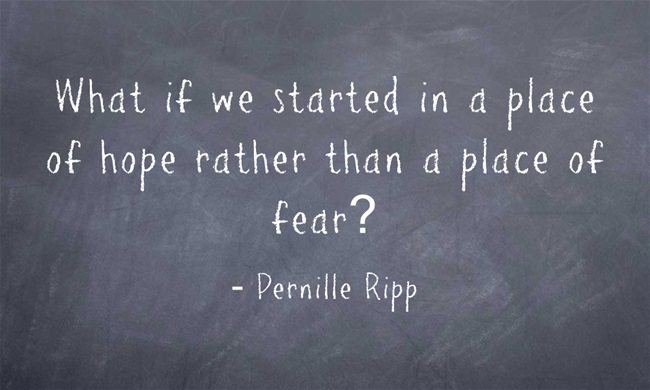
What-if-we-started-in-a

My students continue to astound me.  Not just because they are opening up more and more.  Not just because they are working so hard.  Not just because they are pushing themselves.  While all of those things are wonderful to see, it is how they are speaking up, asking for change, and taking control of their learning journeys that really is getting me excited.  Student voice is something we embrace in my district and it is something I believe in as well (Just see the books I have written).  Sometimes we think student voice is a system or a huge change, but the reality is that it doesn’t have to be.  It can be a s simple as trying some of these ideas.

1.  Give them a blog.  

My students have blogged since 2010 and nowhere do I see the global effects of them having a voice in a bigger way.  Our blogs serve not just as a way to record our growth but as a way to start a dialogue with the world.  And my students embrace it because we take the time to do so.  They see the results in their commments.  They see how people react.  Blogging has changed the way I teach more than once.

2.  Give them time.

Student voice takes time, at least the type of voice that will lead to changes.  So invest the time in the beginning, model what your conversations will look like, and take the time to showcase the tools they will use.  Student voice is something I come back to throughout the year because students often forget that we want to hear their opinions, simply because they are not used to someone asking (and listening).  So make it a focus and keep it in focus all year.

3.  Give them post-its.

Wondering how you will engage your shy students?  Wondering how you are going to find time for this?  Have them write down their idea on a post-it and hand it to you.  Often some of my strongest students are the ones that have the hardest time speaking up, and yet, student voice does not necessarily mean the words have to be spoken.  They have to be communicated and post-its count as that.  In fact, this is something that I use throughout the year as a quick way to check opinion.  Students can express their honesty without wondering about judgment from others.

4.  Model constructive feedback.

Part of student voice is getting and giving constructive feedback.  If students want to change the way things are done well then they need to know how to approach it.  Often students can be overly blunt, which requires a thick skin, but take the time to discuss how to frame their words so they will be listened to.  I teach my students that how they deliver their message sometimes matter more than the actual message, you can get so much further with kindness.

5.  Give them whiteboards.

One of the easiest ways I have for including all student voices within the class (beside post-its) are 2-dollar whiteboards.  Massive white shower walls cut into smaller sizes and accessible at any time.  Sometimes students flash their answers to me while others are still working it through, sometimes they use them to brainstorm and walk around showing each other, other times they write on them and then leave them for me to read after class is over.  Why not just use paper?  There seems to be something about paper that often inhabits kids, the white board though with its quick erase capabilities allow kids to express even half-complete thoughts and take more risks.

6.  Give them a chance.

Student voice is not something that develops as a class culture by itself. It has to be a focused approach to include all voices and there is bound to be not so stellar moments.  Yes, your feelings will probably get hurt (mine still do), Yes, students will say cringe-worthy things.  Yes, students may even hurt each other’s feelings or be misunderstood.  But if you persist in it, working through any obstacles you will see the results.

7.  Give them an audience.

While student voice kept within a classroom can be quite powerful in itself, find a way for students to connect with the world so that their voice can be amplified.  Blog, tweet, Skype, use whatever tools you have available even if they don’t include tech, but give students the opportunity to make a difference to a larger crowd than their classroom.  The give and take process that happens between an audience and the students is something that will teach them even bigger lessons about delivering a message and getting their point across.

8.  Give them a starting point.

Sometimes my students are eager to share all of their opinions and ideas and other times they are not.  So provide all students with a common starting point.  I always start by asking questions specific to what we are doing and how they would like to change it.  (Don’t forget to listen to it and change the things you can!).  Then move forward from there making the issues deeper until students are sharing comfortably.  A few months in I know I can start to ask my students more personal questions and have them share their answers because they have shown me they are ready.

9.  Give them a purpose.

My students want to change the world.  Well, at least some of them do.  So I try to get out of their way.  Whether I ask them to look for things they can change locally or globally or it grows naturally out of whatever we are doing, once that seed has been planted, it often does not take much for students to get involved.  Even within our confined schedules there are many ways to tie our standards into service learning.

10.  Give them trust.

I think we fear that students will say stupid things (they might).  I think we fear that students will make a fool out of themselves (they wont).  I think we have so many fears when it comes to giving students a voice that we often don’t even try it because we know all of the things that can go wrong.  But what if we started in a place of hope rather than a place of fear?  I hope my students will change the world.  I hope my students will find their voice matters.  I hope my students will have the courage to tell me how to be a better teacher for them.  But I wont know unless they try.  We are here to protect and guide them yes, but we are also here to watch them unfold their wings.  At some point we have to let go, at some point we have to trust them.

I am a passionate  teacher in Wisconsin, USA,  who has taught 4th, 5th, and 7th grade.  Proud techy geek, and mass consumer of incredible books. Creator of the Global Read Aloud Project, Co-founder of EdCamp MadWI, and believer in all children. I have no awards or accolades except for the lightbulbs that go off in my students’ heads every day.  First book “Passionate Learners – Giving Our Classrooms Back to Our Students” can be purchased now from Powerful Learning Press.   Second book“Empowered Schools, Empowered Students – Creating Connected and Invested Learners” is out now from Corwin Press.  Follow me on Twitter @PernilleRipp.

being a teacher, being me, Student, student voice

We Teachers, We Make Mistakes Too

image from icanread

To my incredible former 5th grader,

I hear from your mom that school is not the way you want it.  That last year, our year together, was so much better than the one you have now.  That reading and writing are no longer your favorite things to do.  That a teacher even told you that you can’t read picture books because they are for little kids.  You aren’t quite sure that school is fun anymore, that anything can ever beat 5th grade.

I am here to tell you to not give up on school, not that I think you would anyway.  You see, we teachers, we say a lot of things, and we sometimes don’t know how our words are taken.  I wish we always said the right thing or even did the right thing.  But we are human too, and sometimes words come out of our mouths before we have thought them through.  Maybe that teacher who told you not to read picture books just hasn’t found the right one yet?  Or maybe that teacher doesn’t know you yet.  Doesn’t know how great of a reader you are, how you love to read a variety of books.  How you love handing books to your teachers to have them read them so that you can share your favorite moments.  Maybe that teacher didn’t mean it the way it sounded.

Even if it sounds like I am making up excuses for what your teachers are doing, know that I am listening.  Know that sometimes we adults think we know best, even if we don’t.  Know that sometimes we do know best but we don’t explain it well.  Other times there is a big plan in the works and we have just forgotten to share it with our students.  But we do listen, and we do care.  And I can tell you that every teacher that gets to teach wants to teach you in the very best way that they can.

We teacher, we try really hard, but sometimes we miss the mark.  Don’t you remember last year when I would screw up?  How I would come in the next day and apologize?  How sometimes you guys had to tell me how I had missed the mark?  There is no such thing as a perfect teacher, there are only teachers trying really hard to make school a better place for all of their students.  You would have hated being my student six years ago, I said a lot of things about what students were reading that now makes me cringe.  And yet, I changed, and so can every teacher that you meet.  But you first have to let them know who you are and what you love.  You have to let them know how to teach you best, it’s ok, we teachers want to hear it.  I know we sometimes seem too busy, I know we sometimes seem like we don’t have time for you students, but we do, and we care, and we want to be the best teachers for you.

So please don’t think school is not great anymore.  That would simply break my heart.  Instead, think of it as a year full of possibilities.  You get to impress all of these new teachers, just like you impressed me.  You get to help these teachers teach you best, but they can’t do that if you stay quiet.  So find your voice, find a way, communicate what you need.  Be respectful as you always have, but don’t lose yourself.  You are a reader.  You are a writer.  And no teacher, whether they intend to or not, can take that away from you.

Love,

Mrs. Ripp

I am a passionate  teacher in Wisconsin, USA,  who has taught 4th, 5th, and 7th grade.  Proud techy geek, and mass consumer of incredible books. Creator of the Global Read Aloud Project, Co-founder of EdCamp MadWI, and believer in all children. I have no awards or accolades except for the lightbulbs that go off in my students’ heads every day.  First book “Passionate Learners – Giving Our Classrooms Back to Our Students” can be purchased now from Powerful Learning Press.   Second book“Empowered Schools, Empowered Students – Creating Connected and Invested Learners” is out now from Corwin Press.  Follow me on Twitter @PernilleRipp.

Be the change, classroom management, student voice, Student-centered

Why Don’t You Challenge Them Instead?

image from icanread

I raise my hand, 5 fingers in the air and I wait.  I wait for them to notice, I wait for them to focus, I wait for them to settle in and be ready to listen.  I tell them, “Every night I go home and tell Brandon just how kind you are, how fun you are, how creative you are.  Every morning, my team mates and I talk about how we love our groups, how we love the energy, how we love the dynamics and how proud we are of you.  So today my heart sank a little bit…”

I now have 27 sets of eyes on me.

“I was told that this grade level is the rudest in the lunch line and the messiest in the lunchroom…”

The kids hold their breath waiting for me to yell.  Waiting for me to punish.  Waiting for me to tell them they know better and how dare they.

“My heart sank because I don’t think that’s who you are…”

Confused looks.

“So rather than try to figure out who did what.  Rather than try to figure out who is being rude or how messy you are, I am going to ask you to prove these people wrong.  I am going to ask you to leave this school as the 5th grade to beat, as the kids to be like, as the kids that everybody is sad to see go.  Can we do that?

Head nods.

“Can you prove them wrong?”

Shouts of yes.

“Thank you…”

Sometimes when we think we need to punish or to rein in even tighter, we should challenge our kids instead.  Challenge them to make us proud, challenge them to be better, challenge them to prove others wrong.  These kids didn’t need more yelling, they needed someone to tell them they are good kids that can do better.  I am proud of these kids and they need to know that even when they mess up, I still have their back.  Even when others say that they are “those kids” again I see more than that.  I see them for the kids they can be, the kids they are most of the time, not the kids they used to be.


I am a passionate (female) 5th grade teacher in Wisconsin, USA, proud techy geek, and mass consumer of incredible books. Creator of the Global Read Aloud Project, Co-founder of EdCamp MadWI, and believer in all children. I have no awards or accolades except for the lightbulbs that go off in my students’ heads every day.  First book “Passionate Learners – Giving Our Classroom Back to Our Students Starting Today” will be released this fall from PLPress.   Follow me on Twitter @PernilleRipp.


classroom setup, new teacher, new year, student voice

My Student Questionnaire for Beginning of Year

My old student questionnaire

Since I will be traveling quite a bit in August, I am getting my papers in order for the beginning of the year and stumbled upon my standard student questionnaire in a folder.  Once I glanced at it I realized how it was in need of a serious revamping and thus asked my PLN for must ask questions for this document.  Thank you so much to everyone who inspired me!

Here is a link to the Google Doc – feel free to make a copy and make it your own.

Here are just the questions (for the actual survey go to the link) that I will be using that first week of school to get to know the kids better.


  1. What are the three most important things I should know about you?
  1. What are things you are really good at?
  1. What are you most proud of?
  1. What is the favorite thing you did this summer?
  1. What have you most loved learning (even if not in school)?  Why?
  1. What’s your favorite thing to do when you’re not in school?
  1. What is the best book or books you have ever read?
  1. What do you want to learn HOW to do?
  1. I think 5th grade will be….
  1. What do you love about school?
  1. What do you not like about school?
  1. I work best in a classroom that is….
  1. Some things I really want to to work on this year in 5th grade are….
  1. What are things you cannot wait to do this year?
  1. I learn best when the teacher is….
  1. What do you know about Mrs. Ripp?

Be the change, student blogging, student voice

Give Students a Voice; How Blogging Changes Education

image from icanread


I had the fortune of being asked by Kidblog (which I love so much) to write a little about how student blogging has changed my classroom and although this was published a long time ago on their blog, I forgot to cross post it here.  

“Do you really mean it Mrs. Ripp, you want the truth?”


The student is hesitating, eyes are cast downward and they are waiting for the inevitable, the answer that most teachers will give, but it doesn’t come.  Instead I tell them, “Yes, don’t hold back, tell me how you really feel about being a student in this classroom.  My feelings won’t get hurt, I promise…”


The spring is back in the student’s step and they bounce over to the computer, log on to our Kidblog classroom blog and happily answer this week’s blogging challenge.  And just like that, with that little question and one website, I have given my students a voice.


I didn’t use to want to hear how my students felt about their role in the classroom or our school.  I didn’t use to care about what my students thought about their education, about their feelings or desires.  I certainly never asked them to tell me what I could do better, or solicited advice.  Yet, here I am, two years into a student blogging journey, and that is exactly the types of posts that I love the most.  Those where the students bare their thoughts and really tell it like it is.


For too long, education has been done to students.  We graduate with our teaching degrees thinking we know best. We know the research, we know what students need, and we know that we know.  So we enter our classrooms as experts on education and students.  We plan and create the lessons that students have to soak in whether they want to or not.  We take just enough time to build a relationship and to listen to students but we often don’t ask the questions that students want to be asked.  How often do we take the time to ask them what they think of what we are doing?  How often do we genuinely care about how they feel about us, how they feel about their part in the classroom?  How often do we ask them to please be honest, don’t hold back, and then don’t hold a grudge when they follow our directions.  It is hard to be told that students are bored but a necessary step for us to become better teachers.  Yet it takes time, students won’t be honest from the moment you meet them, we have trained them too well to be “rude” like that.  So I start with blogging challenges that speak to their creativity like, “What is the color of fifth grade?”  Then I ask them to change just one rule at our school, just one, and we inch into unknown territory.  Students are always hesitant at first, after all, teachers don’t usually ask them to take ownership of their classroom.  They are waiting to get busted by you or for your relationship to sour.  It never does, I am thankful instead and I communicate that to them.


I have tried to start out having these conversations, rather than through their blog, but it was too much too soon.  Blogging provide us with a venue in which students feel in control.  They can record their thoughts, edit them, mull them over and then hit publish when they feel ready to do so.  They have time to think of the question and of their response.  I acknowledge that I am asking them to open up and at first it is frightening for them, but then, when they see that I change according to feedback, when they see that their words hold power in a positive way, then they find their voice.  They don’t hold back and offer up topics for discussion.  What they write on their blog, how they share, translates directly into our classroom.  The trust grows, the discussions get livelier, and students become more invested.  


Blogging allows us to take it to the next level; international discussion.  Now students are not just telling me how they really feel but anyone who will read it.  Blogging allows us to start discussions, to compare our school situations to those around the world.  To realize that we can change the world when we discuss the every day.  School stops being done to students and instead becomes something they also have some control over, they also have an active part in because we have provided them with a mouthpiece and a captive audience.  Finally, students know that they do matters, what they think matters, and what they say matters.  So when they see assignments change because of their feedback, when they see the role of the teacher change because of what they told me, that’s when they know that their voice matters.  Students run to their blogs to tell me their thought of their prior week, they use their blogs to invite others to debate the merit of homework, tests, and grades.  They write directly to our principal asking for longer lunches, extra recess, or perhaps just a little of his time.  No longer needing an adult to pass on their message, they have found a way to share it with the world.  All through the power of a blog.


I am a passionate 5th grade teacher in Middleton, Wisconsin, USA, proud techy geek, and mass consumer of incredible books. Creator of the Global Read Aloud Project, Co-founder of EdCamp MadWI, and believer in all children. I have no awards or accolades except for the lightbulbs that go off in my students’ heads every day.  First book “The Passionate Learner – Giving Our Classroom Back to Our Students Starting Today” will be released this fall from PLPress.   Follow me on Twitter @PernilleRipp.

Reading, student voice

Reading Book Clubs – A What To Do and What Not To Do

image from here

I have had the privilege of being a student at Teachers College this week and thus now have a brain bursting with ideas of what to do in reading this year to continue to grow our passion for reading.  One of the ideas I cannot wait to implement is book clubs, something I have implemented with limited success in previous years, mostly because I was going about it in a wrong manner.  While I wish these were my ideas, they are not, they are the ideas of many of the fabulous instructors at Teachers College so please check their stuff out for even more great ideas.  And as always, make it your own!

What I was doing wrong:

  • Thinking it was all about me.  I used to run book clubs like a guided reading group.  I facilitated all conversation, I decided the rules, I decided what to do.  
  • Have large clubs.  I thought it would be easiest if I grouped many kids together because then I would have to read and keep track of fewer books.
  • Have them meet on different days.  Again, since every club had to meet with me I had to do it on different days meaning I didn’t have much time to pull other small groups.
  • Deciding the book.  I thought I should determine the exact book because I knew best.
  • I set the goals.  And they were not really individual goals, they were for the group not for the kid.
  • I thought it was about the reading and their opinions, not their thoughts.  So kids just needed to speak about something, not actually engage in a discussion.
What I will do now:
  • Groups will be small.  4 kids at the most and they will get to write a list of 12-15 kids they would like to be in a group with.  
  • Groups will meet at the same time.  The noise level will work for everyone because everyone will be engaged in their own discussion.
  • Book choices will be determined by the kids.  There will be many choices for them of which book to read together.
  • The kids set the rules.  They determine how they want their book club to function, what the consequences should be for kids that don’t do their part, and how they will share.
  • The kids set their group goals.  The kids will be setting their own goals for their reading, including how much to read and what direction they want the conversation to go in.  
  • The kids set their individual goals.  Whether with me through a conference or by themselves depending on their ability, they will also make these public to the group so that they can support each other and hold each other accountable.
  • I will coach in.  I will not be in the middle but rather in the circle with the kids, helping if I need to, fishbowling for the class when needed, scaffolding if needed, and whispering in kids’ ears to get them to engage in the conversation.
  • Kids will problem-solve their club when needed.  They need to fix their clubs to create their learning community and that comes through working through problems, trusting each other, and growing together.
  • Give kids the tools they need to push their discussion further: help in the beginning, prompts for later, chart paper, post-its – whatever they need.
  • Confer often.  Pop in and out when needed and trust the kids.  This is about digging deeper into the text not just sharing ideas or opinions.
  • Support the kids to think deeper and discuss deeper.  Remind them that they should build off each other’s ideas and not just share their thought.
  • Book club meetings will be short.  These will be 5 or 10 minutes at the most so that students can have high quality , intense discussions, not drawn out conversations where they are not sure what they should discuss next.  This will also help create a sense of urgency and excitement.
  • Students will sit together in their clubs even when it is not a book club day.  That way they can still rely on each other for help as they read their book, even if they are not officially meeting.
  • You can put kids in book clubs without an actual book.  Early in the year you can group kids so that they start developing the trust and also develop their discussion habits.  I love this idea of a mini group that they know is theirs to use throughout the year, even if they are not actually reading the same book.
In the end, my biggest take away was that these book clubs are about the students developing deeper thoughts about their books through engaged discussion.  As Kathleen Tolan said, “We are not teaching kids to get them ready for the next grade, we are teaching them to get them ready for life.”  Book clubs are meant to be passionate discussions about great books that make us think.  I cannot wait to give this experience to my students.

I am a passionate 5th grade teacher in Middleton, Wisconsin, USA, proud techy geek, mass consumer of incredible books. Creator of the Global Read Aloud Project, Co-founder of EdCamp MadWI, and believer in all children. I have no awards or accolades except for the lightbulbs that go off in my students’ heads every day.  First book “The Passionate Learner – Giving Our Classroom Back to Our Students Starting Today” will be released this fall from PLPress but until then I muse on education on my blog “Blogging Through the Fourth Dimension.”   Follow me on Twitter @PernilleRipp.