being me, reflection

My Daughter Doesn’t Care About Gender Stereotypes – Should I?

Doing ballet

I was a girl who loved to climb trees.  A girl who wore pants every day.  A girl who played with Barbies and GI Joe’s.  My best friend was a boy for many years and I didn’t care about pink, glitter, or rainbows.  I don’t know if I was a tomboy – don’t you have to be good at sports for that designation? – but I was not a girly girl by any means.  I was just me.

Thea, my 5 year-old-daughter is a glitter queen.  Her life cannot contain enough pink or rainbows.  Life is better if she is wearing a tutu skirt, her hair done, and preferably a snazzy shoe.  This is the kid that refused to wear jeans for 2 years because “Girls don’t wear jeans, mom!”  We didn’t make her this way, she just is her.

Thea has been fully living the girly girl stereotype since she started talking.  Throwing fits when she didn’t like her clothes, telling me how she wanted her hair done.  Playing princess, rockstar, and fairy.  Wishing for a pink bedroom when she had the choice and picking out a Barbie backpack for 4K.  There was one Halloween when she picked a Buzz Lightyear costume, but otherwise it has been anything cute and maybe even pink.  And I feel so guilty.  After all, according to experts I am enabling her to think that this is how girls should act, that they should be cute, that they should be giggly, that they should love pink above all else.   That they can’t be tough or fighters in life.  I should be introducing gender neutral toys, clothing in all colors, and emphasizing her toughness and her smarts, not her cuteness.  And I have and she laughs and refuses to play with the toys, refuses to wear the clothes, and tells me she looks cute.

Yet, I am not worried.  Thea may be the living embodiment of gender stereotyping in girls, but she is also tough, she also loves to run and play Ninja Turtles, she wants to be a Power Ranger when she grows up (the pink one of course), and she doesn’t see her girlyness as limiting herself in any way.   In her eyes she can be a “karate girl” while wearing a pink tutu.  In her eyes she can conquer the world wearing sparkly shoes.  I may be worried about the stereotype she embodies, but Thea?  She doesn’t have a care in the world about it, she is just being her, and she is happy with that.  So I should be too.  Perhaps wearing a rainbow hat is not a way of showing you are the weaker sex but rather that the world needs more color.  Perhaps insisting on a tutu skirt is not saying you want to be a princess but rather that life is an occasion to celebrate.  Perhaps we shouldn’t read as much into what our children do and instead just embrace who they are.  I know I will.

I am a passionate (female) 5th grade teacher in Wisconsin, USA, proud techy geek, and mass consumer of incredible books. Creator of the Global Read Aloud Project, Co-founder of EdCamp MadWI, and believer in all children. I have no awards or accolades except for the lightbulbs that go off in my students’ heads every day.  First book “Passionate Learners – Giving Our Classroom Back to Our Students” will be released this March from Powerful Learning Press.   Follow me on Twitter @PernilleRipp.
 

advice, being a teacher, being me, Mentor, new teacher

Lessons From My Mentors

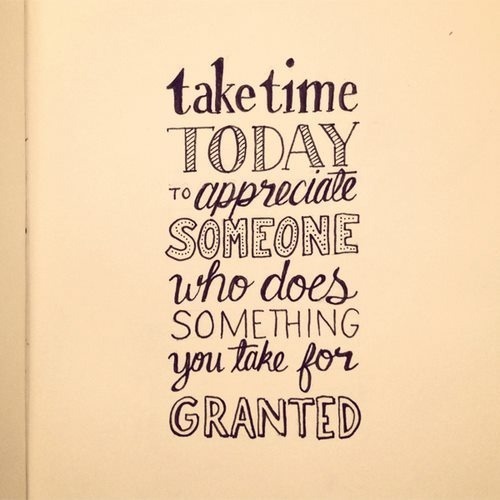
image from incanread

I didn’t know how lucky I was in the beginning.  Surrounded by phenomenal teachers that quickly became my mentors, I assumed every teacher had the same experience as me; people reaching out and guiding me whenever I needed it.  Now 6 years into my teaching journey, I see how wrong I was.  Many teachers have few people to reach out to in the beginning, sure they may have a mentor on paper, but that is where the relationship stays, never fully blossoming into what I still have to this day – a true give and take with some incredible teachers, Kathy and Melanie.

So why are mentors so important?  Some of my biggest lessons have come straight from my mentors.

  • Be prepared to eat a little crow.  Meaning be prepared to eat your words and swallow your pride.  I cannot tell you how many times these words have helped me through difficult situations.  Whether I was in the wrong or not, sometimes the best for a heated situation is to simply apologize and look for a solution rather than continue fighting.  It shows grace and humility and can often forge much stronger relationships than existed before.
  • Stay connected.  While my mentors never dreamed I would be connected globally, they both believe in the power of relationship and that being connected can only benefit you in the long run.  So reach out to those around you and believe in the power of team, we are stronger together.
  • You can learn from anyone.  They have modeled this to me through all the years I have known them.  When I walked in through their doors, they both assumed that I had something to offer, not that I was an empty vessel.  This approach not only boosted my esteem but has set the stage for how I treat my students.
  • You can create a relationship with any student.  While we seem to easily connect with some kids, there are others that take hard work.  Tenacity and genuine interest have taken me a long way in figuring out how to connect with all of my kids, not just the easy ones.
  • Those that fight you the hardest are often the ones that need you the most.  Those students that seem hellbent on making our lives miserable are often the ones that need us the most, whether they even know it or not.  So don’t give up on them, don’t fight back in anger, but keep trying.
  • Keep changing and innovating.  You are never done growing as a teacher, so keep changing the way you teach to fit the students in front of you right now, not those you had the year before.
  • Kids can always do more than we think is possible.  The power of expectations and continually pushing students to do more and better is something that inspires my classroom every single day.
  • Start out positive.  There have been many times that I wanted to condemn a new initiative before it has started, but these words have stayed with me.  Give it a chance and withhold judgment until you know more.
  • Be kind.  Nowhere have I seen better modeling of being kind to anyone.  As teachers we spend a lot of time being kind to our students, but what about the adults we encounter every day?  Do you stop and take an extra moment with those that surround you?  Do you take a genuine interest in the people you see?  There is so much power in being a model of kindness, we can make a difference with our actions every day.

I am a passionate (female) 5th grade teacher in Wisconsin, USA, proud techy geek, and mass consumer of incredible books. Creator of the Global Read Aloud Project, Co-founder of EdCamp MadWI, and believer in all children. I have no awards or accolades except for the lightbulbs that go off in my students’ heads every day.  First book “Passionate Learners – Giving Our Classroom Back to Our Students” will be released this March from Powerful Learning Press.   Follow me on Twitter @PernilleRipp.
Student-centered, technology, tools

What Do Teachers Want From Tech Tools?

image from icanread

Too often when we discuss technology and what to use in  our classrooms we get caught by the flashy gadgets, the promises of something new, or the latest tool to be sweeping the community  We think we need the newest thing to keep us current and connected.  We think we need more tools to have better tech integration.  And yet, I often find that it is not so much about getting more tech, but rather using the things I have better.  So what does this teacher really want from her tech tools?

  • User friendliness.  I am not afraid of technology, meaning I will gladly play around with something until I make it work, but sometimes even I throw in the towel.  If a new tool is not something I can figure out a little within a half an hour then I doubt it will find a permanent home in my classroom.
  • Global Collaboration.  I love integrating things that can connect my students to the world.  So whether it is a Kidblog account, a Chromebook, or a digital camera, the tech I use needs to serve a higher purpose of creating global citizens.
  • Ease of Integration.  I like to bring in a new tool or site and then see how easily my students gravitate towards it.  How easily do they find ways to integrate it into our every day learning.  That is not to say that it all has to be easy, but if my students never use it (like our Livescribe pen) then I know it is not the best fit for us.
  • Multi-people-functionality.  I have many gripes about SmartBoards, but a huge one is that only one child can use it at one time.  I have 26 students, they need to be engaged in their learning at all times.  Watching one kid (or one teacher) write on a fancy board does not equal engagement.
  • Reliability.  For a tool to truly find a permanent home in my classroom it has prove itself over and over.  It needs to work when we need it to work, and although we will excuse the occasional glitches, if a tool proves to be unreliable then I am not wasting my time on it anymore.
  • Security.  I am entrusted with 10 and 11 year old’s as they venture online and get connected so whatever we use in our classroom has to provide me with a level of safety for these kids.  That doesn’t mean filters to block out the world, but ways to keep these kids’ information and work safe while exploring the world.
  • Accessibility. The best tools live in the cloud or are portable, most of the time.
  • Purpose.  The tools we use need to have a deeper purpose of enhancing our curriculum, not just be a flashy tool to get my students’ attention.  So if we are investing our time using something, then there needs to be a deeper purpose behind it.
  • Fun.  Who can forget fun?  Tech tools should also be fun to use (most of the time) otherwise they just become one more thing to do.  We don’t need more things we have to do.

What things do you look for when picking a tool for your classroom?


I am a passionate (female) 5th grade teacher in Wisconsin, USA, proud techy geek, and mass consumer of incredible books. Creator of the Global Read Aloud Project, Co-founder of EdCamp MadWI, and believer in all children. I have no awards or accolades except for the lightbulbs that go off in my students’ heads every day.  First book “Passionate Learners – Giving Our Classroom Back to Our Students” will be released this March from Powerful Learning Press.   Follow me on Twitter @PernilleRipp.

Be the change, reflection, Student-centered

All In Their Own Time

1451380_603729596343324_1857940930_n

Thea learns when she wants to.  She creates her own homework when she wants to.  And she gets it done when she wants to.  She has almost been like this since she was born.  Master of her own path and of her own time,  So putting her in school, 4K, to be exact, has been interesting to say the least.  She works hard in school, playing mostly, learning happens too (she has an amazing teacher) but she is carving her path at her own speed.  Her personality staying true no matter what we try to do at home, no matter what she should be learning at a certain point in time.  She doesn’t care about time lines of learning, she is on her own journey.

I wonder about my own students and those whose habits I try to change, am I on a wild goose chase?  Are their habits already past changing or does that change have to come from within them with slight goading from me?  How many times have I told a quiet child that they should speak up more, or a rowdy child that they should calm down?  What about the child whose file shares a pattern of work not getting done, office referrals for miles, and grades to go with it?  Can I truly change how they are as a person or only show them a better way and hope that they agree?  Can I expect them to line up their achievements with what my curriculum map says thet should accomplish?

We talk about achievement in education as if we can just teach students something and expect them to be ready to learn it because of their age.  Yet we seem to forget that we are working with human beings that don’t just change when someone tells them to, even if they are just a child being told what to do.  We forget that even children have a sense of self and stay true to that unless the benefit to change is so great that they cannot resist.  No matter how much I cajole Thea to learn her letters if she doesn’t want to, she won’t.  No matter how much I sweet talk or tell her of the life consequences that will face her if she doesn’t.  She will learn in her own time, as she always does, staying true to her personality along the way.  Curious, creative, but all in her own time.  Did I forget that my students are probably just like her?

Reading, reflection, Student-centered

Is There Room for Slow Readers in Your Class?

image from icanread

“…but I read as fast as I can…”  followed by tears and the teacher in me stopped while the parent in me took over.

“I know you do, and there is nothing wrong with savoring the words.  It is okay to be a slow reader as long as you are reading, that is all I care about.”

We focus so much on quantity of books read in school.  I even have the 40 book challenge adapted to my room so students know that the expectation is that they read 40 books in a year.  And yet, every year I modify it for a couple of kids.  They don’t need the challenge to read 40 books, they need the 10 book challenge instead, or even the 5 book challenge.  And so we discuss it privately and I ease their fears that they will not do as well in reading as they should just because of their reading pace.   I let them in on my secret that the 40 book challenge is not about who reaches 40 books first, but rather about reading more than one did the year before.  That there is no prize nor punishment for those who do not reach the 40 books, but rather just a year long focus on the love of reading and finding incredible books to dot our path in 5th grade.

We tell children that to become a great reader one must read a lot.  To become a fast reader one must read a lot.  We forget about the kids that do read a lot but read slowly, enjoying every moment, taking their time and studying the nuances.  We get so focused on hurrying them through the experience of reading that we forget to say it’s ok to be a slow reader, all that matters is that you read.  We make them ashamed of their pace, we push them inadvertently toward shorter or easier books because they want to read a lot of books rather than just read the books they want.

And so in the spirit of reflection, I wonder what we can do to celebrate our slow readers?  To make them feel that reading pace is nothing to be ashamed of and also to spread the word to other teachers that being a slow reader does not equal being a bad reader.  It just means that you read at a different pace than others.  That perhaps you take your time.  And sure, we should encourage and help children become faster readers, but not for the purpose of speed, but rather for the purpose of being ale to devour even more books.  There should not be a set reading pace for a 5th grader, there should not be a set amount of books that every child must read (and yes, I know I do this myself), but only the expectation to read.  Instead, we should expect our kids to reach higher, to read more, to read better, and set individual goals.  My slow readers taught me that.

I don’t have tears in my room this year over reading pace, they are all in our secret, they are all reading more without the pressure of reading enough.  The biggest gift was when one student told me that he noticed that he reads faster now and how much more fun books are because he doesn’t get bored as easily.  And while he does not think he will complete his 40 book challenge, he knows he will have read much more than he did the year before.  And so with him I celebrate the new goal and how he is reaching it.  That is what matters in reading.

I am a passionate (female) 5th grade teacher in Wisconsin, USA, proud techy geek, and mass consumer of incredible books. Creator of the Global Read Aloud Project, Co-founder of EdCamp MadWI, and believer in all children. I have no awards or accolades except for the lightbulbs that go off in my students’ heads every day.  First book “Passionate Learners – Giving Our Classroom Back to Our Students” will be released this March from Powerful Learning Press.   Follow me on Twitter @PernilleRipp.
Be the change, principal

What Amazing Principals Do and You Can Too

image from icanread

I used to think I would end my days as an administrator, now I laugh at the notion. Nothing against administrators, but being a teacher has proven to me that I have no dreams of being a principal anymore.  So I cannot pretend to write this post as a letter to a future me, instead, I hope it will serve as a small homage to the amazing principals I know and as a guide to those just starting out.

Dear principal,
I offer you a wish list of do’s, some hopes and dreams, some things I have seen amazing principals do, from this single teacher to you.

Do be accountable. When you say you are going to do something, please do it, no matter how big or small.  If the every day gets in the way, please let us know, we understand there are only so many hours in a day. Tell us your plan for getting it done or why you can’t. Don’t make promises you cannot keep.

Do be confidential. It is hard to open up to your boss sometimes so confidentiality is key, and  not just with our personal lives, but also with what happens in our classrooms. If you see areas we need to improve, let us know, but please do not tell other teachers, it only breeds embarrassment, not an urgency to change.

Do trust us.  Part of being a strong leader is allowing yourself to trust others to do their best, even if their idea sounds a little crazy, even if they teach in a different way.  Ask questions, be curious, but do trust our methods when you can.

Do share you stories but keep them short. It is wonderful when a principal has experienced something similar, that tells us this is not a singular event. Acknowledge the similarity and then help us problem solve, time is precious, let’s not waste it.

Do listen well. Part of being a role model is showing teachers how to be effective leaders, and great leaders listen well. So while you may have much to share, wait until the right time to interject, sometimes teachers are only looking for a shoulder rather than a solution.

Do advocate. Sometimes we need you to advocate for us to others, please stand behind us when you can or come to us when you can’t. We should be in this educational journey together, so have our backs.

Do lead by example, but be wary of titles. I see many principals call themselves the lead learner, the lead thinker and so on. While I embrace the notion of setting an example when you take that title it can diminish what all the other staff is doing. If you are the lead thinker then no one else will ever be expected to think as much as you or even think differently than you. As the lead learner I would expect you to learn more than me, learn better than me, and also share more than me. For some principals that is true, for others it is not. I am not sure that a title is either needed or conducive to foster joint responsibility or innovation.

Do draw your own conclusions. Part of being a fair and trusted leader is to make sure you have the full story, so seek people out, do your own research before decisions are made and above all, be fair.

Do be connected.  Some of the best principals I have met have been connected ones. They bring new ideas into their schools, they have a finger on the pulse, and they are the first to share the amazing things happening at their school. So connect in some way with others, not just to promote your school, but to learn from the world.

Do be visible. A principal I worked with knew the names of every single child and parent in the building. This meant something to the people he encountered every day and he did it partly by being out in the school. I know there are mountains of things to do in your office, but take time to be seen. It shows us that the people matter, not just the duties.

Be honest. Being a great leader also means being honest with yourself, with your staff, and with the kids. If I am doing something that needs improvement I would like to know. If I did something amazing, let me know. Don’t sugarcoat it too much, cut to the chase and stay honest.

I am sure there is much I have left out, what else do amazing principals doI am a passionate (female) 5th grade teacher in Wisconsin, USA, proud techy geek, and mass consumer of incredible books. Creator of the Global Read Aloud Project, Co-founder of EdCamp MadWI, and believer in all children. I have no awards or accolades except for the lightbulbs that go off in my students’ heads every day.  First book “Passionate Learners – Giving Our Classroom Back to Our Students” will be released this March from Powerful Learning Press.   Follow me on Twitter @PernilleRipp.