Be the change, being a teacher, discipline, punishment, reflection, students

Put Your Name on the Board – A Tale of Why I Gave Up Classroom Discipline Systems

image from icanread

When I moved my blog from Blogger to WordPress last summer I mistakenly assumed that all posts would seamlessly transfer.  I have since found the error in my thinking and have decided to re-post some of my more discussed posts.  This post first appeared in June of 2011 but still rings true to me. 

Put your name on the board! Those words spoken in a very stern voice accompanied by a teacher look was enough to whip the toughest student into shape. Except when it didn’t which for me was enough times to make me wonder. Could my discipline systems really be thrown out and replaced with nothing? Would chaos then reign supreme?

If you had come by my room last year you would have seen them. Those sticks in the cups or the names on the boards with checks, sometimes double checks and plenty of stern looks to go around. I was doing exactly what I had been taught in school, exerting my control as the main authority figure and if students misbehaved, well, then there was some form of punishment. Oh don’t worry; there were plenty of rewards as well. If students didn’t move their stick or get their name on the board for a week then their name got entered into drawing for pizza with me. At the end of the month if they didn’t have their name in my book for not doing their homework, they could also enter their name, and then I would finally draw names and five lucky students would have pizza with me. Confused? I was! I could hardly keep check Of all those names, checks, and punishments.

However, last year I realized something after reading Alfie Kohn; I knew I had to change. By perpetually focusing negative energy on the same students, who, lets face it, are most often the ones having their name singled out somehow already, I was indeed just adding more to their self doubt. While I believe in discipline for all students, I also believe in compassion and that philosophy simply was not fitting in with my chosen system. So I did as many teachers may do; I threw it all out. However, instead of hunting for a new system, I decided to detox myself, start this year with no system for reward and punishment and instead strive to create a classroom community where students just know what the expectation is.

I was petrified that first month. I run a tough classroom in my expectations for my students and I know that if you do not set the tone those first weeks, it can be detrimental to the rest of the year. And yet I held strong in my conviction that even the more unruly students would eventually figure this out through repeated conversations and respect. And boy, did we talk. We talked about expectations, rules, how to speak to one another, and what to do when something goes wrong. A lot of the time, I just listened to these amazing students come up with solutions to problems, listened to them explain how they envisioned our classroom, how they wanted fourth grade to be. And I was in awe; these kids knew how to behave without me telling them over and over. And they certainly would figure it out without me alternating punishment and rewards.

So after the first month I started to breathe again. I let our new system flex itself and watched the students help keep the classroom stabile. Sure, there are times when I think ooh if I just had a way to “punish” it would fix this and this and then I realize that perhaps I just need to find some time to speak to that particular student. Now instead of an exasperated tone and a system to keep them in check, we discuss, we try to fix, and we reevaluate. I don’t run the classroom with a complicated system of checks and balances, rewards and punishments, but rather with an atmosphere of community, of belonging. Is it perfect? No, but neither am I, nor my students. I am just glad I believed in my own skills enough to realize that perhaps, just perhaps, my students would know how to behave without me rewarding them for it. Once again, they blew away all of my expectations.


being a teacher, reflection, Student-centered, technology, Uncategorized

It Is Not About the Gadgets – Why Every Teacher Should Have to Integrate Tech Into Their Classroom

image from icanread

When I moved my blog from Blogger to WordPress last summer I mistakenly assumed that all posts would seamlessly transfer.  I have since found the error in my thinking and have decided to re-post some of my more discussed posts.  This post first appeared in February of 2012 but still rings true to me. 

I once sat on an interview committee in which the candidate proudly proclaimed that to integrate technology her students would use word processors and publish their work in a monthly book.  My toes instantly curled.  It wasn’t so much that she had used the words “word processor” but rather that she thought tech integration meant to have students type on a computer and then publish their work, that that would make them ready for this century of jobs.  So a couple of things come to mind whenever we discuss tech integration in schools.

Students have often more seamlessly integrated technology into their lives than their teachers and didn’t even need to take a class on it.  We chalk this up to them being digital natives or because they have an interest in it.  Yet not all children are digital natives and most of them have had role models that show how to use the technology.  They also know that tech is valuable and can add to their lives rather than detract from something else.  And then there is the fearlessness, many students are simply not afraid to mess around with tech, but many adults are.  It is time for us to be role models in our own fearlessness.

Some teachers assume that clicking on a SmartBoard or having students type their papers mean that they are “integrating” tech.  This is one very limited usage of tech, in fact, it doesn’t really count as integration.  Better integration is when a student decides to film a video to show off learning rather than create a poster.  True integration is when students have ideas and fearlessness to use technology to show their learning as a natural extension of the classroom.  Not to type a paper.

There seems to be no urgency when it comes to actual technology integration into the classroom, but more of an urgency on how to buy the flashiest gadgets and then offer limited training or support.  How often do we hear about a district that has spent too much money on 30 SmartBoards, 100 iPads and how they will be placed in the hands of the students to enhance their learning?  How often do we then hear about the support they will offer their teachers or how those products will actually be used to enhance learning?  There seems to be an assumption that if you give it to teachers  they will use it effectively, which we all know is not true.  Some teachers might, but most will use it superficially and after a while the product will languish, unused, outdated, and just another relic of someone’s hastily thought out idea.

Some teachers feel that integrating technology is optional.  Integrating technology is no more optional than teaching how to use a pencil.  And while many may find that extreme, we cannot equip our students with the skills they need to be successful learners and teachers without teaching them to use technology properly.  Many schools see typing as a necessity but then cannot bring that view into how to stay safe on the internet, how to search properly on a computer, and myriads of other things that technology can offer us.  How to use computers effectively is now a life-skill and as teachers it is our job to equip students with these.

Teachers who have been labeled “techie” teachers are sometimes viewed as a one-trick pony, that is all they are passionate about and therefore they cannot possibly have an effective classroom.  I certainly am one of the techie-teachers in my district but many are surprised at how little we use tech on a day to day basis.  That is not to say we don’t use it, because we do, but we also do many other things.  In fact, using a tech tool is just one option my students have to show their learning.  What I do practice is fearlessness in tech usage and that I pass on to my students.  Not that they always need to use some sort of tool, we use our pencils more than a computer, but that they can effectively use whatever whenever they need to.

Teachers think they have a choice in their classroom.  I am sorry but the choice should not be teachers’ anymore; every school should have an effective technology integration curriculum to offer students the skills they need.  We do not have a choice in teaching literacy or math and should not be given one when it comes to technology.  This is not about what WE want the kids to know but what the KIDS need to know.


And I am sure I could continue the list, however, these are my main concerns.  We cannot afford to not focus on proper technology integration in our schools.  It is not about the gadgets, it is not about the typing, it is how to use technology tools fearlessly, respectfully, and effectively.  All things every teachers should be teaching, no excuses.

blogging, Student-centered, students

10 + 1 Steps to Meaningful Student Blogging

IMG_2138Last summer, I had the pleasure of guest blogging for Middle Web and chose to do it on student blogging.  While I had started with a 14 step plan, I was able to revamp it a bit and bring it down to 11 steps.  Since then many educators have asked how to best get started with blogging, so I bring to you a re-posting of this popular post.

Four years ago I started blogging with my 4th grade students on a whim. I knew three things at the start: I wanted to get them connected with each other; I wanted to give them a voice, and I knew I had to change the way they wrote. So I started blogging with them – fumbling my way through the how to and the when to.

What I had no way of knowing was how blogging would change the way I taught, how blogging would give my students a way to speak to the world, and how blogs would make it possible for them to create lasting global connections with other children.

Blogging has since become an integral part of my classroom. It’s a way for me to check the emotional temperature of my kids and a way for them to add their voice to the continuing education debate and reach out to other communities.  We no longer just wonder how things are done in other countries. We blog and ask questions and get our answers.

So when I meet with any teacher who wonders how to lower the walls of their classroom and create more authentic learning opportunities, my first advice is to get students blogging.

If they’re interested, I share these steps. They grow out of my own experience working with upper elementary-aged kids, and I believe they can help any middle grades teacher successfully launch a blogging program and integrate it into the daily learning experience.

10 + 1 Steps to Meaningful Student Blogging

Here’s the checklist I follow myself at the beginning of each year, before I unleash my (now) 5th grade students’ voices to the world:

1. Figure out your why

You have to reflect on why it is you want to have students blog. Is it to make connections, for technology integration, to give your students a voice, or for some other reason? If you know the why it is much easier to get students excited about the blogging experience. I don’t feel that blogging should be just to show off student work; it can be something much bigger than that.  So figure out your reasons why before you move on to the how.

2. Pick your platform

I use Kidblog because of its accessibility, its wonderful safety features, and the ease with which I can adapt it to fit our purpose. While some feel (as a result of recent changes) that Kidblog is geared more toward early elementary students, I disagree. But it’s not the only safe and easy-to-use option: Edublogs is another popular student blogging platform that also comes highly recommended.

3. Get your permissions

Check with your principal, your tech coordinator, and finally get parent permission. You need to be prepared to explain and justify what you are doing — and be transparent throughout the conversation — to receive ultimate support for this endeavor. Student online safety is a predictable concern, and it’s much easier to be proactive, seek out these conversations, and present evidence that safety is easily assured and the learning rewards are significant.

I’ve created my own permission slip to ensure that parents feel well informed as they make their decision about whether to let their child blog. And I have yet to have a parent say no.

4. Blogging versus writing

I always introduce blogging by discussing how it is similar and different to writing. Students often get what blogs are but not necessarily how they can use one themselves. So I showcase my own professional blog and other students’ blogs to get them excited about the adventure they are about go on. We discuss what we can blog about, how long a post should be (as a minimum), and what to do about spelling and grammar. These discussions lead to heightened awareness of what is appropriate for a blog post and what isn’t and will also lead to the next step.

5. Discuss safety!

Before students ever log into their blog accounts for the first time, you have to discuss safety. I use the analogy of “Why the Internet is Like the Mall” to get students to really think about their online behavior and what they post. This is an in-depth discussion that covers many aspects of internet behavior, not just those that are specific to blogging. This is also not just a beginning-of-the-year conversation, but an all-the-time conversation.

6. Do a paper blog

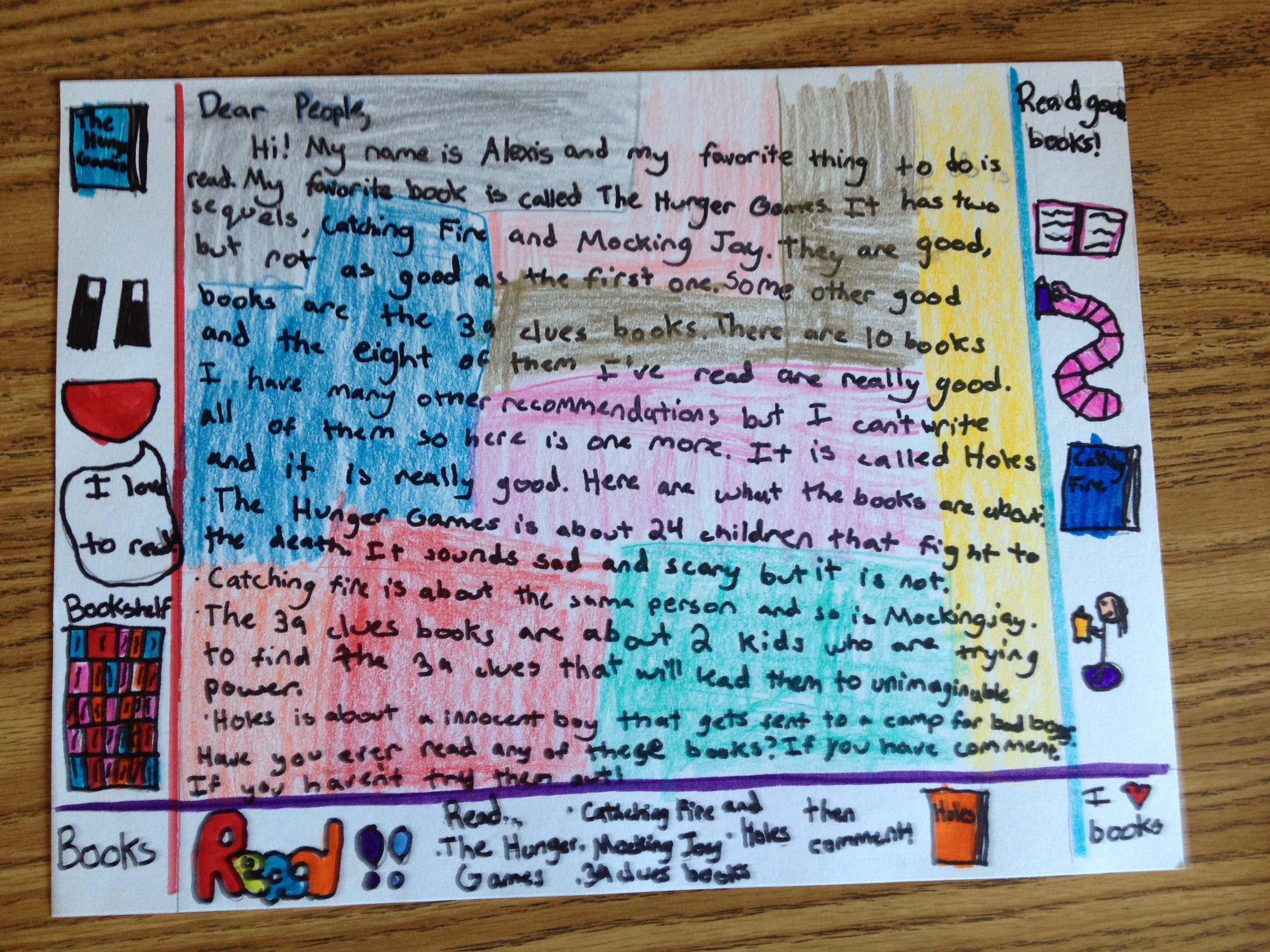
Starting out on paper is a great way to introduce students to blogging and how they can add their own personal voice and flair. (It’s an idea I got from Karen McMillan.) By creating and personalizing a paper copy of their dream blog, my students have a tangible piece to work with while we learn the ins and outs of style, substance and safety. Once all of the paper blogs are done, students spend a class period leaving post-it comments on each other’s blogs as well as responding to the comments they themselves receive. This is a natural progression toward our next step . . .

7. Discuss commenting

For blogging to be effective, students need to know how to make good comments. Commenting on other blogs is one important way to grow an audience for your own blog. And when people comment on what you have written, you need to be prepared to respond with follow-up comments of your own. So we discuss how to create a dialogue in comments, how to thank people, and also how to give constructive feedback. We set up parameters for our posts and our comments in order to uphold a high standard of writing and we discover how commenting can (and should) become a conversation. We even act out comments from our post-its to see if they work well as conversation starters or act as dead ends.  Students quickly realize the power of a comment.

8. Start small

When students are finally ready to blog, have them introduce themselves.  That way, as your class starts to reach out to others (because ultimately blogging is about connections), students can showcase themselves and thus spark a conversation.

9. Connect with others.

Use quadblogging or a project like The Global Read Aloud to get students connected – or simply reach out to one or two other classes (preferably far away from you) to establish a blogging relationship. Once you get started, teachers can go on Twitter and use the hashtag#comments4kids to get comments for your students. Kidblog also has a wonderful feature called “Blogroll” where you can build a list of links to other blogs you like to follow in the margin of your own blog. My students use this all year as they check in with classes from around the world.

This is what gets the kids excited about blogging — it’s not just that they get to read other posts, they are able to establish a personal connection with other kids in faraway places, maintain that relationship throughout the year, and learn a lot about life in other parts of the globe.

10. Make it their own

Students need to feel genuine ownership of their blogs. I ask them for ideas of what to blog about; I give them free artistic rein over their posts, and I give them time to explore the blog’s tools and capabilities. This is what gives students ownership and has them take pride in their blogging. If it is truly their voice being heard in whatever fashion they want to present it, then they are eager to show it off.

Blogging has to be authentic for it to work. I don’t correct their grammar and spelling. I don’t require editorial changes unless something is likely to lead to hurt feelings or misunderstandings. I will ask them to add more or to explain further, but I give them the time to do so. I also challenge them with a weekly blogging challenge and then find time to do it in school. (Ideas for the challenge come from students or things I wonder about myself.)

11. Give it time

Great blogging and great connections don’t happen overnight, so give it time. Let the students develop as bloggers, celebrate their successes, and map their connections. Truly celebrate the blogging they do and spend time on it class. Encourage blogging but don’t make it an assignment to just get done. Treat it as an integral part of your classroom and watch it become one. Blogging is not just about writing, it is about bringing the world in and making it a little bit smaller.

In the end, blogging should not be a burden in your already full day. Students should love blogging, not see it as a chore (which is also why I never grade my students’ blogs) and they should be eager to express themselves and expand their worlds.

If you are ever in need of someone to connect to or ask questions, please reach out to me @pernilleripp on Twitter. I will gladly help. After all, blogging is about expanding our own comfort zones and creating authentic, global collaboration.

Be the change, being me, new year, reflection

The Promises I Make for the New Year

image from icanread
image from icanread

2014 has already become a year we will never forget.  Between Augustine’s battles, the arctic winter we are surrounded by, and the incredible love that surrounds us, this year will be the year that follows us.

Whenever life gets crowded I think of my classroom and how closely connected my life is to it.  I stopped doing resolutions years ago, after all, I had to write them down to even remember them and then never followed through on them.  This year, though, begs for resolutions or rather promises I would like to make.  So this year I promise 3 simple things.

  1. To be kind.  The mask I wear most days does not show how much turmoil there is in my heart at the moment.  I am a fighter, as is my whole family, but I admit that it does not take much to crack my surface right now and tears come easily.  We never know what other people are holding inside, we never know why a child acts out or acts indifferent.  We never know why a parent does not respond to our contacts, or another teacher gets upset.  So this year I promise to approach everyone and every situation with kindness.  I will think of the human being first and the task at hand second.
  2. To be present.  Taken from John T. Spencer’s post, this promise continues to be at the forefront of my mind.  I want to be present for the ups and downs that life throws at us.  I want to be present at the small moments that truly shape our lives that my own children and my students have.  I want to notice.  I want to think about what I see.  I want to slow down and take it in.  To be present does not require much, in fact, it is done best by turning everything else off and giving someone the gift of you.  So that is what I will do.
  3. To celebrate the small things.  Too often we wait until momentous occasions to celebrate in style.  Life is too short, life is too complicated to hold your breath and wait for those few moments where everything lines up.  This year I will celebrate as much as I can.  Thea learning a new letter, Ida and Oskar learning new words, Augustine gaining even the smallest amount of weight.  My students conquering a task for the day, fellow colleagues trying small new things, and yes, my husband and all of the small things he does to keep our marriage strong every day.  Those are the things I will celebrate.

While I cannot control some of the things that I wish I could, I can control myself and my reaction to life.  I can make promises and keep them, so that is what I intend on doing, how about you?

Be the change, connections, reflection

It Is Not Enough to Be a Connected Educator Anymore

image from icanread

Today I approved more than 70 comments on my  students’ blogs.  Strangers from Canada, England, The Netherlands, New Zealand, and many states took the time to celebrate the writing my students do, to encourage them to write more, and to praise their voice.  They shared stories of their own fire mishaps, their own resolutions, their own love of books.  All because my students asked them to.  All because I asked them to on Twitter.  Today was not an anomaly.  Today was simply another day in the life of my connected students.

I didn’t get connected myself at first so that I could connect my students.  In fact, it didn’t even cross my mind.  Why in the world would 4th graders need to have anything to do with the world?  Why would I ever want them to open up to strangers or to let strangers have any kind of contact with them?  Being connected was not something I saw as a necessity.  Being connected was something they could figure out when they were much, much older.

But then we got connected.  Once I started blogging, I realized that they should blog too.  Once I started learning from strangers, I realized the power of reaching out to others that knew more than me and how the whole world could be my students’ teacher, not just me.  I knew I was not enough anymore, and I was at peace with that.

Yet, I think we forget the power of connecting our students, even when we are connected ourselves.  We talk about connected educators and all that it brings into our lives, but I think it is time we shift the conversation to that of connected students.  Sure, I am connected, but that does not matter if my students are not.

So rather than just push teachers to get connected, let’s focus on getting their students connected too.  Let’s focus on showing what bringing the world in means and how it can change the way students think about the world.  Let’s focus on making global collaboration easy, even if on a small scale.  It is not enough to be a connected educator anymore, we have to be connected educators that connect our students.  We have to let our students reach out tot he world and see how the world answers.  We have to trust them to do the right thing and teach them how to do it best.  Just like we do for ourselves, we must push a global education, we are no longer enough in ourselves.