Be the change, first week, Reading, reflection, students

So You Want a Reading Classroom – 12 Ideas to Help You

I have always been a passionate reader and this year was no different, what was different though was that I finally unveiled this to my students.  I don’t quite know what took me so long.  So as I go into my second year as a reading classroom – and by that I mean, a room where reading takes center stage,  students cannot wait to read, and there are books being passed around every single day – I am thinking of how to create that.  Here are some of my ideas:
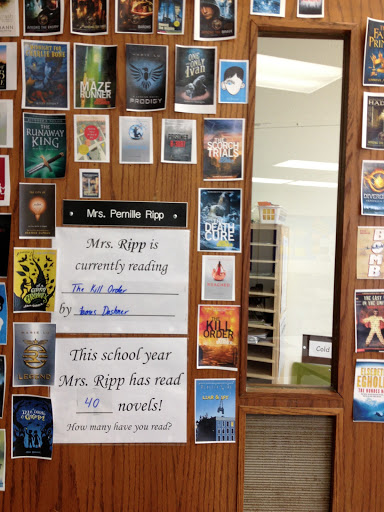
  1. Showcase your reading – this year through the inspiration of Jillian Heise I did a Mrs. Ripp reading display.  I cannot tell you how many book discussions this sparked with not just my students, but many students who just walked by the room.  
                                                     

  1. Get rid of books – I know this seems so simple but in honesty my classroom library had plenty of books but not a lot of great books.  So I weeded more than 100 books last year and then started replenishing as I saw fit.
  2. Invest in great books – I lost count of how much money I poured into books this year and while I wish teachers didn’t have to pay so much out of pocket for things, it seems to be just the way it is.  One great thing that happened was that my students would give the classroom giftcards for more books when they saw my passion – now that was awesome.
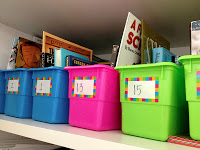
  3. Give your library space – I have always had a decent sized library but it was more tucked in a corner and not fully getting the attention it deserved.  While it is still in a corner, it is nice and open with short shelves and all of the books in labeled bins.  I label them by genre, author, or interest, it just depends on the book.  Books are easy to find and put back, which I think is a must as well and students take ownership over it.  They want it to work well for them so they can spend more time reading.
  4. Give choice – nothing will kill reading faster than constantly requiring students to read certain books.  I hate it, my students hate it, so I had to find a way around doing small group instruction without using chapter books.  I now use short high-interest articles instead to accomplish the same thing with my students and when they are done they get to read whatever they want.
  5. Challenge them – I love the concept of some sort of a book challenge and am contemplating doing the 40 book challenge by Donalyn Miller.  I love the idea that it is not about succeeding or failing but rather pushing yourself as a reader.
  6. Give reading priority– the first thing I would sacrifice in our busy schedule was always independent reading time.  Now it is the last thing to go; students crave uninterrupted reading time and many of them need it as a way to work on their skills.  All students get this every day, after all, to become a better reader you need to read!
  7. Read great picture books – I have always loved a great picture book but I had never really used them jus to hook kids.  Now we start many days with a picture book and then cherish the story-telling.  What I discovered is that every picture book can teach us something about reading or writing, thus making them both entertaining and purposeful.
  8. Make it authentic – ask adults; when we read a great book we cannot wait to tell others about it so that they may read it as well.  Students are no different, so many of them cannot wait to recommend a book to a classmate or me but you have to give them the time to do it.  We did through blog writing, speed book dating – 1 minute book recommendations – and informal conversations.  Students always had a to-read list going which made their next book selection so much easier.
  9. Read the books yourself – this is a must for any teacher that want a great reading classroom.  You have to read the books!  Students need to know whether the book is a great book or not and the person they trust is you.  So take the time and read the books; I have and I love discovering all of these incredible books that I need to get into the hands of students.  
  10. Talk about it – I book-talk books all the time, I show students my to-read list, I rush in excited about a new book I cannot wait to read and I created the Global Read Aloud.  I even created a book review blog so my students can see what I am reading after they leave my classroom.  I live the life of a passionate reader!  Be a role model for the students and show them that it is okay to really love reading.
  11. Don’t diminish reading – I ask students to read 30 minutes every day outside of school but what they read is completely up to them: magazines, books, websites, or whatever they think.  I do not check whether they do it, I assume they do.  I do not want them to think that they can only get better at reading by reading what I think is worthy, they need to see the power of any kind of reading (and we need to honor that).
  12. Plant the seed early – I had my students create book bins with favorite books for the incoming 5th graders.  These bins will be sitting on their desk the very first day of school and that is what we will start with; a discussion of why reading is the most incredible thing in the world – I cannot wait!
Be the change, reflection

You Get What You Are

image from icanread

We all know the old adage that you get what you give but lately I have been realizing that it is deeper than that.  Not only do we get what we give, but we also get what we are.  Sort of like we cannot just talk the talk, but we also have to walk the walk but that walk has to be a confident pace and not just a hesitant shuffle.

Take a teacher who fears math, although they may not show it, some of that fear will almost certainly shine through in their instruction and affect their students.  How about a teacher who does not read outside of the classroom?  They may not discuss their lack of reading but students will still know and so see what the true importance of reading is to to that person; little to none.  Or how about the teacher that asks for respects but doesn’t give it in the heat of the moment, yup, students will see through that as well and mold their behaviors accordingly.  
The thing is, we cannot fake what we are.  So before we get into our classrooms at the beginning of our career, at the beginning of our year, at the beginning of the day, or at the beginning of our lesson, we need to make sure we are ready to give the right things.  We need to take stock of what we give to our students based on what we are.  We need to know ourselves so that we can fully understand how we teach and what we need to work on ourselves.  It is only fair to our students that we lead by example, even if that means facing some of our own shortcomings.
Teaching is not just about being good at it, it is about being a teacher with everything you do: personality, actions, and yes, even how you live your life.  If you want passion, then be passionate.  If you want respect, then respect others.  If you want curiosity then be curious yourself.  We cannot just say students should be these things, we should be them ourselves.
Reading

To Have a Reading Classroom You Must Be A Reader Yourself

image from icanread

It’s summer and all Thea wants to do is play in the pool or read books.  As a person who loves to play in the pool and read books, I happily oblige thus we read and read and read.  And then she saves special books for her daddy to read when he gets home.  She has a pile of books every night that she “reads” (she is not at the stage of reading the words yet) every night before bedtime   She asks me what a page says so she can retell the story to Ida and Oskar.  She met her first author yesterday and couldn’t be happier.  I cannot help but love that she loves books as much as I do.

In my classroom this was the year of the books.  I finally infused my classroom with my passion for reading and lo and behold; my students did the same.  I don’t know why I had never done that before.  So we became a reading classroom; a room that discussed books whenever we had a chance, a room that rushed book recommendations to each other, a room where boys shared what they were reading as much as the girls.  We invited in authors, poets, and other readers.  We wrote our own books and performed them for our 1st grade buddies.  We skyped about books, we debated whether the first book or the second book was best, and we watched our books being shipped to us hoping that the tracking email was incorrect and that they would get here sooner.  We tweeted about books, we breathed books.  Books were just as important as math facts and for those who know me, that means a lot.

And it hasn’t ended; one student texts me about the books he is currently reading and continues to offer me recommendations.  Another sends me emails and has even started a reading blog of his own.  Some use KidBlog and others are ready to tell me what they are reading when I see them out and about.  They are still readers and we are still a reading class even if the walls have disappeared.

As I read a book a day this summer and my pile grows rather than shrinks, I am eager to start with my new incredible group of students.  I have spotted them reading in the hallways.  I have asked them what they have been reading.  I have even given a few book recommendations already.  I will create a book display of what I read over the summer so that my passion is visible that very first day.  I hope to get what I am this year as well.   I hope they love books as fiercely as I do.  I hope they are willing to share that love wtih me and the world.  I hope they are readers.

global read aloud, Reading, students, technology

Get Connected! How One Project Can Set You Up for The Year #GRA13

I am sure it will come as no surprise but I am passionate about bringing the world into my classroom.  I think global collaboration and interconnectedness is vital in any child’s education.  I also happen to be passionate about reading and reading aloud.  All of this led to the creation of the Global Read Aloud 4 years ago and what started as a simple idea has grown into a massive world wide connection and collaboration event.  And you should be a part of it!

Who is this for?  Any educator who teaches K-12, homeschoolers, librarians  or whomever wants to read and share one of our amazing three books with the world.

So what is it?  The premise is simple; we pick a book to read aloud to our students during a set 6-week period and during that time we try to make as many global connections as possible. Each teacher decides how much time they would like to dedicate and how involved they would like to be. Some people choose to connect with just one class, while others go for as many as possible.

Why should you care?  Because it promotes reading and global connections.  Because your kids will love the idea that kids around the globe are listening to the same story as they are.  Because the 3 authors, Sharon Draper, Geoff Herbach, and Kate Messner cannot wait to interact with the kids.

So how does it help me connect?  Since the whole project is about connecting there is a network of teachers eager to connect and work with you in whichever fashion you feel comfortable with.  Don’t believe me?  Check out our Edmodo groups!  The project doesn’t start until September 30th and they are already busy reaching out.  (Here is a post on how to get to our Edmodo groups).

But what about the technology?  Every year I use the GRA to introduce my students to various technological tools we will use throughout the year; Skype, Kidblog, Twitter, Edmodo and Google docs.  Other people use other things as well – it is up to you.  Because you decide how invested you want to be, you also decide which tools you would like to use.  And the best part?  You don’t have to know how to use the tools, we can help you!

What about after it ends?  This is the brilliance of it, many people continue to use their same connections to collaborate and interact throughout the year.  We have people set up smaller book clubs, some choose to do units together, and others become blogging buddies.  Because the network is already set up it is easy to keep using it and you can use it for whatever you wish, it doesn’t even have to be reading related.

What are the book choices?  3 books this year for the first time: Marty McGuire by Kate Messner, Out of My Mind by Sharon Draper, and Stupid Fast by Geoff Herbach.  All meant to be a great read aloud that will make the kids think.

Where do I sign up?  Right here!

What are the dates?  The read aloud starts September 30th and ends November 11th.  It is 6 weeks for the first time to give people more time to enjoy the text.

I am still not sure…go here, poke around, Google the project, and ask me questions.  I would love to help you get connected for the year.  

being me, global read aloud, Reading

Hooked on Books – I Was A Guest on the #NerdyCast

I had the distinct pleasure of being a guest on the Nerdycast on Bam Radio Networks not too long ago and while the whole experience was a sheer delight, the fact that I got to speak about reading made it incredible.  I even got to plug the Global Read Aloud!

So listen here or add it to your iTunes podcast list like I did.  Nick and Tim have some pretty amazing guests and it always worth your time.  I am just lucky I got to be a part of the Nerdy-awesomeness.

education reform, reflection

We Will Never Be Truly Standardized and Thank God for That

The Common Core is meant to save us all from poor teaching or so it seems if you read many political opinions.  Publishers too have been eager to grasp the Common Core and quickly label all of their curriculum with the sure to sell “Common Core Aligned  sticker.  I get inundated with emails offering me new lessons that fit the Common Core, new ideas that will make me ready for the Common Core.  Everywhere I look it seems to be hailed as the savior  of American public education.  And yet I have to laugh a little and perhaps even roll my eyes at all of the promises and ideas of standardization of our educational system.  Has anyone ever truly thought to think about what true standardization would look like?

You would enter into any classroom in America and teachers would preferably be teaching from the same scripted material in the same classroom set up with the same type of children.  All teachers should address concerns the same way.  All teachers should address children the same way.  We should all carve out the same lesson plans, preferably guided by our aligned materials.  We should all make sure our students walk away with the same specific knowledge and skill set.  Then we would have true standardization of the American public school system.

In reality though, you will walk into one school and see many different ways of teaching the same scripted material.  You will see teachers address children differently, you will see them approach lessons in different ways.  No classroom will look the same.  No lesson will sound the same, sure core ideas may be present, but the way they are taught will be different.  And thank god for that.  We have to teach specifically to our students.  We cannot plow our way through scripted curriculum and not stop when a child doesn’t understand or we see an opportunity for further investigation.  If we do, then we are not doing our job as teachers.  The very nature of what we do and who we do it with prevents true standardization  even if politicians think they can test us into submission and sameness.

So I have decided to not get too hung up on the Common Core, sure the idea is quaint, let’s all get on the same page and be rigorous together.  Yet the way it has been processed by curriculum providers and districts clamoring to be aligned is nonsense.  The states racing to the top without really knowing what that means hasn’t helped much either.  If the Common Core is truly meant to push deeper learning opportunities then why would I ever want a scripted curriculum?  Why would I want to pretend that my students learn the same way as an inner city school in Chicago or a small school in rural America?  Why would I want to pretend that I even teach the same every year?  If it is meant to standardize then they will have to standardize the very act of teaching and the very act of learning, which is an impossible thing to do.  And for that I am thankful.