aha moment, Be the change, ideas, Reading, students

On Slow Readers and What It Means for Student Reading Identity

http---www.pixteller.com-pdata-t-l-212837

I am ready to hang a banner in our classroom to loudly display the following words, “Being a slow reader does not make you a bad reader!” and then point to it every time a child tells me with a downward glance that they are slow readers.  The shame of the designation oozing from them.

Since when did taking your time as you read become something to be ashamed of?

And yet, they continue to tell me they are slow as they share their true reading lives.  They tell me that being a slow reader means they hate reading, that they cannot find any books, that there is no way they will ever read enough books in 7th grade and that there is nothing to be done about it.  They have given up because of speed.  They have given up because of everything they have attached to the word “slow.”

And with our emphasis on getting things done, including books, in our schools I cannot blame them.

So I tell them instead that they are not “slow,” they are simply taking their time.  That yes, increasing reading speed can become a goal for them but that it should not be the only goal.  That I understand that when you read at a slower pace (notice the difference in word choice) that you sometimes lose meaning so we need to find a pace that works for them.  Because you see, being a fast reader does not make you a great reader.  In fact, I struggle publicly with my own fast reading and have as one of my goals that I need to slow down.

Yet, they do not believe me.  Not yet anyway.  And how can they?  When the standardized tests they take to measure their worth as readers are timed?  When the countdown clock appears urging them to hurry up and answer or else it will count against them?  When I give them all a book challenge of reading 25 books or more and they automatically feel that is a mountain they cannot conquer?  When they see their friends whizzing through books and cannot help but compare themselves?

We create environments where fast = good and slow = bad.

So as Thomas Newkirk says, “There is no ideal speed in reading.”  Instead it depends on the purpose, the time, the book they are reading.  And that is what we should be teaching toward.  That students need to find a reading pace that works for them and then make sure that the reading environment we create supports that.  We have to remove the stigma of the word “slow.”  We have to help our students find success as readers, to redefine their own reading identity so that that very identity does not become a stranglehold or the reason they give up before they even begin.

So we hand them books they can conquer successfully to build up the confidence they lack.  And I don’t mean books designated by levels, but books that they want to read based on interest.  We hand them graphic novels.  We hand them page turners where they will want to read on.  And then we hand them time.  We remove the “get it done” pace that seems to surround us as we teach.  And every time they say they are slow readers and mean it as a bad thing, we tell them they are mistaken.  We change the very language we use so that they can find a new way to identify themselves.  So that they can feel proud of the time they take when they read, rather than see it as yet another deficit.

We decide what being a slow reader means.  That change comes from us.  Our job is to make sure students know it.

If you like what you read here, consider reading my book Passionate Learners – How to Engage and Empower Your Students.  The 2nd edition and actual book-book (not just e-book!) just came out!
assessment, assumptions, Be the change, being a teacher, grades, ideas

7 Simple Things that Make Feedback and Assessment About the Students Again

http---www.pixteller.com-pdata-t-l-191398

I think we all are always looking for ways to ease the assessment and feedback process in our classrooms, I know I am!  And I get it, giving feedback and doing great assessment with 120 students, or even just 20 students, can seem like an unwieldy beast at times.   So while I wrote about lessons I have learned while trying to limit grades, I thought I would also offer up the practical things that have made my day-to-day better.  Behold, a few things to maybe make your feedback and assessment process easier.

Background:  I now work in a district that is doing Standards Based Grades and moving away from letter grades.  We also believe that formative work is practice work and can therefore not count toward a summative score, and finally, that students have the right to re-take work.  At my middle school, we have a 2 week automatic re-take policy that we encourage students to use in case they need extra help with a concept.  

They have a notebook that stays in the room.  I have learned the hard way that when students leave with their notebooks,  they sometimes do not come back with them.  So this year, I instead created a readers notebook for them to keep in the classroom.  Yes, it was a lot of paper, but it means that my students always know where to write their thoughts, it means that all writing about reading only happens in the classroom, and it also means that I have access to them at all time.  This means that not only do we have a routine established for responding to reading, which frees up time, but also that student scan see their thoughts develop over time along with the feedback I give them.  Each class has a bin on my shelf for easy access every day and they grab them when they come in before they start their independent reading time.

They have a manila folder with their names on it in real life or electronically.  Each class is separated into 5 different groups and each group has a folder.  All work that students do that is not in their readers notebook go in these folder.  This year, the students will even file it themselves to save time.  Why collect the work?  Because my students write way more than I can assess, so this allows them a gathering place for all of their work.  When a unit is nearing its end, I ask them to pick the one piece that they want me to assess.  I also do this for anything we do electronically (but I respect the fact that some of my students want to hand write rather than type).  The discussion that happens based on what they select for me to look at are richer because I know they had to think about it and not just hand me the last thing they wrote.  This also signals to them that they are not working to get through things, but to learn, and that every piece of work they create has value eve if it does not get assessed

I have pre-printed labels with comments.  Not for everything, but when I give feedback in their readers notebooks there are certain things that crop up again and again.  That is what the pre-printed labels are for.  These change throughout the year and I do not reuse the same ones from unit to unit.  It is always catered to what we are working on  what I am noticing with the students, and are explained before they are put on their work.

The students self-assess before I assess.  At the end of unit, before anything is handed back by me, the students will then set goals and reflect on their work.  This involves them scoring themselves as far as where they are with their  proficiency in the chosen standard.  The score is based on a standard they have deconstructed to put into student-friendly language, and also based on a rubric they have built with me or we have discussed.  I want my students’ to have a chance to reflect before their confidence is skewed by my words.

Standards are assessed twice at least.  We have 7 standards to cover in English this year and all of them will be assessed for a summative score at least twice in separate quarters.  It is a chance for students to truly see that mastery may come at a different time for them than their peers and that that is ok.  It also allows us to establish a baseline score and then see how they grow.  When a standard is only assessed once, we assume that all students grow at the same rate, which we know is not true.   So instead, make it a point to show students that knowledge is something we gain at all times and that they are the masters of their growth.

They have a chance to disagree.  Once students have self-assessed, it is my turn.  I will either handwrite their assessment or speak to them about it.  But even then it is not final, it is a conversation, and students know that this is their chance to speak up.  Too often we gloss over the assessment piece by handing things back at the end of class and forget that this is one of the largest opportunities we have for meaningful conversations about their learning journey.  Don’t rush through it but take the time to discuss, reflect, and set new goals.

All work is kept in the classroom, pretty much.   I need to know what my students know.  Not what others know, not what they later figured out, but what they know right now.  So any kind of summative work is done in the classroom, not at home, so that I can see how they work on a product with time management and the need for them to think deeper.  This also fits into my policy of limited homework.  And it forced me to evaluate what I am asking them to do, since I can see how much time something takes.  ( I also do all of the work my students have to do, which has definitely been an eye-opening experience).

PS:  For the how-to for eliminating or limiting grades, please consider reading my book Passionate Learners.  There is a whole chapter dedicated to not just the why, but the actual how.

aha moment, assessment, Be the change, feedback, grades

Some Helpful Realizations for More Meaningful Assessments

http---www.pixteller.com-pdata-t-l-190658

I have been trying to create more meaningful assessment for the past 5 years.  Not a small feat if you would, especially now when I am teaching more than 120 students.  Yet, a few things I have realized over the years may help others as they try to move away from grades as an end point, and instead move into better assessment and feedback, where students actually feel like they are in charge of their own learning journey.

Let me preface that this move from giving grades to giving feedback has not always been easy.  I find it is much easier to simply assign a grade to something, yet it has definitely been worth it.  By the end of the year my students are much better at evaluating, reflecting, and goal setting than they are when we start.  And that is worth it all in itself.  So a few things that I had to realize to make this shift was…

I am not the only one assessing.  Students self-assess on almost every assignment once we get started.  This is important, because they should not always be looking to me for how they did.  They need to know themselves well enough to reflect on their own performance.

It is an ongoing conversation.  We take the time to deconstruct the standards and rewrite them in student language.  We take the time to go through what an assignment is actually asking them to do.  We take the time to plan together so students can get ownership over what they are doing.  Assessment is not something that only happens once in a while so it should not just be discussed once in a while.

I cannot assume.  Too often we assume as teachers that we know what a child is doing or thinking.  It is not accurate most of the time.  So instead, I ask a child what they meant, I ask them to explain it to me as if I was not in the room.  I ask them to make sure that I can understand their thinking at all times.  We seem to focus too much on brevity, I would rather have a child be able to explain the full extent of their thinking than assume I know what they mean.

They need to produce more than I can assess.  Our job is not to assess every single thing that a child produces, but instead to assess the pieces they feel are worth others looking at.  Asking students to evaluate their work and only submit the one piece from a unit that they feel will show off their knowledge the best?  That is an assessment in itself.

They need to assess each other, but not until they trust each other.  We love using students as peer editors, as peer reviewers, and even as peer assessors.  However this can be incredibly hard for students who do not trust one another.  So wait.  Let them build community first.  Let them choose the people who will see their work.  Do not force them into vulnerability, it is not worth it in the end.

Assessment needs to happen in class.  They need to take ownership of the whole process, not just the end result, so that means that we are constantly evaluating our work, we are constantly engaged with our work, and we are doing it in class, not at home, not with parents.  But here, now, this day, so that the conversations can happen as a group, as a partnership and as a self-reflection.  And so the conversation can mean something and not just be homework or something else to get through.

Finally, assessment is a point in the journey, not the end of the journey.  And students don’t often understand that.  We have to have these conversations with them in order to change their mindset.  If students think that grades are something being done to them, that grades are out of their control and do not happen until the end when it is too late to do anything about it, then we are missing the whole point of assessment.  Assessment is for bettering yourself, for deepening your understanding, for helping you set goals.  Not for completing something so you can cross it off the to-do list. Once again, I am reminded of the saying; We do not teach standards, we teach kids.  And that is painfully apparent in the way we use assessment, feedback, and grades in our classrooms.

PS:  For the how-to for eliminating or limiting grades, please consider reading my book Passionate Learners.  There is a whole chapter dedicated to not just the why, but the actual how.

Be the change, being me, punishment

On Public Shaming and Our Classrooms

image from icanread
image from icanread

I used to yell students’ names across the classroom, making sure that everyone knew who was now in trouble.  I had the teacher voice down coupled with the stern glance.

I used to have students write their names on the board when they messed up.  That name served as a public reminder of their poor decisions all day and showed them that I meant business.  It was a wonderful display of who could not figure out how to behave well.

I used to have students call their parents in the middle of class to tell them when they were having a bad day.  Three strikes you are out was the way we worked.  I figured it didn’t matter that the rest of the class could hear their call, after all, that would probably just act as a deterrent for the rest of them.

I did not think I was shaming children, after all, children thrive on rules and routines.  Therefore, these rules were definitely helping them become better citizens of our school.

After a year, the names on the board did not seem to work so well, so I switched to sticks in a cup.  Everyone started in the green cup, your poor decisions moved you to yellow or red.  The sticks never moved backwards and we reset at the end of the day.  The names were no longer on the board, but the stick moving, that happened in front of the class.  That walk of shame where all eyes were on a child as they were told to “Move their stick” was a daily occurrence.  In our classroom everyone knew who the “bad kids” were, and so did their parents, after all, students love to share stories about how so and so got in trouble that day.

Then my firstborn got a little older.  She got a little more energy.  She wasn’t that good at sitting still or even paying attention at times.  She had so much to do and so many things to see.  And in her, I quickly saw the future.  If she got a teacher that used these systems of public shaming, she would be the kid that would move her stick.  She would be the kid whose name would be on the board.  And I would be that parent, wondering why my child was being publicly shamed for behaviors she was trying so hard to control.  For things that she did not do to intentionally harm the instruction, but simply needed support to work through.

So I stopped.  I threw it all out.  It turns out that you can have classrooms that thrive without the shaming from public punishment.  That you can have well-functioning classrooms without the public behavior charts.  That students will try to correct behavior and set goals with you when you remove the element of shame and try to problem solve instead.  That they will see you as an ally, rather than just a punisher, and that will get you much further when you try to help them become better human beings.

There are only a few things I am willing to fall on the sword for on this blog.  Previous experiences have shown me that most ideas in education are not black and white.  There are always more than 2 sides to every story, and every teacher teaches differently, and that does not mean they are not good teachers, it just means they are different.  But today, I will make an exception.

The public shaming that happens to students in our schools has to stop.  The reliance on public displays of punishement as a way to control behavior has to stop.  And the first place we stop it is by getting rid of public behavior charts.  Those clip systems that tell the whole world something that should be a private conversation between a teacher, a student, and the parents.

Whether it is a clip-system, the move-your-stick, the flip-your-card, or the put-your-name-on-the-board, and yes I used most of them myself, we have to find a better way.  We have to try because we are creating schools where children hate coming.  Where parents worry that their child will be singled out for having energy, for being excited, for not being able to sit still all day.  Where teachers are forced into roles as enforcers rather than nurturers.  I know that there needs to be consequences.  I know that we have to help students navigate behavior in our classrooms, but there are better ways then asking a child to create a permanent reminder and public display of how they are having a very bad day.

I am not proud of the mistakes I have made as a teacher.  I am not proud of the things I have tried that have hurt children rather than helped them.  But I am willing to write about it in the hopes that it will start a dialogue.  That perhaps someone, somewhere, will take a moment to rethink something that seems to be so ingrained in our classrooms.  That perhaps this post will help someone wonder what they can do instead.   Because there is so much that can be done instead, there are so many ways to build community, to build better relationships, to still have consequences, and create classrooms where kids have a chance at thriving.  All kids, not just the ones that know how to behave.  But we have to take the first step.  We have to take down the charts, remove the cups, erase the names.  We have to create classrooms that do not run on shame, but run on community. I speak not just from my teacher heart, but from that of a parent.  Our children deserve better than this.  And it starts with us.  Even if it makes us nervous.  Even if we are not sure of what to do instead.  I will help.  Just ask.

If you like what you read here, consider reading my book Passionate Learners – How to Engage and Empower Your Students.  The 2nd edition and actual book-book (not just e-book!) just came out!

Be the change, being a teacher, being me, students

Do We Forget What We Are Asking Students to Do All Day?

http---www.pixteller.com-pdata-t-l-186667

Yesterday I was in Michigan, surrounded by passionate educators, trying to make a change in the way they teach.  I was lucky enough to give the keynote at Googlefest and after I was done speaking, my job was to listen.  And so I did.  With every inch of me I listened to their stories, tried to answer their questions, and soak in the knowledge that I was being given.  What a gift it was.

It was exhausting.

By the time I reached the airport, my brain called out for sleep and food.  No more computers.  No more work.  By the time I sat down, I couldn’t fathom doing anything productive although my to-do list screamed out for attention.  My brain was full.  My brain was so tired.  And there was nothing I could do to trick it into thinking anything smart or productive.  Thank goodness I did not have a looming deadline.  So that’s when it struck me…

This is what happens to our students every single day.  

We ask them to give us their full attention.  For them to be on high alert all day as they learn. Ask any student and they will tell you they mostly listen throughout the day, interjecting knowledge throughout, yet their brain is constantly processing.  Constantly working to make sure they are fulfilling what we demand students do:  pay attention, be ready, learn.  And be ready to prove it to us, no slacking allowed, whenever we feel like calling on them.

As adults we forget how tiring that must be.  How not only are they asked to pay attention, but they are also asked to sit still, take notes, and be ready to answer any question we throw their way.  We expect them to care about what we are doing and give us their very best, every minute, every day.

So today as I plan for the learning to come, I cannot help but think of how I need to make sure my students are moving.  How I need to make sure they are talking and discussing.  How I need to make sure we are doing something with the knowledge that we are working with, so they are not just paying attention, not just getting more information.  And how I also need to be more understanding when they tell me they are tired.

We ask so much of our students because so much was asked of us when we went to school, yet we forget how hard it can be to live up to our standards.  Do you have room for students brains to take a break?  Do you plan for engagement and not just listening?  Do you ask the students what they need so they are not exhausted by the end of the day?  No wonder, students ask us to rethink  homework, when all their brain is asking for is to take a break.  I hope this is a lesson I don’t forget.

If you like what you read here, consider reading my book Passionate Learners – How to Engage and Empower Your Students.  The 2nd edition and actual book-book (not just e-book!) just came out!

Be the change, being a teacher, being me, Passion, power

A Rally Cry for Our Girls (And Boys)

11872287_893262384056709_8164193695113575675_o

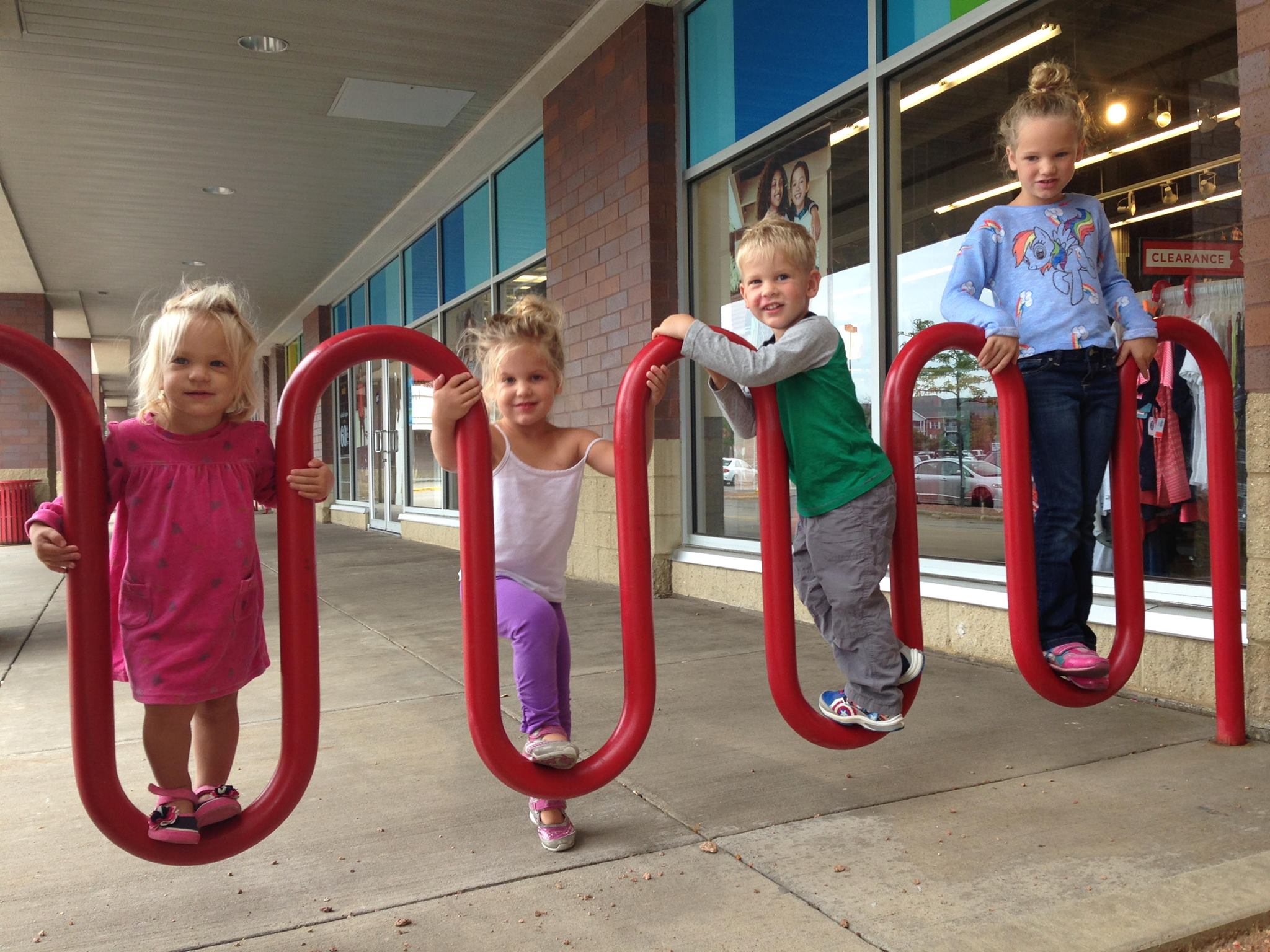
A woman I admire greatly, Joyce Valenza, keynoted today on female leadership.  Before her keynote she asked me and other women I admire greatly to share their experiences of what it means to be a woman in education.  The following is roughly what I shared in a short video clip, I thought it only best to share it here as well but written instead of spoken.

I am the mother to 4 children all under the age of six.  I am the mother to 3 daughters that will one day, hopefully, become independent leaders, not afraid to speak up or speak out.  But for them to become just that, our society has to change.  Our classrooms need to change.  Our language needs to change.

In how many classrooms are girls expected to follow the rules better?  To sit still?  To listen quietly?  If a girl runs around, full of energy she is “acting like a boy.”  If she does it on a regular basis then something must be wrong with her.  If a girl raises her voice, has high energy, then she must be having a bad day.  She is labeled “wild” and “unruly.”  Because that is not how girls are supposed to be.  It goes against their very nature.

The same goes for boys, except only opposite.  If a boy is quiet, if a boy shows emotion, then something must be wrong.  If a boy does not engage in rough housing he must have a problem or be a wimp.  We call our boys “sensitive” like it’s a swear word.

As educators, we must see our students as full human beings that can act in whichever way they choose, even if that means not being a “good” girl every day.  As mothers, we must protect our children from the language that is sure to shape their identity so that they can be what they want to be, not just the archetype of a woman that society has bestowed upon us.

We are raising the future so I raise my girls to be independent.  To be brave.  To be fierce.  I raise my son to be proud of his emotions and to say no when he wants to.  That he does not have to fit into any gender stereotype someone else has decided for him.  But most of all, I raise my children to be themselves, no matter their gender.  Our classrooms, our very language, should protect that.

If you like what you read here, consider reading my book Passionate Learners – How to Engage and Empower Your Students.  The 2nd edition and actual book-book (not just e-book!) just came out!