Be the change, being me, new year

How About Intentional Acts of Niceness?

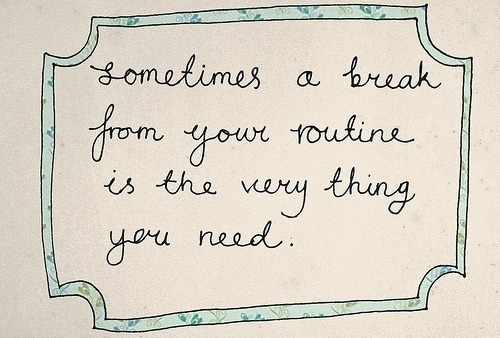
image from icanread

In the past few months, niceness seems to have surrounded my family and I.  Not just the every day, that was nice sort of thing, like someone holding a door.  A student picking up a dropped pencil.  No, instead intentional acts of niceness where people doing it had to actually go out of their way to be nice.  And you know what?  I have noticed.  And I am inspired.

I try to be a nice person to everyone I meet.  (There are some people who I will never be nice to if I meet them again but that list is thankfully short and probably boring.)  I teach my kids their manners in both Danish and English.  I teach them to ask if they can help, hold doors, pick up dropped items, ask interested questions when in conversations and so forth – yes the three young ones think I am just blabbering when I teach, but still…  But I don’t think I go out of my way to be nice.  I don’t think I plan nice things to do for others.  Not like what has happened to me lately.  Take my new teammate Kelly (and in fact all of my new teammates), she has gone out of her way to make me feel welcome, included, and safe.  She has answered all of my stupid questions with grace.  She even took the time to set up an entire scheduled day for me to shadow the team.  She didn’t have to do that, but the fact that she did and still continues to go out of her way, means more than she will ever know.  Or Erin, a friend who I seem to grow closer to every day, who took the time to mail me a surprise gift just because.  It floored me.  When was the last time I mailed someone something?  Or our neighbor who dropped off a homemade cake the other day, just because she felt like it.  Who does that anymore?

So my pledge is to plan intentional acts of niceness.  To go out of my way to do nice things for others.  Not because I need some sort of karmic reward, but because of the profound effect it has had on me.  I have felt thought of by others, what a powerful feeling that is.

So join me.  Plan something.  Take a step out of your normal routine that will make someone else happy.  Spend some of your time creating happiness.  Teach others to do the same.  Think of what we can start?  I know I start tonight, will you join me?

I am a passionate  teacher in Wisconsin, USA,  who has taught 4, 5th, and 7th grade.  Proud techy geek, and mass consumer of incredible books. Creator of the Global Read Aloud Project, Co-founder of EdCamp MadWI, and believer in all children. I have no awards or accolades except for the lightbulbs that go off in my students’ heads every day.  First book “Passionate Learners – Giving Our Classrooms Back to Our Students” can be purchased now from Powerful Learning Press.   Second book“Empowered Schools, Empowered Students – Creating Connected and Invested Learners” can be pre-ordered from Corwin Press now.  Follow me on Twitter @PernilleRipp.

Be the change, being me, rewards, students

Ten Reasons I Ditched Traditional Rewards

When I moved this blog to WordPress some posts did not survive, so in an effort to move some of my favorite posts with me, I will be republishing them here.  This one first appeared October, 2011.

I used to be the queen of the awesome board, the gold stickers, and definitely the special lunches and privileges.  I thought my kids loved it, and sure some did, but after a huge hallelujah moment, I realized that I was doing more harm than good in my seemingly innocent hand out of rewards.  So I ended all individual rewards as I knew them, because here is what I realized.

  1. Students don’t actually need rewards to work.  Sure they work in the short-run but guess what after a while you have to up the ante and keep going up because it just isn’t going to be very effective for long.  And yes, students will take rewards if you offer them, but they will actually also work without the perpetual carrot dangling in front of their noses.    And you won’t believe me until you actually try it.
  2. Rewards tend to go to the same kids over and over and over.  We say that it is really up to the students to get the rewards but at the same time we can probably all list the kids that would have a hard time earning one.  So then who are we fooling?
  3. Rewards split the students.  If you ever want to create a class of have and have not’s in your classroom just hand out rewards; the students will quickly figure out who the “smart” kids are and who are not.  Or worse, who the teachers like and who they don’t.
  4. Rewards devalue the learning.  By attaching a reward to a learning task, you are telling a student that the task is not worth doing if it weren’t for the reward.  That is not how learning should be.  Learning should be fun, exciting, and curiosity driven, not mechanical and focused on the end point.  When a reward becomes the end point, then that is the focus.
  5. You keep giving rewards; the students won’t work without it.  With rewards you create a culture of “what’s in it for me?” and the learning just isn’t enough.  And yet the learning and experience should be enough for the child, provided it is meaningful and purposeful.  So set them up from the beginning to earn rewards and soon there will be hardly any extra work or deeper digging into concepts.  If the child knows that they “just” have to do whatever to get a reward, or an A for that matter, then that is what they will do.  The learning stops wherever you dictate it to.
  6. The students will argue with you.  My first year students would get upset over which sticker I gave them because in their minds certain stickers were worth more.  A sticker!  Now equate that to extra recess, or books, or special lunches and think of the conflict it creates.  You want to make sure your struggling learners keep feeling more disenfranchised; keep up the rewards.
  7. Rewards become the measure of success. If you don’t reward a child then they don’t think they have succeeded.  No more handing them back a project with great feedback; if that sticker or some recognition isn’t attached then it just isn’t enough.  I had students collect stickers and notes to showcase to the other students, it became a competition of who could gather more.  It wasn’t about what they had learned or how great a project was, it was only about how many they had.
  8. Students lose their voice in the learning process.  When a teacher is the only one deciding on success shown through rewards, the classroom does not belong to the students.  That teacher is therefore the ultimate power within the room and the kids know it.  If you want to create a student-centered classroom, you cannot have such a vast difference in learning authority.  To build the kids confidence they have to have a voice.
  9. But they all  get rewarded….  Some schools run weekly recognitions of students for whatever reason, or some classrooms do.  And while this may seem innocent enough, after all, there is nothing tangible tied to it, it still causes jealousy and anxiety.  If a program calls for recognizing every single student for the same things, then why are we recognizing in a public way in the first place.  Wouldn’t it be easier just to state the expectations and then tell the kids that we are happy they are all living up to it?  There is no need to create weekly recognition if we are doing our jobs right as educators; making our students feel valued and respected as part of the learning community.
  10. Rewards create more work for the teacher.  I was so worried that everyone had been on my “Awesome board” that I kept track = more paperwork.  I also had to make sure that I was eating lunch with all of my students = more paperwork.  I also had to make sure I could justify to parents why one child got a certain privilege and another didn’t = more paperwork.  Do you see where I am going?  Rewards and trying to keep it “fair and balanced” creates more work for us without providing any long-term benefits.

So you may assume that my classroom is one stripped of rewards and recognition, yet it isn’t.  My students have parties, except they get them after the fact, when we have something to celebrate.  I have high expectations for my students to “represent” as much as they have for me.  We strive to create a learning environment where we all feel comfortable messing up and trying again, because we know that the learning journey is the focus and not just the end result.  So I recognize and I reward but I do it through the learning and the conversations.  I don’t have a classroom where students expect things to do their jobs, I have a classroom of kids eager to learn, on some days more than others, but who are always willing to be a part of what we consider our second home; our classroom.  All without the use of rewards.

I am a passionate  teacher in Wisconsin, USA,  who has taught 4, 5th, and 7th grade.  Proud techy geek, and mass consumer of incredible books. Creator of the Global Read Aloud Project, Co-founder of EdCamp MadWI, and believer in all children. I have no awards or accolades except for the lightbulbs that go off in my students’ heads every day.  First book “Passionate Learners – Giving Our Classrooms Back to Our Students” can be purchased now from Powerful Learning Press.   Second book“Empowered Schools, Empowered Students – Creating Connected and Invested Learners” can be pre-ordered from Corwin Press now.  Follow me on Twitter @PernilleRipp.


Be the change, reflection, rewards, Student-centered

How Do You Reward Students When You Don’t Believe in Rewards?

When I moved this blog to WordPress some posts did not survive, so in an effort to move some of my favorite posts with me, I will be republishing them here.  This post first appeared in June, 2011.

It used to be when a student did something exceptional, I would place a cute sticker on their worksheet, homework, or test.  I had a drawer just meant for stickers and I lovingly picked new ones for each year in the office catalogs.  I also had Bravo certificates and even great stamps that quickly but distinctly told them exactly how I felt.   Who doesn’t feel great after getting a stamp with a big thumb on it telling you “Thumbs Up!?”  Sometimes, when I had a little more time,  I would even write “Fantastic” next to that sticker just so that they knew I really meant it.

If the class was having a great day I couldn’t wait to dole out those kid points (if I remembered) so that they could earn another party. Never mind the fact that they knew they would earn it eventually because odds were they would have many more great days than bad days. I thought my kids knew that I thought they were great. I thought my kids understood why they were great.   In fact, I even had an “Awesome Wall” where all the A+ work would go up. Of course, I hoped that all kids would eventually have their work prominently displayed, but truthfully some just never did.

So this year I threw it all away. Well, I kept the stickers but they are for my daughter and husband – he loves motivational stickers on his honey-do lists.   The awesome wall got replaced with a world map, the kid/teacher points disappeared. And I felt so empty; after all, how would my kids know when they did a great job? Wouldn’t they miss the stickers and the fantastics? Ummm no. In fact, no kid ever asked me for a sticker this year. No kid ever asked me to explain their fantastic remark because I didn’t write them often.  Truthfully I found out that kids really didn’t need those extrinsic rewards, that learning still happened, that the kids still stayed motivated, of course some days more than others because guess what, they are kids.

So in throwing out all of my rewards, I found out about the biggest reward of all; time.  This simple concept that I know we have precious little of in a classroom is a hot commodity to everyone.  Now when my kids deserve recognition (which they do every day) I give them time.  Whether it is to take the time to speak to them about their work, or to write feedback.  Whether it is to give them time to work or just time to speak to one another.  How about time for a sledding party?  Or time for 5 minutes of meditation after that awesome assembly?  How about the time to just be a classroom, to just hang out and celebrate all the amazing things happening in our room, in our school, in our world?

So don’t feel like giving up rewards will steer your classroom management off course, I believe it will actually heighten it.  I believe that when you push the superficial things out of the way, deeper connections arise and the students become more willing to share, more connected, more motivated.  Finally, by getting rid of rewards I also gave myself the biggest one of all; the chance to connect deeper with my students.  The chance to speak to them more.  The chance to have them all be equals and not labeled and ranked according to grades or homework.  The chance to finally all be “Fantastic.”

I am a passionate  teacher in Wisconsin, USA,  who has taught 4, 5th, and 7th grade.  Proud techy geek, and mass consumer of incredible books. Creator of the Global Read Aloud Project, Co-founder of EdCamp MadWI, and believer in all children. I have no awards or accolades except for the lightbulbs that go off in my students’ heads every day.  First book “Passionate Learners – Giving Our Classrooms Back to Our Students” can be purchased now from Powerful Learning Press.   Second book“Empowered Schools, Empowered Students – Creating Connected and Invested Learners” can be pre-ordered from Corwin Press now.  Follow me on Twitter @PernilleRipp.

Be the change, being a teacher, being me, motivation, reflection, Student-centered, students

Some Thoughts on Motivation

When I moved this blog to WordPress some posts did not survive, so in an effort to move some of my favorite posts with me, I will be republishing them here.  This post first appeared in May, 2011.

“Mrs. Ripp, this is so boring.”  That sentiment greets me on semi-regular basis from one child.  Most days he is passionate, funny, and involved, that is, if he likes what we happen to be during.  Today is no different, he has been involved, engaged, and eager most of the day but now the fatigue has set in and the writing prompt just does not want to get done.  This is a regular occurrence throughout America, passionate students that are mostly motivated at all times but sometimes hit slumps.  This post is not about them.

Instead, this post is about those kids that put their head on their desks, that groan when we give directions, that could not care less about threats, rewards, punishment or motivating pep talks.  Those are the kids we all meet; the truly unmotivated.  Those students that do not see the relevance, the importance, or even the wisdom behind school.  Those students that feel that this is just a temporary illness, something to be waited out for real life to begin.  And yes, we have them even at the elementary level.

The other night, I shared on Twitter, “I always wonder if having unmotivated students just mean that what I am teaching is unmotivating, I think it does.”  Lo and behold a man I admire greatly, Tom Whitby, was kind enough to engage me in my train of thoughts.  As we discussed, my own thoughts became much clearer:

Motivation is linked to the teacher whether we we believe it should be or not.

If a student fails, the teacher is most often the first to be blamed before any outside factions are investigated.  (Whether this is appropraite or not).

We have the most control over what happens within our classroom.

As part of this discussion, Tom Perran offered up this article discussing how teachers only have control over 10 of 16 motivating factors.  And yet as teachers we do have to own up to our part in motivation.  Last year, when I sat through another round of book report presentations I yawned often, stretched to stay awake, got droopy eyelids, and yet admonished the students for getting restless and unfocused  Hmm, that doesn’t seem right.

As teachers, part of our job is to provide engaging lessons, but it is this definition of engaging that seems to mess us up.  I used to think that by engagement it meant me lecturing for a while and then giving the students work time, as long as I kept the questions coming, the students were engaged, right?  For some reason most of the time my results were less than stellar.  I also used to think that as long as I provided some sort of choice then the students would find their motivation.  And while our more self-reliant students did because they already have a sense of duty instilled by the teacher, some students didn’t.  Enter in punishment and rewards.  If a student didn’t turn in their work then recess was taken away, and if that didn’t work then a 0 was given.  Ooh a failing grade.  They even got their name on the board and were not offered a chance to enter the weekly drawing for the monthly pizza party, confused?  So was I.

The problem with punishment and reward though is that it often only motivates in the short term.  A student knows that as long as they hand something in, even if it is awful, then that counts as a finished product.  As a teacher, I often lost sleep over what to do with these students.  they seemed already by 4th grade to hate school, finding it a punishment for childhood, and worst of all, they knew how to work the system.  So what to do?  Again, I realized that the problem wasn’t the students, it was the curriculum and how I taught it, so really it was me.  See, I am the biggest in school motivator there is.  While I may not be the one that decides what to teach, I most certainly am the one that decided HOW to teach it.  And if I thought that lecturing (which even put me to sleep in college) was going to capture the imaginations of 9 year olds’ then I was an idiot. 

So after almost a year of changing things up, this is what I have realized as far as motivation:

  • Choice matters.  When students choose not just what they will do for a project but also what they would like to learn about within a perimeter, you get buy-in.  This continues to be one of the most exciting simple realizations I have come across.
  • Motivation is contagious.  When one student gets excited and has an opportunity to share that enthusiasm, it catches.  My students get to blog about projects, we have huddles where we share and we are a bit louder than we used to be.  But guess what?  Those loud noises are usually students super excited about something.
  • Eliminate punishment and rewards.  This short-term motivator seemed more harmful than helpful to me.  This year we have class parties when we feel we want one, I have lunch with all my students several times a month because they ask me to, and no one is excluded from anything.  When homework doesn’t get done, I ask them how they plan to fix it, most students choose to do it at recess.  Fine by me, they are free to go if they choose.
  • Be excited yourself.  The fastest way for kids to lose interest is if you are bored.  I realized that I hated some of the things and taught and how I taught them (goodbye grammar packets), so something had to change.  Now my students joke about how I almost always introduce something new with “I am so excited to do this…”
  • Look at outside factors.  Some students have a lot more on their plate than we could ever realize.  Ask questions, get to know your students, and be a listening ear.  When my husband lost his job, it was hard for me to be excited about things as well because I was too busy worrying.
  • Control what you can.  We will never be able to control what our students go home to but we sure can control what happens in the room.  All the teachers I know choose to create a caring environment where all students feel safe.  This alone means students let their guards down and feel it is okay to work hard and have fun.

Loss of motivation doesn’t just happen overnight, I believe all students start out motivated and then life gets in the way.  At some point during their school years they start to hate school feeling it is stagnant and irrelevant.  I therefore do everything in my power to ensure that students leave my classroom still liking school, perhaps a small goal, but an incredible important one.  If they like to be in your room, then it is up to you to figure out how to keep them engaged.

I am a passionate  teacher in Wisconsin, USA,  who has taught 4, 5th, and 7th grade.  Proud techy geek, and mass consumer of incredible books. Creator of the Global Read Aloud Project, Co-founder of EdCamp MadWI, and believer in all children. I have no awards or accolades except for the lightbulbs that go off in my students’ heads every day.  First book “Passionate Learners – Giving Our Classrooms Back to Our Students” can be purchased now from Powerful Learning Press.   Second book“Empowered Schools, Empowered Students – Creating Connected and Invested Learners” can be pre-ordered from Corwin Press now.  Follow me on Twitter @PernilleRipp.

Be the change, classroom management, punishment, reflection, Student-centered, students

Do We Really Need the Public Call Out?

When I moved this blog to WordPress some posts did not survive, so in an effort to move some of my favorite posts with me, I will be republishing them here.  This one was first written in April, 2011.

“Joe, you need to pay attention!”

“Sit up, Peter!”

“Lisa, what happened there?”

 All day and every day, we use our students names when they are off task, when they are fiddling, sleeping, or simply not performing to the high standard we have set for them.  We see something out of sorts, judge their action, find them guilty, and deliver the verdict all within a few seconds.    As our lesson continues, we don’t always have the time to dig deep so we assume instead that we know why they are fiddling, why they are not paying attention, and so we correct, coerce, call out their names until they are with us again.  

Their names.  Something that is so intricately linked with who they are as a budding person.  Their names so linked with their identities.  And yet we use them to our advantage, without a second thought as a way to maintain control, as a way to punish. 

This week I asked my students to finish the sentence: “Being a good teacher means…” and what Nathan wrote really made me think: “Don’t yell out the kids name that does something wrong.”  At first, I scoffed at this notion, after all, what else are we supposed to do as teachers when our students are off task?  Calling out their names is one of the most efficient ways to re-direct them quickly.  And yet, as I thought about it more, I understood his thoughts.  Calling out a student’s name in front of the whole class means that the whole class knows that the student is not doing what they ought to.  Some teachers use it specifically for that purpose; the public enforcement of expectations.  And yet, calling out a name means that what one student is doing (or not doing) becomes the focus of the entire class.  Yes, you achieve your goal of attention redirection, but you are directing everyone elses’ attention to that child without fully knowing what is going on.  So I make it my mission to reduce the public negative call out.  

So what can I do instead, because we all know, there are times when even the most attentive student gets off-track and I would otherwise use their name to re-direct right away,  

I could take a breath, hesitate, and see if another strategy can grant the same outcome.  Can I redirect them silently?  Can I signal them?  Can I tap them on their shoulder, or pass by their work area?  Do I need to shout out their name?

I could also re-evaluate, do a quick scan of the room, is this the only child off-task?  Is the whole class really not interested anymore? Did I speak too long, do we need a break or to do something student-directed or hands-on?

Yet, sometimes, it is not me or the students that are the problem.   I am reminded that my students live full lives that sometimes interfere with our school day.  This is when I take the time to stop and talk and ask if everything is alright, is there anything I need to know?  Sometimes they are just so excited about something happening that they cannot focus, other times it is lack of sleep, of food, or they are distracted by life situations.  Sometimes, they will just tell you they are having an off day.  That is alright too, after all, we all have off days.

This isn’t a perfect system, nor is it intended to be.  It is rather one more step in learning how to be a better teacher, one that doesn’t cause embarrassment for the students because I don’t need to embarrass them into behaving.  One that takes the time to figure out the real reason behind distractions and then works with the student rather than just dolling out punishment.

So once again, my students teach me how to be a better teacher.  I should be using their names wisely, reserving the public call out for when it is truly necessary.  Nathan taught me that and for that I am thankful.  He had enough courage to tell his teacher the wrong of her ways, and lead me to deeper reflection.  When we ask our students questions, we may not like the answer, but there is always a great reason for that answer.  A reason that should not be taken lightly, but rather explored, reflected upon and then acted upon.

I am a passionate  teacher in Wisconsin, USA,  who has taught 4, 5th, and 7th grade.  Proud techy geek, and mass consumer of incredible books. Creator of the Global Read Aloud Project, Co-founder of EdCamp MadWI, and believer in all children. I have no awards or accolades except for the lightbulbs that go off in my students’ heads every day.  First book “Passionate Learners – Giving Our Classrooms Back to Our Students” can be purchased now from Powerful Learning Press.   Second book“Empowered Schools, Empowered Students – Creating Connected and Invested Learners” can be pre-ordered from Corwin Press now.  Follow me on Twitter @PernilleRipp.

Be the change, being me, classroom management, reflection

I Do Not Manage

When I moved this blog to WordPress some posts did not survive, so in an effort to move some of my favorite posts with me, I will be republishing them here.  This one first appeared in March, 2011.

I am sick of the word “manage” as in “classroom management” or even better how do you “manage” your students?

Well, I don’t manage them.  I teach them, guide them, and learn along with them.  I do not come to school intent on herding cattle but rather helping young minds develop their knowledge, as well as their desires to become more knowledgeable.  I do not manage my classroom, but instead I collaborate with students to set up perimeters for us to function at our best, be our best, and want to stay that way.  I do not manage their desires to learn or become better citizens; I nourish it, sometimes light it, but always, always maintain it.

I do not manage to get through my day, I flourish through it, loving the trials, the ups and downs, the wondrous moments that come with teaching.  I do not manage my life or my curriculum, I live it, love it, and will continue to push myself as a teacher, a human being.

I am not a manager, I am a teacher, and I would like to stay that way.

I am a passionate  teacher in Wisconsin, USA,  who has taught 4, 5th, and 7th grade.  Proud techy geek, and mass consumer of incredible books. Creator of the Global Read Aloud Project, Co-founder of EdCamp MadWI, and believer in all children. I have no awards or accolades except for the lightbulbs that go off in my students’ heads every day.  First book “Passionate Learners – Giving Our Classrooms Back to Our Students” can be purchased now from Powerful Learning Press.   Second book“Empowered Schools, Empowered Students – Creating Connected and Invested Learners” can be pre-ordered from Corwin Press now.  Follow me on Twitter @PernilleRipp.