Who are you as a reader is a question that shapes our experience together in room 235D.
At first, their answers are typically short. ..
I am a reader because I like to read.
I hate reading.
I only read because I am told to.
As the year progresses so do their thoughts. They start to realize the parts that were there all along and that they are discovering and so gradually their answers change.
I am a reader who only reads a certain type of book.
I read because it takes me away.
I am a picky reader who loves to read but struggles with finding the next great book.
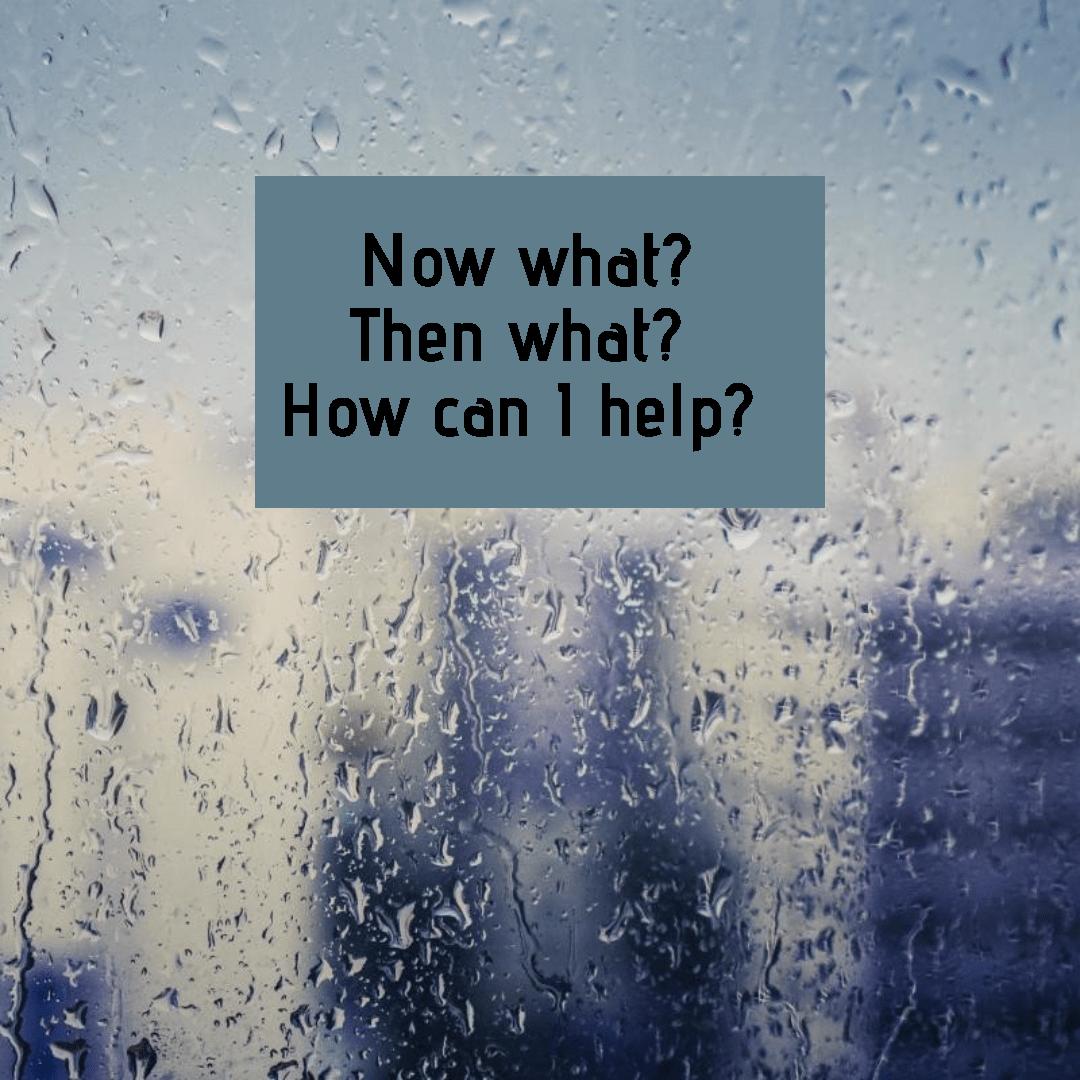
As their identities develop, the responsibility shifts from me to them. They set the goals at the beginning of the year, I make sure they revisit them, but I also ask them, “Now what?” when they say they don’t like reading.
I ask them, “Then what?” when they say they cannot find a book.
I ask them, “How can I help?” when they tell me they don’t know what to do as readers.
These questions subtly change the power of the room, the control of the learning. they may seem insignificant but they add up.
As the year progresses, our conversations shift. No longer a focus on what I need to do but rather on what they need to do. But this doesn’t just happen, I ask them to take responsibility, to figure out their own part so that I can help guide them rather than lead them.
Today, as we settled back after a long weekend break, I asked them to tell a partner who they were as readers. I modeled it and then let them loose.
Their words surrounded us for a few minutes and then they turned their eyes on this reflection.
Only four questions, but again, such a simple reflection of the thinking that needs to happen. The ownership that needs to be taken and honed.
I read their answers and am reminded once again how such a small assignment can help me grow so much.
They need my help still with book shopping.
They want more time to read.
They have grown but are still not sure that reading is for them.
They ask me to speak to them more about their reading.
And they see their own role in what it means to be a reader. As one child writes, “Ms. Ripp doesn’t have to do anything to help me. I think that this is something I need to work on myself.”
So much growth, all from the little things we can do that go beyond handing a child a book and giving them time to read.
It has been four days since I stood in my classroom and surveyed the books. Four days since I got the papers ready. Four days since I sharpened the pencils and then shut the door, ready to take a break. My brain is now thinking of how in one day I go back. rejuvenated, refreshed, excited, and yet…
Am I really ready to be the teacher that these kids so wholeheartedly need?
I keep seeing the ideas shared. The quippy lines. The hopes and dreams that we so eagerly pass on as reminders to one another. The mantras, the quotes and even the blog posts that tell us how we should be teaching. With urgency, with passion, with creativity.
We should see each child.
We should strive for more.
We should make it relevant.
We should make it challenging.
We should make it real-world learning, whatever that means.
And yet…
We say we want the students to talk, but are we quiet long enough to hear them?
We say we want innovative classrooms, but are we embracing new ideas, unafraid of change?
We say we want hands-on learning, but are we providing opportunities for that or are we stumped for how to do it?
We say we want kids to explore, but are we giving them the time to veer off our path?
We say we want choice, but are we giving it?
We share the ideas that others have and tell ourselves that they are right. That we can do education better, but then fall into our same patterns as we shut our doors and get to teaching. We nod our heads in agreement with all the pretty statements but then cannot find the time, the courage, or the know how to change.
So as I prepare for this Monday, I ask myself, is this everything you hoped it would be or could it be better? And if so, how?
Perhaps I need to ask myself the following, and perhaps you should too:
How is there choice involved?
How are their voices heard?
How can they move around?
How can it be relevant to them?
How can it matter?
How can it be fun?
How will this help them grow?
And then I can plan my lesson.
If you like what you read here, consider reading my newest book, Passionate Readers – The Art of Reaching and Engaging Every Child, out August 2017. This book focuses on the five keys we can implement into any reading community to strengthen student reading experiences, even within the 45 minute English block. If you are looking for solutions and ideas for how to re-engage all of your students consider reading my very first book Passionate Learners – How to Engage and Empower Your Students. Also, if you are wondering where I will be in the coming year or would like to have me speak, please see this page.
I often get asked how I started writing, where this blog came from. My answer has always been the same; this blog should b called Pernille’s Random Thoughts. Pernille’s thoughts that keep me up at night. Pernille’s reflections that I need to to make so that I can grow from them. While I know others now read it, this was never my intention, it still isn’t.
I write for myself.
For the words that otherwise haunt me.
For the experiences, I have to process.
Sometimes I write to share ideas because I am so proud of something that worked.
Sometimes I write to share failures so that others can learn alongside me.
Sometimes I write simply to think out loud, to hold myself accountable, to set my thoughts out in the world so that I can be reminded of what I believe in to my core.
On Sunday, 8 AM, at NCTE, I was part of a session with 6 powerful women. That morning Jess Lifshitz, Katie Muhtaris, Kathleen Sokolowski, Sara Ahmed, Katherine Hale, Donalyn Miller and I got the chance to share a personal story to help others reflect on their identity and our society. The invitation was wide open for me to share whatever I felt like. I knew that this was an opportunity for me to take the privilege that I have been handed because of my skin color, my socioeconomic status, my resources and so many other things and shine a light on it.
And yet, I was scared. My hands shook. Not because my risks are great; what’s the worst that can happen?! (Although I sometimes do forget that things can happen that would greatly affect my family) But because I was afraid of not saying it right. Of muddling my words. Of unintended consequences. But the words came out and so did the tears. So for all of you who were not in our little session at NCTE, here is the story I chose to share, some pieces already shared on this blog, and others not.
I remember clenching the steering wheel. The red and blue lights behind me flashing. My heart in my throat. My breathing fast. In my head, I kept wondering what I had done. I knew I had followed the speed limit. I knew I had used my blinkers. I knew my registration was up to date.
And yet, I was getting pulled over and all of my kids were in the kid yelling at me about the police car behind us. As the police officer walked up, I was scared. After all, I didn’t have my Green Card on me. That little card that grants me the permission to be in the United States as a lawful immigrant. That little card that tells authority that I am legal. That little card that I am supposed to carry on me at all times, in case anyone ever needs to see it. In case the police, or ICE agents, or any other authority ever decides to question whether I have the right to be in the United States of America.
I didn’t have it. It was at home. And then the police officer came up to my window.
I rolled down the window, ready to ask if I could please go home and get it, ready to make promises to always carry it with me in the future. I still had no idea why I was being pulled over.
She asked me for my license and I held my breath as I handed it over and she began to speak.
My brake light was out. That was it. A brake light. I had seven days to get it fixed or else but my “or else” was a ticket, not questioning, not deportation.
She thanked me for my time. And then she walked away.
She never asked about my green card. She never asked if I was an American. She never even thought to ask.
I almost cried as I pulled my car out into traffic and went home.
I was raised in Bjerringbro, Denmark, a small town of about 8,000 people. My mother moved my siblings and me there, I was 6 months old when she found the courage to look for a better life. My mother was a strong single mother, who also had a wandering heart and so when I was six years old, she moved us to America so that she could write a book at Berkeley. I was six years old the first time I spoke a word of English taught to me in an inner city classroom in San Francisco. For seven months I navigated this foreign tongue, I navigated not understanding what someone said to me when they spoke. I navigated trying to find the bathroom when you don’t know how to ask to leave or even how to say “Bathroom.” I navigated how to make friends when you don’t speak the same language, how to show I was smart even if I didn’t know what I was supposed to be doing. And just when I felt like I had mastered this new language, this new culture, this new me, we went home. Back to Denmark where we resumed the life we had left behind. Becoming Danish once again, rather than a kid who doesn’t have English as their first language.
So when you see me; do you see a woman whose first language is not English? Do you see the ESL student I was? Or do you just see my white skin? Hear my American English?
When I was 18, my mother decided it was time to move again and she asked me once more if I would come. “Stay for a year and if you don’t like it, I will buy your ticket home.” In July of 1998, I walked up to the counter in Logan Airport and declared myself an immigrant. I was alone, traveling by myself, and clutching my sealed papers as tightly as I could. The immigration official, a surly man, pulled me into a small room, took my papers and then opened them without a word. I stood there silent, afraid that I somehow would make the wrong move or say the wrong thing. Afraid that at any moment the uniformed man, this stranger, would decide that I was not going to America and just like that I would be sent back home to a country where my family no longer was. After questioning, he stamped my passport, handed it back and simply said; “Welcome to America” as he led me out into what felt like a whole new world.
Newly moved to Wisconsin, in my 18 year old glory
For 19 years no one has ever asked me for my papers again. I have walked freely wherever I wanted to without being questioned, without being pulled over, without name-calling, all because of how I look. That is white privilege,
When I wrote about how I am never assumed to be an immigrant, someone replied; “Well, that is easy to understand, after all, you look like an American.”
Let’s think about that for a moment. How can I look like an American when I do not have a single drop of American blood in me? How can I look like an American when I can trace my Danish roots back more than a thousand years? How can I look like an American when my first language is Danish and not English?
Take Martha, our nanny. She is a full-blooded American and yet she gets pulled over regularly for as she calls it “Driving while Mexican.” She is questioned about her heritage, asked where she is really from, whether her parents came here illegally. When we go out together, she is automatically viewed as the immigrant and I am not. Our assumptions about what makes someone American follows her everywhere she goes. She shrugs it off like it is no big deal, says that’s just the way it is, but I am not okay with that, we shouldn’t be okay with that.
And I get it, I am so white I am like a caricature of whiteness. You see me coming; blonde, blue eyes, tall, my Viking heritage directly responsible for the four blonde children that cruise around with me in our mini-van while we bungle the words to Despacito. I was born white, it is who I am, but I am on a journey to use my innate privilege to be something more. Not just an ally, but a fighter. Someone who doesn’t just shut the door when the going gets tough but leaves it wide open.
My children go to a school that does not mirror us. It is through circumstance we came to it but by choice that we stayed. Learning among other cultures, races and identities have brought many questions to our dining room table. Questions that were hard for us to navigate with our young children, questions who pushed our own thinking. I shudder to think whether these questions would have been posed by my children if they did not go to the school they do. And so I think of the choices we, as white people, make as a privileged society to keep our lives homogenous. How we live in neighborhoods where people look like us, we send our kids to schools where they float in a sea of whiteness, we not only elect people whose values mirror our own but so do their faces. I can choose to step away from racism. I can choose to step away from inequity discussions. I can choose to step away from anything that may be upsetting, dangerous, or demoralizing.
I am privileged because I get to be afraid of the type of reaction my teaching may cause if I continue to discuss inequity. If I continue to discuss racism. If I continue to discuss what it means to be privileged in my classroom. I get to be afraid for my job and I get to choose whether to have these hard conversations or not. But the truth is, there should be no choice. We, as teachers, are on the front lines of changing the future narrative of this country. Ugliness and all. We are the bastions of truth, so what truth are we bringing into our classrooms?
Where is our courage when it comes to being a part of dismantling a racist and prejudiced system? It is not enough to have diverse books in our classrooms if we are too afraid to discuss diversity and what the lack of humanity for others does to our democracy. It is not enough to say “You matter” and then do nothing to change the world that we live in. Or to celebrate diversity and then not accept a child for who they truly are, differences and all. It is not enough to say we are an ally if our actions don’t match our words. I don’t need 100 clones of me, I need to create more opportunities for the students to do the hard work. To offer them an opportunity to decide. To create an environment where they can discover their own opinion. Where they can explore the world, even when it is ugly so that they can decide which side of history they want to fall on.
So this year I am planning for even harder conversations. I am planning on being an ally, for being a fighter, even when I get scared. We say we teach all children, but do we teach all stories? Do we teach the whole truth, and nothing but the truth, or just the sanitized version that will not ruffle any feathers? Do we give the students time to discuss, to formulate their own opinions, to evaluate the society that they live in and reach their own conclusions?
I am so white, I am like a caricature of whiteness, but perhaps even this white person can make a difference by not being so afraid. By listening, by asking questions, and by doing more than just saying that this world is filled with wrongness.
I am no longer just an immigrant, this summer I became a United States Citizen. I no longer have to fear being deported and separated from my children, but then again; did I ever really have to fear that? Or did my white skin shield me from what it truly means to be an immigrant to this country? Did it give me the cover of assumptions when I am assumed to be American? And so I wonder; what assumptions do you make about those that you teach?
My beautiful friend, Jess Lifshitz’ also shared her story, please go read it, it took my breath away.
That we want our kids to be awake, to be critical, to be citizens who not just consume information, but tear it apart, ask the hard questions and then draw their own conclusions. Who stand up, who fight for what they know is right, who knows what it means to be afraid of the decisions they make but still keep fighting.
We want them to feel safe with us.
To matter with us.
To be something even more than they were before with us.
We say we want to teach all children and help them discover their superpowers so that they too believe that they can be someone.
But our censored libraries tell different stories.
Our libraries tell us of the fear we feel.
The decisions we make.
The way we exclude without meaning to.
The way we keep the white, cis-gender, hetero norm the norm.
The way we perpetuate the privilege so many of us live.
When we say we want equity we cannot shout those words without looking at the equity that our libraries represent.
Do we have all our children’s stories represented?
Can all of our children find themselves in our books?
Can those who are not ready to label themselves find the answer they may not even know they needed within our pages?
Can those who feel marginalized, disenfranchised, rejected find a home within the pages of the books we place on our shelves?
Can those who mainstream society tend to label as “other” find a representation of the normal being they are? One that is not other, but one that just is?
I get that we are afraid to offend. I get that we are afraid for our jobs. I get that we worry about backlash, pushback, and questioning. But perhaps that is why we became teachers so that we can fight for those who society has tried so hard to silence? So that our voices can join those whose voices are just a whisper.
So that we can stand up for those who do not have the armor of white privilege, of hetero privilege, of middle-class privilege, of cisgender privilege and say that their stories are part of the human story and therefore deserves to be in the very books we hand to children. And once we are standing up, we can give them our space, so that they can reclaim the void that society wants to keep them in.
I cannot say that I teach all children if I do not have all children’s stories represented on my shelves. It’s as simple, and as complicated as that.
Don’t forget that not being able to find yourself in a story is not just a tragedy, it is a complete erasure of your identity. One that we easily can forget when our own identity is constantly represented.
So fight for yourself. Fight for your books. Fight on and fight hard. All of our children are counting on us.
PS: If you want to be smarter, follow my friend Dana Stachowiak.
“I would give them time to read but I don’t have the time…”
The words haunt me several weeks later. Shocking in their simplicity, yet profound in their meaning. I didn’t have the courage then to address it but I have the courage now.
You see, that statement represents so much of what goes wrong in our reading instruction. We want kids to read but expect them to do it outside of our classrooms. We want them to grow as readers but expect them to fall into the pages of a book on their own. We want them to be readers but then tell them that with us we don’t have to practice because surely they know how to do that already. And yet the numbers don’t lie. The increase in summer slide, in kids who say they don’t read for fun and the scary statistic that says that 26% of adults haven’t read a book in the last year.
And we wonder why we seem to be turning from a nation of readers into a nation of watchers.
It starts with us. It starts with the way we choose to spend our time. It starts with our lesson planning. We nurture the seeds of reading and make the decisions that will help them grow or wither. With us, the reading should start so that it has a chance to continue once they leave us. It is as simple as that.
So how do we find the time to have kids read when we don’t have the time? The answer lies in the small things, the small tweaks that we make every single day with one goal in mind; more time to read.
We start with independent reading. Every day.
My students start every single class with 10 minutes of uninterrupted free choice reading time. I do reading check-ins during this time, but their job is to read. To fall into the pages of a book. Nothing else. Every child is expected to read, and for those who fight it every single day, I keep trying every single day. I wish I could give more but 10 isthe least I can give, if I had a longer class period, I would give more time.
Ask yourself; what if we started with independent reading, what is the worst that could happen?
We figure out our learning target.
While I don’t love everything about learning targets, they do force me to think about the ONE thing that I want students to grow in. Too often we pile many different lessons into one, which increases our talk time. Instead, really narrow down what is the most important for today and then focus your lesson in on just that. I know that I teach many different skills in one day, but this helps clear up some of the clutter.
Ask yourself; what is the one skill we really need to focus on today?
We stop talking so much.
Teachers are estimated to speak 60-75 % of the time. So if you teach in 45 minute periods like I do, we are dominating almost 30 minutes of that time. No wonder we say we don’t have the time. Yet how much of that time talking is spent on repeating instructions, on giving extra directions, or simply trying to answer every single thing question asked in front of the whole class. So set a timer, record yourself, have someone observe you, or ask a child to stop you after a certain amount of time. Couple this with a specific goal and then stick to it when someone says you are out of time. If it is a lengthy lesson, which mine sometimes are, explain why to the kids and then help them get up and move. But again, if you start with reading then you will already have preserved their reading time.
Ask yourself; how can I find out how much time I actually spend talking?
We get to the point.
I know we are supposed to activate background knowledge, share personal stories, and really suck kids into our instruction but how often do we get so wrapped up in sucking them in that we lose them by the time we finally get to the point. Keep the introduction short, it is, after all, the introduction, and get to the meat of the lesson more quickly.
Ask yourself; How can I keep my introduction to only a few sentences?
We do most of our teaching in small groups rather than whole class.
How often do our lessons increase because we are trying to teach all the skills to all the students and yet what is really needed is one major teaching point and then tons of small groups for personalized instruction? So focus your one thing in on what all the kids need and then save everything else for small group instruction. That way kids are getting what they need rather than tuning out in a large class.
Ask yourself; is this needed for all of the kids or just some of them?
We re-evaluate our routines.
Independent reading is my bell-ringer, it is my task to do while I do attendance. It is the thing to do while kids get settled in. It is the thing to do while I check in on a kid. It the thing to do while we wait for the last kid to show up. If you are waiting for something you read. If you think you are done and need to check in with me you read until we can speak.
Ask yourself: What small things take up time in your everyday routine that could be converted into reading time because, truly, every minute counts?
We cut out the extra stuff.
Just like we speak too much during class, we also have kids go through unnecessary hoops to teach and practice their skills. Do they really need to “do” something every day with their reading other than talk? Can they simply read some days and not write about it? Not post-it note it? Not do mini jots or other tasks? I fear we often feel that we need proof that their reading meant something or that they got something out of it, and that leads us creating more tasks to do. We focus a lot on longer projects so that we minimize the time spent doing stuff around their reading.
Ask yourself; is the task I planned for them to do essential or filler?
We grow our patience.
We often stop with independent reading because not ALL kids are reading, not ALL kids are making great choices, not ALL kids are using it well. But some are. The thing is, it takes time, sometimes months, sometimes years to help kids embrace independent reading. For some, it seems an impossible task and yet, we can nurture them as readers every single day. We can show that our belief in them being well-developed readers is strong and that we will keep believing in them every single day, even if they reject us completely.
Ask yourself; Am I making whole class decisions based on a few kids?
If we want kids to be readers we give them time to read, I cannot state this enough. I cannot bold it enough. I cannot repeat it enough. We cannot wonder why our students are not reading if we don’t give them time to do so with us. Then that’s on us. And if you don’t believe me, read the research courtesy of Donalyn Miller.
If you like what you read here, consider reading my newest book, Passionate Readers – The Art of Reaching and Engaging Every Child, out August 2017. This book focuses on the five keys we can implement into any reading community to strengthen student reading experiences, even within the 45 minute English block. If you are looking for solutions and ideas for how to re-engage all of your students consider reading my very first book Passionate Learners – How to Engage and Empower Your Students. Also, if you are wondering where I will be in the coming year or would like to have me speak, please see this page.
The kids who came to me who were successful in school did just fine. The kids who had already figured out the way to do school were just fine. The kids who seemed to find things to like about school ended up just fine.
And yet, every year there they were. Their data staring back at me as fiercely as their refusals. That little group of kids that no one seemed to be able to reach, to help, to figure out how to make them grow like we hoped they would.
And every year, at the end of the year, I hoped for the very same thing; maybe next year it will finally click. Maybe next year’s teacher will figure it out. Maybe next year they will be a better teacher than me. Maybe next year…
But what I seemed to forget for so many years. What I still forget at times is one simple truth; for all of our kids, we are the “Next year…”
We are the teachers that are supposed to finally figure it out, to make the difference, to help them grow.
We are the teachers that are supposed to find just one more idea when we seemingly have tried everything and yet nothing has made a difference.
We are the teachers that we hoped all of “those” kids would get. We are the maybe next year…
So we cannot sit back and wait for next year when that is exactly what we are.
We cannot hope that others will figure it out better than us when we are what these kids got. We cannot pass the child on as an unsolved mystery without working until the very last day, the very last moment, in the hopes that something, even something minuscule, will finally help them grow.
So we keep trying, and we keep reflecting, and we keep asking questions. And we slide those book stacks across their desks with our most enticing books, and we keep sliding them even when they dismiss us through their eye rolls or outright refusal.
We purchase the books we hope they will read.
We confer with them even if they have little new to say.
We give them as much of our time as we can so that they can see that rather than giving up we keep coming back.
And we rediscover the hope of becoming a reader that may have been extinguished either by our own actions or of actions outside of our control.
So when I am asked but what do we do when the kids still don’t read?
When they still don’t care?
When they still just don’t?
I remind myself and anyone else.
Not yet.
But they will, however small.
There will be a moment of success, perhaps not transformation yet, and we will know that instead of simply hoping that next year’s teachers would figure it out, with this one little piece we have gotten one step further. And we cannot dismiss that. So look for the little, for the often overlooked, pump up your patience, and find your successes. Don’t give up on a child just because it hasn’t worked yet. Don’t give up just because nothing seems to matter. Don’t give up and hope that others will figure it out when you are what that child has.
Teach, work, believe and love, and know that instead of “next year” we can make it become “this year…” and then for this one child, we will make a difference. But we can’t do that if we already are waiting for next year’s teachers to figure it out.
If you like what you read here, consider reading my newest book, Passionate Readers – The Art of Reaching and Engaging Every Child, out August 2017. This book focuses on the five keys we can implement into any reading community to strengthen student reading experiences, even within the 45 minute English block. If you are looking for solutions and ideas for how to re-engage all of your students consider reading my very first book Passionate Learners – How to Engage and Empower Your Students. Also, if you are wondering where I will be in the coming year or would like to have me speak, please see this page.


 We say we want equity.
 Pernille Ripp