aha moment, choices, inspiration, lessons learned, student voice

Teaching Students How to Speak Well – A Unit to Explore

It had never occurred to me that I haven’t taught my students how to speak well.  After all, for the past 7+ years my students have spoken in front of their peers.  I have told them to stand up straight, to speak clear and loud and to establish eye contact.  That should be enough, right?  Except for the last 7+ years I have also sat through one terrible presentation after another.  Yes, most have spoken loudly, yes, most have had some stilted eye contact, and yes, most have stood up fairly straight.  Yet, most have also been terrible presenters.  No passion, no enthusiasm, no special something that have made them enjoyable to listen to. I figured it was because I taught elementary school and perhaps better speaking skills would develop naturally.

As a 7th grade teacher, now I can see that they don’t.  My 7th graders still present fairly poorly and I realized, with the help of Erik Palmer, that we need to teach how to speak well.  Not just assume that students will figure it out over the years.  We need to teach it early, we need to teach it often, and we need to teach it every year.  So I have snagged ideas from Erik’s article and adapted them to fit our purpose.  Feel free to use and make your own and check out his other resources as well, it has been easy and fun to use.

The main idea I have borrowed from Erik is his 6 points of what a great speaker does.  These have been the framework for this week and as we go forward.  It has been essential for my students to have common language and a framework to develop them as speakers and this is what Erik discusses quite well.

These have been the guiding points for our lessons and have also been the base points of our rubric.

While we will be doing speeches all quarter, our first assignment was given on the very first day of the quarter to give the students a goal to work toward.  Assignment:  Create a one minute speech answering “How do you want to be remembered at the end of 7th grade?” (Thank you Josh Stumpenhorst for the inspiration).  To see the entire assignment, see here.

I have tweaked their first speak to be given in a circle format.  Our school uses counseling circles/restorative justice circles throughout the year and every Tuesday all of our students do circles with their homeroom teacher.  This format for delivering a speech means that my students are automatically more comfortable, which is a huge barrier in 7th grade.  They are so worried about what their peers are thinking about them.  And that is something I have faced head on when I have been teaching them how to speak.  My biggest tool has been my own enthusiasm and tendency to screw up and laugh about it.  I have no problem making mistakes in front of them to take the pressure off of them.

So what have we been doing?  Note: these lessons are about 10 minutes long, maybe 15 depending on the discussions.

Big talking points every single day:

  • What have they been taught in the past and why they need to learn better skills.
  • The need to trust others when we speak or at the very least assume that others mean us well when they watch.
  • The need to step a little out of their comfort zone.
  • That speaking well is a life skill, something that will help them be more successful in life.

Poise

Student definition:  Your swag, or how you use your body to match your message.

  • Discuss what is poise, have the students get up and move showing you poise.  They started off very hesitantly, which is ok, I have been taking baby steps.
  • Every student gets a Shell Silverstein poem and are told to practice speaking it aloud.  I then fishbowl the next activity – perform the poem just worrying about poise, none of the other things, and have their mirror (partner) critique them kindly.
  • I then partnered them up randomly and had them perform the poems in front of just their partner.  I helped them coach each other and we talked about how to give kind criticism that allows others to grow.

Voice

Student definition:  Controlling how you speak to match the message.

  • Discuss what is voice, why it is important to take control of your voice and how it is not just all about being loud and clear at all times.
  • Video clips of powerful speakers.  After giving them background knowledge about Hitler and his powers of persuasion, I showed them a one minute clip with no subtitles just so they could see how he used his speaking skills to incite people.  This really caused a reaction in my students because they saw how powerful being a great speaker can be and how that power can be used for good or evil.
  • I then juxtaposed that with clips of Gandhi and Nelson Mandela who used their voices in much different manners and yet still had people follow them.
  • The students then worked on what type of voice would be needed for their speech assignment.

Life

Student definition:  The passion you bring to your speech has to match your message.

  • We faced our demons head on this day as we discussed why most 7th graders have a hard time speaking in front of people.  This was excellent because the kids offered very honest answers about their fear of being judged by others or screwing up.
  • I then told them about major screw ups I have had as a teacher such as substituting words in read alouds for the wrong very bad words, clean underwear falling out of my pant leg while teaching thanks to static, and other fun things that happen when you are a teacher.
  • I read aloud Pigeon Wants a Puppy by Mo Willems and did the emotions and voices.  I actually made them laugh out loud because I went there, something that is hard to get 7th graders to do.  This was important because they needed to see me let down my barriers.  Then we talked about allowing us to be silly when we need to be such as when we read picture books aloud and I promised them that I would be the craziest person that day.
  • We discussed why it can be extra hard to read aloud in front of others because we worry about screwing up the words.
  • They then each got one line or two from Jabberwocky, a phenomenal nonsense poem by Lewis Carroll.  Why this poem?  Because students can’t mess up the pronunciation of the words, who knows how they are supposed to be pronounced?  They got one minute to practice how they were going to perform their line with as much life in their voice as they could.
  • I lined them up in order and each student performed their line.  Some classes we did it twice to allow the kids to build up their courage.
  • This was awesome, the kids laughed – laughed!  And not at each other but with each other.  This was a huge break through for my kids.

Eye Contact

Student definition:  How we look at our audience and how they look at us

  • We did different things in different classes based on their unique mix of personalities:
    • Most classes I did an eye contact experiment: Two students sat in front of the class while two other students came up.  The two seated students shut their eyes and then had to report whether the other two students were looking at them or not.  Most of the time they were wrong.  We did it a few times.  Mission: To prove that not everyone is looking when we think they are.
    • I had note-cards with different emotions on and we used them in different ways.  Some classes stood in a circle and acted out the emotions.  Others found a partner to do it.
    • Some classes I did an emotion charade scavenger hunt competition.  All students got an emotion but was not allowed to say it or tell others about it.  Four kids each got the same emotion (anger, sadness, excitement etc) and when I said go the students had to try to find their group partners without talking and gesturing, they could only use their emotion charades.  First team to correctly assemble got a prize.
    • All of these things may not seem like they have a lot to do with eye contact but they do; students had to pay attention and use their facial expressions to express their feelings.  This is all part of doing eye contact well and definitely helped students push themselves out of their comfort zone a little.

Gestures

Student definition:  How our hand/body movements tell our message.

  • I have note-cards with different statements on them (“Yes, we won!, No….., What happened?” and such) and students will be acting them out using gestures, with no voice.
  • We also acted out different versions of the same words, such as “no, ok, and I’m sorry…”
  • Students will have to give directions of how to do something to their partner using only gestures, such as how to tie a shoe, how to mail a letter, how to make spaghetti.  Their partner will have to try to guess what they are doing.
  • We will also try to make emotions with our hands, so what do our hands do if we are sad, if we are confused, if we are happy and such.  The key is building awareness of our own bodies so we can control them when we speak.

Speed

Student definition:  How fast or slow we speak.

  • We will watch clips of “I’ve Been to the Mountaintop” Speech paying attention to the way Martin Luther King Jr. changes his pacing to emphasize his message.   I also have various other clips of speakers to show up, just snippets so they can see speakers speak well.  It is important that students get a sense of many types of speakers; male and female, present and past.
  • Each student will decide which picture book to act out by themselves or with a partner, I have grabbed a stack of Mo Willems and Dr. Seuss for them to work on all of the elements.  They will work on all elements that we have been working on.
  • They will not perform in front of the class but instead in small groups and then kindly critique each other.

And that’s how we are starting.

As we move forward this quarter, I am excited to give them continued opportunities to speak and speak well.  Next year, this will be starting off the year.  Not only are we becoming better communicators, we are also building community.  The students are slightly kinder, slightly more relaxed, and having a bit more fun in English because they are all acting a little bit silly, getting into something a little bit more, and yet developing essential skills at the same time.  I am sad that I hadn’t taught this before but at least I can correct my ways starting now.  All students deserve to have the opportunity to become great speakers and their practice starts with us.

I am a passionate teacher in Oregon, Wisconsin, USA but originally from Denmark,  who has taught 4th, 5th, and 7th grade.  Proud techy geek, and mass consumer of incredible books. Creator of the Global Read Aloud Project, Co-founder of EdCamp MadWI, and believer in all children. I have no awards or accolades except for the lightbulbs that go off in my students’ heads every day.  The second edition of my first book “Passionate Learners – Giving Our Classrooms Back to Our Students” will be published by Routledge in the fall.   Second book“Empowered Schools, Empowered Students – Creating Connected and Invested Learners” is out now from Corwin Press.  Join our Passionate Learners community on Facebook and follow me on Twitter @PernilleRipp.

aha moment, Be the change, being a teacher, being me, challenge, choices, Passion

When We Forget Where We Are Going

image from icanread

Sometimes we get so turned around that we forget our chosen path.  We forget where we are going.  We forget where we came from.  And in our turned-around-ness we think we need to abandon our path completely, because we no longer know who we are.

A week ago I thought my path forward next year would not be in 7th grade.  That I was not meant to teach this challenging age after all.  That I had gotten so far away from who I was as a teacher that there was no way for me to find myself again. I didn’t want to stick around for another year, I wanted to run.  Forget about the challenges,  Forget about all the good I thought I could do that wasn’t happening.  Lick my wounds and go back to my safe zone.  Back to elementary where the kids show they like you and think your jokes are funny.

Then spring break happened and with it came a moment to reflect.  A moment to remember that I don’t run from challenges.  I don’t quit when it gets hard.  That when something isn’t working, I don’t give up, I fix it.  And that perhaps 7th grade is my biggest challenge, and since when have challenges scared me?

I had forgotten that the last time I thought I was going to quit, I recommitted.

I had forgotten that the last time I didn’t like the teacher I had become, I changed.

I had forgotten that it is hard to change schools, districts, and especially grade levels, but we still do it.

That it is hard to reinvent yourself.  That it is hard to figure out new curriculum.  That it is hard to get to know students especially when you only have them for 45 minutes.  And that you will never be the greatest of teachers the very first year you teach something.  No matter your passion.  No matter your dedication.  No matter your ideas.

So I am getting back to basics.  Back to making it about the kids and not the curriculum.  Making it about growing together and figuring it out.  About making school about them and not about me.  Taking my own advice over the years and giving the classroom back to the students.  Away from homework, away from scores, away from me lecturing, and back to them doing, and questioning, and changing our school.

I am terrified to continue on as a 7th grade teacher.  They are my biggest challenge.  Yet, within that challenge I have been given a new chance to be better.  And not just as a teacher, but as a human being.  Sometimes life gets us so lost that we forget to see where we are.  We forget to see the wonder around us.  To marvel at all of the greatness that surrounds us.  It is time for me to once again open my eyes and revel in the fact that I get to be a part of the 7th grade journey.  It is time for me to stop being so scared and getting back to what I love; being a great teacher for every single kid.  Even the ones that make me want to quit.

I am a passionate teacher in Oregon, Wisconsin, USA but originally from Denmark,  who has taught 4th, 5th, and 7th grade.  Proud techy geek, and mass consumer of incredible books. Creator of the Global Read Aloud Project, Co-founder of EdCamp MadWI, and believer in all children. I have no awards or accolades except for the lightbulbs that go off in my students’ heads every day.  The second edition of my first book “Passionate Learners – Giving Our Classrooms Back to Our Students” will be published by Routledge in the fall.   Second book“Empowered Schools, Empowered Students – Creating Connected and Invested Learners” is out now from Corwin Press.  Join our Passionate Learners community on Facebook and follow me on Twitter @PernilleRipp.

being me, choices, Passion, Reading, student choice

Can We Discuss the Whole Class Novel For a Moment?

I have been pondering the idea of the repeated whole class novel; a bastion of English classes everywhere.  I have been pondering why this practice seems to flourish in English classes everywhere despite what it seems to be doing to some students’ love of reading.  Frankly, I am starting to get upset about it, after all, it is hard not to when my incredible niece who seems to inhale books told me today that since she keeps being assigned books in school she hasn’t really been reading much else.  Which means her grand total of books this year is about 10.  Rather than the 50 or 60 she usually reads.  From 50 to 10.  Let that sink in.  She also told me the only reason it’s so high is because over the holidays she read a few books of her own choice, ones she had been waiting to read and finally felt she had the energy to.  But 10 books is not very high, not for her at least, so there seems to be a problem here.  Her English class seems to be killing her joy of reading.

As someone who has not used whole class books for several years, I am trying to see the need for them.  I am trying to take this post and turn it into a discussion, rather than a rant.  Yet I keep returning to the question of why we continue to force students to read certain books when that is the number one thing ALL of my students report kill their love of reading?

I see reasons for assigning the classics, in her 8th grade class a few of the titles this year have been Johnny TremainAnimal Farm,  and The Diary of Anne Frank, but wonder why it has to be all classics all year?  I also wonder who determines the books being read, when does a book become a classic, and does that list ever get updated?  I read Animal Farm and The Dairy of Anne Frank in school as well and that was 20 years ago in another country.  Are there really no new classics that can take their place?

I see reasons for having a shared text to discuss, analyze, and work with, but wonder if it can be done through a read aloud rather than an individual read?  Or could it be just one part of the year rather than every unit and every book?

I see reasons for presenting students with great book choices but wonder if they all need to be reading the same one at the same time?  Can the teaching purpose be reached in a different way?

What is the grand purpose that is eluding me?  Why does this tradition continue?  Why is something that is inherently harming some children’s love of reading being continued in so many schools?  It is just me that worries?  Is it a rite of passage that all readers have to go though and we hope they just make it out alive, reading love still somewhat intact?  Am I overreacting?

PS:  You know what is incredible though; my niece still loves her English teacher.  She doesn’t see the curriculum as a flake in that teacher’s ability, which says a whole lot about that teacher and their ability to connect with students.  So while she longs for the days where reading was just fun, she doesn’t hold it against the teacher.  And bottom line, that matters too.

I am a passionate teacher in Oregon, Wisconsin, USA but originally from Denmark,  who has taught 4th, 5th, and 7th grade.  Proud techy geek, and mass consumer of incredible books. Creator of the Global Read Aloud Project, Co-founder of EdCamp MadWI, and believer in all children. I have no awards or accolades except for the lightbulbs that go off in my students’ heads every day.  The second edition of my first book “Passionate Learners – Giving Our Classrooms Back to Our Students” will be published by Routledge in the fall.   Second book“Empowered Schools, Empowered Students – Creating Connected and Invested Learners” is out now from Corwin Press.  Join our Passionate Learners community on Facebook and follow me on Twitter @PernilleRipp.
Be the change, being a teacher, choices

Find Your Change

image from Case&Co

I write a lot about change, after all, in education how can you not?  Change does appear to be the constant every year and this year is no different.  However, the change I love to focus on is the personal change; the one where we know that something has to be different for us to keep on going.  The change that tells us that we will burn out in teaching if we don’t act now.  So the one question I seem to get the most is; how do you change?

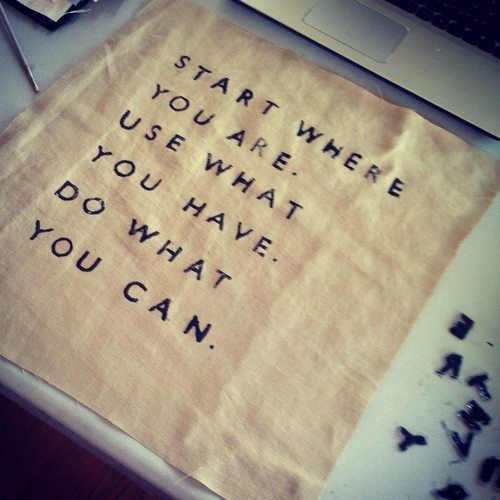
The answer for me is; start where you are.  Take stock of what it is that makes you tick and what makes you stop.  What burns you out and what do you have power over?  There are many things that wear my soul down that I cannot control so I try to focus on those that I can; homework, grades, punishment, ways I present information, community, and so on.  And then I focus in on a few that I need to change right now.  I do not marry an idea, I date i,t and year after year it may get transformed – the change may change, and I am at peace with that.

I also don’t buy into a lot of programs.  I already have enough to memorize with the curriculum I have to teach so I look for natural changes; those that speak to me, that I know are authentic to me, nor purchased and packaged in a sleek form.  I have tried to implement many programs in my classroom, Tribes anyone, only to watch them disappear because I don’t remember what the main components are.  So my change is my program and therefore not prescriptive, it works for me in that moment, in that year, and I believe those are the best types of changes.

So this year, as I sit on maternity leave and wait for the calendar to show November 5th, I think of changes I may implement this year.  There are many I can think of but none that I know for sure, after all, how can I know what to change when I don’t know what will work with this amazing group of students?  And yet, the need for change is there, I can’t wait to blog about it.

Be the change, being a teacher, choices

We Make Kids Hate School

image from icanread

I think it is time I take responsibility for the damage I can do.  Most definitely for the damage I have done to those kids that came to me loving school who  left my room changed.  Those kids that thought they were good at math until my long-winded lectures and explanations confused more than clarified, and in the end they did not know whether to ask for help or just pretend that they got it.  I changed my teaching because of the damage I had done.  I still change my teaching hoping that the students I teach will not leave my room hating school, but loving it instead, seeing it as the ultimate learning challenge to be embraced and celebrated.  Not scorned, survived, or floated through.

So how do we make children hate school so much?  I teach 5th grade and by that time certain subjects have already become hated for most kids.  Math tops the list but social studies comes in a close second.  Most love recess (which so doesn’t count), art, reading (not often writing) and science.  PE is up there and as is music for the girls.  But math and social studies, yikes.  I think of how I used to teach math; lecturing at the students with hardly any time to actually apply.  I thought they could go home and “practice” on their own time.  Often we had so much to get through that questions were not always answered thoroughly and discussion was certainly discouraged; can’t you see we have a lot to do here? Social studies belonged to the textbook, to spice things up we would share the reading aloud of the text and I would try to catch students not paying attention so I could point out that they were not paying attention.  Nothing beats a good old fashioned public embarrassment routine.  By the time I was done with them in 4th grade they knew how to follow along in a textbook and fill out worksheets really well.  Too bad the incredibly fascinating history we had just read about got buried in the disgust.

So what is so different now?  Well, I don’t talk as much.  That’s huge.  In math I prepare just what is important, then showcase it, and we discuss, answer questions, and practice as we go.  Time is given to finish pages in class and I never feel I have to assign it all if need be.  If a students asks one of those questions that are just too hard to miss out on, we explore it and deal with the time constraint later. We pull out manipulatives and whiteboards whenever we can.  We work together when desired and we move around when it makes sense.  I stress that not all concepts are meant to be conquered that day and that the most important thing is growth; no longer rote memorization but application and deeper meaning.  We discuss the similarities between concepts and how they are connected; I hope students see the red thread that runs through our year and why things are presented in this order.

Social studies starts much the same way; I don’t talk as much!  And I no longer fool myself into believing that reading round robin style counts as interaction.  Instead, the massive text book is used as a spring board for discussion.  We find the key concepts and then we set off through projects to explore them.  Students have choice in how they explore and often in what they explore within a topic.  History is brought up to the now as we discuss the parallels we can see between the past and the present.  Student questions are invited and we debate whether we would have proceeded the same way or anything else that needs to be debated.  Student voice is as important as my own and so is their understanding of why we are where we are now in the world, how we got there, and that doesn’t come through rote memorization either.

So while not every kid that leaves my room falls back in love with school – sometimes the damage takes years to undo – I try to put them back on the path.  I take responsibility for my own actions as a teacher and realize the damage I can do.  I go to school every day with the mission for kids to love learning and to show my own curiosity and be a rolemodel for loving school.  I go to school knowing that I can be the difference between love and hate and between further success in school or not.  I hope everyone takes that responsibility.

alfie kohn, assessment, Be the change, being a teacher, change, choices, grades, homework

Change Doesn’t Have to be All or Nothing

I remember the first orientation day when I had to face parents and explain to them that their child would probably not have much homework in my classroom.  I remember the fear that almost made me choke on my words, the way I had to remind myself to look up, the way I held my breath waiting for a reaction.  Then I added that instead of letter grades students would get feedback and we would set goals, grades would only show up on trimester report cards and no where else.  By now I was breaking into a cold sweat, my stomach churning, hands were clammy.  Somebody had to react, and then…nothing.  No raised hands, no sour faces, just a quiet wait for what else I had to share. 

Big changes for sure coming from this sophomore teacher.  Big changes that I felt had been necessary for me to be a better teacher and to provide a better education for the students.  Big changes that I had decided to do all at once.  And yet, you don’t have to.  Even though I speak passionately about how throwing out grades or limiting homework has been the best decision I have ever made, that is exactly it; it was my decision.  Something that I knew I had to do to restore my sanity, my passion for teaching.  And yet, that doesn’t mean it is going to work for you.  Perhaps my ideas are too extreme, or just do not fit with your educational philosophy and that is perfectly fine.  But maybe, just maybe, you would be willing to try it for just one little assignment?

Perhaps you are curious but just not ready to go all out.  Perhaps the idea of limiting homework overall sounds insane but maybe it could be tried for a unit?  Perhaps rather than a letter grade, for one project, feedback could be given or students could assess themselves?  Perhaps just trying something different one time will work better for you?  Perhaps, you might like it, perhaps you wont, but perhaps one time will change your mind?

As a first year teacher, if someone had told me to limit homework, or to get rid of grades, I would have rolled my eyes and not listened.  I would have thought them radical, extreme, or totally clueless.  I was not ready for that type of teaching.  I was not ready to take my teaching in that direction.  That direction had to come from within me, the timing had to be right, as did the purpose.   And that is ok.  It is ok to not embrace what Alfie Kohn says.  It is ok to have faith in whatever one believes is the way to teach, there is room for us all in education.  But perhaps, we should all try something else, just once, and then see if that change is meant for us or not.