being me, ideas, student voice

Unleash the Power of Post-Its

The students would always show up with them; stacks and stack of yellow post-its.  My pile in the cabinet would grow year after year with graduated student names, not quite collecting dust, but definitely not being utilized.  We used them for reading sure, after all, how else would we mark all of our thoughts, but other than that, I had not understood the power of the post-its quite yet.  That changed a few years, when after an aha moment prompted by a student, I finally realized just how much power a small post-it can really hold.

So what can you use them for beside the obvious?

Give your reluctant speakers a voice.  Every year I have a few students that have so much in their heads but seemingly few ways to express it.  Whether it be due to shyness, self-doubt, or any other barrier, these students would rather the teacher think they don’t know an answer than share it with the class.  Behold the mighty post-it!  I speak to my students beforehand, hand them some, and ask them to write down their thoughts, their comments and questions as the discussion progresses.  At the end, they hand them in to me so that I can see their thinking.  Often I use them as a way to affirm their thoughts as well, hoping to build their self-confidence.

Level the playing field.  Some of my students are really quick thinkers that usually get it right the first time, others are more meticulous, sifting through various opportunities, possibilities, and methods before finding an answer.  Rather than make our sharing times a race for who is the fastest thinker, I have students write down their thoughts.  If a child is done, I ask them to add more while we wait for others to think through their answers.  I can walk around and see their thinking without them feeling the pressure to come up with something brilliant on the spot.

Creates visual thinking maps.  This goes hand-in-hand with having them write thoughts down as a class; if students continue to add their thoughts, they can lay them out in front of themselves as their thinking hopefully deepens.  They can also all add more thoughts to something they had previously written and see their thinking grow.  It is quite powerful for a child to see how much they have to offer to the world in terms of their ideas.

As a quick assessment.  I always have small groups created for possible re-teaching but nothing beats my post-it groups.  Once we have done our mini-lesson, I ask students to apply it right then on a post-it and hand it to me.  I can quick flip through them and immediately see who needs to be re-taught or just needs a check-in.

A story starter.  Sometimes I have students brainstorm possible topics for a new writing assignments and then lay them out on a table.  Everyone can then shop for ideas for stories and borrow others by simply taking them.  For students who have no idea what to write about, this can be an easy way to get started.

As surprise book recommendations.  If a student loves a book, I ask them to place a post-it in it with their thoughts or recommendation right in the book.  That way when the next student open it up, they get to see another child’s thought, whether it is from someone they know or someone they don’t.  The power of a student recommendation cannot be replicated.

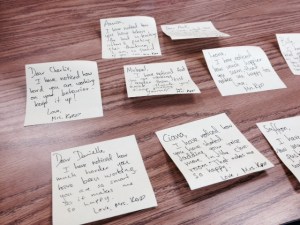
An affirmation.  I have been doing the “I have noticed…” post-its for two years and I cannot tell you how fun it is to hand to students.  All it is is a post-it starting out “I have noticed…” and then whatever great thing I have seen.  Sure, they take time to write but the students take them to heart.  Every year, I have a few students leave them on my table as well on their own accord, I keep them all.

I am a passionate teacher in Oregon, Wisconsin, USA,  who has taught 4th, 5th, and 7th grade.  Proud techy geek, and mass consumer of incredible books. Creator of the Global Read Aloud Project, Co-founder of EdCamp MadWI, and believer in all children. I have no awards or accolades except for the lightbulbs that go off in my students’ heads every day.  First book “Passionate Learners – Giving Our Classrooms Back to Our Students” can be purchased now from Powerful Learning Press.   Second book“Empowered Schools, Empowered Students – Creating Connected and Invested Learners” is out now from Corwin Press.  Follow me on Twitter @PernilleRipp.

being me, ideas, Reading

So What Has Actually Been Working – 7th Grade Readers Workshop

Every year I start with so many ideas of what we will try, what will do, things we can accomplish.  Every year, I have a long list of all of my ideas from the summer waking me up at night, getting me excited to teach again.  And then…the year starts, I try some things, others are forgotten, some work, some don’t.  This year with a new grade level and a new subject and only 45 minutes, there has not been a dull moment yet.   So why not share, hopefully we can learn from each other.

What has worked:

  • Starting with independent reading.  Jillian Heise shared this wonderful idea of having the first 10 minutes dedicated to independent reading,  and while that cuts class time down to 35 minutes, this is the best use of 10 minutes I can think of.  Students get settled, they actually read, and we all get a nice start to class.
  • Status of the class.  This great idea from Donalyn Miller is a simple check in tool where students write down what they read in the 10 minutes.  I use it to have students track their reading habits, such as whether or not they are actually reading and whether or not they are picking good books.
  • The “What to Read Next List.”  Rather than showcase new books one at a time, I save them up and have book shopping time.  Yet, with 5 English classes they cannot take any of the books until the end of the day.  Thus the need for somewhere to write it down.  Students get free time to browse the piles of books on the tables and share their excitement with others.  They always have a book they cannot wait to read without it taking too much time.
  • Blogging!  I was very nervous about whether we could fit blogging in but I am so glad we found the time.  We blog every other week in class but then the students can blog as much or as little as they want outside of class.  They can’t believe the comments they are getting, I cannot believe how much I am learning about them, but again, their voices and ideas are getting a place in the world, which matters so much.
  • Mini-lessons.  I wasn’t sure how 7th graders would respond to this but it has worked well.  We are able to get through the teaching so they can get to work.  They don’t mind gathering on the carpet in chairs or on the floor and I like that we have a smaller area for discussion.
  • “Adult” discussion.  We actively work on how to discuss our thoughts without raising our hands, I love how the students are figuring out how to do this while listening and responding to each other.  We have a long way to go but the seed has been planted.
  • Choice.  These students need to choose their books in order to keep reading.  I have been a proponent of choice for many years and even more so with this age group.  Some of my students hate reading with a passion and much of that hate comes from being forced to read certain books.
  • Picture books.  I wasn’t sure if 7th graders would be too cool for picture books, but once again these timeless tales are capturing their audience.  I love when I see two 7th graders sharing a picture book somehow thinking they are getting away with it.  Reading is reading no matter what.  And there is always time for a great picture book.
  • A huge library.  I knew I needed a lot of books to keep 121 7th graders reading, and boy was I right.  The taste, abilities, and needs are so varied that I am so glad I didn’t get rid of my “easier” books, nor nixed some of my tougher ones.  Sure the library is a bit more messy than it was in my 5th grade but it also getting a lot of use, even though we have a fantastic library here too.  I have even had teachers come in and borrow books, now that is a success.

What has not worked:

  • Post-its for all.  I really drove the use of post-its home with my 5th graders but have fund it less useful with my 7th graders.  Some need the, some use them, others don’t need them at all, and stil others need an entirely different system to get them thinking.  What matters is that each child is on the path to figure out what works best for them in order to push their thinking.
  • Outside reading.  I have yet to see a huge growth in outside reading.  While the students know they are supposed to read, some choose not to, some don’t have time, and others forget.  I am not enforcing it through a system simply restating the expectation every day.  I will keep working on it.
  • My old conferencing ways.  I used to call students to my table with all of their stuff but have found this wastes too much time.  Instead I pop next to them with a sheet of address labels and I write my anecdotes on those.  They then get transferred to an “I Have Noticed” sheet that I keep in their section binder.
  • Partnering students.  I had partnered students based on personalities and not friendships, this has definitely backfired.  I forgot how shy some 7th graders can be and have to re-think how to partner them better.  They do not have assigned seating which has been fine so far so perhaps self-chosen partners wont be a bad idea.

While this is just a snapshot, I am happy to see more ideas that have worked than not.  Working under the 45 minute time constraint has given me a whole new appreciation for middle school and high school teachers and all they do.  Whew, there is a lot to cover int hat amount of time.  What has been working for you?

being a teacher, being me, ideas, Literacy, new year, Reading

Small Ideas for Better Readers Workshop

image from icanread

I have been discussing reading and writing almost every day these past few weeks preparing for my new job as a 7th grade English teacher.  I haven’t minded one bit either.  It seems if I am not discussing it, I am thinking about it, and that tends to lead to a blog post or five to get my own thoughts straight.  I started to realize that there are little tweaks that I have been using the past few years to make our conversations deeper and to make it run a bit smoother, couple that with new ideas thanks to my amazing PLN, and I am feeling pretty good about the start of school September 2nd.

So if you want students to actually read…

  • Give them reading time in class, even in middle and high school.  We cannot control what students do outside of our rooms but we can give them the gift of time in our rooms.  So even if you only have 10 minutes like me to give in a 45 minute block, give it to students for independent reading.  Make it sacred and believe in it by not infringing in it.
  • Set up reading routines and expectations from day one.  The students will be coming up with how to get settled into independent reading right away as they come to class, as well as what that looks like/sounds like/feels like.  I am taking the time to build a proper foundation because this is so important for the entire year.  Yes, there is curriculum to cover but it will not be covered well if our routines aren’t in place.
  • Have incredible books.  Don’t just rely on your school library, have an actual library in your classroom.  No, it is not cheap, but the investment we put into getting great books pays off when it hooks a reader.   I also use sites like Donorschoose and Books4Schools to get more books.  And yes, this goes even for middle school and high school.
  • Let students choose their books.  We do book clubs later in the year, but overall books are self-selected, with help when needed.  Students need to develop their own taste in books and need to develop deep reading habits, they have a hard time doing that if we are constantly telling them what to read.  I do not have a leveled library because of this, I don’t want students to feel defined by their level, but rather figure out who they are as readers.  I do whole class books as a read aloud to have a shred experience and a shared text to discuss lessons within.
  • Read yourself.  A very simple idea that pays off tenfold.  If you read and can hand books to students, you set an expectation for continual reading.  It also creates a better reading community because you can really discuss books with your students.
  • Do a challenge of some sort.  I have done my own version of the 40 book challenge with a lot of success; every student read more books than the year before because they were trying to get to 40 books.  This year it will be a 25 book challenge instead, due to the limited independent reading time I can offer students.  There is no prize, nor any competition, but rather an awareness of trying to beat one’s own number of books read.  And no, it is not a public challenge.

So if you want them to develop deeper ideas…

  • Use post-its to mark text and jot down ideas.  Teach students to look for things they want to discuss, not just connections, questions, or unfamiliar words.  Those tend to not to lead to deeper discussion, but rather dead end ones.  
  • Discuss what creates a highway conversation vs a dead-end one.  This is a simple analogy that works well; think of your reading thoughts as a highway.  You are trying to create one where there are many places to go, not on that stops abruptly.  Having students act this out on pre-written post-its can get the point across really well.
  • Re-visit post-its.  This is a great strategy for those students that cannot get past their initial idea.  Have them jot something down and then have them continue reading, at the end of their reading time, have them return to an older post-it and add thoughts to it now.
  • Give students a warning before reading time is over.  I do a 2 minute warning reminding them that they need to take time to think and jot something down for them to discuss with their partner or group.  Everyone knows there is no reason to not have anything written down.
  • Give them cheat sheets.  I am all about scaffolding because asking probing reading questions can be hard eve for teachers.  So we brainstorm cheat sheets that students keep on small rings, these rings also have their monthly reading goals on them (one quantity goal and the other two skills goals) that they write.  
  • Model partner conversations.  Have students guide each other on what they can say or how they can push someone’s thinking.  It is often much more powerful coming from peers than a teacher.
  • Create huge goals for reading.  In our classroom, we don’t read to be better readers, we read to be better people that can carry on conversations by being interested and active listeners and speakers.  Yup, my 5th graders could discuss more than just a book by the end of the year, I was so incredibly proud of them.

So if you want it to be better because something isn’t working…

  • Ask the students their opinion.  I survey them at the beginning of the year for their reading habits, but I also ask them throughout the year what is working for them and what it isn’t.  Sometimes really small things can be the cause of distractions and can be easily fixed but we won’t know that unless we ask.
  • Videotape yourself.  I found out I talk too much and don’t see kids lose interest through video tape.  Film yourself teaching and then watch it with an open mind.  No one is perfect and there is always room for improvement.
  • Ask a colleague to watch you teach.  This can be one of the hardest things for us to do and yet it can be one of the most powerful.  I have an open door policy in my classroom at all times and if people happen to wander in during a reading lesson, I always ask for their opinion.  They always have something valuable to teach me but you won’t know it if you don’t invite people in.

I am a passionate  teacher in Wisconsin, USA,  who has taught 4, 5th, and 7th grade.  Proud techy geek, and mass consumer of incredible books. Creator of the Global Read Aloud Project, Co-founder of EdCamp MadWI, and believer in all children. I have no awards or accolades except for the lightbulbs that go off in my students’ heads every day.  First book “Passionate Learners – Giving Our Classrooms Back to Our Students” can be purchased now from Powerful Learning Press.   Second book“Empowered Schools, Empowered Students – Creating Connected and Invested Learners” can be pre-ordered from Corwin Press now.  Follow me on Twitter @PernilleRipp.

ideas, Student-centered, Uncategorized

Some Small Ideas That Make a Difference

I love this time of year because my students really hit their stride.  They are confident, they are disciplined, and they love the ownership they have over the rooms.  It allows me to really push their thinking and introduce new things into the room that I think will keep them engaged.

  1. The Video Newsletter – Thanks to Tony Sinanis for this awesome idea!  For the past five weeks my students have been creating video newsletter showcasing what is happening in our room, rather than me writing one.  Students decide what to put in it and how and then film it during class time.  All I do is make sure they didn’t leave something important out and then upload it for them.

http://www.youtube.com/watch?v=M_-YaUzgbbU

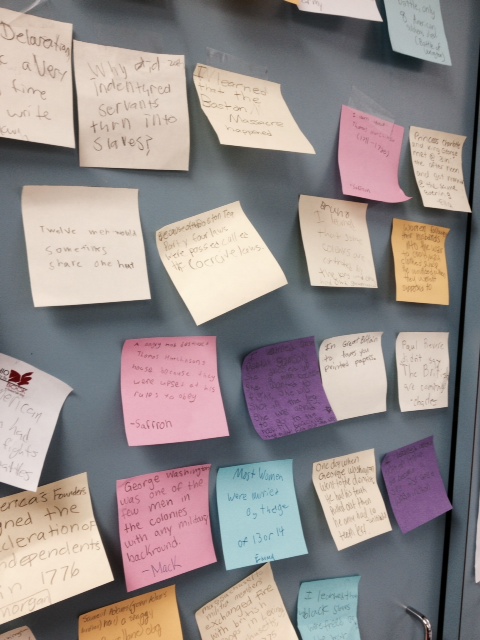
  • The Wall of Thinking.  My students have been furiously researching the Revolutionary War in groups and will create something within the next few weeks to show off their knowledge.  Until then, they have been adding post -its to a cabinet door with something amazing they learned.  I have noticed the students reading each other’s post-its and commenting on them as well.  It has been a blast to see their thinking grow.

photo (5)

  • Resurgence of the “I have noticed…” Post-its.  I did these earlier in the year and then promptly forgot all about them.  This week I am back on track.  The kids need to know we notice how they have grown all through the year.

photo (7)

  • The Bully Discussions.  If you have not taken the 3 minutes to watch Will Wheaton’s eloquent response to a girl’s question on what to do when people call you a nerd, please watch it.  We read the book “Bully” and then watched the video.  Then students silently reflected on what bullying means to them, how it affects their lives and any other thoughts they had.  I was surprised at how many of them reported having been a bully without even realizing it.
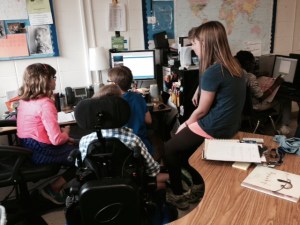
  • Students Teaching the World.  My students have been skyping into classrooms teaching kids and teachers how to do either Mystery Skype or blogging.  I cannot tell you how proud I am of them.  So think of what your students could etach another class and then put it out there.  I love the maturity, discipline, and presentation skills my students have had to showcase while presenting their knowledge.  (If you would like us to teach you, please let me know!).

photo (6)

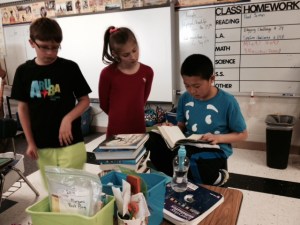
  • Planting the Seed for Summer Reading.  It is not too early to think about what incredible books the students will devour during summer, so this week we did the “Mrs. Ripp recommends” book piles on each table.  I pull out as many books as my arms can carry from our library, new and old, place them on the tables and then give students time to peruse.  They have an “I can’t wait to read…” list in their notebooks which they then add to . This 30 minute book extravaganze leade to each students adding at least one new book to their list.

photo (4)


I am a passionate (female) 5th grade teacher in Wisconsin, USA, proud techy geek, and mass consumer of incredible books. Creator of the Global Read Aloud Project, Co-founder of EdCamp MadWI, and believer in all children. I have no awards or accolades except for the lightbulbs that go off in my students’ heads every day.  First book “Passionate Learners – Giving Our Classroom Back to Our Students Starting Today” can be pre-bought now from Powerful Learning Press.   Follow me on Twitter @PernilleRipp.
ideas, students

After Spring Break Some New Ideas to Try

image from icanread

There is something almost palpable in the air in a 5th grade classroom after spring break.  It is as if the students were replaced by 6th graders so suddenly that it never ceases to startle me.  Where did my 5th graders go and who are these new kids?  I used to fear spring break and the change it seemed to signal.  I used to dread it, wondering how on earth  I would get through all we have to get through while not shouting at the top of my lungs for their attention.  Now I relish the challenge, the chance to start fresh with a “new” set of kids, the chance to push them harder in our final home stretch.

So when my students come back there will be new things to try:

  • A new spelling approach based on root words, their meaning, their origin and whether they can come up with an example of a word.  And not just for my advanced spellers but for everybody.  Spelling practice seems to never transfer so I hope this new word study will give my students more knowledge rather than just more practice memorizing words they never end up using.  We will use buddy chats, acting out, and simple word plays to hopefully get the students to learn.
  • A tweaked resource time rotation modified by my students.  I will be looking at doing more mini lessons with my book club groups too, maximizing every minute I get with them.
  • A service learning project.  With the push for common core implementation comes more research papers so this is not the first time my students will spend time researching.  I therefore need a hook to increases engagement so it is time to give back.  Students will be presented with an opportunity to research any need either in our school, our community, or the world.  They choose the direction but must come up with a way to help the problem and not just in theory either, they have to actually help.  I cannot wait to see how they will change the world.
  • A new math approach.  After my latest post on math, my team and I decided to change our program again.  We will continue to share kids, but with a bigger focus on math stations trying to hit the needs of every kid, pushing those students that need to be pushed, and trying to fill in some of the math holes in others.
  • More hands on social studies.  My students have been knocking their colony prezis out of the park and I want to keep the momentum going.  So while we continue to lean on the text book as our base knowledge (through summary not reading it) we will continue to connect our knowledge, bringing back genius hour, simulations, as well as creating new problem solving tasks for the kids such as figuring out what would have happened if the US lost the Revolutionary War.

My mind will continue to spin during spring break hoping to come up with even more.  All I know is that I get two more months with these incredible kids and we need to make it memorable.  I know they are up for the challenge.

being a teacher, end of year, ideas, projects, students

What Do You Do in the Last Few Weeks of School?

Some teachers start a countdown, others do a lot of reading.  We instead have quite the to-do list to get through before my fabulous 5th graders get to graduate.  So beyond the culminating projects we have going on, here are some things that are keeping us busy:

  • Writing thank you letters.  This often overlooked skill is something I put a lot of value in so every year we take the time to thank all of the teachers and people that have helped us have a successful year.  I love slipping these into people’s mailboxes.
  • Write Dear Future Mrs. Ripp’s Students letters.  Every year I have my class that is leaving write letters to incoming students.  This is way for them to give them top insider information, get them excited and I get to peek at what meant a lot to them in the year.  I love handing these to my new students and seeing what they gain from them.
  • The Top 10.  We brainstorm all of the great things we have loved doing through the year and fill a white board with all of them.  Students then vote for the top 10 things of the classroom and a committee makes a huge poster for me to put on display for the new year.  Again, this is a sneaky way for me to see what really stuck out to students and incoming students cannot wait to figure out what the different things are.
  • Clean the library and review the books.  Not only do students help me get all the books back in the baskets they also get to rate all of the books.  If they would not read a book they place it on the carpet and other students can rescue it.  However, if no one comes to its rescue that books is given a new home.  
  • How to Flourish in 5th Grade videos.  My students have been busy writing scripts, rehearsing them, filming and soon editing videos for the incoming students on a variety of topics ranging from internet safety to how to transition to math (we switch classes).  I love seeing what the students wish they had known and also having them use some amazing Adobe software to edit their videos.
  • Give me your favorite memory… Another committee project where every student has to add their favorite memory to a video.  Again students are in charge of making this and I show it in the last days.
  • My favorite thing about…Every student has to a favorite thing about 3 other students on video.  We then edit it together to make a montage of all the things we have loved about each other.  This is always very secretive and students don’t know who has them.
  • Look at our time capsules.  At the beginning of the year we do a time capsule with our favorite things at the moment and we also see how tall we are.  At the end we remeasure and laugh about how much we have changed or not.
  • Give me your feedback.  Students do a survey rating all of our classes, ranking their favorite assignments and their least favorite.  They also give me advice and constructive criticism on what I should change.
So there are just some of the things we have to do.  Like I’ve said there is a lot going on in 5th grade and every day counts.  I used to have students write letters to their new teachers as well but it doesn’t work so well with the transition to middle school, however in other grades it probably would.