I think we are all really good at setting goals. But goals that we actually attain? Those are harder. So when I think of the reading goal work I do and have done with students, there is a small tweak that has made a big difference: including the why. And not in teacher lingo, but in the everyday kid language that shows us this is something they have truly reflected on.
Why have they chosen what they chose? What should the end result be?
Does it even align with who they are and what they have the capacity for right now?
This small tweak can lead to a deeper understanding of how they want to grow overall and move goals from being checklist items to meaningful pursuits. It can also show us which kids are just setting goals to please the adults or get it off their to-do. There is a lot of parroting that happens in schools, kids know what we teachers want to hear and so often when it comes to setting learning goals, kids tell us what we want to hear. Asking them to pause and add on an answer to “in order to” gives us a chance to open up for much broader conversations, and also continue our focus on developing readers and not “just” reading skills.
I have shared my reading survey before, but here is my 6 week survey that I use every 6 weeks to check in with students. This is where they set new goals and it has been updated with this addition.
Another post first shared on Patreon, but one that is oh so relevant as we continue to attempt to build meaningful reading relationships.
I came across a fascinating article that discussed the three pillars of self-compassion and how actively developing it can help us alleviate anxiety and depression. Immediately, my mind jumped to reading identity and overall school affinity for students. How does self-compassion and seeing your own worth tie in with how we develop and what we are willing to try?
So I have a few ideas for how we can take this work and bring it into our classrooms as a part of what we already do. In my experience, some kids who hate reading have this reaction because of how reading makes them feel; worthless, and so when we focus on developing self-compassion, they can sometimes shift their mindsets into one of awe rather than disappointment.
Reading is an incredibly complex brain capability. It is not something that just happens, but something we have to train our brain to do, thus the need for specific reading skills teaching, as well as positive reading experiences. When kids don’t develop as easily as they see others do, they often turn that inward, seeing themselves as less-than, rather than recognizing that many components need to be in place to develop as a reader and that we inherently develop at different speeds. And we can try to speak this out of existence, but we all know that ultimately the deeper realization needs to come from the child themselves.
Adding these ideas into the reading conferring that hopefully is happening provides us with an opportunity to dig deeper into how kids view themselves as readers, and the next steps they can take in their journey. So it is not that it is one more thing to do, but rather a new lens and line of questioning we can explore with those kiddos who despite all our attempts still hate reading.
I use a lot of surveys with kids in order to see how they view themselves as readers. My beginning of the year one – which can be used any time – can be accessed here but sometimes a quick survey like this one can also be a great way to check in and deepen conversations.
I would love to know your thoughts on this. Do we even have time for this? How do we make the time? What are the conversations we can have with kids that help them take over the ownership of their reading development?
I have been thinking, writing, speaking about reading identity and building joyful reading opportunities in school for more than a decade. Ideas still come, but at times, they slow down. After all, there are mnay tried and true ideas that still work, even as they get re-shared throughout the years. We finetune, we adapt, we consider, we reflect, and we put things into practice to see if this little tweak, this little idea is THE idea for helping a child build their reading culture.
We all know so many of the components of a reading environment that works a for a lot of kids. Independent reading time, book choice (As my niece said today, “I only like to read books I decide myself”), embracing diverse preferences not just in reading material but also in how we read, who we read with and how we work with reading. We allow and encourage book abandonment, and we spend precious minutes recommending books to speak books with our students. We lead the way as a committed adult reader who wants to showcase all the paths into reading and why it matters.
Bit it doesn’t always work. Even this, is sometimes not enough. And I get asked a lot; then what. But how can we take it further? Because an adult-centered reading community is an artificial one at length for students. It has an expiration date that lines up with when the adult says goodbye.
This is why some of our time has to be focused on that shift in who is at the center of the reading culture. How can we shift from being the sole source of reading knowledge to cultivating a shared knowledge base? How do we establish and grow a casual reading community that goes beyond just the teacher-student interactions and start to draw in each other as fellow readers?
Like I said, I have shared many ideas throughout the years – in my book, Passionate Readers, this community, and on social media. But here are a few more to get those readers talking, sharing, and seeing each other as the valuable resources that they are.
I have linked to the resources I have created as well.
Choose my Bookfor Me
Have each child fill in a reading desire sheet: length, genre, format, favorite previous reads etc – see sheet for questions and to make your own.
Then have students identify four people they would like to find a book for – 2 friends and 2 not-yet-friends. Assign two students to each child, ensuring everyone has two individuals to find a book for.
Share the reading desire sheet and let them loose, pulling books they think these people may like.
Pile them up and have them add them to their to-be-read list.
Grab some shoe boxes or other smaller boxes and group 4-5 students together.
Let them loose in your book stacks – collaborate with your librarian if you don’t have a classroom library – and as a group, have them fill each box with recommendations of books they have loved.
Swap boxes with other groups, give a short rundown of titles selected if you want, and have kids write down book recommendations on their to-be-read lists.
1 Minute Book Talk
At the end of independent reading once a week, have students stop and do a 1 minute or less book talk to their table group (or group them together).
Have them share what they are reading, why they chose it, and one other question from this list or ones they make up themselves.
Share the most shocking or surprising moment you’ve encountered in your book so far.
What keeps you hooked and motivated to continue reading this book?
On a scale of 1 to 5, how would you rank this book in terms of enjoyment?
Who do you think would enjoy reading this book?
If you could ask the author one question about the book, what would it be?
Share a favorite quote or passage from the book that resonated with you.
Has this book made you see something in a different way? How has it changed your perspective?
Make a TikTok dance or gesture that represents the overall mood or theme of the book.
Imagine if this book were turned into a movie. Who would you cast as the main characters?
Share your favorite character from the book and explain why they’re memorable to you.
If you could recommend this book to anyone (real or fictional), who would it be and why?
Share an interesting fact or trivia related to the author or the book’s setting.
What emotions has this book made you feel?
Show us your reading spot or favorite place to dive into this book.
If you could live in the world of this book for a day, what would you do or explore?
Share a book-related tip or hack that has enhanced your reading experience.
In three words, describe the overall vibe or atmosphere of the book.
Think Like a Marketer
Have students find a book they would like to advertise. Can be one they have read or not.
The goal is now to create an advertising campaign for this to entice as many readers as possible. What should the tagline be? How should the book be photographed? Think like a marketer – how would the book be placed, what props would be present, what would the angle be?
Have students create posters using Canva with their images and taglines and share them around the school as a way to entice further readers. You can even run a campaign and see how many kids end up borrowing the book.
Giving students an opportunity to be the ones that speak books more than the adults is a way to shift ownership. It becomes commonplace when we give it value, time, and space to be developed.
So what are ideas that you like to use? How have you shifted the ownership of the discovery of books into the hands of your students?
Another post from my Patreon that I thought might be useful to others. After all, we are all faced with many who have deselected reading as something they spend time on, either by choice or by circumstance. And those kids, or adults, have more than likely had a lot of well-meaning adults try to help them reconnect with reading. But have we really dug into why? And not just in a one question on a survey kind of way. So if you are looking for some inspiration, perhaps these thoughts can help.
My students are supposed to read 20 or so minutes a day. Maybe yours are too.
Most of them don’t.
They go to afterschool care, play video games, play with friends—do all the things kids tend to do when they have full and busy lives. Many also don’t seem too bothered by their lack of outside reading.
Reading is, after all, just something you do in school for school.
It’s remarkable, even at the 2nd-grade level, how vast the difference is between the kids who read regularly and those who don’t. Those who read for discovery outside of class grow by leaps and bounds in class. They bring in words, ideas, connections that weren’t part of a lesson plan but are now shaping their learning anyway. It shows the benefits of having a literate life and what can happen when someone is not given that same opportunity.
Those who haven’t found a lot of reading joy yet—or whose parents don’t help them make time for reading (or force them to in some instances)—are growing too. But it’s different. More halting. There’s more confusion, more gaps to fill, more knowledge to simply encounter as they grow their brains.
So as always, I am curious.
Why not?
Why is it that despite their access to books, their reading time at school, their exposure to true reading role models, and all of the good things that come with that, they still don’t read?
Is it choice? Is it life circumstances?
So this is the core of today’s discussion: Why don’t you read?
Not just a question to be answered in five minutes and moved on from. But a conversation, something to be worked with, to be shared, to be understood. What are the actual barriers that stop you—not just from reading, but from enjoying it?
And if reading isn’t a struggle for you, if you already carve out time for books, then what’s your question for reflection?
Every student has paper or their notebook to reflect in.
🔽 Do you read outside of school? ➡️ YES! → What has helped you build that habit? What do you wish more people knew about reading? What’s a book you wish someone would pick up? ➡️ No… not really. → Let’s figure out why.
Barrier: I Don’t Have Time.
➡️ Is that really true? 🔹 Do you scroll on your phone? 🔹 Do you rewatch the same YouTube videos? 🔹 Do you lie in bed awake, waiting to fall asleep? 🔹 Do you sit in the car, on the bus, waiting for things to start?
➡️ If so… ✅ Try a 5-minute read—set a timer and stop when it dings. ✅ Audiobooks count. Can you listen while doing something else? ✅ Carry a book with you and grab small moments while waiting. ✅ Swap one round of social media, one video, one game level for a page.
➡️ If not… ✅ Reading doesn’t have to be daily—what if you just picked one time per week?
Barrier: I Don’t Have a Good Book.
➡️ What’s the last thing you liked? 🔹 A movie? 🔹 A game? 🔹 A TV show? 🔹 A meme?
➡️ Now match it. ✅ Like action? Try graphic novels or fast-paced adventure books. ✅ Like funny things? Try books that make people laugh (even if it’s just ridiculous facts). ✅ Like facts? Nonfiction books exist about EVERYTHING. Even weird stuff. Especially weird stuff. ✅ Hate long books? Short stories, poetry, or “choose your own adventure” books count.
➡️ Still not sure? ✅ Let someone else pick for you—friends, a teacher, even a random shelf grab. Worst case? You don’t like it and try something else.
Barrier: My Brain Can’t Settle Down to Read.
➡️ What’s going on in your head right before you try to read? 🔹 Just came off screen time? 🔹 Feeling stressed or distracted? 🔹 Can’t sit still?
➡️ Try helping your brain shift gears: ✅ Move first—walk, stretch, or shake it out. ✅ Do something calming before reading (drawing, deep breaths, fidgeting). ✅ Start tiny: Read for 2 minutes only. Then decide if you want to keep going.
Barrier: My Space Isn’t Helping Me Focus.
➡️ What is your reading space actually telling your brain? 🔹 “Time to relax”? 🔹 “Time to scroll”? 🔹 “Snack time”? 🔹 “Get up and do something”?
➡️ Change the signal: ✅ Play soft music or use headphones. ✅ Light a candle or turn on a lamp you only use for reading. ✅ Wrap yourself in a blanket or sit somewhere totally new—even under a table!
Barrier: There’s Too Much Emotional Noise.
➡️ What happened right before you tried to read? 🔹 A fight? 🔹 Rushing from one thing to another? 🔹 Feeling overwhelmed?
➡️ Make space for calm first: ✅ Pick a spot that feels safe and yours. ✅ Pause and take 3 deep breaths or journal for 1 minute. ✅ Let yourself off the hook—it’s okay to reset and try again later.
Barrier: I Feel Weird or Judged When I’m Reading.
➡️ What’s making you hide your reading? 🔹 Afraid of being judged for what you like? 🔹 Embarrassed to be seen reading at all?
➡️ Make reading yours again: ✅ Read somewhere private or where no one bothers you. ✅ Own what you like—comics, sports facts, scary stories, whatever. ✅ Know this: Many who love reading started by maybe liking something others didn’t expect.
Barrier: It’s Boring.
➡️ Have you ever read something you liked? ✅ Yes → What was it? Why did you like it? What’s similar to that? ✅ No → Are you sure? Not even a weird fact? A joke book? A book that made you feel something?
➡️ Options to make it better: ✅ Try a different format—graphic novels, audiobooks, books with amazing visuals. ✅ Try stopping—if you hate a book, pick another. Life’s too short for bad books. ✅ Try making it social—buddy read, listen to a book with someone, or join a book-related challenge. ✅ Try a weird book. (Weird books are never boring.)
Barrier: It’s Too Hard.
➡️ What’s the hardest part? 🔹 The words? 🔹 The length? 🔹 The focus?
➡️ Solutions: ✅ Words are tricky? Graphic novels, page turners, novels in verse, or audiobooks might help. (You can get free access to audiobooks through the library!) ✅ Books feel too long? Try short stories or poetry. ✅ Hard to focus? Set a timer, read in small bursts, or listen to the book instead. ✅ Read with someone else. A friend, sibling, teacher, or even your pet.
Barrier: I Just Don’t Feel Like It.
➡️ Why? 🔹 Because it feels like work? 🔹 Because you think you “should” but don’t actually care? 🔹 Because you don’t see the point?
➡️ Reframing it: ✅ Reading doesn’t have to be a big commitment. What if it was just one page, one laugh, one cool fact? ✅ You don’t have to feel like a “reader” to enjoy a good story—what’s something you love or something you want to know more about? There’s a book about it. ✅ What if reading wasn’t about school, but about escaping, understanding, or just killing time in a way that actually sticks with you? ✅ No rules. No pressure. Just curiosity—what’s the last thing that made you go, “Huh, that’s interesting”? There’s probably a book for that. ✅ Forget “should.” What if you just picked up a book with no expectation to finish? Just to see.
For Those Who Already Read
➡️ Your questions: ✅ What has helped you build a reading habit? ✅ Have you ever had a reading slump? How did you get out of it? ✅ What book do you think would change someone’s mind about reading? ✅ How can you help others who don’t love reading yet?
Wrap it up: Pair & Share or Small Group Discussion
Students discuss their barriers and potential solutions in small groups.
Those who already read regularly can act as mentors—sharing strategies that have helped them make time for reading or find books they love.
Closing Reflection
One final written reflection or class discussion:
What is one idea from today that you want to try?
What might that look like?
Who is your accountability partner?
Why This Approach?
It acknowledges real barriers instead of just saying “read more.”
It gives choice and control back to students.
It makes room for both struggling and committed readers to reflect meaningfully.
It creates a community of readers where those who love books can help those who don’t—without making it feel like a lecture.
I love these end of the year lists that come out, especially now that I sit in Denmark and don’t get to see quite the same amount of books written in America as I normally would.
So I figured why not share some of my favorite graphic novels, starting with this gift guide in case you are looking for that perfect gift for yourself or another reader.
Maisie is on her way to Fancon! She’s looking forward to meeting her idol, Kara Bufano, the action hero from her favorite TV show, who has a lower-leg amputation, just like Maisie. But when Maisie and her mom arrive at the convention center, she is stopped in her tracks by Ollie, a cute volunteer working the show. They are kind, charming, and geek out about nerd culture just as much as Maisie does. And as the day wears on, Maisie notices feelings for Ollie that she’s never had before. Is this what it feels like to fall in love?
Huda and her sisters can’t believe it when her parents announce that they’re actually taking a vacation this summer . . . to DISNEY WORLD! But it’s not quite as perfect as it seems. First Huda has to survive a 24-hour road trip from Michigan to Florida, with her sisters annoying her all the way. And then she can’t help but notice the people staring at her and her family when they pray in public. Back home in Dearborn she and her family blend right in because there are so many other Muslim families, but not so much in Florida and along the way. It’s a vacation of forced (but unexpectly successful?) sisterly bonding, a complicated new friendship, a bit more independence, and some mixed feelings about her family’s public prayers. Huda is proud of her religion and who she is, but she still sure wishes she didn’t care so much what other people thought.
Pedro Martín has grown up hearing stories about his abuelito—his legendary crime-fighting, grandfather who was once a part of the Mexican Revolution! But that doesn’t mean Pedro is excited at the news that Abuelito is coming to live with their family. After all, Pedro has 8 brothers and sisters and the house is crowded enough! Still, Pedro piles into the Winnebago with his family for a road trip to Mexico to bring Abuelito home, and what follows is the trip of a lifetime, one filled with laughs and heartache. Along the way, Pedro finally connects with his abuelito and learns what it means to grow up and find his grito.
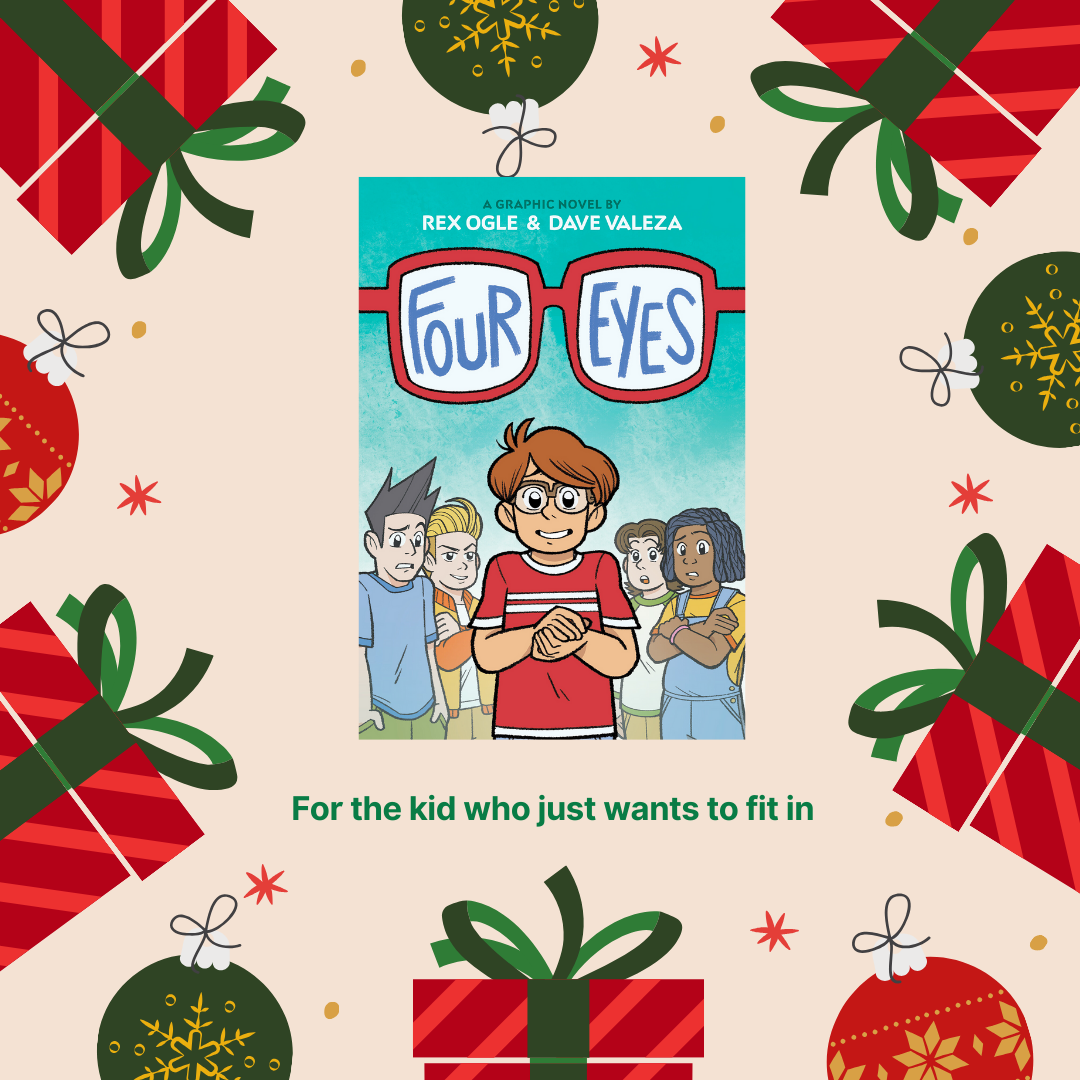
Sixth grade isn’t as great as Rex thought it would be. He’s the only kid who hasn’t had a growth spurt, and the bullies won’t let him forget it. His closest friend is unreliable, at best. And there’s a cute girl in his class, who may or may not like him back. With so much going on, everything is a blur — including Rex’s vision! So when he discovers that he needs glasses, and his family can only afford the ugliest pair in the store, any hope Rex had of fitting in goes completely out of focus.
Charlie has a foolproof plan for the first day at her new middle school. Even though she’s used to starting over as the new kid—thanks to her military family’s constant moving—making friends has never been easy for her. But this time, her first impression needs to last, since this is where her family plans to settle for good. So she’s hiding any interests that may seem “babyish,” updating her look, and doing her best to leave her shyness behind her…but is erasing the real Charlie the best way to make friends? When not everything goes exactly to plan—like, AT ALL—Charlie is ready to give up on making new friendships. Then she meets the Curlfriends, a group of Black girls who couldn’t be more different from each other, and learns that maybe there is a place for Charlie to be her true self after all.
Ignacio “Iggy” Garcia is an Ohio-born Colombian American teen living his best life. After bumping into Marisol (and her coffee) at school, Iggy’s world is spun around. But Marisol has too much going on to be bothered with the likes of Iggy. She has school, work, family, and the uphill battle of getting her legal papers. As Iggy stresses over how to get Marisol to like him, his grandfather comes to the rescue. The thing is, not only is his abuelito dead, but he also gives terrible love advice. The worst. And so, with his ghost abuelito’s meddling, Iggy’s life begins to unravel as he sets off on a journey of self-discovery.
Livy is already having trouble fitting in as the new girl at school—and then there’s Viola. Viola is Livy’s anxiety brought to life, a shadowy twin that only Livy can see or hear. Livy tries to push back against Viola’s relentless judgment, but nothing seems to work until she strikes up new friendships at school. Livy hopes that Viola’s days are numbered. But when tensions arise both at home and at school, Viola rears her head stronger than ever. Only when Livy learns how to ask for help and face her anxiety does she finally figure out living with Viola.
Dan’s always been a good kid. The kind of kid who listens to his teachers, helps his mom with grocery shopping, and stays out of trouble. But being a good kid doesn’t stop him from being bullied and feeling like he’s invisible, which is why Dan has low expectations when his parents send him on a class trip to Europe. At first, he’s right. He’s stuck with the same girls from his middle school who love to make fun of him, and he doesn’t know why his teacher insisted he come on this trip. But as he travels through France, Germany, Switzerland, and England, a series of first experiences begin to change him―first Fanta, first fondue, first time stealing a bike from German punk rockers… and first love.
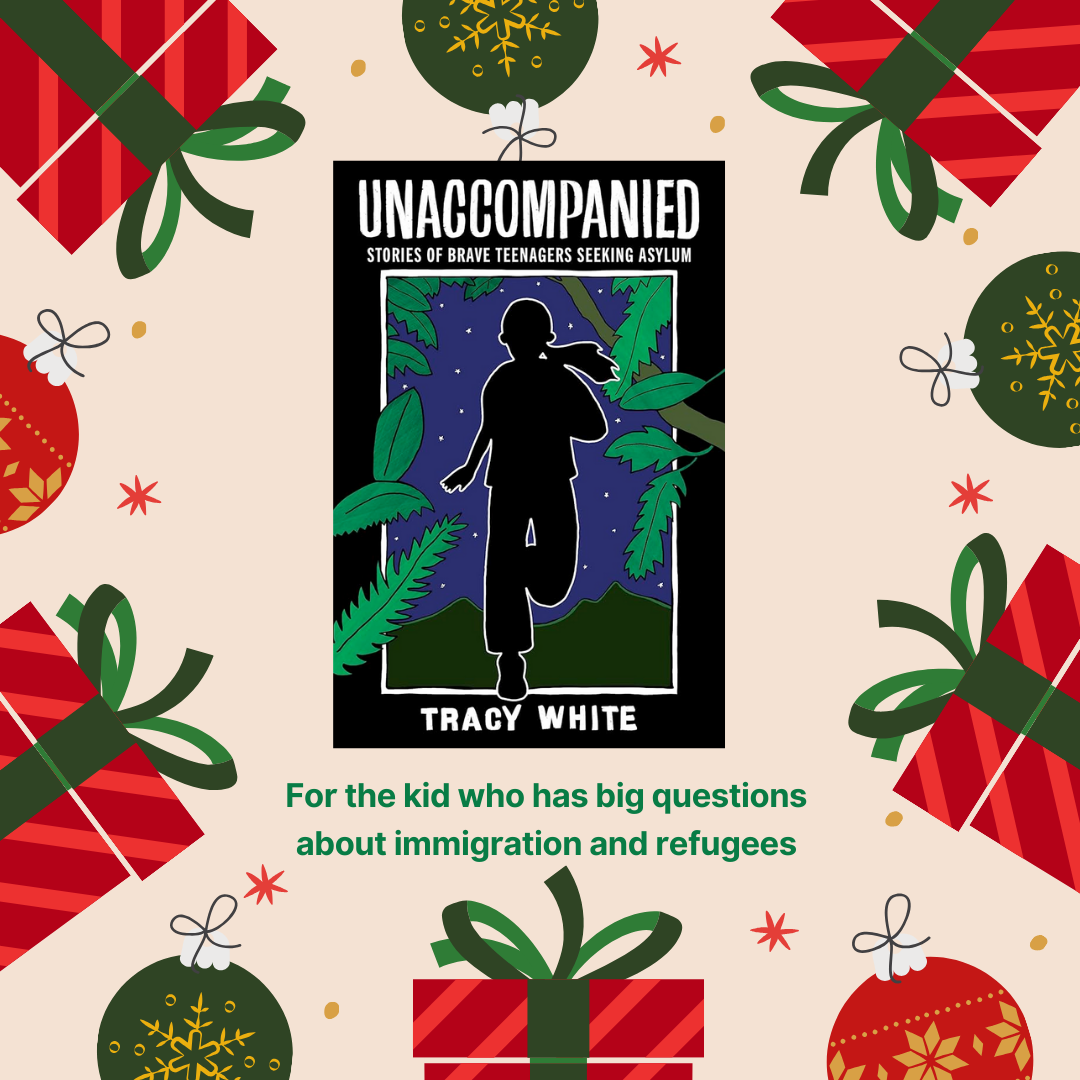
This book tells the true stories of five brave teens fleeing their home countries of Guatemala, El Salvador, Honduras, and Guinea, on their own, traveling through unknown and unfriendly places, and ultimately crossing into the US to find refuge and seek asylum. Based on extensive interviews with teen refugees, lawyers, caseworkers, and activists, Tracy White shines a light on five individual kids from among the tens of thousands of unaccompanied minors who enter the US each year. In stark black and white illustrations, she helps us understand why some young people would literally risk their lives to seek safety in the US. Each one of them has been backed into a corner where emigration to the US seems like their only hope.
Mia is still getting used to living with her mom and stepfather, and to the new role their Jewish identity plays in their home. Feeling out of place at home and at her Jewish day school, Mia finds herself thinking more and more about her Muscogee father, who lives with his new family in Oklahoma. Her mother doesn’t want to talk about him, but Mia can’t help but feel like she’s missing a part of herself without him in her life.
Soon, Mia makes a plan to use the gifts from her bat mitzvah to take a bus to Oklahoma—without telling her mom—to visit her dad and find the connection to her Muscogee side she knows is just as important as her Jewish side.
Seventh-grader Viv never looks forward to picture day. It’s just another day where she wears a boring braid and no one notices her. (Her two best friends, Milo and Al, don’t count, of course.) But enough is enough. This year, she’s taking matters into her own hands. Literally. Viv grabs a pair of scissors, her phone for live-streaming, and, well, bye-bye braid. Suddenly Viv is an over-night influencer at Brinkley Middle School. Everyone wants her help planning their next big moment—from haircuts, to dance proposals, activist rallies and mathlete championships. She hardly even has time for her friends anymore. It’s exactly how she dreamed of reinventing herself…right?
A new year of school is starting, and Brit finds herself struggling with feelings for a seemingly rude boy from class who might have a soft side. Meanwhile, Christine can’t deny that she likes her best friend Abby…as more than just a friend. The only question is, does Abby have feelings for Christine, too? And will their feelings for each other mess things up in their friend group? Misunderstandings, betrayal, and jealousy are bound to get in the way. But hey! Look on the bright side: They’re in this together. Always.
Darrin Bell was six years old when his mother told him he couldn’t have a realistic water gun. She said she feared for his safety, that police tend to think of little Black boys as older and less innocent than they really are.
Through evocative illustrations and sharp humor, Bell examines how The Talk shaped intimate and public moments from childhood to adulthood. While coming of age in Los Angeles―and finding a voice through cartooning―Bell becomes painfully aware of being regarded as dangerous by white teachers, neighbors, and police officers and thus of his mortality. Drawing attention to the brutal murders of African Americans and showcasing revealing insights and cartoons along the way, he brings us up to the moment of reckoning when people took to the streets protesting the murders of George Floyd and Breonna Taylor. And now Bell must decide whether he and his own six-year-old son are ready to have The Talk.
Shakti is used to being the new girl at school. She and her two moms have moved more times than she can count. With her unborn baby brother on the way, Shakti hopes her family has found their forever home in Amherst, Massachusetts, and that she can finally make friends.
On her first day of seventh grade, she meets Xi and they bond over their shared passion for manga (and pizza with mayo). But the three meanest girls in school—Harini, Emily, and Kelly (aka “HEK”)—are determined to make life miserable for Shakti and her new friends.
When Shakti and Xi discover HEK casting spells in the woods, they fear what might happen to the other kids at school. Drawing on ancient Indian magic, Shakti seeks the aid of Durga Ma to stop HEK. But instead, Shakti accidentally conjures Kali Ma, the destroyer—Durga Ma’s dangerous twin. Kali Ma punishes HEK by transforming them into monsters and curses the entire town. As more and more people begin to fall ill, including Shakti’s mom, will Shakti be able to harness her own strength, power, and empathy to save those she loves—and put an end to all the hate?
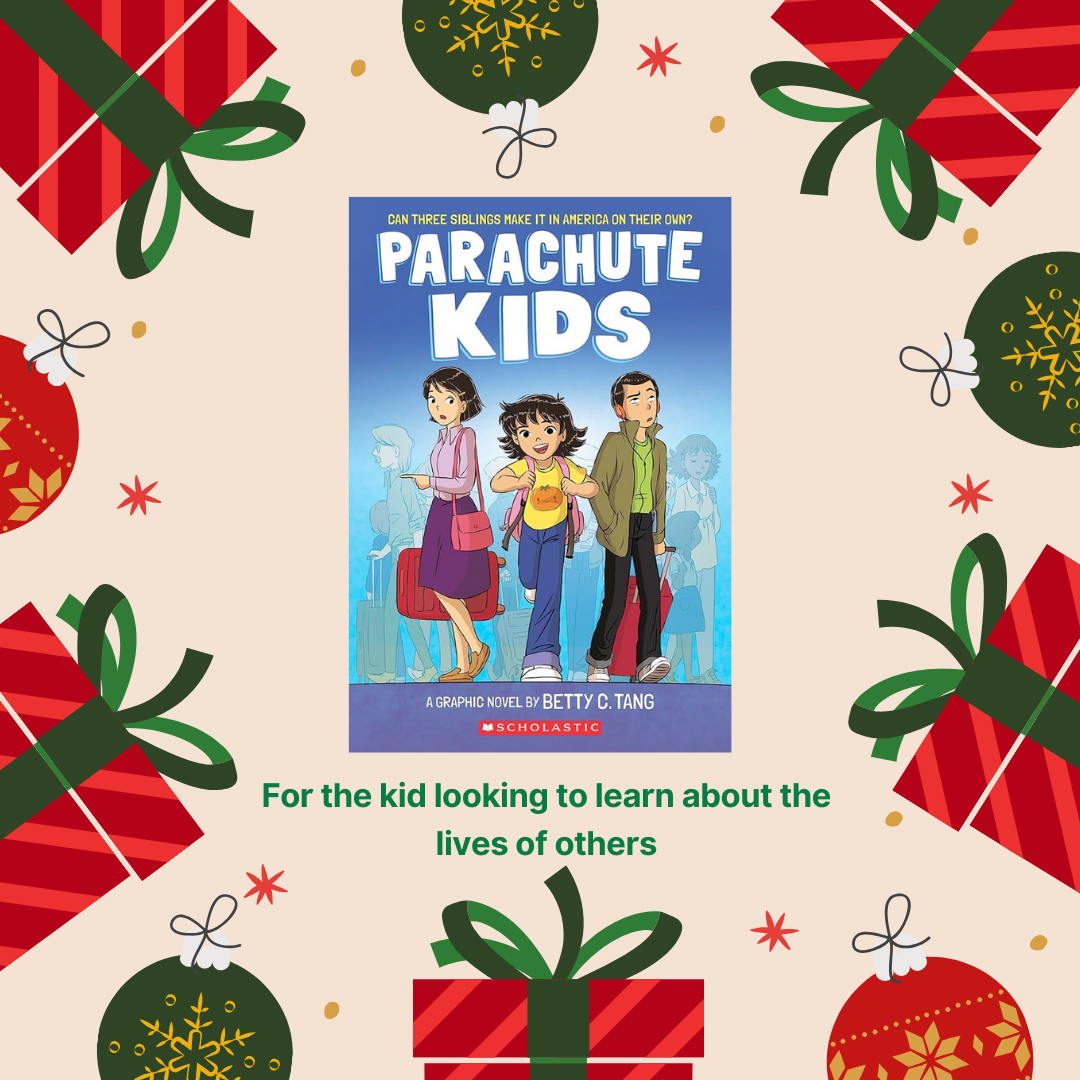
Feng-Li can’t wait to discover America with her family! But after an action-packed vacation, her parents deliver shocking news: They are returning to Taiwan and leaving Feng-Li and her older siblings in California on their own.
Suddenly, the three kids must fend for themselves in a strange new world–and get along. Starting a new school, learning a new language, and trying to make new friends while managing a household is hard enough, but Bro and Sis’s constant bickering makes everything worse. Thankfully, there are some hilarious moments to balance the stress and loneliness. But as tensions escalate–and all three kids get tangled in a web of bad choices–can Feng-Li keep her family together?
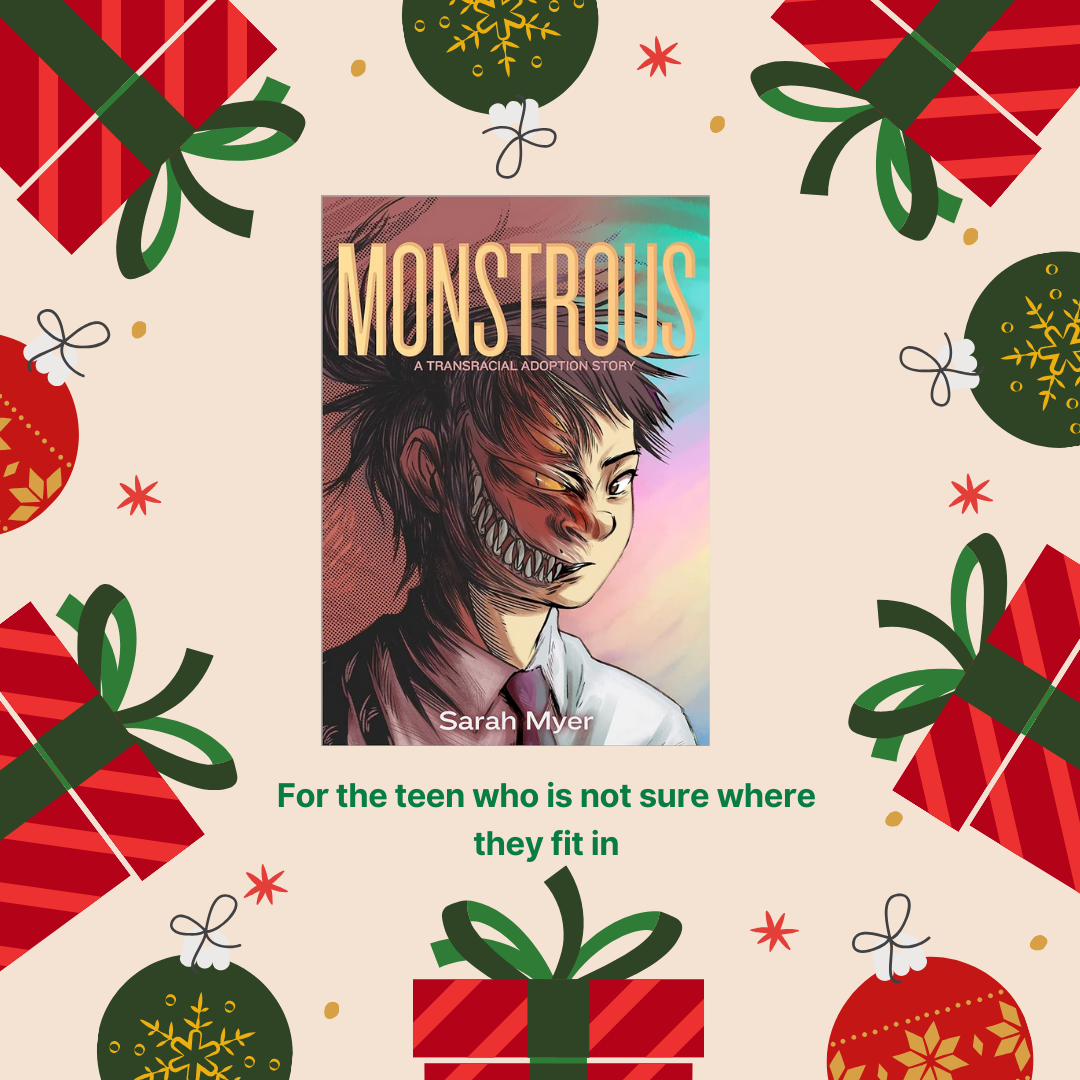
Sarah has always struggled to fit in. Born in South Korea and adopted at birth by a white couple, she grows up in a rural community with few Asian neighbors. People whisper in the supermarket. Classmates bully her. She has trouble containing her anger in these moments―but through it all, she has her art. She’s always been a compulsive drawer, and when she discovers anime, her hobby becomes an obsession.
Wondering why this blog is more quiet? It’s because I am much more regularly sharing and creating in my Patreon community. And right now, you can get a free trial. What might you find there? Units such as the one I just posted below.
Giving students, and ourselves, further tools for how to navigate visual literacy is a must in today’s society. After all, most impressions that we get these days are not just from words alone but are accompanied by one or more images.
So why not approach the teaching of visual literacy through one of the most beloved formats of texts; graphic novels? After all, I see many teachers who are not quite sure how to teach this or even how to fully read graphic novels in order to sink into their depths, surely there are students who have the same gaps.
So I spent some time pulling together a 10-day unit plan for this concept, where students are invited to read their own graphic novels and go on a journey of exploration.
In this plan, we’ll not only unravel the mysteries of graphic novels but also nurture critical reading, visual analysis, and creative skills.
So what is in this unit?
Day-by-Day Lesson Plans: The unit offers a structured 10-day plan, complete with detailed activities, guiding questions, and vocabulary. You can follow this plan as-is or adapt it to fit your classroom needs.
Flexible Assessment Framework: The unit includes optional assessment frameworks, such as peer feedback and visual narrative presentations. You can choose which assessments align best with your learning objectives.
Diverse Mentor Texts: The unit utilizes inclusive mentor texts, including “New Kid” by Jerry Craft and “American Born Chinese” by Gene Luen Yang. However, there are so many other graphic novels you can use. Make sure you choose mentor texts that resonate with your students’ interests and backgrounds.
Promoting Cultural Awareness: The unit places a strong emphasis on exploring cultural themes and perspectives within graphic novels, fostering cultural awareness and inclusivity.
Creative Expression: Through activities like creating visual narratives, students are encouraged to express their creativity and develop visual storytelling skills.
Reflection and Celebration: The unit concludes with a reflection on key takeaways and a celebration of students’ achievements, reinforcing the value of graphic novels and visual storytelling.
As always, this is meant to be a helpful tool that you can make your own. I would love to know if you can use this, and also if there are things I can change. I have broken it into pages so that you can print them for easy reference if you want.
To access the unit-plan, become a member of my Patreon community by going here. Like I said, a free trial is available to access resources.







 Pernille Ripp