
assessment, being a teacher, grades, Student

Do Our Students Understand Our Standards?

I-want-my-students-to

I could see the disappointment creep through the room like a fog enveloping us all.  Those kids who had been bright and cheery when they entered our room now sat there sullen, shoulders dropped, barely meeting my eye.  I tried to explain again; I thought you needed some honest feedback…I know I have high expectations…it is not too late…

My students had done halfway through the quarter reflections and some of them had really missed the mark on their own engagement and work quality. Or maybe I had missed the mark as a teacher, but something was not lining up between their perception and reality, something was not right.  Thus Tuesday’s conversation; a quick “If grades were handed out today” sheet and now lots of broken hearts.  Sometimes being a teacher just sucks.

That night, when I couldn’t sleep, I realized what we needed to do, ashamed that I hadn’t thought of it before; we needed to deconstruct the standards.  Tear them apart, put them in our own language, but most importantly discuss ways of showing mastery, so that they could be in control of their 7th grade learning journey

So today we started with our very first standard.  The students and I reworded it, spoke about what it meant, and also spoke about my ideas for second quarter; show me mastery in your own way.  Tell me when you are ready to give me evidence that you can do these things.  Yes, you can choose to do a written assignment, and yes there will still be certain milestones that we have to reach,  but you can also show me in another way; sculptures, videos, conversations, blogs, whatever we can work out, whatever you can dream up.

After today, I feel like it finally makes sense.  Not just to my students who function under the scope of these standards; but to myself, the wielder of the assessment.  I hadn’t thought to do this because I made the assumption my students had figured it out themselves.  That they had figured out the standards.  That they knew how they would be assessed and how to show me their growth.  Why I would assume this I am not sure, but I know I cannot be the only one.  I know others like me must have assumed that students know what they are supposed to learn, know what they will be assessed on.  That’s a mistake I will not make again.

After the day was done and the new standard hung on our bulletin board, I have hope.  Hope that my students will start to understand what I take for granted in their learning journey.  Hope that my students will see that they there is room for all of their abilities and not just the ones determined by me.  Hope that my students will embrace the push for personalization, hope that it will make them understand more where they need to go and how they need to grow.  I should have done this day one, I am glad it is not too late.

IMG_3947.JPG

I am a passionate  teacher in Wisconsin, USA,  who has taught 4th, 5th, and 7th grade.  Proud techy geek, and mass consumer of incredible books. Creator of the Global Read Aloud Project, Co-founder of EdCamp MadWI, and believer in all children. I have no awards or accolades except for the lightbulbs that go off in my students’ heads every day.  First book “Passionate Learners – Giving Our Classrooms Back to Our Students” can be purchased now from Powerful Learning Press.   Second book“Empowered Schools, Empowered Students – Creating Connected and Invested Learners” is out now from Corwin Press.  Follow me on Twitter @PernilleRipp.
being a teacher, Student

We Teach These Kids

image from etsy

I see her crying, tears rolling down her cheeks as she tries to get through the assignment.

My heart sinks, I don’t have time, we have so much to cover, and yet I know what I need to do.

Outside the door we go, heart to heart, tears dry up, and back in to face the rest of the class, who miraculously are still working.  Perhaps our routines are starting to sink in?  Perhaps we are getting there, wherever there may be.  So we jump back in, back to teaching, and the day moves forward.  Just another moment in my day as a new 7th grade teacher.

I knew teaching 7th grade would be a whole new world.  That what I thought I knew about kids would be challenged, twisted, and turned on its head.  I thought I knew how to teach reading, I thought I knew how to teach writing.  And I do, but that’s not all I teach, and in 7th grade, it has never been more apparent to me.

We teach these kids that yes, we expect them to be resilient, independent, and organized, but that we are still here to pick up the strays when the locker overflows and the planner is lost.

We teach these kids that we would rather hear the truth than another excuse and that their words are worth standing behind.

We teach these kids that being different can be hard, that being independent can make you a target, but that does not mean you should ever back down from what you are or what you believe in.

We teach them that it is okay to laugh at ourselves.  That it is okay to try to find the humor in any situation and that does not mean we don’t take it seriously.

We teach these kids that not even adults have all the answers, we are still searching for some too.

We teach these kids that adults will listen and take them seriously.  That we remember what it is to be young and feel like the whole world is coming down.

We teach these kids that they don’t have to say “It’s ok” when we tell them that we are sorry their parent passed away.  Or that they can’t tell us about the truth on why their work isn’t done.

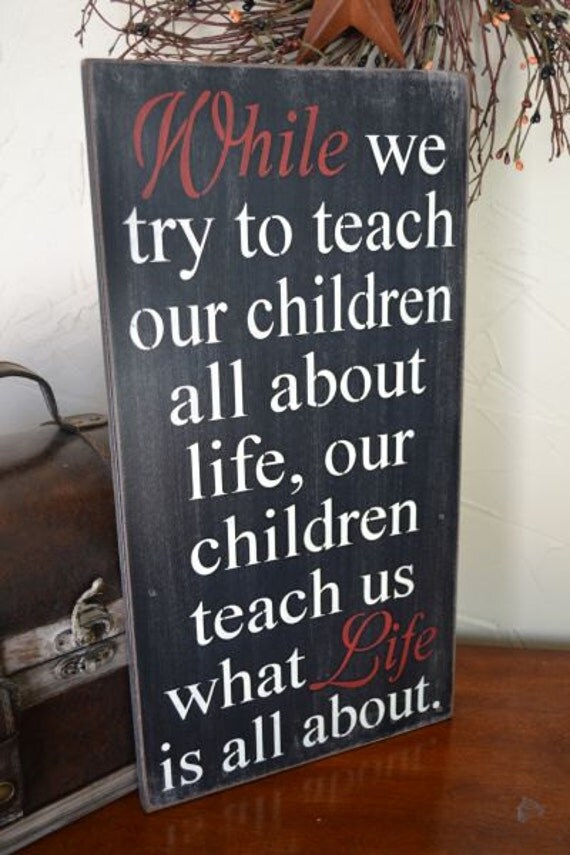
I teach these kids and they teach me.  I cannot thank them enough.

behavior, being a teacher, punishment, Student

"Why Do You Only See the Bad, Mrs. Ripp?"

“Why do you always notice me when I am bad, Mrs. Ripp?…”

I stand there, stopped in my tracks.  Is that what I do?  Only notice this child when they have done something I didn’t want, when they have done something “bad?”  Do I ever praise them for when they are on task, not poking their neighbor, or just simply working really well?  I think I do, at least I hope I do and yet, this child is on my radar more frequently than others.  The level of distraction is just so high and the level of interference with others a constant.  Do I ever just say, “Nice work…” or just bite my tongue altogether?  I am not sure.

Perceived negative behavior zeroes us in wherever we are.  The people that speak the loudest.  The child that moves the most.  The student that just cannot get to work because they just have to do that one more annoying thing that you swear they know annoys you the very most out of all annoying things.  So if we let it, soon, that behavior is all we ever see.  We only see them moving when they shouldn’t, we only see them messing about, we only see them breaking all of the unwritten rules we have worked so hard to establish.  We only see the bad.

Why not give them a break?  Why not let them move about if that is what they need?  Why not smile or even just hold our words and let them shine for a little bit?  Fill them up rather than tear them apart?  Focus our energies elsewhere?  Just for a moment at least.  They know they are moving, they know they are poking, they know they are not working, and yet, let them figure it out.  Let them feel that we don’t just see the bad, we see the whole, and that whole is good enough.

image from icanread

being a teacher, role model, Student, technology

You Don’t Have to Be A Technology Whiz But You Do Need to Be Fearless

Image from here

As we find ourselves surrounded by more and more technology in our profession as teachers, we see teachers react in strong ways.  You have the embracers, the ones that think any tech tool will enhance their teaching whether it really will or not.  You have those who are open but sceptic, who look for tools that will create deeper meanings and not just be another flashy gadget.  You have the hesitaters, the ones that will not request but will use the tool when they get it.  You have the hand-holders, those who stare at something and do not use it until someone else walks them through the entire process, multiple times.  Then you have the skeptics, the ones that do not think any tech will enrichen their teaching because they don’t believe in gadgets.  Finally you have the resisters, those who resist pretty much any change, whether technology related or not.  All of these types of teachers have their reasons for being who they are, all of them base their perceptions on assumptions and on past experience.

So for all of them I offer some advice.

  • Don’t blame the tool.  Often we hate the tool before we have even tried it, it is like a gut reaction to change in education that one develops.  “Oh, here they come again with their fancy new ideas while the old ideas work just fine.”  And while there is some truth in that, it is not the tool’s fault it was placed in your room, so the least one can do is explore it.  Otherwise it leads to…
  • Judge first, condemn early.  How many teachers have gotten upset over new initiatives or things being introduced before they have even tried it?  Sometimes it is easier to get upset rather than just wait and see; many words have been eaten this way.
  • You don’t have to love it but do try it.  I don’t love every piece of tech in my room (SmartBoard I am thinking of you) but I do use it.  After all it is there so I might as well.  I may just prefer to teach in other ways and use different tools.
  • Mess with it.  Too many times teachers are afraid to even turn something on, let alone push several buttons.  This approach can no longer be accepted.  We should be guided by many of our students’ approach to tech; turn it on and mess with it.  You never know what you can discover on your own.
  • Give it more than one try.  Even with my SmartBoard I continue to explore it, hoping I will have that aha moment where I embrace it.  It hasn’t happened yet, but I will not give up on it.  It is there to stay and so am I.
  • Ask questions, but don’t gripe.  Yes, satisfaction can be reached through commiseration over the latest tool but will that really push us any further toward figuring it out?  Start a conversation, reach out to others, but leave it productive.  You will feel better when you walk away.
  • Get help.  Sometimes teachers are too proud to ask others for help but not me.  I ask my students to help me figure stuff out, I ask other teachers whether globally or in my school.  Somebody else is bound to have run into the same problem at some point so why not solve it together?  Team approach works best with technology.
  • Be fearless.  Technology is not the master of us and it never was intended to be, and yet, how many teachers are deathly afraid of it all?  Yes, you may break something but so what?  At least you attempted to use it.  Again look to our students for how we should embrace technology; try it, use it, make it work for you.  

Being a 21th century teacher means we have to equip our students with the know-how of technology, there simply is no excuse to not fulfill our job.  Our students learn from us, even the way we react to change, so think of your approach as the newest thing is shown to you.  Will you model how to be fearless?

being a teacher, Student, testing

It’s the Least We Can Do

De Cito Eindtoets Basisonderwijs.Image via Wikipedia

In this numbers obsessed society, test makers have figured us all out.  They have realized that if they make the test long enough, tedious enough, and fill them with multiple choice or scantron-able answers then we will assume they are valuable.  What more is that they have figured out that they can even sell us software that will grade the tests for us, break down all of the date, and create a nice graph.  Testing done.  Results at hand.

Except if we are to test students, then at the very least we should look at those tests.  We should try to decipher their answers, create our own data, and meet with them to discuss it.  Yes, a multiple choice test is cleaner and easier but it also provides less of a view into the heads of our students, into their thoughts, into their learning.  A clean test that a machine can correct provides us with data, nothing else, points to be graphed with no clear direction or at the very least not a very detailed one.

So if we must test the children, then do them the favor of correcting it yourself.  Give their work the time and effort you expect them to put into taking the test.  It’s the least we can do.

being a teacher, social media, Student

How We Fail Young Students with Facebook

Image representing Facebook as depicted in Cru...Image via CrunchBase

A gaggle of 5th grade girls all sit around a lunch table obviously in a deep discussion.  As I walk past them, one word makes my ears perk up and my step slow…Facebook.  Immediately the teacher in me wants to interrupt, remind them that they are 10 and 11 which according to the law means they are not allowed to be on Facebook, and yet I don’t.  I let them and their conversation be and instead head to my room and ponder the hypocrisy that is the age restriction on Facebook.

To be a legal member of Facebook you have to be 13 years old.  The site makes this very clear, and yet we all know that the this rule is being broken on a daily basis as 4th and 5th graders sign up and start using the site.  And while we can sit here and discuss how kids are just too young to handle to the responsibility of such a decision at that age, I think we should instead move on and discuss the real ramification of these sign ups:  Kids that are not being taught how to use the site safely, because we choose to pretend they are not signing up.  And yet, they are signing up, and they are using it to their full potential; the good, the bad, and the bullying.  So rather than releasing educated students onto a social media site, we stick our heads in the sand, cover our ears and pretend it isn’t happening.

So as teachers we are once again put in a situation where we cannot teach kids skills that would be beneficial to them in the long run.  Skills they for sure will need in middle school.  Rather than confronting Facebook head on in the classroom and discussing how to use it, we ignore it, give stern warnings, and move on as if this will stop kids from signing up.

In America we seem to have a tendency in general to cover our ears and pretend kids are not doing things they shouldn’t, rather than actually teach them how to do it safely.  Just look at how sex ed. and underage drinking is being treated.  So as a society we would rather hold up the rule and say, “Well, they shouldn’t be doing this!” rather than face the facts and give them the proper education to handle it well.  Again, this discussion isn’t meant to be about whether kids are too young to be on Facebook, much smarter people have written oodles about that.  It is to bring up how we as a society should be giving kids an education in social media before they start to sign up rather than trying to patch things up later in life.

We fail these children when we pretend that they are not on Facebook at ten years old.  We fail to teach them right, to show them how to behave and move around in a virtual social media site.  How to deal with being friends with people or un-friending, how to post properly, what not to post, and how to treat others with respect.  By being a restriction that is still so easily accessible to children, it becomes the ultimate must do.  And perhaps Facebook isn’t what is so scary about this whole thing, but rather kids that have no idea how to use it properly.  And that is for us to fix, if society would let us.