Be the change, being a teacher, being me, motivation, reflection, Student-centered, students

Some Thoughts on Motivation

When I moved this blog to WordPress some posts did not survive, so in an effort to move some of my favorite posts with me, I will be republishing them here.  This post first appeared in May, 2011.

“Mrs. Ripp, this is so boring.”  That sentiment greets me on semi-regular basis from one child.  Most days he is passionate, funny, and involved, that is, if he likes what we happen to be during.  Today is no different, he has been involved, engaged, and eager most of the day but now the fatigue has set in and the writing prompt just does not want to get done.  This is a regular occurrence throughout America, passionate students that are mostly motivated at all times but sometimes hit slumps.  This post is not about them.

Instead, this post is about those kids that put their head on their desks, that groan when we give directions, that could not care less about threats, rewards, punishment or motivating pep talks.  Those are the kids we all meet; the truly unmotivated.  Those students that do not see the relevance, the importance, or even the wisdom behind school.  Those students that feel that this is just a temporary illness, something to be waited out for real life to begin.  And yes, we have them even at the elementary level.

The other night, I shared on Twitter, “I always wonder if having unmotivated students just mean that what I am teaching is unmotivating, I think it does.”  Lo and behold a man I admire greatly, Tom Whitby, was kind enough to engage me in my train of thoughts.  As we discussed, my own thoughts became much clearer:

Motivation is linked to the teacher whether we we believe it should be or not.

If a student fails, the teacher is most often the first to be blamed before any outside factions are investigated.  (Whether this is appropraite or not).

We have the most control over what happens within our classroom.

As part of this discussion, Tom Perran offered up this article discussing how teachers only have control over 10 of 16 motivating factors.  And yet as teachers we do have to own up to our part in motivation.  Last year, when I sat through another round of book report presentations I yawned often, stretched to stay awake, got droopy eyelids, and yet admonished the students for getting restless and unfocused  Hmm, that doesn’t seem right.

As teachers, part of our job is to provide engaging lessons, but it is this definition of engaging that seems to mess us up.  I used to think that by engagement it meant me lecturing for a while and then giving the students work time, as long as I kept the questions coming, the students were engaged, right?  For some reason most of the time my results were less than stellar.  I also used to think that as long as I provided some sort of choice then the students would find their motivation.  And while our more self-reliant students did because they already have a sense of duty instilled by the teacher, some students didn’t.  Enter in punishment and rewards.  If a student didn’t turn in their work then recess was taken away, and if that didn’t work then a 0 was given.  Ooh a failing grade.  They even got their name on the board and were not offered a chance to enter the weekly drawing for the monthly pizza party, confused?  So was I.

The problem with punishment and reward though is that it often only motivates in the short term.  A student knows that as long as they hand something in, even if it is awful, then that counts as a finished product.  As a teacher, I often lost sleep over what to do with these students.  they seemed already by 4th grade to hate school, finding it a punishment for childhood, and worst of all, they knew how to work the system.  So what to do?  Again, I realized that the problem wasn’t the students, it was the curriculum and how I taught it, so really it was me.  See, I am the biggest in school motivator there is.  While I may not be the one that decides what to teach, I most certainly am the one that decided HOW to teach it.  And if I thought that lecturing (which even put me to sleep in college) was going to capture the imaginations of 9 year olds’ then I was an idiot. 

So after almost a year of changing things up, this is what I have realized as far as motivation:

  • Choice matters.  When students choose not just what they will do for a project but also what they would like to learn about within a perimeter, you get buy-in.  This continues to be one of the most exciting simple realizations I have come across.
  • Motivation is contagious.  When one student gets excited and has an opportunity to share that enthusiasm, it catches.  My students get to blog about projects, we have huddles where we share and we are a bit louder than we used to be.  But guess what?  Those loud noises are usually students super excited about something.
  • Eliminate punishment and rewards.  This short-term motivator seemed more harmful than helpful to me.  This year we have class parties when we feel we want one, I have lunch with all my students several times a month because they ask me to, and no one is excluded from anything.  When homework doesn’t get done, I ask them how they plan to fix it, most students choose to do it at recess.  Fine by me, they are free to go if they choose.
  • Be excited yourself.  The fastest way for kids to lose interest is if you are bored.  I realized that I hated some of the things and taught and how I taught them (goodbye grammar packets), so something had to change.  Now my students joke about how I almost always introduce something new with “I am so excited to do this…”
  • Look at outside factors.  Some students have a lot more on their plate than we could ever realize.  Ask questions, get to know your students, and be a listening ear.  When my husband lost his job, it was hard for me to be excited about things as well because I was too busy worrying.
  • Control what you can.  We will never be able to control what our students go home to but we sure can control what happens in the room.  All the teachers I know choose to create a caring environment where all students feel safe.  This alone means students let their guards down and feel it is okay to work hard and have fun.

Loss of motivation doesn’t just happen overnight, I believe all students start out motivated and then life gets in the way.  At some point during their school years they start to hate school feeling it is stagnant and irrelevant.  I therefore do everything in my power to ensure that students leave my classroom still liking school, perhaps a small goal, but an incredible important one.  If they like to be in your room, then it is up to you to figure out how to keep them engaged.

I am a passionate  teacher in Wisconsin, USA,  who has taught 4, 5th, and 7th grade.  Proud techy geek, and mass consumer of incredible books. Creator of the Global Read Aloud Project, Co-founder of EdCamp MadWI, and believer in all children. I have no awards or accolades except for the lightbulbs that go off in my students’ heads every day.  First book “Passionate Learners – Giving Our Classrooms Back to Our Students” can be purchased now from Powerful Learning Press.   Second book“Empowered Schools, Empowered Students – Creating Connected and Invested Learners” can be pre-ordered from Corwin Press now.  Follow me on Twitter @PernilleRipp.

Be the change, classroom management, punishment, reflection, Student-centered, students

Do We Really Need the Public Call Out?

When I moved this blog to WordPress some posts did not survive, so in an effort to move some of my favorite posts with me, I will be republishing them here.  This one was first written in April, 2011.

“Joe, you need to pay attention!”

“Sit up, Peter!”

“Lisa, what happened there?”

 All day and every day, we use our students names when they are off task, when they are fiddling, sleeping, or simply not performing to the high standard we have set for them.  We see something out of sorts, judge their action, find them guilty, and deliver the verdict all within a few seconds.    As our lesson continues, we don’t always have the time to dig deep so we assume instead that we know why they are fiddling, why they are not paying attention, and so we correct, coerce, call out their names until they are with us again.  

Their names.  Something that is so intricately linked with who they are as a budding person.  Their names so linked with their identities.  And yet we use them to our advantage, without a second thought as a way to maintain control, as a way to punish. 

This week I asked my students to finish the sentence: “Being a good teacher means…” and what Nathan wrote really made me think: “Don’t yell out the kids name that does something wrong.”  At first, I scoffed at this notion, after all, what else are we supposed to do as teachers when our students are off task?  Calling out their names is one of the most efficient ways to re-direct them quickly.  And yet, as I thought about it more, I understood his thoughts.  Calling out a student’s name in front of the whole class means that the whole class knows that the student is not doing what they ought to.  Some teachers use it specifically for that purpose; the public enforcement of expectations.  And yet, calling out a name means that what one student is doing (or not doing) becomes the focus of the entire class.  Yes, you achieve your goal of attention redirection, but you are directing everyone elses’ attention to that child without fully knowing what is going on.  So I make it my mission to reduce the public negative call out.  

So what can I do instead, because we all know, there are times when even the most attentive student gets off-track and I would otherwise use their name to re-direct right away,  

I could take a breath, hesitate, and see if another strategy can grant the same outcome.  Can I redirect them silently?  Can I signal them?  Can I tap them on their shoulder, or pass by their work area?  Do I need to shout out their name?

I could also re-evaluate, do a quick scan of the room, is this the only child off-task?  Is the whole class really not interested anymore? Did I speak too long, do we need a break or to do something student-directed or hands-on?

Yet, sometimes, it is not me or the students that are the problem.   I am reminded that my students live full lives that sometimes interfere with our school day.  This is when I take the time to stop and talk and ask if everything is alright, is there anything I need to know?  Sometimes they are just so excited about something happening that they cannot focus, other times it is lack of sleep, of food, or they are distracted by life situations.  Sometimes, they will just tell you they are having an off day.  That is alright too, after all, we all have off days.

This isn’t a perfect system, nor is it intended to be.  It is rather one more step in learning how to be a better teacher, one that doesn’t cause embarrassment for the students because I don’t need to embarrass them into behaving.  One that takes the time to figure out the real reason behind distractions and then works with the student rather than just dolling out punishment.

So once again, my students teach me how to be a better teacher.  I should be using their names wisely, reserving the public call out for when it is truly necessary.  Nathan taught me that and for that I am thankful.  He had enough courage to tell his teacher the wrong of her ways, and lead me to deeper reflection.  When we ask our students questions, we may not like the answer, but there is always a great reason for that answer.  A reason that should not be taken lightly, but rather explored, reflected upon and then acted upon.

I am a passionate  teacher in Wisconsin, USA,  who has taught 4, 5th, and 7th grade.  Proud techy geek, and mass consumer of incredible books. Creator of the Global Read Aloud Project, Co-founder of EdCamp MadWI, and believer in all children. I have no awards or accolades except for the lightbulbs that go off in my students’ heads every day.  First book “Passionate Learners – Giving Our Classrooms Back to Our Students” can be purchased now from Powerful Learning Press.   Second book“Empowered Schools, Empowered Students – Creating Connected and Invested Learners” can be pre-ordered from Corwin Press now.  Follow me on Twitter @PernilleRipp.

being a teacher, classroom management, punishment, reflection, students

Call Me Crazy But It Is Still About the Kids…

I stopped using a punishment system in my classroom, when I realized I already knew who would get in trouble.

I stopped using a reward system in my classroom, when I realized I knew who would be rewarded.

Few kids ever proved me wrong, instead they mostly stayed within the track that my management system had placed them in.  And those that were always on the board?  Who I was always calling out?  They didn’t stay there for lack of trying, oh I tried to reach those boys behaving badly(because let’s be honest most of them were boys).  I tried to reason with them, talk about the future, praise them when they made better choices, point out their mistakes so they could fix them, help them grow, help them learn.  Support them, guide them, punish them when needed.

Sure, there was change.  I could usually get them to work after a while.  You take enough away and most kids will crumble at some point.  You yell enough and most kids will get to it.  But their behaviors never changed for good.  The next day, the next week,sometimes the next period, the battle started over and sometimes I ran out of punishment options.  Where do you go after you have sent a 10 year old kid to the office, had the principal yell at them, and pulled in their parents?  Do you start to suspend so that they will work harder?  Do you take away every privilige until they break?

It wasn’t until I got rid of my systems and started working on relationships, community, trust, and creating a passionate classroom environment, that the behaviors changed.  It wasn’t until I took down the behavior charts, and started to get to know my students better that the kids, those kids, started to care more.  As one principal told me, “It is not for themselves they work, it is for you, we will get them to work for themselves later.”  So I set out to create an environment where they wanted to be, create a classroom filled with learning that spoke to them.  That didn’t mean throwing out the curriculum but it meant working with it in a different way to reignite a curiosity that had been forgotten.  It didn’t always work, sometimes kids come to us with bigger demons than we can ever fight, but a seed had been planted in some of these kids that perhaps school wasn’t just out to get them.

I never knew that writing about public behavior charts would ignite a firestorm of comments on this blog.  After all, I have tackled bigger topics before.  But this one, this seemingly small part of our classrooms, has taken on a life of its own.  Some agreed, some discussed, and some simply thought I was crazy to put it mildly.  My skin has definitely grown thicker every day.  What upset me the most were not the words spoken about me, but rather about the kids we teach and how if we don’t do something like this, they will turn out in a certain way.  Here are a few highlights from comments…

” I’m sorry, but being an overprotective, hypersensitive teacher will get my students nowhere.”

“Maybe if we didn’t “baby” kids they would be stronger individuals.”

“…we are raising an entire generation of hypersensitive kids who are unable to behave appropriately, and take responsibility for their own actions. ”

“…is it almost came off sounding like if you use behavior charts you’re a bad, horrible teacher that could care less about the feelings of your students.”

“You want a society of sociopaths? Keep rewarding (or not addressing) bad behavior and failing to teach values.”

“So tired of these parents who want to caudle these disrespectful beings….oh I don’t want to hurt their feelings….please….I seriously would like to see you try to teach a group of children who are quite difficult….making noises, throwing chairs, flipping desks, kicking or hitting THE TEACHER! ”

In the end, what we do is about children, and I chose to get rid of a system that did not work for my students, nor me.  It did not promote unity, self-control, or solutions.  It was  a quick fix that sure let a child know where they stood for the day, but also let the rest of the world know.  As an adult, I am given the privilege of a private conversation whenever I screw up.  I wanted to afford my students the same thing.  That doesn’t mean I baby them, nor that they are coddled.  My difficult children, the ones that fist fought, that threw tables, that told me that there was nothing I could do about it.  They were the ones that needed me the most.  They were the ones that needed some control the most.

You may not agree with me on public behavior charts, you may even want to attack me personally, calling me delusional or worse.  But the kids?  They are not all bad kids, who we need to toughen up.   Some of these kids have had lives that I could never imagine dealing with.  They are not all kids that get away with whatever they want.  They are not all kids whose parents are not raising them right.  They are kids who are trying.  They are kids who want to make good choices.  They are kids who probably have dreams.  They are kids…Let’s not forget that.

I am a passionate  teacher in Wisconsin, USA,  who has taught 4, 5th, and 7th grade.  Proud techy geek, and mass consumer of incredible books. Creator of the Global Read Aloud Project, Co-founder of EdCamp MadWI, and believer in all children. I have no awards or accolades except for the lightbulbs that go off in my students’ heads every day.  First book “Passionate Learners – Giving Our Classrooms Back to Our Students” can be purchased now from Powerful Learning Press.   Second book“Empowered Schools, Empowered Students – Creating Connected and Invested Learners” can be pre-ordered from Corwin Press now.  Follow me on Twitter @PernilleRipp.

Be the change, behavior, being me, classroom management, reflection, students

So What’s My Problem With Public Behavior Charts?

image borrowed from Kimberley Moran – see her great post on how to move past behavior charts linked at the bottom of the post


The day starts out fine, you had your breakfast, you had your tea, you feel prepared, happy even.  You are off to school and ready to teach.  At the morning staff meeting you get so excited over an idea you lean over to your colleague to whisper in their ear.   After all, they really need to hear this.  “Mrs. Ripp, please move your clip.”  Shocked, you look around and feel every set of eyes on you.  You stand up, walk to the front, move your clip from the top of the chart to yellow or whatever other step down there is.  Quietly you sit down, gone is your motivation for the day, you know it can only get worse from here.

Ridiculous right?  After all, how many times as adults are we asked to move our name, our clip, our stick, or even write our name on the board so others can see we are misbehaving?  We don’t, and we wouldn’t if we were told to, after all, we demand respect, we demand common courtesy, we expect to be treated like, well, adults.  So us, moving sticks, yeah right…

Search for “Classroom behavior charts” on Pinterest and prepare to be astounded.  Sure, you will see the classic stop light charts, but now a new type of chart has emerged.  The cute classroom behavior chart, filled with flowers, butterflies, and smiley faces.  As if this innocent looking chart could never damage a child, as if something with polka-dots could ever be bad.   And sure, must of them have more than three steps to move down, but the idea is still the same; a public behavior chart display will ensure students behave better.  Why?  Because they don’t want the humiliation that goes along with moving ones name.  Nothing beats shaming a child into behaving.

The saddest thing for me is that I used to do it.  I used to be the queen of moved sticks, checkmarks, and names on the board.  I used to be the queen of public displays heralding accomplishments and shaming students.  I stopped when I realized that all I did was create a classroom divided, a classroom that consisted of the students who were good and the students who were bad.  I didn’t even have to tell my students out-loud who the “bad” kids were, they simply looked at our chart and then drew their own conclusions.  And then as kids tend to do, they would tell their parents just who had misbehaved and been on red or yellow for the day. Word got around and parents would make comments whenever they visited our room of just how tough it must be to teach such and such.  I couldn’t understand why they would say that until I realized it stared me in the face.  My punishment/behavior system announced proudly to anyone who the bad kids were, so of course, parents knew it too. So I took it down and never looked back.  No more public humiliation in my classroom ever again.

We may say that we do it for the good of the child.  We may say that it helps us control our classrooms.  We may say that public behavior charts have worked in our classrooms.  I know I used to.  And yet, have we thought of how the students feel about them?  Have we thought about the stigma we create?  Have we thought about the role we force students into and then are surprised when they continue to play it?

The fastest way to convince a child they are bad is to tell them in front of their peers.  So if that is what we are trying to accomplish, then by all means, display the cute behavior charts. Frame them in smiley faces, hearts or whatever other pinterest idea you stumble upon.  Start everyone in the middle so the divide becomes even more apparent when some children move up and others move down.  Hang those banners of accomplishment, make sure not everyone is on there.  Make sure everybody has been ranked and that everybody knows who is good and who is bad.  Create a classroom where students actions are not questioned, nor discussed, but simply punished.  And then tell them loudly and proudly to move their clip.  After all, if the whole class doesn’t know someone is misbehaving then how will they ever change?

To see one teacher’s journey of how she moved past public behavior charts, please read this post by Kimberley Moran “Moving Past Behavior Charts” 

PS:  As Patrick’s comment wonders, what are the alternatives?  I have blogged extensively about what to do instead, just click the links highlighted in the post or go to this page 

PPS:  More thoughts on this have been posted tonight 

I am a passionate  teacher in Wisconsin, USA,  who has taught 4th, 5th, and 7th grade.  Proud techy geek, and mass consumer of incredible books. Creator of the Global Read Aloud Project, Co-founder of EdCamp MadWI, and believer in all children. I have no awards or accolades except for the lightbulbs that go off in my students’ heads every day.  First book “Passionate Learners – Giving Our Classrooms Back to Our Students” can be purchased now from Powerful Learning Press.   Second book“Empowered Schools, Empowered Students – Creating Connected and Invested Learners” can be pre-ordered from Corwin Press now.  Follow me on Twitter @PernilleRipp.


Be the change, being a teacher, books, reflection, Student-centered, students

A Second Book Cover Revealed…

Some of you may know that I was lucky enough to be asked by Peter Dewitt and the amazing crew at Corwin Press to be a part of their Connected Educator book series.  Peter asked me in the fall of 2013 and I thought I would have plenty of time to write the book, after all, doesn’t being pregnant afford you a lot of time to put your feet up?  Well, Augustine arrived 10 weeks early so this book was finished watching her sleep and grow in the NICU, which only made me write more urgently for the need to change our schools and classrooms.  So today,I am thrilled to be able to reveal the cover of my next book…

CCES-Ripp


This book’s title really says it all.  Another how-to book, just like “Passionate Learners – Giving Our Classrooms Back to Our Students,” except this time focused on how to turn a whole school culture around, as well as within the classroom.  Written for administrators and teachers, this book will give you many things to think about, easy ideas to implements, and tools to change your school culture right away.

The book is available for pre-order now and will be offered as both a print and an e-book, which makes me so excited!  In fact, you should check out the whole series, I promise you it will be incredible!

Reading, students

10 Chapter Books My Students Say You Need

Much like we love our picture books, reading graphic novels or chapter books is a big deal in our room.  All day, every day, there is an undercurrent of book recommendation conversation running through our room and so I knew this year’s top ten list would be a tough competition.  With many ties, and many books to even choose from, I am happy to reveal the 10 books my students say any middle grade classroom library should not be without.

Number 10:

We start off with a three way tie.  I love the range of these books and think they truly represent the range of readers and interest we have in our group.

A favorite every year for our Tangle of the Titles, The Giver by Lois Lowry always surprises kids with how great it is.  I love how fiercely the students debate the ending as well.                Flora & Ulysses by the amazing Kate DiCamillo was hit in our room with a diverse crowd of readers.  whimsy, fun, and yet thought provoking the kids loved passing this around.

I love the power of graphic novels and Smile by Raina Telgemeier is one that I have had to repurchase a few times, it always seems to disappear or get destroyed from so many reads.

Number 9:

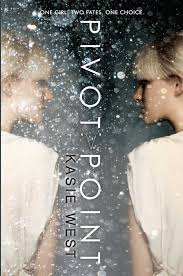
Pivot Point by Kasie West is one of my all-time favorite YA reads and so I was thrilled when so many kids took to it as well.  With the perfect amount of action and love, Kasie West in this book and the sequel “Split Second” captivated many readers.

Number 8: 

A chilling tale of hope and survival mesmerized many of my boys and some of the girls as well.  They couldn’t believe the story told here and wanted to know more.  Prisoner B-3087 by Alan Gratz is a must add.

Number 7:  

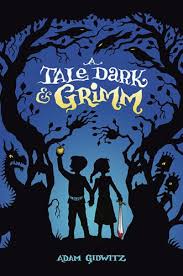
For the second year in a row, Adam Gidwitz’s tale of Hansel and Gretel in A Tale Dark & Grimm won the hearts of my students.  This is a perfect series for anyone who loves action, fantasy, humor and yes, a little bit of magic.

Number 6:

No classroom library at this age is complete without Divergent by Veronica Roth, I loved how many students discovered this book this year and how they discussed book vs movie.

Number 5:  

One of the official selections for Global Read Aloud 2013, Out of My Mind by Sharon M. Draper kicked our read alouds off in the best way possible.  all year, the lessons from Melody resonated through our walls, permeated our conversations, and changed the way we viewed others.

Number 4:

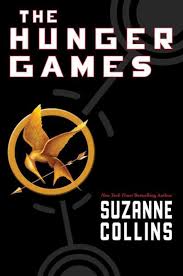
What can we say that hasn’t been written about The Hunger Games by Suzanne Collins.  There is a reason almost every child in my room has read it.

Number 3:

One of my all-time favorite reads, I am always excited to see when a new child discovers The One and Only Ivan by Katherine Applegate.  The best part?  It usually only takes the first page to hook them.

Number 2:

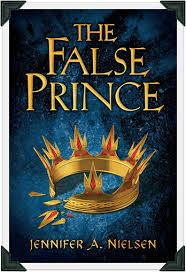
The power of The False Prince by Jennifer A. Nielsen never fails to mesmerize students, and this year marked the first time I read it aloud.  Students begged for me to read just one more page of this incredible tale. Our culminating Skype call with Jennifer A. Nielsen only made this book better.  This was one of our read alouds.

Number 1:

And what was the most beloved book in our classroom?

If you have not read Rump – The True Story of Rumpelstiltskin by Liesl Shurtliff, please run out to your nearest book store or library and get it.  The kids have lived Rump’s tale, begged me to keep reading, pondered about the role of destiny in our lives and asked if there is a sequel. This book is a must read aloud, and was one of ours.

Many other books were on the list but these were the top picks.  We hope we have given you some suggestions to add to your library or summer reading, you won’t regret it.

I am a passionate (female) 5th grade teacher in Wisconsin, USA, proud techy geek, and mass consumer of incredible books. Creator of the Global Read Aloud Project, Co-founder of EdCamp MadWI, and believer in all children. I have no awards or accolades except for the lightbulbs that go off in my students’ heads every day.  First book “Passionate Learners – Giving Our Classrooms Back to Our Students” can be purchased now from Powerful Learning Press.   Follow me on Twitter @PernilleRipp.