Reading

What the #Nerdybookclub Taught Me About Reading

I have always been slightly nerdy, ask my oldest friends and they will tell you stories of eye rolls whenever I discussed the latest sci fi flick I couldn’t wait to see.  Or get me started on a favorite author and watch.  I haven’t ever been a geek, I would have to be really good at math for that, but a nerd, that I could embrace.  My adulthood didn’t change my nerdy ways but only sophisticated them.  I could now pass ubernerdy things of as cool and stand behind them tall.  And when being a nerd became kind of cool, I was so nerdy, that even my husband still laughed a little bit at me when i got too out there.

So when I fell into the Nerdy Book Club I knew I was at home.  All of these book lovers in one group, oh and the hashtag and the chats; I was home.  And yet even I could not have realized how much the Nerdy Book Club would change me and the way I teach.

So The Nerdy Book Club taught me that

  • It is okay to get really, really excited about a book and want to give it to everyone I meet.  I am thinking of you “The One and Only Ivan.”
  • It is ok to want to talk books with friends, even if those friends are 20 years younger than you.
  • It is ok to bring in my books to school and perhaps sneak a chapter or two during recess.
  • It is ok to weed out my library and finally get rid of the books that no one has touched, no one will touch, and to give them to others who might.
  • It is ok to not do book talks.
  • It is ok to not do whole group books unless it is so deep and so rich that the whole class will actually stay engaged.
  • It is ok to tweet out pictures of new books you have received because you are so gosh darn excited about reading them.
  • It is ok to tweet authors and hope they will respond to you.
  • It is ok to have your class tweet authors and hope even harder that they will respond to them.
  • It is ok to have a pile of books beside your bed that never quite seems to diminish and yet entices you to sit down and read every time you pass by it.
  • It is ok to change from a clothes shopaholic to a bookaholic as long as you don’t go broke.
  • It is ok to watch your home library start to bleed into your classroom library because some of your kids are ready for a bigger challenge.
  • It is ok to do book challenges as long as they do not suck.
  • It is ok to not love a book and tell students that.
  • It is ok to make book trailers rather than book projects.
  • It is ok to think books, breathe books, talk books even if no one is listening or cares.
  • It is ok to have the reading taste of a 5th grade boy.
  • It is ok to think that reading and loving books is the most important thing we can ever model for our students and our own children.

Thank you Nerdy Book Club


Related articles

Reading

Creating Great Summer Reading Plans

I have never before cared about what my students read over the summer, sure, I cared whether they were reading or not but I figured it was no longer my duty to ensure they had great books to read.  I certainly never assigned reading over the summer and would never do that.  This year though with our  increased passion for reading, my students have been telling me they just are not sure what to read and asked for my help.  So behold; what we will be doing in the final weeks of school to create massive reading lists with awesome book suggestions for each student.

First of all; this is by choice.  I am not dictating what students should read but simply creating opportunities for them to get as many recommendations as possible.  Second of all; they will be making a list of possible books they would love to read and this list will be passed to parents, but I will not be checking up on them.  There is no incentive, no punishment, no have to.  Just hopefully a way for them to continue to stay passionate about reading.

So in the next few weeks, we will:

    • Start out with our initial reading plan survey.  This gave me an idea of where students are at with their ideas for what they will read and also gives me something to compare to at the end.
    • Continue our speed book dating – 1 minute per partner as students recommend books to each other.
    • Try the teacher book dating as detailed by this awesome post by Colby Sharp.  In fact, I brought in my stack of to read books from home so that they can add those to the mix as well.
  • Skype with other classrooms to get book recommendations.  Short, simple Skype calls where 5 students each get to do a short book recommendation of either a favorite book from this year or a book they are currently reading.  I have asked students to think of the audience as we may be skyping with other grade levels than 5th.  If you want to Skype with us please fill out the contact form located on the right!
  • Collect all ideas in our note book so that we can create a master list that can be typed up and emailed/printed.
  • Continue tweeting out our book recommendation survey on Twitter and checking in to see which books people are recommending there.  If you haven’t taken it – please do!
  • Watch the Scholastic fall preview trailer – it may be for the fall but some of these books come out in August.
  • Interview teachers around the school for their favorite young adult books.
  • Read several book recommending blogs connected through our Kidblog account.
  • Create an Animoto sharing our reading plan with the word and posting it on our blog.  Thanks for the great idea Shannon from Van Meter – here is the post she wrote!
Reading

So You Want a Reading Classroom – 12 Ideas to Help You

I have always been a passionate reader and this year was no different, what was different though was that I finally unveiled this to my students.  I don’t quite know what took me so long.  So as I go into my second year as a reading classroom – and by that I mean, a room where reading takes center stage,  students cannot wait to read, and there are books being passed around every single day – I am thinking of how to create that.  Here are some of my ideas:

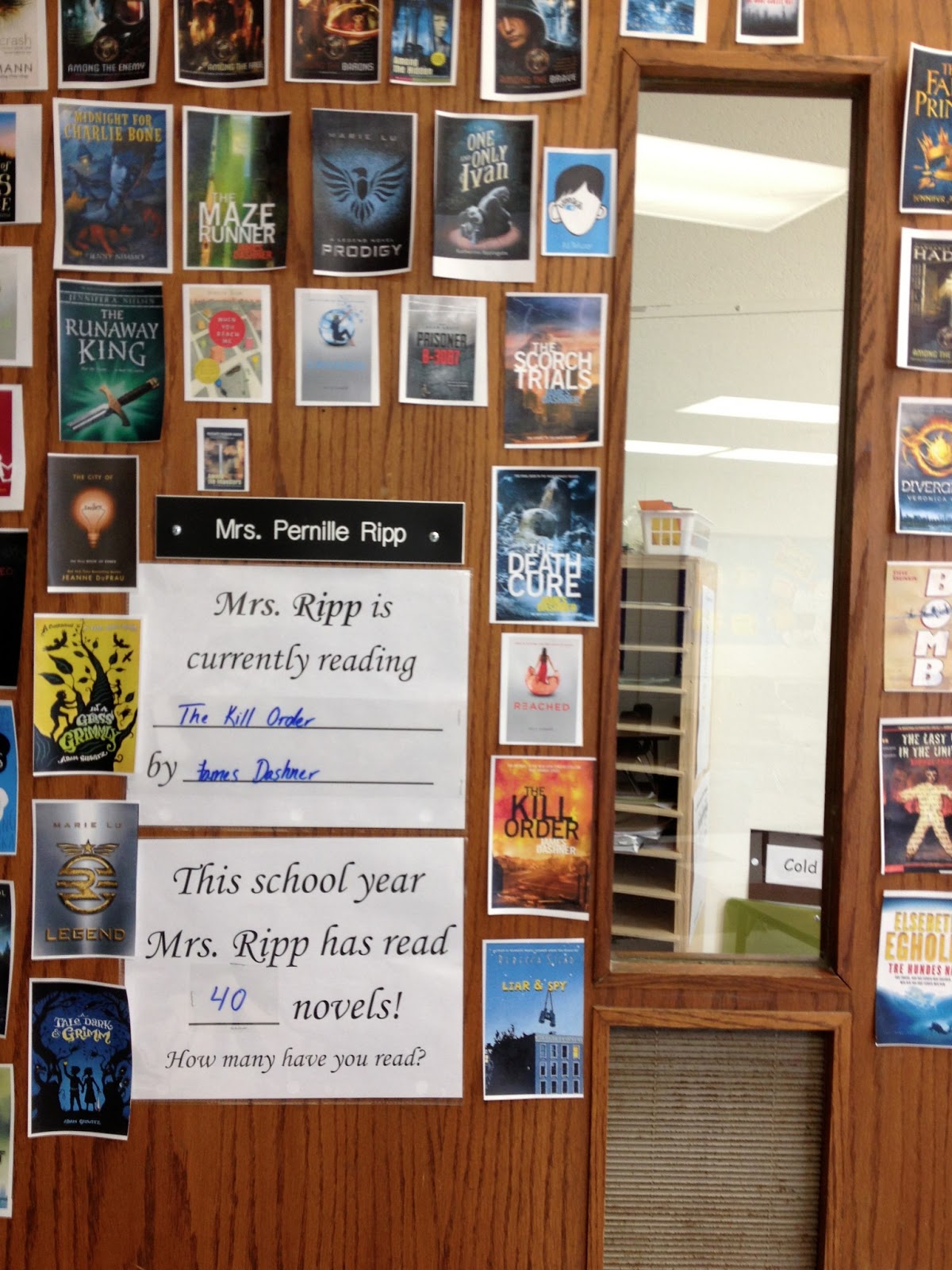
  1. Showcase your reading – this year through the inspiration of Jillian Heise I did a Mrs. Ripp reading display.  I cannot tell you how many book discussions this sparked with not just my students, but many students who just walked by the room.
  2. Invest in great books – I lost count of how much money I poured into books this year and while I wish teachers didn’t have to pay so much out of pocket for things, it seems to be just the way it is.  One great thing that happened was that my students would give the classroom giftcards for more books when they saw my passion – now that was awesome.
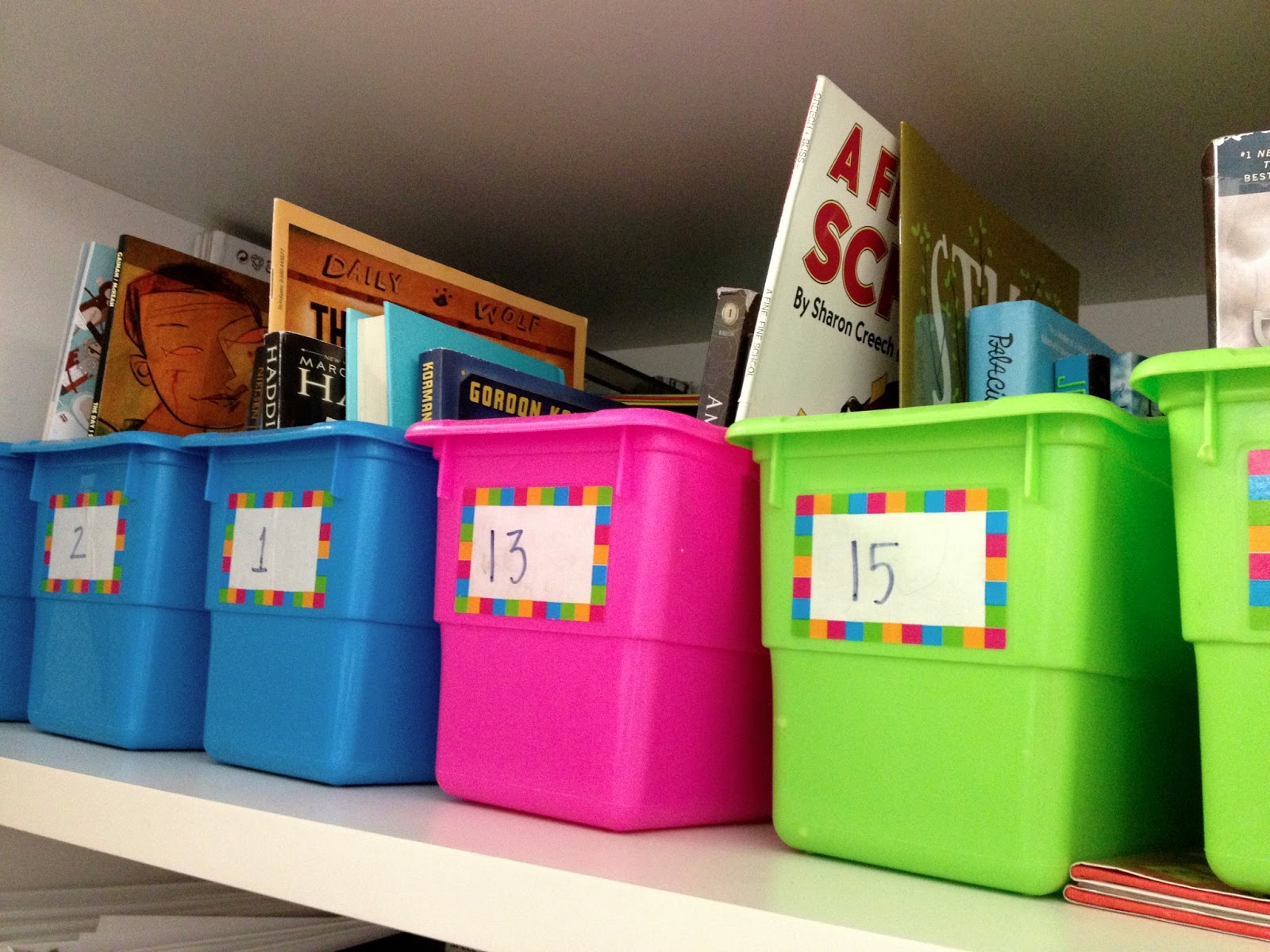
  3. Give your library space – I have always had a decent sized library but it was more tucked in a corner and not fully getting the attention it deserved.  While it is still in a corner, it is nice and open with short shelves and all of the books in labeled bins.  I label them by genre, author, or interest, it just depends on the book.  Books are easy to find and put back, which I think is a must as well and students take ownership over it.  They want it to work well for them so they can spend more time reading.
  4. Give choice – nothing will kill reading faster than constantly requiring students to read certain books.  I hate it, my students hate it, so I had to find a way around doing small group instruction without using chapter books.  I now use short high-interest articles instead to accomplish the same thing with my students and when they are done they get to read whatever they want.
  5. Challenge them – I love the concept of some sort of a book challenge and am contemplating doing the 40 book challenge by Donalyn Miller.  I love the idea that it is not about succeeding or failing but rather pushing yourself as a reader.
  6. Give reading priority– the first thing I would sacrifice in our busy schedule was always independent reading time.  Now it is the last thing to go; students crave uninterrupted reading time and many of them need it as a way to work on their skills.  All students get this every day, after all, to become a better reader you need to read!
  7. Read great picture books – I have always loved a great picture book but I had never really used them jus to hook kids.  Now we start many days with a picture book and then cherish the story-telling.  What I discovered is that every picture book can teach us something about reading or writing, thus making them both entertaining and purposeful.
  8. Make it authentic – ask adults; when we read a great book we cannot wait to tell others about it so that they may read it as well.  Students are no different, so many of them cannot wait to recommend a book to a classmate or me but you have to give them the time to do it.  We did through blog writing, speed book dating – 1 minute book recommendations – and informal conversations.  Students always had a to-read list going which made their next book selection so much easier.
  9. Read the books yourself – this is a must for any teacher that want a great reading classroom.  You have to read the books!  Students need to know whether the book is a great book or not and the person they trust is you.  So take the time and read the books; I have and I love discovering all of these incredible books that I need to get into the hands of students.
  10. Talk about it – I book-talk books all the time, I show students my to-read list, I rush in excited about a new book I cannot wait to read and I created the Global Read Aloud.  I even created a book review blog so my students can see what I am reading after they leave my classroom.  I live the life of a passionate reader!  Be a role model for the students and show them that it is okay to really love reading.
  11. Don’t diminish reading – I ask students to read 30 minutes every day outside of school but what they read is completely up to them: magazines, books, websites, or whatever they think.  I do not check whether they do it, I assume they do.  I do not want them to think that they can only get better at reading by reading what I think is worthy, they need to see the power of any kind of reading (and we need to honor that).
  12. Plant the seed early – I had my students create book bins with favorite books for the incoming 5th graders.  These bins will be sitting on their desk the very first day of school and that is what we will start with; a discussion of why reading is the most incredible thing in the world – I cannot wait!

Reading

Reading Book Clubs – A What To Do and What Not To Do

image from here


I have had the privilege of being a student at Teachers College this week and thus now have a brain bursting with ideas of what to do in reading this year to continue to grow our passion for reading.  One of the ideas I cannot wait to implement is book clubs, something I have implemented with limited success in previous years, mostly because I was going about it in a wrong manner.  While I wish these were my ideas, they are not, they are the ideas of many of the fabulous instructors at Teachers College so please check their stuff out for even more great ideas.  And as always, make it your own!

What I was doing wrong:

  •  Thinking it was all about me.  I used to run book clubs like a guided reading group.  I facilitated all conversation, I decided the rules, I decided what to do.
  • Have large clubs.  I thought it would be easiest if I grouped many kids together because then I would have to read and keep track of fewer books.
  • Have them meet on different days.  Again, since every club had to meet with me I had to do it on different days meaning I didn’t have much time to pull other small groups.
  • Deciding the book.  I thought I should determine the exact book because I knew best.
  • I set the goals.  And they were not really individual goals, they were for the group not for the kid.
  • I thought it was about the reading and their opinions, not their thoughts.  So kids just needed to speak about something, not actually engage in a discussion.

What I will do now:

  • Groups will be small.  4 kids at the most and they will get to write a list of 12-15 kids they would like to be in a group with.
  • Groups will meet at the same time.  The noise level will work for everyone because everyone will be engaged in their own discussion.
  • Book choices will be determined by the kids.  There will be many choices for them of which book to read together.
  • The kids set the rules.  They determine how they want their book club to function, what the consequences should be for kids that don’t do their part, and how they will share.
  • The kids set their group goals.  The kids will be setting their own goals for their reading, including how much to read and what direction they want the conversation to go in.
  • The kids set their individual goals.  Whether with me through a conference or by themselves depending on their ability, they will also make these public to the group so that they can support each other and hold each other accountable.
  • I will coach in.  I will not be in the middle but rather in the circle with the kids, helping if I need to, fishbowling for the class when needed, scaffolding if needed, and whispering in kids’ ears to get them to engage in the conversation.
  • Kids will problem-solve their club when needed.  They need to fix their clubs to create their learning community and that comes through working through problems, trusting each other, and growing together.
  • Give kids the tools they need to push their discussion further: help in the beginning, prompts for later, chart paper, post-its – whatever they need.
  • Confer often.  Pop in and out when needed and trust the kids.  This is about digging deeper into the text not just sharing ideas or opinions.
  • Support the kids to think deeper and discuss deeper.  Remind them that they should build off each other’s ideas and not just share their thought.
  • Book club meetings will be short.  These will be 5 or 10 minutes at the most so that students can have high quality , intense discussions, not drawn out conversations where they are not sure what they should discuss next.  This will also help create a sense of urgency and excitement.
  • Students will sit together in their clubs even when it is not a book club day.  That way they can still rely on each other for help as they read their book, even if they are not officially meeting.
  • You can put kids in book clubs without an actual book.  Early in the year you can group kids so that they start developing the trust and also develop their discussion habits.  I love this idea of a mini group that they know is theirs to use throughout the year, even if they are not actually reading the same book.

In the end, my biggest take away was that these book clubs are about the students developing deeper thoughts about their books through engaged discussion.  As Kathleen Tolan said, “We are not teaching kids to get them ready for the next grade, we are teaching them to get them ready for life.”  Book clubs are meant to be passionate discussions about great books that make us think.  I cannot wait to give this experience to my students.


I am a passionate 5th grade teacher in Middleton, Wisconsin, USA, proud techy geek, mass consumer of incredible books. Creator of the Global Read Aloud Project, Co-founder of EdCamp MadWI, and believer in all children. I have no awards or accolades except for the lightbulbs that go off in my students’ heads every day.  First book “The Passionate Learner – Giving Our Classroom Back to Our Students Starting Today” will be released this fall from PLPress but until then I muse on education on my blog “Blogging Through the Fourth Dimension.”   Follow me on Twitter @PernilleRipp.


Reading

To Have a Reading Classroom You Must Be A Reader Yourself

image from icanread


It’s summer and all Thea wants to do is play in the pool or read books.  As a person who loves to play in the pool and read books, I happily oblige thus we read and read and read.  And then she saves special books for her daddy to read when he gets home.  She has a pile of books every night that she “reads” (she is not at the stage of reading the words yet) every night before bedtime   She asks me what a page says so she can retell the story to Ida and Oskar.  She met her first author yesterday and couldn’t be happier.  I cannot help but love that she loves books as much as I do.


In my classroom this was the year of the books.  I finally infused my classroom with my passion for reading and lo and behold; my students did the same.  I don’t know why I had never done that before.  So we became a reading classroom; a room that discussed books whenever we had a chance, a room that rushed book recommendations to each other, a room where boys shared what they were reading as much as the girls.  We invited in authors, poets, and other readers.  We wrote our own books and performed them for our 1st grade buddies.  We skyped about books, we debated whether the first book or the second book was best, and we watched our books being shipped to us hoping that the tracking email was incorrect and that they would get here sooner.  We tweeted about books, we breathed books.  Books were just as important as math facts and for those who know me, that means a lot.

 And it hasn’t ended; one student texts me about the books he is currently reading and continues to offer me recommendations.  Another sends me emails and has even started a reading blog of his own.  Some use KidBlog and others are ready to tell me what they are reading when I see them out and about.  They are still readers and we are still a reading class even if the walls have disappeared.

As I read a book a day this summer and my pile grows rather than shrinks, I am eager to start with my new incredible group of students.  I have spotted them reading in the hallways.  I have asked them what they have been reading.  I have even given a few book recommendations already.  I will create a book display of what I read over the summer so that my passion is visible that very first day.  I hope to get what I am this year as well.   I hope they love books as fiercely as I do.  I hope they are willing to share that love with me and the world.  I hope they are readers.

Related articles

Uncategorized

The Danger of the “Just Right” Books and Other Helpful Reading Interventions

My mother never told me what to read.  Neither did my teachers.  Sure, I was an insatiable reader, a child that loved riding her bike to the public library only to return with the biggest bag of books my handlebars could handle.  Sure, I would sometimes stay up past midnight just to see what would happen next.  Sure, I used to be able to read in the car without getting carsick.  And yet, it wasn’t because I read just right books. It wasn’t because I logged how many minutes I read at home and at school so that I could see the pattern.  It wasn’t even because my teacher told me I would love this book and I had to read it next.  It was simply because I loved the freedom of reading.

 The freedom of reading….

How often do we discuss that in our classrooms?  How often do we just let our students read whatever they choose and then let them discuss however they want why they just loved reading whatever they chose?  How often do we let them sing the praises of a certain book even if it is not just right for a majority of the class?  How often do we let them try that book even if we think it may just be a tad too hard, too long, or too boring?

The freedom to read….

We seem obsessed with the particularity of reading.  Of breaking it down into nothing but strategies so that students understand what great readers do.  Of logging every minute and every page.  Of finding “just right” books through levels and forcing them upon children because we know best.  Yet the problem with breaking something down is after a while all of those pieces become just that; pieces, and we lose sight of why we did it at all.  When reading becomes a strategy to master, we forget about the love that should be a part of it as well.  When we take away students freedom to read, we take away a part of their passion, a step of the path to becoming kids who just love to read.  And when we continue to tell them what to read, we take away part of what it means to become a great reader: knowing thyself.

So when we discuss “Just right” books don’t forget that that may just mean just right for that kid.  Just right for their interest.  Just right for their passion.  Just right for their curiosity.  Just right for their need.  And that may have nothing to do with their reading level.  When we discuss strategies don’t forget the big picture and what the goal is.  When we discuss logs and minutes and genres, well, just don’t discuss reading logs, please.  In fact, do your students a favor and get rid of them.   If you want to see why, read this post by Kathleen Sokolowski titld “How Do You Know They Are Reading?” and then think about it.


Give students the freedom to read so that they may want to read.  How powerfully simple is that.