being me, new year

A Word to End the Year

Image from I Wish You More by Amy Krouse Rosenthal

The house is clean, my exercise goal met, lagkagen stands at the ready – Happy birthday, sweet Theadora – and as 2018 runs slowly out, I think of the year to come. A year where I will turn 39. A year where Augustine will enter kindergarten. Where we will travel as far away as Taiwan to teach and learn. Where perhaps another book will be written. A year that beckons for a word to describe it. And so like in the past, I choose a word to help me focus as the year opens up and daily life returns.

More.

More love, even when it is snuck in small moments and through small gestures.

More relaxation. Augi already asks me if we will go to the pool every day this summer.

More moments to sit quietly.

More moments to feel good.

More “I love you’s” and ” I like you’s.”

More thank you’s.

More laughs.

More books.

More sleep.

More walks.

And even more vegetables.

More opportunities to say yes to and if no is said it is because it stood in the way of another more.

But also knowing that more does not mean all. That more does not mean unlimited. That more does not mean sacrificing my family to be more for others. But the type of more that comes with paying attention. With care. With a positive outlook that allows us to look back and realize that we already have so much and that what we really need to do is to realize it.

To give more when it matters. To know when to say no, more. To know when others should have the chance to be more, to be an ally more.

More for the good of others.

And so I wish you more, to quote the incredible Amy Krouse Rosenthal. More of what you need, not what you don’t.

Thank you for giving me more.

books, picture books

My Favorite Books of 2018

Another fantastic year of reading and yet I know there are so many books I have probably missed on this list. In the hundreds of books I got to experience this year, these are the ones that stood out. These are the ones that I hope others get to experience. While many were published in 2018, some were not and I am so glad I finally got to read them.

Picture Books Fiction

Image result for the very last castle
Image result for forever or a day
Image result for i am loved nikki giovanni
Image result for the rabbit listened
Image result for dear girl
Image result for what if picturebook

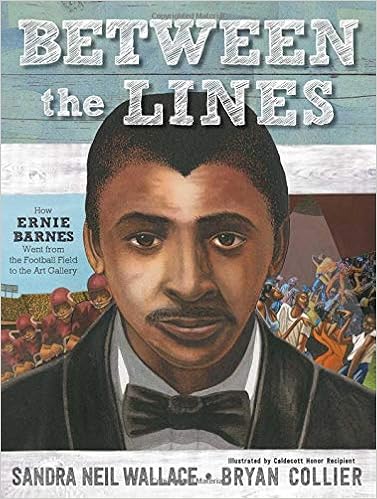
Picture Book Non-Fiction

between the lines.jpg
cute.jpg

Chapter Books – Middle Grade or Younger

Lu by Jason Reynolds

Wicked Nix by Lena Coakley and illustrated by Jaime Zollars

Stella Diaz Has Something to Say by Angela Dominguez

Meet Yasmin! by Saadia Faruqi  (Author), Hatem Aly (Illustrator)

Wonderland by Barbara O’Connor (Author)

The Benefits of Being an Octopus by Ann Braden  (Author)

Courage by Barbara Binns

Minrs 3 by Kevin Sylvester (Final book of the Minrs trilogy)

Amal Unbound by Aisha Saeed

Beatrice Zinker, Upside Down Thinker by Shelley Johannes

Ghost Boys by Jewell Parker Rhodes 

Greetings from Witness Protection by Jake Burt

The Night Diary by Veera Hiranandani

Rebound by Kwame Alexander

The Wild Robot Escapes by Peter Brown

Enginerds by Jarrett Lerner

Winnie’s Great War by Lindsay Mattick and Josh Greenhut, art by Sophie Blackall

The Science of Breakable Things by Tae Keller

Ivy Aberdeen’s Letter to the World by Ashley Herring Blake

Small Spaces by Catherine Arden

Lions and Liars by Kate Beasley

Tight by Torrey Maldonado

Mac B. Kid Spy  by Mac Barnett illustrated by Mike Lowery

Louisiana’s Way Home by Kate DiCamillo

Harbor Me by Jacqueline Woodson

The Unicorn Rescue Society by Adam Gidwitz, illustrated by Hatem Aly

The Endling by Katherine Applegate 

Front Desk by Kelly Yang

Graphic Novels

Undocumented – A Worker’s Fight by Duncan Tonatiuh

7 Generations – A Plains Cree Saga by David Alexander Robertson and drawn by Scott A. Henderson

Ms. Marvel Vol. 1: No Normal (Ms. Marvel Series) by [Wilson, G.]

Ms. Marvel by G. Wilson and drawn by Adrian Alphona

Last Pick by Jason Walz

Escape from Syria by Samya Kullab and Jackie Roche

Mary’s Monster by Lita Judge

Speak – The Graphic Novel by Laurie Halse Anderson

The Prince and the Dressmaker by Jen Wang

Click by Kayla Miller

All Summer Long by Hope Larson

Be Prepared by Vera Brosgol

Dog Man: Lord of the Fleas by Dav Pilkey

The Unwanted: Stories of the Syrian Refugees

Chapter Books – Young Adult

A Very Large Expanse of Sea by Tahereh Mafi

Odd One Out by Nic Stone

Internment by Samira Ahmed – won’t release until March 2019 – must pre-order

Dry by Jarrod Shusterman and Neal Shusterman

The Skin I’m In by Sharon Flake

Darius the Great Is Not Okay by Adib Khorram  (Author)

The Marrow Thieves by Cherie Dimaline

Dread Nation by Justina Ireland NOTE – Debbie Reese has an excellent discussion of the Native portrayal in this book (or lack of) that made me think through the book in a different way.

Image result for one of us is lying

One of Us is Lying by Karen McManus

Love, Hate, and Other Filters by Samira Ahmed

Girl Made of Stars by Ashley Herring Blake

You Bring the Distant Near by Mitali Perkins

The Poet X by Elizabeth Acevedo

Children of Blood and Bone by Tomi Adeyemi

The Wicked Deep

The Wicked Deep by Shea Ernshaw

Stalking Jack the Ripper by Kerri Maniscalco

Tradition by Brendan Kiely

Day of Tears by Julius Lester

The Fandom by Anna Day

Give Me Some Truth by Eric Gansworth

Tyler Johnson Was Here by Jay Coles

#Murdertrending by Gretchen McNeilTrail of Lightning by Rebecca Roanhorse

What If It’s Us by Becky Albertalli and Adam Silvera

Non-Fiction


(Don’t )Call Me Crazy – 33 Voices Start the Conversation about Mental Health edited by Kelly Jensen

Fault Lines in the Constitution by Cynthia Levinson & Sanford Levinson

Unpresidented by Martha Brockenbrough

We Rise, We Resist, We Raise our Voices edited by Wade Hudson & Cheryl Willis Hudson

First Generation by Sandra Neil Wallace and Rich Wallace, illustrated by Agata Nowicka

Dog Days of History by Sarah Albee

#NotYourPrincess – Voices of Native American Women edited by Lisa Charlieboy and Mary Beth Leatherdale

Hey, Kiddo by Jarrett J. Krosoczka

Two Truths and a Lie – Histories and Mysteries by Ammi-Joan Paquette and Laurie Ann Thompson

Which books did you love in 2018?

To see all of our favorites through the years, go here

parents, Reading

Parents: Creating Joyful Reading Routines at Home

We sit together with a book between us carefully piecing the words together. Sometimes they come haltingly. Sometimes they flow. Learning to read is hard work, but loving to read is not, not right now, not for most of our kids. We are a household of readers, all on a separate journey. All growing, exploring and learning, some more quickly than others. I am one of several bookworms in our household with books wherever we go, with a to-be-read pile bigger than we have hours in the day. We are a household of readers, and yet, even for us, in the hustle and bustle of the holidays, we haven’t done much reading lately. Not planned anyway, I know we cannot be alone.

So how do we keep reading front and center, even when life gets really busy? How do we try to create joyful reading experiences at home? It turns out, that many of the same things we do in our classrooms to create passionate readers also work at home.

Flood your home with books if possible. To be readers we need things to read. There has been a lot of research on the harmful effects of students living in book deserts and what the unintended consequences are when kids don’t have access to books. This is why book ownership is so important, kids who own books are 15 times more likely to read above the level they are expected to be at according to the National Literacy Trust. And more importantly, it sets the tone; reading is valued at home, reading is something we believe in by spending our money or procuring reading material somehow. However, this is also an equity issue, it is easy for someone to say; buy books for your kids, but if you don’t have disposable income, then that can become a challenge. Yet, finding books and other reading material for kids to have where they live is vital in creating readers. So if you have the money; buy books and other reading materials. If you do not, reach out to your child’s school, visit a little free library if possible, visit a public library if possible, or get connected with a book charity. Here in Madison, we have the Madison Reading Project whose mission is to get books in the hands of kids – what do you have where you live? (A great book to read on book access and how it helps students become readers is the book Game Changer – Book Access for All Kids by Donalyn Miller and Colby Sharp).

Leave reading materials everywhere. We have books everywhere at our house, which is a privilege in itself. Books are in our kitchen, bathroom, living rooms, cars, and, of course, bedrooms. But not just books, magazines, newspapers and other fun things to read. Lately, we have been loving MAD magazine which I grew up on in Denmark. Our kids gravitate toward the books, picture books and everything else because they are visible. So if you can leave books wherever your kids are: the car, the bathroom, the living room, their rooms.   If you do not have access to a lot of books ask their school for help, scour garage sales, or visit the library if possible.

Sneak in more reading. Because we remind our kids to bring books in the car, to family gatherings, to appointments, grocery shopping, and yes, even sometimes to lunch, we sneak in a lot of reading. Our kids don’t sit on iPads or phones on a regular basis, they sit with books. In fact, this has been one of aha moments, every time we pull out our phone to check Reddit (#ThereWasAnAttempt) or other social media, we could be pulling out a book. I am often asked how I read so much in a year, this is one of the ways. While we love sitting down for long chunks of time to read, there is a lot of value in the minutes that can be snuck in, and those minutes add up.

Create a reading routine.  One of the biggest things I discuss with those at home is to find a routine for reading and not leaving it to chance.  Is it that everybody reads before getting out of bed? Is it the last thing that happens at the end of the day? Find a time, space, and then make it an expectation. We have the kids read after school with us when I get home, on the weekends we have them read before TV. This isn’t because it is a punishment but because it shows importance. Create a drop-everything-and-read time and then abide by your own decisions and join in with your own books, because we know that children who see adults read, read more themselves, thanks Stephen Krashen.

Read yourself. This is an often missed step where we, adults, claim that we do not have time to read. I cannot tell you how many parents have sheepishly admitted that they do not read themselves and then wonder how they can best help their own kids become readers. My advice always; read with your kids. Go on your own quest to find incredible books. Abandon books that don’t work. Set yourself up to have incredible reading experiences just like you would hope your kid(s) would. Be a reading role model because kids need to see what real adult reading looks like. Read in front of them. While Brandon, my husband, has been a slow convert to reading for pleasure, he has been very deliberate in sharing his reading journey with our kids. I think it is incredibly powerful for kids to see their parents or caregivers start to embrace reading for pleasure finally as adults.

Visit places where books are present.  Build visits into the library, bookstores or even friends’ houses where there are books visible into your reading lives.  Seeing books within reach often entices reading and there is something about the promise of a brand-new crisp book that cannot help but be exciting.  And browse online as well. What are people sharing on the #BookADay thread? Which books are being shared on Instagram under hashtags like the one I use (#pernillerecommends)?

Give books. Despite the abundance of books that our kids already have we still give books at Christmas and birthdays. We make it a big deal; which book do you wish for? What is the one special book you would love right now? We go to the bookstore so they can browse and then we secretly buy them the book only to be wrapped and handed as a gift. We also have book giving traditions in our family, on lille juleaften (Little Christmas Eve) we host our family at our house for aebleskiver and instead of a nameplate, each guest is gifted with a brand-new book handpicked for them. And yes, even I get books. This year I was lucke enough to get Becoming and Art Matters (Signed by Neil Gaiman – argh!) as well as a few others.

Build excitement through book shopping. Go book shopping with your kids at your local bookstore, browse the displays at the library, look up the bestseller lists to see what is hot in literature right now, order from the book catalog that comes home (i get as excited as the kids).  Countdown the days together for that sequel or an amazing new book to be released, order it if you can or go to the bookstore on its release date. Build excitement for the act of reading together much like you would the release of a movie. If you need ideas for release dates, see Mr. Schu’s calendar of book releases.

Have your own to-be-read list.  I get super excited when new books show up or when we go to a bookstore together and my kids know that my to-be-read pile (or bookshelf because let’s be honest here…) is a neverending quest of great reading experiences waiting to happen. They see how big it gets, they see how I have piles in different places, I discuss how I pick a book at times if it comes up and I encourage them to have their own. What will they be reading next?

Embrace audiobooks.  We do a lot of driving as I travel to speak and as we visit others, so audiobooks from the local library are a constant companion. The kids select the text or we do when we know a book may be a great discussion for our family. This is also a great way to start conversations about social justice topics, such as when we listened to George by Alex Gino and we discussed gender identity, yes, even with our youngest.  Overall, audiobooks cut down on our kids arguing, creates conversation, and become a part of our reading memories.

Embrace real choice.  So your child wants to read the same book all the time?  Ok. So your child wants to read super “easy” books all the time?  Ok. So your child wants to read only one type of book all the time?  Ok. Reading at home is for great reading experiences, for having fun with your reading, for keeping the joy of reading alive.  We can recommend, we can purchase, we can entice, but I would never force certain texts on kids. I have seen too many kids stop their reading or fake it because of forced choice, usually through the eagerness of parents to share their favorite classic texts with their kids. While I love the sentiment of that, I am not always sure it is done well and can end up doing more harm than good. Perhaps, our focus instead should be to discover new classics instead such as The Poet X by Elizabeth Acevedo or The One and Only Ivan by Katherine Applegate.

Be invested and interested.  Ask genuine questions about their reading experiences.  Share your own. Embrace your reading slumps together and do something about them together.  Ask questions about what they plan on reading, whether they like the book or not, or what made them pick that book.  Keep it light but keep it constant.

Keep it joyful.  When kids come home from school, they are often tired and ready to do everything but read. I get it, after being at a conference all day or even teaching, reading is pretty far from my mind as well. We often lose readers at home because we see it as one more thing to do, rather than an experience waiting to happen. So keep it light, keep it fun.  Don’t assign journal prompts or summaries to go with it. Don’t make it homework, but instead revel in the joyful experience that reading a great book can be. Read aloud to your kids, even if they are older, this is one of the things many students report they miss the most with their parents. Celebrate new books, celebrate finishing books, celebrate abandoning books.

Fight for your child’s rights as a reader. While this will inevitably be a whole other post one of these days, I think it is vital, that we as parents/caregivers know what is happening to our children in their reading instruction at school. What are they making kids DO as readers? And what is that work DOING to your child as a reader? I can tell you that there are not many swords I care to fall on as “that” parent but reading logs and computerized programs to teach kids reading are two such swords. I have seen the damage done, and I refuse to sit idly by while decisions implemented at school harm our children’s reading lives, So know what their instruction looks like and what they are expected to do. Become an advocate for change if you need to or become an advocate for those who are using best practices, they often need our support as well. Don’t just trust schools to make the best instructional decisions, this is not always the case.

There is so much we can do to support our children as readers, and while it may seem like a lot of work, it isn’t. It is a chance for us to sit down with our kids, with something to read, and to create memories. But it starts with routines. With decisions that will support and not hinder. And with being readers ourselves.

If you like what you read here, consider reading my book, Passionate Readers – The Art of Reaching and Engaging Every Child.  This book focuses on the five keys we can implement into any reading community to strengthen student reading experiences, even within the 45 minute English block.  If you are looking for solutions and ideas for how to re-engage all of your students consider reading my very first book  Passionate Learners – How to Engage and Empower Your Students.      Also, if you are wondering where I will be in the coming year or would like to have me speak, please see this page.
being me

On the Day You Were Born

Five years ago today, I held our youngest daughter for the first time. She was 24 hours old. She was down to almost 3 pounds. She could fit into the palm of her father’s hand. I held her for the briefest of minutes until she stopped breathing, her alarm went off, and she had to go back in her incubator. I remember being too scared to hold her, she was so tiny, and yet the nurse, Layla, told me she would be okay. That being held by us would only help, that we would get used to the alarms, the wires, the tubes. That what Augustine needed most at that time from us was our touch. It was the one thing we could do.

I wasn’t supposed to be able to get pregnant on my own. I still remember the doctor being as surprised as we were. The whole pregnancy with her was one fraught with complications. 8 weeks in we thought we lost her, but it turned out that it wasn’t her that was causing the bleeding, it was the blood clots that I had. After weeks of bleeding, and so many ultrasounds we could fill an album, the news came that they thought she had Spinal Bifida. One more ultrasound in a darkened room as they meticulously scanned every centimeter of her body. Her gender was revealed as a side-note, “…by the way you’re having a girl…” and I remember calling my husband, Brandon, to tell him. Standing in front of the hospital shouting into my phone over traffic; we’re having a girl, and she may be okay, they didn’t see any holes…

When my labor started at 29 weeks, we were surprised, yet didn’t think it meant anything. Surely, it would stop. Surely, it was much too soon. Yet, 6 days later as Augustine came so fast that the nurse caught her because there was no doctor in the room, we became part of a group of families that got to take the elevator up to the 8th floor of the hospital, to scrub in, to watch their baby grow under plastic. Who got used to alarms beeping and others caring for a child, we were supposed to take home. Whose crib stood empty as her siblings asked us what happened to the baby?

And to this day, while I see the child she has become, the child that knows no limits, I also am reminded of the events of her birth, of the brutality of her birth. Of how we didn’t know why I was in so much pain that even the strongest pain medicine they could give, didn’t do anything. Of how my mother came to visit and didn’t know how to help. How Brandon stood by my side, holding my hand, imploring the doctors to figure out what was going on. How I couldn’t even scream in the end and just cried silently as I felt like I was being torn apart and they couldn’t make it stop.

In those events, wrapped up in pain and fear, Augustine came into the world. Silently and quickly. Brandon was the first to tell me she was breathing as they rushed in and rushed her away.

It was then that they realized that the lining had separated from my uterus. A condition that can kill your baby and cause massive bleeding to the mother. Having Augustine early was my body’s way of saving her. Forcing her into the world was my body’s way of giving her a chance.

And she is fine. She just turned five. She is in school and knows how to write her name. She knows our phone number. She is a great friend and role model. She loves her teddy “Puppy” and asks me to sing to her every night. The doctors have declared her perfectly average years ago and yet, on her birthday, and in the days leading up to and away from it, I am reminded of one of the most traumatic events that happened to me. Of the fear, of the pain, and of the incredible guilt that comes with giving your child such a hard start to their life, even if you know rationally it is not your fault. I can see that she is fine. I know she is fine, and yet, the joy is wrapped in memories that are hard, still, to process.

How many others carry memories such as these silently?

I think of our students as they come to class with unknown trauma surrounding them. Of how small things that we see as harmless may be triggers. Of how we all carry our stories with us and within us and that sometimes those stories can still make us cry when we are reminded of them. That one of the things trauma does to you is to intricately change the connections in your brain and that you might never fully heal, even if you know you should. That it causes you sometimes to act in ways that don’t make fully sense at first, but then later can be traced back to a reaction caused by something that happened to you. That it is something I have had to recognize within my own actions as I cried on her birthday and I couldn’t figure out why.

And so as I share this seemingly too personal story, I do it in the hopes of giving myself the freedom to speak these words out loud. When I recognize that her birthday, while joyful, is also one that carries many layers, I can feel the burden lighten. When I write out the thoughts that continue to haunt me, they seem to lose some of their weight as we look to a new year of memories.

Sometimes I wonder how some of our students do it every day, knowing full well the lives they live in, the lives that continue to produce trauma in their world. How perhaps in our rooms they can feel safe. How perhaps our time together can be something good in their lives that doesn’t cause them more pain. How perhaps with us they can find courage if they need it, reclaim their voice if they lost it, find hope if they seek it. Because I know that what we do everyday matters, that how we help kids feel everyday matters. And as Augi sits here next to me, I am reminded of what we all know to be true; every moment is but a moment, and yet, every moment has the power to break us or empower us. We choose its legacy. Happy birthday, Augustine Grete, and many more.

being a teacher

Win A Copy of the Audio Version of Passionate Readers

Passionate Readers audiobook cover art
Brand new cover, same great book (hopefully)

Yesterday was a new milestone in my author life; my book, Passionate Readers, came out as an audiobook!    I shared the news with my students and they thought it was pretty cool as well.  It is certainly not every day that you get to see your name on Audible but then hear someone else speaking your words professionally.

So in honor of this milestone moment for me, and in preparation for our winter book club study of the same book, I thought a little giveaway was in order.  If you would like the chance to win an audio version of Passionate Readers please enter below.  The contest will run until Sunday evening, December 16th at 8 PM CST.  This is open to anyone in the world as long as you can access the website http://tantortitles.com/

Thank you for your encouragement of my students and I.  Thank you for believing in the message of Passionate Readers.  Thank you for giving me so much love.  

Book Clubs, Reading, Student-Led

Partner Feedback Groups – A Tip for Better Book Clubs

In room 235D, we have been immersed in our dystopian book clubs.  These past two weeks kids have been quietly reading, and loving, their self-chosen texts, using strategies that they have been taught previously, as well as the ones introduced each day, to gain a deeper understanding of the text.  Navigating these books as they try to figure out how they will discuss what they have uncovered, how they will prepare for their own student-led discussions.    Every day, these kids and their thoughts are reaching new heights.  Each day, we get to sit and listen to them discuss without dictated questions, without packets, without us constantly holding their hand.  It is a brilliant thing to see.  

While we have loved seeing the growth in student discussions every year, we wanted to give students another chance to learn from each other and to also be exposed to great conversations.  Enter my brilliant colleague, Reidun, who came up with the following idea and template.  Introducing the partner feedback groups.

The idea is simple:  Students are matched up with a partner group.  Every time the group discusses, the partner group gives feedback to them using the following form.

The sheet is printed and handed to each student

We introduced this tool individually with each discussion group rather than as a group fishbowl.  This was for time’s sake and also helped everyone ask questions and ward off confusion.  While all kids give feedback, not all groups are matched, only because some groups have expressed anxiety over the extra audience and we wanted to respect that.  we are hoping that in the spring when we do our next round of book groups, all groups will be ready to be matched.

Each child is assigned the same person to follow and they take turns coaching each other.  They are not evaluating, but merely paying attention to what is actually happening in the conversation.  It works quite easily.  Let’s say Sam is evaluating Marcus.  Every time Marcus adds to the conversation, depending on what is said, she gives him a tally mark.  So if Markus brings up a new idea to discuss – i.e. the main character fits the villain archetype – she would put a tally in the “Brought up a new idea” box.  She could also write “Villain archetype” under specific example.  She categorizes everything Markus says in order to give him feedback at the end.

Once the discussion is over, they usually last between 10 and 15 minutes, I ask the discussion group, “What went well?”  After they reflect on this, then I ask them, “What do you need to work on? ”  They reflect on that and then it is their partner’s turn to give them feedback.  In our example of Sam and Marcus, she may let him know that while he did well in bringing up new ideas and also responding to other people, he didn’t use a lot of text evidence to back up his thinking.  This is then something he can work on for the following discussion.  After each feedback partner has gone, they are dismissed so that I can speak privately with their group about their actual evaluation.

What we have noticed since implementing this last week is the keen observational skills of our students.  They notice things that we miss and also have been providing spot-on coaching tips.  Just today a student stated how impressed she was with the growth of the member since the last discussion and all of the things she noticed they had worked on.  This tool is offering our students a way to give each other feedback that is constructive and without judgment.  They are merely stating their observations, not offering up a grade.  

In the long run, we hope this help students become better givers of valid and productive feedback.  For many years we have been stuck in a rut when it comes to kids helping each other grow more pointedly.  They often say that things are great when really they need work or simply don’t know what to say.  This little tool has helped them focus on what the tangible skills are and how they can be improved while also providing them with models of effective discussions.  An added bonus has been the excitement over each other’s books as well, and how some kids now want to read the books that other groups are reading.

So there you have, a small idea, shared by a great friend and colleague that has been making a difference in our book club discussions.  To see what else w do to make our book clubs better, go here.

If you like what you read here, consider reading my book, Passionate Readers – The Art of Reaching and Engaging Every Child.  This book focuses on the five keys we can implement into any reading community to strengthen student reading experiences, even within the 45 minute English block.  If you are looking for solutions and ideas for how to re-engage all of your students consider reading my very first book  Passionate Learners – How to Engage and Empower Your Students.      Also, if you are wondering where I will be in the coming year or would like to have me speak, please see this page.