being a teacher

On Selecting Better Read Alouds

When the Global Read Aloud was founded, I added the word “Global” because I wanted to connect kids around the world.  I wanted to make the world smaller.  I wanted to bring the world into my 4th-grade classroom in Middleton, Wisconsin, and help my students understand just how many others like them were out in the world.

A few years into the project someone pointed out, in a not so nice way but still, that perhaps the word “Global” should also mean books that weren’t always written by American authors.  That perhaps global also meant global authors, not just global connections.  I stood corrected and have tried as much as possible since then to include authors not from the US.  While distribution problems arise at times when a non-US author is chosen, it is an important part of the project.  Not every child involved lives here, therefore, not every book should be set here.  There is much more to the larger world than just this…

The read aloud is a central part of many classrooms, something that we value for the experience it gives us.  In fact, according to The U.S. Department of Education Commision, the most important activity for building the skills and background for eventual success in reading is reading aloud to children.  And it should be, reading aloud to our students, at all ages, allows us to not only build community but to build knowledge together.  To dive deep into a text and have rich discussions.  To model what it means to be a reader in thinking and in fluency.  Read aloud weaves us together and it is the stories that we remember as we look back on our students and the year we had together.

This is why choosing the right book to read aloud, whether globally or not, is such an important action.  No longer can I simply pick a book just because I like it, more thought needs to be given than that.  Examining the books you read aloud has to be a central part of your educational grounding, because it is not enough to simply pick a book because it is fun, or because you loved it for many years, or because you have to.  There are many different questions to ask before you start the book.

Is it meaningful? 

An obvious question to ask, of course, but is the book something that will add value to your experience together?  Will you come out changed at the end?  Better?  More thoughtful?  The experience that your chosen read aloud cerates should be one that students are excited about and remember after your year is over.

Is it relatable?

Is there something in the book that the students can connect to?  Not that the book has to feature characters like them, but is there some aspect of the story that students can recognize within themselves so that it can be a book that means something to them personally.

Is it pushing our thinking?

Will new conversations arise from this read aloud?  Will new experiences be sought after so that we grow past the book?  Read alouds work so well for starting deeper conversations because it is safe to start within the pages of a book, rather than just dive into it.

What else have you read aloud?

Is this book just like the others or does it bring a new facet to your year?  While it is great to do one tried and true read aloud, there is immense value in experiencing something new together, something different than the norm.  Also look at mood, if every book you read aloud is heavy in nature, then what does that do for your community.  read alouds can tackle complex topics and still be funny.

What does the main character look like?

If we are only reading books with characters that mirror what the “norm” is projected as in America: cisgender, white identifying, heteronormative families, we are doing our students a disservice.  Where are all of the books that show off families and children that are unlike the supposed norm?  Where are all the books to further own understanding of what it means to be a person?

What is the gender of the main character?

For a long time, I read books with male protagonists.  It wasn’t on purpose, I just hadn’t thought about it.  It wasn’t until one of my 5th graders pointed out that she would really enjoy a book with a strong female character lead that I realized what had happened.  Study the characters of the books you have chosen and make sure to add variety.

What is the issue of the book?

Is the issue of the book always how someone who is seen as being on the fringes of society is struggling to fit in?  Is it that a disabled character is shunned?  Is it that an LGBTQ child is struggling with society’s acceptance of their identity?  While these books are vital they cannot be the only books that we introduce students to.  How about a book like The Parker Inheritance by Varian Johnson which is a mystery that also discusses embedded racism and even has a parent that comes out to their child?

Is the book problematic?

There are so many books that we have clung on to as our read-aloud books that are truly problematic, look no further than Little House on the Prairie.  If we are creating inclusive classrooms where every child’s identity can be fully accepted then we have to examine the choices we make for read aloud.  How do the books handle race?  How do the books handle history?  What is represented as the norm? Who wrote the book and are they an #ownvoices author, does it matter whether they are? A read aloud can be a seminal experience in a child’s life, we want it to be that for the right reasons not because it made them feel marginalized or pushed outdated and even dangerous thinking on them.

Is the book a window, mirror, or door book?

The work of Dr. Rudine Simms Bishop has been seminal within the children’s book industry and it should be in our classrooms as well.  Are you only reading one type of book where students only see characters like themselves (mirror)?  Are they never seeing themselves in books (windows)?  Are the books opening up to new conversations, learnings, and connections (doors)?  The choices we make as far as the texts we use to tie our community together speaks volumes of what we hope for our readers.

Is it worth it?

Choosing the right book to share with a class is no laughing matter, even if the book itself brings plenty of laughs.  Don’t be afraid to abandon a read aloud that isn’t working, there are some books that are better experienced by yourself than read aloud.  Don’t be afraid to do nothing but listen, read aloud is about being together, about listening, about going on a journey within the pages of a book.  Not just listening to understand or find evidence for comprehension.

The Global Read Aloud started as a small dream of making the world a little bit smaller.  To think that an idea thought of on a long summer drive could reach millions of kids around the world is almost inconceivable.  But it did, and it does, join us as we do it again starting on October 2nd with some incredible new read alouds.  Because the GRA would be nothing if it weren’t for the books.

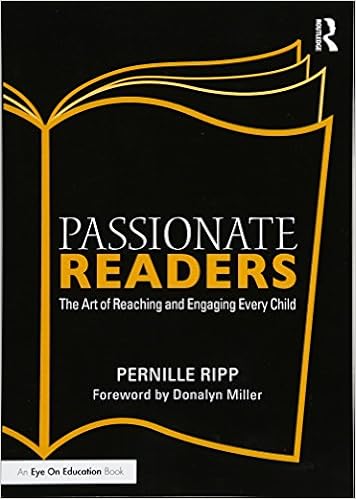
If you like what you read here, consider reading my newest book, Passionate Readers – The Art of Reaching and Engaging Every Child.  This book focuses on the five keys we can implement into any reading community to strengthen student reading experiences, even within the 45 minute English block.  If you are looking for solutions and ideas for how to re-engage all of your students consider reading my very first book  Passionate Learners – How to Engage and Empower Your Students.      Also, if you are wondering where I will be in the coming year or would like to have me speak, please see this page.


Be the change, being a teacher, Literacy, Reading

The Real Reason to Read Children’s Books

White, Black, Yellow,  Free Image

We had visitors in our classroom again today as some fantastic educators had traveled to be with us (shout out to West Dubuque).  As always, they had a few moments to speak to the people that prompted their visit in the first place; our students, who with their candor, wisdom, and humor always have great things to share.

They asked, “Why do you think it matters that Mrs. Ripp reads children’s books?”  I was eager to hear their answers.

I thought they would say that it mattered because I could recommend great books.  They did.

I thought they would say that it mattered because there was a lot of great books in here to choose from.  They did.

I thought they would say that it mattered because it made it easier for them to find a new book.  They did.

But what I hadn’t expected was this…

It matters because it shows that she cares about her job.

It matters because it shows that she cares about reading.

It matters because it shows that she cares about us…

Let that sink in.  That while we know that reading children’s books matters for so many reasons, this was the biggest one of all.

For all of my students, me reading a book and being able to bring it into class shows them that I care about them as people.  As kids who read and who have meaningful reading experiences.  That I am willing to dedicate my time away from our classroom to something that will hopefully matter to them shows that I mean every word when I say I love my job, I am grateful to be your teacher.

We worry so much about whether or not kids know that they matter.  Whether they know that we care about them.  We come up with elaborate ideas to show them how much we appreciate them and sometimes forget about the small things.  That care comes in small packages.  That caring sometimes comes in the shape of a book read and discussed.

So for every book I purchase, for every dollar spent, I will continue to tell our students that I love my job, that I love being a teacher for them, that reading matters and that this very book I read is my way of reminding them that I care.

If you like what you read here, consider reading my newest book, Passionate Readers – The Art of Reaching and Engaging Every Child.  This book focuses on the five keys we can implement into any reading community to strengthen student reading experiences, even within the 45 minute English block.  If you are looking for solutions and ideas for how to re-engage all of your students consider reading my very first book  Passionate Learners – How to Engage and Empower Your Students.      Also, if you are wondering where I will be in the coming year or would like to have me speak, please see this page.


Be the change, being a teacher, technology

Lessons from a #PhoneFree Classroom

I have been meaning to write more about our phone free classroom for a while.  It’s been more than month now.  I have been meaning to update, and yet, it keeps slipping my mind.

Not because I am busy.  Not because there are so many other things to do, even though there is.

No.

More because quite simply put, there isn’t much to say.

The protests and indignation I was worried would build over this rule haven’t come.

The anger or the sneakiness I wondered about hasn’t happened.

The letters to the principals, the “how dare you” statements never uttered.

Are some kids annoyed?  Probably.

Are some kids leaving them in their pockets? Probably.

Are some kids hoping to go back to the old way?  Probably.

But are they mad?  Outraged?  Feeling like their rights as a learner somehow having been violated – nope.

In fact, every day we have our routine down.  Most kids leave their phone in their locker.  Some in the bin in our classroom.  After the bell, I give a final reminder which inevitably leads to a few more phones in the bin and then we are off.  Focused as much as we can be in May in 7th grade on the learning that is happening.

Yet, what I have noticed has been small.  A few changes here and there; more face to face conversation within our classroom walls.  Less tense faces.  More presence.  Less worry.

It turns out that we didn’t need more cloud for more engagement, but needed more presence.  More here.  More now.

And today I noticed how several kids even forgot to grab their phone, only showing up later in the day to claim it once they realized it was missing.  Some of these kids were kids I have had to remind to put their phone away in the past, and here they come several class periods later, glad that their phone is still there waiting but realizing that perhaps it wasn’t that big of a deal anyway.  Perhaps not having their phone was not the end of the world.

And so we will continue until the very last day.  Separated from something that sometimes feels like it contains our entire world.  Given a moment to breathe that doesn’t involve notifications, likes, or needing to record every moment of our day.  A space to take risks, be present, and focus on each other, with just a small change in our days.

I started this experiment worried about the mental health of us all as we become more and more addicted to our phones.  But I also worried that it would cause resentment and anger, a sense of distrust in our community, that I was yet another adult who didn’t care about my students.  It turns out that my fear was unfounded.  That asking students to leave their phones out as they bring their hearts in was a step in the right direction.   In the end,  it turned out that we really didn’t need them for much anyway, who knew?

If you like what you read here, consider reading my newest book, Passionate Readers – The Art of Reaching and Engaging Every Child.  This book focuses on the five keys we can implement into any reading community to strengthen student reading experiences, even within the 45 minute English block.  If you are looking for solutions and ideas for how to re-engage all of your students consider reading my very first book  Passionate Learners – How to Engage and Empower Your Students.      Also, if you are wondering where I will be in the coming year or would like to have me speak, please see this page.
 

assessment, being a teacher, Reading

How to Assess Student Reading Skills Without Knowing the Book They Are Reading

A question I am asked often is how do I know what my readers know when they are all reading their own self-chosen books?  How do I keep them accountable for their reading?  How do I know what they can do without knowing the book they are reading?

And I get it.  How do we adequately assess the readers we have for their growth in comprehension when we don’t have them DO stuff all of the time?  Because that’s the thing, one of the biggest reasons that kids report for hating reading is actually the stuff we have them do after they read, not the actual reading itself.  It seems as if we have forgotten a few simple lessons that academics such as Louise Rosenblatt have been trying to remind us of for years.  Kids need relevant reading experiences that not only teach them how to be better readers but also help them grow or protect their love of reading.  I think I just summarized the goal of my book Passionate Readers here.

Yet, when we constantly attach something to the very act of reading, we diminish the act itself.  So how do we assess without harming?

A few things first, our students get ten minutes of protected self-chosen reading every day.  It is the very first thing we do.  If I had more time to teach (darn you 45 minutes), it would be a longer period of time.  During those ten minutes, the only thing our students are working on is reading a great book.  There are no post-its, no jots, no turn-and-talk.  They are working on their reading relationship, nothing else, because that task is big enough in itself.  While they read I check in with them, not to have them do stuff or talk about their book, but to talk about themselves as readers.   To help them establish or continue a connection to the act of reading itself.

Then we move into our mini-lesson, whatever that may be.  If the day is focused on reading then after we read the students then apply the skills as they read their own books if they can, a central tenet to our teaching always being; be able to use the skill when needed but you don’t have to use it all of the time.

We use read aloud, picture books, or short stories to model and discuss what readers need.  If students are asked to do a long-term project with their own books such as focusing on character development, symbolism, or analysis in some capacity,  then I model what that may look like within a read aloud.  I can sort out from their own writing whether they grasped the depth of the skill or if they merely skimmed the surface.  I don’t need to know the plot of their book to do this.  If I have questions I ask or look at the book they used.

If I need to narrow my scope then I will model a skill using a short story or a picture book (aren’t they almost the same?!) and then have either another short story or a stack of picture books to hand to them as they try out the skill for themselves.  Because I know all of the picture books and short stories I can quickly assess whether they understood it or not and use their work to further my own instruction.  Simple and yet it works every time.  Students get to balance reading their own self-selected text with the work of the classroom and we have created a balance between teaching skills and establishing the love.

And there you have it, how I assess my students’ skills without needing to have them do a reading journal – one of the number one things my students attribute to causing a hatred of reading – and without needing to know every single book they are reading.  Sometimes it is the simple things that make the biggest difference.

If you like what you read here, consider reading my newest book, Passionate Readers – The Art of Reaching and Engaging Every Child.  This book focuses on the five keys we can implement into any reading community to strengthen student reading experiences, even within the 45 minute English block.  If you are looking for solutions and ideas for how to re-engage all of your students consider reading my very first book  Passionate Learners – How to Engage and Empower Your Students.      Also, if you are wondering where I will be in the coming year or would like to have me speak, please see this page.


administration, being a teacher

Dear Administrators – A Few Ideas to Motivate Teachers

I was asked about how to motivate your teachers just the other day.  How do you help them stay invested?  How do you stave off burn out?  An earnest question and also one that deserves a thorough answer.  Yet, before I was able to answer in full, another administrator at the table, threw out a quick idea, “Jeans Friday…”

“Tell them if they work hard, they can earn the right to wear jeans that week.  It works every time…”

And while this may be true, I still carried the comment with me, not quite sure how to process it.  After all, allowing a teacher to wear jeans as a reward seems like the lowest type of compliment there is; you finally get to dress like other adults, congratulations!  Perhaps it is because I work in a district that expects us to dress professionally and allow us to wear jeans whenever we want.  Because they trust us to dress for success.  Because they trust us to dress well.  Perhaps it was because of the unbridled enthusiasm shown for the idea as if our burn out would magically appear when such a token was placed on the table.  Perhaps I just was tired and could not come up with something good to say, so I sat in silence and quietly buried my thoughts.

So today, I am here to say what I wanted to say in how to motivate your teachers and trust me, it goes beyond allowing them to wear jeans on the last day of the week.  Because the thing is, it may seem complicated, but it comes down to just a few things that can be implemented easily.  Just a few key ideas that can make all of the difference or at the very least offer us all a place to start.

Trust us to be professional.  That includes how we dress.  That includes the lessons we create.  That includes the everyday decisions we have to make.  Tell us you trust us, so often it is assumed as a known fact but I can tell you, many teachers assume they are not trusted because of the lack of curricular decisions or even smaller things they are allowed to make.  And yes, when it happens that we make a mistake, because we all do, then help us fix it.  Have our back because you trusted us in the first place.

Trust us to try new things.  So many administrators say that they want their teachers to take risks but then don’t give permission for the things they want to try.  So many look to innovators and wish that they were in their district.  What if they are and you just don’t know it yet?  What if the most innovative teacher is already working in your building but because of technology restrictions, scripted curriculum, or teaching to fidelity, they haven’t been able to do what they wish to do.  Which limitations are being placed on staff that aren’t actually needed?  And how can those be lifted?

Trust us to invest ourselves.  From staff meetings to professional days, the educational field has such few choices when it comes to how we, educators, spend our time learning.  Yet so many of us actually burn to learn about specific things, isn’t that the mark of a passionate learner, so give us the time to do so.  Let us choose our path and plan your staff development as if everyone will take the opportunity to pursue meaningful learning rather than the opposite.  For the few who are not motivated, and you may know who they are, help them find a direction that matches them.  No more one-size PD for all at all times where few walk away inspired. No more staff meetings that could have been handled via email.  No more one thing, no choice, please.

Help us leave it at work.  Teaching is a never-ending job.  There are always more lessons to plan, more ideas to think of, something more we can do to try to reach every single child.  To make this year matter.  And yet, we have to leave it at work sometimes.  We have to have full lives outside of school so we can truly be the best that we can be in school.  So make it a policy that staff is not expected to answer emails after 5 PM, that it is not about getting it all done, but getting enough done.  Protect our prep time and our collaboration times.  Don’t steal away minutes here and there for quick announcements or that extra little thing.  Help us achieve a better balance by protecting the precious time we have in building so that we can fully utilize it.

Help us forge connections.  Teaching can be incredibly lonely, especially if you are seen as an outlier in some way, so build in opportunities to get to know one another beyond the in-service days at the beginning of the year.  Run book clubs and health clubs, yoga and garden clubs.  Create events that go beyond the school walls, that go beyond the work.  Give us time to praise each other at every meeting.  Give us time to see the good that happens in our classrooms so that we can stop with our assumptions and instead see what the experience is like in other classrooms.

Help us see the good.  Not just in each other but in ourselves.  Check in with your staff to make sure they are okay.  That they feel supported.  That they know the good they are doing.  While admin can be quick about sharing concerns and even complaints with staff, what if a pointed effort is also made to share the good, those small comments from parents, from kids, from the community?  Write a card of thanks, find out their favorite candy and leave it for them, do something to share the appreciation so that we, in turn, can share ours.

While warding off teacher burn out starts with the decisions we, educators,  make ourselves, there are also so many small things that can be done to help within the school, within the district.  Teaching is a hard job but we were never told it would be easy, we were told it would be worth it, sometimes we just need a little bit of a reminder from those that make the decisions.  What have you done to help your teachers stay motivated?

PS:  Many ask how I get to do what I do; teach, travel, write, speak, be a mom, have a life etc.  There are two main reasons I can do what I do – an incredible husband and an incredible district.  Both support me in ways I could never have dreamed of when all of this started.  I hope you all may find support like what I have.


being a teacher, Literacy, Reading, Reading Identity

Five + One Ideas for Redefining the Whole Class Novel Experience for All

I knew I had to teach reading when I was first hired as a 4th-grade teacher.  After all, every teacher teaches reading.  Yet, I didn’t know how to really teach reading.  I knew components of effective literacy practice, and yet, what those actually looked like within my own classroom was a bit of a mystery.  How did actual teachers of reading teach reading to kids who already knew mostly how to read?

My very first answer?  Whole class novel, of course.

Thinking back to my own days of learning how to read, I knew to not go the basal approach, and yet I remembered that shared experience of reading the same novel as everyone else.  Of discussing.  Of trying to find meaning within its pages as we drove each other to deeper levels of understanding.  Of even finding a few books I never knew I could love (For Whom the Bell Tolls, anyone?!) to remembering the year together (9th grade honors English with Mrs. Vincent at Lenox Memorial High School, Massachusetts)because of the very books we shared.

Since I knew my students were not quite ready for Hemingway, I picked what I hoped would be a great anchor text for us – Tales of a Fourth Grade Nothing, the beloved classic rite-of-passage read by Judy Blume.

I now had the book.

All I needed was the work to go with it.

So I found it on the internet, an entire packet just for the book, with questions, activities, and word searches galore.  The students could even color in the pages if they so chose.  Prep work done, I was ready.  And so we began our fourth-grade year together within the pages of a very short book, 144 pages to be exact and we split it up evenly within the 7-ish weeks I had set aside for the task.  4 pages a night could certainly not be too much to ask.  Let the reading begin.

And it did.  So did the packet work.  The lackluster discussions.  The rigid instruction, and perhaps even some scolding when students dared to read ahead.

Rarely do I remember us marveling at the audacity of Fudge.  Rarely do I remember gathering the kids around the pages of the book to look at something together.     Rarely do I remember coming to class excited to discuss, to share, to connect around the book.

But the work pages.  The long-drawn-out reading.  The lack of excitement.   That I remember.

And so for a long time, I swore off whole class novels.  Even jumped in the camp of telling everyone else how awful they were.  How they are killing the love of reading in kids.  But what good does that type of rigid thinking do when my very own memories betray me of my own whole class novel experiences.  And so it turned out that I, once again, was proven wrong.

Because it wasn’t really about the whole class novel.  It was about me and my own adherence to terrible decisions that surrounded the experience.

So now, let’s look at this concept of the whole class novel and how we can actually make it work within our reading environments without killing the love of reading.  It turns out what we need are just a few tweaks and perhaps a dose of common sense.

Step 1 – Redefine the purpose.  Rather than using whole class novel to produce a lot of work, how about we redefine the expectation to producing a whole lot of talk.

Idea – Cut out the written work altogether or boil it down to one main product.  Does it have to be written or can it be filmed?  Does it have to be an analysis or can it be a discussion of relevance?  By connecting the book read with other issues in our current society?  Does it have to be produced alone or can it be produced with others?  Can we assess the discussions as they happen and not worry so much about the end result? And can we please roll back on the annotations.  There is very little reason to annotate an entire book, other than to prove you have read it.  Is that really what we want kids to work on?

Step 2 – Redefine the access. One of the major problems within a whole-class novel is that for many students the book is not a great match for their current reading capabilities.  While it is good to stretch students with challenge texts, you don’t want to put it so far our of their reach that they simply feel defeated and it becomes yet another nail in their “I hate reading coffin.”  For others students, the book is way too easy and they would rather read other books after they have read this one.

Idea – Offer choice in accessibility.  Do all students have to read it with their eyes or can it be listened to?  Can it be shared as a small group read aloud?  Can kids partner-read?  Can kids read it quickly and show up ready to discuss when needed?  Provide multiple access points so that all kids can focus on the purpose; engaging discussions.

Step 3 – Redefine what we read.  Why is it that our literary canon are still the same books that I read more than 20 years ago in high school?  Yes, there is merit at some point in your life to picking up some of the classics, but you will get infinitesimally more out of them when you are invested.  To Kill a Mockingbird was incredibly boring when I read it in 9th grade, but when I re-read it as a 23-year-old, I had a better experience.  So how about rather than using this format as a way to expose students to classical texts that they otherwise may not pick up on their own,  instead use it to garner deep discussion that can mirror the societal discussion surrounding us? Besides, what about how problematic some of these texts are?  we cannot keep hiding behind the cloak of “that’s how they spoke in that time” to make it okay to read them.  See this great article here discussing some of the major issues with our current literary canon.

Idea – Critically evaluate the classics and give choice.  Perhaps some kids do want to read the same books as their parents did, but others don’t.  Take a critical lens to what you are offering up.  Who are these choices for?  Why are these choices offered year after year?  When were these books selected?  Simply saying its because they are classics is not enough when we have brilliant books that have been published within even the last 50 years. (Even this year!)  There should be a balance.

Step 4 – Redefine the time.  One of my major mistakes was to stretch our whole class novel out over way too long of a time period.  I have seen some schools use an entire book for a quarter of the year.  I don’t care how great the book is, few people can sustain their interest for 12 weeks or more.

Idea – Shorten the length.  Three weeks max.  That way you have to move through it at a good speed and you can focus on the most central or interesting parts.  Within a three-week period, there is also a sense of urgency that otherwise can get lost.  Students have to keep up with the text to keep up with the discussion rather than assume that they can simply read it later when it really starts to count.

Step 5 – Redefine your role.  One critical aspect I lost within our whole class novel was that it was all centered on me.  I generated the questions (or purchased them in my case).  I led the discussions.  I assessed the work.  That is easy for kids to get through and exhausting for the teacher.  There is also very little buy-in as far as responsibility and it is easy for kids to coast through, especially those kids who have pretty great reading skills.  That is not the intent behind the work.

Idea – Share the responsibility.  Start as a role model for how to lead discussions but then share the responsibility with students.  Delegate who will come up with questions and who will steer the conversation?  Getting students invested beyond the quick answer can lead to more engagement and definitely more understanding of what it means to engage others.

Step 6 – Use it sparingly.  I have heard of school districts that mandate that every single reading experience is through a whole class novel for an entire year.  In fact, my own amazing niece is currently a victim of that.  I don’t use that term lightly, but you know what it has done for her love of reading after several years of this?  Yup, totally quashed it.  When I ask her what she reads for fun, she says nothing.  That’s what doing the same thing over and over can do for you.  It may have been great at first but going through the same routine over and over is sure to lead to routine fatigue.

Idea – Everything in moderation.  Reserve the whole class novel for those one or two incredible books that you just know will light your class on fire.  Reserve it for the fall as you establish your community and perhaps once more in the spring when you know each other so much better.  Use it as a tool to challenge their thinking, their analysis, their communication.  Put your all into it and then do something else; free choice, book clubs, anything but another whole class novel.  Make it special and treat it as such.

While it has been a while since my students actively dove into a whole class novel with me, I am always on the lookout for that amazing text that I feel we all need to digest together.  Once I find it, I cannot wait to dive in with my students.  Until then, if you need more ideas and inspiration, please read Kate Roberts new book, A Novel Approach.  

If you like what you read here, consider reading my newest book, Passionate Readers – The Art of Reaching and Engaging Every Child.  This book focuses on the five keys we can implement into any reading community to strengthen student reading experiences, even within the 45 minute English block.  If you are looking for solutions and ideas for how to re-engage all of your students consider reading my very first book  Passionate Learners – How to Engage and Empower Your Students.      Also, if you are wondering where I will be in the coming year or would like to have me speak, please see this page.