Today my students did one of my favorite speeches of the year; the very best book they have read this year. They have highlighted, enticed and persuaded others to fall in love with their selected book. And I have taken note. It turns out my students have very good taste when it comes to books. Some of these are fine for all 7th graders, some are more mature, I am including them all so that you can make your own decision. All parents are informed of the range of books that are present in our classroom library so that students can choose something that speaks to them. It was interesting to see just how many of these books I myself had read and booktalked, as well as how many have been favorites two years in a row. So what are the must have or add books in a 7th-grade library for 2017? Behold the entire list…
(And if you would like to see 2016’s, go here, I promise you won’t regret it)
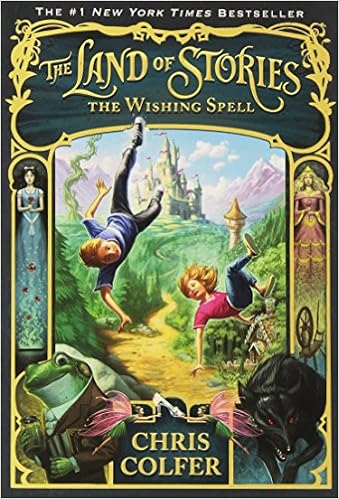
The Land of Stories by Chris Colfer
From Amazon:
The Land of Stories tells the tale of twins Alex and Conner. Through the mysterious powers of a cherished book of stories, they leave their world behind and find themselves in a foreign land full of wonder and magic where they come face-to-face with the fairy tale characters they grew up reading about.
But after a series of encounters with witches, wolves, goblins, and trolls alike, getting back home is going to be harder than they thought.
From Amazon:
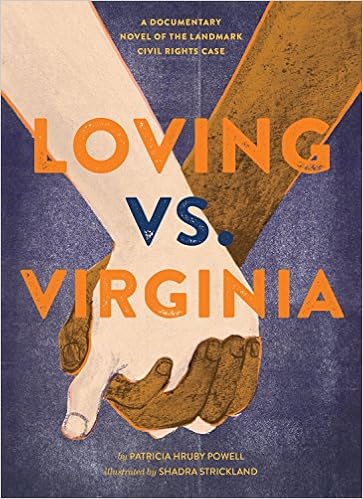
From acclaimed author, Patricia Hruby Powell comes the story of a landmark civil rights case, told in spare and gorgeous verse. In 1955, in Caroline County, Virginia, amidst segregation and prejudice, injustice and cruelty, two teenagers fell in love. Their life together broke the law, but their determination would change it. Richard and Mildred Loving were at the heart of a Supreme Court case that legalized marriage between races, and a story of the devoted couple who faced discrimination, fought it, and won.
From Amazon:
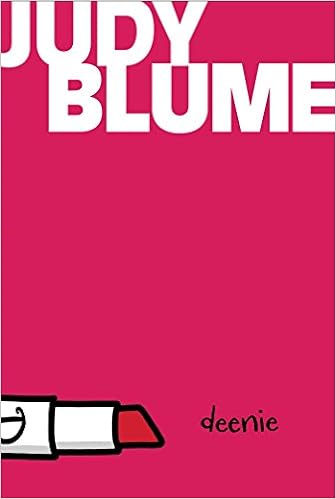
Deenie’s mother wants her to be a model, with her face on magazine covers—maybe even in the movies—but Deenie wants to spend Saturdays with her friends Janet and Midge, tracking Harvey Grabowsky, the captain of the football team, around Woolworth’s. She wants to be a cheerleader, too, and go to the seventh-grade mixer to hear Buddy Brader play his drums.Instead, Deenie is diagnosed with scoliosis. And that means body stockings to squeeze into, a roomful of strangers to face, and a terrifying brace that she’ll need to wear for years that goes from her neck to her hips. Suddenly Deenie has to cope with a kind of specialness that’s frightening—and might be hers forever.
From Amazon:
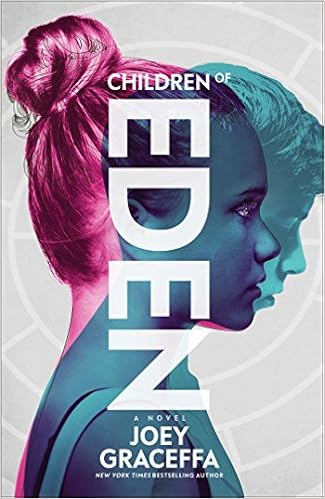
Rowan is a second child in a world where population control measures make her an outlaw, marked for death. She can never go to school, make friends, or get the eye implants that will mark her as a true member of Eden. Indeed, her kaleidoscopic eyes may very well give her away to the ruthless Center government.
Outside of Eden, Earth is poisoned and dead. All animals and most plants have been destroyed by a man-made catastrophe. Long ago, the brilliant scientist Aaron Al-Baz saved a pocket of civilization by designing the EcoPanopticon, a massive computer program that hijacked all global technology and put it to use preserving the last vestiges of mankind. Humans will wait for thousands of years in Eden until the EcoPan heals the world.
As an illegal second child, Rowan has been hidden away in her family’s compound for sixteen years. Now, desperate to see the world, she recklessly escapes for what she swears will be only one night of adventure. Though she finds an exotic world, and even a friend, the night leads to tragedy. Soon Rowan becomes a renegade on the run.
From Amazon:
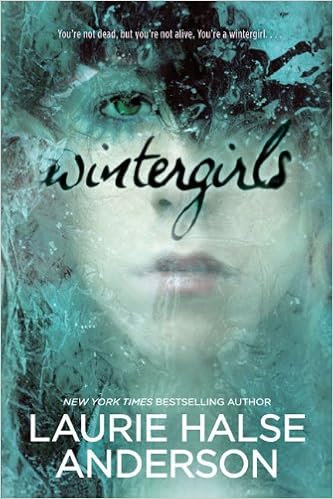
Lia and Cassie are best friends, wintergirls frozen in fragile bodies, competitors in a deadly contest to see who can be the thinnest. But then Cassie suffers the ultimate loss—her life—and Lia is left behind, haunted by her friend’s memory and racked with guilt for not being able to help save her. In her most powerfully moving novel since Speak, award-winning author Laurie Halse Anderson explores Lia’s struggle, her painful path to recovery, and her desperate attempts to hold on to the most important thing of all: hope.
From Amazon:
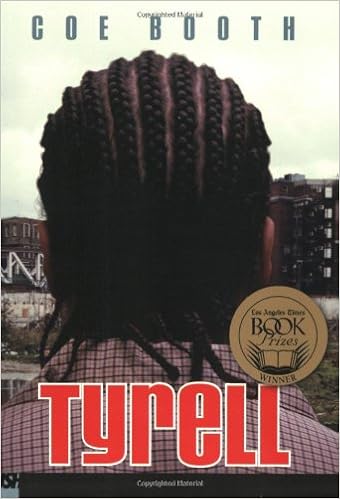
Tyrell is a young African-American teen who can’t get a break. He’s living (for now) with his spaced-out mother and little brother in a homeless shelter. His father’s in jail. His girlfriend supports him, but he doesn’t feel good enough for her — and seems to be always on the verge of doing the wrong thing around her. There’s another girl at the homeless shelter who is also after him, although the desires there are complicated. Tyrell feels he needs to score some money to make things better. Will he end up following in his father’s footsteps?
From Amazon:
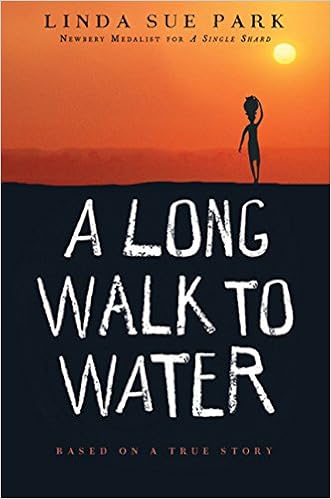
The New York Times bestseller A Long Walk to Water begins as two stories, told in alternating sections, about two eleven-year-olds in Sudan, a girl in 2008 and a boy in 1985. The girl, Nya, is fetching water from a pond that is two hours’ walk from her home: she makes two trips to the pond every day. The boy, Salva, becomes one of the “lost boys” of Sudan, refugees who cover the African continent on foot as they search for their families and for a safe place to stay. Enduring every hardship from loneliness to attack by armed rebels to contact with killer lions and crocodiles, Salva is a survivor, and his story goes on to intersect with Nya’s in an astonishing and moving way.
From Amazon:
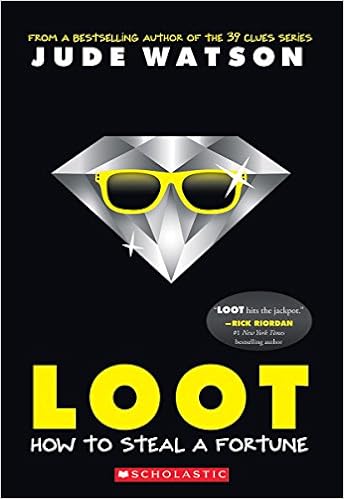
On a foggy night in Amsterdam, a man falls from a rooftop to the wet pavement below. It’s Alfie McQuinn, the notorious cat burglar, and he’s dying. As sirens wail in the distance, Alfie manages to get out two last words to his young son, March: “Find jewels.”
But March learns that his father is not talking about a stash of loot. He’s talking about Jules, the twin sister March never knew he had. No sooner than the two find each other, they’re picked up by the police and sent to the world’s worst orphanage. It’s not prison, but it feels like it.
March and Jules have no intention of staying put. They know their father’s business inside and out, and they’re tired of being pushed around. Just one good heist and they’ll live the life of riches and freedom most kids only dream about.
Watch out! There are wild kids on the loose and a crime spree coming . . .
From Amazon:
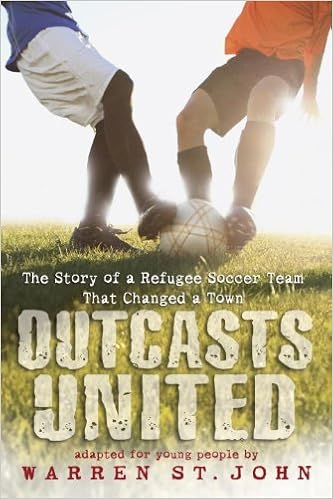
Based on the adult bestseller, Outcasts United: An American Town, a Refugee Team, and One Woman’s Quest to Make a Difference, this young people’s edition is a complex and inspirational story about the Fugees, a youth soccer team made up of diverse refugees from around the world, and their formidable female coach, Luma Mufleh. Clarkston, Georgia, was a typical southern town until it became a refugee resettlement center. The author explores how the community changed with the influx of refugees and how the dedication of Lumah Mufleh and the entire Fugees soccer team inspired an entire community.
From Amazon:
Samantha McAllister looks just like the rest of the popular girls in her junior class. But hidden beneath the straightened hair and expertly applied makeup is a secret that her friends would never understand: Sam has Purely-Obsessional OCD and is consumed by a stream of dark thoughts and worries that she can’t turn off.
Second-guessing every move, thought, and word makes daily life a struggle, and it doesn’t help that her lifelong friends will turn toxic at the first sign of a wrong outfit, wrong lunch, or wrong crush. Yet Sam knows she’d be truly crazy to leave the protection of the most popular girls in school. So when Sam meets Caroline, she has to keep her new friend with a refreshing sense of humor and no style a secret, right up there with Sam’s weekly visits to her psychiatrist.
Caroline introduces Sam to Poet’s Corner, a hidden room and a tight-knit group of misfits who have been ignored by the school at large. Sam is drawn to them immediately, especially a guitar-playing guy with a talent for verse, and starts to discover a whole new side of herself. Slowly, she begins to feel more “normal” than she ever has as part of the popular crowd . . . until she finds a new reason to question her sanity and all she holds dear.
From Amazon:
Pedru has always wanted to be a great hunter like his father, but after a lion takes his arm, he worries that he’ll always be the crippled boy instead. Pedru longs to kill the lion that mauled him and strengthens himself to be ready for the hunt. But when the opportunity arises, will Pedru have the strength to turn his back on revenge? Zoologist Nicola Davies perfectly merges a heart-pounding adventure with an important message about conservation, and Annabel Wright’s gorgeous black-and-white illustrations bring Pedru’s story to life.
Tia lives with her mom in a high-risk neighborhood in New Orleans and loves singing gospel in the Rainbow Choir with Keisha, her boisterous and assertive best friend. Tia’s dream is to change the world with her voice; and by all accounts, she might be talented enough. But when a shooting happens in her neighborhood and she learns the truth about the crime that sent her father to prison years ago, Tia finds she can’t sing anymore. The loss prompts her to start asking the people in her community hard questions–questions everyone has always been too afraid to ask.
From Amazon:
Ghost wants to be the fastest sprinter on his elite middle school track team, but his past is slowing him down in this first electrifying novel of a brand-new series from Coretta Scott King/John Steptoe Award–winning author Jason Reynolds.
Ghost. Lu. Patina. Sunny. Four kids from wildly different backgrounds with personalities that are explosive when they clash. But they are also four kids chosen for an elite middle school track team—a team that could qualify them for the Junior Olympics if they can get their acts together. They all have a lot to lose, but they also have a lot to prove, not only to each other, but to themselves.
Ghost has a crazy natural talent, but no formal training. If he can stay on track, literally and figuratively, he could be the best sprinter in the city. But Ghost has been running for the wrong reasons—it all starting with running away from his father, who, when Ghost was a very little boy, chased him and his mother through their apartment, then down the street, with a loaded gun, aiming to kill. Since then, Ghost has been the one causing problems—and running away from them—until he meets Coach, an ex-Olympic Medalist who blew his own shot at success by using drugs, and who is determined to keep other kids from blowing their shots at life.
From Amazon:
You can’t stop the future.
You can’t rewind the past.
The only way to learn the secret . . . is to press play.
Clay Jensen returns home from school to find a strange package with his name on it lying on his porch. Inside he discovers several cassette tapes recorded by Hannah Baker—his classmate and crush—who committed suicide two weeks earlier. Hannah’s voice tells him that there are thirteen reasons why she decided to end her life. Clay is one of them. If he listens, he’ll find out why.
Clay spends the night crisscrossing his town with Hannah as his guide. He becomes a firsthand witness to Hannah’s pain, and as he follows Hannah’s recorded words throughout his town, what he discovers changes his life forever.
From Amazon:
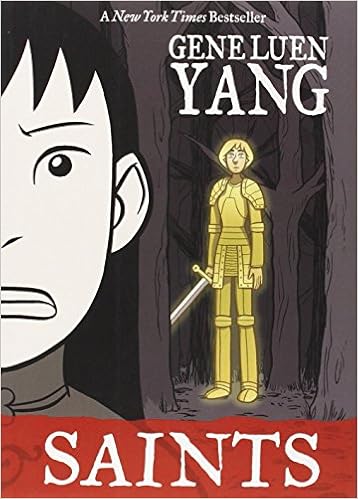
In two volumes, Boxers & Saints tells two parallel stories. The first is of Little Bao, a Chinese peasant boy whose village is abused and plundered by Westerners claiming the role of missionaries. Little Bao, inspired by visions of the Chinese gods, joins a violent uprising against the Western interlopers. Against all odds, their grass-roots rebellion is successful.
But in the second volume, Yang lays out the opposite side of the conflict. A girl whose village has no place for her is taken in by Christian missionaries and finds, for the first time, a home with them. As the Boxer Rebellion gains momentum, Vibiana must decide whether to abandon her Christian friends or to commit herself fully to Christianity.
Boxers & Saints is one of the most ambitious graphic novels First Second has ever published. It offers a penetrating insight into not only one of the most controversial episodes of modern Chinese history, but into the very core of our human nature. Gene Luen Yang is rightly called a master of the comics form, and this book will cement that reputation.
From Amazon:
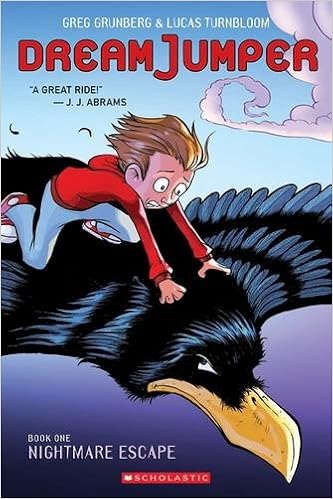
Ben has a problem. When he sleeps he dreams, and when he dreams, they’re all nightmares! But he can also jump into other people’s dreams. So when his friends start falling victim to an evil dream-monster that prevents them from waking, Ben knows he has to help them. Easier said than done when dreams can shift and the monster knows his way around the ever-changing landscape of the mind! With help from a talking rabbit-companion who has a mysterious past, Ben might just be able to defeat the monster and save his friends . . . if he can figure out how to use the power within him against his enemies.
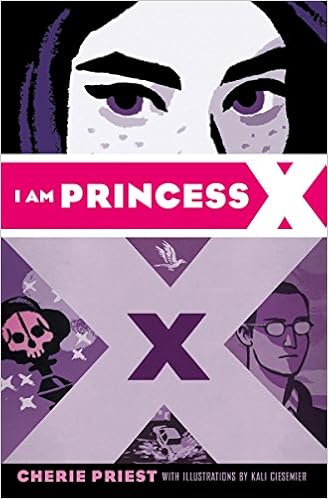
Once upon a time, two best friends created a princess together. Libby drew the pictures, May wrote the tales, and their heroine, Princess X, slayed all the dragons and scaled all the mountains their imaginations could conjure.
Once upon a few years later, Libby was in the car with her mom, driving across the Ballard Bridge on a rainy night. When the car went over the side, Libby passed away, and Princess X died with her.
Once upon a now: May is sixteen and lonely, wandering the streets of Seattle, when she sees a sticker slapped in a corner window.
Princess X?
When May looks around, she sees the Princess everywhere: Stickers. Patches. Graffiti. There’s an entire underground culture, focused around a webcomic at IAmPrincessX.com. The more May explores the webcomic, the more she sees disturbing similarities between Libby’s story and Princess X online. And that means that only one person could have started this phenomenon — her best friend, Libby, who lives.
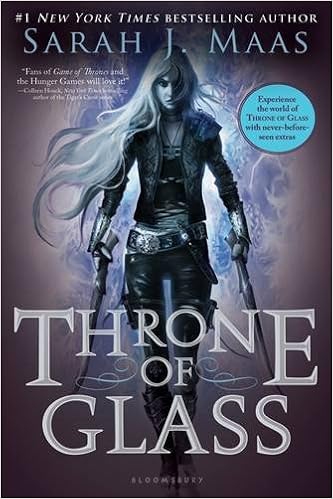
In a land without magic, where the king rules with an iron hand, an assassin is summoned to the castle. She comes not to kill the king, but to win her freedom. If she defeats twenty-three killers, thieves, and warriors in a competition, she is released from prison to serve as the king’s champion. Her name is Celaena Sardothien.
The Crown Prince will provoke her. The Captain of the Guard will protect her. But something evil dwells in the castle of glass–and it’s there to kill. When her competitors start dying one by one, Celaena’s fight for freedom becomes a fight for survival, and a desperate quest to root out the evil before it destroys her world.
From Amazon:
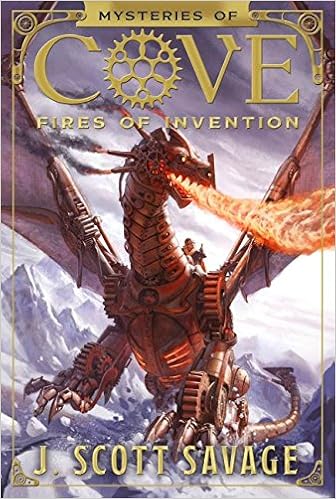
Trenton Colman is a creative thirteen-year-old boy with a knack for all things mechanical. But his talents are viewed with suspicion in Cove, a steam-powered city built inside a mountain. In Cove, creativity is a crime and invention is a curse word.
Kallista Babbage is a repair technician and daughter of the notorious Leo Babbage, whose father died in an explosion an event the leaders of Cove point to as an example of the danger of creativity.
Working together, Trenton and Kallista learn that Leo Babbage was developing a secret project before he perished. Following clues he left behind, they begin to assemble a strange machine that is unlikely anything they ‘ve ever seen before. They soon discover that what they are building may threaten every truth their city is founded on and quite possibly their very lives.
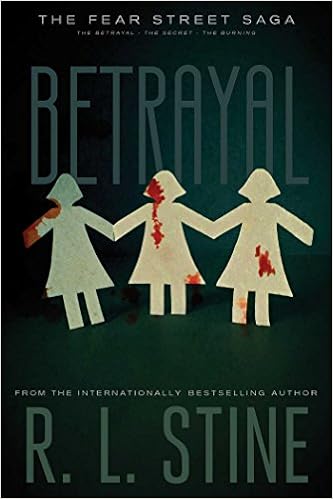
Fear Street is cursed.
It’s been that way for hundreds of years. Unspeakable horrors haunt those who’ve walked on its terrifying path. And it all started with one family—the Fears.
Go back to how it all began and discover the dark family secrets buried underneath years of terror, from who sentenced an innocent woman to burn at the stake, to why the Fear mansion caught on fire, and how forbidden love, a bloody feud, and dark magic unleashed the curse that has lasted for far too long.
And how Fear Street became the evil place it is today.
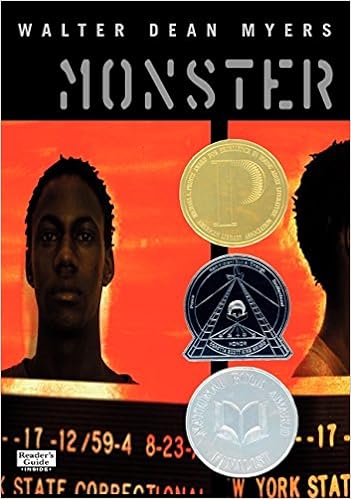
This New York Times bestselling novel from acclaimed author Walter Dean Myers tells the story of Steve Harmon, a teenage boy in juvenile detention and on trial. Presented as a screenplay of Steve’s own imagination, and peppered with journal entries, the book shows how one single decision can change our whole lives.
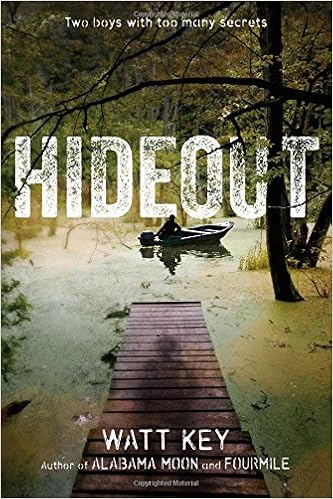
In this riveting middle-grade adventure, the son of a Mississippi policeman finds a boy living on his own in the wilderness. Twelve-year-old Sam has been given a fishing boat by his father, but he hates fishing. Instead he uses the boat to disappear for hours at a time, exploring the forbidden swampy surroundings of his bayou home. Then he discovers a strange kid named Davey, mysteriously alone, repairing an abandoned cabin deep in the woods. Not fooled by the boy’s evasive explanation as to why he’s on his own, Sam becomes entangled in his own efforts to help Davey. But this leads him to telling small lies that only get bigger as the danger increases for both boys and hidden truths become harder to conceal.
From Amazon:
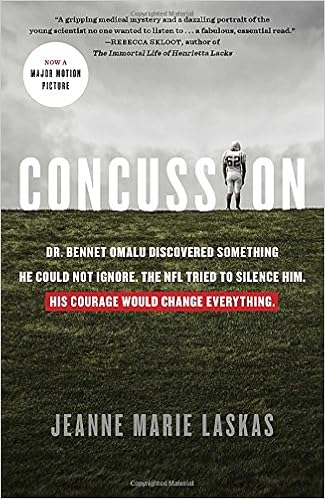
Jeanne Marie Laskas first met the young forensic pathologist Dr. Bennet Omalu in 2009, while reporting a story for GQ that would go on to inspire the movie Concussion. Omalu told her about a day in September 2002, when, in a dingy morgue in downtown Pittsburgh, he picked up a scalpel and made a discovery that would rattle America in ways he’d never intended. Omalu was new to America, chasing the dream, a deeply spiritual man escaping the wounds of civil war in Nigeria. The body on the slab in front of him belonged to a fifty-year-old named Mike Webster, aka “Iron Mike,” a Hall of Fame center for the Pittsburgh Steelers, one of the greatest ever to play the game. After retiring in 1990, Webster had suffered a dizzyingly steep decline. Toward the end of his life, he was living out of his van, tasering himself to relieve his chronic pain, and fixing his rotting teeth with Super Glue. How did this happen?, Omalu asked himself. How did a young man like Mike Webster end up like this? The search for answers would change Omalu’s life forever and put him in the crosshairs of one of the most powerful corporations in America: the National Football League. What Omalu discovered in Webster’s brain—proof that Iron Mike’s mental deterioration was no accident but a disease caused by blows to the head that could affect everyone playing the game—was the one truth the NFL wanted to ignore.
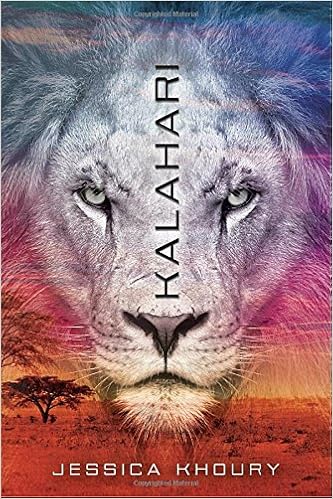
When an educational safari goes wrong, five teens find themselves stranded in the Kalahari Desert without a guide. It’s up to Sarah, the daughter of zoologists, to keep them alive and lead them to safety, calling on survival know-how from years of growing up in remote and exotic locales. Battling dehydration, starvation and the pangs of first love, she does her best to hold it together, even as their circumstances grow increasingly desperate.
But soon a terrifying encounter makes Sarah question everything she’s ever known about the natural world. A silver lion, as though made of mercury, makes a vicious, unprovoked attack on the group. After a narrow escape, they uncover the chilling truth behind the lion’s silver sheen: a highly contagious and deadly virus that threatens to ravage the entire area—and eliminate life as they know it.
From Amazon:
Most kids would do anything to pass the Iron Trial.
Not Callum Hunt. He wants to fail.
All his life, Call has been warned by his father to stay away from magic. If he succeeds at the Iron Trial and is admitted into the Magisterium, he is sure it can only mean bad things for him.
So he tries his best to do his worst — and fails at failing.
Now the Magisterium awaits him. It’s a place that’s both sensational and sinister, with dark ties to his past and a twisty path to his future.
The Iron Trial is just the beginning, for the biggest test is still to come . . .
From Amazon:
Are you made fainthearted by death? Does fire unnerve you? Is a villain something that might crop up in future nightmares of yours? Are you thrilled by nefarious plots? Is cold porridge upsetting to you? Vicious threats? Hooks? Uncomfortable clothing?
It is likely that your answers will reveal A Series of Unfortunate Events to be ill-suited for your personal use. A librarian, bookseller, or acquaintance should be able to suggest books more appropriate for your fragile temperament. But to the rarest of readers we say, “Proceed, but cautiously.”
From Amazon:
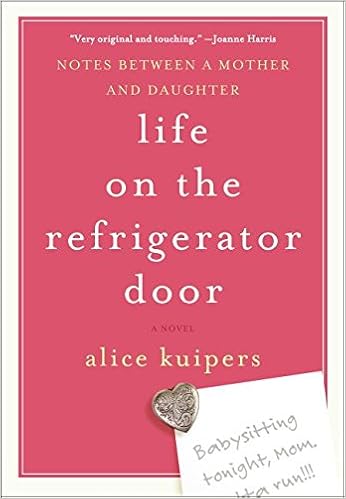
Claire and her mother are running out of time, but they don’t know it. Not yet. Claire is wrapped up with the difficulties of her bourgeoning adulthood—boys, school, friends, identity; Claire’s mother, a single mom, is rushed off her feet both at work and at home. They rarely find themselves in the same room at the same time, and it often seems that the only thing they can count on are notes to each other on the refrigerator door. When home is threatened by a crisis, their relationship experiences a momentous change. Forced to reevaluate the delicate balance between their personal lives and their bond as mother and daughter, Claire and her mother find new love and devotion for one another deeper than anything they had ever imagined.
Heartfelt, touching, and unforgettable, Life on the Refrigerator Door is a glimpse into the lives of mothers and daughters everywhere. In this deeply touching novel told through a series of notes written from a loving mother and her devoted fifteen-year-old daughter, debut author Alice Kuipers deftly captures the impenetrable fabric that connects mothers and daughters throughout the world. Moving and rich with emotion, Life on the Refrigerator Door delivers universal lessons about love in a wonderfully simple and poignant narrative.

Absolutely True Diary of a Part-Time Indian by Sherman Alexie
From Amazon:
Bestselling author Sherman Alexie tells the story of Junior, a budding cartoonist growing up on the Spokane Indian Reservation. Determined to take his future into his own hands, Junior leaves his troubled school on the rez to attend an all-white farm town high school where the only other Indian is the school mascot.

All American Boys by Brendan Kiely and Jason Reynolds
From Amazon:
A bag of chips. That’s all sixteen-year-old Rashad is looking for at the corner bodega. What he finds instead is a fist-happy cop, Paul Galluzzo, who mistakes Rashad for a shoplifter, mistakes Rashad’s pleadings that he’s stolen nothing for belligerence, mistakes Rashad’s resistance to leave the bodega as resisting arrest, mistakes Rashad’s every flinch at every punch the cop throws as further resistance and refusal to STAY STILL as ordered. But how can you stay still when someone is pounding your face into the concrete pavement?
There were witnesses: Quinn Collins—a varsity basketball player and Rashad’s classmate who has been raised by Paul since his own father died in Afghanistan—and a video camera. Soon the beating is all over the news and Paul is getting threatened with accusations of prejudice and racial brutality. Quinn refuses to believe that the man who has basically been his savior could possibly be guilty. But then Rashad is absent. And absent again. And again. And the basketball team—half of whom are Rashad’s best friends—start to take sides. As does the school. And the town. Simmering tensions threaten to explode as Rashad and Quinn are forced to face decisions and consequences they had never considered before.

Booked by Kwame Alexander
From Amazon:
In this follow-up to the Newbery-winning novel THE CROSSOVER, soccer, family, love, and friendship, take center stage as twelve-year-old Nick learns the power of words as he wrestles with problems at home, stands up to a bully, and tries to impress the girl of his dreams. Helping him along are his best friend and sometimes teammate Coby, and The Mac, a rapping librarian who gives Nick inspiring books to read.

Drums, Girls, and Dangerous Pie by Jordan Sonnenblick
From Amazon:
Steven has a totally normal life (well, almost).
He plays drums in the All-City Jazz Band (whose members call him the Peasant), has a crush on the hottest girl in school (who doesn’t even know he’s alive), and is constantly annoyed by his younger brother, Jeffrey (who is cuter than cute – which is also pretty annoying). But when Jeffrey gets sick, Steven’s world is turned upside down, and he is forced to deal with his brother’s illness, his parents’ attempts to keep the family in one piece, his homework, the band, girls, and Dangerous Pie (yes, you’ll have to read the book to find out what that is!).

Eleven by Tom Rogers
From Amazon:
Alex Douglas always wanted to be a hero. But nothing heroic ever happened to Alex. Nothing, that is, until his eleventh birthday. When Alex rescues a stray dog as a birthday gift to himself, he doesn’t think his life can get much better. Radar, his new dog, pretty much feels the same way. But this day has bigger things in store for both of them.
This is a story about bullies and heroes. About tragedy and hope. About enemies with two legs and friends with four, and pesky little sisters and cranky old men, and an unexpected lesson in kindness delivered with a slice of pizza. This is Eleven: the journey of a boy turning eleven on 9/11.
From Amazon:
Nine of us came here.
We look like you.
We talk like you.
We live among you—but
We are not you.
We have powers you dream of having.
We are the superheroes you worship in movies and comic books—
But we are real.
They caught Number One in Malaysia. Number Two in England. And Number Three in Kenya.
They killed them all.
I am Number Four. I am next.

Illuminae by Amie Kaufan and Jay Kristoff
From Amazon:
This morning, Kady thought breaking up with Ezra was the hardest thing she’d have to do. This afternoon, her planet was invaded.
The year is 2575, and two rival megacorporations are at war over a planet that’s little more than a speck at the edge of the universe. Now with enemy fire raining down on them, Kady and Ezra—who are barely even talking to each other—are forced to evacuate with a hostile warship in hot pursuit.
But their problems are just getting started. A plague has broken out and is mutating with terrifying results; the fleet’s AI may actually be their enemy; and nobody in charge will say what’s really going on. As Kady hacks into a web of data to find the truth, it’s clear the only person who can help her is the ex-boyfriend she swore she’d never speak to again.

Legend by Marie Lu
From Amazon:
What was once the western United States is now home to the Republic, a nation perpetually at war with its neighbors. Born into an elite family in one of the Republic’s wealthiest districts, fifteen-year-old June is a prodigy being groomed for success in the Republic’s highest military circles. Born into the slums, fifteen-year-old Day is the country’s most wanted criminal. But his motives may not be as malicious as they seem.
From very different worlds, June and Day have no reason to cross paths – until the day June’s brother, Metias, is murdered and Day becomes the prime suspect. Caught in the ultimate game of cat and mouse, Day is in a race for his family’s survival, while June seeks to avenge Metias’s death. But in a shocking turn of events, the two uncover the truth of what has really brought them together, and the sinister lengths their country will go to keep its secrets.

Michael Vey: The Prisoner of Cell 25 by Richard Paul Evans
From Amazon:
To everyone at Meridian High School, fourteen-year-old Michael Vey is nothing special, just the kid who has Tourette’s syndrome. But in truth, Michael is extremely special—he has electric powers. Michael thinks he is unique until he discovers that a cheerleader named Taylor has the same mysterious powers. With the help of Michael’s friend, Ostin, the three of them set out to discover how Michael and Taylor ended up with their abilities, and their investigation soon brings them to the attention of a powerful group who wants to control the electric teens—and through them, the world.

MiNRS by Kevin Sylvester
From Amazon:
A boy and his friends must find a way to survive in the mining tunnels after their new space colony is attacked in this gritty action-adventure novel, which School Library Journal called “a solid survival story.”
In space. Underground. And out of time.
Christopher Nichols and his family live on a new planet, Perses, as colonists of Melming Mining’s Great Mission to save the earth. Dozens of families like Christopher’s have relocated, too, like his best friend Elena Rosales.
A communications blackout with Earth hits, and all of Perses is on its own for three months. It’s okay, though, because the colonists have prepared, stockpiling food and resources to survive. But they never prepared for an attack.
Landers, as the attackers are called, obliterate the colony to steal the metal and raw ore. Now in a race against time, Christopher, along with a small group of survivors, are forced into the maze of mining tunnels. The kids run. They hide. But can they survive?

Need by Joelle Charbonneau
From Amazon:
“No one gets something for nothing. We all should know better.”
Teenagers at Wisconsin’s Nottawa High School are drawn deeper into a social networking site that promises to grant their every need . . . regardless of the consequences. Soon the site turns sinister, with simple pranks escalating to malicious crimes. The body count rises. In this chilling YA thriller, the author of the best-selling Testing trilogy examines not only the dark side of social media, but the dark side of human nature.
From Amazon:
Listen—Travis Coates was alive once and then he wasn’t.
Now he’s alive again.
Simple as that.The in between part is still a little fuzzy, but Travis can tell you that, at some point or another, his head got chopped off and shoved into a freezer in Denver, Colorado. Five years later, it was reattached to some other guy’s body, and well, here he is. Despite all logic, he’s still sixteen, but everything and everyone around him has changed. That includes his bedroom, his parents, his best friend, and his girlfriend. Or maybe she’s not his girlfriend anymore? That’s a bit fuzzy too.Looks like if the new Travis and the old Travis are ever going to find a way to exist together, there are going to be a few more scars.Oh well, you only live twice.

The two-time Newbery Honor winner Gary D. Schmidt delivers the shattering story of Joseph, a father at thirteen, who has never seen his daughter, Jupiter. After spending time in a juvenile facility, he’s placed with a foster family on a farm in rural Maine. Here Joseph, damaged and withdrawn, meets twelve-year-old Jack, who narrates the account of the troubled, passionate teen who wants to find his baby at any cost. In this riveting novel, two boys discover the true meaning of family and the sacrifices it requires.

Ranger’s Apprentice: The Ruins of Gorlan by John Flanagan
From Amazon:
They have always scared him in the past—the Rangers, with their dark cloaks and shadowy ways. The villagers believe the Rangers practice magic that makes them invisible to ordinary people. And now 15-year-old Will, always small for his age, has been chosen as a Ranger’s apprentice. What he doesn’t yet realize is that the Rangers are the protectors of the kingdom. Highly trained in the skills of battle and surveillance, they fight the battles before the battles reach the people. And as Will is about to learn, there is a large battle brewing. The exiled Morgarath, Lord of the Mountains of Rain and Night, is gathering his forces for an attack on the kingdom. This time, he will not be denied. . . .

See You at Harry’s by Jo Knowles
From Amazon:
Twelve-year-old Fern feels invisible. It seems as though everyone in her family has better things to do than pay attention to her: Mom (when she’s not meditating) helps Dad run the family restaurant; Sarah is taking a gap year after high school; and Holden pretends that Mom and Dad and everyone else doesn’t know he’s gay, even as he fends off bullies at school. Then there’s Charlie: three years old, a “surprise” baby, the center of everyone’s world. He’s devoted to Fern, but he’s annoying, too, always getting his way, always dirty, always commanding attention. If it wasn’t for Ran, Fern’s calm and positive best friend, there’d be nowhere to turn. Ran’s mantra, “All will be well,” is soothing in a way that nothing else seems to be. And when Ran says it, Fern can almost believe it’s true. But then tragedy strikes- and Fern feels not only more alone than ever, but also responsible for the accident that has wrenched her family apart. All will not be well. Or at least all will never be the same.

The Crossover by Kwame Alexander
From Amazon:
“With a bolt of lightning on my kicks . . .The court is SIZZLING. My sweat is DRIZZLING. Stop all that quivering. Cuz tonight I’m delivering,” announces dread-locked, 12-year old Josh Bell. He and his twin brother Jordan are awesome on the court. But Josh has more than basketball in his blood, he’s got mad beats, too, that tell his family’s story in verse, in this fast and furious middle grade novel of family and brotherhood from Kwame Alexander.
Josh and Jordan must come to grips with growing up on and off the court to realize breaking the rules comes at a terrible price, as their story’s heart-stopping climax proves a game-changer for the entire family.

Eragon by Christoper Paolini
From Amazon:
Fifteen-year-old Eragon believes that he is merely a poor farm boy—until his destiny as a Dragon Rider is revealed. Gifted with only an ancient sword, a loyal dragon, and sage advice from an old storyteller, Eragon is soon swept into a dangerous tapestry of magic, glory, and power. Now his choices could save—or destroy—the Empire.

The Maze Runner by James Dashner
From Amazon:
If you ain’t scared, you ain’t human.
When Thomas wakes up in the lift, the only thing he can remember is his name. He’s surrounded by strangers—boys whose memories are also gone.
Nice to meet ya, shank. Welcome to the Glade.
Outside the towering stone walls that surround the Glade is a limitless, ever-changing maze. It’s the only way out—and no one’s ever made it through alive.
Everything is going to change.
Then a girl arrives. The first girl ever. And the message she delivers is terrifying.
Remember. Survive. Run.
From Amazon:
Two brothers will need all their wilderness skills to survive when they set off into the woods of Wyoming in search of their absent father.
Jake and Taylor Wilder have been taking care of themselves for a long time. Their father abandoned the family years ago, and their mother is too busy working and running interference between the boys and her boyfriend, Bull, to spend a lot of time with them. Thirteen-year-old Jake spends most of his time reading. He pours over his father’s journal, which is full of wilderness facts and survival tips. Eleven-year-old Taylor likes to be outside playing with their dog, Cody, or joking around with the other kids in the neighborhood.
But one night everything changes. The boys discover a dangerous secret that Bull is hiding.
And the next day, they come home from school to find their mother unconscious in an ambulance. Knowing they are no longer safe and with nowhere else to go, the Wilder Boys head off in search of their father. They only have his old letters and journal to help them, but they have to make it.
It’s a long journey from the suburbs of Pittsburgh to the wilderness of Wyoming; can the Wilder Boys find their father before Bull catches up with them?

From Amazon:
To everyone who knows him, West Ashby has always been that guy: the cocky, popular, way-too-handsome-for-his-own-good football god who led Lawton High to the state championships. But while West may be Big Man on Campus on the outside, on the inside he’s battling the grief that comes with watching his father slowly die of cancer.
Two years ago, Maggie Carleton’s life fell apart when her father murdered her mother. And after she told the police what happened, she stopped speaking and hasn’t spoken since. Even the move to Lawton, Alabama, couldn’t draw Maggie back out. So she stayed quiet, keeping her sorrow and her fractured heart hidden away.
As West’s pain becomes too much to handle, he knows he needs to talk to someone about his father—so in the dark shadows of a post-game party, he opens up to the one girl who he knows won’t tell anyone else.
West expected that talking about his dad would bring some relief, or at least a flood of emotions he couldn’t control. But he never expected the quiet new girl to reply, to reveal a pain even deeper than his own—or for them to form a connection so strong that he couldn’t ever let her go…

Maybe a Fox by Kathi Appelt and Alison McGhee
From Amazon:
Sylvie and Jules, Jules and Sylvie. Better than just sisters, better than best friends, they’d be identical twins if only they’d been born in the same year. And if only Sylvie wasn’t such a fast—faster than fast—runner. But Sylvie is too fast, and when she runs to the river they’re not supposed to go anywhere near to throw a wish rock just before the school bus comes on a snowy morning, she runs so fast that no one sees what happens…and no one ever sees her again. Jules is devastated, but she refuses to believe what all the others believe, that—like their mother—her sister is gone forever.
At the very same time, in the shadow world, a shadow fox is born—half of the spirit world, half of the animal world. She too is fast—faster than fast—and she senses danger. She’s too young to know exactly what she senses, but she knows something is very wrong. And when Jules believes one last wish rock for Sylvie needs to be thrown into the river, the human and shadow worlds collide.









 Pernille Ripp