being me

Your Best Tips for #ISTE2015?

For five years I have watched ISTE from afar, always hoping that I would get to go some day.  I have watched the Twitter feed, the Facebook posts, and had the conversations with some of the lucky ones that went.  And every year to no fail there is a story of failed expectations, of something that didn’t got to plan. Well, seeing that I finally get to this year, I figured I better ask.  What are the hidden rules of ISTE, or really any other major conference?  What do people expect?  What should I know to make sure that I not only have a great time, but that I also don’t do some sort of faux pas sure to upset others?

Also, what are your best tips?  How do you make the most out of this experience?   I would love to know your thoughts.

PS:  Where will I be?  Well here you are:

Sunday:

ISTE Townhall Lead & Transform Panel – Sunday, June 28th 9 AM to 11:30 AM.  I am honored to be the teacher representative on this panel where we get to discuss how we are changing professional learning in our communities.  The best part of the panel is that I get to listen to  he amazing students from SLA, who will start the discussion!

ISTE Ignite – Sunday, June 28th 1:30 PM to 3  PM.  I have dreamed of doing an Ignite for several years and what better place to try it than at ISTE.  I don’t know whether I am more excited to speak about having courage to create passionate learning environments or listen to the other Ignite presenters!

Monday:

Monday morning – Award breakfast where the Global Read Aloud and I will be honored with the ISTE Innovation in Global Collaboration Award. 

Monday lunch – The ISTE Making IT Happen award luncheon.

Personalized Learning Panel: Stories, Process and Models – Monday, June 29th 4:15 – 5:15 PM.  Very excited to get to represent my district, Oregon School District, on this panel with the amazing Barbara Bray and Kathleen McClasky and others.

Tuesday:

Set Their Voices Free:  How Students Can Share Their Stories – Tuesday, June 30th 10:45 AM to 11: 45 AM.  I am pumped to be presenting on this topic and with these people; Erin Klein and Colby Sharp.  We started planning this session this week and it promises to be hands-on with time to work, discuss, and share ideas.  Isn’t that what we all hope to get from a session.

Wednesday:

Corwin Connected Educator Panel – Wednesday, July 1st 8:30 – 9:30 AM.  I get to see some of my favorite people and discuss one of my passions; how do we empower students and staff in our schools with my friend and inspiration, Tony Sinanis.  What isn’t there to like?

being a teacher, classroom setup, Reading

How I Organize My Books

A question I often get asked is how my books are organized in our classroom.  The system is really simple and one that many people use,  so I thought I would share here to help others.  I have used this system in 4th, 5th and 7th grade but have seen younger grades use this as well.  I do not level my classroom library.

I have more than 1,000 books in my library.  I am not sure how many exactly but it keeps growing.  And so my library is an ever growing work in progress.  Book shelves are a mix of what my school graciously purchased for me and ones that I could secrue from family.

IMG_1275

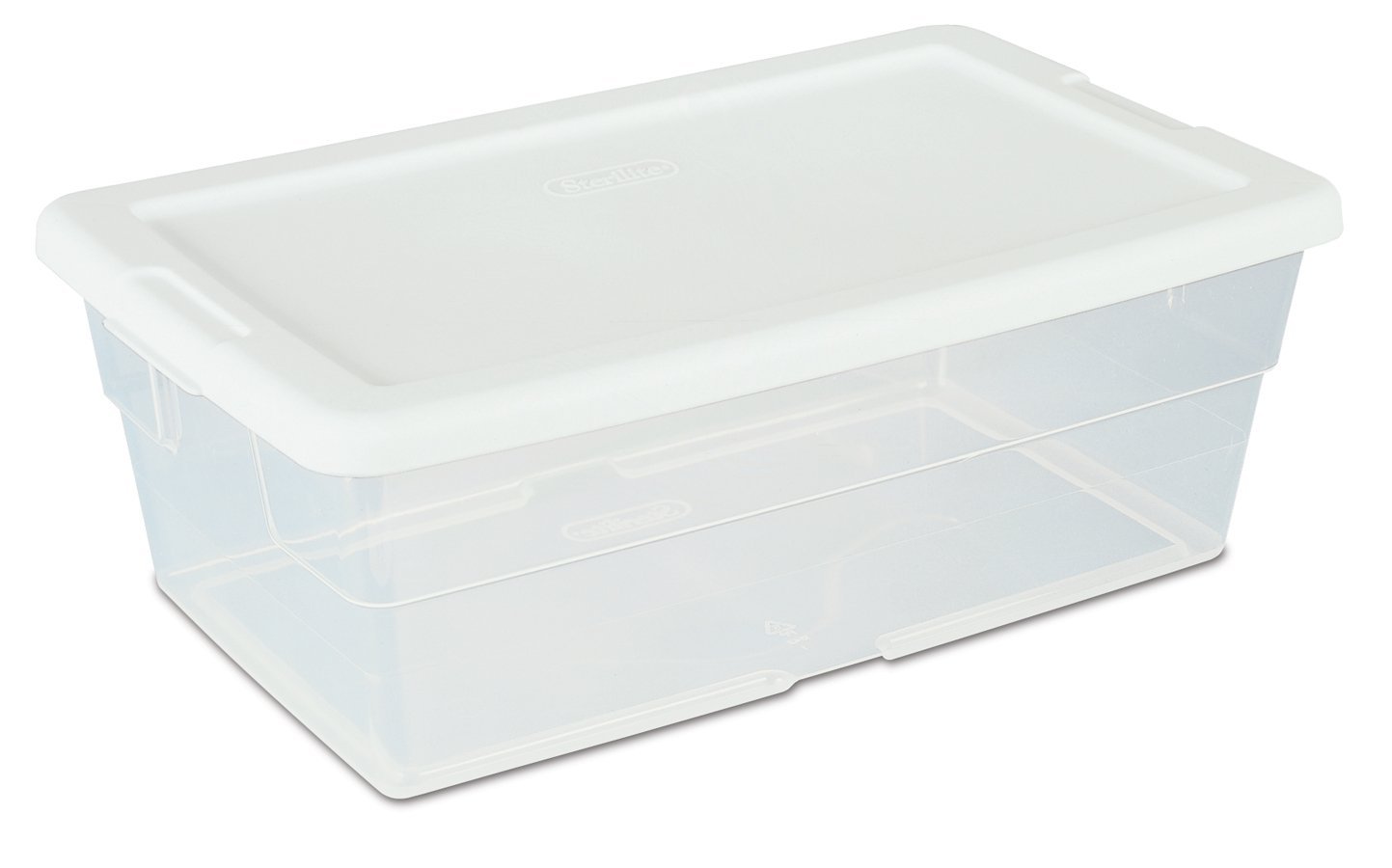
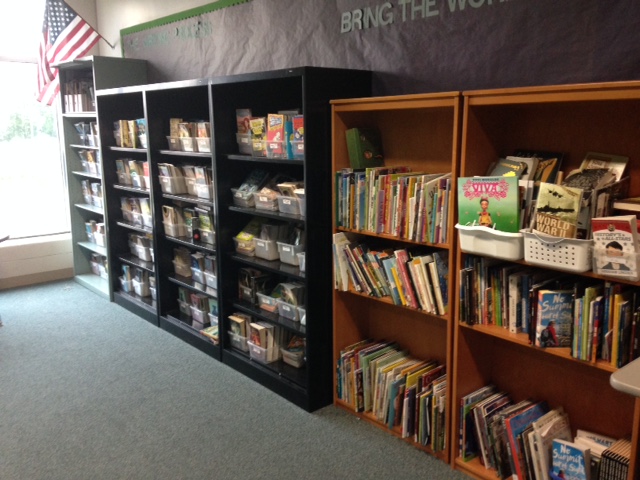
Most of my books are organized in bins, I have found this to be the easiest way for students to find books, as well as it being appealing to them.   Bins are grouped into several categories, some by genres, some by theme, some by author.  Students will suggest new bins as they see fit, for example this year we added a “War” bin and a “Cassandra Clare” bin.  I use clear bins like these because they fit all books and provide students with covers that may entice them.  For larger books, I use this type of bin since they fit my large books and picture books as well.  I also use this size bin as my “Return books here” bin.  The bins have stickers on them (address stickers) with the bin name and the abbreviation below it.  So a bin might say “Realistic Fiction (RF)”  on its sticker.  RF is then also the designation that is put inside of the book underneath my stamp.

Large bins for collections, poetry and others
Small bins for all of my books, I just remove the lids.

Most of my picture books are simply shelved on one bookcase.  Students know that the entire bookcase is dedicated to picture books and put them back as needed.  I have decided not to organize by author as it took too much time to keep up with it.  As long as they have their own separate bookshelf, I have no problem.  All non-fiction texts are also housed on a separate bookshelf and I have slowly started to group those texts together as well.  These are mostly grouped by theme and are a work in progress because I need more bookshelf space.

IMG_1187

Finally, one of the best things I have ever purchased for my library was a stamp!  I purchased this type of stamp 2 years ago and it has been amazing.  No more having to write out labels, no more mess.  Books are stamped on the inside upper right corner as well as on the closed pages of the books (vertically when the book is closed I stamp it for parents to see my name).  I then add then genre or bin abbreviation under the stamp so students know where the book belongs.  This stamp has meant many more books have been returned to me and one of the best $6 I ever spent, plus when the ink runs out you just buy a new inkpad, wahoo.

There you have it, a quick peek into the organization of my library, I hope it was helpful.

being a teacher, being me, Passion, Reading, students

But The Kids Aren’t Reading – 20 Ideas for Creating Passionate Reading Environments

So many of us are trying to create passionate reading environments, we are doing all the things the experts tell us to do, and yet, something just isn’t clicking.  Some kids are reading sure, but they would probably be reading any way, others though, not so much.  Our passionate reading environments are just not working for all of our kids.

When I moved from 5th to 7th I knew I would be up against a challenge, after all, I had seen the slow decline of reading in my 5th graders and was pretty sure it would continue as they got older.  And I was right,  by 7th graders some of my students are not just disliking books, some really hate reading. And they are vocal about it!  So what have I done to continue to create passionate reading environments?  Here are a few ideas…

Invested in books.  Every single book that I have in my classroom, pretty much, is a book that I think might capture a reader.  When a book gets worn,  I replace it.  If a book has a bad cover, I try to see if a new version has come out with an updated cover.  While I know our libraries should have massive amounts of books for all readers, I also believe in quality over quantity.

Diversity in books.  The #WeNeedDiverseBooks movement have really gained momentum the past year, and rightfully so, and I couldn’t agree more.  Our students need to be able to find themselves and their lives within the books we have.  Not just across racial lines or economic lines but also in the narratives of their self-identity.  These three books are doing just that for many of our students.

Easy access to our books.  All of my books are in bins  and they are right at their fingertips.   No check out system, no asking for permission.  And we need it in our classrooms, not just in the book room or in the main library.  We need to have in-class libraries so that students can bookshop whenever they need to and so that they can be enticed to read.

Giving choice.  Choice in seating, choice in books, choice in way of reading.

Free abandonment.  Students think they need permission to abandon books for some reason and so I celebrate freely whenever I abandon a book.  I ask the kids if someone wants to prove me wrong when I abandon a book and they always do.  Sometimes they commiserate with me about how that book is not well-written and other times they argue that I am so wrong.  What it does though is that it signals to kids that they should be selective in their reading as well, because that is the sign of a wild reader, to quote Donalyn Miller’s amazing book!

Leaving time to talk books.  Too often we over-schedule our lessons and don’t leave time to just talk about what we are reading and why it is amazing.  So find holes in your schedule where students can just talk books without any project attached to it.

Teacher recommendations.  I start many classes with the 1 minute book recommendation sharing why I loved a book or why I bought a book.  Then I place it on a ledge and walk away.  I do different recommendation in all of my classes.

Student recommendations.  We talk about books quite a bit, both in structured and unstructured ways.  We do the 1 minute speed book dating where students face each other in two long rows and one side recommends their book in a minute, one the timer buzzes they go to the next person and recommend it to them.   I leave book piles out on tables for students to browse through as they enter.  These are not just new books but also some of my favorite older books that students may not have discovered.  They have a “Favorite reads” book tree, where they can leave their favorite books for other students to read.

The To-Be-Read List.  Students need to always have an idea of what they will be reading next so we have a paper list this year of the books we cannot wait to read.  Next year, we will move to use Goodreads as a way to keep track of what we have read, offer suggestions and also have a way for our friends to see what we are reading.

It is judgment free.  I am not the reading police and while I continually recommend books to students I will not stop them from reading a book, nor will I judge them based on what they are reading.  Sometimes your strongest readers need a break, other times your developing readers need a challenge.  Letting them figure out what they need at a particular time is incredibly empowering for students and definitely necessary.

Celebrating the re-read.  I re-read picture books all of the time and often find myself gravitating toward certain books.  The Poisonwood Bible is a book I have read several times, relishing the vague recollection of what happens but also discovering the text in new way each time.  Too often we assume that students are re-reading because they lack inspiration, but that may not be the case.  Some kids are re-reading to discover more about the text, that is true close reading.

No need for speed.  Because we are reading log free, we have no need to track minutes or pages.  Students read as much as they can in our independent reading time and I only ask them to write down the title.  We do a 25 book challenge for all students, or higher if need be, and all students keep track of how many books they have read.  Larger books count for more than one so that students are not discouraged from reading thick books, but can read whatever they want.  And yes, picture books or graphic novels count as well.

Protecting independent reading time.  Often our independent reading time is what we sacrifice when we have a lot to cover, and yet, this is the thing we need to protect the most.  I start almost every class period with 10 minutes of independent reading and it is sacred time for us (thank you for the idea Jillian Heise!).  Some times that is the only reading time students get and they need it.  If we worry about whether a kid is reading outside of school pay attention to what they are reading inside this time.  This is where I can help kids to find better books or help them develop their skills to pick books.

Creating enticing libraries.  Kids love book stores because the books are exciting, even our most reluctant readers will pick a new book of the shelves if we display it well.  So I pay very close attention to how books are displayed;  I use all ledges, have a gutter hanging on the wall for picture books, and I switch out the books often.  I want students to pick up the books and flip through them so I have to create opportunities for that to happen.

Creating reading role models.  Students need reading role models, and not just adult ones.  I love being passionate reader and it is something I showcase any chance I get in our classroom, but more importantly students need to see students who are reading role models as well.  We Skype with other classes to share book recommendations, we share our favorite books on our blog, and we give students time to take on the role of role model.  We need to create communities of readers where students have room to discover each other as individuals so they can learn from each other.

Let them order books.  If a child says they cannot find a book they love, then I pull out a Scholastic catalog or get on Amazon and I let them choose a book.  I use bonus points when I can or I buy the book myself if I need to.  Sometimes simply being able to completely choose a brand new book means that a child will at least try to read the books.

Crack your hardest nut.  You know that kid that really hates reading and almost flaunts it every chance they get.  Spend your energy on them because often they are influencing the way their peers are thinking.  So they are the ones I continually pass books to, they are the ones I am always talking books with, and they are the ones that I try to get be a reading role model if I can get them hooked.

Embrace mature books.  These are the books that some of our most reluctant readers will finally pick up.  The ones with the swear words, or the ones with the little bit more mature story lines.  Be selective, set your standards, but don’t shield all readers from mature books.  These can be “that” book for some of our kids who otherwise will never read.

Ask your students.  Too often we assume that we know why students are not reading, so we never ask, but that is the very first thing we need to do.  Ask your students to discuss why they hate reading and get those demons out in the open so that you can start to work with them rather than just assume you know what the problem is.

Stay passionate.  There are times when we get so busy that reading was pushed to the side, yet often within our busyness is when we need to embrace our passion even more.  So re-ignite your own passion, change things up, go on a mission to find the most magnificent book you have ever read so that you can hand it to students.  Don’t let the outside world influence your inside passionate classroom.

Become a reading warrior.  No more quiet compliance when initiatives are introduced that we know will hurt students’ love of reading, we have to band together and start speaking up for our students.  Their love of reading is too sacred for us to stay silent any longer.  Here is the blog post that discusses this more.

What did I miss?

I missed one of the biggest ones!  Thank you Rachel Yoder!

Partner with the librarian!  Whether your school has one (which every school should!)  or you partner with your local librarian, bringing in another knowledgable reading adult is a sure fire way to have an even bigger impact.  You are not alone in trying to create passionate reading environments, your librarian should be a trusted ally.

To see how all of my books are organized, go here.

To organize your own library, including check out, go here.

To see my book review blog, go here.

I am a passionate teacher in Oregon, Wisconsin, USA but originally from Denmark,  who has taught 4th, 5th, and 7th grade.  Proud techy geek, and mass consumer of incredible books. Creator of the Global Read Aloud Project, Co-founder of EdCamp MadWI, and believer in all children.  The second edition of my first book Passionate Learners – How to Engage and Empower Your Students” is available for pre-order now.   Second book“Empowered Schools, Empowered Students – Creating Connected and Invested Learners” is out now from Corwin Press.  Join our Passionate Learners community on Facebook and follow me on Twitter @PernilleRipp.

being a teacher, being me, MIEExpert15, Passion, Reading, student choice, student voice

Enough…

My love of reading never had to survive my childhood.  My love of reading never had to survive well-meaning teachers, at least not when I was young.  When I grew up, teachers weren’t really that bothered with what we read, or how much we read every night, just that we read.  That we grew.  That we became better.  They didn’t ask us to keep logs, to record minutes, to stick post-it notes whenever we had a thought.  They didn’t tell us which box to pick from or give us a label.  Instead, they gave us a book, pointed to a chair, and they told us to read.  Come up for air when you are done.

Some may shudder at the lack of instruction that I was put through as a young child, after all, where was all of the teaching?  And yet within this brutally simplistic approach; read, read, read and then please read some more, was an immense amount of wisdom.  Kids need time to read.  Kids need choice.  Kids need to be allowed to self-select books and then when they are done reading they should be asked to get another book.  So if we hold these truths to be self-evident, I wonder, how has so much of our reading instruction gotten so far off track?

I think we teachers are part of the problem.  I think our silence while we seethe inside at the new initiatives being dictated to us means that we are now complicit in the killing of the love of reading.  I think we have sat idly by for too long as others have told us that students will love reading more if we limit them further and guide them more.   We have held our tongue while practices have been marched into our classrooms disguised by words like research-based, rigorous, and common-core aligned.  We have held our tight smiles as so called experts sold our districts more curriculum, more things to do, more interventions, more repetitions.  We have stayed silent because we were afraid of how our words would be met, and I cannot blame any of us.  Standing up and speaking out is terrifying, especially if you are speaking out against something within your own district.  But we cannot afford to stay silent any more.  With the onslaught of more levels, more logs, more things to do with what they read all in the name of deeper understanding, we have to speak up.  Reading is about time to read first.  Not all of the other things.  And if we are sacrificing time to read to instead teach children more strategies,, then we are truly missing the point of what we we should be doing.

So I declare myself a reading warrior, and I believe you should as well.  No more reading logs to check whether kids are reading.  No more levels used to stop children from self-selecting books they actually want to read.   No more timed standardized tests to check for comprehension.  Being a fast reader does not mean you comprehend more. No more reading projects that have nothing to do with reading.  No more reading packets to produce a grade that stops students from talking about books.  No more rewards; prizes, stickers, lunches with the principal.  We cannot measure a great reader by how many pages a school has read, so stop publishing it.  Don’t publish your test scores.  Don’t publish your AR levels.  Publish instead how many children have fallen in love with a book.  How many recommendations have been made from student to student.  Publish how many books have needed to be replaced because of worn pages.  Publish that, and be proud of the teachers that dare to speak up to protect the very thing we say we hold sacred.

Be a reading warrior, because for too long we have hoped that the decisions being made are always in the best interest of a child when we know at times they are not.  No child is helped when we protest in silence, when we protest in the teacher lounge, or in our homes.  We have to find the courage to speak up for the very students we serve.   We have to practice being brave.  We have to allow students to read books that they choose, to give them time to talk about their books rather than fill out a packet, and to allow them to self-monitor how much reading they are doing and then believing them when they tell us their truth.  It is time for us to stand up and speak up.  It is time to take back our reading instruction and truly make it about what the kids need and not what others tell us that they need.  One voice can be a whisper or a protest, we make the choice when we decide to make a difference.  Are you with me?

I am a passionate teacher in Oregon, Wisconsin, USA but originally from Denmark,  who has taught 4th, 5th, and 7th grade.  Proud techy geek, and mass consumer of incredible books. Creator of the Global Read Aloud Project, Co-founder of EdCamp MadWI, and believer in all children.  The second edition of my first book Passionate Learners – How to Engage and Empower Your Students” is available for pre-order now.   Second book“Empowered Schools, Empowered Students – Creating Connected and Invested Learners” is out now from Corwin Press.  Join our Passionate Learners community on Facebook and follow me on Twitter @PernilleRipp.
aha moment, being me, conferences, PLN

10 Tips for Going to A Conference All By Yourself

This is the summer of a lot of firsts for me; first time going to ISTE and many other conferences, first time going to certain states like Utah, first time doing an Ignite, first time going to NerdCamp (finally!) first time getting an award, and first time doing a lot of travelling by myself.  So as I have been preparing to hit the road, I figured I cannot be the only one that is traveling to conferences by themselves this summer and thus needs some help on how to make the best of it.  Behold, Pernille’s 10 travel tips for going to a conference all by yourself…

Make connections beforehand.  If you are on Twitter, start following the hashtag of the conference and see who else will be there.  I also know there are Facebook groups for some larger conferences and I have been joining some of those, just to make connections.  Even if you are not into social media, Google the conference and see what comes up.  I also try to scope out what type of social event there will be available to you beforehand so that you can go and meet people.  No one should have to go through a conference by themselves.

Figure out your goal.  The first conference I went to I tried to do it all; go to as many sessions as possible, meet new people, make meaningful connections, check out new products!  And I was exhausted.  So this summer it is all about meeting people.  Yes, I want to learn, yes I want to see the new products, but I am focusing in one thing rather than all of them so that I can allow myself to take a break.  Don’t try to do it all, do as much as you can and be excited about how much you accomplish.

Pack what you feel the most comfortable in.  I like to dress up when I present, it is a professional respect thing for me, as well as something that gives me confidence when I have to speak.  Even if I am not presenting, I look pulled together but always comfortable.  Very rarely do I wear heels if I can wear sandals in summer, and I always dress in layers.  Who wants to be cold all day?  So find out what you feel your best you in and then see if that will work for you, if you are going to meet people, make sure you feel confident when you do.

Pre-brainstorm opening questions.  I can be shy at times, particularly in large groups or when people tell me they have read my blog or my books.  So while this may sound stupid, and I probably shouldn’t admit to this, I purposefully go through and think up questions that I can ask any person I meet.  I am, after all, traveling to connect and meet with people and want to make sure that I can spark up a conversation.

Go up to people.  This is something I have had to really work on, but it is important to learn how to introduce yourself to others.  I have had too many missed opportunities where I had hoped to meet someone and I never felt the right moment came for me to go up to them.  Later I was bummed I had missed the opportunity because of my own fear.  So make sure you create that moment, which leads me to my next point…

Practice being brave.  This is something I remind myself of every time I go a new place.  I love meeting new people but can have a hard time initializing a brand new connection.  I have told myself I have to practice every time I travel, every time I have the chance, and meet at least 5 new people.  I set a small goal so I can accomplish it but also make it big enough for me to get in the habit of going up to people.  Some of the best conversations I have had has been with complete strangers that I introduced myself too.  It took bravery and that is something we could all use practice in.

Print a business card.  I laughed the first time someone told me this, (what does a teacher need a business card for?), and then I went to my first conference.  Aha!  When you meet someone new and you want to exchange information that business card becomes your new best friend.  The best part was my husband’s tip of using one of the free websites where all you have to pay for is shipping.  I got 250 cards for $5 and I am bringing them all.

Plan down time.  While I love the learning and connecting that happens at conferences, my brain can only take so much.  So don’t overbook yourself, schedule in for down time where you will sit, eat, and do whatever it is you need to do to feel like this is still a good time.  Going to conferences should be a great experience, not a hassle, nor a stressor.

Bring a book (or five).  Or whatever it is that lets you completely relax by yourself.  I read any time I can and know I will be traveling with a lot of books.  Yes, they weigh a lot but the fact that I can pull out a book at any time and escape a little bit makes a world of difference for me.

Be a nice human being. Unfortunately sometimes going to a conference means that some people forget to be nice, or completely forget to be professional.  We are all busy, we all have places to be, and yes, we probably have many people we would love to be speaking to.  But be nice.  Be kind to the people that speak to you.  Help others.  Look for people who are alone or seem like they don’t know what they are doing, after all, that person may be me.

Represent.  I tell my students this whenever they leave our classroom and the word carries us out into the world.  Remember, you are not just there representing yourself, you are representing your entire school community and your family.  I go to conferences to share the words of my students, to help them change the way education is done to kids all around the world.  That is not something I take lightly and so I behave appropriately.  I have heard crazy stories of conference after parties, and I certainly have no intention of becoming part of those stories.

What else would you add to those traveling to conferences by themselves?

PS:  To see where I am traveling to, go here – hopefully our paths will cross this summer.

I am a passionate teacher in Oregon, Wisconsin, USA but originally from Denmark,  who has taught 4th, 5th, and 7th grade.  Proud techy geek, and mass consumer of incredible books. Creator of the Global Read Aloud Project, Co-founder of EdCamp MadWI, and believer in all children.  The second edition of my first book Passionate Learners – How to Engage and Empower Your Students” is available for pre-order now.   Second book“Empowered Schools, Empowered Students – Creating Connected and Invested Learners” is out now from Corwin Press.  Join our Passionate Learners community on Facebook and follow me on Twitter @PernilleRipp.

being a teacher, PLN, student voice

Have You Heard of the Teachers Leading Teachers Conference?

TeachersLeadingTeachers-conference-600x235

Being a teacher who presents, which is a very new adventure for me, has been quite interesting to say the least.  I didn’t know just how few of us there are that actually are able to go out and talk about the things that we do with our students and still stay in the classroom.  In fact, I have been to a few places where there were less than a handful of teachers presenting and yet the entire conference was geared toward teachers.  Hmmm… But I get it.  It is hard to leave my classroom.  It is hard to leave my family.  Presenting and sharing the words of my students is an incredible opportunity that I am honored to get, but it is like having two full-time jobs at times.  Yet, I can’t help but wish that more teacher’s voices were heard at all of the conferences that surround us.

Well, that is exactly what the founders of the Teachers Leading Teachers Conference, John T. Spencer and A.J. Juliani thought so too.  But instead of wondering about it, they decided to do something about it.  So what are the details of this awesome totally online conference?

The Teachers Leading Teachers Conference (from July 16th-20th) is bringing the best teacher leaders from around the world together to present and share their failures, wins, and practical strategies for teaching today’s student.

Here Is The Best Part

The entire conference in online (no travel or paying for accommodations)! Each session is available live, and as a digital copy. This format allows you to bring back the learning to your colleagues and school leaders at anytime.

It’s often difficult to explain the experience of an Edcamp or conference when someone wasn’t there, but the TLT Conference gives you access to that learning at any time. Sign-up now and take part in this first of it’s kind, online conference for teachers.

What You’ll Get As An Attendee

  • Over 20 Live Presentations From Top Teachers Around the World – Mine is all about empowering students, one of my very favorite things to discuss and share about.
  • Digital Recordings and Access to the ALL Presentations Forever  – think of the wealth of knowledge you will have access to!
  • Certificates for work completed and each session – I love this because my district gives me PD Hour credit for conferences like this.
  • 20+ Hours of How-To Sessions from Teachers Still Working in Schools
  • Bonus Resources From Our Presenters That You Can Use Right Away
  • Free eBooks from the Presenters and Conference Leaders
  • The Best Online Experience with Cisco WebX Platform
  • Live Q&A Before, During, and After Each Session
  • Sessions on STEM, Design-Thinking, Project-Based Learning, Student Blogging
  • Classroom Design, Robotics, 21st Century Literacy, Genius Hour, 20% Time, and Global Projects

Schools, Group Packages, and Early Bird Pricing

We are currently offering Early Bird Pricing from now till June 16th. You’ll save $50 on each conference ticket with the early bird price.  And if you use the coupon code “Pernille” you will save an additional 10%!!!!!

We are also offering group packages for schools and districts. If you are a school district leader who is interested in purchasing a school/group package please contact me at ajjuliani[at]gmail[dot]com.

Learn more about this conference at TLTconference.com – and we’d also love for you to send in a proposal to speak (on the website we have a Call for Proposals).

So I hope you consider being a part of the conference or even presenting at it.  I did my very first presentation 5 years ago at an online conference and I can tell you; it is an incredible experience to share the work of your students with others!

I am a passionate teacher in Oregon, Wisconsin, USA but originally from Denmark,  who has taught 4th, 5th, and 7th grade.  Proud techy geek, and mass consumer of incredible books. Creator of the Global Read Aloud Project, Co-founder of EdCamp MadWI, and believer in all children.  The second edition of my first book Passionate Learners – How to Engage and Empower Your Students” is available for pre-order now.   Second book“Empowered Schools, Empowered Students – Creating Connected and Invested Learners” is out now from Corwin Press.  Join our Passionate Learners community on Facebook and follow me on Twitter @PernilleRipp.