being a student, being a teacher, Literacy, Reading, Reading Identity, student choice, Student dreams, student driven

The Leveled Library; When Is It Time to Remove the Scaffold?

Levels were never meant to confine a child's reading choices or life, they were meant to help them on their way. pernille ripp

When I was a 5th grade teacher, I was told to level my library, or at least a part of it.  When I asked why, I was told that it needed to be done so that students could find the right fit books.  Yet, in our classroom, this was already happening.  I was a 5th grade teacher after all and most students had many different ways of determining whether a book would be the right fit for them or not.  This was something we had developed throughout the year.  Just like when they went to our school library, the students knew to pick up books, flip through the pages and determine whether they wanted to read a book by reading a few pages and so on.

When I present, I often discuss levels and our seemingly obsession with the boxes they create for us.  We love when we can quickly point a child in the right direction.  We love when we can hand a kid a stack of books without having read them and say; these are for you because their level told me so.  Whether Lexile, Fountas & Pinnell, AR score, or another contrived measuring form; levels seems to have permeated our educational experience.  And it makes sense, after all, with our obsession with data and standardized testing, we love when we can break something complicated down to something tangible.  But reading identity was never meant to be broken down like this.

Levels are not meant to be a child’s label, but a teacher’s tool to quote Fountas & Pinnell.  They were never meant to be hindrances to children exploring books, nor were they meant to be the focal point of how we know a reader.  They were meant for guiding us, the teachers, as we planned our instruction in order to help students succeed at the reading strategies we were teaching.  And yet, I have seen entire classroom libraries designated by letters, even whole school ones.  I have heard from librarians that were told that they had to police their book check outs to make sure a child had picked the correct books.  From teachers who have seen children stop reading because they were only allowed to pick from certain boxes.  Levels have even shown up in our book order magazines in order to help parents guide their child’s decision.

I cannot be the only one that is horrified at what this is doing to our readers?

You see, levels, much like a child’s reading level, is meant to be a scaffold.  We start our early readers by guiding them using every tool that we have, including the reading level they are at, as we try to help them figure out how to pick books by themselves.  Having a level or a letter helps them on their beginning journeys as readers.  So does the five-finger rule.  Yet at some point, our conversation needs to move beyond the letter, or whatever other designator we have.  We need to shift the exploration of reader identity past the easy and into the hard.  We need to start asking students what draws them to books and what keeps them there.  How do they know when a book will be successful for them?  How do they book shop?  How do they keep track of what they want to read next?  It has to be more than just because the level said it would work for them.  Those conversations take time, they take energy, and they take us knowing our students in a deeper way than just their supposed reading ability.  It also takes investment from our readers, which again, takes time within our curriculum.  If our goal is to create reading experiences where students will leave our classrooms and school knowing who they are as a reader, then our conversation has to extend beyond the level.

So before we level our entire library, or even tell a child what level they are at, remember that depending on our students, it may be not only unnecessary, but also damaging to their future reading life.   As educators our main goal is to create independent learners, yet the very levels we use to help students reach independence means that they are not.  Moving beyond a level, a label, or whatever else we have decided will break down a child for us must be a priority as teachers of reading.  We must ensure that their reading identity does not hinge on an outside indicator, but instead on their own understanding of themselves as readers.  That takes time, and while time seems to be something we have very little of in school, it is an investment into their future life as adult readers.

Levels were never meant to confine a child’s reading choices or life, they were meant to help them on their way.  Much like we remove training wheels from a bike when a child is old enough, we must remove the levels as well.  We owe it to the future adults we teach.

PS:  I love this post from Kylene Beers “A Kid is Not an “H””

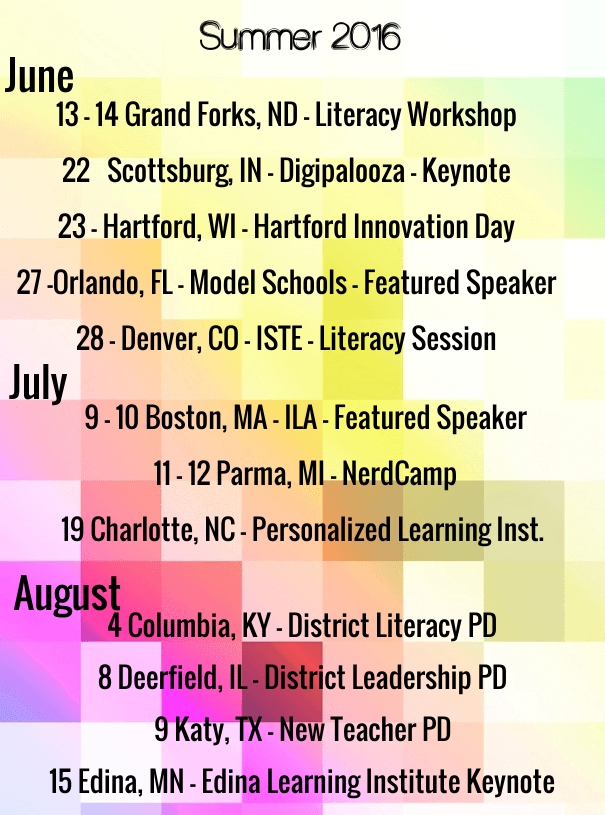
If you are wondering why there seems to be a common thread to so many of my posts as of late, it is because I am working on two separate literacy books.  While the task is daunting and intimidating, it is incredible to once again get to share the phenomenal words of my students as they push me to be a better teacher.  The first book tentatively titled The Global Literacy Classroom is scheduled for release November, 2016 by Solution Tree.  The second, which I am still writing, is tentatively Passionate Readers and will be published in the summer of 2017 by Routledge.  So until then if you like what you read here, consider reading my book Passionate Learners – How to Engage and Empower Your Students.  Also, if you are wondering where I will be in the coming year or would like to have me speak, please see this page.


being a teacher

The Book All Leaders Should Read

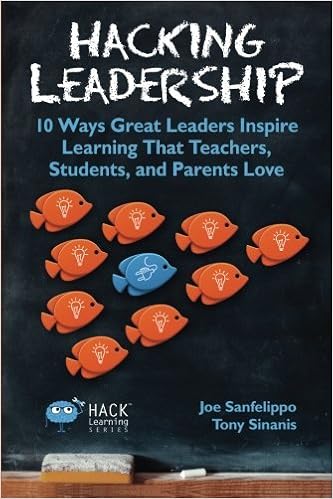
I have been lucky to call Joe Sanfelippo and Tony Sinanis friends for a few years now.  I have watched as they have taken their amazing ideas from theirs schools and districts and amplified them into the world.  I have seen how their words and through leading by example have helped others become more human in their leadership, more adept at navigating what it means to be a leader for all, and not just some.

So when I was sent a copy of their new book, Hacking Leadership, I knew I wanted to read it….at some point.  But a leadership book?  What did I really need that for?  On Sunday night, as I flew to North Dakota, I decided to glance at it, to get a feel for the book so to speak.  2 hours later, I was done with the book.  Mesmerized by the amazing ideas that unfolded in its pages, I was live tweeting quotes from the book, not because they had asked me too, but because these words resonated so deeply with me that I had to share them with others.  The next night I added one of their quotes to the reading presentation I was giving, ending with their words rather than my own.  I am not sure how else to put this; but this book?  This book will change education if we let it.

6569089671102464

What Tony and Joe have done is taken some very common problems in our schools, that seem to cross boundary lines, socioeconomic lines, and any other lines that may distinguish our schools from one another, and given us tangible solutions.  Ideas that we can not only implement starting tomorrow, but also a blueprint for long-term change.  They make no excuses for the roles of leaders within these problems, which as a teacher I found refreshing, and yet they do not blame, they merely point out the obvious and then offer up solutions right away.  And these solutions are not long-winded plans that will be forgotten after the first day, but small “hacks” that will have an immediate effect.

Sending positive notes home to a teacher’s family and support network thanking them for their support because it truly takes a village to change the world, yes please.  Making 100 phone calls home to parents on the 100th day of school to highlight awesome work, yes please.  Having students share the news from their school so they can shape the narrative, having students and parents as part of hiring committees even in elementary, asking for feedback more than once a year, yes please.  Trusting teachers to develop learning opportunities, knowing that for many it will allow them relevant PD , but also knowing that some will still abuse the system but not letting that hinder you, YES PLEASE!

5942021493096448

The book may say that there are 10 hacks in it, but there are so many more.  From the small and seemingly insignificant like making sure you speak to all staff members by keeping a checklist, to the truly groundbreaking way that Tony and Joe have empowered students, staff, and their community to be a part of their schools; this book should be required reading for all people in a leadership position, no matter their philosophy, no matter their experience.  In fact, if I were a superintendent, I would order a copy of this book for all of my leaders and make it their summer read.

I recommend many books as I speak, but hardly ever any PD books.  It takes a lot for me to really feel like a book is worth telling others about when it comes to how they should grow as an educator, grow as a practitioner.  The Book Whisperer and Book Love are really the two books that I recommend the most, but now they have been joined by Hacking Leadership.  A book I wasn’t really sure that I needed to read, but now can’t stop raving about.

Read this book, pass it on, or better yet get everyone you know a copy and then try the ideas.  Change small.  Change big.  Create a school community where every child, every adult feels that their voice matters.  Follow the words of advice from Tony and Joe that I loved so much I took a picture of them to remind myself.  “Not too many people wake up in the morning and say that they can’t wait to be average today.”  Don’t be average, hack your leadership and see the difference.  I am so grateful that this book is out there for all of us to learn from, even if we didn’t think we had much growing to do in the first place.


being a teacher, being me

May You Always

To my four young children,

I grew up the child of a single mother, who worked hard so that we could have a better life.  I grew up the daughter to a man who wasn’t quite sure how to be a dad, until my mother married someone that did.  I grew up often lonely, although surrounded by friends, always moving from place to place trying to find out where I fit in and who I belonged with.   I grew up not wanting to really have kids, until one day I knew that being a mother was the biggest thing I could ever be.

As I sit in this airport, flight grounded, brain tired, I think of all of the things that your daddy and I hope for you.  All those hopes that we carry with us as we try to shape your future, and your present, into something that will let you be the incredible people we see you as. So our dreams are many, our wishes are real, because right now there are so many things I hope you may never feel.

May you never feel the despair of losing someone unexpected.  May death be a natural part of your life, much like living, and not be something that leaves you deep scars, whether real or imagined.

May you never feel the anguish of loved ones incarcerated or otherwise removed from you, leaving you wondering what happened and how you could have helped.

May you never feel like you are alone, like it will not get better, like there is no better way to cope.

May you never have to feel like there is something you could never possibly tell us, ashamed of your own actions, ashamed of events beyond your control or those of your friends.  May you know that no matter what, we are there to support, to help, to be the kinds of parents we both had as we grew up.

May you always feel found.  Feel seen.  Feel heard.

May you always come back to feeling whole, even if for a while you didn’t.

May you always feel like you matter, like your voice matters, and that at the end of every day who you are and what you do makes a difference to the world.

May you make the natural foolish decisions that all adolescents seem to make without them altering the path you are on.

But if you ever find yourself in a situation you are not sure how you got into.  If you ever find yourself wondering about something that you do not feel comfortable enough to discuss with us.  If you ever wonder about some of the harder sides of life; may you find a library that carries books that will satiate your curiosity.

May you be taught by teachers who have the right to carry books in their classrooms that may have topics that can make grown ups pretty uncomfortable.

May you meet authors who dared to write books that didn’t fall into pretty boxes, who made us think, who made us question.

May you always be able to find a book that will give you the answers you were searching, so that you do not have to experience something instead.

May you always be able to explore safely within the pages of a book, within the conversations that teachers and librarians can facilitate in their schools, within the natural exploration that comes with being alive.

May you always have access to the books freely, much like I did growing up.

As your mother, I can only hope for so many things, but as an adult, as a teacher, I can speak up for books that need to be in the hands of students so they can learn about a world that hopefully does not mirror their own.

May you find what you are looking for, whenever you search, and may you have great teachers and librarians there to guide you as you do.

Love,

Mor


being a teacher

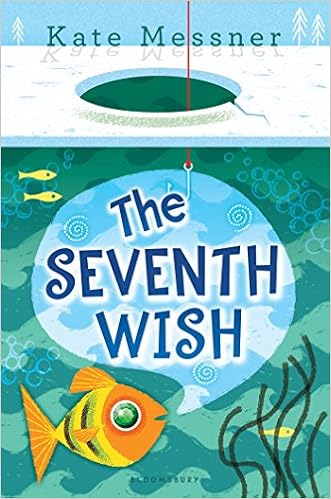
Review: The Seventh Wish by Kate Messner

Cross-posted from my reading review blog because this book deserves to be read.

Kate Messner has long been an author of must buy books.  Her range and talent mean that she is represented quite well in my classroom library, and the students love her work as much as I do.  Kate Messner gets it when it comes to writing books for kids about kids and that kids will want to book talk to others.  She writes from the heart, yes, but she also writes from a deep place of wanting to make this world a better place for any kid who may need the book she has created.  She writes so that children can find themselves in her books or can learn more about others.  And that is the beauty of her latest book; it is a book that will not only allow children to relate, but also for them to learn about a reality that many children face, and often a reality that not many children share out loud.

The moment I heard about the controversy surrounding The Seventh Wish by Kate I was torn up about it.  After all, here is a book that handles a topic that often is out of the maturity range for students and yet is so gravely needed in our middle grade classrooms. In fact, I wrote a blog post dedicated to the preservation of hard topic books and why they are so important for our classroom libraries.   The Seventh Wish is about figuring yourself out, reconnecting with your family, and yes, it is also about a child dealing with an older sibling’s addiction problem and the effects on the family.  The Seventh Wish is a book I wish didn’t have to be written, but it does, and it is so well done.  And the thing is, this book is not “just” about opiate addiction and the effects of it on a family.  It is about a girl trying to come to terms with what it means to be a middle schooler, who is trying to create the type of life she envisions for herself.

This book can be handled to those who may have experiences with drug addiction, but even more so, it can be handed to those who haven’t.  And while it may not be a great fit for some kids, it is for others, and it is for those kids that this book should be a part of a classroom library.  So yes, this book is appropriate for the grades it is written for.  Yes, this book is needed in our classroom libraries.  Yes, this book is not too much, nor too mature for our students.  It is a book that will stay with you for a long time, that can lead to discussions, that can lead to  a kid perhaps making better choices later in life.   I don’t often give books 5 stars, I am rather stingy that way, but this book.  This one got 5 stars.

For a much better worded review, please see the Barnes and Nobles Kid Blog.

From Amazon:

Charlie feels like she’s always coming in last. From her Mom’s new job to her sister’s life away at college, everything else always seems to be more important than Charlie’s upcoming dance competition or science project. Unsure of how to get her family’s attention, Charlie comes across the surprise of her life one day while ice-fishing . . . in the form of a floppy, scaly fish offering to grant her a wish in exchange for its freedom. Charlie can’t believe her luck until she realizes that this fish has a funny way of granting wishes, despite her best intentions. But when her family faces a challenge bigger than any they’ve ever experienced, Charlie wonders if some things might be too important to risk on a wish.

Be the change, being a teacher

Our Job is Not to Censor

Our job was never to censor, but always to educate.

I have taught children who have never owned a home.  Or some who own several.  Who have lived solely on the generosity of strangers.  I have taught children who have watched their parents get arrested.  Children who have watched family members drink until they passed out, shoot up, or take pills.  I have taught children whose earliest memories were of a parent walking out on them.  Children who have found God, or Allah, or nothing at all.  I have taught children who believe that family matters above everything else and some who do not know what family means.  I have taught children who from an early age knew they were not straight or the gender they were born with.  Every year I teach a new child, whose story breaks my heart and makes me question humanity.  We probably all have, whether we know it or not.

We wear so many hats as teachers, as parents.  Sometimes we wear many at ones, our roles always fluid, striving to do the very best we can for every child that is in our care.  We carry so many words with us that our students entrust us with.  Snippets of their life stories as they try to realize who they want to be  while they grow up in our classrooms. As they try to accept themselves and the person they see themselves becoming.

This is why one of the biggest responsibilities we have is to offer a safe environment for students to explore their identity, no matter the age of a child.  To create an environment where students can relate to each other, even if their lives seem very different.  To create an environment where every child can find out that they are good enough, that they are smart enough, that they are not broken.  To create a community where all children are accepted, no matter their background, their race, their religion, or any other identifier that may shape their lives.

We can do this through the very books we place in our libraries.  Through the very experiences we share as a reading community.    Our classroom library spans age groups, it spans ability levels, and it spans topics that may not be suited for all but are certainly suited for some.  Because the students I teach deserve to have a library that will allow them to explore topics that matter to them.  Because the students I teach deserve to have a library that will allow them to feel found.  Because they deserve to have a library that is not based on what I think they need, but rather on a myriad of books that may bring topics into their lives that they need to learn about.  That they may already know about but no one else does.

We teach children whose lives we can never imagine.  Who may go home to a life that looks nothing like the one we thought they had.  We teach children who are curious by nature, whose curiosity may lead them down a path that is destructive unless we somehow find a way to warn them.  We teach children who have so many questions about the bigger world but no idea how to answer them.  Books help us reach these children.  Books that may not work for all children, but may work for some.  So when we censor the books we allow into our reading communities we are telling some of our students that the story they live every day is not suitable for the rest of the class.  That the life they lead is not meant to be discussed by us.  That the experiences they have had is so different/hard/awful/mature that we will not allow a fictional character to experience it along with them, to allow them to feel less alone, less scared, and less broken.

So while we , of course, should read the books in our libraries as there are books better suited for some age groups, we should do everything we can to make sure our library is for all of the children we teach.  That our library becomes a way for students to discuss and explore things that they may not be exposed to yet, but that they should know about.  That our libraries become opportunities for students to learn about other ideas, beliefs, or lives that may seem foreign from their own.  Our job was never to censor, but always to educate.  Make sure that your library is for all of the children you teach, and not just those whose story mirrors your own.

PS:  Kate Messner, an author I greatly admire, was recently dis-invited from a school visit due to the topic of her newest book The Seventh Wish, a middle grade novel that deals with the effects of drug addiction on a younger sibling. This book should be in our libraries for all of those kids whose reality mirrors that of the main character.   To read about what happened and to show your support, please go here.