Be the change, being a teacher, books, inspiration

Need Some Inspiration? Enter to Win a Bundle of Books.

Congratulations to Jessie Krefting, who was picked by the random number generator.  Thank you so much to the more than 800 of you who participated in the contest!

With the days hurriedly passing by, it is hard to believe that in the northern hemisphere school is almost done for many.  I am going to miss my students so much.  Days of eating ice cream, sitting by the pool, and yes, traveling to speak and learn from others are ahead and my stack of amazing professional development books awaits.  I love summer for the renewal and recharge it gives us.

So why not share the love a little?  I thought it would be fun to give away a bundle – yes, all four books to one person – of professional development books that can hopefully spark some conversation and help you shape your teaching different.  This contest is open to the world and all you have to do is enter on the form.  It will close on May 10th.

What are the books?
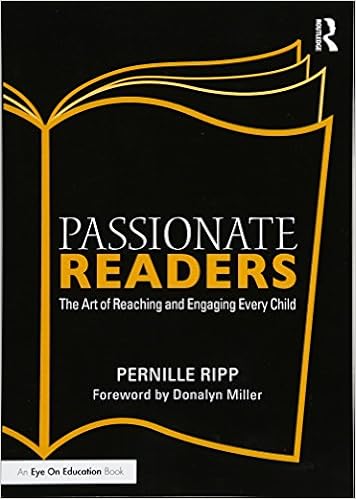
I am so happy that so many are finding inspiration within the pages of my latest book, Passionate Readers.  The lessons from my students in it have truly changed the way I teach and think about reading instruction.  Hopefully, it will help you do the same as we discuss independent reading, reading identity, libraries, and how to help students actually like reading.
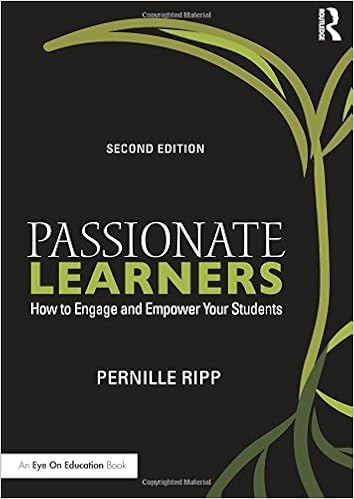
The very first book I wrote, Passionate Learners, is all about how we change our school system from within.  Once again, pushed by my students’ lessons and advice, this book is meant to reshape our entire school experience in order to help students find more reason to be engaged in school.  From small ideas to big pushes, this book is meant for every teacher, everywhere, that feels school can be better for all of our kids.

If you follow this blog, you know that I am obsessed with Sara K. Ahmed’s book, Being the Change.  This book is reshaping my classroom and should be a must for any educator, no matter their grade level.
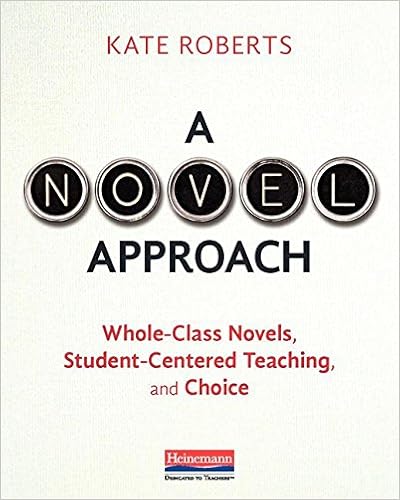
And finally, but not least, Kate Roberts’ newest book, A Novel Approach, is the book we all have waited for.  A practical inspiration for how to incorporate a whole class novel into reader’s workshop.  Trust me, the ideas in here are not to be missed.

I hope you are as excited about this bundle as I am, after all, any of these books by themselves should help an educator grow and also feel affirmed in the work they are already doing.  But together, that is a powerhouse of change.  To enter, please fill out the form, please enter only one.  Good luck and happy reading!

If you like what you read here, consider reading my newest book, Passionate Readers – The Art of Reaching and Engaging Every Child.  This book focuses on the five keys we can implement into any reading community to strengthen student reading experiences, even within the 45 minute English block.  If you are looking for solutions and ideas for how to re-engage all of your students consider reading my very first book  Passionate Learners – How to Engage and Empower Your Students.      Also, if you are wondering where I will be in the coming year or would like to have me speak, please see this page.

Be the change, being a teacher, Literacy, Reading

The Real Reason to Read Children’s Books

White, Black, Yellow,  Free Image

We had visitors in our classroom again today as some fantastic educators had traveled to be with us (shout out to West Dubuque).  As always, they had a few moments to speak to the people that prompted their visit in the first place; our students, who with their candor, wisdom, and humor always have great things to share.

They asked, “Why do you think it matters that Mrs. Ripp reads children’s books?”  I was eager to hear their answers.

I thought they would say that it mattered because I could recommend great books.  They did.

I thought they would say that it mattered because there was a lot of great books in here to choose from.  They did.

I thought they would say that it mattered because it made it easier for them to find a new book.  They did.

But what I hadn’t expected was this…

It matters because it shows that she cares about her job.

It matters because it shows that she cares about reading.

It matters because it shows that she cares about us…

Let that sink in.  That while we know that reading children’s books matters for so many reasons, this was the biggest one of all.

For all of my students, me reading a book and being able to bring it into class shows them that I care about them as people.  As kids who read and who have meaningful reading experiences.  That I am willing to dedicate my time away from our classroom to something that will hopefully matter to them shows that I mean every word when I say I love my job, I am grateful to be your teacher.

We worry so much about whether or not kids know that they matter.  Whether they know that we care about them.  We come up with elaborate ideas to show them how much we appreciate them and sometimes forget about the small things.  That care comes in small packages.  That caring sometimes comes in the shape of a book read and discussed.

So for every book I purchase, for every dollar spent, I will continue to tell our students that I love my job, that I love being a teacher for them, that reading matters and that this very book I read is my way of reminding them that I care.

If you like what you read here, consider reading my newest book, Passionate Readers – The Art of Reaching and Engaging Every Child.  This book focuses on the five keys we can implement into any reading community to strengthen student reading experiences, even within the 45 minute English block.  If you are looking for solutions and ideas for how to re-engage all of your students consider reading my very first book  Passionate Learners – How to Engage and Empower Your Students.      Also, if you are wondering where I will be in the coming year or would like to have me speak, please see this page.


Be the change, being a teacher, technology

Lessons from a #PhoneFree Classroom

I have been meaning to write more about our phone free classroom for a while.  It’s been more than month now.  I have been meaning to update, and yet, it keeps slipping my mind.

Not because I am busy.  Not because there are so many other things to do, even though there is.

No.

More because quite simply put, there isn’t much to say.

The protests and indignation I was worried would build over this rule haven’t come.

The anger or the sneakiness I wondered about hasn’t happened.

The letters to the principals, the “how dare you” statements never uttered.

Are some kids annoyed?  Probably.

Are some kids leaving them in their pockets? Probably.

Are some kids hoping to go back to the old way?  Probably.

But are they mad?  Outraged?  Feeling like their rights as a learner somehow having been violated – nope.

In fact, every day we have our routine down.  Most kids leave their phone in their locker.  Some in the bin in our classroom.  After the bell, I give a final reminder which inevitably leads to a few more phones in the bin and then we are off.  Focused as much as we can be in May in 7th grade on the learning that is happening.

Yet, what I have noticed has been small.  A few changes here and there; more face to face conversation within our classroom walls.  Less tense faces.  More presence.  Less worry.

It turns out that we didn’t need more cloud for more engagement, but needed more presence.  More here.  More now.

And today I noticed how several kids even forgot to grab their phone, only showing up later in the day to claim it once they realized it was missing.  Some of these kids were kids I have had to remind to put their phone away in the past, and here they come several class periods later, glad that their phone is still there waiting but realizing that perhaps it wasn’t that big of a deal anyway.  Perhaps not having their phone was not the end of the world.

And so we will continue until the very last day.  Separated from something that sometimes feels like it contains our entire world.  Given a moment to breathe that doesn’t involve notifications, likes, or needing to record every moment of our day.  A space to take risks, be present, and focus on each other, with just a small change in our days.

I started this experiment worried about the mental health of us all as we become more and more addicted to our phones.  But I also worried that it would cause resentment and anger, a sense of distrust in our community, that I was yet another adult who didn’t care about my students.  It turns out that my fear was unfounded.  That asking students to leave their phones out as they bring their hearts in was a step in the right direction.   In the end,  it turned out that we really didn’t need them for much anyway, who knew?

If you like what you read here, consider reading my newest book, Passionate Readers – The Art of Reaching and Engaging Every Child.  This book focuses on the five keys we can implement into any reading community to strengthen student reading experiences, even within the 45 minute English block.  If you are looking for solutions and ideas for how to re-engage all of your students consider reading my very first book  Passionate Learners – How to Engage and Empower Your Students.      Also, if you are wondering where I will be in the coming year or would like to have me speak, please see this page.


Be the change, being a student, being a teacher, student driven, Student Engagement, student voice

What Matters to You? An Exploration into #BeingtheChange

“I brought this because my mother bought it for me before she picked me up…”

“I brought this because my brother sent it to me…”

“I brought this because it represents who I am…”

My student holds up a small stuffed toy, the rest of the class sits in a circle in silence, and then a few ask questions.

The next child shares their object, and the experience replicates itself.  Silent listening, thoughtful questions, and a newfound knowledge of who we are and what we are.

For the past few weeks, we have been working our way through experiences inspired by Sara K. Ahmed’s new book, Being the Change.  A book that I knew the minute I read it would be a game changer for me.  And I was right.  The book inspired me to throw out my entire 4th quarter plans and revamp them with a focus on self-exploration, discovery, and social comprehension.

The book inspired me to add more student discussion, more time for reflection, more quiet, more time, deeper experiences.

We started with an exploration of the identity webs we created at the beginning of the year.  What can we add now?  Have we changed this year?  We discussed what identity means, how it shapes our experiences.

The focus naturally shifted then to our names.  I asked students to discover the story of their name or of someone else’s name.  I let those at home know to share the stories.  I shared my own name story, opened up and shared what it meant to only be named by my mother because my father didn’t really have a stake in my name, nor me as he decided that he couldn’t be at my birth because of a meeting.

The questions followed and I answered as best as I could, modeling my own trust in the community we have created, the vulnerability it sometimes takes to open up to others when you are not quite sure what they will do with the information.

We spent a lot of time talking, asking questions, and writing in our identity journal.  A low-key journal where students are asked to share their thoughts on what they are learning about themselves and others.  Quick lessons turned into several days, savoring the pace with which it unfolded in front of us.  Giving the proper time it deserves.

We moved into picture books, diving into amazing stories of others who decided to make an impact on the world.  Students read, inferred and wondered what led someone to take a risk and try to change the world.  I asked the students if they could connect with the person they wrote about.  And they did, not so much in the large feat the book was focused on, but on the everyday resilience, on the goals, on the motivation, the decision to be courageous.

And then I asked them where they were from.  Not just location, but what shapes them as a person.  What smells remind them of whatever home may be.  Which words, objects, moments frozen in time.  I shared my own life once more, opening up for questions and then stepped out of the way, having the students slowly unpack what the question even meant. They reflected, shared, and opened up.

And then I asked them to bring in an object that represented them somehow.  Something that mattered to them.  A 7th-grade show-and-tell but with meaning.  Some forgot, but those that remembered showed parts of themselves that perhaps others hadn’t seen.  It was meant to be a reminder of how to listen actively, a reminder of how to ask thoughtful questions, and yet it became so much more.

An unveiling of small parts that perhaps others hadn’t seen.

A deep sense of appreciation for taking the chance and sharing.

A stillness in our classroom as some kids chose to share deeply personal items, while their peers took it all in.

As a visitor observed yesterday, I can’t believe what they shared, and I agreed.  These kids with their hearts.  These kids with their stories.  These kids with their sometimes bravado laid it out there for all to see.  I am so grateful.  I am so proud.

As we move forward in this exploration of the issues that surround us in our world, I am so thankful for the inspiration for the book.  For the ideas to push us toward a closer understanding to who we are and how we see the world.  For how our very identity shapes the worldview we carry with us.  Sometimes all we need is a little inspiration.

If you like what you read here, consider reading my newest book, Passionate Readers – The Art of Reaching and Engaging Every Child.  This book focuses on the five keys we can implement into any reading community to strengthen student reading experiences, even within the 45 minute English block.  If you are looking for solutions and ideas for how to re-engage all of your students consider reading my very first book  Passionate Learners – How to Engage and Empower Your Students.      Also, if you are wondering where I will be in the coming year or would like to have me speak, please see this page.

Be the change, being a teacher

When I Realized I Would Be OK…

I ask her if she has anything else she wants to share.

The student-led conference is almost over.  Ups and downs have been highlighted.  She has discussed how she has grown, the choices she has made, how she is ready for the challenge of the next year.  I couldn’t be prouder, she is right, she is ready.

She clears her throat, says, “Yes, I want to share my highlight of the year…” pulls up the page to show her mom and then begins.

“My highlight of the year is when I realized I would be ok…

When I realized that all of the work I had put in would pay off, when I realized that I was smart, that this would be a good year.  That the way others saw me was for me to decide.  That last year which wasn’t so great, was not this year but that this year would be good.”

She continues on, and as I listen I get teary-eyed, I cannot help but think that perhaps we all need to have this realization.

That we will be okay.

That the past is truly in the past.  That we decide how the present will be.  That we screw up, that we make mistakes, but that we can fix it, that we can be better.

That sometimes others view us in a way we don’t want.

That sometimes we surround ourselves with negativity.

That sometimes we are the negativity.

That sometimes we make these decisions that affect us for a long time, but that there always, always is a way out.

And that sometimes, we are the reason a kid started to see themselves this way.

That we, as educators, hold so much power over how these kids feel within our classrooms, that if we do not feel okay, it will be hard for our students to.  That if we only see our student through one lens, whatever we may be, we miss the whole kid.  That we all need to help kids that they will be ok.

So may we all have the realization that we will be ok.

That we are enough.

That we are smart.

That we are kind.

That what we have done is worth it.  Is worth us.

If you like what you read here, consider reading my newest book, Passionate Readers – The Art of Reaching and Engaging Every Child.  This book focuses on the five keys we can implement into any reading community to strengthen student reading experiences, even within the 45 minute English block.  If you are looking for solutions and ideas for how to re-engage all of your students consider reading my very first book  Passionate Learners – How to Engage and Empower Your Students.      Also, if you are wondering where I will be in the coming year or would like to have me speak, please see this page.


Be the change, being a teacher, student voice

I Hate Your Class

She tells me that she hates my class.  She hates coming.  She hates what we are doing.  Waits for my reaction, after all, aren’t those fighting words?  I take a breath, quell my shame, and ask, “How can I help?  What can I do?”

Nothing, she says, and she looks away.  This conversation is over.

I carry the words with me wherever I go.  I am the teacher that a child hates to have.  I am a teacher whose class a child hates.

It happens to all of us and yet we feel like, surely, we must be the only ones who have ever been told just how awful we are.  Just how miserable we make coming to school, just how we make this child feel.  In the past, a long time ago, I would have gotten mad.  Angry at the words.  How dare you and do you know what I do to make this class great?  Don’t you know just how much I care?  Don’t you see all of the kids smiling, having fun, investing in our class?  Don’t you hear their declaration of love?

Surely it cannot be me but you that is the problem…

Now I know that the words are not meant to hurt, but instead, inform.  To help us realize that what we are doing at the moment is not what this child needs.  That their lens of our classroom needs to change, that somehow, somewhere our connection has been dulled or frazzled and that it is in our power to now do something about it.

Because that’s what those words are; an invitation to repair.  To have a deeper conversation.  To say, what can I do instead of what have you done?  To reflect on our actions, on our interactions, and question how we are part of the problem before we get to the solution.  It starts with us, and it starts with asking, after all, not every child will have the courage to say it straight to your face.

So on Monday, take a moment to ask your students or even your teachers, do you like our classroom, do you like our school, do you think I like you?  Ask them to trust you with their truths and put their names on the answer.

Take a deep breath before you read the answers.

Don’t get angry, get quiet instead, think for a moment and then approach the kids, or the adults, and thank them for their honesty.  For their truth.  Then ask, how can we make it better?  How can we change this?

Because we cannot change what we don’t know.

I am the teacher that a child hates to have.  I am a teacher whose class a child hates.  But it is not all I am.  It is not all I have to be. If only I have the courage to ask.  I can change that, we all can.

If you like what you read here, consider reading my newest book, Passionate Readers – The Art of Reaching and Engaging Every Child, out August 2017.  This book focuses on the five keys we can implement into any reading community to strengthen student reading experiences, even within the 45 minute English block.  If you are looking for solutions and ideas for how to re-engage all of your students consider reading my very first book  Passionate Learners – How to Engage and Empower Your Students.      Also, if you are wondering where I will be in the coming year or would like to have me speak, please see this page.