Be the change, being a teacher, Literacy, Reading, Reading Identity

On Accelerated Reader and All the Other Computer Programs

Pardon me while I write what is on my mind for a little bit.

I just took an Accelerated Reader practice quiz on Elephant and Piggie’s There’s a Bird on Your Head.  A picture book  I have read so many times I think I know it by heart.  A picture book series that my 7th graders end up loving too as we perform plays based on them.  A picture book series that made me cry when the last book came out and they told us all “Thank you for being a reader.”

You know what AR wanted me to know about the book?

It wanted to know what happened and what was said.

That’s it.

Not why Gerald didn’t like the birds on his head.  Not what the message of the book was.  Not what they could learn from the book and apply to their own life.  After all, that doesn’t prove they have read it.  That doesn’t prove they have understood, right?!

Sheer memorization and retelling.

Of Mice and Men wasn’t any better.  Again, memorization was the key factor here.  Not deep thinking.  Not deep conversation about the ultimate decision made at the end.  Not how this book will change you or make you think about the world you live in.

An American classic boiled down to remembering minute details.

All in the hands of computer programs which purport to help readers grow.

And before, someone tells me that for some kids programs like this works, I would like to know what we define as “works?”  Do we define “works” as rushing to read another book?  As sharing the incredible experience a book just provided them with others?  Do we define “works” as cannot wait to read another book, outside of class not because they have to but because they want to?  Do we define “works” as continuing to develop a positive reading identity that will carry them into adulthood?

Or do we define ‘”works” as kids doing it because they are rule followers and don’t want to cause a stir? Do we define “works” as a computer telling us how much a child remembered from the book they just read?  Do we define it as how many points they have gained this year as a supposed reflection on how they have grown as readers?  Or as now we know which book a child should read next because the computer told them so?

Because if that is what we mean be developing lifelong readers then I must have lost my mind.

When people ask me why I dislike programs like AR so much, it is hard to know where to start.  My problem with these blanket programs are many; we rob kids of actual true choice not determined by a reading database that only allows you to select books that have quizzes on them.

You know which books don’t have AR quizzes on them right now?  Long Way Down by Jason Reynolds and Dear Martin by Nic Stone.  Arguably two of the most important books for adolescents to read this year. I hope they never add them, I can’t even begin to imagine what types of low-level questions they would ask.

We rob kids of the chance to have conversations with others about the books that are changing them.  We rob kids of the messy process that it is to get to a deeper meaning within a book, even when they are young.  We rob kids of the chance to be seen more as the points they are given.  We rob our most vulnerable readers, those we label struggling, low, or whatever other harsh terms in our data meetings, the opportunity to have the best possible chance at becoming a reader through the determined instruction of a knowledgeable teacher.

In our eagerness to make sure every child is reading the right fit book, we have forgotten about the very child reading those books.

Reading was never meant to be about points.  Or scores.  Or correct answers.

It was never meant to be about levels or data or rewards for goals met.

Reading was never meant to be easy either.  It was meant to be a complex process in which we discover parts of ourselves that we didn’t know before.  A process that brought us closer together as a community of learners, as we felt the growth we made not because a test told us but because the very book we just finished was an accomplishment in itself.

Don’t believe me?  How can simple computer programs really be so bad?  Why don’t we ask the very kids we subject these programs to?  A novel idea, I suppose, as what would kids really know?  And yet, I am here writing about this because of the very things kids (and their horrified parents) have told me over the years.

“AR means my child picks the smallest books they can in order to get the points they need…”

“AR means I am not allowed to read the book I wanted to…”

“I am a bad reader because I cannot get the answers right…”

So what can we do instead of these programs?

We can start the conversation first.  We can ask the very kids we subject to the reading programs and then do something about what they tell us.

We can ask parents and caregivers how this program either hurts or harms their child.

We can invest all of that money spent on this program into great books and then put them in every single classroom.  And then we can read them and speak about them and help kids find great new books.

We can give teachers training on reading workshop and how to have meaningful conversations about books with kids.

We can tell our teachers to go back to common sense reading instruction.

We can tell our teachers that teaching to fidelity doesn’t mean fidelity to the program but to the kid in front of them.

We can evaluate everything we do with kids and see if it really gets to what we hope they become; kids who read books because they want to!

If we want to know whether a child is reading, we can look at them while they read.

If we want to know whether a child understands what they are reading, we can ask, sometimes face to face, other times on paper.

If we want to know how a child is progressing as a reader, we can assess them, hearing them read out loud, conferring with them and asking further questions.  And sure, use a computer to give them a test but make sure that the test is actually giving you valid information.  Let the data be a part of the conversation, not the whole conversation.

If we want to know what book a child should read next, we can ask them. Then we can bookshop.  If a child doesn’t know how to select a great book then that is where we start.

If we want to know whether a book is a good fit for a child, we can ask them.  And we can remember the words of Fountas and Pinnell who said, that “Levels are a teacher’s tool and not a child’s label.”

You know what helping a child figure out their reading identity is?  It’s hard.  It’s messy.  It’s exhausting at times.

It’s not easy.

But it’s worth it.

it’s worth it every time we see child realize that they, too, can be a reader.

It’s worth it every time we see a child realize that they, too, can get something out of a book.

It’s worth it every we see a child realize that they, too, can understand what it means to want to keep on reading.

Not because a computer told them to select another book from their level.

Not because they were given points for their work.

Not because they were given rewards.

But because to them, it mattered, beyond the computer, beyond the quiz, beyond the task.

But because to them, they became readers because someone cared about their reading journey and protected the very hope they carry for being a reader some day.

A computer program will never do that for a child, no matter how “research-based” it is.

PS:  Whoa, apparently this post which was just me thinking out loud has struck a chord for many.  I encourage you to reflect on it and see where it fits into your reading philosophy.  As I have said before, if a program harms even one child’s love of reading then we need to question it, which is what I am doing here.  I am not shaming teachers, I am a teacher myself, but instead asking us to really reflect on whether the thousands of dollars spent on these computer programs are really helping us achieve our goals in the long-run, because of course programs like these can garner compliance in the short run, but we are in this reading life for the long run.

To see more thoughts on AR please see Jen Robinson’s posts which showcases other work on it.  Donalyn Miller’s post on it and do take the time to read Stephen Krashen’s discussion of the research that AR uses as a selling point.

If you like what you read here, consider reading my newest book, Passionate Readers – The Art of Reaching and Engaging Every Child, out August 2017.  This book focuses on the five keys we can implement into any reading community to strengthen student reading experiences, even within the 45 minute English block.  If you are looking for solutions and ideas for how to re-engage all of your students consider reading my very first book  Passionate Learners – How to Engage and Empower Your Students.      Also, if you are wondering where I will be in the coming year or would like to have me speak, please see this page.
 

Be the change, being a teacher, Reading, Student dreams

Cover Reveal: Albie Newton by Josh Funk and Some Very Exciting News

I first properly met Josh Funk when he bought me a cup of tea in a convention center in Boston for ILA.  Properly because we had actually met at NerdCamp but had not had much time together.  So in a crowded hallway, we sat down to talk picture books, writing, and what it means to work with kids and try to make the world better.  Had I known that I would make a friend that day I would have made him buy me a donut (chocolate with sprinkles, please).

That day Josh told me of his latest picture book, he was still writing it and was wondering out loud about how characters would react to a child that perhaps didn’t see the wrong in his ways.  We laughed about the perfect endings we both wished for all of our children and realized that the not so perfect endings are sometimes what makes books so amazing and also life so hard.  I spoke of one student who right away reminded me of Albie Newton and how I wished that he would be a part of a world where his set ways were seen as strengths rather than an oddity.

More than a year later and that picture book we talked about is ready to have its cover revealed.  When Josh asked me if I would do the honor, there was no other answer than yes.  After all, this would perfectly coincide with another announcement I had planned; Josh Funk is a contender for Global Read Aloud 2018!  His books are some of my 7th graders’ favorites, as well as my own childrens’, and will be perfect for sparking conversations around the world.    I have wanted to tell him for some time but thought a little surprise would be better.

So surprise, Josh, thank you for trusting me to reveal Albie Newton to the world.

Who is Albie Newton?

A clever scientist?

A brilliant artist?

A mischief-maker?

On the surface, it might seem like ALBIE NEWTON is a cute little story about a boy’s first day at school and how he attempts to make friends (and fails with hilarity), but everything eventually works out in the end. Hopefully, you’ll revel in the adorable illustrations created by Ester Garay. And I certainly want you to laugh at the silly STEAM-related situations in which Albie finds himself. For example:

Arjun ate his snack and finished Albie’s cleanup duties,

while Albie built a science lab and found a cure for cooties.

But there’s a deeper level; one I really struggled with getting right. And Pernille Ripp helped me realize exactly who Albie was and how to keep his character true.

We talk about the need for windows and mirrors. I believe Albie will be a mirror for some kids who often don’t get to see themselves in everyday, non-”issue” related stories.

Let me back up. One of the very first lessons you learn as a picture book writer is this:

The main character must solve the problem on their own – and learn a lesson in the process.

It’s a basic picture book paradigm – flip through pretty much any picture book and you’ll see what I mean. And this generally makes sense. Stories are far more satisfying if the main characters figure out how to solve their own problems. It’s less satisfying if a parent or teacher solves the problem and didactically explains the lesson.

But as an educator, you’ve likely encountered some students who, in certain social situations, have difficulty solving their own problems. And in some of those cases, kids may not even notice that they’ve caused problems … until it’s too late.

Back to Albie’s story, on his first day of school, he ends up unintentionally and unknowingly alienating his classmates one by one on each and every page of the book. As the tension rises and his classmates’ anger reaches a boiling point, Albie is still unaware he’s caused a conflict.

And then, I had my own conflict: How do I end this book?

Does Albie solve the problem himself? Does he apologize? Does he learn a lesson? That was the textbook answer according to the “Picture Book Paradigm”.

But I knew Albie’s character. He wouldn’t apologize on his own. I didn’t even believe he would change throughout the story. Would this be a satisfying ending for the reader? Would it be believable? After several phone calls and emails with my agent AND editor about this very topic, a decision had to made. Deadlines loomed. The illustrator was already hard at work.

And there I was, having coffee on a bench at the Hynes Convention Center for ILA 2016 in Boston explaining my struggle to Pernille Ripp. If you’ve read Pernille’s writing (and I’m assuming you have because this is her site, after all), you’ll know she’s got passionate opinions. And that day she didn’t disappoint.

Pernille said that she’d had students like Albie. And sometimes social interactions are incredibly challenging, to say the least. She adamantly said I needed to stick to my gut and have Albie NOT apologize or learn a cliché lesson. Because that’s how it would have been for many of the Albies she’s taught. And especially not because that’s just how picture books work.

Pernille’s encouragement gave me the confidence to keep Albie’s character the way I’d always intended – a mirror for those who need him to be one. And hopefully, Albie is a window for the rest of your students, who often have trouble interacting with and understanding the Albies of the world.

You might even say that Albie Newton isn’t really the main character of ALBIE NEWTON; the main character is everyone else in the class. And they’re the ones who learn that valuable lesson and come out of the story changed.

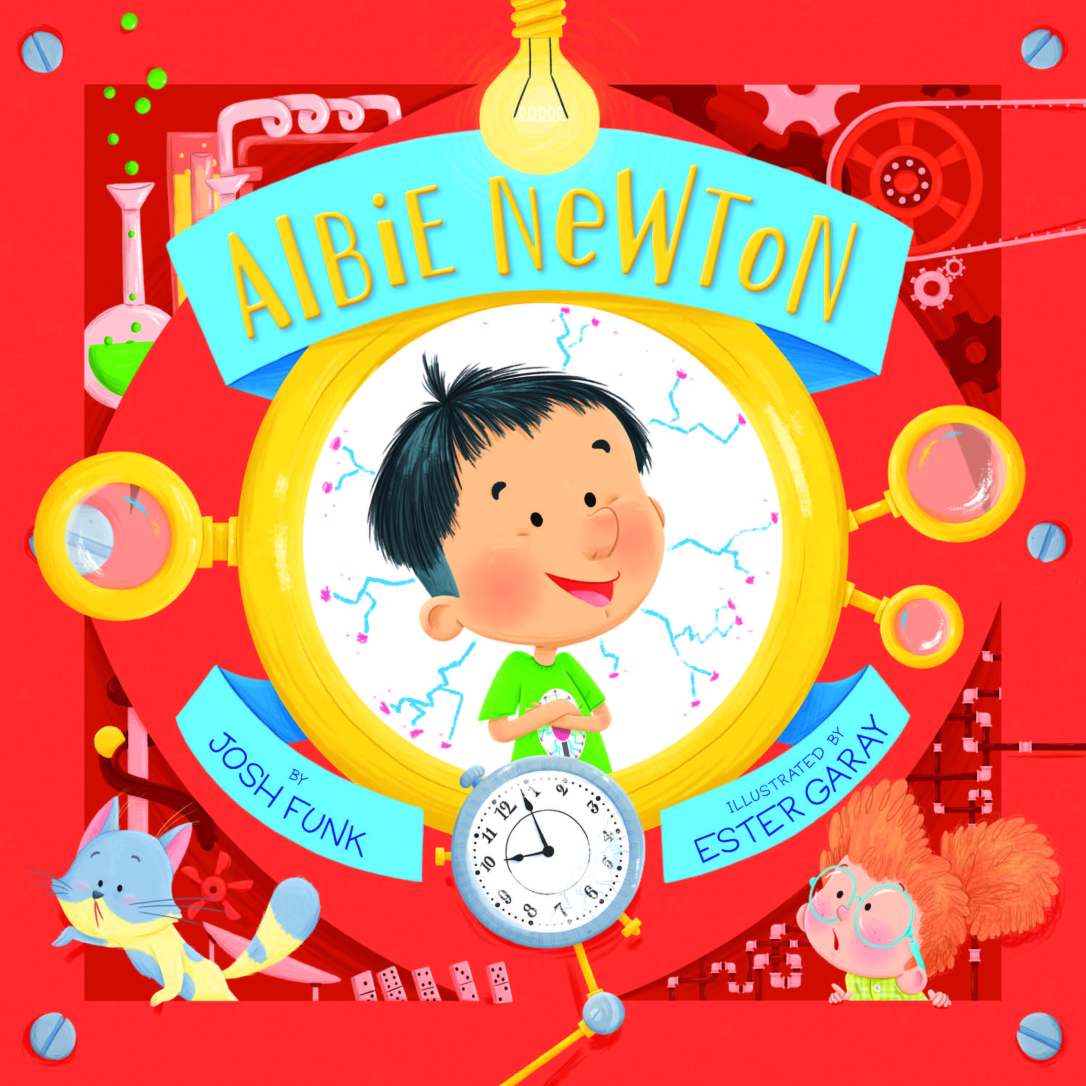
Without further ramblings, explanations, and ado, here is the cover of ALBIE NEWTON.


_Albie Newton.jpg


Thank you, Pernille, for hosting this cover reveal. And thank you for giving me the advice and confidence to make this book the way it needed to be.

ALBE NEWTON by Josh Funk, illustrated by Ester Garay, published by Sterling Children’s Books will be available everywhere on May 1, 2018.

Bio: Josh Funk writes silly stories and somehow tricks people into publishing them as books – such as the Lady Pancake & Sir French Toast series (including The Case of the Stinky Stench and the upcoming Mission: Defrostable), It’s Not Jack and the Beanstalk, Dear Dragon, Pirasaurs!, and the forthcoming Albie Newton, How to Code a Sandcastle (in conjunction with Girls Who Code), Lost in the Library: A Story of Patience and Fortitude (in conjunction with the New York Public Library), It’s Not Hansel and Gretel, and more coming soon!


Josh is a board member of The Writers’ Loft in Sherborn, MA and was the co-coordinator of the 2016 and 2017 New England Regional SCBWI Conferences.

Josh grew up in New England and studied Computer Science in school. Today, he still lives in New England and when not writing Java code or Python scripts, he drinks Java coffee and writes manuscripts.

Josh is terrible at writing bios, so please help fill in the blanks. Josh enjoys __(naps)_____ during ___(rain storms)_____ and has always loved ___(doing his taxes)_______. He has played __(old and wise)_____ since age _(2)_ and his biggest fear in life is being eaten by a __(goldfish)________.

For more information about Josh, visit www.joshfunkbooks.com or @joshfunkbooks on Twitter.

Be the change, being a teacher

Our Perfectly Average Child

dsc_0124_2_18187211169_o.jpg


I have shared the story of our youngest daughter Augustine’s much too early arrival several times on this blog.  It is a story I share gladly as we think of what our students sometimes live through before they come to us.  It is a story I share to remind myself of how far we have come.  And yet, whenever I look at her I cannot help but marvel at just how far she has come.

How much she is versus what she was.

How far she has grown from how little she was.

The odds she has overcome to be given the best title in the world; perfectly average.

Average; meaning in the middle of a set of numbers, meaning typical, meaning the usual.

A perfectly average child who has fought her way to carry that label.

It is within her story that I am reminded of just how far “average” can be for a child.

How much our students sometimes overcome to simply reach it.

How far our students go to simply be typical.  To reach the usual.  To reach the middle of others.

How we sometimes forget just how much of a victory reaching average can be.

Of course, we should push our students to be more than what they were but don’t ever discount the average.  Don’t ever dismiss the journey of a child who happens to land right there, for we don’t know how far that journey has been.

As I look at Augustine run after her siblings I see a perfectly average child and I know that she will be okay.  That we will be okay.  And that average is right where she is supposed to be.

IMG_7346 (1).JPG

Be the change, being a teacher, Literacy, Reading, Reading Identity

A Call for Common Sense Reading Instruction

It appears that in our quest to make sure students can comprehend what they read that we have lost our common sense.  That we have started listening much more to programs, politicians, and shoddy research than the very kids who the programs are happening to.  That we have pushed the ideas of teachers aside, of best practices, and solid pedagogy, and gotten so lost in the process that we turn to more experts to tell us what we used to know.

So it is time for a little reminder of what we know about best reading practices; those same ideas that my students have been reminding me of for years.  Those same ideas that the godfathers and godmothers of reading have been shouting loudly for years.

Choice matters.

And choice for all matters.  Not just for the kids who already know how to read well.  Not just for the kids that seem to be able to pick the right book almost every time.  Not just for the kids who already feel like readers.  Choice for the vulnerable, for the strugglers, for the resistant, for the kids who don’t think they will ever like reading, for whatever we deem to label a child that just not has blossomed as a reader just yet.  And real choice, not the pretend you have choice when I ask you to select from this one stack of books.

Time matters.

And not the time to do more stuff about reading, but actually read in class.  To plant the seeds of further reading as Allington discusses in his research.  To actually give them time to read within our school day before we make them do more with their reading.  How can we say that reading a great book is vital and then deny them the chance to do it right in our very own classrooms?  How do we find time to have them read in class, we, educators, stop speaking so much in class.

Perception matters.

How we view the abilities of our students directly influence the instructional choices we make.  When we perceive them as high-achieving and capable we give them freedom, more chances of creativity, and have better relationships.  When we are afraid that they will not be able to handle something, we restrict them, we tighten our control, we have them read less, do less meaningful work, and also have a more strained relationship with them.  Do you see all of your students as capable readers or just some of them?

Access matters.

We know children should be surrounded by books, and yet how much money is spent on other resources rather than books.  When I see 1 on 1 programs rolled out or other major tech initiatives, I always wonder if the same amount has been spent on books?  Not because I don’t support the technology, but because books aren’t often seen as investments.  I always wonder if there is a classroom library in every room.  Yes, we need fully staffed school libraries with certified librarians for all kids AND we also need classroom libraries in every single classroom.  In fact, research shows that students read 50-60 % more in classrooms that have libraries than in those without.

Representation matters.

And those classroom libraries need to represent the diverse society we live in.  We need to critically evaluate what we bring into our students’ reading lives, not because it always has to be classical reading but because we need great books for many readers.  That means we say yes to graphic novels, audio, comic books and other amazing formats of books.  That means that we search out and specifically purchase stories featuring a diversity of characters from #OwnVoices authors.  That means that we not just aware of who is represented, but also how they are represented.  And we constantly assess who is not represented in our classroom library.  We start small with our library collections and build them every month.

Reflection matters.

When we finish a book, what do most of us do?  I can tell you what most people don’t do – write about it.  And yet, what is one of the most common practices we have students do in our classrooms?  Those little jots, reflection pieces, reviews, and logs are making the very act of reading a chore.  Not for all but for some.  So why make all kids reflect after they have finished a book?  Why not give them choice?  Perhaps they want to do nothing, perhaps they want to book talk it, perhaps they want to share the book on social media, perhaps they want to write.  Let them discover what their reading identity tells them to do rather than follow a blanket rule.

Our knowledge of children’s literature matters.

If we are teaching readers then we should be reading their books.  Every time we read a children’s book we are able to speak another language with our students.  The books we recommend get read more, which also means that the book gaps we have (books we do not tend to read) dictate what we don’t recommend.  So read widely and proudly.  Read children’s literature as much as possible so that you can become a proper reading role model, not just because you said you are, but because you are able to speak books with the very kids you teach.

Trust matters.

When a child tells me that they read at home, I trust them.  Much like I trust them to work on reading outside of our class.  If I hand them a reading log to have parents sign, I am telling them that I don’t trust them when they share their reading decisions with me to quote Jessica Lifshitz.  For some that may take all year to achieve, for some, the habit never fully solidifies.  But we try every day as we offer up reminders of why reading more than just what is accomplished in class matters.

Personalization matters.

When we purchase the programs, when we make blanket decisions, when we force the same procedures on every child, we are telling them that we are too busy to get to know them.  That their unique reading identity needs to fit within this one box, no matter where they are on their journey.  That we would rather trust a program than trust the very kids we teach.  So use the program but keep your students in mind, detour when needed, and administrators, please tell your teachers to trust their experience rather than just follow a program to fidelity.  Give them time to wrestle with new ideas, new challenges, and new curriculum.  Trust those that are ready and support those that need it.  So much can depend on one great administrator.

You matter.

And so you must find the courage to speak up when you see instructional decisions harm the love of reading that our students carry.  You must start conversations within your own district, your own buildings, and you must reflect on your own decisions.  Ask your students how you can be a better teacher for them.  Ask them what makes reading amazing and what makes it awful.  Question your own practices and admit when you need to grow.  We are only as good as our last decision to change.

So we can purchase the programs, we can get caught up in test scores and test prep.  We can continue to search for the next big thing or we can go back to the things we know work for all kids; time to read, choice in what they read, access to books, and a community to grow with.  Don’t lose touch with your own common sense.

If you like what you read here, consider reading my newest book, Passionate Readers – The Art of Reaching and Engaging Every Child, out August 2017.  This book focuses on the five keys we can implement into any reading community to strengthen student reading experiences, even within the 45 minute English block.  If you are looking for solutions and ideas for how to re-engage all of your students consider reading my very first book  Passionate Learners – How to Engage and Empower Your Students.      Also, if you are wondering where I will be in the coming year or would like to have me speak, please see this page.

 

Be the change, being a teacher, being me

What the Test Didn’t Care About

Dear Theadora,

Today you told me you were stupid.  That you couldn’t even read the stupid test.  That you knew you failed and so you gave up.  That you will never be a reader.  Again.

And I looked at you and I asked if you needed a hug.  As you crept into my arms, there was so much I wanted to tell you and like your bumbling mother I tried.

I told you to remember that you are not a stupid test.

That you are not a correct answer.  Or an incorrect one for that matter.

That you are not just a level, a piece of data, an insignificant number determined by a profit-making entity.  You will never be just a J.

That you are not stupid.

That you are not failing.

But that you are smart.

That you are brave.

That you are a reader.

Because what the test didn’t care about is that we see you read.  We see you listen.  We see you choose a book and make your way through the pages, even when the words don’t make sense.

We see you ask to go to the library and please can I have one more book?

We see you read to your siblings, to ask for just one more page, to tell me everything that has happened in the Lightning Thief since I last drove the car.

We see you try, We see you fight for the words at times, and other times, they come so easily.

What the test doesn’t care about is how far you have come.  How you know all of the strategies but when you know you are getting the answers wrong it doesn’t matter what you were taught because all you can think about is how you know you are wrong and now the rest of the world knows it too.  How does anyone face that as a child?

What the test doesn’t care about is how much you love reading.  How much your teachers work hard to protect it.  How much being a reader, one that reads chapter books, means to you.  Which is why you keep trying every single day, every single time.

So when we look at the data, dear Thea, I wish it told the full story.  That it actually showed us what we needed to know.  Not just a level.  Not just a score.  Not just the incorrect or the time spent struggling.  Not just the suggested lessons or the gaps in your skills.

I wish it knew you.  No test ever will.  That is why we are so thankful for your teachers.

But I can tell you now, and you have to believe this loudly.  You have to believe this proudly.  You have always been a reader.  You will always be a reader.  Nothing will change that if you don’t let it.  So don’t let it.

Love,

Mommy


Be the change, being a teacher, Literacy, Reading, Reading Identity

On Creating Reading Experiences

They groan when I tell them about the Signposts.

“Another thing to write about, Mrs. Ripp?”

“Do we have to?”

“Why can’t we just read?”

Their post-its hang behind me, reminding me of all they have said about what kills their love of reading.

And I get it, we, meaning educators, have written reading to death.  With every post-it, every jot, every stop and think, every time we ask them to do more work and forget about the virtues of aesthetic reading as discussed by Louise Rosenblatt, we make them dislike it more.  In our eagerness to help kids become better readers, we have made the kids drown in their post-it notes.  We have broken meaningful stories into such small tasks so that the very meaning that made the story worth our time is gone.  We have forgotten about the purpose of all this instruction it seems; to create literate human beings that can grow from what they read, both intellectually, but also on a heart level.

Yes, we need to teach skills, of course, we do.  But we also have to let the kids use those skills in meaningful ways.  We have to let them practice too without telling them to use post-its, without telling them to write down, without telling them to look for specific things, because if we don’t, we don’t know if they will ever be able to do it without our prompts, our scaffolds, our tasks.  We have to remind them, and ourselves, that when we read it is not just to complete a task attached to it.  That the task is just a practice for the real deal; for when we read and we have an experience with the text.

So I tell them not to worry.  The signposts, or any other skills we review or learn are just tools.  Tools to use when it makes sense.  Tools to use so they can complete the tasks that we do need to do at times.  Practice them so they become habit when we need them but that it is also okay to just read and let the movie flow in our heads to the point where the rest of the world falls away and all we can focus on is how close we are getting to the end of the book.

So let your students experience meaningful words, not just more reading tasks.  Let them experience what it means to read and then feel something.  Let them experience what it means to read and sit in silence.  Let them read and get to the end and then discuss what the text made them think of, not just a few skills you have just taught, not just the repertoire of tools they may have.  Balance is needed in all of our classrooms for the purposes of reading, our students are telling us this loudly if we will only listen.

If you like what you read here, consider reading my newest book, Passionate Readers – The Art of Reaching and Engaging Every Child, out August 2017.  This book focuses on the five keys we can implement into any reading community to strengthen student reading experiences, even within the 45 minute English block.  If you are looking for solutions and ideas for how to re-engage all of your students consider reading my very first book  Passionate Learners – How to Engage and Empower Your Students.      Also, if you are wondering where I will be in the coming year or would like to have me speak, please see this page.