being a teacher, conferences, Student

There Is Always Something Good

Every-child-has

I am exhausted.  Eyes feel like cotton balls, my head is spinning.  The boots on my feet feel like they weigh 20 pounds each.  Welcome to the day after parent-teacher conferences; a marathon of 5 minute conferences in a 4 hour span that leaves me feeling like I am not quite sure who I am or what I said.  And still…

I may have rushed through every conversation.  I may have not said everything I wanted to say.  I may not have fulfilled every hope, that happens when you are held to a 5 minute time limit (middle school conferences at their best).  I am not sure I was enough , the time definitely wasn’t, but I kn I know one thing for sure.  I know that in every conference I brought up something good.  I brought up something unique.  Something that the child brings to our classroom, brings to my life.  Every single child had something good mentioned.  Every single child was worth celebrating.

Yes, there are goals and challenges, ups and downs that need to be discussed.  Those pesky habits we are trying to break, those strong skills we are trying to teach.  The strides we have to make, the plans we have to lay.  But there is also good.  And goodness in every child.  Every child has something positive worth sharing.  Every child is worth us smiling about.  So even if the academics are in shambles, and who knew where those behaviors are coming from, look for the good, perhaps dig really deep, but remember, that these are children we get to talk about.  Children who are learning what it means to be successful.  Children who are learning from their mistakes.  Children whose parents send us their very best child every day.  Parents who need to hear that we see something worth believing in.

There is always something good to share, it is our job to uncover it.  Just like our students uncover it in us every day.  Just like parents believe in us every day.  So dig deep if you must, but don’t give up.  Uncover the goodness in each child.  Uncover your belief that they can be good.

photo

PS:  I cannot wait to do student-led conferences in the spring…

I am a passionate teacher in Oregon, Wisconsin, USA,  who has taught 4th, 5th, and 7th grade.  Proud techy geek, and mass consumer of incredible books. Creator of the Global Read Aloud Project, Co-founder of EdCamp MadWI, and believer in all children. I have no awards or accolades except for the lightbulbs that go off in my students’ heads every day.  First book “Passionate Learners – Giving Our Classrooms Back to Our Students” can be purchased now from Powerful Learning Press.   Second book“Empowered Schools, Empowered Students – Creating Connected and Invested Learners” is out now from Corwin Press.  Follow me on Twitter @PernilleRipp.

aha moment, assessment, assumptions, Be the change, being a teacher

You Can’t Just Do It To Them

image from icanread

“Remember, whatever I ask you to do, I ask myself to do too.”

This is how almost any assignment is handed out in my classes.  Not to make the students feel better.  Not to make them embrace the assignment more quickly.  No, it is really quite simple; I have done the assignment already.   I have spent time doing the exact same thing, following the same directions, looked at the assessment and pondered how I would do.  Not when I was their age, not when I was in college, not even last year.  No the assignment I am asking them to do, I have done in the past few days as well as I prepared.

Why is this important?  Because every day we ask students to spend their time, whether in class or after school, doing work for us to show their mastery, to practice their skills, to help them grow.  Yet often these assignments are ones that we have never experienced ourselves.  Ones that we may have used to much success before.  Or ones that we got from an amazing source. Yet, we don’t know what it feels to actually do it.  And that creates a problem based on assumptions.  We assume we know how much time it will take.  We assume we know how hard it is.  We assume our directions are clear.  We assume the assessment is fair.  All of those assumptions add up to nothing good.

I started doing my own assignments a few years back.  I didn’t get why my students groaned so much when a new project was handed out.  I didn’t get why I would get emails from parents stating how many hours their children had spent.  Whether it was book report dioramas, grammar packets, or even just outside reading, I assumed I knew what it was like to do them because I had gone to school once too.  On a whim one night, after a particular groan-filled day, I did one of my grammar packets.  9 pages, front to back copied, neatly stapled to teach me all about proper nouns versus common nouns.  45 minutes later, I threw it in the trash.  How many times could I write the same answer over and over or be asked the same thing?  Yikes.  The next day I apologized to my students and we found other ways to do grammar.

So now, I live by a simple rule.  Whatever I ask my students to do I have to do as well.  So if they have to write an assignment, I write it too.  If they have to read outside of school every night, I do too.  I discuss my struggles and problems that I encounter hoping they will feel more confident to try something new.  I tell them when I stop reading and I recommit in front of them, I tell them when I don’t feel like doing any work but now I have to.  My students will not learn from having a perfect teacher, they need someone that they can relate to, even if our years push us apart.

I know that I am not 12 years old and that I have an easier time doing their work.  That only cements my resolve to do every assignment.  If it takes me 30 minutes to write a great constructed response, then imagine how long it can take for a student?

We cannot keep forcing our ideas on kids without experiencing them ourselves.  So commit; whatever your students have to do, make yourself go through it.  Trust me, the things you will change will surprise you.  Be a learner, just like them, and tell them that you know what it feels like.  But don’t just say it, do it and mean it.

I am a passionate teacher in Oregon, Wisconsin, USA,  who has taught 4th, 5th, and 7th grade.  Proud techy geek, and mass consumer of incredible books. Creator of the Global Read Aloud Project, Co-founder of EdCamp MadWI, and believer in all children. I have no awards or accolades except for the lightbulbs that go off in my students’ heads every day.  First book “Passionate Learners – Giving Our Classrooms Back to Our Students” can be purchased now from Powerful Learning Press.   Second book“Empowered Schools, Empowered Students – Creating Connected and Invested Learners” is out now from Corwin Press.  Follow me on Twitter @PernilleRipp.
aha moment, Be the change, being a teacher, change, inspiration

You Don’t Have to Throw Everything Out to Be Innovative

Innovation-should-not-be

I almost felt guilty walking to the cabinet.  I almost felt as if I would get busted, as if someone would burst through the door wagging their finger and raising an eyebrow.  Touting me as a phony because am I not “one of those” educators that are supposed to be innovative?  One of those that is constantly trying something new and crazy?  One of those that tells everyone to just take a chance and make a change?  Well I am (sometimes), but I am also human.  And on this day I went to the cabinet to fetch an old lesson, something I knew would work, something that I could use again.  Something that I would probably tweak to fit my new students, but not majorly overhaul, and honestly I felt relieved.

We often confuse great teaching with constant innovation.  We think that to reach all of our students in the best way possible, we must constantly change.  we must never rest.  We must never reuse.  Yet, we forget that we are dealing with children that crave routine.  Children that yes can be creative and curious but at the same time also need some predictability.  Children that can get exhausted when we are constantly trying new things and asking them to discard the old to embrace the new.

And let’s not forget about ourselves.  The job we have is demanding, and we must constantly search for new solutions, yet we forget to give ourselves a break.  There is nothing wrong with using something that has worked before, as long as we make it better each time we use it.  There is nothing wrong with trying something we have tried before.  There is nothing wrong with pulling out old lessons.  Innovation should not be confused with discarding every thing we have tried.  There is beauty in the old, in the tried.  There is beauty when a teacher has experience.  Allow yourself that moment.

So do embrace the old when it works.  Fly the flag of your past lessons that have soared.  Don’t get stuck, but allow yourself to rest in familiarity as well.  Great things come from ideas we have tried on before.  Don’t think you have to constantly change to be a change-maker.

I am a passionate teacher in Oregon, Wisconsin, USA,  who has taught 4th, 5th, and 7th grade.  Proud techy geek, and mass consumer of incredible books. Creator of the Global Read Aloud Project, Co-founder of EdCamp MadWI, and believer in all children. I have no awards or accolades except for the lightbulbs that go off in my students’ heads every day.  First book “Passionate Learners – Giving Our Classrooms Back to Our Students” can be purchased now from Powerful Learning Press.   Second book“Empowered Schools, Empowered Students – Creating Connected and Invested Learners” is out now from Corwin Press.  Follow me on Twitter @PernilleRipp.

being a teacher, student voice

10 Quick Ways to Give Students A Voice

What-if-we-started-in-a

My students continue to astound me.  Not just because they are opening up more and more.  Not just because they are working so hard.  Not just because they are pushing themselves.  While all of those things are wonderful to see, it is how they are speaking up, asking for change, and taking control of their learning journeys that really is getting me excited.  Student voice is something we embrace in my district and it is something I believe in as well (Just see the books I have written).  Sometimes we think student voice is a system or a huge change, but the reality is that it doesn’t have to be.  It can be a s simple as trying some of these ideas.

1.  Give them a blog.  

My students have blogged since 2010 and nowhere do I see the global effects of them having a voice in a bigger way.  Our blogs serve not just as a way to record our growth but as a way to start a dialogue with the world.  And my students embrace it because we take the time to do so.  They see the results in their commments.  They see how people react.  Blogging has changed the way I teach more than once.

2.  Give them time.

Student voice takes time, at least the type of voice that will lead to changes.  So invest the time in the beginning, model what your conversations will look like, and take the time to showcase the tools they will use.  Student voice is something I come back to throughout the year because students often forget that we want to hear their opinions, simply because they are not used to someone asking (and listening).  So make it a focus and keep it in focus all year.

3.  Give them post-its.

Wondering how you will engage your shy students?  Wondering how you are going to find time for this?  Have them write down their idea on a post-it and hand it to you.  Often some of my strongest students are the ones that have the hardest time speaking up, and yet, student voice does not necessarily mean the words have to be spoken.  They have to be communicated and post-its count as that.  In fact, this is something that I use throughout the year as a quick way to check opinion.  Students can express their honesty without wondering about judgment from others.

4.  Model constructive feedback.

Part of student voice is getting and giving constructive feedback.  If students want to change the way things are done well then they need to know how to approach it.  Often students can be overly blunt, which requires a thick skin, but take the time to discuss how to frame their words so they will be listened to.  I teach my students that how they deliver their message sometimes matter more than the actual message, you can get so much further with kindness.

5.  Give them whiteboards.

One of the easiest ways I have for including all student voices within the class (beside post-its) are 2-dollar whiteboards.  Massive white shower walls cut into smaller sizes and accessible at any time.  Sometimes students flash their answers to me while others are still working it through, sometimes they use them to brainstorm and walk around showing each other, other times they write on them and then leave them for me to read after class is over.  Why not just use paper?  There seems to be something about paper that often inhabits kids, the white board though with its quick erase capabilities allow kids to express even half-complete thoughts and take more risks.

6.  Give them a chance.

Student voice is not something that develops as a class culture by itself. It has to be a focused approach to include all voices and there is bound to be not so stellar moments.  Yes, your feelings will probably get hurt (mine still do), Yes, students will say cringe-worthy things.  Yes, students may even hurt each other’s feelings or be misunderstood.  But if you persist in it, working through any obstacles you will see the results.

7.  Give them an audience.

While student voice kept within a classroom can be quite powerful in itself, find a way for students to connect with the world so that their voice can be amplified.  Blog, tweet, Skype, use whatever tools you have available even if they don’t include tech, but give students the opportunity to make a difference to a larger crowd than their classroom.  The give and take process that happens between an audience and the students is something that will teach them even bigger lessons about delivering a message and getting their point across.

8.  Give them a starting point.

Sometimes my students are eager to share all of their opinions and ideas and other times they are not.  So provide all students with a common starting point.  I always start by asking questions specific to what we are doing and how they would like to change it.  (Don’t forget to listen to it and change the things you can!).  Then move forward from there making the issues deeper until students are sharing comfortably.  A few months in I know I can start to ask my students more personal questions and have them share their answers because they have shown me they are ready.

9.  Give them a purpose.

My students want to change the world.  Well, at least some of them do.  So I try to get out of their way.  Whether I ask them to look for things they can change locally or globally or it grows naturally out of whatever we are doing, once that seed has been planted, it often does not take much for students to get involved.  Even within our confined schedules there are many ways to tie our standards into service learning.

10.  Give them trust.

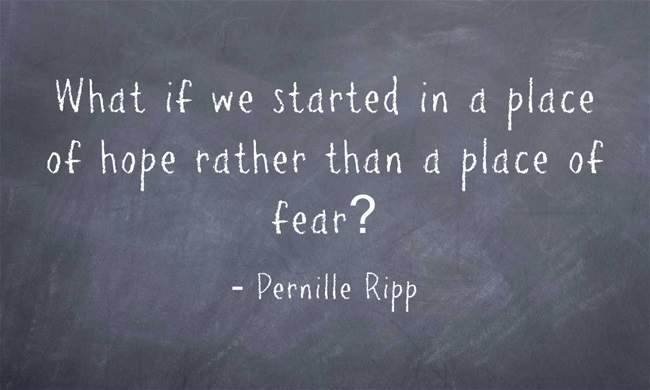
I think we fear that students will say stupid things (they might).  I think we fear that students will make a fool out of themselves (they wont).  I think we have so many fears when it comes to giving students a voice that we often don’t even try it because we know all of the things that can go wrong.  But what if we started in a place of hope rather than a place of fear?  I hope my students will change the world.  I hope my students will find their voice matters.  I hope my students will have the courage to tell me how to be a better teacher for them.  But I wont know unless they try.  We are here to protect and guide them yes, but we are also here to watch them unfold their wings.  At some point we have to let go, at some point we have to trust them.

I am a passionate  teacher in Wisconsin, USA,  who has taught 4th, 5th, and 7th grade.  Proud techy geek, and mass consumer of incredible books. Creator of the Global Read Aloud Project, Co-founder of EdCamp MadWI, and believer in all children. I have no awards or accolades except for the lightbulbs that go off in my students’ heads every day.  First book “Passionate Learners – Giving Our Classrooms Back to Our Students” can be purchased now from Powerful Learning Press.   Second book“Empowered Schools, Empowered Students – Creating Connected and Invested Learners” is out now from Corwin Press.  Follow me on Twitter @PernilleRipp.

being a teacher, being me, Student, student voice

We Teachers, We Make Mistakes Too

image from icanread

To my incredible former 5th grader,

I hear from your mom that school is not the way you want it.  That last year, our year together, was so much better than the one you have now.  That reading and writing are no longer your favorite things to do.  That a teacher even told you that you can’t read picture books because they are for little kids.  You aren’t quite sure that school is fun anymore, that anything can ever beat 5th grade.

I am here to tell you to not give up on school, not that I think you would anyway.  You see, we teachers, we say a lot of things, and we sometimes don’t know how our words are taken.  I wish we always said the right thing or even did the right thing.  But we are human too, and sometimes words come out of our mouths before we have thought them through.  Maybe that teacher who told you not to read picture books just hasn’t found the right one yet?  Or maybe that teacher doesn’t know you yet.  Doesn’t know how great of a reader you are, how you love to read a variety of books.  How you love handing books to your teachers to have them read them so that you can share your favorite moments.  Maybe that teacher didn’t mean it the way it sounded.

Even if it sounds like I am making up excuses for what your teachers are doing, know that I am listening.  Know that sometimes we adults think we know best, even if we don’t.  Know that sometimes we do know best but we don’t explain it well.  Other times there is a big plan in the works and we have just forgotten to share it with our students.  But we do listen, and we do care.  And I can tell you that every teacher that gets to teach wants to teach you in the very best way that they can.

We teacher, we try really hard, but sometimes we miss the mark.  Don’t you remember last year when I would screw up?  How I would come in the next day and apologize?  How sometimes you guys had to tell me how I had missed the mark?  There is no such thing as a perfect teacher, there are only teachers trying really hard to make school a better place for all of their students.  You would have hated being my student six years ago, I said a lot of things about what students were reading that now makes me cringe.  And yet, I changed, and so can every teacher that you meet.  But you first have to let them know who you are and what you love.  You have to let them know how to teach you best, it’s ok, we teachers want to hear it.  I know we sometimes seem too busy, I know we sometimes seem like we don’t have time for you students, but we do, and we care, and we want to be the best teachers for you.

So please don’t think school is not great anymore.  That would simply break my heart.  Instead, think of it as a year full of possibilities.  You get to impress all of these new teachers, just like you impressed me.  You get to help these teachers teach you best, but they can’t do that if you stay quiet.  So find your voice, find a way, communicate what you need.  Be respectful as you always have, but don’t lose yourself.  You are a reader.  You are a writer.  And no teacher, whether they intend to or not, can take that away from you.

Love,

Mrs. Ripp

I am a passionate  teacher in Wisconsin, USA,  who has taught 4th, 5th, and 7th grade.  Proud techy geek, and mass consumer of incredible books. Creator of the Global Read Aloud Project, Co-founder of EdCamp MadWI, and believer in all children. I have no awards or accolades except for the lightbulbs that go off in my students’ heads every day.  First book “Passionate Learners – Giving Our Classrooms Back to Our Students” can be purchased now from Powerful Learning Press.   Second book“Empowered Schools, Empowered Students – Creating Connected and Invested Learners” is out now from Corwin Press.  Follow me on Twitter @PernilleRipp.
being a teacher, being me, Reading, students teach me

The Things I Did That Stopped A Love of Reading

We-are-not-here-to-lead

I have always had good intentions, my heart and mind has always been in the right place whenever I have done anything “to” my students.  I don’t think any teacher sets out to destroy, I don’t think any teacher wants to harm a child’s love of reading.  And yet, they say that the road to Hell is paved with good intentions, and nowhere is that more visible than when it comes to our reading instruction.  When I look back upon the things that I have done, the things that I did because I thought they would help, but now know the results, oh boy. Well, let’s just say I am lucky that I have had amazing students that have helped me see the wrong in my rights.

So what did I do that was so wrong?  Over the last 7 years as a teacher, this is how I have changed based on feedback from my students.

Then:

I forced them to read certain books because I knew better.  Armed with levels and lessons, I have forced many a child in giving up the book they were certain to struggle through and handed them a better suited one.  Better suited based on levels, reading abilities, but typically not interest.

Now:

Students have free choice to read with few restrictions.  Throughout the year they have to read 25 books, 15 of which must be chapter books.  If a child is continuously abandoning books we discuss, adjust, and try new things.  We also spend time selecting books together and work on strategies to get through books that may be a bit out of their “level.”

Then:  

Students had to prove they had read either through worksheets or a reading log.  Worksheets never worked for me because they didn’t give me the deeper level thoughts I wanted, plus it meant that students had to read the same book, and reading logs are something I will never subject a child to again if I can help it.

Now:  

Students prove to me that they are reading in a myriad of ways without a reading log or a worksheet, the most common one being conversation.  We discuss books frequently in class and even within my 45 minute class period the students still get 10 minutes of independent reading time.  There are so many ways we can see whether a child is reading, we just have to tap into it.

Then: 

We did the whole class book throughout the year.  This was to make sure we had a common text to discuss and I also believed that my developing readers could learn a lot from the stronger readers (which I still believe), however, this format slowed down some kids while it burned out others.

Now:

We do the whole class read aloud.  Starting with the Global Read Aloud we have a whole class text read aloud every day as part of our mini-lesson.  Students can develop their discussion skills around a shared text and I have a text to use every day as a springboard.  Students are then still free to read whichever book they want and apply our strategies discussed to that one once the read aloud portion of the day is complete.

Then:

All students had to use post-its.  This was a way for me to see their thinking while they read, they would even hand them in.

Now:

Students show me their thinking however they want.  Some still use post-its which I have readily available, others their notebook, their blog, or any other way they can think of.  What matters is that they are finding a way for them to stop and think and then jot down their thoughts so that we can have some deep discussions.

Then:

I always had an independent text to use for every small group.  I always did guided reading with the same kids every week and we always had either a pre-selected book club book or a text that I had selected.  This way I could control the strategies we developed because I had pre-read everything and could thus lead the conversation.  Students answered questions but no real discussion ensued.

Now:

Sometimes I have a text but more likely I have a picture book.  Students and I read the text together and then work our way through it.  All ages love picture book sand I have been spent a lot of money getting great ones into the hands of my students.  We read the book and then apply the strategy to their own book right then and there so that I can see whether they fully understand it.  If a child needs extra time, I hold them back while I release the others.

Then:  

Students did book clubs with me as the guide.  This type of guided reading was something I worked very hard at but frankly it was exhausting.  I always had to read ahead and prepare the discussions so that I could lead the conversations.  Often I had a hard time keeping the 6 different books I was using straight, and trying to find multiple texts centered around the same theme was also hard.  Students did little discussion but at least they had a shared reading experience.

Now:

Students run the book clubs.  I check in and help them push their thinking but they set the pace, they select the books  based on group conversations, and they “manage” the club.  I have to step in once in a while to help a student who is not adhering to the group’s etiquette but mostly the students are in control.

Then:

Groups were created based on level.  I did not look at pace, interest, or specific skills needed, only what level the computer or Rigby said the child was at.  While this is a great place to start for the year I didn’t move past it until I realized this was not a great way for my students to learn from others.

Now:

Students are grouped based on needs.  Typically students go in and out of small groups that crop up throughout a week based on how they are doing on certain skills.  This means that students don’t feel labeled as beign a “bad” reader because they are not in the same group day after day.  They instead see that we are helping them with the skill they need and then released once they have it.

Then:

Students shared their reading lives with the class.  I always knew I wanted a classroom that was focused on reading, one in which reading took a central role throughout all curriculum.  One where our reading lives were visible to each other.   But I didn’t think to share it with others.

Now:

We share our reading with the world.  Students share their books on our blogs, ask for recommendations, and ask questions of other students that are reading the same book.  Our reading lives are not just something we discuss, it is up for everyone to discuss, and the world has a lot to offer.

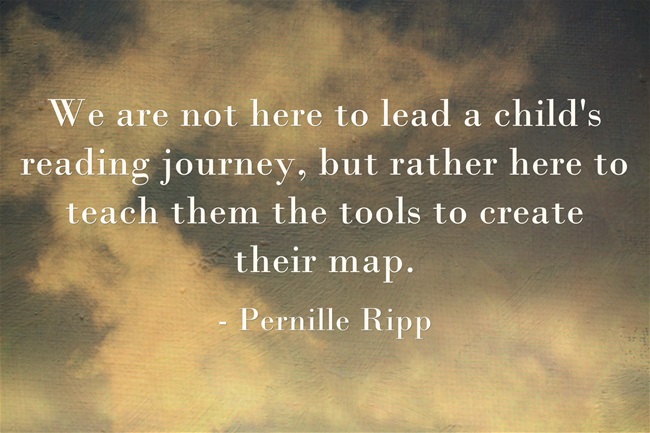
There are so many things we choose to do within our reading instruction, or any instruction for that matter, that we think will help students, but end up robbing them of the spark that carries them forward as readers,  While some of these things may work for other teachers, they have not worked for me.  I am just grateful that my students have had the courage to tell me these things but they would not have done so if I hadn’t asked.  So please, if nothing else, ask your students what helps them become better readers and then do more of that.

I am a passionate  teacher in Wisconsin, USA,  who has taught 4th, 5th, and 7th grade.  Proud techy geek, and mass consumer of incredible books. Creator of the Global Read Aloud Project, Co-founder of EdCamp MadWI, and believer in all children. I have no awards or accolades except for the lightbulbs that go off in my students’ heads every day.  First book “Passionate Learners – Giving Our Classrooms Back to Our Students” can be purchased now from Powerful Learning Press.   Second book“Empowered Schools, Empowered Students – Creating Connected and Invested Learners” is out now from Corwin Press.  Follow me on Twitter @PernilleRipp.