being a teacher, being me, reflection

The Downside to Being a Connected Educator

I have written a lot about all that being a connected educator has done for me.  I have written a lot about how I would not trade it for anything and that I hope others will choose to become connected as well.  I have written about how being a connected educator has enabled me to have connected students, which has radically changed the way I teach.  And yet, I have not talked about the downfall of being connected much.  Not like this, not in this way.

Yet, I think in honor of Connected Educator month, (which is a strange month anyway because aren’t we always connected?), I think it is time to discuss the downfalls.  Those things that I deal with from being a connected educator, because after all, if I am going to encourage others to be connected, I think I need to be honest about all that it entails.

  • You are no longer private.  Of course, you can edit what you put  out into the world, but the truth is the moment you open up your classroom and your thoughts to the world, people will have an opinion on it.  And sometimes that opinion hurts.  Other times it is completely false.  I carefully pick the words I put out there but at the same time, my skin has grown thicker, and yet, because I choose to put it out into the world it seems to carry so much more weight in my life simply because others know what I do.
  • You can get a big head.  It is easy to think that you are more important than you are because of the validation that comes along with being connected.  We are awfully good at praising one another, which is wonderful, but at the same time it can also lead to a false sense of accomplishment.  “I must be doing something amazing because all of these people tell me I am.”  What we forget is that we choose what we put out there, not many share their utmost failures or embarrassing mistakes, thus we look incredible online.  That can only grow as more people get connected with us; our ego ticks upward right along with our follower count.
  • You can get really jealous.  Michelle Baldwin wrote a blog post discussing the identity of teaching and wrote that a problem she had faced was that the more she did, the more she needed to do to feel the same way.  Part of being a connected educator means that you are not just comparing yourself to your local colleagues, but to everyone out there.  So if someone is writing a book, I feel I should write one too, if someone is keynoting a conference, I wonder why I am not.  It becomes this viscous circle of wanting to do more to get more, which is hard to break.
  • You feel you need to be perfect.  I choose to put a lot of my flaws out there because others need to know I am not a perfect teacher, nor do I think I am.  And yet, every time I publish a post discussing my mistakes or screw ups, I cannot help but cringe a bit.  Am I really putting this out there publicly?  What if it reaches some person that will hold it against me?  And yet, I am not perfect, none of us are, but stating that publicly is terrifying.
  • You lose time from other things.  Yes, I choose to be connected but I am well aware of how my habits have changed.  I Vox when I am driving in the car rather than listen to an audio book or podcast.  I check Twitter while my husband is driving rather than speak to him.  I read blog posts rather than books.  And then there is the feeling of constantly needing to produce.  Although I try to not pay much attention to what my site statistics are, I still wonder if they are dipping or if they are stagnant.  Being connected can sometimes feel like a job, and not in a good way.
  • You are perceived a certain way.  I remember when a close friend asked me where I was going with all of this writing about no homework, no rewards, no grades, and I looked at her confused.  Sure, I had written about those things (and continue to) but I didn’t feel like that was all I did.  Yet, the perception of me was starting to take shape and it was feeding itself.  I think this can be both a positive thing and a negative one, after all, we can somewhat control that perception, but from my own experience it is hard to change it once it is out there, and you can feel boxed in.
  • You may forget about your local PLN.  When I first became connected I couldn’t believe the online discussions, collaborations, and profound idea sharing I was having with educators all over the world.  Yet upon closer inspection I realized I wasn’t having those same moments with the people I worked with in my school.  Being connected to a global PLN had taken the place of the local connections because somehow the exoticism of the global collaboration seemed like it would be more beneficial, yet this is not ture.  Being connected does not just mean that you are connected globally, it also means that you nurture your local connections and include those people in your PLN.  Sure, I have had incredible moments online with people I have never met, but I have also had that face-to-face with people I get to work with.  Don’t dismiss the local just because it doesn’t seem as exciting.
  • You think there is a right way.  I used to think that all teachers should be on Twitter, that they should blog, that they should engage in a certain way with others because that is what was working for me.  But that’s exactly it; they worked for me.  Being a connected educator does not mean doing certain things or using certain tools, it means being connected, joining together with others.  Whichever way you are doing it, is probably the right way for you.
  • You may become a target.  I was told once that I had a bulls-eye on my back because I chose to be connected.  When I wrote about being bullied by a former colleague, I cannot tell you how many people reached out to me privately to share their stories.  The biggest thing we had in common was the fact that we were connected educators putting our work into the world.  That does not make it automatic that people who choose to connect will be targets within their districts but it sure does offer up ammunition if needed.

Don’t take this post the wrong way, I love being a connected educator, but I am not a fool when it comes to the downfall of it all.  I struggle with many of these things regularly and yet every time I run into something negative, I consciously reaffirm my decision to be connected.  The positive outcomes will always outweigh the negative, but let’s not fool ourselves that being connected is always a magical thing.  It can be, but it can also be hurtful, brutal, and time consuming.  And yet, I wouldn’t go back to how I used to be; the benefits have simply been too great.

PS:  To see great reasons for why you should become connected, check out Angela Watson’s post 

I am a passionate  teacher in Wisconsin, USA,  who has taught 4, 5th, and 7th grade.  Proud techy geek, and mass consumer of incredible books. Creator of the Global Read Aloud Project, Co-founder of EdCamp MadWI, and believer in all children. I have no awards or accolades except for the lightbulbs that go off in my students’ heads every day.  First book “Passionate Learners – Giving Our Classrooms Back to Our Students” can be purchased now from Powerful Learning Press.   Second book“Empowered Schools, Empowered Students – Creating Connected and Invested Learners” is out now from Corwin Press.  Follow me on Twitter @PernilleRipp.

being a teacher, Student

We Teach These Kids

image from etsy

I see her crying, tears rolling down her cheeks as she tries to get through the assignment.

My heart sinks, I don’t have time, we have so much to cover, and yet I know what I need to do.

Outside the door we go, heart to heart, tears dry up, and back in to face the rest of the class, who miraculously are still working.  Perhaps our routines are starting to sink in?  Perhaps we are getting there, wherever there may be.  So we jump back in, back to teaching, and the day moves forward.  Just another moment in my day as a new 7th grade teacher.

I knew teaching 7th grade would be a whole new world.  That what I thought I knew about kids would be challenged, twisted, and turned on its head.  I thought I knew how to teach reading, I thought I knew how to teach writing.  And I do, but that’s not all I teach, and in 7th grade, it has never been more apparent to me.

We teach these kids that yes, we expect them to be resilient, independent, and organized, but that we are still here to pick up the strays when the locker overflows and the planner is lost.

We teach these kids that we would rather hear the truth than another excuse and that their words are worth standing behind.

We teach these kids that being different can be hard, that being independent can make you a target, but that does not mean you should ever back down from what you are or what you believe in.

We teach them that it is okay to laugh at ourselves.  That it is okay to try to find the humor in any situation and that does not mean we don’t take it seriously.

We teach these kids that not even adults have all the answers, we are still searching for some too.

We teach these kids that adults will listen and take them seriously.  That we remember what it is to be young and feel like the whole world is coming down.

We teach these kids that they don’t have to say “It’s ok” when we tell them that we are sorry their parent passed away.  Or that they can’t tell us about the truth on why their work isn’t done.

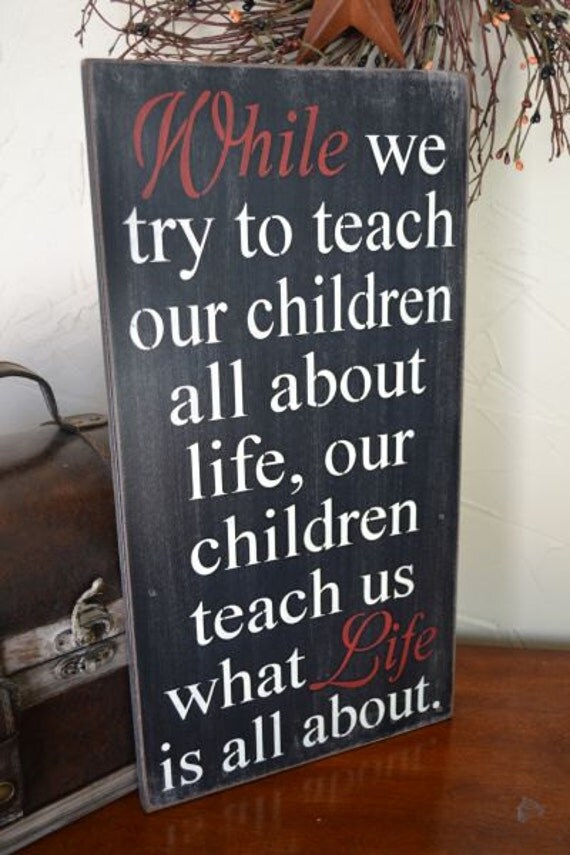
I teach these kids and they teach me.  I cannot thank them enough.

Be the change, being a teacher, being me, reflection, Student-centered, students

Are We Having Honest Conversations with Kids?

image from icanread

The groan could have been heard for miles it seemed.  The 7th grader in front of me looked at me with that look only kids can give you when you have said something that they hate.

“Post-its?  I hate post-its, why do we have to use post-its?”

I bent down and said “Why?” took the few minutes to discuss and then knew I had to change what I was about to teach.

It was my first day of readers workshop with the students and I was pumped, I couldn’t wait to get them started on their journey to think deeper about their books, have better conversations, and boost their writing.  And yet, already by the first hour, I had run into a boulder of disapproval.

In the past, I would have had a conversation with the student as well, but it would have centered on explaining why this was good for them, why they had to do it, and how they just had to trust me.  This time though, I knew it wouldn’t be enough, that my role right now is not to force habits because I said so but rather create discussion and find habits that work for us.  So I listened and we discussed and I realized that the student brought up points that I think of myself as I read through some of my lessons and it was time for me to admit it.

Being a teacher is sometimes like being an enforcer.  We tell children what to do because we know best, we know the end point, and so we know the building blocks that they need to get there.  We have discussions, we offer choice, but how often do we listen to what the students are telling us and admitting our own doubts or thoughts?  How often do we admit our own adult habits and how they fly in the face of what we are teaching and then create a new path forward because we know the students might be right?  How often do we listen when students tell us how they feel and then actually act upon it even if it means changing the way we teach?

We have to have honest conversations with our students.  We have to be able to admit that sometimes the ideas we first had are not the ideas that are best suited for the children in front of us.  That we as adults have developed habits that fly in the face of what we are teaching and yet we still manage to be deep thinkers.  We have to admit that sometimes our lessons are not “real life” or even do-able for all of us.  We have to admit that not everyone has the same path forward to whatever goal we may have set.

I speak to my students about developing as independent thinkers, yet I expect them to conform to all of the same rules in our classroom.  I am not sure how to go forward, but I know something has to give.  We may know what is best for most, but I need to know what is best for each.  And that will take a lot of honest conversations.

I am a passionate  teacher in Wisconsin, USA,  who has taught 4, 5th, and 7th grade.  Proud techy geek, and mass consumer of incredible books. Creator of the Global Read Aloud Project, Co-founder of EdCamp MadWI, and believer in all children. I have no awards or accolades except for the lightbulbs that go off in my students’ heads every day.  First book “Passionate Learners – Giving Our Classrooms Back to Our Students” can be purchased now from Powerful Learning Press.   Second book“Empowered Schools, Empowered Students – Creating Connected and Invested Learners” is out now from Corwin Press.  Follow me on Twitter @PernilleRipp.
Be the change, being a teacher, being me, Passion

All the Small Words

image from icanread

Last night, it was back to school night.  My first one as a 7th grade English teacher.  Now speaking in front of students, no problem, even speaking in front of large groups of people is ok.  But parents?  Terrifying!  Not because I think they don’t like me.  Not because I don’t think they are open-minded.  Not because I think they are critical, over-involved, or demanding.  Quite the opposite indeed.  They terrify me because they care.  because they entrust with their child every day.  Because they hope that I will protect the curiosity of their kid every single day.  Taht i will damage, but rather enhance the child that comes to me every day.  I do not take that responsibility lightly.

When it was over, a few hung around to introduce themselves.  Many had kind words, telling me how their child is already loving English.  How they saw their child read and actually like it for the first time in a long time.  How they cannot wait to see how their child grows this year.  Thank you and whatever you’re doing, keep doing it.

As I drove home, those words echoed within me, wrapped my head in thought as I woke up at 12:30 unable to sleep.  I don’t think these parents know what those words mean to me.  I don’t think these parents have any idea of what effect small words can have on a teacher.  How big of an impact a greeting and a few sentences can have.  Whether they be kind or inquisitive, harsh, or probing.  The words we pass on to our child’s teachers matter, sometimes more than our actions do.  

I get to teach children every day.  I get to help them grow.  I get to help shape their dreams.  I get to help them decide whether reading is something they are good at or bad at.  Whether they are a writer or not.  I may be trying to change the world, but what happens within my classroom is what matters most.  What I do with kids and to kids is what matters most.  So those parents who stopped by just to say hi and thanks; those small words make a big difference, those small moments make a big impression.  When was the last time you made a difference in another teachers life?

I am a passionate  teacher in Wisconsin, USA,  who has taught 4, 5th, and 7th grade.  Proud techy geek, and mass consumer of incredible books. Creator of the Global Read Aloud Project, Co-founder of EdCamp MadWI, and believer in all children. I have no awards or accolades except for the lightbulbs that go off in my students’ heads every day.  First book “Passionate Learners – Giving Our Classrooms Back to Our Students” can be purchased now from Powerful Learning Press.   Second book“Empowered Schools, Empowered Students – Creating Connected and Invested Learners” can be pre-ordered from Corwin Press now.  Follow me on Twitter @PernilleRipp.


being a teacher, Reading, reflection, students

Before You Assign a Reading Log


“…Mrs. Ripp, should we bring this home?”  A student is waving the status of the class form I just had them glue in their notebook during our first week of 7th grade English.  “No, please don’t,” I answer, “This is not a reading log, just a tool for you to use here in class.”  I can see the relief spread across the student.  They thought it was a reading log.  I am glad it isn’t.

I have written about reading logs before; how I used to use them, how I had to use them, what to do instead.  I know there is a possibility that Thea will have one at some point.  And I worry about what that will do to her, how she will react not so much to the logging of reading, I do that myself through Goodreads, but the prize aspect, the reading to get something. You see, Thea reads for fun.  Not because she naturally developed that, she would much rather read for prizes, which kid wouldn’t?  But I have learned though her reactions to reading challenges to shield her from that, to build up that we read for the sheer enjoyment of reading.  That we don’t get a reward when we finish a book other than the experience.  That we talk about books and remember them that way, not to log them, not to see how many we can read so we can earn something.

Yet, I get why reading logs are used.  Not all kids read, not all parents push reading as a thing to do every day.  Some kids need a prize to get them motivated or a log to see their habits so they can develop better ones.  Some teachers have to use them because of a school or district initiative, even though they would rather not.   But here’s the thing; not every kid needs one.  Just like every kid doesn’t need an intervention.  Just like every kid doesn’t need homework help, not every kid needs to create better reading habits.

So instead of assigning a reading log to all if there has to be one, how about a tiered approach?  How about a quick conversation with home or the student to discover reading habits?  How about choice?  I will gladly share with Thea’s teachers that we read for 30 minutes or more every night.  That Thea pretends to read for another 30 after we tuck her in.  That our house is filled with books.  That going to the library or the book store is viewed as the biggest surprise.  That getting a new book is something we celebrate.  That we read the same books over and over because we love them so much.  That we don’t need a reading log for that, we just need time.

I don’t have to do a reading log anymore so instead I asked my 7th graders about their reading habits to see who needs help establishing better habits.  It doesn’t take long, it is not hard work, but the information I gained will help us grow. They don’t need reading logs, they need a place to jot down how much they read in class and a place to record their ratings of books.  Their parents don’t need to be involved.  There will be no prizes.  They are expected to read and I can tell if they don’t through conversation.  That works for me, for the students right now, and hopefully it will in the future as well.

For ideas of what to do instead of a reading log, here are some

I am a passionate  teacher in Wisconsin, USA,  who has taught 4, 5th, and 7th grade.  Proud techy geek, and mass consumer of incredible books. Creator of the Global Read Aloud Project, Co-founder of EdCamp MadWI, and believer in all children. I have no awards or accolades except for the lightbulbs that go off in my students’ heads every day.  First book “Passionate Learners – Giving Our Classrooms Back to Our Students” can be purchased now from Powerful Learning Press.   Second book“Empowered Schools, Empowered Students – Creating Connected and Invested Learners” can be pre-ordered from Corwin Press now.  Follow me on Twitter @PernilleRipp.
Be the change, being a teacher, new year, reflection, students

What I Learned My First Week of School

Image from etsy

I thought I knew how to be a good teacher.  After all, I have been doing alright in 5th grade.  Yet, this week as I faced my awesome 7th graders, I realized that I still have so much to learn.  That even though I have a few years under my belt, being new is still being new.

I learned that students wont automatically like you just because you are their teacher.  That often we take that love and respect for granted in elementary but as they get older we have to work for it even more.  The best part though is that I don’t mind working for it at all.

I learned that while I may think I am super human and can say yes to every project thrown my way, I am not.  I have found my limits.  I have found my tipping point.  I am glad I did.

I learned that although I may have taught the same thing 5 times in a row, it is new to the students in front of me and they deserve the very best of me.  Not the tired me.  Not the rushed me.  Not the “let’s just get through this” me.  But the in-tune, attentive, fun-loving me.  Every single student, every single time.

I learned that laughing at myself is a great way to get students to open up a little.

I learned that learning 118 names in 4 days is near impossible, even though I am soooooo close.

I learned that 7th graders still love picture book, hallelujah!  They also love gruesome fairy tales and a good story.  I think we will be okay.

I learned that you can win the team lottery twice in a row.  That there are schools out there, districts even, that thrive on the positive, where teachers matter.  Where ideas are shared, crazy thoughts supported, and small successes celebrated.  These schools are no longer unicorns, they exist, and I hope everyone finds one.

I learned that being a team matters and that compromise is not a dirty word.  We can still change education through compromise, through being kind, and that every person in a building brings something to the table.  That being in a bubble and shutting your door should not be the norm, should not be okay.  We have to get better at listening to each other.

But my biggest lesson this week; that 7th graders are so unbelievably great to teach.  That my fears of not loving this age group as much as fifth was completely unfounded.  That I am thankful for this chance of a new home, that “my kids” can really mean 118 students and not just 27.  I am so lucky.  I feel like I am home.

My new team – go sharks!


I am a passionate  teacher in Wisconsin, USA,  who has taught 4, 5th, and 7th grade.  Proud techy geek, and mass consumer of incredible books. Creator of the Global Read Aloud Project, Co-founder of EdCamp MadWI, and believer in all children. I have no awards or accolades except for the lightbulbs that go off in my students’ heads every day.  First book “Passionate Learners – Giving Our Classrooms Back to Our Students” can be purchased now from Powerful Learning Press.   Second book“Empowered Schools, Empowered Students – Creating Connected and Invested Learners” can be pre-ordered from Corwin Press now.  Follow me on Twitter @PernilleRipp.