Every year, I do several surveys at the beginning of the year, I don’t think I am the only one. As we try to get to know these kids that have come into our lives, I think it is so important to gather as much information as they are willing to tell us in order for us to be better teachers for them. But I also think about how hard it can be to answer questions those first few days of school when you don’t really know what your answers will be used for, when you are not quite sure who this person is who is asking you these questions, when you are perhaps not even sure what the questions mean.
So this year, I am changing my approach a little bit. The questions have been changed to be more of a progression of trust, not because I am under any impression that from Tuesday to Friday the students will trust me, but because I want to honor the relationships we are building and the fact that they take time. Students will be asked to answer a few questions every day, but can also choose to speak to me about these things. They are focused more specifically on what the child needs from me potentially to be successful and not so much on academics. Students will do a separate survey every day, while not ideal, it will allow me to see their answers as the week progresses and then create one answer froup per student at the end of the week.
Along with these questions, I will also give my reading and writing surveys during that first week. Those will be on paper as I place them in my conferring binder alongside the notes I take during our conversations.
Before the children have shown up, we will also have asked those at home about them. We want to reach out to parents and caregivers as experts on their children and honor the knowledge they have through a home survey. It is sent electronically before school starts and I respond to each person that takes it with follow up questions, those who do not have access to email or choose not to take it online are handed a paper version once school starts.
While the first-week surveys are not done, I am sharing here in order to receive feedback. What have I missed? What have I misworded? What would you add or remove? You are more than welcome to make a copy and make it fit your students, just please give credit. To see the surveys, please see here:
Thank you to those who have already helped me make it better, here are all of the questions together.
If you like what you read here, consider reading my newest book, Passionate Readers – The Art of Reaching and Engaging Every Child. This book focuses on the five keys we can implement into any reading community to strengthen student reading experiences, even within the 45 minute English block. If you are looking for solutions and ideas for how to re-engage all of your students consider reading my very first book Passionate Learners – How to Engage and Empower Your Students. Also, if you are wondering where I will be in the coming year or would like to have me speak, please see this page.
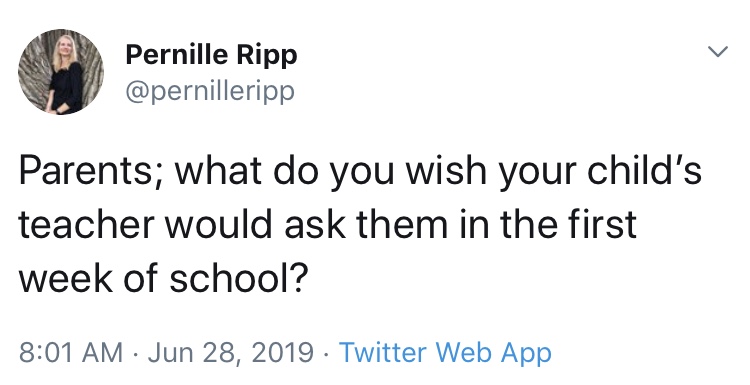
Yesterday, I asked a question on social media, a question I have asked before. A question that has been rolling around in my head here in Costa Rica as I dream of the year to come.
While responses continue to come in from around the world, I am struck by the urgency so many of the questions are wrapped in. An urgency that speaks to the hopes and dreams, and yes, sometimes fears, that I also share as my own children inch closer to a new year with new teachers.
See my child as the gift they are.
See my child for how hard they try.
See my child for all they are and not just the decisions they may make in their low moments.
Give my child a way to let you know who they are, what they believe in, what they dream, and what they fear.
Get to know my child beyond the data, beyond the rumors, beyond the assumptions that they may be wrapped in due to society, due to the past, due to things outside of their control.
Take the time to be someone in their corner, someone that they know will have their back, someone they know will fight for them and believe in them.
Partner with us, those who send you the child, so that we can be a part of their journey, because it is hard to believe our child is welcome in your class, in your school, if we don’t feel welcome as well.
Get to know our child beyond the basics and have them get to know you as well.
But also, take you time. Don’t expect our child to trust you right away. Earn their trust, earn our trust, through your actions and not just your words. Be a champion and admit when you are wrong, help us connect with you as you connect with our child. Because it hopefully goes without saying, I send you our hearts every day, please take care of them.
To honor the time it takes, I will use questions throughout the year not just the first day or first week. I will continue to ask students many of the ones shared spaced out over time in order to recognize that relationships, real ones, take time and that the answer a child gives me the first week will, hopefully, deepen as we get to know each other.
Finally, for me, I want to honor their history and their home. As an immigrant myself, my biggest identifier is being Danish, and yet for my children they are assumed fully Americans in their schools, even though they are designated ESL, there is little with care or even curiosity to the identity they share with me, the threads that we weave throughout our home and family. So I want to continue to work on creating a space where all of students’ identifiers and heritage is understood, honored, and developed.
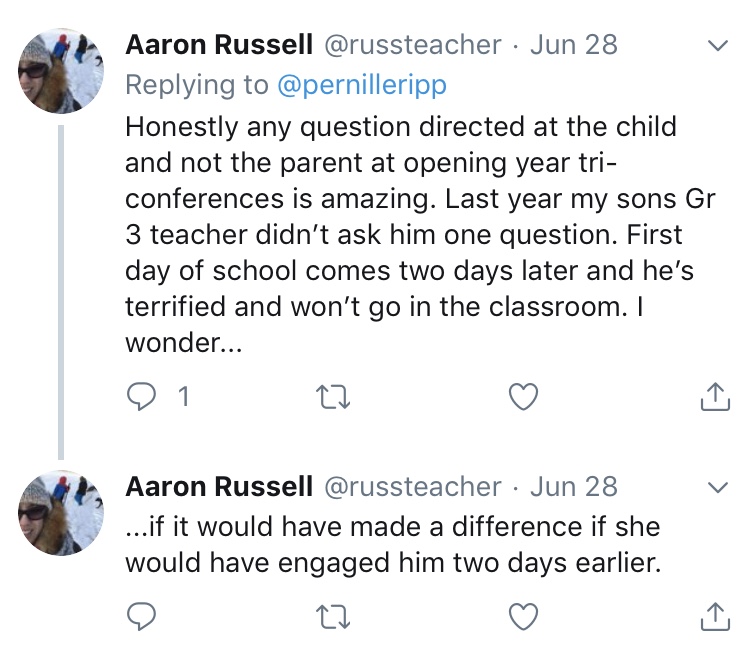
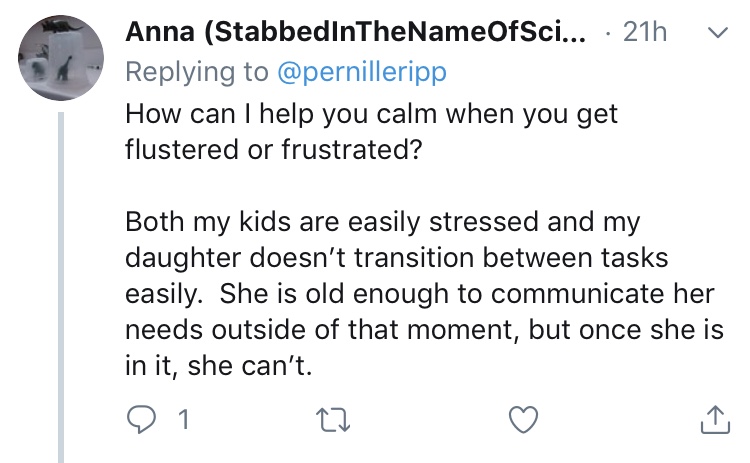
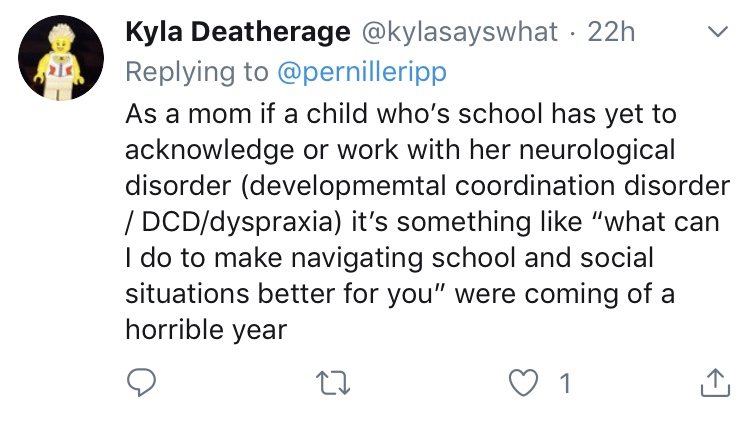
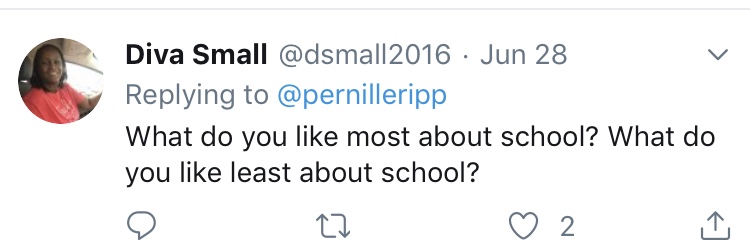
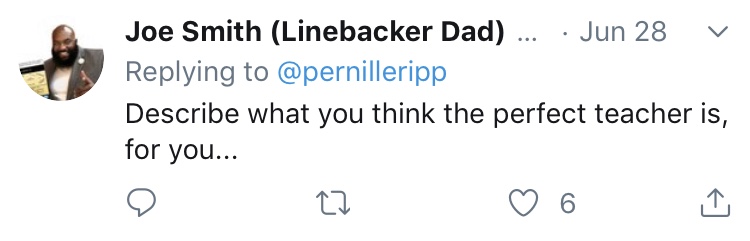
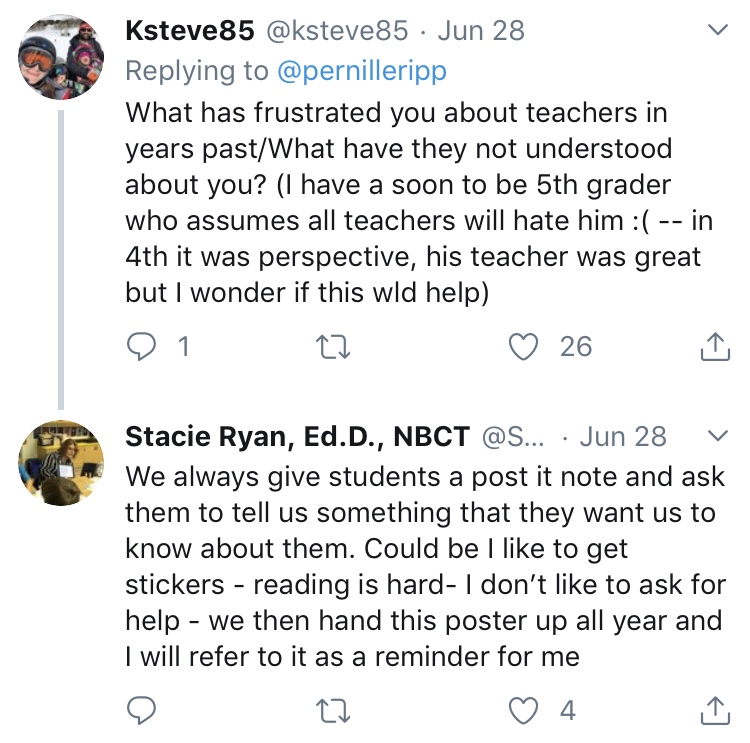
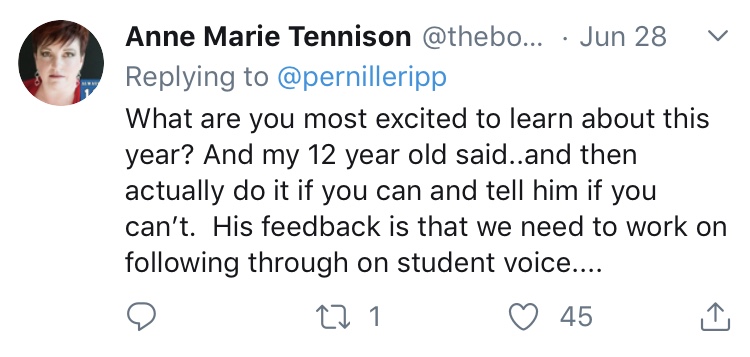
So what would parents like us to ask their child, here are a few of the many tweets, to see them all, please go to the thread, it is absolutely worth your time.
And so now, I ask; what do you wish your child’s teacher would ask them as a new school year begins?
Working through my keynote for this morning and I keep coming back to this moment from my own students – I asked my students who the “bad” kids were and they answered, “The teachers tell us…”
Even though I was there to witness it, it still hits hard every single time I see it. The power we wield, as educators, as adults, in how human beings see each other is astounding. It is something I carry with me every single time I teach, that through my actions, whether conscious or not, I will shape how a child’s humanity is potentially seen by others. While not singlehandedly determining the narrative, my presence, my being will provide others with a road map of how to see themselves and others.
It is something I don’t feel we spend enough time discussing, pondering, and helping us shape our teaching experiences.
And it starts on the very first day where we explain through our rules what “good kids” do and a child looks at that list and doesn’t see themselves.
That quote is 5 years old and yet, I wonder how many kids would still say something like that in schools across the world.
How many kids would consider themselves “bad” kids because that is the legacy we make for them?
Or how we label entire grade levels as “hard” groups or other awful titles and then wonder why they live up to it?
Words matter, actions matter, and the way we help children shape their identities in school to the point of where some are trying to succeed despite us is something to sit with, and then something to do something about.
Because as the mother of a child who felt unsafe at school due to bullying, who felt her teacher hated her in kindergarten, that was exactly the legacy she thought she should live up to. A child who didn’t belong, who was angry, who was broken.
And as a teacher who continues to screw up, despite her best intentions, I have realized that the least I can do is ask the very kids I teach whether they feel safe and respected and if they tell me no, then do something about it.
Because then, perhaps, we can change the narrative.
One of the biggest changes within children’s publishing since I became a teacher and a parent has been the explosion of graphic novels onto the market. While comics have long been mainstream in the home, and many of us grew up devouring comics, the power of the graphic novel to excite readers and keep them reading is tangible. So much so that if you looked at my own classroom collection, you wouldn’t just see a bin or two but instead 16 of them and growing. It is a format that is growing significantly not just in my classroom, but also my home, with my kids crowding around every book delivery asking whether there is a graphic novel in there and fighting over it if there is. In fact, graphic novels are the biggest reason our oldest daughter believes she can actually read and be a reader.
Graphic novels are nothing new, the first one was published in 1842, but the way they have captured the imagination of readers everywhere is nothing less than amazing. And why not? Combining powerful illustrations with, at times, the sparse text is sure to keep many readers reading. And yet, one of the biggest push backs in reading also happens to surround graphic novels with many parents and educators lamenting their “easiness.” Within these missives lies a movement to then steer kids away from these “dessert” books and into “harder” reading, or outright banning the reading of graphic novels, telling kids that these books are just for fun, don’t count toward whatever set goal or points, or even confiscating them from kids seen reading them.
No wonder, our kids are confused when we tell them to read more but then tell them not that!
As parents, it is important that we do not become part of the groups of adults who dismiss the value of graphic novels, who effectively stop our own children from these meaningful reading experiences, all in the name of “harder” reading. We must also become advocates for these incredible books that are giving many children a way back into reading that wasn’t there before. And while fantastic organizations like the CBLDF – Comic Book Legal Defense Fund – have been heading the charge for many years, we know that knowledge is power and so I think it helps to also break down some of the ideas surrounding graphic novels and the stigma that is often attached to them.
So what do we know about graphic novels and their readability? Their enticing nature? And their place in not just our schools but also in our homes?
It is easy to see why many people, adults especially, would like to dismiss all graphic novels as being too easy to read, thus not challenging a reader enough. Many adults seem to be very stuck on what a challenging reading experience looks like; it must have this many pages, it must have dense wording, it must center around a deep topic, and the institutionally ingrained notion that it would be best if it were a “classic” book, so that the reader will not only have an exciting reading experience but an enriching one as well. And while there is the need for a balance within what we read, this idea of what is easy to a reader is something worth discussing.
While there are many nuances to what makes a book easy for someone, common traits are that the reader can easily access all of the information on the page, read and understand all of the words, visualize all of the story in order to fill in the gaps between story and reader, as well as follow the story and complete it within whatever timely manner would be sensible for that reader. An easy book, therefore, seems to be used interchangeably with what we expect a good fit book to be for all of our readers. So why is it that graphic novels as a whole are seen as easier than most chapter books?
The pictures or illustrations, of course, seem to be the most common answer.
Yet, in my own experience with my children and students, it is the pictures that actually add to the sophistication and difficulty of graphic novels because of the skills required to read the images. Think of it this way, when a reader is translating symbols into meaning such as what we do when we read, they are being asked to not only read the symbols but also decode it and create meaning behind the words, or translating those words into images. As a reader, they are then tasked with inferring and visualizing what is happening in the story in their own mind leading to a full understanding. In a graphic novel, readers are still expected to decode and understand all of the words, but at the same time as this complex process is happening, they are also asked to decode and interpret the images that go along with the words. And then they have to combine that through synthesis in their brain otherwise the book will make no sense. That is not an easy process. The visual complexity of many graphic novels convey a story that would take ages to convey, yet are being presented within one panel or page. It takes time to dive into a graphic novel, much as it does with a text-only book. To read more about what process the brain must go through when reading a graphic novel, read this blog post by Leslie Morrison
In fact, I have noticed throughout my years as a teacher that it is most often my readers who read very quickly who find graphic novels hard to read. They simply do not slow down enough to fully decode the images, mostly focusing on the words, and thus missing outright the subtleties that the images themselves provide, thus losing out on a deeper meaning. So while the illustrations may be what is enticing to the reader in the first place, the illustrations also add a layer of complexity onto the text that the words themselves would not have provided.
One can argue that the illustrations mean that the reader no longer has to visualize the story on their own, yet when asking my readers of graphic novels to describe scenes it is clear that many of them go beyond the page in their understanding of what a scene looks like and once again are “filling in the gaps” between the page and themselves, inferring beyond the story and adding the nuances we would expect any reader to add.
And sure, some of my kids rush through graphic novels so quickly that I know as their mom that they did not engage in close reading of the pages and illustrations, similar to what happens when a reader skims through the pages of a non-illustrated book just to find out what happens next. However, here there is one distinction in the habit of many readers of graphic novels; while they may read the graphic novel quickly on the first try, what often happens then is the re-reads of the same graphic novel as they pore over the pages more closely once they have navigated the story once. This process is one that only adds value as their understanding deepens with each re-read.
Yet the words “It’s too easy” continue to haunt our graphic novel committed readers. And as a parent, I do understand the hesitation and perhaps even fear that because your child is not doing the hard work of visualizing a story independently, and not practicing these skills without images attached to them, that they are somehow developing less than a child that doesn’t get to read graphic novels or stays clear of them. But here is the thing; those skills are being practiced, it just might not be within their independent reading choice. If you look at a broad swath of a child’s reading day in school, most of the text they are given is image-free. They are asked to navigate complex texts within literacy classes, science classes, and social studies. They are asked to pull out the meaning from texts that are often above their comprehension and background level and working on the skills to sustain attention. What schools have started to add more of is actual visual literacy as dictated by the Common Core and other education reform initiatives. The same skills being honed within visual literacy, or the reading of everything that surrounds the words (color, layout, texture et al) can and should be transferred to reading regular text. With the onslaught of images within our day, being able to critically analyze them is a vital component of comprehension of our world.
Another aspect of the “too easy” notion is that kids will only want to read “easy” books if that is all they are allowed to read. For this argument, I encourage us, adults, to look back at our own reading journeys and visualize the books that have shaped us. If we do this we should notice not a smooth diagonal line where each book increased in complexity but rather stages and stops on a reading journey that has probably been bumpy yet still helped us grow. How many of us still read the same books we read as children because that is all we care to read – well, if you are an educator this may be you, but still, the books I gravitated toward as a child don’t hold the same value or intrigue as they did when I was younger. When I was ready, I moved on to something else, and this is exactly what research also shows us: That graphic novel reading will not lead to less challenging reading, but instead to more challenging as kids mature and naturally gravitate toward harder texts whether illustrated or not. As Krashen, Lee, and Lao say in their book Comprehensible and Compelling: The Causes and Effects of Free Voluntary Reading, “Children in a print-rich environment in which they are free to select their own reading do not stay with easy books. They not only read more as they mature, but they also select, on their own, books that are harder to read and have more complicated plots.”
So what is it we mean by easy? I think that the word we are looking for instead is enticing. That graphic novels offer readers of many skills different points to enter into a text through. That the abundance of images offers readers a way to anchor their thinking and sink deeper into a text that they might not have been able to access in a regular text-only form. That readers with or without reading difficulties can find success within graphic novels, not just in a comprehension aspect, but also in a reading identity aspect. They can be readers that love reading. They can be readers who feel at home within the pages of a book, for some this may be for the first time ever.
A shared read aloud makes the wait go faster
This is why we need to review our own adult reactions when it comes to a child who embraces graphic novels. Rather than worry that somehow the reading experience they are engaged in is somehow less-than, we should be jumping in with both feet, finding more graphic novels for them to explore and also reading some ourselves. After all, as parents and caregivers, we often have an immense sense of power when it comes to what our children deem proper reading. Why not show our children just how much these books matter? Why not change the conversation?
If you like what you read here, consider reading my newest book, Passionate Readers – The Art of Reaching and Engaging Every Child. This book focuses on the five keys we can implement into any reading community to strengthen student reading experiences, even within the 45 minute English block. If you are looking for solutions and ideas for how to re-engage all of your students consider reading my very first book Passionate Learners – How to Engage and Empower Your Students. Also, if you are wondering where I will be in the coming year or would like to have me speak, please see this page.
Yesterday, I wrote about what I wanted out of the year and how it had gone, and yet, within that post is also the hope for the coming few months, for the coming year. Isn’t it funny how we, as educators, already start to plan for the “new” year already in the spring?
And so with only a few precious weeks left, I wanted to once again share what my Must-Do’s for the year are in case anyone else wants a few ideas.
I plan on surveying my students. While our school does both a home and student survey, I also need to know what I can work on. Every year, the words of my students help me shape the experience to come. Every year, the words of my students help me grow as an educator. Don’t let the kids leave without helping you grow. To see this year’s survey, paper copy go here – I will do it as electronic version as well, to see that go here
I plan on keeping certain experiences and make a map. Looking through the year and reflecting on what really worked, whether it was a lesson, an idea, or simply a moment, helps us think of the year to come. Don’t let this year end without you realizing what worked. Whether you go through lesson plans or simply write a bullet list, take note so that when the time comes for your ideas to come back, you have a place to start. We have started as a team to create our map for the upcoming year, this helps us plan and discuss what we want our students to experience with us.
I plan on face to face collaboration. Our district believes in paying teachers to collaborate over the summer, which I plan on once again taking advantage of. So as I take on a new class next year (Enriched English), I plan on spending time with those who know more than me. I am so grateful for this opportunity for concentrated learning.
I plan on getting rid of certain lessons. While our experience inevitably changes year after year, there are also certain things that despite our best intentions simply didn’t work. So I am getting rid of them both physically and mentally. Goodbye feedback tracker! Goodbye reading rate tracker! Goodbye to you so that I can make room for better things.
I plan on freshening up the room. Every year, i do revamp of our room, but this year I get to move rooms altogether to a larger room with more room for all of our books. So not only do I get to go through everything, but I also get to set up a whole new experience for the students. However, if I wasn’t moving, I would still move furniture, go through files, weed books, and just refresh everything. While we don’t have a lot of fancy furniture, these small changes help keep the pride in the room intact which shapes the experience.
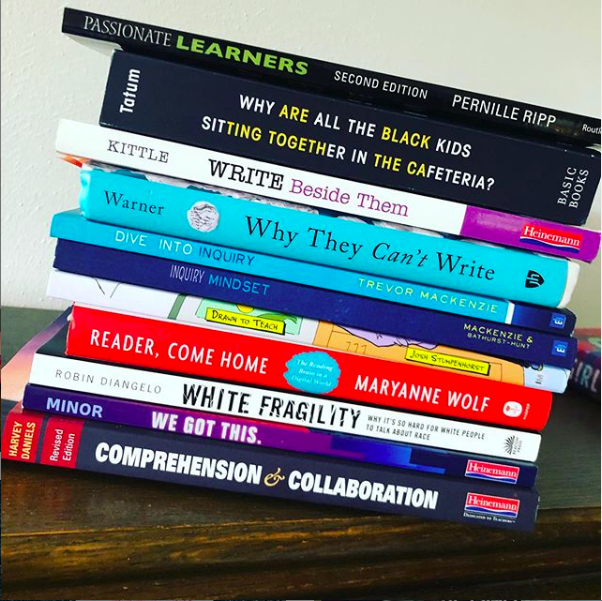
I plan a focus. This summer, I get to both teach others and learn from others and so I need a focus. Where does my craft need to grow? Writing continues to be a focal point, as well as the hard work of equity and social justice. And so I go to conferences with a few goals in mind. I read PD books with these goals in mind. I reflect, invent, and write down ideas with these few goals in mind. In the past, when I have had a broad focus, I feel I have learned little, but when I have a few questions in mind, such as how will I continue to help students understand their role in the world or how we will we create more meaningful writing experiences that will help students reignite their writing identities, then I leave summer with a few tangible ideas that shape our experience together. Some of these books are re-reads, others are brand new and I cannot wait to let the work of others shape the every day work I get to do with students.
My stack of summer PD reading awaits – I can’t wait.
I plan a break. Teaching is amazing, it is my favorite thing to do as far as work., but it is also exhausting, heartbreaking at times, and hard. So summer is time for a break, and not a kind of break where I still work, but one where I feel no guilt for not checking my email. Where I feel no guilt for reading whatever I want even if it is slightly trashy. Where I feel no guilt for not checking in, creating something, or coming up with new ideas. But you have to plan for it or it won’t happen. We know how consuming teaching can be, how it can spill into every part of summer, but don’t let it. Allow yourself to detach completely so that you can get excited. So that you can let ideas marinate in the back of your mind. So that you can remember what it means to have a life, if even for a little bit, outside of teaching. Because if you never leave, then you cannot get ready to come back.
Summer is a break. A much-needed one for many. But it is also an incredible time to become something more than what we ended as. To remember why we entered teaching. To get excited, to catch up on sleep, and to become the very best version that we can be of ourselves so that when September rolls around, or whenever our students come back, we can say, “I am so glad you are here,” and truly mean it.
PS: In case, you missed the announcement, I am running a book study of my first book Passionate Learners this summer in the Passionate Readers Facebook group. You should join us as it kicks off next weekend!
If you like what you read here, consider reading my newest book, Passionate Readers – The Art of Reaching and Engaging Every Child. This book focuses on the five keys we can implement into any reading community to strengthen student reading experiences, even within the 45 minute English block. If you are looking for solutions and ideas for how to re-engage all of your students consider reading my very first book Passionate Learners – How to Engage and Empower Your Students. Also, if you are wondering where I will be in the coming year or would like to have me speak, please see this page.
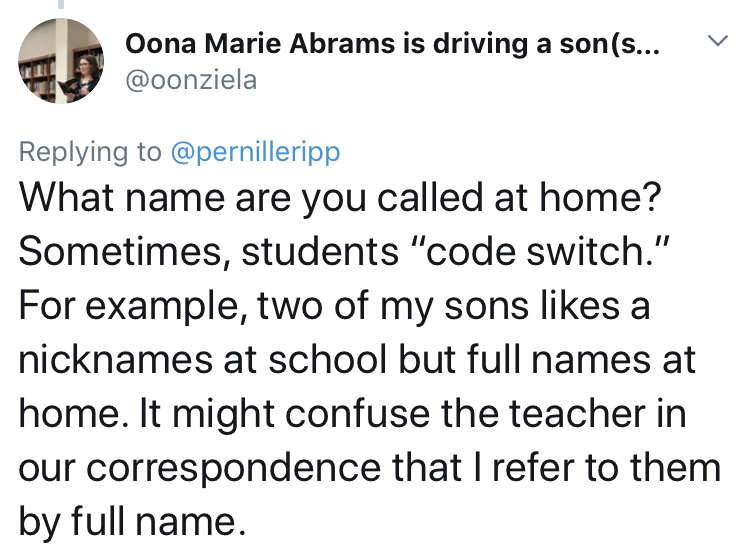
I have been thinking a lot about the way we show others that we trust them. About how we code switch between our different environments, how we let down our guard when we feel the safest because that is the only place we can truly just be without having to worry about the potential judgment we face within our uncensored self. How sometimes, when kids trust us the most it is when they show us the hardest sides of them. When they let us see their anger, their tears, their silence.
And I get it. We all carry our guards up, hoping that others will allow us to lower them enough and not reject us when we are the most vulnerable. I think of my journey on here, and how there have been times where I couldn’t believe I shared the thoughts and yet, somehow, somewhere they resonated with someone else.
I think of how long relationships take to truly form, even when we see the same kids every day. How some, right away, click with us and we move into comfort quickly, while others look from afar, not quite sure how to take us, to use us, to fit in with us.
I think of the ways students show us they trust us. How they let us into their identity and how they view themselves little by little. How they start to give us slivers of themselves in order to see how we will handle those parts, evaluating whether we will be able to handle all of them, if we will take care of them, or just use it as ammunition when they push us to our limits. When I tell my 7th grade students that I feel I have to earn their trust every year, I mean it. I don’t take it for granted, nor is it assumed. Yet trust is not always shown quietly.
I think of the kids who slam our doors. Who refuse every single trick we have. Who reject us purely out of determination. Who won’t even tell us how to make it better. How they are easy to see as troublemakers. How they are easy to discuss only in labels and incidents, rather than the child they really are. How despite their seemingly hurtful acts, how despite their sometimes loud emotions, they still need us there as a safe person, our rooms as a safe place to scream, to vent, to slam, to break.
Sometimes my students’ love language is yelled through clenched teeth. Sometimes their declaration of loyalty to us is written through swear words and exclamation points. Sometimes it takes us a moment to remember just what those emotions mask – kids who want ot be seen, to be heard, to feel safe. So the least I can do is recognize them for the full human being they are, even when the language they speak is at odds with what we would like to hear.
So every day, we say, “Welcome.” Every day, we say, “We’re glad you’re here.” Every day we remember that all kids deserve adults who remember that today is a new day, a new chance to continue to build something that wasn’t there before. That every day, no matter how it ends, marks the beginning of a chance to help every child feel safe, feel trust, feel home. And that every kids deserves that every day.
If you are wondering where I will be in the coming year or would like to have me speak, please see this page. If you like what you read here, consider reading my book, Passionate Readers – The Art of Reaching and Engaging Every Child. This book focuses on the five keys we can implement into any reading community to strengthen student reading experiences, even within the 45 minute English block. If you are looking for solutions and ideas for how to re-engage all of your students consider reading my very first book Passionate Learners – How to Engage and Empower Your Students.




 Pernille Ripp