being a teacher, being me

We Are Stories

I am in the air, headed to another conference, headed away from home for the next three days.  As home fades to a pinprick, my husband’s grandmother lies in hospice, surrounded by family, finishing her journey through life.  The guilt weighs heavily on me, they know I would be there if I could, but still….


Our kids are trying to process what it means to die.  Our four-year-old son cries at bedtime telling me, “I will miss her so much, Mom.”   Our eight-year-old asks me why people have to die and how is that fair.  Our three-year-old asks us when Old Grandma will go home, not sure why she isn’t answering when she asks her questions.  My husband, stoic as always, keeps his emotions close to his chest, he never was one for public displays.  We are all processing in our own ways, trying to bumble our way through something we know is inevitable, yet always comes as a surprise.  As each child asks their questions, we try to navigate as best as we can, offering up shallow answers and lots of hugs.


As our children process, I try to think of what they will remember.  The stories Anita leaves us with.  The little things that stand out to us, to me, as she welcomed me into this family.  As I recognize that without her, my husband would never even exist.  The little gestures that mattered the most, such as how she brought pickled cucumbers to every gathering because she knew they reminded me of my grandfather.  How she met Brandon’s grandfather and the trouble they got in together as they married young, knowing they were meant to be together.    How when Augustine came ten weeks early, she crocheted two blankets the size of doll bedding to keep in her incubator and tiny hats to keep her warm, saying they would be better than the ones the hospital had – and they were.  How she slipped her false teeth out of her mouth just to scare my kids and they didn’t even notice.

Her stories become our stories, but only the ones we know.  There are so many we don’t know. Death is never easy.  Neither is grief.  The thought of all of the missed opportunities.  The missed moments where we could have asked for more stories, more of her.  The times we were too busy.  The times we didn’t ask more questions.

And that’s it, isn’t it?

Stories are all we are.

All we leave behind are the stories that when read from start to finish make the book of our life.

We take life for granted so often, We live as if our time will never run out.  We get too busy to stop and listen to each other.

So as I think of the year ahead in our classrooms, I think of all of the stories we are waiting to begin.  The stories awaiting us.  How it feels as if we don’t have the time to know the kids we teach because we have so much curriculum to cover.  And yet, either way, our story will continue.  The story we will create together will be written into existence whether we give it our time or not. And we can hope that this coming year is one of the good chapters, the one where there is more good than bad, more happy than not.

As Anita slowly passes, our own mortality is remembered.   We tell her thank you, we love her, and hope that it is enough.  That we were enough.  And I hope that one day, my own family will gather around me as I get ready to leave this Earth and will share their stories.  Will have enough to remember me by, not as someone who was there once in a while, when work didn’t call, but who was there for the small moments, where there are more stories than time to share them.

We can’t just wait for it to happen.  We write the story of our year, of our lives.  We are the authors of what awaits.  So make it matter.  Make it one that will be shared for years to come.

We have no more grandparents left after this.  The generation that gave birth to our parents has vanished into memories, ready to be overtaken by the next one.  Ready to have the next chapter written.  As we grieve and process, we are thankful and grateful.  At least we got to be a part of this one story.  This one life.  May we all be so lucky.


being a teacher, Literacy, Reading, Reading Identity, student choice, Student dreams

On Reading Tasks


I used to ask students to write in their reader’s notebook for a few minutes every day after they finished reading.  Some days they could write about whatever, other days I had a specific prompt.  Just four minutes because four always seems less daunting than five.  Just four minutes to give me a feel for what you are thinking.  Just four minutes to let me know if you are reading.

The protests started quickly.  Slow steps to get their reader’s notebooks, lengthy pencil sharpening sessions, bathroom breaks and long stretches.  Kids who needed to read just one more page even though it cut into their writing time.  Then louder, more vocal, “Do we have to, Mrs.  Ripp?”  “I don’t know what to write…”  “What’s the prompt again?”  I even had a child tell me that they thought it was stupid.  But I knew best, so we soldiered on.

Their responses were mediocre at best.  Short burst of thinking.  Not a lot of depth.  Surface level understanding, connections, and even writing.  I was baffled at how poorly they did., had they really misunderstood all of my instruction?  Did they really not understand theme?

On the end of the year survey, I asked them, “What is the one thing you wish Mrs. Ripp would never do again?”  Their response was resounding; our reader’s responses.  “Please don’t put other kids through that, Mrs. Ripp!” one child wrote in the margin.  “It made me hate reading!” another child confided.  I knew they disliked it, but the sheer quantity of kids that, without consulting each other, had put this four minute part of our class on the survey was astounding.  I had known all along, but still…surely this little check for understanding was just that; little.  Insignificant, and yet the damage it was doing to a child’s reading life was anything but.

This happens all the time in our reading classrooms; small ideas, insignificant extra tasks, minor routines that end up doing major damage.  We assume that kids will be okay, they are resilient, but we forget that for many their reading identities are not well formed yet.  That it doesn’t take much to knock them off course.  That it is not just because they dislike reading because they never found the right book, but because we have created reading classrooms where there sometimes is very little reading, but very many tasks.  Yes, kids need to process their reading.  Yes, kids should grow from their reading, but that doesn’t mean always writing.  That doesn’t mean always producing something.  That doesn’t mean that we squeeze in a short response thinking it will help them in the long run, no matter the damage it does now.

We forget that just reading is work.  That for some kids it takes incredible mental prowess to figure out the words, to visualize the story, to comprehend what is going on.  They are tired after they read.  We forget that reading can be solitary.  That as adults we often sit in silence after we have read or we think of who we would like to share this book with.  How we would like to proceed.  I know very few adults that write a summary every time they read or even write down their pages.  So why do our reading decisions look so different in our classrooms?

So what tasks do you have attached to reading?  What are you asking kids to do when they are reading?  Do they get stretches of uninterrupted time to just read?  Do they get to choose what to do when they do read or when they are done?  Have you asked students what they would like to do or what you need to change?

Most days, my students “just” read.  Sometimes I ask them to speak to a peer about their book, sometimes I do ask them to answer a question, sometimes I ask them to reflect on their reading, either out loud or on paper, sometimes I ask them to just think.  The key here is “Sometimes…” not always or often.  Not every day, not always in writing.  I tell them that when I ask them to do something, it matters, and because we do it so rarely, to most it does.  They take their time, they do the work because they know that this is a rarity rather than an everyday occurrence.

I wish I would have stopped our four minutes earlier.  I wish I would have listened to the students, rather than thought I knew best.  I wish I would have asked them sooner, what would you like to do when you finish reading and then listened to their answers.  I wonder if they would have answered much like Thea, our eight-year-old, did when I asked her, “When you finish a book, what would you like to do?”

She looked at me confused, “What do you mean?”

“What kind of thing would you like to do when you have finished a book?”

She looked me right in the eye and said, “Start another book…” and she walked away.

So let them read, not for the sake of producing, but for the sake of reading itself.

PS:  Join the conversation in our Passionate Readers Book Club on Facebook.

If you like what you read here, consider reading my newest book, Passionate Readers – The Art of Reaching and Engaging Every Child, out August 2017.  This book focuses on the five keys we can implement into any reading community to strengthen student reading experiences, even within the 45 minute English block.  If you are looking for solutions and ideas for how to re-engage all of your students consider reading my very first book  Passionate Learners – How to Engage and Empower Your Students.      Also, if you are wondering where I will be in the coming year or would like to have me speak, please see this page.


being a teacher, being me, Dream, global, Reading Identity

On Hard Conversations and Having Courage

I am so white I am like a caricature of whiteness.  You see me coming; blonde, blue eyes, tall, my Viking heritage directly responsible for the four blonde children that cruise around with me in our mini-van while we bungle the words to Despacito.  I was born white, it is who I am, but I am on a journey to use my innate privilege to be something more.  Not just an ally, but a fighter.  Someone who doesn’t just shut the door when the going gets tough but leaves it wide open.

We live in a neighborhood that does not mirror us.  It is through circumstance we came to it but by choice that we stayed.   Living among other cultures, races and identities have brought many questions to our dining room table.  Questions that were hard for us to navigate with our young children, questions who pushed our own thinking.  I shudder to think whether these questions would have been posed by my children if we did not live here.  And so I think of the choices we, as white people, make as a privileged society to keep our lives homogenous.  How we live in neighborhoods where people look like us, we send our kids to schools where they float in a sea of whiteness, we not only elect people whose values mirror our own but so do their faces.  I can choose to step away from racism.  I can choose to step away from inequity discussions.  I can choose to step away from anything that may be upsetting, dangerous, or demoralizing.

I am privileged because I get to be afraid of the type of reaction my teaching may cause if I continue to discuss inequity.  If I continue to discuss racism. If I continue to discuss what it means to be privileged in my classroom.  I get to be afraid for my job and I get to choose whether to have these hard conversations or not.  But the truth is, there should be no choice.  We, as teachers, are on the front lines of changing the future narrative of this country.  Ugliness and all.  We are the bastions of truth, so what truth are we bringing into our classrooms?

I saw this tweet from ILA

Pernille Ripp (@pernilleripp) - Twitter.clipular.png

and it has kept me up at night.  Where are the white allies?  Where have I been?  Have I done enough?  Where is our courage when it comes to being a part of dismantling a racist and prejudiced system?  It is not enough to have diverse books in our classrooms if we are too afraid to discuss diversity and what the lack of humanity for others does to our democracy.  It is not enough to say “You matter” and then do nothing to change the world that we live in.  Or to celebrate diversity and then not accept a child for who they truly are, differences and all.  It is not enough to say we are an ally if our actions don’t match our words.   I don’t need 100 clones of me, I need to create more opportunities for the students to do the hard work.   To offer them an opportunity to decide.   To create an environment where they can discover their own opinion.  Where they can explore the world, even when it is ugly so that they can decide which side of history they want to fall on.

So this year I am planning for even harder conversations.  I am planning on being an ally, for being a fighter, even when I get scared.  We say we teach all children, but do we teach all stories?  Do we teach the whole truth, and nothing but the truth, or just the sanitized version that will not ruffle any feathers?  I am so white, I am like a caricature of whiteness, but perhaps even this white person can make a difference by not being so afraid.  By listening, by asking questions, and by doing more than just saying that this world is filled with wrongness.

If you like what you read here, consider reading my newest book, Passionate Readers – The Art of Reaching and Engaging Every Child, out August 2017.  This book focuses on the five keys we can implement into any reading community to strengthen student reading experiences, even within the 45 minute English block.  If you are looking for solutions and ideas for how to re-engage all of your students consider reading my very first book  Passionate Learners – How to Engage and Empower Your Students.      Also, if you are wondering where I will be in the coming year or would like to have me speak, please see this page.

being a teacher

Join the Passionate Readers Facebook Group

(5) Passionate Readers Book Club.clipular (1).png

For the past two years I have been working on a heart book; a book that has my whole heart in it.  One of those books that are so hard to write and yet the voices of my students urged me onward.  One of those books that I hope will help others become better teachers of reading.  One of those books I hope will matter.

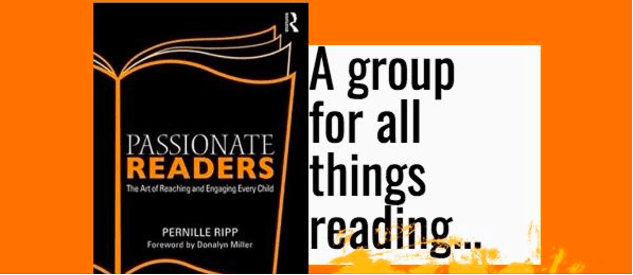
With just one month until the release of my newest book, Passionate Readers: The Art of Reaching and Engaging Every Child, I wanted to create a place where educators could gather to ask questions, share ideas, and hopefully be inspired.  Where better to do this than on Facebook?

I, therefore, invite you to join our Passionate Readers book club on Facebook.  Share your ideas, get excited, and find other people who are also trying to create passionate reading communities.  I am always in awe of what I can learn from others. And while the book is not out yet, you can start to use the community now.  What are you reading?  What are you excited about?  What is the worst thing you have done as a teacher of reading?  Come join the conversation and the collaboration.

If you like what you read here, consider reading my newest book, Passionate Readers – The Art of Reaching and Engaging Every Child, out August 2017.  This book focuses on the five keys we can implement into any reading community to strengthen student reading experiences, even within the 45 minute English block.  If you are looking for solutions and ideas for how to re-engage all of your students consider reading my very first book  Passionate Learners – How to Engage and Empower Your Students.      Also, if you are wondering where I will be in the coming year or would like to have me speak, please see this page.

being a teacher, fun, Literacy, Reading, Reading Identity, Student dreams, Student Engagement, Student-centered

On the Need to Plan for Reading Enjoyment

A question I receive often is what do you teach?  Meaning what reading skills do I get to explore with my 7th graders in our English block?  And how do I cover it all?  I get it, teaching English Language Arts in the forty-five-minute block is daunting.  We feel like we are behind on the second day of school.    (Incidentally, this is what prompted me to write Passionate Readers because I figured I could not be alone in trying to deal with the madness).  And yet, while I gladly share what we do as I try to help my students become better readers, there seems to be a missing part in this curriculum conversation; the need to plan for reading enjoyment.

Why does this matter?   Because our assumptions about what we can do to kids’ reading lives through our well-meaning intentions are wrong.  We have assumed for too long that kids will just like reading, no matter what we do to them in class.  No matter the task we assign them.  No matter how we teach and what we discuss.  And yet, the numbers don’t lie… As kids get older, reading for fun decreases and with it outside reading.  We all know where this goes, by the time kids leave our classrooms and become the adults we have hoped to shape, many of them; 26% to be exact, choose to not read a single book for the next twelve months.  And we know this, we see it in our classrooms every single year; those kids that come in and sigh, that pick up a random book, that look us in the eyes and tell us proudly that they will never like reading no matter what we do.  It seems, in our eagerness to create amazing readers, we have lost sight of the end game; people who actually want to read once they leave our schools.

The decisions we make today, as we plan for the year ahead, or for the next day’s lesson, matters more than we know.  Yes, kids need reading skills, of course, but we also must plan specifically for protecting the hope of reading.  For protecting the positive reading identities that are already present in our school communities, for investigating and hopefully changing the negative reading identities.

But this won’t happen just by happenstance. Joyful reading experiences don’t just happen magically even if we provide choice, time, and plenty of great books.  We must strive to make it fun.  To create meaningful opportunities to interact with others through the books we read.  To abandon the books that do not work for us, even the ones we rank a seven or an eight.  To read picture books aloud not just for teaching the skill but for creating a community, for laughing together.  For speaking books with one another.  For reading aloud.  For finding time to slow down so we can savor what we read, rather than just to get through it.

And don’t take my word for it, here is just some of the research of the benefits of focusing on reading enjoyment from The National Literacy Trust.

clipular (1).png

We may lament the amount of time we have in our classrooms.  We may worry that we will never get “it” done.  That we are not enough or that what we are doing is not the right thing.  But we must not forget how much we do control in our limited time with students; how many decisions we do get to make.  One of those has to be what we are going to do to protect the love of reading.  How will we make reading fun again and then stand proudly behind our decisions?  So next time you plan a lesson or have a curriculum discussion, ask yourself this; will there be enjoyment in this?  Will the very students we are teaching find this fun?  And if not, why not?  What can you do to change?  Our classrooms were never meant to be the place where reading came to die, they were meant to be places filled with reading explorations.  What will we do to change the very experience we have with our students?

Our classrooms were never meant to be the place where reading came to die, they were meant to be places filled with reading explorations.  What will we do to change the very experience we have with our students?

If you like what you read here, consider reading my newest book, Passionate Readers – The Art of Reaching and Engaging Every Child, out August 2017.  This book focuses on the five keys we can implement into any reading community to strengthen student reading experiences, even within the 45 minute English block.  If you are looking for solutions and ideas for how to re-engage all of your students consider reading my very first book  Passionate Learners – How to Engage and Empower Your Students.      Also, if you are wondering where I will be in the coming year or would like to have me speak, please see this page.

being a teacher, being me

On This New Country of Mine

Brandon stood outside the door, ready to congratulate me.  My best friend, my better half, took one look and asked why I was crying.  It was hard to find the right words…

I came here in 1998 with the idea of staying one year.  I had said my goodbyes but they felt like so longs and yet as the years progressed, my home, Denmark, slipped further and further away.  Once I married Brandon and Denmark changed its immigration laws, I realized that this country was probably my home, because no longer could the man I loved come with me.  It hit me like a ton of bricks because in this country, as an immigrant, I was not seen as a full person with equal rights.  And yet, I stayed, believing in this nation and the work that we do in education for the future of us all.

But I’ll tell you; the past eight months, as an immigrant to this nation, have not been easy.  Every time I have left, I have wondered whether I would be allowed back in.  When I have discussed my political opinions, I have wondered if my name would show up on a  list somewhere.   I have worried that this country which has been my home for 19 years and is the birth-nation of my husband and children, was no longer a safe place for me or anyone who does not fit this version of what it takes to make America great again. I have been reminded of my own white privilege and then also been reminded that just like that, what I take for granted, could be taken away.

It wears on you when day in and day out, you don’t know if this is the place you belong.  I cannot imagine what it must feel like for those who feel this way every day, with no end in sight.

So when I took the oath today, I cried.  Not just because I am proud to become a part of the glorious mess that is the American experience.  Not just because I can now travel without worry.  Not just because I get to vote, but because I feel this sense of relief.  Like my rights cannot be so easily dismissed or taken away.  Like I now matter to this nation, as if I am fully human here now, and not just someone with pseudo rights that can be easily tossed out.

When you are born with these privileges you may not know what it means to be handed them.  This is the closest I will ever come to feeling marginalized and that is something worth remembering.

So I cried my tears and then I registered to vote and in my heart, I said yes.

Yes to seeing the greatness that already exists.

Yes to being a part of the change that we need.

Yes to fighting for the things I believe in.  And fighting loudly.

Yes to seeing the flaws.

Yes to realizing that my voice matters now more than ever.

Yes to taking responsibility and also being in awe of that.

I am now a citizen of the United States of America and I am ready to work for change.

IMG_5590.JPG