Reading, students

How to Engage Your Strongest Readers

image from etsy

This summer, I was lucky enough to be inn the presence of Mary Ehrenworth at Teachers College as she gave us strategies for how to support our strongest readers.  Inspired by her words and knowing that I would have readers that were well beyond their years, I decided to put her words into action.  But what did it look like in the classroom?

I met with them frequently.  All kids had one to one with me at least every other week depending on what we were doing.  This meant I knew what every kid was reading and working on.  I also met with them in small groups or in partner ships.  They pushed each other’s thinking just as much as they pushed mine.

We revisited ideas.  Too often their initial ideas were good, but not deep thinking.  In the past I would have been happy with that but I wanted more from these kids.  If they wrote something down, I would ask them to think deeper about it, add more thoughts, and clarify what they meant.  They learned to push themselves further than their initial thoughts.

We brought writing into reading more.  Students would jot more thoughts down as they read since I was not worried about the quantity of books they were consuming, so if they decided to sit and think while reading that was celebrated rather than frowned upon.

Their reading goals were catered to their thinking. My strongest readers don’t need to just work on vocabulary, connections,or the standard comprehension strategies but really need to have their thinking pushed.  Things we discussed in our books were:

  • How would the characters react if placed in a different book such as putting Katniss in the Divergent series?
  • Gender roles in their books for example: why are strong female characters in science fiction still obsessed with love?
  • How would a character change if they were of the opposite sex?
  • How would characters react to each other if they met outside of a book?
  • What social issues were in the book?
  • How did characters develop throughout an entire series?
  • What was the author trying to tell us with the decisions the characters make?
  • Similarities and differences in genres as a whole, but not just within the genre but also with the time frame that it was written.  So how is science fiction written now different from science fiction written in the 1980’s?
  • How trends in literature show up in other media such television, movies, comics etc.
  • And finally, what the role models are now that we are creating for younger children?

If you had told me at the beginning of the year that I would have these deep conversations with 5th graders, 5th graders!, I would have thought you were joking.  But these kids, with their insatiable thirst for books, even if they read slowly, they were ready for these conversations and thoughts.  They brought things to the table that I had not thought of.  They pushed me in my thinking, even if I had never read the book they were discussing.

Mary Ehrenworth was right; our strongest readers need us just as much as our developing readers. They need to be pushed and challenged, they need to be handed books that will inspire them.  They need to discuss and think with each other and continue to push themselves.  I am so glad I listened, I am so glad I pushed myself.

I am a passionate (female) 5th grade teacher in Wisconsin, USA, proud techy geek, and mass consumer of incredible books. Creator of the Global Read Aloud Project, Co-founder of EdCamp MadWI, and believer in all children. I have no awards or accolades except for the lightbulbs that go off in my students’ heads every day.  First book “Passionate Learners – Giving Our Classrooms Back to Our Students Starting Today” can be purchased now from Powerful Learning Press.   Follow me on Twitter @PernilleRipp.

 

Be the change, being a teacher, Reading, Student-centered

Who Cares About Reading Strategies?

image from icanread

I saw him reading that bright green book, I snuck a closer look and recognized the cover.  “Guinness Book of World Records” was perched on his lap.  After independent reading, I asked him if he had any chapter books to read too.  I don’t mind Guinness but I love when students have a little bit of everything to read.  He told me no, and when I asked him why not, he said, “Reading is not my thing.”

This student has been taught every day in reading strategies.  How to comprehend, how to figure out themes, how to connect and draw meaningful conclusions.  He has diligently written post-its showing some thoughts, he has spoken to others about the books.  He has discussed goals with his teacher.  And yet, he doesn’t love reading, he doesn’t even like it, nor does he feel he needs to.

So then what does it matter if a student can tell me about theme?  What does it matter if a student can give me text evidence?  If there is no love of reading then what do we need reading strategies for?  Sure, students may be  equipped to move on in school and figure out the texts given to them.  But the child who does not like reading will not reach for books to enlighten them, or books that will challenge them.  They will not reach for books to transport them.  Books will not be a needed companion.  They will be okay with reading not being their thing and continue on that path.  And I am not okay with that.

Who cares about reading strategies and teaching them if we are not uncovering at least a like of books?  If we are not helping our students discover a book that they want to read, not because I told them to but because they want, whether it be fiction, nonfiction, or audio?  Who cares about theme if a child thinks reading is torture?  Who cares about connections when the most important one; the child connecting to the book, is missing?

Yes, we should teach students to be better readers but we should also help them uncover a love of books if it is missing.  We should be professing our own love of books and urging them to find the right one that may convince them that reading bears value.  Every year this should be our biggest focus, not the reading strategies, they come after.

I am a passionate (female) 5th grade teacher in Wisconsin, USA, proud techy geek, and mass consumer of incredible books. Creator of the Global Read Aloud Project, Co-founder of EdCamp MadWI, and believer in all children. I have no awards or accolades except for the lightbulbs that go off in my students’ heads every day.  First book “Passionate Learners – Giving Our Classroom Back to Our Students Starting Today” can be pre-bought now from Powerful Learning Press.   Follow me on Twitter @PernilleRipp.
 

Be the change, being a teacher, being me, Reading, reflection, students

Why It Matters to Be Passionate About Reading

image from icanread

“…I used to hate reading, it wasn’t cool, you know?  But then when I heard you were my teacher, I was kinda excited because in your room it was ok to like reading.”

He speaks these words to me as if they are no big deal.  To him they probably aren’t, just another conversation with his teacher.  But in my heart and mind, these words mean everything.  These words are why I am so passionate about books and about kids loving books.

I chose to finally unleash my passionate reader last year, thinking it might make a difference in my classroom. Little did I know just how much of a difference it would make.  We are a reading classroom now.  Not that we weren’t before, but not like this.  Not this excited, not this engaged, not this immersed.  Reading is cool in my room, something that matters to 5th graders.  Reading is what we do.

When I pull out a new picture book, the kids cheer.  They laugh, they comment, they re-read.  When I bring in a pile of books, I have to step out of the way while my students grab the one they have to read now and others scramble to make signup sheets so they can read it next.  All it took was for me to be passionate.  All it took was for me to share that passion.  (And of course, incredible books).

We wonder whether passion matters in education and in reading in particular.  Do teachers really need to be readers themselves to teach reading?  I am here to tell you it makes the biggest difference.  Children who have long given up on school can find solace in books.  Books build connections.  Books build memories.  When we are passionate readers ourselves we are actively sharing our lives, our connections, our feelings, with the kids that we hand books to.  When we go all out in our love of reading, we show kids that it is okay to be a reader.  That it is not something to be ashamed of.  Not something to hide.  But rather something that should be embraced and shouted from the rooftops.

So when students come to me and tell me reading sucks, or reading is uncool, I am not afraid.  Nor am I upset.  They just haven’t found the right book, they just haven’t laughed at the right read aloud.  They haven’t experienced the magic of reading a picture book as a big kid.  They just haven’t had that moment where everything disappears and all that matters is the book.  And that’s ok, hopefully, this year will be the year.  Hopefully this year they will find their passion.  Because I am not giving up on them.

PS:  Have you heard about the Global Read Aloud?  The books for 2014 were just chosen and I promise this year will be amazing.  Connect your students to the world through a shared read aloud, after all it only takes one book to connect the world.

I am a passionate (female) 5th grade teacher in Wisconsin, USA, proud techy geek, and mass consumer of incredible books. Creator of the Global Read Aloud Project, Co-founder of EdCamp MadWI, and believer in all children. I have no awards or accolades except for the lightbulbs that go off in my students’ heads every day.  First book “Passionate Learners – Giving Our Classroom Back to Our Students Starting Today” can be pre-bought now from Powerful Learning Press.   Follow me on Twitter @PernilleRipp.

Be the change, being me, Reading, reflection

So What’s My Book About?

This week was very exciting for me as my very first e-book published by Powerful Learning Press became available for pre-buy.  I had never thought I would be able to add “author” to my bio!  This book is meant to be a how-to change your classroom for any level of teacher, pre-service, new, or veteran.


What’s even better is that right now until April 7th there is a coupon, I love a good coupon!

Save with this pre-buy coupon code

To celebrate the pre-launch of this exciting book for educators, Powerful Learning Press is offering a $3 discount through April 7. Use our coupon code PREBUY at checkout to save $3. Go to the PLPress online store to buy now.

I hope you consider reading it.

being me, Reading, reflection

Take a Moment to Celebrate

image from icanread

He sat down next to me, book bin in hand, ready for his conference.

“So what has been going on in your head as you read?” I ask, pen poised and ready to jot.

“Well…” he clears his throat “…I just finished this book.”

And that’s when it hits me.  This kid finished a book!  And not just one book but almost 10 books this year.  This kid who at the beginning completely had given up on chapter books, who only read magazines if forced.  This kid is reading.  And not just reading, he is sharing his thoughts, writing ideas down, thinking of what to read next.

So I put my pen down, I only write “Celebration” in my notes.  Instead we spend several minutes discussing his accomplishments, discussing his growth.  I urge him to be proud, to notice what he has done.  A few minutes is all it is, but monumental none the less.

When was the last time I took a few minutes to celebrate a child’s growth with them privately?  I am great with the whole class praise, but often forget the one to one.  Not any more.  Instead of a reading mini-lesson I will be celebrating.  Instead of  giving them something new to try, we will instead spend a few minutes cherishing what they have accomplished, what they have already done.

In a week we can go back to the new, but for now we will cherish the old.  After all, a small celebration can indeed go a long way.

I am a passionate (female) 5th grade teacher in Wisconsin, USA, proud techy geek, and mass consumer of incredible books. Creator of the Global Read Aloud Project, Co-founder of EdCamp MadWI, and believer in all children. I have no awards or accolades except for the lightbulbs that go off in my students’ heads every day.  First book “Passionate Learners – Giving Our Classroom Back to Our Students Starting Today” can be pre-bought now from Powerful Learning Press.   Follow me on Twitter @PernilleRipp.


Reading, Student-centered

For the Love of Book Clubs – Creating Meaningful Conversations

“….I think you are right because…”

“…on page he said…”

“…I really connected with…”

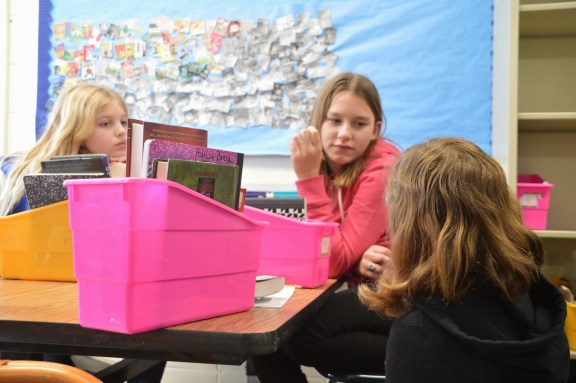
I am drifting around my classroom listening in on the book club conversations happening during reading.  Some times I stop and guide, other times I just listen, smile and move on.  What a glorious sight indeed, 26 students discussing their books.

It wasn’t always this way in my room.  I remember the days of guided reading, teacher front and center, and the students skimming the surface of their books waiting for their turn to read aloud.  I remember the times when 2 children dominated every conversation and others just watched.  Or the time when I thought book clubs meant I had to have all of the questions prepared in all of the books.  Gone are those days and thank goodness they are.  So how did we get to this stage, because I can tell you it didn’t just happen by magic!

  1. We started the first day of school.  The very first thing I did in my classroom was read aloud a book and ask my students to discuss it.  Everything we have built off started that day.
  2. We set the goal beyond school.  I don’t want my students to have deep conversations to get a good reading grade,  I want them to be able to have meaningful conversations about anything in life.  The goal is bigger than 5th grade and the students get that.
  3. I gave them a timeline.  I told the students that later in the year we would be in book clubs and so everything we were practicing in reading led up to this; real “adult” conversations about books.
  4. We practiced.  Deep conversations don’t just happen so we practiced with every read aloud.  That way the students had a shared experience to discuss without it taking up much time.  Practice wasn’t just out loud, students would also write down what their response would be on post-its, thus allowing everyone a chance to be a part of the conversation.
  5. We built off each other.  Younger readers tend to state their opinion without really listening  to what has been said before them.  I modeled how to build off what has just been said and students then practiced every chance we got.
  6. We did it across subjects.  Creating great discussions isn’t contained to just reading but is something we need in all subjects because it is a life skill.  We have many discussions across the board and they all practice the same skills with the goal of pushing our thoughts deeper.
  7. We created cheat sheets.  Students don’t always know what questions to ask to push a conversation so we created cheat cards together; little note cards with printed questions that they could refer to anytime they want.
  8. I stopped talking.  Rather than lead the conversation, I am now on the side coaching in and helping when needed.  I also have a designated weekly time set aside for each book club so that I can really see how it is going and help as needed.  It has been wonderful to see the clubs grow.
  9. They picked the book.  And abandoned the book if needed.  Just as every book doesn’t work as a read aloud, every bookd doesn’t work as a book club book either.  Students had about 12 different books to choose between and gave me a top 4.  Each group knows they can abandon the book if it does not live up to their expectations but that it needs to be a shared experience.
  10. They set the expectations and the pace.  Before we started reading, all groups met to create the expectations within their group.  They discussed what they should look like, sound like, and feel like and then created a poster.  All the posters are different based on the group.  The groups also decide how many pages they are going to read every day, leading to 100% completion and buy-in.

My students know that book clubs are their chance to show off everything they have learned in reading, but also that it is bigger than that.  Book clubs are not just reading and discussing a shared book, it is about growing as a person.  I am so proud of my students and what they are accomplishing.

photo 3
Book Club Expectations

photo 1

photo 2
Book Club Expectations