authentic learning, being a student, being a teacher, being me, Personalized Learning

Re-thinking Our Learning to Infuse More Joy and Choice

One of many things I love when on break is the chance to simply reconnect with amazing people, and when said amazing people are fellow educators, you can bet that it doesn’t take long for the conversation to turn to how to make the educational experience better for all kids.

After dinner, I was left thinking about how often we get so caught up in all that we need to do that so many of those grand ideas, the ideals we dreamt up this summer or whenever we have room to be inspired seem to be forgotten as the year starts and the pressure resumes. That while we implement many things, tweak many others, there are many notions and ideas that simply don’t happen. And who can blame us? There are so many days that I am just keeping my head afloat trying to stay a few steps ahead of the students in order to create and sustain relevant educational experiences.

Last night, the conversation turned to joy and play. How little there seems to be purposefully implemented throughout especially older students’ daily routines in school. How the minute they come to us in the upper years there are few opportunities for infusing joy and allowing more creative approaches to learning. And while both of those concepts are foundations of learning I hold dear, I also look back at my own curricular choices for the year and see how easily those two tenets of learning get siphoned away as I feel the need to do more, dig deeper, and make sure that the learning is “serious.” However, the siphoning itself relies on a untruth – joy and creative choice does not equate easier learning and is serious business, in fact, often purposefully creating moments for joy and creative choice requires a broader commitment and self-reliance within the learning happening. So with this in mind, I have done some restructuring of a few upcoming units and also rededicated efforts in other places, so what might that look like coming up in room 203?

The main questions I focused on in my reflection is: how might this spark joy and engagement and how do students have creative choice?

Re-committing to picture books. I usually read a lot of picture books aloud to my 7th graders and also use them in a variety of ways throughout our curriculum and yet, this year, I feel like with the busyness of it all, picture books have been less of a central tenet to us. It’s time to change that. In a little more than a week we kick off our Mock Caldecott unit for the year, a two week investigation into twelve incredible picture books for the year that will lead into a persuasive speech in which students will try to sway others to their choice of winner of the Caldecott. Reading picture books together is something that we already see as joyful and doing it in small groups will hopefully bolster that. Creative choice comes in how students want to persuade their peers – how will they deliver a message that is persuasive in nature and which tools will they use?

Bringing back our immersion project. Two years ago, I did an extended genius hour project in which students got to pick something to learn for themselves in order to teach others about it through a mini-lesson. This consisted of identifying an area to immerse themselves in and then spending time figuring out how to create an enticing lesson for others to learn from them. The topics were broad: How to do a card trick properly, what integration methods are necessary to integrate any function and how are they used, how do you play guitar and so on? These were all catered to student interests and were very broad on purpose. We then infused note-taking skills, how to find sources to teach them how to do the skills, and how to engage an audience in order to help them understand a concept, as well as created a speech rubric in order to practice public speaking. This year, I will finetune it with a few more scaffolds for those who are not sure what they would like to teach, as well as opportunities to tandem-research. This project sparked a lot of joy the first time we did it because students got to self-select their learning, immerse themselves into something they found relevant, as well as show off their knowledge in a fun way. There was a lot of natural choice embedded throughout.

Re-thinking our TED talk unit. Every year, the students get an opportunity to create a TED talk on a chosen topic and then give it to the class, and while the unit itself is solid, I want to spend more time helping students choose topics that they are invested in already. This year many of our students have expressed a deep interest and commitment to social justice work, as well as the overlooked history we have explored. This will, therefore, be my starting point in reminding students of what they already know and which questions they may have to push their thinking further. So often we push students into new learning without realizing how much work it is to research and then synthesize and process all of the information into a brilliant short speech. With the re-introduction of our immersion project, I want to implement more time for students to dive into their identity and what they are already interested in so that their TED talk work can be more focused on filling in knowledge gaps, rather than starting all over with research. This will also be an opportunity to jump into persuasion, how advertisement plays on our biases, and how we are influenced by social media. Choice plays into topic, as well as the angle they want to take in their talk.

Asking for more student input and taking the proper time for it. In the Enriched English class I teach, we have 6 vocabulary lessons consisting of 25 vocabulary words each that we need to somehow process, understand, and implement into our vocabulary. While I have gamified it in the past and also allowed for choice in how students show mastery, I have never really loved what we did. The words seem like a chore no matter how I spin it This year, I plan on showing students the vocabulary and then having them come up with opportunities for how we can learn it together. While there will undoubtedly be traditional methods for students to choose from such as rote memorization with a quiz, I also want to give them the opportunity to come up with other methods for learning that they will be able to choose from as we move into the vocabulary. While I already try to get as much student input as possible, I feel it often gets rushed, so this is a reminder for me to slow down and let it take the time it takes, and this goes for all classes, not just the Enriched English class.

Re-committing to free writing. We have been dabbling with free-writing throughout the year but due to book clubs in December, we changed our process. While students continued to write on their own, the community piece was lacking and so as we enter into January, I want to bring back the prompts and self-selected choice and the time to then share the creations we have. I also want to bring back the notion of playing with writing that so often gets lost as we write. Students so often fear that they have to write great pieces every single time which is an incredibly damaging notion for anyone trying to work through the emotions of writing and so I want to model my own not-so-great writing that tends to happen when we do a free-write. Students don’t need perfect role models, they need real ones.

Skyping with authors. Talking with actual authors is magical at any age and the advent of World Read Aloud Day reminded me to sign up to bring authors into our classrooms more. This is something I used to do a lot but once again seem to have gotten away from. I cannot wait for students to hear from Kevin Sylvester, Juana Martinez-Neal and Ishta Mercurio as they discuss their writing process.

Participating in Global School Play Day again. I love this initiative created by Scott and Tim Bedley with the idea to infuse more play into schools again. I have done this day before with 7th graders and while I am not able to do it the day it is scheduled for this year, I will do it instead on February 7th where students will get all of English to simply play with each other. You should sign up as well.

While this is not an exhaustive list, I am glad to be bringing this lens back to our work together this year to hopefully create experiences where it is not just students learning from me, but more from each other. Where there is more cooperative problem solving, more relevance, and more choice. Where maybe, just maybe, students can think of English class as a class that is meaningful to them beyond developing a love of reading and writing and helping them find themselves. Who knows, but I will keep trying.

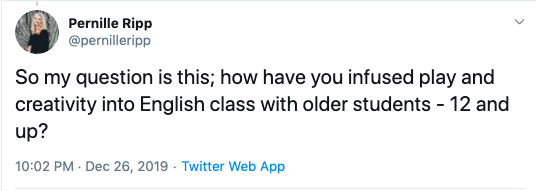
I posted the following question on Twitter last night and the responses are definitely worth checking out – so many great ideas for infusing more play and creativity into our work.

And now I ask you as well; how will you restructure or continue to reinforce the notion of play and creative choice in your class these upcoming months?

If you are wondering where I will be in the coming year or would like to have me speak, please see this page.. If you like what you read here, consider reading my latest book, Passionate Readers – The Art of Reaching and Engaging Every Child.  This book focuses on the five keys we can implement into any reading community to strengthen student reading experiences, even within the 45 minute English block.  If you are looking for solutions and ideas for how to re-engage all of your students consider reading my very first book  Passionate Learners – How to Engage and Empower Your Students

being a teacher

I Forgive

A personal post as the break offers time to ruminate on the ways I live my lives. Moving these thoughts out into the universe so that I can return to regular thoughts on this blog.

I never assumed perfection and yet in looking back I see the strive for it every day. How hard I have fallen on myself whenever I have made a mistake. How I have carried these burdens with me as if they were a weight to carry. Held them up at every opportunity where happiness clouded my vision and I felt so undeserving.

I have done my best and yet I know how often I have screwed up, how I have said it the wrong way, how I have offended, not done enough, not been enough. I can look back at my path and see it through the lens of failure, revisit every pot hole, every blockade. Can’t we all? Those words that cut and thrown my way have become my skin for so many years that there is little left over.

And I have allowed myself to continue on a path of accumulating disasters. Of accumulating failure. Of seeing myself through a lens of never enough, of not good enough, of not deserving the happiness that surrounds others. Of holding my breath because sure, soon, so soon, the happiness I do have will be taken away. Reallocated to someone who should have had it in the first place. The feeling of fradulence seeping through my pores.

How dare I take up space?

How dare I raise my voice?

How dare I ask more questions?

How dare I think that I am okay?

But these words have become too heavy to carry, the mirror become too big and I hear ir reflected in the voices of my students whose pasts haunt chase them into our classroom. Who tell me that for them there is no future, that what lies ahead has already been determined. That despite the proof in front of them, they will never be smart, they will never be good, they will never be anything because failure is what is familiar. Failure and fear are their constants.

And I see the harm. And I get exasperated. And I speak louder and more insistently trying to help them rewrite their narrative because they are so much more than that. And yet they smile, shrug, and repeat once again, “I am nothing…” but we tell them, “you are so much more than that…”

I am so much more than that.

So for this Christmas I forgive myself. Not because I am perfect but because this is not the way to live. This is not the way to learn.

I forgive myself for the past mistakes I have carried with me for so long. Forgive, but not forget, the ways I have needed to grow so that I can be better.

I will unwrap the moments that shaped me and redistribute their weight.

I will be grateful for the long path I still have to walk and make room for all of the moments still coming my way.

I will reclaim my space so that my kids can see what it means to be strong, and sure, and also human.

And I will be okay. Not because I finally deserve it but because I have been okay all along, just not able to see it.

These words will be empty until I live them, but they are being put out in the universe in case others need to hear them too.

Forgive.

Redistribute.

Embrace.

Breathe.

Live.

Repeat.

books, picture books, Reading

Best Books of 2019

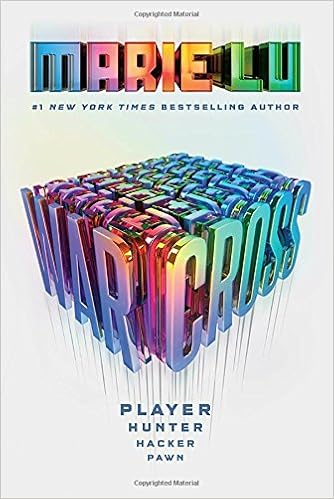
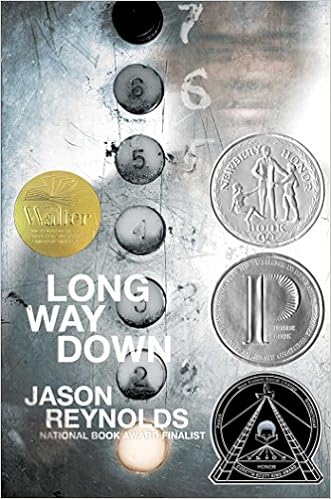
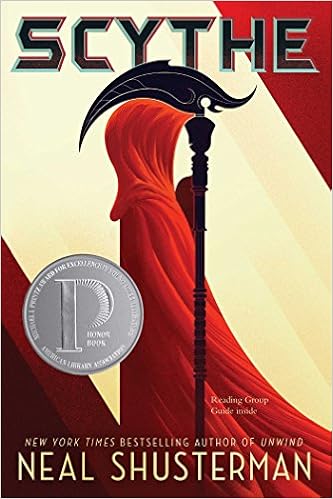
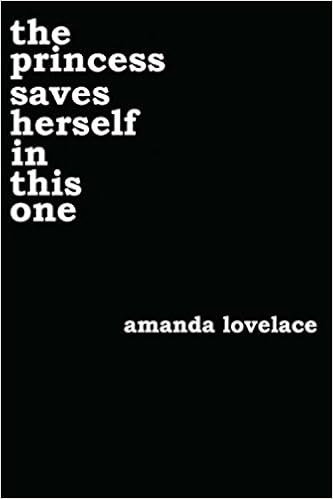
In June, I published my Best Books of 2019 So Far list, the very next day after publishing it, I read an incredible book, and then another, and then another. And so as it happens, the list continues, here are all of the incredible books that I loved in 2019. I know I missed some so please let me know your favorites as well.

And I know the year is not over yet, and so this list will inevitably be updated but I also want to allow myself to take time off from work during this month.

Picture Books

Out APril 14th, 2020
Out March 10th, 2020
Out January 14th, 2020
Out April 7th, 2020
Not Quite Snow White
Image result for saturday oge mora
The Bell Rang by [Ransome, James E.]

Early Readers

Middle Grade

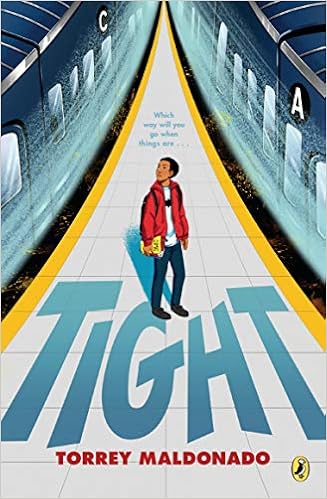
What Lane? by Torrey Maldonado
Out April 14th – Preorder now
I Can Make this Promise by Christine Day
Global Read Aloud contender for 2020
Out March 3rd, 2020 – pre-order now
Prairie Lotus by Linda Sue Park
Global Read Aloud Contender 2020
For Black Girls Like Me by Mariama J. Lockington
Global Read Aloud Contender 2020
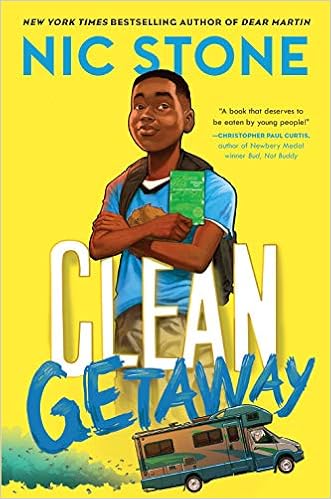
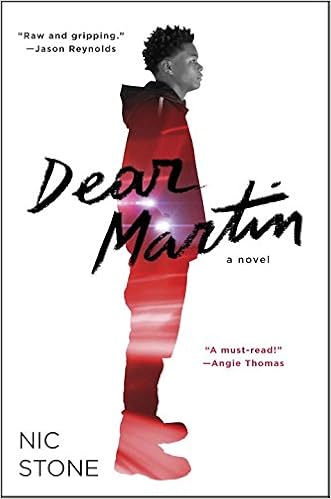
Clean Getaway by [Stone, Nic]
Clean Getaway by Nic Stone
Out January 5th – preorder now
Count Me In by Varsha Bajaj
Global Read Aloud Contender 2020
My Jasper June by Laurel Snyder

Young Adult

Pet by Akwaeke Emezi
Global Read Aloud Contender 2020
Jackpot by Nic Stone
Global Read Aloud Contender 2020

Non-Fiction

Kent State by Deborah Wiles
Out April 21st – pre-order now
Stamped – Racism, Antiracism, and you by Jason Reynolds and Ibram X. Kendi
This is the best book I have read all year
Out March 10th 2020 – pre-order now
Global Read Aloud Contender 2020


It’s Trevor Noah: Born a Crime by Trevor Noah
Global Read Aloud Contender 2020

While the year is not over yet, this was another great year of reading. I continue to marvel at the strength of the books that come out, the broader marketing of better representative books – even though we still have so far to go – , and also the guts that our children’s’ authors and illustrators continue to have when it comes to what they tackle for kids. I am so grateful for all of these creators and the continued magic they provide us with. I also know I missed books this year, so what did I miss? What were your favorite must reads?

being me, New Adventure, new year

Embarking on a Year of Yes

December 1st…

Chocolate calendar opened. Candles burning bright. Christmas tree up and presents are starting to appear below it as we think back on the year that was and the look forward to the year that will be. To the year I turn 40, to the 10th year of this blog.

For the past year, I said no a lot, focusing on my family as my husband enters his final year of his education degree – I cannot wait for him to graduate in a year! As my kids settled into new routines, as we worked through another diagnosis for one of the children. No to anything extra that would take my focus away from my family, away from my classroom. And I loved it, mostly, it was wonderful to have time to breathe and time to re-prioritize. But…and there’s always a but. I missed out on great opportunities to learn. On meeting new people. On exploring new facest of my life that I otherwise would have grown from.

So with the blessing of my husband, I am embarking on a year of “yes.” On saying yes to as much as I can manage, on saying yes to new collaborations, to new adventures, to new learning. On saying yes when it feels like a great fit either personally or professionally. On saying “yes” when it feels as if I can help in some way.

While it will not be yes to everything, after all, I am only human and do not want to work all of the time, it will be a lot more yes than no, a lot more let’s try than no thanks. A time to perhaps write another book, to blog when I can, to learn as much as I can.

So this is my invitation to the world; whether it’s for collaboration, working with other teachers or speaking at a conference, whether it is trying a new idea, meeting new people, doing interviews or reflecting through something, whether it’s for friendship or some other thing, send your idea my way. Reach out, send an email, come say hi if our paths cross.

Welcome to the year of yes, I cannot wait to see what happens.

To contact me, please go here https://pernillesripp.com/about/

If you are wondering where I will be in the coming year or would like to have me speak, please see this page.. If you like what you read here, consider reading my latest book, Passionate Readers – The Art of Reaching and Engaging Every Child.  This book focuses on the five keys we can implement into any reading community to strengthen student reading experiences, even within the 45 minute English block.  If you are looking for solutions and ideas for how to re-engage all of your students consider reading my very first book  Passionate Learners – How to Engage and Empower Your Students

achievement, being me, Reading, Reading Identity

My Daughter Will Not Be Left Behind

Our daughter’s annual IEP meeting is coming up. It’s a big one, she is headed to middle school next year and this is the document that is meant to wrap her in protection. To make sure that she still gets the services that her numerous teachers have offered her through the years as we have watched her grow from barely reading to where she is now. It has been a long process, I have documented it on this blog, and yet the growth has been there because of the people who have seen her for more than a reading score. For more than a reading level. Who have sat with her, countless hours, and asked her to read, to explain, to try, and taught her new ways to look at the pages and find meaning. Who have seen her whole process as a reader as something to pay attention to, and not just her comprehension. Here as a human being. We owe so much to the teachers that have had her in their care. Who, like us, know and believe that the best we can do for kids who are vulnerable in their learning is to put highly qualified professionals in front of them in order to see the child and not just the disability, the lack of, the less than. To keep their dignity and humanity at the center of all of our work.

So imagine our surprise when we were told that in middle school her reading growth would be measured using Lexile. A computer test will test her throughout the year and progress will be reported to us this way. After we made sure we heard correctly, we told them that that would not be acceptable. We know our rights as parents when it comes to an IEP. Her meeting is next week, I know we will come to a solution with her team because that’s how they are.

And yet, what about all those kids who do not have someone fighting for them? Who do have people fighting but no one listens? Whose parents or caregivers are not even invited into those conversations because our assumptions about them have shut the door? Whose parents or caregivers do not know why Lexile is problematic? Why trusting a computer to spit out a test score is problematic? Why basing a child’s reading instruction which inevitably becomes part of their (reading) identity on what a computer test tells you is problematic? Why, once again, removing experts, trained professional, from the equation is problematic? Why reducing a child to a score is problematic?

And it keeps happening to our most vulnerable kids. The kids we worry about and then have no problem putting in front of a computer who will not understand the nuances of their thinking, the way they reached an answer, or even give them enough time to think about it. But sits there, waiting for an algorithm to be complete, in order to supposedly tell us everything we need to know. And we base our instruction on this? And we base our assumptions on this?

We are in the business of human beings and yet how often do we, educators, say yes, or are forced into, instructional components that have nothing to do with valuing children as people. Education says yes to the easy. Education says yes to the packaged. Education says yes to the computer. To the limitations. To the less-than-equal instruction, because it might save us time, it will make us more efficient, it will make us all achieve, but it doesn’t. Because the kids who continue to strive are left behind while we pour our human resources into the kids that can.

My daughter will not be left behind. She will not be left behind a computer screen. Or behind layers of inequity that would rather dehumanize her than provide equity in the deepest way we can; human power, human potential. Because we will fight. But it’s not enough for me as a parent to just fight for her. Because this is a story that plays out loudly in so many places. How else can we mobilize and try to break the cycle of inequity that has always been a part of our system? That has always been based on creating further inequalities and separating the kids who can from the kids who can’t. A system that continues to protect those whose circumstances allow them access to more opportunities, better opportunities, and offer nothing but band-aids to the kids who need so much more than that. And I am supposed to be okay with that.

On Monday, we meet and while I will gladly pull out research and offer alternatives, I also know that it won’t be a hard fight, not for me, because of my privilege as a white, college-educated, middle-class woman. Because of the quality of educators our daughter is surrounded by. But it shouldn’t have to be that way. I shouldn’t be able to game the system because of what I know. I shouldn’t have to raise red flags when those flags should have been raised before the program was even purchased. Before the first child was placed in front of that test. We owe to all our kids to do better. To fight and break the continued systems of oppression who function alive and well within our educational system. Which have created a system that can predict who will succeed before they even show up.

Right now, it’s my daughter who’s on the line, my miracle, but it could just as easily be any other child.They all deserve better.

If you are wondering where I will be in the coming year or would like to have me speak, please see this page.. If you like what you read here, consider reading my latest book, Passionate Readers – The Art of Reaching and Engaging Every Child.  This book focuses on the five keys we can implement into any reading community to strengthen student reading experiences, even within the 45 minute English block.  If you are looking for solutions and ideas for how to re-engage all of your students consider reading my very first book  Passionate Learners – How to Engage and Empower Your Students

being a student, being a teacher, Reading, student choice, student driven

Stepping Into Inquiry – How to Use Google Search Better and Whose Voices are Missing?

Note: This is a continuation of the blog series I am doing detailing the work I am doing with students in an inquiry project into how to research better. The first post detailing the set-up and our first module, How to Write an Inquiry Question, can be found here.

Module 3 was a big one for us, spread over two days, not so much for the tips on how to use Google Search better although they were helpful, but more because we wanted our students to think about the types of sources they were finding, as well as whose voice was missing from their sources, so they could consider the impact of those missing voices.

This question; whose voices are missing, is a question we center our work around all year. Throughout the year, I have been actively trying to expand students’ historical knowledge of the world using an “overlooked history” segment every Friday for discussion and reflection, as well as spending a lot of time selecting the media that our students will be immersed in, in order for them to experience as many voices as we can. So we knew that searching for reliable sources to use would be a brilliant opportunity to put this more into their hands as our students don’t automatically consider whose voices they are using an dhow that will impact the knowledge they gain and the direction they take.

There are so many tips for how to use Google Search better, many can be Googled, so we wanted to introduce just a few that would potentially limit their results and bring them more specific results. We watched a video together that discussed some of the limiters, I didn’t love it and will probably search for a better video for next year. The students continued to practice their note-taking skills along with the video and then I walked them through a search so they could see how my results changed.

The limiters we decided to focus on were:

  • Using quotation marks for an exact phrase
  • Using boolean operators.
  • Eliminating unnecessary words.
  • Excluding words.
  • Including year range.
  • and using specific sites to limit their search – this one we just showed but didn’t expect them to use.

Teaching slides day 1

Then they started their work in their student slides (note, there are duplicate slides in here because I was out with sick kids and so they worked through slides I would have taught otherwise). We wanted them to specifically consider:

  • What they actually were searching for, so to clarify their inquiry question.
  • Which types of sources they would search for, we reminded them that video, infographics, and podcasts can also make for excellent resources.
  • We discussed the difference between primary and secondary sources in order for them to think of whose voices they should be listening to.
  • Then led a specific conversation about whose voices they would search for urging them to think of how someone’s perspective is going to change based on many factors such as their economic situation.

Once they had found the sources they wanted to use, they needed to consider whose voices were being represented so they could think of whose voices were missing. You could see a lot of aha moments here as students considered their sources and how they were incomplete. Then they had to consider whose voices they needed to add as well as the the impact those missing voices would have on their research. Honestly, this is the largest point I wanted students to walk away; getting to think about whose voice holds power and who is not represented. My teaching slides for day two had introduced this concept more fully and many students were spot on in theirintial analysis of whose voices were missing and why they needed to find better sources.

For my 2nd day of teaching, I had specific discussion points about changing perspective and why it is so vital we recognize our limitations of what we know and then try to learn more. This was a great discussion supported by the teaching slides and set them up for further work within their own slides.

Day 2 Teaching Slides

Reflection Back

I am still pondering what I need to change as there were many things I liked and some I didn’t. Like I said, I need to find a better video for them to take notes on. We also had our small groups work together on one inquiry question and find sources together for that question, but I don’t love how that limits their choice when it comes to what they are pursuing. Some of the limiters were not particularly helpful and actually increased their results rather than decreased them. But the conversation about perspective, missing voices, and the impact it will have on our knowledge were powerful and will be continued throughout the year because the few days of work we did around it here is simply not enough. It was a taste and something I am still actively working through as an adult.

The one area I want to work on through discussion is why we should be worried about whose voices are given authority and how power is given to certain voices and not others. While I touched on it, it was not enough (I am not sure what “enough” would look like), so I am mulling over how this can be added further.

Note: The unit after this was a lesson on how to use databases led by our librarian so I will not be sharing those slides as they are not mine to share.

After that came another big one: How to check reliability using the CRAAP method.

If you are wondering where I will be in the coming year or would like to have me speak, please see this page.. If you like what you read here, consider reading my latest book, Passionate Readers – The Art of Reaching and Engaging Every Child.  This book focuses on the five keys we can implement into any reading community to strengthen student reading experiences, even within the 45 minute English block.  If you are looking for solutions and ideas for how to re-engage all of your students consider reading my very first book  Passionate Learners – How to Engage and Empower Your Students