The post I wrote before this was really long and rambling, so much so that I got sick of writing it and instead decided to just get to the point. So here’s the point…
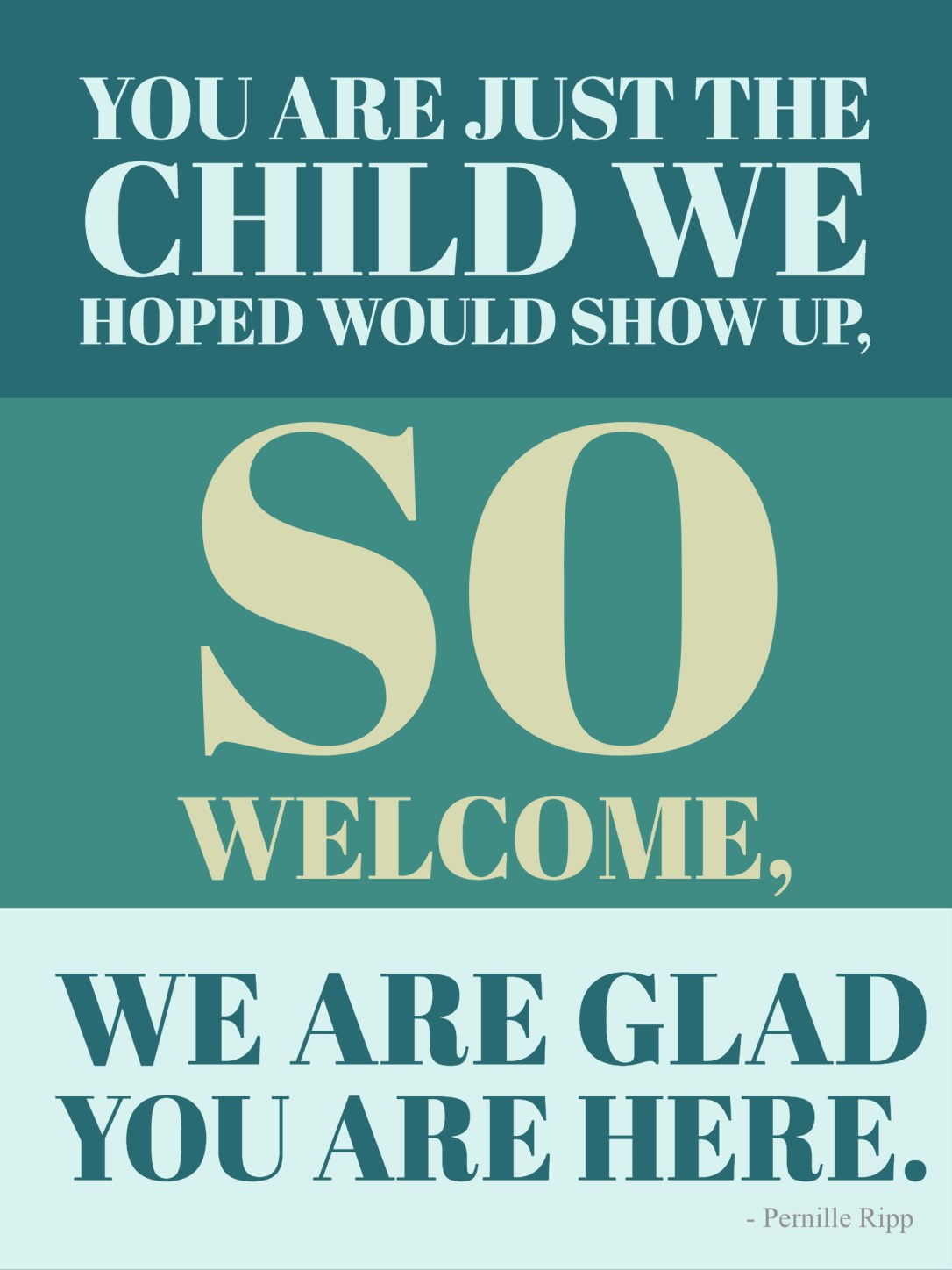
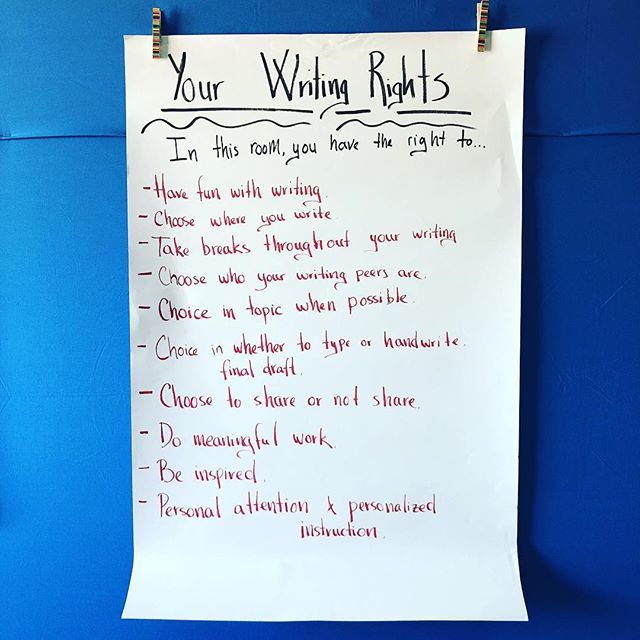
If you come to our room, and many people do, you will see this poster hang next to the door, in a prominent place where I hope every person sees it. This poster is my heart on display, but it also so much more.
It is a promise.
A reminder.
A stern warning when needed.
And not to the kids, no, they barely glance at it, but to myself.
A promise to every child that walks in that day no matter their mood, no matter their temper, that in our space they will have space and I will do my best to value them.
A reminder to live the words I choose to share with the world, even when I am tired, frustrated, out of ideas.
And a stern warning to myself when my actions and reactions go against the very words I say I believe in. To stop. To breathe. To find love.
Because let’s face it, the display is easy to make but hard to live up to. Especially after the first few week’s excitement has worn off, especially once we settle into the every day routines, especially after the dust settles and we realize that we have so much to do and somehow we need to get doing it. Especially once we realize that we are, indeed, only humans with dreams and flaws that sometimes get in the way of success.
And so the poster hangs proudly as a reminder to myself to continue to reflect. To look at my own practice, to hold myself accountable even when others may think I am doing just fine. To use my voice to speak up, to try to make change, when so many inequitable practices still exists within the structures of school. To stick my neck out and fight for the kids who we don’t always fight for, even when I am the problem, even when my choices are the problem.
To remember that I cannot say that every child is welcome if the truth is far from it. That I cannot support the education of all children if the inequitable systems are not questioned, changed, broken. That I cannot pretend to be happy that these are the children that showed up if my pedagogical and psychological decisions don’t reflect that.
And so at the beginning of this brand new school year, with a classroom as ready as it can get for now, with all of these ideas in my head, with all of these hopes and dreams, I say this out loud so the universe knows; how will I live up to the words that I promise? How will you?
If you like what you read here, consider reading my newest book, Passionate Readers – The Art of Reaching and Engaging Every Child. This book focuses on the five keys we can implement into any reading community to strengthen student reading experiences, even within the 45 minute English block. If you are looking for solutions and ideas for how to re-engage all of your students consider reading my very first book Passionate Learners – How to Engage and Empower Your Students. Also, if you are wondering where I will be in the coming year or would like to have me speak, please see this page.
We are starting the year, and the creation of our writing portfolio, with a unit focused on memoir and personal essay. I am hoping that in this unit, the students will start to share parts of their writing identity through discussion of what makes them a writer or not, the erules of writing and which we need to break, as well as experimentation with writing based in their own lives.
I have been gathering memoirs and personal essays for a while now, trying to focus on stories that may enrich their understanding of how others see the world so that they in turn can focus on their own lives.
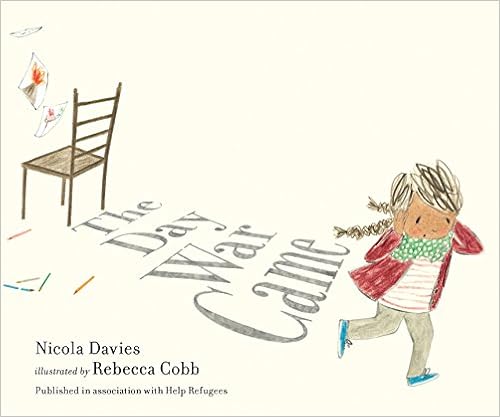
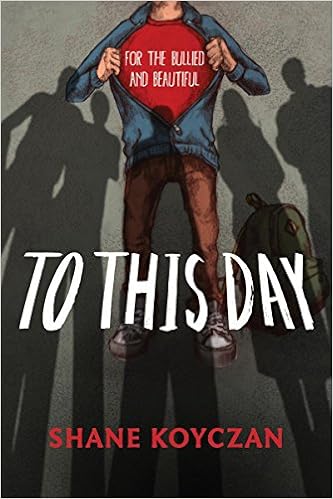
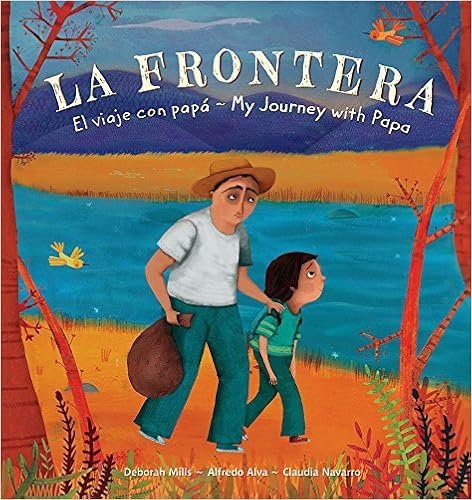
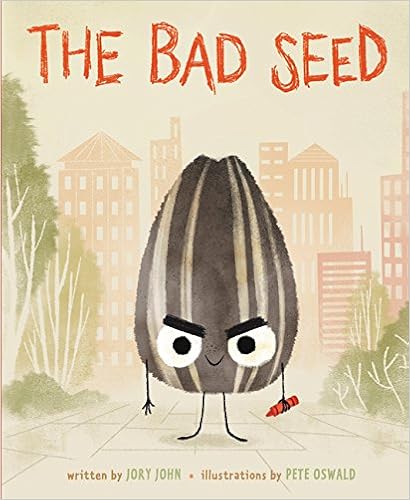
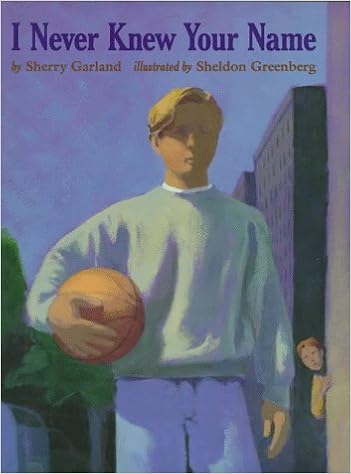
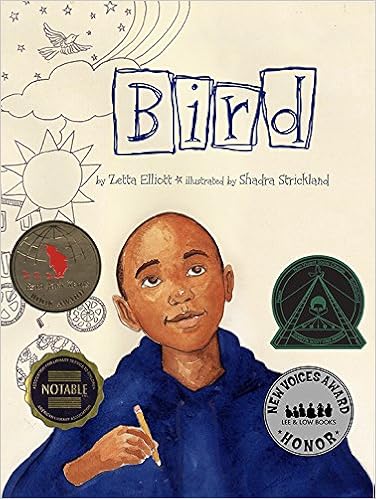
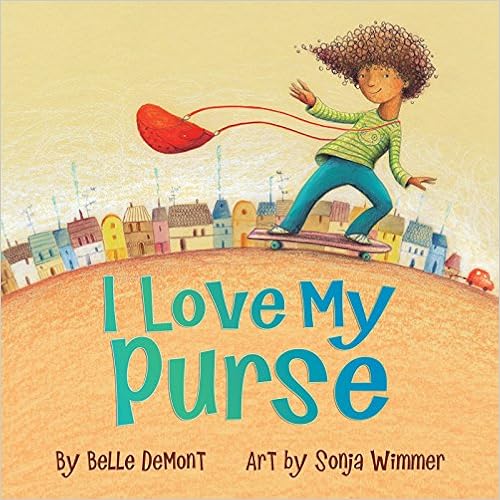
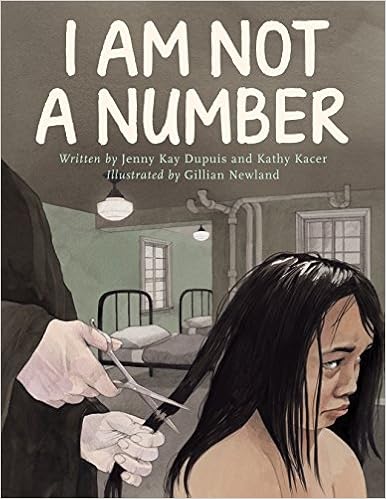
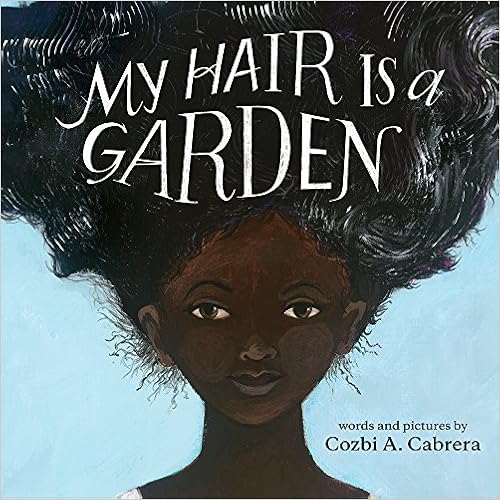
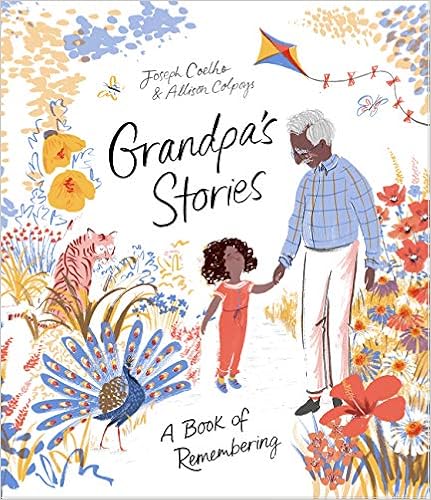
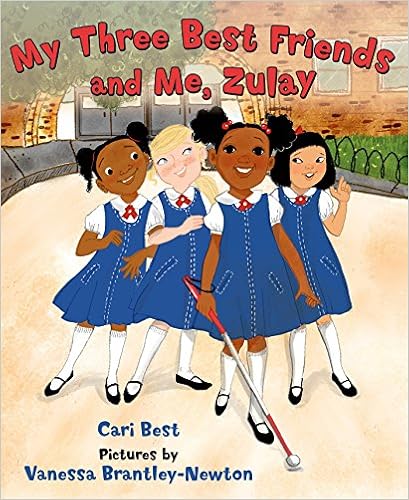
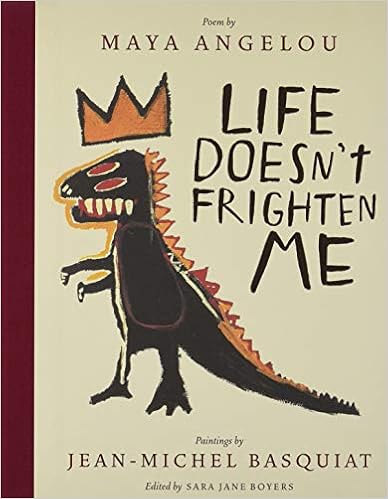
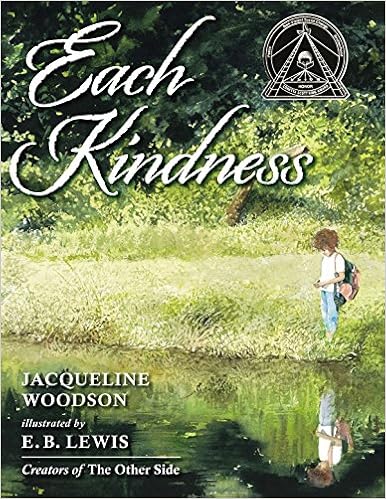
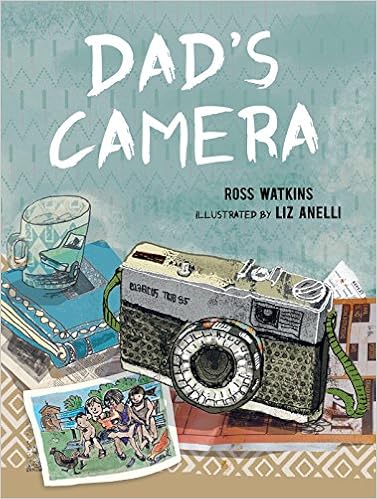
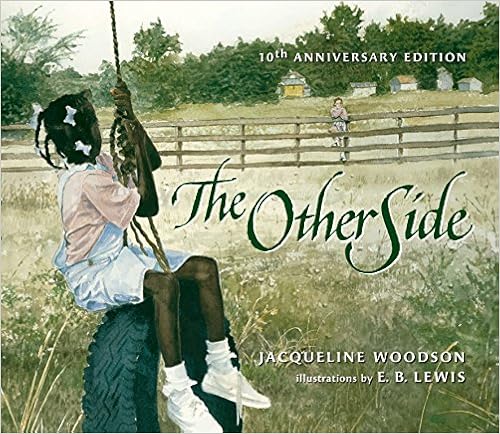
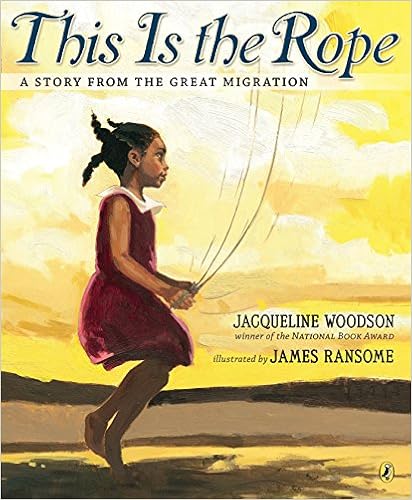
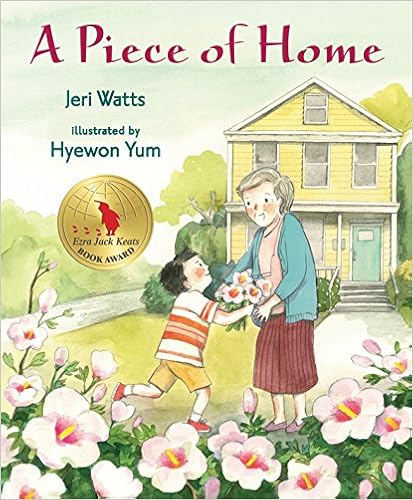
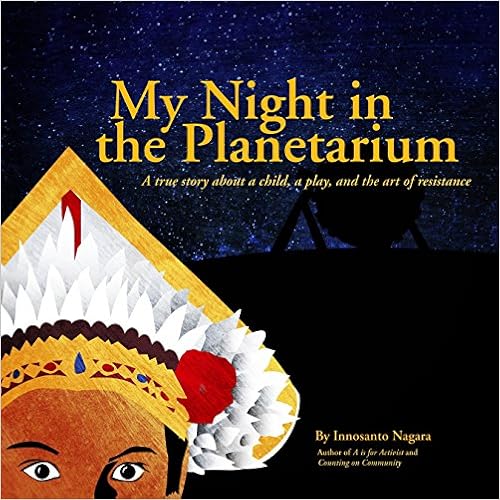
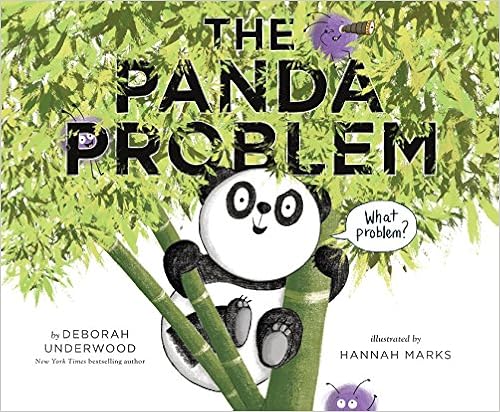
As always, our trusted picture books are part of the mentor text collection that will surround students as we embark into this work, so here are the ones I have pulled so far that focus on small moments and written in 1st person. While some of these are true memoirs, others are texts I can use as models despite them not being true stories.
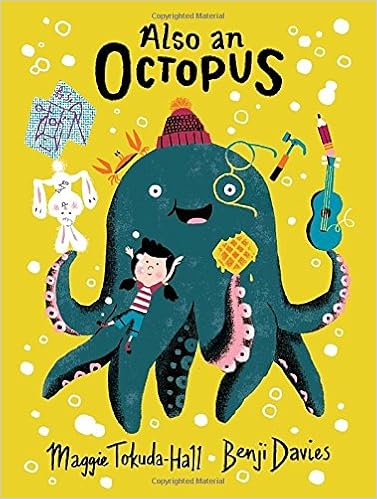
As I get ready to embark on another year of teaching English, I have been learning more about the writing process and the specific skills that I need to teach in order to help my students change or strengthen their experience with writing. Within the pages of professional development books I have found so much inspiration for how to create a better experience, hopefully, for kids. And so when I went to my classroom today, I pulled a few great picture books that I plan on sharing and showcasing to students to help them discuss the supposed rules of writing and how we can break them to create our a unique written piece. Here are some of the ones I pulled.
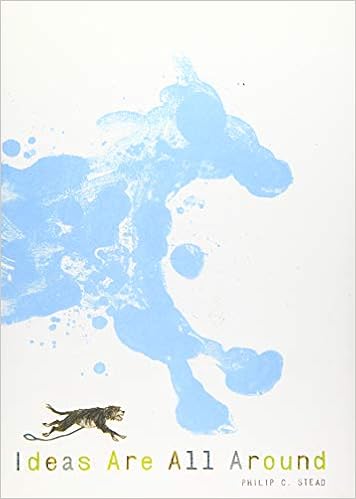
Ideas are All Around by Philip C. Stead is a great book to share when someone tells you they have no ideas. Perhaps they need to take some time to look around and then see what they can come up with.
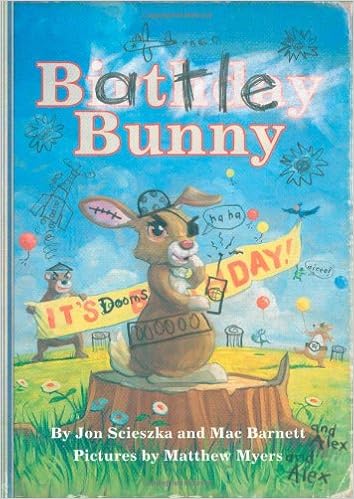
Battle Bunny by Jon Scieszka and Mac Barnett is a great picture book to use with kids that feel they have no ideas because it shows the legitimacy of starting from something known and making it your own. Plus, this book is just a fun read!
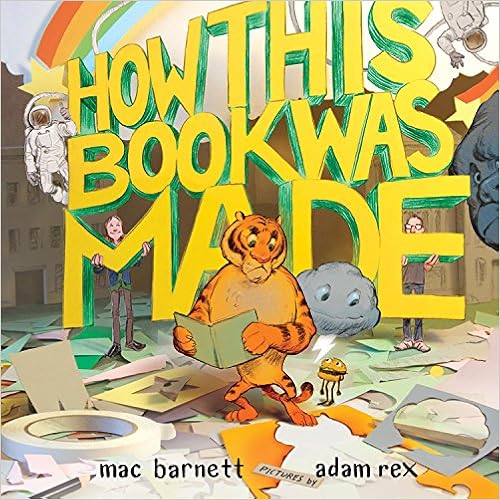
I wonder how many Mac Barnett books I have featured on this blog, his How This Book Was Made illustrated by Adam Rex is perfect for discussing writer’s and illustrator’s process. I am so thankful for their genius.
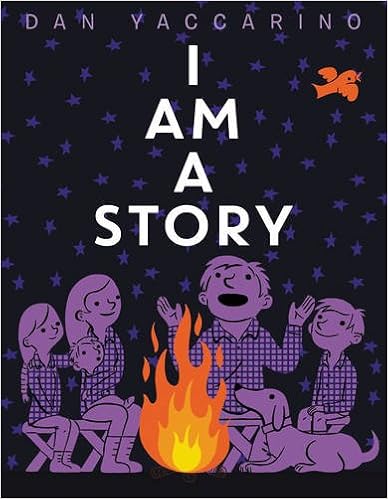
I love how I Am A Story by Dan Yaccarino urges us to think of how far stories have traveled and how they shape our society. I love the illustrations paired with the unfolding of story, fantastic for setting up writer’s workshop at any age.
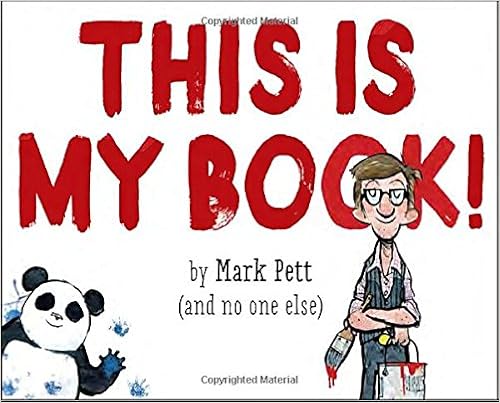
This Is My Book! by Mark Pett (and no one else) is laugh out loud funny. I especially enjoyed the interplay between the author and the panda. Kids are sure to appreciate the message but also how well it is portrayed; who really creates the story and how can we co-create?
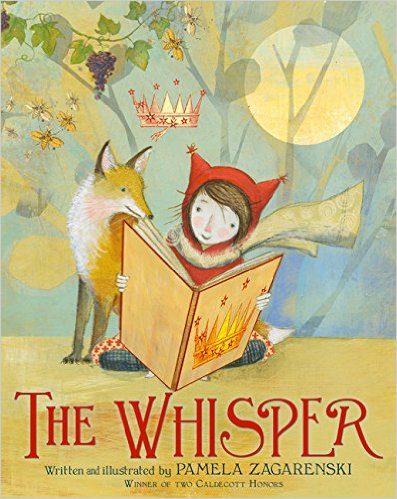
The Whisper by Pamela Zagarenski is beautiful both in text and in the illustrations. Using a book whose words fall out as a way to discuss imagination is a marvelous way to get students thinking more creatively.
Three PD books that are furthering my work at the moment are
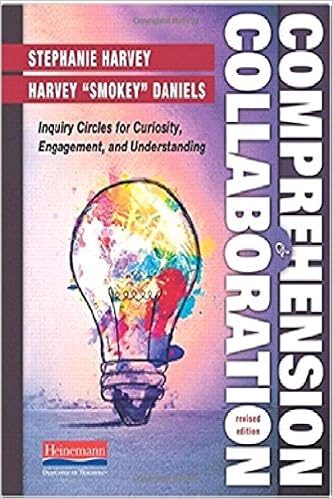
Comprehension & Collaboration – Revised Edition by Stephanie Harvey and Harvey “Smokey” Daniels is helping me frame our year of writing as inquiry explorations.
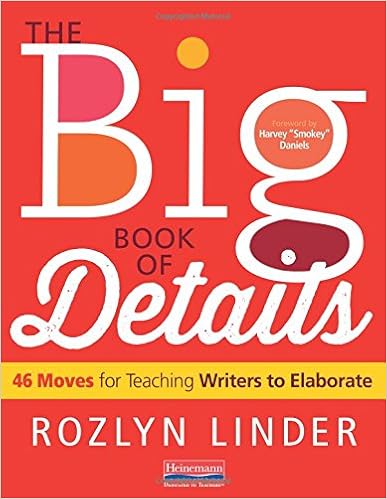
Rozlyn Linder left us much too soon but her genius lives on in her book The Big Book of Details. If you have ever told a child to add more details but wasn’t quite sure how to have them do this, this is the book for you.
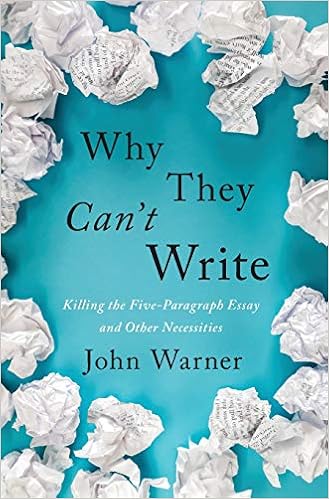
The importance of Why They Can’t Write by John Warner to my upcoming year of instruction is undisputed. I am re-working everything I am doing with writing because of this book.
Warning: This post contains me changing my mind as well as unfinished thoughts. Read on to see what happens when you open your discussion to the expertise of others.
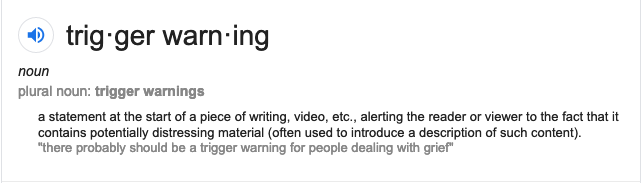
You may have come across them if you read adult books. A list at the beginning of the book telling you what types of sensitive content you are about to be exposed to. A gentle reminder to take care of oneself, to breathe and step away if needed. To pay attention to the reading experience in more ways than understanding the text, but also understanding one’s own reaction to something in order to make an educated choice about the type of risk one is willing to take.
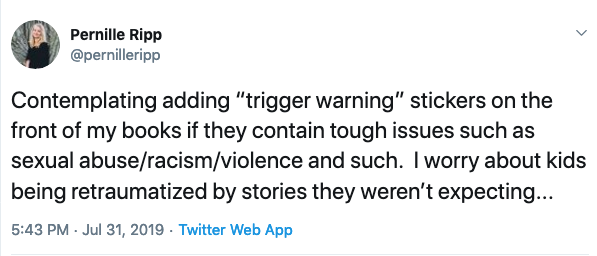
I usually skim over them but appreciate the gesture, but as I came across another one, it made me think; should our classroom and library books have trigger warnings? Should we as educators, librarians, add in potential trigger warnings in order for students to be more informed about the book they are about to pick up or not. It couldn’t hurt surely…
And yet, I wanted to think this out loud. What was I not seeing this discussed more because it seemed like such a simple idea. If it was so helpful, why wasn’t everyone doing it?
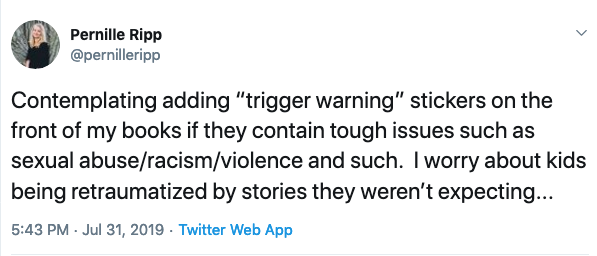
So I tweeted my thinking…
…and was not disappointed.
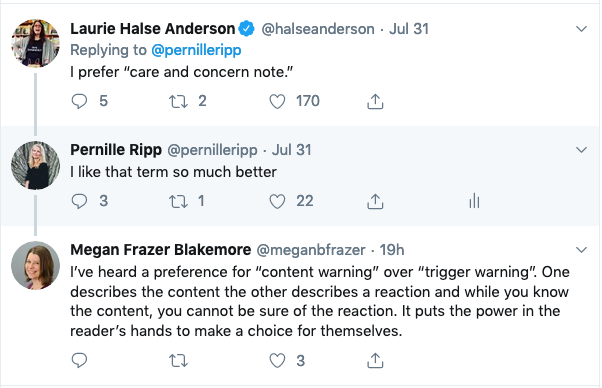
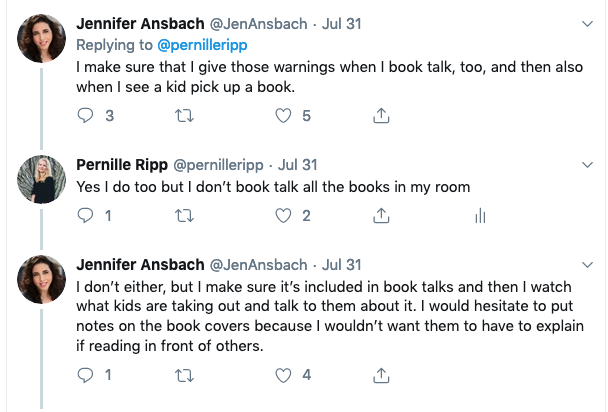
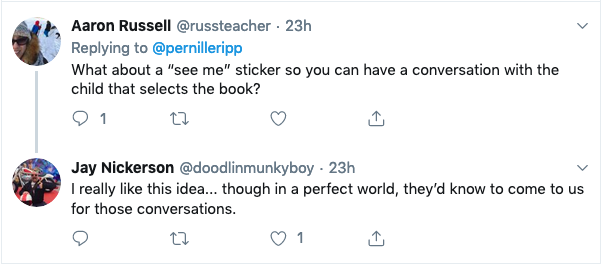
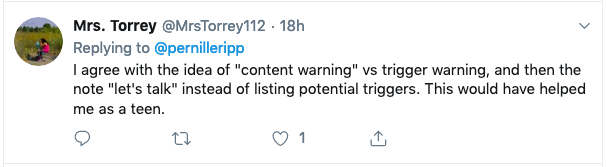
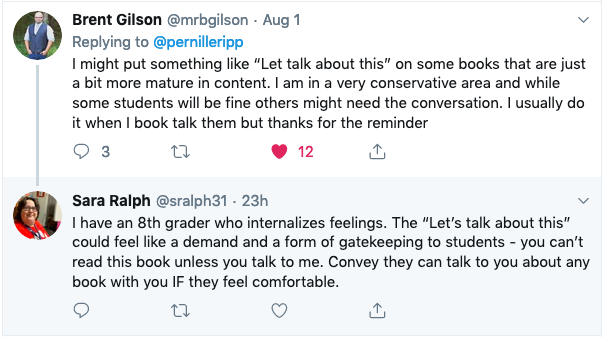
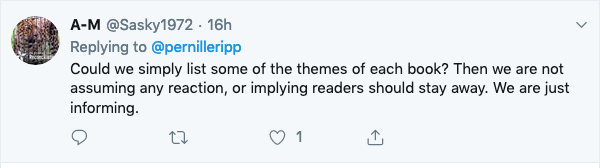
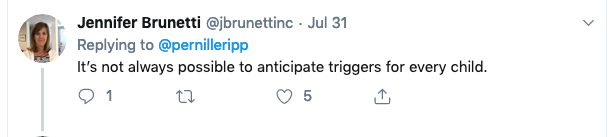
A few different discussion ensued; one about the language “trigger warning,” one about the placement of a potential sticker, and then also one about the problems with this practice.
On the language of using “trigger warning”
On the placement of the label on the front of the book
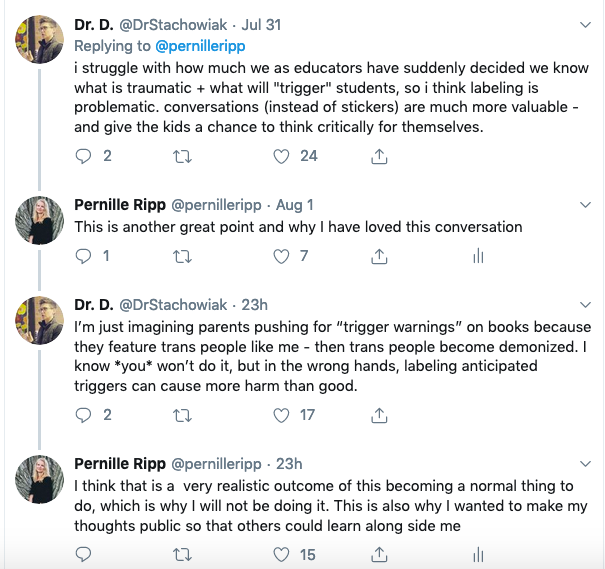
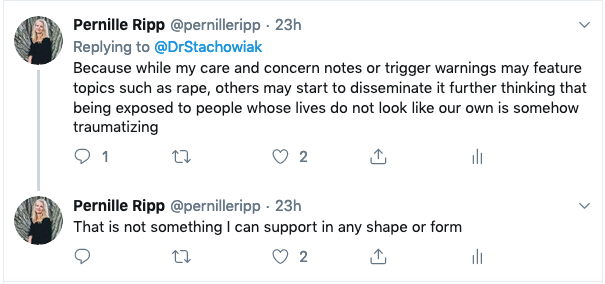
And most importantly on the whole concept
So, as you can see, my thinking changed as others added their thoughts. It went like this…
Great idea, Pernille, get labels and make them colorful and bright so all kids can see them on the front of the books that discuss sexual abuse and violence, have racist language like the “N” word, feature violence against children and maybe other topics as well.
Don’t call them trigger warnings – call them care and concern notes instead. Keep them on the front.
Hmm, don’t put them on the front, put them on the inside instead.
Wait, perhaps, it should just say “Come speak to me…”
Hang on, what do I know about what will trigger a child?
Will I end up needing to put a label on every single YA book in my room?
Whoa, I may be encouraging censorship through this process.
Whoa, I may be encouraging wider censorship of books through my original tweet sharing my idea.
Where will the boundary be for what is considered a trigger? How will this look mixed in with hate/animosity towards marginalized populations?
Someone may take my original idea and think to do this and end up demonizing marginalized people further.
I need to write about this
And so, where does this take me?
Well, I still have a lot of thinking to do, but I know I won’t do trigger warnings. What I will do instead is many folded because the identities of our readers are complicated and nuanced.
I started by reading this article shared by my friend Sara Ralph and others
I will send home our classroom library letter at the beginning of the year in order for those at home to have an idea of what types of books their learners may encounter in our classroom.
When students are introduced to our classroom collection, I will specifically discuss how Young Adult books differ from middle grade and explain how I use the PG-13 rating on books.
I will book talk many of our tougher topic books so that students can hear me discuss some of the potential emotional parts in them so they can make the decisions that will work for them.
I will encourage, as always, that each child knows themselves well enough to know when to abandon a book.
I will confer as much as possible with my students about their book choices and whether they feel the book is great for them or not.
Books that have to do with suicide or sexual assault, I will place a label on the inside with help-line numbers.
And then I will continue to mull over the fine balance between helping kids find great books and hurting their choices instead.
The bottom line is; censorship lives and breathes in our collections of books. We already know that most of the challenged books as reported by ALA in the past few years have had to do with sexual and gender identity. We know that there are many active book challenges happening at this time. We know that sometimes through our well-meaning intentsion (like my original tweet) we may be furthering censorship. But the good news is that we don’t have to.
As a child growing up in Denmark, there was no censorship on the books I was encouraged to read. If I wanted to read about mature topics, I could, my mother trusted me to navigate these books when I was ready and then also let me know that at any point, we could discuss them. It fundamentally shaped my worldview today; that children know more than we assume, that we cannot shield them from tough things in the hopes of keeping them innocent, and that they are eager to learn about others.
By bringing this discussion online and now here, I encourage others to look at labeling systems that are already present in their schools, such as “mature” sections which only some kids can access, or books that need to be checked out with parent permission. Are these really helping kids or are we stopping them from reading books that will speak to them? That may be about them? That may give them hope? Do our “helpful” systems to shield children actually end up hurting them instead?
The kids show up in a month and one day, the books will be waiting. I cannot wait to see the stories they will gravitate toward, I will be there to help them.
Follow up: After posting this post, this incredibly thoughtful comment was left on it in a Facebook group it and brought to my attention. This once again shows me how much I still have to learn, despite being acutely aware of PTSD and how it can affect you.
Pernille Ripp you’ll be in our area at the end of this month, so I shared this post with our librarians, and one of them had this response. “I appreciated Pernille’s showcasing of dialogue and evolution of ideas on the topic. However, the origin of the trigger warning I feel is completely lost in the article. Trigger warnings are for people who have Post Traumatic Stress Disorder (PTSD). As someone who has PTSD and actually has to seek out signs for potential triggers when I engage in materials, trigger warnings are literally supposed to help prevent me, who has experienced trauma, from going into panic and/or fight or flight mode. Trigger warnings are not supposed to filter distressing topics. Those of us with PTSD are not distressed. We have a diagnosable condition where our brains are like broken records that when triggered can easily be stuck on repeat, reliving trauma over and over. When triggered we can forget where we are and who we are with, we can have a complete nervous break down, suffer insomnia, physical pain, lose consciousness, need medical intervention. This article did not seem at all to be dealing with actual triggers. Many of us experience trauma in a myriad of ways – and that can include reading material that covers topics discussed in the blog you shared because, let’s be honest here, reading is an empathetic experience. However, not all of us who experience trauma develop PTSD. My point here is: If a person needs trigger warnings, they need professional help.
I think the goal behind the conversation is valid and worthy of our time. However, the focus is misplaced. In order to properly label materials with warnings or care and concerns or whatever you want to call them, we would have to be well-equipped to understand what constitutes a trigger and then engage all our collection’s materials on a deep enough level to be able to properly label each and every one. That’s not a realistic goal. So instead of zeroing in on the materials themselves let’s focus efforts instead on making sure every library has a consistently updated and very visible and accessible: poster of hotlines and local resources, book collection, and series of programs designed to equip patrons with the tools they need to handle their pain/medical conditions. Let’s train every library staff member to recognize suicidal ideation in our patrons (a lot of times that stuff just leaks right out without them even knowing), how to talk to someone in crisis, and how to stay up to date on who to contact in an emergency. “
PS: THANK YOU so much to all who discussed this with me. To see the original tweet and thread go here
If you like what you read here, consider reading my newest book, Passionate Readers – The Art of Reaching and Engaging Every Child.
This book focuses on the five keys we can implement into any reading
community to strengthen student reading experiences, even within the 45
minute English block. If you are looking for solutions and ideas for
how to re-engage all of your students consider reading my very first
book Passionate Learners – How to Engage and Empower Your Students. Also, if you are wondering where I will be in the coming year or would like to have me speak, please see this page.
Six years ago, I wrote a piece on here called, Why Reading Sucks and It’s Ok to Talk About It. It has shaped my work ever since. It has become a defining feature of what I believe in when it comes to the work we help students do in our year of reading together. The need to focus on the emotions and experiences that a child carries with them when it comes to the act of reading, the need to validate them wherever they are on their journey in order to, hopefully, help them shape their journey in a more purposeful way. In order to protect those who love reading. In order to help those who hate reading perhaps dislike it a little bit less.
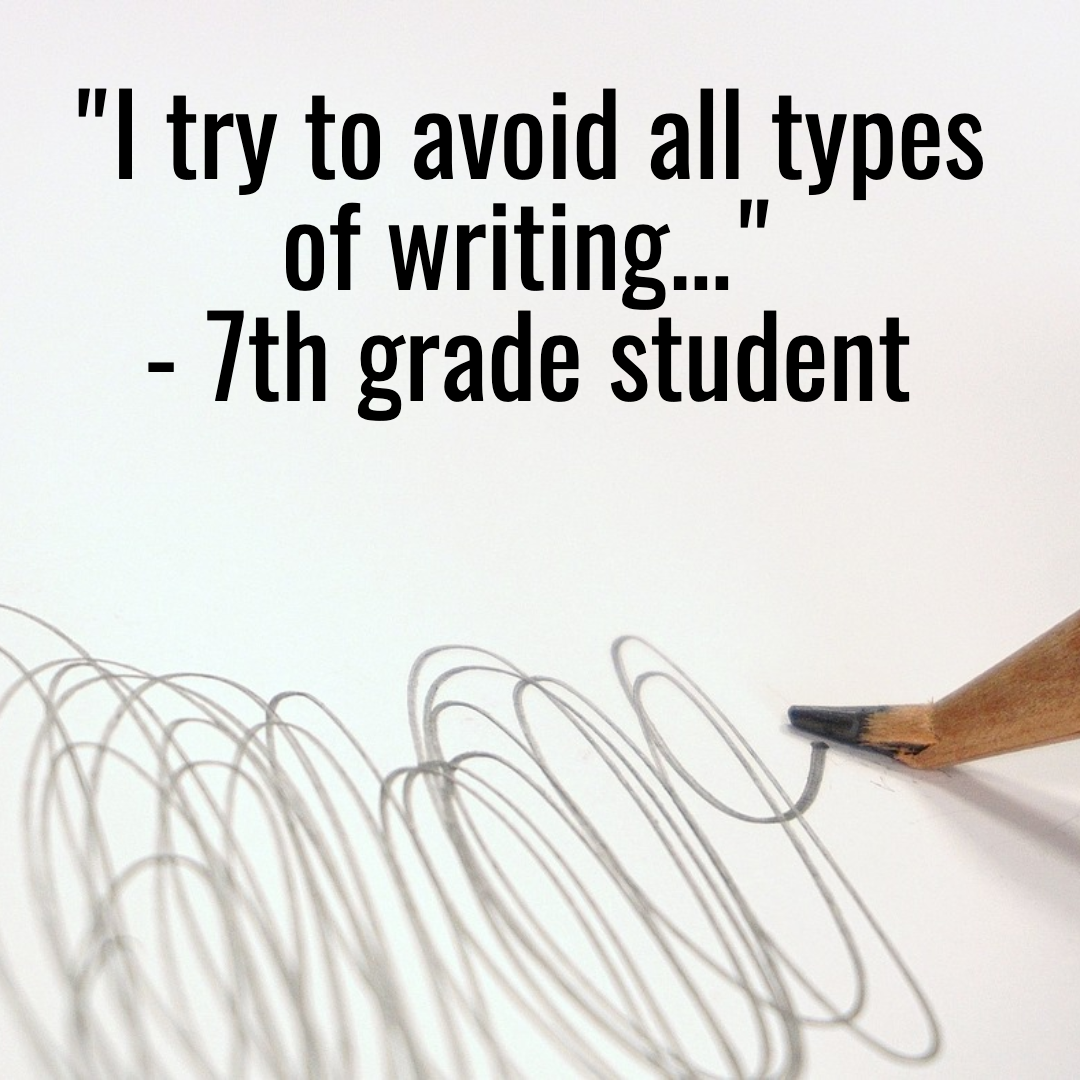
Much like that post, i try to teach kids to care about writing. To see their writing as something they can use beyond the lesson, beyond the product. I try to create situations where they find value in what they do and feel like they were actually taught something that perhaps will help them in their lives. Yet, every year, without a fail, no matter the amazing teaching and classrooms they have been a part of, so many of my students loudly proclaim how much they hate writing. And their actions show it.
“Forgetting” their pencils and not saying anything about it. Repeatedly telling me that they just don’t know what to write. Anger, shut downs, outright refusal. Quickly writing something in order to be done. Sometimes tears. And our students are not alone, often when I teach other teachers, I ask how many of them consider themselves readers – most raise their hand – when I ask themselves how many consider themselves writers, almost all of their hands go down. When I ask them to share a written reflection, you can see the pain behind that in many. And these are adults.
Writing is something that carries a lot of emotions. And we need to talk about that more.
And it needs to be direct, not hopefully something that comes up at some point, but a conversation that acknowledges that writing and the act of sharing one’s writing can be emotional for some, downright terrifying for others.
Because here’s the thing, if we say we want to create classrooms where students feel safe, where they feel accepted, where they feel that we care about them, all of them, then we need to make room for the complicated emotions that can be attached to the work we do. We need to make room for the identity of the writer that shares our space, not just the skills of the writers. And we need to do it purposefully. Not leave it to chance or hope that we will navigate it when it comes up. Think of how powerful it can be when we ask a child to share what they feel comfortable sharing before we dive into the work. When we set up the conditions to say, “It’s ok to not like writing, tell us more about that, so perhaps we can work on that together…” To acknowledge that some of our kids think they are bad writers because their spelling is not strong. That some of our kids think they are bad writers because their grades tell them so. That some of our kids think they are bad writers because they see no value in the types of writing we do, so why invest themselves?
To write something is to make yourself vulnerable to the world. It is to not only share your thoughts but to share them in a way that tells us when they are incomplete, when they perhaps are misspelled, when perhaps our grammar or way of speaking is different than others. It is to create a somewhat permanent record of who we are at that very moment. It is to let others into ourselves.
So as I plan for my first few days of school, one of the central conversations that will ground our identity work for the year will be, “When does writing suck?” I will share my own experiences as a writer in the hope that students will share some of theirs. Then I will hand them post-its; write down as many reasons you can think of for when writing sucks or for when writing is great. You don’t have to put down your name if you don’t want to. You can write to only one side of the experience. You can write down as many as you want. You can share as deeply as you want. Tape them to the board so they don’t fall down.
And then we will step back and look. See the patterns, discuss the patterns. We may see how others share the same thoughts as we do. We will decide on ways to move forward.
We will create our writing rights together, let these community agreements determine our path forward.
Our writing rights based off of last year’s discussion.
I know this is only the beginning, a start that will work for some but not for all. I know that the students have no reason to trust me, yet some will. I know that with others it will take time, action, and courage. I can hope to create the conditions in our shared experience so that at some point, perhaps, writing will be something they don’t hate. Something they can see their own growth in. Something they can see value in. I can hope. But I can also plan.
If you like what you read here, consider reading my newest book, Passionate Readers – The Art of Reaching and Engaging Every Child. This book focuses on the five keys we can implement into any reading community to strengthen student reading experiences, even within the 45 minute English block. If you are looking for solutions and ideas for how to re-engage all of your students consider reading my very first book Passionate Learners – How to Engage and Empower Your Students. Also, if you are wondering where I will be in the coming year or would like to have me speak, please see this page.
As I plan our first exploration for the coming year, one that dives into personal essays, I have been thinking about the writing experience itself. About how personal it is. About how draining it can be. About how asking a child to write is really asking them to trust us enough to show off where they need growth. The emotions attached to writing are often overlooked and yet how many of our students will gladly tell us how they are not writers, or at least not good writers? Now many of my students can technically write. They can produce stories that make sense, that use appropriate vocabulary, that move the action along, that convey a meaning or an idea. They can do the writing, but they will tell you quickly, loudly, that they are not writers. This is despite the stellar teachers and experiences that come before them entering our classroom. This is despite the powerful curriculum and experiences put in place in order to help students develop their writing repertoire so they can feel comfortable.
And yet, the same story plays out every year, perhaps it does for you too, classrooms filled with students who groan at the mention of writing. Who tell me they will never use writing for anything outside of school. But it doesn’t match up with what we see; their urgency to tell stories through the social media apps that they use. Their animated conversations as they hurry up to one another, eager to share what just happened. The many students who invest in the world at large, become emotionally engaged with the stories that surround us, I see them interact with writing so much, and yet, if you were to ask students how many of them would find value in writing beyond the grade? The process? The box checked off and onto the next assignment?
So I have been thinking about the rush we feel to get started with skills. With how we plan our units in order to teach as many practical components in order to equip students with the technical know-how they need to produce good writing. With how we plan our first writing unit in terms of what the end product should be to show mastery of skills rather than focusing on the process to see growth not just as a writer but also as a person. I get the urgency to start; education seems to be a race we are all failing at keeping up with, but I wonder at what cost to developing a writing identity does this rush to get started with skills produce in the long run?
When we fail to discuss the identity as writers that students bring with them into our communities, are we really providing students, kids, with a chance to see themselves as writers beyond the classroom?
Can we affect long-term change if we do not recognize the emotions attached to writing and what it means to write at school?
A main focus for me for many years has been the development of reading identity, this is what I teach others to do and what I often share about here. I have been proud of how our students have invested in this work, and yet, I have failed to transfer that work in a meaningful way over to the process of writing and being a writer. While I have used surveys to discuss their writing identity, I have let it fall off the radar, lost in all of the to-do’s. I have failed to create a community where writing identity is seen as important as writing skills. And I think it has been one of my largest missed opportunities.
But not anymore, not this year. This year, we are slowing down. We are starting with an exploration of what it means to write, notice I didn’t say write well, because language matters and sometimes weighted language is all a child needs to remove themselves from the promise of growth. We will focus on what it means to be a writer, on the language that surrounds us as we see our own writing identity. Each day will have a specific discussion point as I slowly, hopefully, build trust within our community to share the emotions or experiences attached to writing.
It will start with a survey after we have discussed why writing sucks and when it doesn’t, a opportunity to set a writing goal, it will continue with chances to play with writing rather than the immediate focus on a product, instead using their writer’s notebooks to try different prompts (with a permanent option to write whatever they want ) as they read powerful essays we have collected to hopefully show them that writing doesn’t have to follow all of the same rules and that there are many different ways to write.
Slowly, hopefully, we will have conversations about the value they want to find within their own writing. On the worth they want to place on their own stories, their own communication.
Will it be enough? No. But it will be a start. A start to something better for me where the very identity of the child that is entrusted to us is at the center of the work, not just the skills, not the program, not the finished product, but the child itself, as much as they will allow it. A start to the yearlong identity work we do as inspired by the Social Justice Standards created by Teaching Tolerance.
Writing is something so many adults don’t do because we feel like our words have no place being shown and shared with others. Even now as someone who has written four books and had them published, as someone who has written publicly for more than 9 years, I still don’t feel like I get to call myself a writer. And I want to change that.
I hope our students will find some sort of value in the work that we will do beyond “the teacher told me to do it…” I hope that by making intentional space for conversations about who they are as a writer and how they want to grow, embracing both the positive and negative aspects of writing identity, will allow us for a more meaningful overall exploration of writing. Lofty goal? Sure, but we have to at least try.
If you like what you read here, consider reading my newest book, Passionate Readers – The Art of Reaching and Engaging Every Child. This book focuses on the five keys we can implement into any reading community to strengthen student reading experiences, even within the 45 minute English block. If you are looking for solutions and ideas for how to re-engage all of your students consider reading my very first book Passionate Learners – How to Engage and Empower Your Students. Also, if you are wondering where I will be in the coming year or would like to have me speak, please see this page.










 Pernille Ripp