Be the change, being a teacher

The Power of Stories and Compassion: How Literacy Educators Can Support Trans and Gender Variant Students #WontBeErased

For those of you who follow this blog, you know that I don’t often have guest posts.  Yet, today, the truth that my friend and mentor Dr. Dana Stachowiak is about to share is probably one of the most important posts I have shared on here.  I am so grateful for the words and the trust in me as a steward of them.

Why This Topic?

Yes, the Trump Administration’s disgusting memo calling for an erasure of transgender as a gender identity lit a fire in me to write this post. But, a few months back, Pernille asked me to write a guest post on “Trans 101” for her literacy blog. I am used to a request like this, and I love Pernille, so I agreed. I put off writing the post for her because I wasn’t in love with the idea; talking about the ways in which educators can support trans students is so much more than knowing and using the terms and definitions.

Learning these things don’t require what is most needed though: compassion. Yes, most educators have empathy and compassion, and that’s what drives them to want to learn so they can support trans students. Empathy and compassion are often conflated to mean the same thing, and though related, they are slightly different.

Building empathy (resonance with another’s feelings) is abuzz in the world of education. It’s important work, but it’s also taxing work to maintain. It requires us to constantly attempt to relate to others’ experiences. While this effort is important and good, unless we accept the reality that we’ll never really relate fully to another, we will keep spinning. And eventually, we burn out.

This is where the Trans 101 blog post requests come in: reach people’s empathetic nature and give them some concrete type of action that they can go do in their classrooms – like giving a list of trans-related books or providing ways to assess classrooms for gender equity (I’ve done these things. A lot). Learning these things is a way for people to feel better about themselves because they have more knowledge about trans folx, AND it gives them a way they can help. Don’t get me wrong, there’s no harm in this – and people should feel good when they do this work. Keep doing this work!

What’s missing in all of this, though, is that critical piece of compassion, the glue that holds this work together. It is what we need to do before (and perhaps as) we burn out on our empathy work. Compassion requires us to hold empathy (for others’ feelings), accept it for what it is (that we’ll never really ‘get’ it), and then take some action to support who or what it is we were trying to empathize with.

Compassion is a matter of the heart. I study mindfulness, and in my learning, one of the most compassionate things a person can do is to be fully present and listen to others. When we do this, we are simultaneously building empathy. We are often so hungry to fully empathize with others and help them, however, that we forgot to stop trying to solve all the problems and just really listen to peoples’ stories, especially those of minoritized people like trans people (I can say all of this with confidence because I am guilty of listening without compassion at times – I know this hard work first-hand).

But if we truly don’t get to know people’s stories, their experiences, their realities, we remain forever detached from the person. That’s where the trouble lies.

So, instead of sharing with you a quick-read “Trans 101” that you can implement in your classrooms right way, I am going to invite you to sit with the story of my gender journey, be fully present, and listen as you read.

Small disclaimer: Sharing this terrifies me. Only a close few know many of the pieces I share here (it’s not everything, but it’s a lot). I know it’s going to be long, but I do hope that you will take the time to sit down with me, get to know me, and then make your own important decisions about how you can grow your compassion with trans people. From there, I truly believe that all the future 101s and 201s and encounters you have will be deeper and create positive, transformational impacts.

The journey I have taken with my gender has been a long one, a difficult one, a fulfilling one.

Tomboy with a Capital “T”

I can distinctly remember, at 4 years old, running around the backyard of the house of grew up in, wearing my brother’s underwear – fastened with a diaper pin so they’d fit – in the hot summer sun, no shirt and bare feet. I distinctly remember this because I felt so carefree, so happy. I can almost still feel the smile stretched across my face and the happy contentment radiating from my chest.

It wasn’t until in adulthood that I’d learn that my parents took me to my pediatrician that summer because they thought something was wrong with me; I always wanted to dress like a boy. The doctor laughed, told them I was fine – I was just a tomboy.

My early elementary school years were happy. I remember loving school and wanting to please my teachers in kindergarten through second grade. Although hardworking and shy, my classmates always told me they thought I was goofy – I loved to crack jokes and make people smile. If you’ve ever met me, you know this is who I still am today as an adult. If I can help make something hard or sad or difficult a little bit lighter, I’ll swoop in with something that will catch you off guard – something goofy – to ease the tension. I love when people are happy.

I had all sorts of friends those years, but my very best friends were Dan, Scott, and Jeff. Back then, the adults thought we were boyfriend and girlfriend. I guess we thought we were, too. I was a tomboy through-and-through. I don’t ever remember thinking, “I’m a girl!” I just remember thinking I was a kid. I was happy. I remember laughing and smiling a lot.

Slowly Silenced

Third and fourth grades were weird transition years. The pressure to be “more like a girl” was mounting. The boys who were my friends weren’t my friends anymore; they were replaced by girls. My hair was now long, and I spent a lot of time studying the way other girls and women, especially my teachers, acted. I did my best to mimic their ways, but it always felt clumsy, awkward, wrong when I would try it. I was still relatively happy, but school, which I had always enjoyed, started to get harder, and my understandings about the ways I was supposed to be in the world were confusing. I remember immense sadness growing in me when I was in the fourth grade.

By the time fifth grade hit, I was a mess, a ball of anger. My fourth-grade teacher was male, and I loved that. My fifth-grade teacher, however, was a female, and she was different from my other female teachers – she was butch. She wasn’t married. She was confident.

I hated her.

I hated fifth grade. I started acting out and was angry all the time. I grew up in an incredibly loving, stable, and happy home (my parents just celebrated their 45th wedding anniversary, my Mom is my best friend, and my Dad is my biggest protector). I was always a little short-tempered, but no one really knew where all of my anger was coming from. Nothing traumatic had happened to me to cause such angst. I didn’t know it at the time, but in hindsight, I was struggling with my gender identity. Society was telling me that I needed long hair and dresses and boyfriends, while my heart was telling me that I wanted short hair and jeans and girlfriends.

And I hated my fifth-grade teacher because, at a time when I was really searching for an understanding of how to be a female, she – who I saw more hours a day than my Mom – couldn’t provide that for me. Instead, she provided me with more confusion. I hated her for it.

Middle school was awful. I wasn’t known for being that quiet but goofy kid in the class anymore; I was known for having a short fuse, talking back, and being emotional. I was teased so badly – by the very people who called me their friends. I was shoved into lockers. Kicked. Harassed. One time, some girls poured perfume on my clothes so I could “become a real girl.” Some girls broke into my gym locker and took my clothes out, smeared them all over the floor, and threw them in the bathroom stall. When I got to the locker room and found them, the girls who did it laughed and said a dyke like me deserved to wear dirty clothes and should change in the bathroom stall. I began tumbling emotionally; I internalized everything.

Making It Work – For the World, Not for Me

I was able to find somewhat of a refuge in sports, music, and dance. I wasn’t very good at sports, but it was a place where I could let me inner “tomboy” out. It just led to more confusion though. On the basketball court, dressed in a uniform that looked more like boys’ clothing than girls’, I felt unstoppable – like that kid running carefree in boys’ underwear and no shirt. But when I had to take that uniform off (and, I took it off in the bathroom stall and showered after everyone else was gone because I had learned my lesson about “dykes like me”), I had to go back to being a person I didn’t recognize, walking the earth in a body that didn’t feel like mine.

And dance. Oh, dance. I loved it. I could tap dance forever. But, goodness, did I also hate it. My body didn’t move as freely as the other girls’, and the leotards I had to wear each week to class drew unwanted attention to my budding, albeit slender, female figure. I hated looking at myself in the mirror. Tapping felt masculine; those leotards felt humiliating. I loved and hated dance.

I was good at music, and I excelled at in high school – it is what saved me, I believe. I was the drum major of our high school band, first chair in my section, and I was even voted “Most Musical” for our Senior Year Mock Elections. Music, for me, didn’t remind me of my gender identity. It was a place for me to escape. Sports slowly dropped from my world; I didn’t have close girlfriends, but Dan (from my early elementary days) became my best friend again, and I kept to myself in high school. I was still teased and picked on relentlessly. I went through the motions of having prom dates, and I let myself focus on music and school – and I stayed numb to my gender. And I was a usual happy-unhappy-happy-unhappy angsty teen of the 90s.

Undergrad and grad school were much the same. I went through the motions; did what I was supposed to do; hid what I wasn’t supposed to feel/think/do (I’m talking about my sexuality here, which is not tied in any way to my gender identity, so, besides mentioning it here, it remains separate from this sharing). Then, I became a teacher.

Let me rephrase that: I became a female teacher.

I had long curly hair. I wore skirts and heels. I was a good female teacher. I was such a good teacher that, very early in my career, I became a curriculum coordinator of literacy for middle schools in our large county. This came at the perfect time because it was around the same time when “power suits” were in for women. This was such a godsend because I got to dress a little masculine but still fool everyone. I was secretly watching the L Word at home so I would buy power suits like the one Bette wore (check this out if you don’t know what I’m talking about here). I lived one life at work and a completely different life at home.

Loss, Finding, and Letting Go

Then a day came that changed me forever: I was outed by a colleague. Someone saw my life at home, and they brought that life to the school board. On paper, I lost my job because of “budget cuts.” But in the Superintendent’s office, with the district lawyer sitting next to me, I was told that there “wasn’t a place” for people like me in their schools. I was too young, but I knew I wasn’t a protected class in my state. What they did was completely legal. Because I questioned it, though, I was offered a teaching position. I took that for a year.

And in that year I spent back in a middle school literacy classroom, I stopped hiding little by little because I realized that no matter how much I hid, I would be found out. And I couldn’t hide and lie any longer. I cut my hair. I stopped wearing dresses and heels. I pushed teaching boundaries. I started teaching more lessons on reading and writing for social justice. I chaperoned the 8th-grade prom – in a suit and tie. At the end of the year, I took out my retirement and went to get my Ph.D. full-time.

I promised myself that I would never compromise myself again. I would never internalize oppression or hide who I am again. Getting my doctorate brought me into classrooms where I was able to freely talk and philosophize about gender identity and equity freely for the first time. I took it all in, hungry to know and understand. I still was a little confused about my gender identity. I didn’t really identify with “female” or “male,” and I didn’t really identify with “transgender.”

One day, a classmate of mine, who identified as a trans male, told me about how he was trans because he “didn’t want to be the last genderqueer standing.” I had no clue what genderqueer was, but I acted like I did…and then went home and Googled it.

I FOUND ME.

I let go.

For the first time, I found a gender identity that fit everything I had felt about myself. For me, genderqueer means being neither male nor female, sometimes more masculine, sometimes more feminine, sometimes a combination of both. But mostly, I am just me. For the first time, I felt again what I felt when I was that 4 year old in my brother’s underwear – free, happy, full. Me. Not female. Not male. DANA.

This S— Is Hard

Today, I walk through this world and identify as a non-binary genderqueer (I encourage you to begin your “Trans 101” by looking those terms up. What does “non-binary” mean? What other definitions exist for trans? For genderqueer? How is genderqueer related to trans?). Today, I am visible. I have surrounded myself with friends who love me for who I am completely, and encurage me every day to be me.

Make no mistake: being visible is also hard. There are incredibly difficult days. Like the day a colleague informed me that others in my building feel uncomfortable around me because they “don’t know what to do with me.” The days when I’m looked at with disgust in the women’s restroom. Or the days I’m told to leave the women’s restroom. The days when people do everything they can to avoid touching my hand when I give them my credit card, or they sanitize their hands after the transaction. The days I’m terrified to get out at a gas station. The days I’m called a faggot. The days I’m threatened by men who want to beat me up. Those days can sometimes get me really down.

Some days, admittedly, I give in. I don’t have it in me to fight sometimes; it’s so overwhelming. Like the day two weeks ago when the insurance adjuster came to my house to assess hurricane damage. My partner, who is very feminine, was not home, and I was terrified that the adjuster might treat me unfairly because of my gender identity (this has happened before). Sobbing, I went to her closet, put on one of her bras that gave me breasts, slid one of her V-neck shirts over my head, put on some earrings, feminized my hairstyle, and put on jeans that showed the outline of my small hips. And sobbed some more. But I couldn’t risk not getting a decent settlement because the adjuster didn’t like who I am. He told me I pulled off a great Demi Moore. Whatever that means. But it meant that he thought I was feminine enough, and that’s all I needed that day. I sobbed some more when he left. It was a draining day.

As tough as those days are, as hard as visibility is, I wouldn’t trade it for the years I suffered in silence and hiding, when I wasn’t being me. These hateful things that happen to me are because other people don’t have the understanding and compassion to have someone like me in the same spaces as them. It’s about them, not about me. This has taken me a very long time to understanding (and I’m still growing in understanding that too – this s— is hard!). And, for as much as I am visible for me, I am visible for others who can’t yet be visible. I can only hope that my being me and in this world, offers others like my younger self some hope, courage, and strength.

#WontBeErased

The Trump administration would like to make trans identities like mine and many others disappear (see article here). The reality is, they can’t erase us, but they sure can make our lives more difficult. By doing what they are proposing, I will inevitably have more days like the ones I’ve described. And so will our trans and gender variant kids.
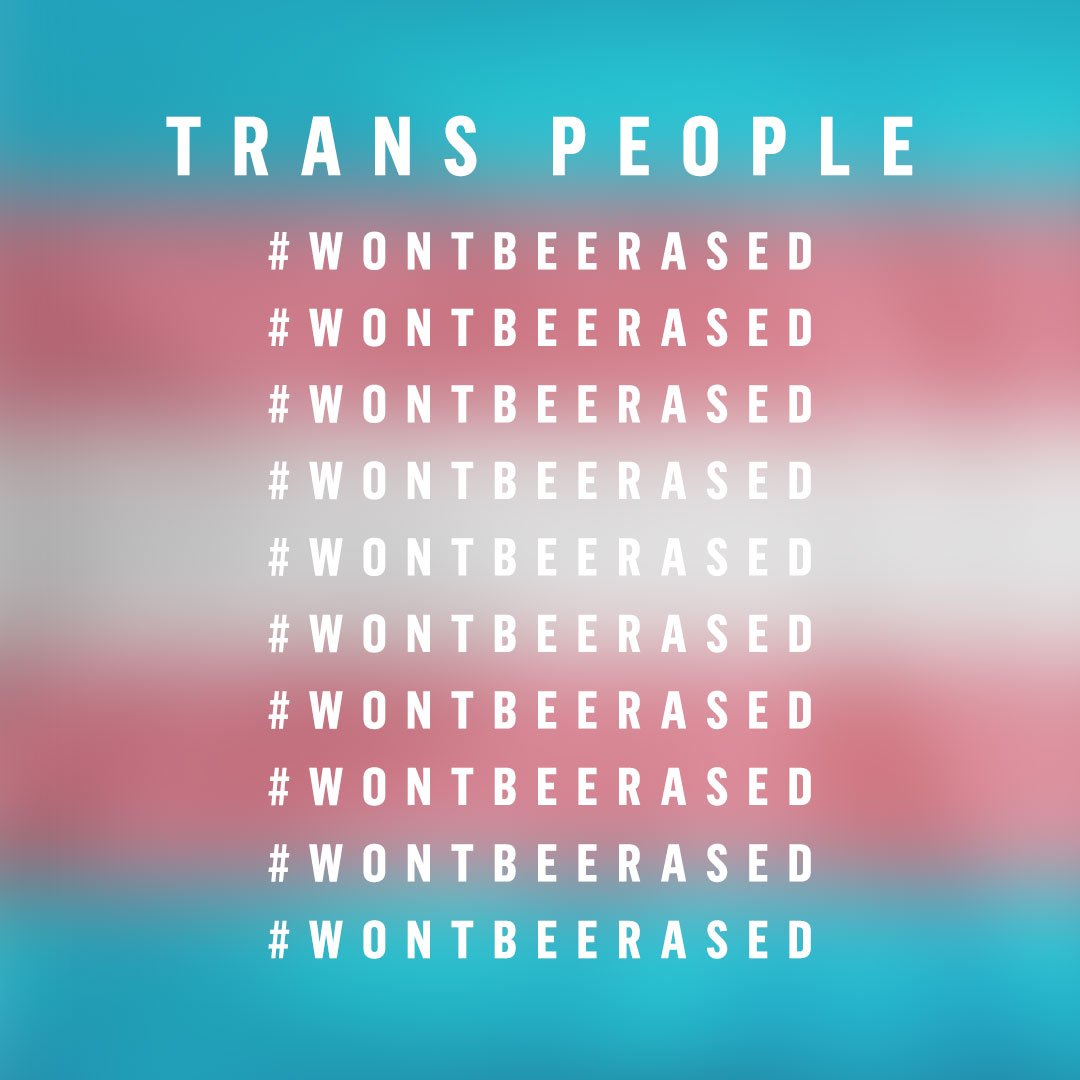
Trans people #WontBeErased! https://t.co/Hb4oftdq8v
Image from Scoopnest

This is where you can come in as an educator. #WontBeErased isn’t just a campaign that trans folx can participate in; it’s a campaign that cis folks can support and participate in. You can pledge to not be a part of this in as many ways as possible. Here are only a few:

  • Change your social media profiles to include an “I support trans people” frame.
  • Use the hashtag #WontBeErased to spread support.
  • Read/view more stories of trans experiences (like the ones found here ).
  • Work with a trans organization in your community or online (like this one or this one).
  • Watch Katie Couric’s special on gender (it’s on Netflix as I write this).
  • Check out my work from this summer for the International Literacy Association. I wrote an article (found here) and a related blog series (found here) that provide you with easy tips to think about gender equity in your literacy classrooms. They’re short and accessible, a place to start.
  • Seek out other trans writers to learn from (like Janet Mock).
  • Will you be at NCTE this year? I will. Are you in North Carolina? I’m keynoting the SafeSchoolsNC Conference. Come talk to me. Say hi, invite me to coffee, come to my sessions. Show up to other sessions with trans or LGBTQ topics. I do consulting. Invite me to do work in your school. If you can’t get books about trans people in your classroom libraries, why not bring a trans person into your classroom?

These things will grow your compassion. These things will amplify #WontBeErased. These things will change procedures, policies, and hearts. These things will save lives.

Getting to Know Me

I feel like you already know me, but if you want to get to know my work and scholarship, you can find me on Twitter (@DrStachowiak), at The Educator Collaborative, and at UNCW.

Thank you, Pernille, for gifting me your tremendous platform, for asking hard questions, building your compassion, and loving me for who I am. Those around you are lucky to have you. We all are.

Thank you, the reader, for sitting with me, listening to my story, and growing your compassion. I’m excited to hear where this takes you, how it moves others, and how it transforms lives.

Addendum: My Positionality

As a critical pedagogue and social justice educator, it is important that I take time to recognize and name my positionality, particularly my privileged identities. My gender identity, as an oppressed identity, meets at the intersections of my privileged ones, thus creating a complex assemblage of opportunities and experiences for me. 

 I am white, middle-class, and able-bodied, and I come from a supportive family. While the small number of experiences I have shared are by no means to be taken lightly (after all, they have been oppressive because of my gender identity and sexuality), I recognize that there is inherent power and privilege that contributes to the oppression of minoritized people within the same systems that have afforded me opportunities and access.

Murders of trans women of color is astronomically high (and steadily on the rise), and the media coverage on this community is astronomically low, practically non-existent. Please consider supporting and amplifying of the voices of these women and related organizations in your journey of becoming a more compassionate and inclusive human and educator. Trans Women of Color Collective is a great place to start.
Be the change, being a teacher, Book Clubs, Passionate Readers

Join the Passionate Readers Winter Book Study

While it seems as though the year has just started and yet there is so much still to do, I am also ready to take on more ideas as I try to reach all of the students that have been placed in my care.  I am ready to think about my instruction, come up with new things to try or ideas for tweaking what I am already doing.  And I don’t think I am alone.   When I asked the educators in our Passionate Readers Facebook group what ideas they are currently working on, every person who answered had some sort of professional learning they wanted to do.

So in order to start a conversation.  In order to help each other grow.  In order to renew, refresh, and reinvigorate, I invite you to join us for an informal four-week book club centered around Passionate Readers starting in January 2019.  We will discuss teacher reading identity, student reading identity, classroom libraries and of course, share must-read, must-add titles for you to consider adding to your classroom.  I know it is early for me to post this, but I wanted to make sure no one missed out on this opportunity to join an already thriving community of passionate educators who are sharing great ideas.

The book club is free, all you need is your own copy of Passionate Readers and to join our Facebook group where the questions and discussion will happen.  For those who do not want to do on Facebook, there is a Google classroom to join instead.  The code to join is tnsqsz

Also:  Please sign up here so that I can email you the study guide and a reminder.

Once a week on Sunday’s, I will do a Facebook live conversation where I can answer questions, highlight books, and share ideas.  Throughout the week I then post questions related to the chapters, you can answer them either in the Facebook group or privately in the Google Classroom.  Anyone can also share resources, questions, or ideas that they have that relate to the chapters.

The book club will kick off January 6th and run for four weeks wrapping up February 2nd.  

1st-week focus – Teacher reading identity and how our habits influence our teaching.

2nd-week focus – Classroom library and must add book titles for the year.

3rd-week focus – Student reading identity – choice, goals, and independence.

4th-week focus – Conferring, lessons, and getting ready for the year ahead.

So if you would like to join, get your copy of Passionate Readers ready, join the Facebook club, and get ready to share.

Note:  The audio version of Passionate Readers was released December 12th.  I love listening to audiobooks on my commute so that is an option as well.

If you have already done the book study, please join us again if you would like.  There will be new questions sprinkled throughout and the Facebook Live videos will reflect new thinking and more ideas.

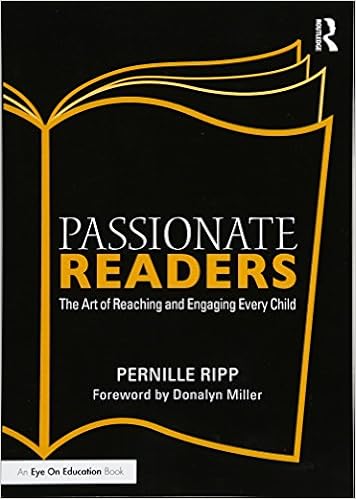
If you like what you read here, consider reading my newest book, Passionate Readers – The Art of Reaching and Engaging Every Child.  This book focuses on the five keys we can implement into any reading community to strengthen student reading experiences, even within the 45 minute English block.  If you are looking for solutions and ideas for how to re-engage all of your students consider reading my very first book  Passionate Learners – How to Engage and Empower Your Students.      Also, if you are wondering where I will be in the coming year or would like to have me speak, please see this page.

Be the change, being a teacher, student choice, Student dreams, student voice

The 30 Day Survey – A Quick Way to Give Students More Power

Black,                 Free Image

It’s hard to believe that we have already had 31 days with this incredible new batch of kids.  31 days of laughing, of learning (hopefully), of working to somehow create a community that will matter to all of us.  I think we are finally starting to get into the groove of who we are and what we need to do.

As I prepared for this week, it was therefore natural for me to wonder how the students felt.  Are they also feeling like we are doing worthwhile work?  Are they feeling respected?  How can we change our teaching to make it work for them?

Rather than assume, I did what I have done for many years and what I tell others to do all of the time; I asked.  On a simple 30-day survey, we asked them a few questions about the class, about themselves, and also about how we have been doing.

As the responses came in, I was startled at their kindness.  How many kids said that they wouldn’t change the class, that they like what we are doing, and most importantly they feel respected by us.  In fact, after giving the survey I had kind of a let down – this what it?  All they had to say?  And yet, again I am reminded that it is not always what they say but that they have a chance to speak in the first place.  I tell our students to be honest, that I have thick skin, that we cannot grow if we don’t know what we need to work on from their perspective.  And so whether students tell us hard truths or give us amicable reassurances, it is not always what they say but instead that we asked.  That we listened.  that we did something about the words that they gave us.

So now, we will read more.  I will try to speak less (always something I am working on), and I will try to notice the things they have asked me to notice.  We are so quick to assume what our students may think or feel, instead just ask them.  Whenever you can and whatever you can.  I promise you will learn something.

If you like what you read here, consider reading my newest book, Passionate Readers – The Art of Reaching and Engaging Every Child.  This book focuses on the five keys we can implement into any reading community to strengthen student reading experiences, even within the 45 minute English block.  If you are looking for solutions and ideas for how to re-engage all of your students consider reading my very first book  Passionate Learners – How to Engage and Empower Your Students.      Also, if you are wondering where I will be in the coming year or would like to have me speak, please see this page.

being a teacher

NCTE and Other Information

I get asked a few times a week where I will be speaking next or whether I do a certain type of work with educators.  While most of my time is spent in room 235d, Oregon Middle School, with my incredibly funny and also rightfully demanding 7th graders, I am on the road once or twice a month, sometimes more.  Summers I am on the road a lot.  I love this work with other educators, it is one of the biggest honors and challenges that I have, and yes, I am always interested in working with districts.  Being with educators and brainstorming with them is an incredible adventure and I walk away with more knowledge every single time.

So just in case, you are wondering what type of work I do and where I will be, check here.

If you are wondering what types of session I lead, check here.

NCTE is coming up soon and besides NerdCamp it is my favorite conference of the year.  Not only do I get to present alongside incredible people, but I also get to learn so much.  So if you will be at NCTE, here is where I will be for sure.  (Other times I will be in the exhibit hall browsing books or sitting in sessions – don’t be afraid to say hi if you want).

Thursday:

Amplify!: Strategies for Elevating Student Voice in the Classroom and Beyond
Thursday, November 15, 2018 1:00-2:15 p.m.

Presenting alongside: Valeria Brown, Matthew Homrich-Knieling, Julie Jee, Christie Nold and José Luis Vilson 

Friday:

Cultivating Students’ Voices in the Reading/Writing Workshop
Friday, November 16, 2018 12:30-1:45 p.m.

Leading roundtables with:  Nancy Akhavan, Pam Allyn, Gretchen Bernabei, Jim Burke, Rose Cappelli, Harvey Daniels, Dr. Lynne Dorfman, Gravity Goldberg,Renee Houser,Mary Howard, Ellin Keene, Brian Kissel, Dr. Lester Laminack, Patty McGee, Donalyn Miller, James Nageldinger, Linda Rief, Pernille Ripp, Evan Robb, Laura Robb andNancy Steineke. 

Creating Passionate Reading Communities: Practical Tools to Engage Every Child, Every Day 
Friday, November 16, 2018 3:30-4:45 p.m.
Presenting alongside: Penny Kittle and Donalyn Miller

Saturday:
Breaking Down Stereotypes and Stigmas One Book at a Time
Saturday, November 17, 2018 4:15-5:30 p.m.

Presenting alongside:  Leah Henderson, K.A. Holt, Laura Shovan, and Elly Swartz


Sunday:

CEL Keynote – Passionate Readers
I hope our paths cross.

Be the change, being a teacher, Reading, Reading Identity

Why Graphic Novels Belong in All of Our Libraries

6407820136939520.jpeg
Look at that; an incredible graphic novel is shortlisted for the National Book Award.  Image from School Library Journal.

Our oldest daughter, Thea, has been in intense reading intervention since she was in Kindergarten.  This creative, vivacious, book-loving child just could not seem to find the right words when she looked at the letters.  And yet she persisted through it all, continually going back to books even if the words proved to be elusive.  Like many parents whose children do not come naturally to reading, we have seemingly tried it all.  More read aloud, more quiet reading, more strategies, more conversation, more intervention, more of anything we could think of and yet, I will never forget that day in 2nd grade when Thea came home and declared, “Mom, I don’t think I am a reader  because reading is just too hard….”

I think you could have heard my heart break a mile away.

Because here was a child who had grown up surrounded by books.  A child who had grown up being read to. A child who had grown up being surrounded by readers.  A child who had seemingly been given every opportunity to be a reader and yet, the foundational skills of reading, the decoding of actual letters to form words, that seemed like it would never happen for her.

So we did the only thing we knew how; we handed her more books, more reading for pleasure, less pressure, more time.  And so did her teachers.

A few months later, Thea once again had a declaration to make.  “Mom, I’m a reader because I can read this book!”  I came to the front door where she stood clutching a book to her chest.  She said, “I can’t read all the words but the pictures help me figure it out.  I have to go read it now to Ida and Oskar…” and she did, and they sat together huddled around this book that had shown my daughter that she was a reader despite her struggles, and she repeated her reading, and she carried that book hugging it to her chest.  She placed that under her pillow at night, every day checking to see if it was still there so she could read it one more time.  Carried it back and forth to school as she got braver and found more books just like it that also made her believe she was a reader.  We still have that book; it is Dogman by Dav Pilkey.  Her teacher recommended it to her and our daughter’s reading life has never been the same since then.

So when I hear teacher’s tell students that graphic novels are too easy.  That comic books are not real reading.  That it is time to pick a “real” book.  That they can read books like that for fun but not for learning, I tend to get a bit upset.  You see, comics are what kept me reading long into the night as a child when books seemed like too much work.  Graphic novels are what make my students who declare they hate reading actually give it a try.  Dog Man and all of the other books by Dav Pilkey are what made Thea believe she was a reader.  How can we just dismiss that?

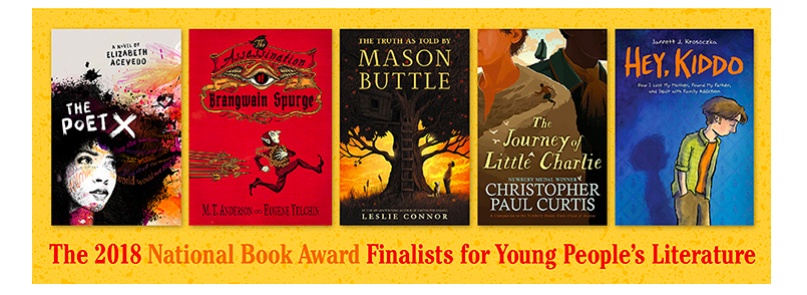
You think graphic novels are easy?  Read March by Senator John Lewis.  You think comics are just for fun?  Read Black Panther by Ta-Nehisi Coates. You think graphic novels don’t have substance?  Read Hey, Kiddo by Jarrett J. Krosoczka.  And then tell me that graphic novels don’t belong in our classrooms.  That they don’t count as real books.  That they are just dessert books, or filler, or vacation books or whatever other terms we use to tell kids that that book they just selected is simply “too easy” for them despite their obvious excitement.

Because when you tell a child that the book they have chosen is too easy you may be dismissing the first book they have ever connected with.

You may be dismissing the first book they have ever actually enjoyed.

You may be dismissing the first book they have ever seen themselves in.

You may be dismissing the first book that made them finally believe that they, too, are a reader.

Because you see when we tell kids that a book is too easy we are dismissing their entire reading journey.  We are dismissing who they are as readers and just how much work it may have been to get there.  We are telling them that their reading journey only has value if they read books that we deem appropriate and that is never okay.  Have we gotten so lost in our reading instruction that we cannot see the harm we can do?

So it is time for us all to realize that while comic books, graphic novels, or any other medium that has pictures in it may seem “easy” at first glance, I think the word we are really looking for is enticing, not easy.  Is inviting, not fluff.  Gives courage, not a cop out of reading.  And that these masterful pieces of literature are, indeed, full-fledged members of the book family.  Are, indeed, full-fledged literary components that deserve not just to be placed into the hands of our students, but also taught alongside other books.  To be held up as shining examples of literary greatness that we should appreciate, promote, and celebrate alongside all of the other books we have.

Thea is still a reader and she still loves Dog Man.  She loves Captain Underpants – Tralala!  She loves Bad Kitty, Smile, Lunch Lady, Baby Mouse, Bad Guys, Cleopatra in Space, Lowriders in Space, and any graphic novel that comes her way.  But she also loves Wishtree, The One and Only Ivan, Aru Shah and the End of Time, George and all of the other books she has read since then.  Books she would have never had the courage or gumption to try if she had not found Dog Man.  If Dav Pilkey had not had the heart and courage to continue to write books that kids would love even if the adults didn’t.  I owe our daughter’s reading life to him and to her teacher that saw a child who desperately needed to feel like a reader and was smart enough to hand her a graphic novel.  Not because she thought it would be easy for her, but because she thought that it was just what Thea needed.  And boy, was she ever right.

If you need more information or ideas of why graphic novels and comics belong in  our libraries and schools, here are just a few resources shared with me:

Is a Picture Worth a Thousand Words? Determining the Criteria for Graphic Novels with Literary Merit

NCTE Diversity in Graphic Novels

Exploring Literary Devices in Graphic Novels

A Printable Educator’s Guide to Graphic Novels 

Ted Talk:  Jarret J. Krosoczka How a Boy Became an Artist 

Raising a Reader

Graphic Novels in the Classroom by Gene Luen Yang

Why Comics Belong in the Classroom – Gene Luen Yang TedX

A Place on the BookShelf for Graphic Novels by Jarret J Krosoczka

The Research Behind Graphic Novels and Young Learners

Comics Used for Therapy Database

Facebook group for teachers using comics

Dr. Debbie Reese’s Resource for Graphic Novels by Native Writers

Research: Graphic Novels in the Secondary Classroom and School Libraries

The Power of Manga, Comics, and Graphic Novel Through the Lens of AASL Standards

CBLDF Panel Power

Diversity in Graphic Novels via NCTE – fantastic compilation of links, sites, and resources
Graphic Novels to Keep by Dr. Laura Jimenez (Thank you also to Dr. Jimenez for the continued push to highlight more diverse titles)
Equally as important – Graphic Novels to Toss by Dr. Laura Jimenez (in fact, her whole blog is focused on critical work)

Professional Titles:
The Graphic Novel Classroom: Powerful Teaching & Learning with Images by Maureen Bakis

Class, Please Open Your Comics: Essays on Teaching with Graphic Narratives by Matthew L. Miller

Graphic Novels and Comics in the Classroom: Essays on the Educational Power of Sequential Art by Carrye Kay Syma

Understanding Comics:  The Invisible Art by Scott McCloud

If you like what you read here, consider reading my newest book, Passionate Readers – The Art of Reaching and Engaging Every Child.  This book focuses on the five keys we can implement into any reading community to strengthen student reading experiences, even within the 45 minute English block.  If you are looking for solutions and ideas for how to re-engage all of your students consider reading my very first book  Passionate Learners – How to Engage and Empower Your Students.      Also, if you are wondering where I will be in the coming year or would like to have me speak, please see this page.

Be the change, being a teacher

See the Small

White, Black,  Free Image

I forgot yesterday was a Monday.  As I drove home, I couldn’t quite wrap my head around why the day did not seem to have gone as planned.  Why I had just taken away all yoga balls in our classroom.  Why the energy seemed so off, no matter what I did.  And then it dawned on me; it was a Monday, and every Monday I leave thinking that I need to change the way I teach.  That what we are doing is not working.  That surely I should not be writing about the way I teach because if you had been in our classroom, you would have been just a little bit surprised, after all, aren’t we supposed to have it all figured out by now?

This morning as I got ready for another day, a child walked in and declared, “Monday’s turn me into Garfield…” and I remembered once again, that sometimes Monday’s are hard.  Sometimes the final class of the day is loud.  Sometimes the kid we thought we had helped feel comfortable still does hurtful things.  Sometimes I am more tired then I thought I was.  Sometimes things happen outside of our classroom that influences our classroom in ways we couldn’t foresee, and while all of these may seem like excuses o why the day didn’t go as planned, they are not.  They are reminders.

Reminders that we are human.  Reminders that teaching is never perfect.  Reminders that sometimes despite what we plan, despite what we intend, despite what we think a day will be like, it just isn’t.

And they are reminders to see the small wins, the small successes that will ultimately shape this year together.  Like the kid who agreed to give an audiobook a try despite how much they hate reading.  Or the kid who asked for help and never has before.  The kid who started yelling but then realized what he did and apologized.  The kid who couldn’t wait to tell me about the book they finished.  The kid who took the time to tell me that no matter what I always seem to be smiling.  That no matter what, the 7th grade teachers are all pretty nice.

Those are the reminders we all need but seem to forget as we focus on the things that seem to not work.   So I wonder; have you given yourself a moment to realize how much good there has happened?  How far we have actually come?

Because if you look you will see the growth.  You will see those small changes as these kids figure out how to be more than what they came as.  You will see them try.  You will see them stretch themselves, even if it doesn’t seem apparent on the surface.  But you won’t if you don’t look closely, it is so easy to miss in all of the things that have not yet been figured out.

So if you had been in our classroom yesterday, you may have thought it was a rougher day, and yet, I would have told you; it’s just Monday.  Tomorrow will be better because that’s just how it goes.  And you know what, today was a pretty good day, just like yesterday.  How about yours?

If you like what you read here, consider reading my newest book, Passionate Readers – The Art of Reaching and Engaging Every Child.  This book focuses on the five keys we can implement into any reading community to strengthen student reading experiences, even within the 45 minute English block.  If you are looking for solutions and ideas for how to re-engage all of your students consider reading my very first book  Passionate Learners – How to Engage and Empower Your Students.      Also, if you are wondering where I will be in the coming year or would like to have me speak, please see this page.