being a teacher, new teacher, new year, parents, students, survey

3 Beginning of the Year Surveys For Students And Parents

I believe in the power of a  great survey and have been giving them to my students ever since I started teaching.  This year, I am breaking them up for different days and will have students do them in class so I can gather them and mine them for information.  One of these is for my entire team to use as well.  Please feel free to use and adapt to fit your needs.  The three surveys are

Beginning of the Year Survey.  To see this survey, go here.

How are you as writer?  To see this survey, go here.

How are you as a reader?  To see this survey, go here.

To adapt these, simply click the link, go under “file” and then click “Make a copy.”  That way you can edit it and tweak as needed.

To see all of the other forms I use, including technology permission forms, student-led conferences, and other survey tools, go here.

As far as parents go, I have a very simple survey.  I ask them what their hopes and dreams are for their kids and then if there is anything else I should know.

(In the past, I have used a more extensive parent survey, to see that go here).

I am a passionate teacher in Oregon, Wisconsin, USA but originally from Denmark,  who has taught 4th, 5th, and 7th grade.  Proud techy geek, and mass consumer of incredible books. Creator of the Global Read Aloud Project, Co-founder of EdCamp MadWI, and believer in all children.  The second edition of my first book Passionate Learners – How to Engage and Empower Your Students” is available for pre-order now.   Second book“Empowered Schools, Empowered Students – Creating Connected and Invested Learners” is out now from Corwin Press.  Join our Passionate Learners community on Facebook and follow me on Twitter @PernilleRipp.

aha moment, being me, books, Literacy, MIEExpert15, Passion, Reading

6 Simple Ideas to Get Kids to Read

recite-1afdwu0

Loving reading, loving books, being a reader, and finding your own books to share are central goals in our 7th grade English classroom.  And I spend every waking moment at times it seems trying to find ways for students to find that special book that will make them feel like they are a reader.  I spend hours planning, prepping, buying books, and yes, reading them to make sure that I am the best teacher possible for all of my many students.  Yet, sometimes we do not need a lot of time, nor a lot of work to inspire a love of reading.  So behold, these are my 6 simplest ideas for getting students to fall (a little bit more) in love with reading.

Public Display of Book Affection

I believe in public displays of book affection every single day and on every surface allowable.  When students enter into our team area (Go sharks!), they are greeted this year with our giant poster wondering how many picture books we can read in a year (Thanks Jillian Heise for the idea).  They can also see what I am reading, as well as what my team is reading.  In our room, there are books everywhere.  Many are faced out and the displays change depending on our mood.  Books are everywhere.  Book love is everywhere.  I take great pride and care in showing that books are central to our world.  There is no willy-nilly displays allowed.

The 1 Minute Book Talk

I will start most classes with a 1 minute book talk highlighting the book I just finished, a book I cannot wait to read, or a book that I purchased for the classroom.  As the year progresses I hope to hand this over to students.  But think about it?  180 days equals 180 books talks.  That’s a lot of exposure.  since I have 5 English classes, there will be 5 different book talks every day.  Once done, they go on the whiteboard ledge for anyone to grab.

The Repeated Question

I always ask students, current and former, what they are reading.  Even when we are not in class.  That constant focus on literacy coupled with the innate expectation that they are reading means that students start to think of their answer before they see me.  And those that don’t read?  Well, this question opens up to a discussion of why not and I can usually sneak them a book recommendation or two as we talk.

The Pushy Book Handler

I am always handing books to students (and colleagues too).  Books do not get read by sitting on your shelf.  Books do not get discovered by being in a bin.  They get discovered and read by someone picking them up, flipping through them, and perhaps reading a few words.  So we have to physically hand books to students if we want them to get excited.  We do monthly (or sometimes weekly) book shopping in our classroom where piles of great books await the students.  With their “To Be Read” list in hand, they take five minutes to browse the piles and find new books to read.

The Getting Out of the Way Trick

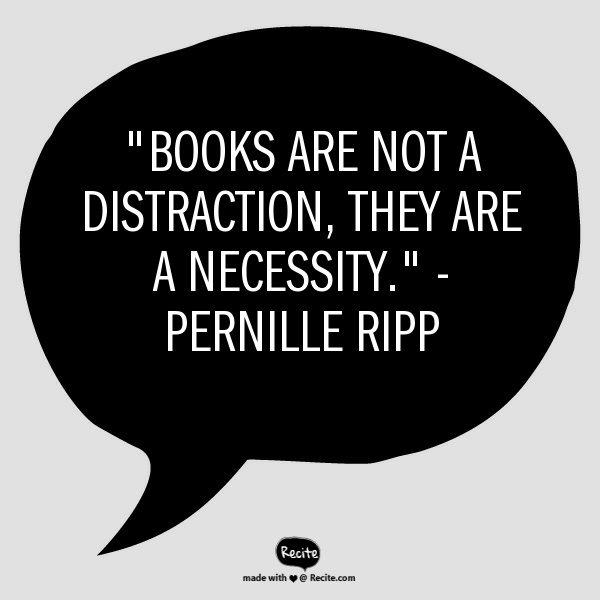
Easy access and check out to books is a must.  Donalyn Miller and Teri Lesesne told us at ILA that if books are across the hallway they are too far away.  We need classroom libraries  in every room, not just the English classroom.  We needs books at the fingertips of our students so that at any moment they can be inspired to reach out and find a new text.  Books are not a distraction, they are a necessity in our classrooms and should be treated as such.  This is also why I don’t have a check out system really.  To see more about how I organize my classroom library, see this post.

The Guest Book Shopper

If you have that one child that will not read.  If you have that one child that keeps reading that one book and not because they love it so much.  If you have that one kid that never likes anything you have to offer, this is a great way to spark an interest in them.  Simply hand them a book catalog.  Get them on Amazon.  Take them to a book store if you can and ask them to select a few books.  Before the books arrive get them excited about their impending arrival.  And then when they get make it a priority to get them to the student that day.  It is a matter of urgency now that the books are here, so they should find their home right away.

Those are my top 6 ideas.  Very simple indeed and take very little time.  What are yours?

I am a passionate teacher in Oregon, Wisconsin, USA but originally from Denmark,  who has taught 4th, 5th, and 7th grade.  Proud techy geek, and mass consumer of incredible books. Creator of the Global Read Aloud Project, Co-founder of EdCamp MadWI, and believer in all children.  The second edition of my first book Passionate Learners – How to Engage and Empower Your Students” is available for pre-order now.   Second book“Empowered Schools, Empowered Students – Creating Connected and Invested Learners” is out now from Corwin Press.  Join our Passionate Learners community on Facebook and follow me on Twitter @PernilleRipp.
advice, being a teacher, curriculum, MIEExpert15

3 Must-Do’s If Your School Purchases Curriculum

There seems to have always been pre-packaged programs available for districts to purchase.  Whether they came as a kit, a textbook, or just a set of ideas they have been a part of education for so many years and will continue to be as long as there are districts searching for the right answer, searching for guidance.  And there isn’t anything wrong with that.  I am not an opponent to the purchased curriculum, I am not an opponent of buying resources for teachers.  However, I am an opponent of buying a program, no matter how great it is, and then telling everyone to follow every single thing in it.

You see, we don’t teach the children that these researchers taught.  Our students will never share the same experience, nor the same background.  And that is important because if a program does not allow us to adapt it to our students, then it will not be as powerful as we need it to be.  If we are chained to a curriculum map based on other people’s students, then we are not teaching the students in front of us.

So by all means; go ahead and purchase the curriculum out there.  There are great ones out there that have a solid foundation,  but if you do, please make sure you do the following three things as well:

  1. Create an open dialogue.   Teachers need to know that they can question the program and that they have a voice.   There should be no sacred cow in our district.  Make sure that this is not a top-down decision and that you constantly assess whether this program is what you need.  Just because you spent money on something does not mean it is right for everyone.
  2. Allow teachers to modify, adapt, and change as needed.  That doesn’t mean compromising the program, but instead it means trusting teachers as the professionals they are to create an even better experience for their students.  One that allows them to teach the very kids they are supposed to teach.  That does not mean teachers are being subversive, it simply means that they are responding to gaps that they see and they are doing something about.  No program will ever be the perfect fit for all of our kids, all of our teachers, and all of our schools.  They are vast road maps, not step-by-step directions.
  3. Ask the students.  If students are losing their love of reading, writing, science, math or whatever program it is they are in, then we have a serious problem.  It does not matter that the program may be the best for creating deep comprehension if students hate doing it.  If a curriculum program is creating robots in our classroom then we should be worried.  And we should take action and we do that best by asking the students what is going on.  Then we listen and then we change.

So if you find yourself in the situation where you can tell that something is not working for your students, speak up.  Do it kindly, but do speak up, because administration cannot engage in a conversation that they do not know is needed.  Ask your students, involve parents, and collect your evidence.  Start a conversation before a program becomes an educational barrier to success.  Don’t stay silent if you see something harming students, the change starts with us and our courage.

PS:  And if you are using money to purchase curriculum but not using money to buy books, then the priorities need to change.

I am a passionate teacher in Oregon, Wisconsin, USA but originally from Denmark,  who has taught 4th, 5th, and 7th grade.  Proud techy geek, and mass consumer of incredible books. Creator of the Global Read Aloud Project, Co-founder of EdCamp MadWI, and believer in all children.  The second edition of my first book Passionate Learners – How to Engage and Empower Your Students” is available for pre-order now.   Second book“Empowered Schools, Empowered Students – Creating Connected and Invested Learners” is out now from Corwin Press.  Join our Passionate Learners community on Facebook and follow me on Twitter @PernilleRipp.

assessment, attention, authentic learning, being a teacher, Literacy, MIEExpert15, student choice, student voice, technology

What About the “P” In Your B.Y.O.D.?

quotescover-JPG-45

The final quarter of last year, our classroom was a limited B.Y.O.D. zone, meaning yes, bring your own device but check it at the door unless we had a purpose for it.  I instituted this because I felt we were getting distracted, myself included, we were having a hard time resisting the instant temptations that our smartphones seem to provide for us.  So we left them out of the room and the students were just fine with it.  I was too.  In fact, there  were times where I knew that our conversations, our reflections, our thinking traveled to deeper levels because we did not have a device nearby to distract.

Yet, I felt like I had taking the easy way out.  That declaring our room a device free zone was limiting the students.  So I have been thinking a lot about meaningful purpose lately, because much like I would not take a pencil away from my students unless I had to, I don’t think we should be taking devices either.  What we need instead is purpose, and purpose starts with us.  Especially in our literacy classroom where we have such an opportunity to use the devices to further a love of reading.

The beauty of students with devices is not just the instant access to information, but the ability to give them a voice even if we are not discussing.  To give them a further purpose than just the immediate one in the classroom.  To create a digital platform for them to share their voices with the world.  Therefore, this coming year, we will not be device-free but rather device-purposeful.  Together we will be deciding how to use, when to use, and what to do with our devices.  There will be clear student-set expectations and they will be a natural part of our classroom, not something to always leave at the door.

A few ideas so far for the purpose part are:  (For students with  no devices we will have access to Chromebooks to do some of these things. )
An ongoing TodaysMeet backchannel.  This idea, shared by Ira Socol at ISTE, means that I am creating a TodaysMeet room for each class and having that as a place for students to discuss, ask questions, and also to take the pulse of my classroom.  Because, of course, students will probably veer off the prompted conversation, but will they do it all of the time?  This will allow my shyer students a way to speak up, allow students to help each other, and also a way to leave me questions that perhaps they don’t feel they need the answer to right away.  This backchannel will also allow me a way to assess to see engagement, interest, and confusion.  All useful tools as I prepare and plan.

A Goodreads community.  I plan on using Goodreads with my students this year as a way to log their books, share recommendations, and explore new books.  It is the same tool I use for myself and so adding it will be a natural extension of what adult readers use.  For those who teach younger students, you could use Biblionasium to do this as well.

A Padlet Wonder wall.  I really want us to start being more curious and wondering more, so having a Padlet with things we wonder about will be another tool for the students to access.  I plan on sharing a daily wonder as well, and may use Wonderopolis if we have time.

A Padlet book share wall.  This idea shared by the inspiring Kristin Ziemke at ILA is having a place for students to post “Book shelfies” plus a recommendation of the book.  I loved Kristin’s idea especially of opening this up to the world and having students around the world sharing their books as well.

Those are just a few ideas, but I am sure more will come soon.  I cannot wait to discuss these ideas with my students and see what else they have to offer.  What ideas would you add?

I am a passionate teacher in Oregon, Wisconsin, USA but originally from Denmark,  who has taught 4th, 5th, and 7th grade.  Proud techy geek, and mass consumer of incredible books. Creator of the Global Read Aloud Project, Co-founder of EdCamp MadWI, and believer in all children.  The second edition of my first book Passionate Learners – How to Engage and Empower Your Students” is available for pre-order now.   Second book“Empowered Schools, Empowered Students – Creating Connected and Invested Learners” is out now from Corwin Press.  Join our Passionate Learners community on Facebook and follow me on Twitter @PernilleRipp.

being a teacher, Literacy, Passion, Reading

The Five Truths of Reading

quotescover-JPG-25

I have been immersed in the world of literacy for the past three days at ILA.  I have come up to breathe only at night, and my thoughts have not fully found their resting place just yet.  For every session I attend, every connection I make, every person that shares their story, the purpose only seems to grows; to change the way we teach reading in our schools.  To protect the love of reading.  Because right now we are implicit in the killing of the love of reading in our schools and classrooms.  We are implicit in raising a generation that sees less and less value in books.  We are implicit in teaching students that there are those who are readers and those who are not.  But it is not too late to change this.

There are truths that we have to embrace, live by, and preach as we continue on our mission.  These truths are not my own but ones that bear repeating.

We must protect and promote choice.  There is no faster way to kill the love of reading than to tell a child what they have to read.  And this does not just count for elementary but in middle school, high school, and even college.  Where is the choice that allows readers to find out who they are?  Where is the time to discover their reading identity?

We must withhold our book judgment.  Our glances, our purchases, our book conversations all shape the identities that our readers are creating.  When we offer a negative opinion, when we purposefully do not purchase book, when we tsk tsk at a certain book a child is reading, we are telling them that their reading identity is not correct.  And that is not our job.

We must be readers ourselves.  You must know your books and your students so that you can successfully pair them.  Children look for adult role models and they needs us as they grow as readers.  So share your reading life, hand over book upon book to students.  Tell them you thought of them as you read it and then tell them why.  Sometimes the biggest sales pitch for a book is not its fancy cover, but the relationship between us and the student.

We must be reading to read.  Not for rewards, not for points, not for accomplishment charts, or even to move through levels.  We must read to become better human beings.  We must read so that we can shape the world around us.

We must label books, not readers.  A child should not call themselves by their level, nor by a title manufactured in school conversations.  I loved how Fountas & Pinnell stressed this at ILA. And when I say “label books” I don’t mean with reading levels.  Instead, label them with stamps to show which bin they belong to, not their reading level.  We do not have struggling readers in our classrooms, they are developing.  We do not have slow readers, but meticulous ones.  We do not have children who read at a level, but books that are at that level.  The very language that we use to frame our reading conversation has to change so that it does not become the choke hold on our students’ reading lives.

There are many more truths for us to hold fast to but these are central ones.  We must find the courage to forge ahead knowing that it comes down to us to protect the love of reading we see in our students.  It comes down to us to be brave.

I am a passionate teacher in Oregon, Wisconsin, USA but originally from Denmark,  who has taught 4th, 5th, and 7th grade.  Proud techy geek, and mass consumer of incredible books. Creator of the Global Read Aloud Project, Co-founder of EdCamp MadWI, and believer in all children.  The second edition of my first book Passionate Learners – How to Engage and Empower Your Students” is available for pre-order now.   Second book“Empowered Schools, Empowered Students – Creating Connected and Invested Learners” is out now from Corwin Press.  Join our Passionate Learners community on Facebook and follow me on Twitter @PernilleRipp.

being a teacher, being me, Student

If You Don’t Love the Kids

recite-10wdjq2I did not love school as a child.  I went.  Did my work.  Spent time with my friends.  Followed the directions and did my homework, mostly.  I did not hate school as a child.  It simply didn’t have enough significance for me to garner much of my emotion.  School was something you did, not something you loved.

Yet, as a teacher, I love school.  I love the feeling of coming into my classroom in the early morning hush waiting for the students to fill it.  I love the deserted hallways after the last bell has rung and the remnants of forgotten pencils remind us that the kids were just here.  I love the ideas.  I love the creativity.  The freshly sharpened pencils, the unused pens, the brand new books that are crying out to be read.   The camaraderie that exists in my school, the stories that are shared, the laughing, the tears, and even the frustration when we just can’t seem to get that one thing right.  I love the passion that goes into creation a community.  But most of all, I love the kids.

I love the kids and their faith in us that this year will be incredible.  I love the kids and how raw they can be, daring us to believe in them when they have stopped believing in themselves.  I love the kids and their uncovered stories, their attempts at fitting in, and the way they secretly look for guidance even when they try to push us away.

I love the kids because if I didn’t I shouldn’t be teaching.

I love the kids because my job as a teacher is not to love the learning, the teaching, or the content.  It is to passionately believe that the kids I get to be with have something amazing to give to the world.  All of them.  And so as we prepare ourselves for a new year here in the United States, I hope that we all keep in mind that we are here for the kids.  That school is about the kids.  Not us.  That we became teachers not to kill the love of learning, but to protect it. So if you don’t love the kids, please take a moment to think about what you should be doing.  Take a moment to reconsider.  Teaching isn’t about us, it is about them.  And we start from a place of love.

I am a passionate teacher in Oregon, Wisconsin, USA but originally from Denmark,  who has taught 4th, 5th, and 7th grade.  Proud techy geek, and mass consumer of incredible books. Creator of the Global Read Aloud Project, Co-founder of EdCamp MadWI, and believer in all children.  The second edition of my first book Passionate Learners – How to Engage and Empower Your Students” is available for pre-order now.   Second book“Empowered Schools, Empowered Students – Creating Connected and Invested Learners” is out now from Corwin Press.  Join our Passionate Learners community on Facebook and follow me on Twitter @PernilleRipp.