being me, global read aloud

Global Read Aloud: One Book to Connect the World – A Video #GRA15

The International Literacy Association (formerly IRA) has been a huge supporter of the Global Read Aloud for a few years.  They put this video together for us as I prepare for the 6th project to start October 5th. I thought it might be nice to share it here.

Also, join me on Wednesday, September 10th at 8 PM EST for #ILAchat as we discuss all things reading aloud and the Global Read Aloud.

PS:  If you are wondering how to get your own reading warrior shirt, go here.

being a teacher, being me, Literacy, making a difference, notice and note, Reading

Great Picture Books to Use for Contrast & Contradictions – Notice and Note

One of the main texts we use to guide our reading instruction is the amazing Notice and Note: Strategies for Close Reading by Kylene Beers and Robert Probst.  This book provides us with the foundation for having deeper reading conversations and a common language as we develop our thoughts.  While the book has excellent text ideas to use as mentor texts, I thought it would be nice for my students to use picture books on the very first day of a new strategy before we delve into the longer text excerpts.  I have therefore looked for picture books I could use with the different strategies and will publish posts as I have them for the 6 different strategies since I cannot be the only one looking for ideas.

First up, “Contrast & Contradictions.”  Here are a few picture books I have used or will use with the kids.

It’s like this picture book was written just for this lesson.  The Bad Seed by Jory John and illustrated by Pete Oswald features two changes in character and also a powerful message about trauma and what can happen to you even after bad things happen.
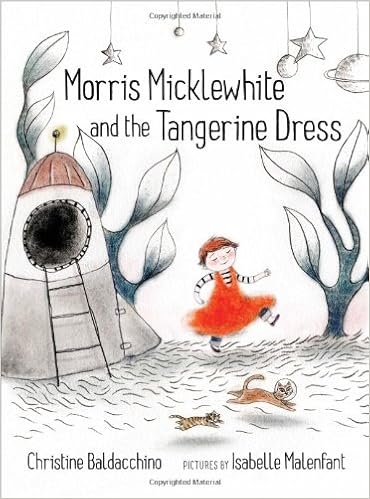
In Morris Micklewhite and the Tangerine Dress by Christine Baldacchino and Isabelle Malenfant, Morris goes from being sad and timid, unsure of his choice to wear a tangerine dress.  As the book progresses he changes as he realizes that he wants to be himself.
According to the boys watching Allie play, girls can’t play basketball.
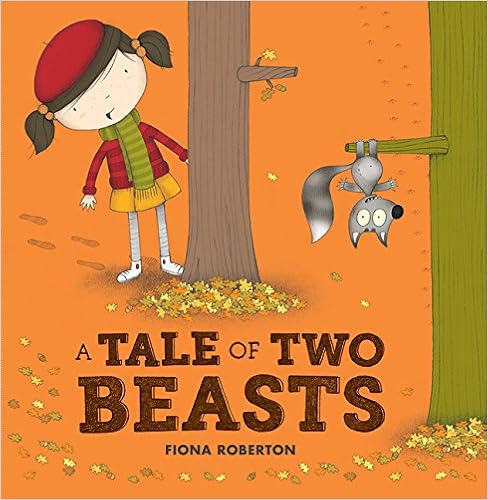
In A Tale of Two Beasts by Fiona Robertson, the C&C is how the two sides view the story.
I Don’t Want to Be a Frog by Dev Petty and illustrated by Mike Boldt is C&C throughout.  The main character does not want to be what he is supposed to be and protests it every way he can.
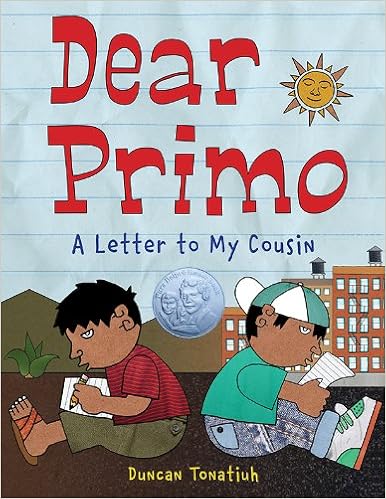
As two cousins write to each other, we see the contrast (and similarities) between their lives.

Tuesday by David Wiesner started us off in our discussions about contrasts and contradictions.  This fantastic nearly wordless picture book is an easy entry into this discussion as it allows students to easily see how the magical event with the toads floating is in contrast to what frogs normally do.


With one of my classes I also used Rules of Summer by Shaun Tan, where the contrast lies in the rules being shared and the images.  While this one was a little more advanced for the students, they greatly enjoyed the illustrations and discussing what they might mean.

Another contrast and contradiction text between self and society in Mr. Tiger Goes Wild by Peter Brown where Mr. Tiger just will not conform.  When he tries to change his ways, he loses his real identity.

This Is A Moose by Richard T. Morris and Tom Lichtenheld is a great example of the contrast between what a moose is supposed to be like and what they really are.

The Story of Fish & Snail by Deborah Freedman is a wonderful example about change in a character as Snail is too scared to follow Fish on a new adventure.

That Is Not A Good Idea by Mo Willems is another great example of a character changing and acting in a different way than we would expect.  I do love this devious little tale.

What I love about Gaston by Kelly DiPucchio, illustrated by Christian Robinson, is that most of my students can relate to its message about being expected to fit in in a certain way.  The contrast lies between the characters and how their upbringing has shaped them.

Any day I can use Pete and Pickles by Berkeley Breathed is a good day in our room.  Here, we focus on the change that Pete the pig goes through as he meets Pickles.  Great book also to use for character development and inferring.

Don’t Call Me Choocie Pooh by Sean Taylor and Kate Hindley follow the story of a dog that does not want to be treated in a certain way afraid of what the other dogs will think.  Great ending that shows the change in the character.

Horrible Bear written by Ame Dyckman and illustrated by Zachariah O’Hora is a lovely picture book that shows what happens when you don’t do what is expected.

Don’t Call Me Grandma by Vaunda Micheaux Nelson and illustrated by Elizabeth Zunon is a perfect example of a character that does not fit the stereotype.  Great-Grandmother Nell isn’t anything but warm and fuzzy and as the great-grand daughter starts to understand why, we see a great slice of history as well.

North Woods Girl written by Aimee Bissonette and illustrated by Claudia McGehee is also about a grandma that doesn’t quite fit the mold.

Little Red by Bethan Woolvin is wickedly funny, it follows the path of the regular story but with a twist at the end and it is that twist that provides our contract and contradiction.

Which books have you used for contrast and contradictions?

If you like what you read here, consider reading my book Passionate Learners – How to Engage and Empower Your Students.  The 2nd edition and actual book-book (not just e-book!) comes out September 22nd from Routledge, but rumor has it that it is out on Kindle already!

achievement, advice, assumptions, authentic learning, Be the change, being a student, being a teacher, reflection, Student-centered, students

Some Ideas for Re-Engaging Students

tumblr_nu5tz1bcUO1qzr04eo1_1280

For the past few days student engagement has been at the forefront of my mind.  Well, who am I kidding, it is always on my mind.  As I gave a workshop on student engagement, I was asked for quick tips on how to re-engage in class.  While these aren’t just simple ideas, I hope they can help you work through engagement lulls in your own classroom.

You can have an honest conversation with students.  If the same class is off-task or the same group, please pull the whole class or group together to discuss.  Do not judge, simply ask what is going on and then ask them to help you solve it.  Often students will blame being bored so then ask them how they can make it more exciting.  Part of creating classrooms where students are engaged is that students are expected to take control of their learning journey meaning you should not be trying to solve everything.

You can change it up.  Too often we fall in love with a routine like the workshop model and then forget that too much predictability can be a bore.  While I am not advocating for a zany show, I think it is important to be tuned into whether the routine is working at its optimal level or not, then tweak and change as needed.

You can turn on some music.  I have found that using music that has the opposite tempo of my students’ mood is great for refocusing them.  So if they are slow and lethargic, I play upbeat music while they work, if they are very energetic, I bring out the mellow tunes.

You can practice mindfulness.  I started using some short breathing or yoga videos after assemblies with my students because there was no way they would settle in on their own.  Once my 7th graders get past their giggles, they also benefit from 3 minutes of focused breathing.

You can stop a train-wreck.  When a lesson was going poorly, I used to ride it out to the end hoping that by then they would get it.  Now I know to stop, ask why they are not understanding, and then fix.  I also have the luxury of completely revamping it throughout the day since I teach the same class five times in a row (one of the only positive things about that).

You can move location or just move.  Sometimes my students have simply been sitting too long.  Past elementary level we sometimes do not realize how much time students spend sitting since we only see our slice of the day.  A natural restlessness is therefore bound to occur.  So we move around in the classroom either by sharing with peers, doing short book recommendations, or showing off our work, or we pick up and move altogether.  We can head to the library, outside, or into our team area.

You can affirm and replace.  This is a technique I adapted from the awesome book Awakened by Angela Watson.  When my students seems bogged down as a class, we spend a few minutes speaking about what is going on and then I try to help them replace those thoughts by shifting the focus to something else. It is important for students to feel validated in their thinking but then also for them to move beyond it.

You can find a different way for them to show off their knowledge.  We use turn-and-talk quite a bit, but I also ask students to act answers out, draw things out without speaking and any other way that will get different areas of their brains to light up.  This is not something I do the entire class period, but it is vital that we have students show knowledge in a variety of ways, rather than just one way.

You can make it personal.  Yes, personalized learning is a major buzzword right now, but I am talking about the personal connections that students can have to the learning and how we can tap into that.  A lot of disengagement comes from students being bored with the content, so we do need to re-evaluate the content we are focusing on, as well as what the students are doing with it.  Students may want to engage with the content in different ways but we won’t know that without knowing our students.

You can use technology.  We integrate technology throughout the year but sometimes introducing a new tool like Kahoot does fire students up in a new way.  However, with any new ideas, moderation is key because this does not address the problem in the long-term but simply changes the pace at that moment.

In the end, student engagement is just about the quick fixes we can make, but about the instrumental changes we need to have in our teaching philosophy.  It is too easy to just blame the students, although they do carry responsibility in all of this, so we must reevaluate whether what we are doing in our classrooms is truly worth being engaged in.  The bottom line is; we have to believe in what we are doing and show that passion every single day, because if we don’t, we have no right asking students to.

PS:  This is part of a three part series on student engagement.  The first post discussed the truths my students shared with me on why they are disengaged, the second post discussed the three areas we must re-evaluate.

If you like what you read here, consider reading my book Passionate Learners – How to Engage and Empower Your Students.  The 2nd edition and actual book-book (not just e-book!) comes out September 22nd from Routledge, but rumor has it that it is out on Kindle already!

advice, being a teacher, being me, Passion, student driven, students

These Three Areas May Be the Root of Student Disengagement

tumblr_nu3wgu161v1qzr04eo1_1280
image from icanread

Yesterday, I shared my students’ reasons for why they become disengaged, yet sometimes it is hard to figure out the why for longterm change.   It is easy for us to blame curriculum or things outside of our control, yet often, disengagement is happening because of a few simple things in our classrooms.  Therefore, I offer you up the three areas to evaluate as you try to engage your students.

Evaluate yourself.  Are you the reason they are off-task?  Did you speak too long or did you not make sense?  Do they like you?  This is huge.  If students do not like you, they are much more likely to be off task and the more we hammer down our authority, the more they will battle us.  So if you are not creating real relationships with students, then off task behavior will often turn into disruptive behavior.

Evaluate the content.  Does it make sense?  Is it engaging?  If it is something that you need to “get through” then students will treat it as such.  I often tell students that we are working on creating a foundation of knowledge that we can use to try new things, I try to steer clear of saying we have to just “get through” anything.  Also, does the content allow for them to speak to others, to move around, to use the information or are they listening to you deliver the content and then working silently with it?  Try to think about how much we ask students to work in silence all day, and then we wonder why students lose their voice?  Student choice and voice is a huge part of this.

Evaluate the time and place.  My third hour class (after study hall) and my sixth hour class (after lunch) are loud and take a lot more to become engaged.  They are wired with energy and need ways to work that off.  Their work often looks different that that of other classes because I need to tap into their energy.  I may play soft music when they come in, speak in a calm tone, and also have them reflect quietly for a few minutes after their independent reading time, all so they can get back in the zone of what we need to do.    My first class and my last class of the day needs energy.  They are tired.  They have either just woken up or have been sitting most of the day.  So I play fast music, get very animated and I create opportunities for them to get up and move around the room focusing more on group learning to get their energy up.  Are you adapting your teaching style to the time and place of the day?

While there are many sub areas we should also be evaluating, I have found that most of the time the answers lies within one of these.  And if in doubt, ask your students.  I know I sound  like a broken record but sometimes I spend hours thinking about why something is happening where I should have just asked the people it involved.  Yes, some times students will tell us things that are hard to hear, but I would rather hear the truth so that I may change, than pretend that I have it all figured out.

PS:  Stay tuned for part 3 of this series, the final part is all about the small changes we can make.

If you like what you read here, consider reading my book Passionate Learners – How to Engage and Empower Your Students.  The 2nd edition and actual book-book (not just e-book!) comes out September 22nd from Routledge, but rumor has it that it is out on Kindle already!
advice, aha moment, Be the change, being a teacher, being me, student choice, student voice

Why Are They Disengaged? My Students Told Me Why

I used to think that when students were disengaged it was their own fault, and while sometimes that is still true, I have found in my years of teaching that a lot of the fault lies with me as the teacher.  Yet, realizing that I may be the cause of my students disengagement is hard to swallow.  It certainly has not done wonders to my self-esteem, and yet, there is something liberating about realizing that while I am a part of the problem, that also means that I can fix it.  Or at the very least fix the things I control.  Student disengagement is something I can do something about.

But why are students so disengaged?  What lies behind the restlessness, the misbehavior, the bored stares?  Every year I survey my students throughout the year, and particularly on those days where nothing seems to be working.  I ask them simply to explain what is going on and they share their truths with me.  So here are their truths on student disengagement.

Students become disengaged, because..

They feel no connection to you.  I often notice that students are much more off task in the beginning of the year when we don’t know each other, right after the honeymoon is over.  This is when we seem to be in limbo and so I spend a lot of time having a lot of conversations with my students, I share stories from my life, and I speak to them in the hallways.  Students will work for you if they like you, so I try to be likable.  It may seem simple but it is repeated so often by my students.

They feel no urgency.  I have 45 minutes per class so the urgency is always there.  It is not the threat of a deadline that makes my students work at a faster pace, it is the promise of the next adventure that lies ahead.  My students and I make a deal that if they work hard and stay focused then I do not give them homework.  They know that they are given as much time in class as I can give them so they know to use that time well.  The students that don’t; they have to do the work outside of school.

They feel there is no purpose.  I use to assume that students knew what the greater purpose of something was, but they don’t.  So now we spend time deconstructing our standards and we speak about the connections between things.  We speak of why we are learning something and how it fits into our lives, not just how it is preparing us for the next year or for college.  We speak about how the learning we do right now allows us to become better human beings.

They feel they have no power.  When students feel powerless in our rooms, most become disengaged.  Particularly those kids who have often had behavior issues in the past.  Those are the kids, in particular, that need to feel like they have more control over their day.  This is why I proselytize about student choice.  Give them choice, even if just in a minor way like telling them they can sit wherever they want.  Give them power over their day so that they feel like who they are matters.

When the teacher talks too much.  We do.  We need to stop.  We need to set a timer or whatever will stop us from going on and on.  Give them knowledge then let them work with it.  Give them a chance to speak as well, after all, they are the ones that should be doing the learning.

When the teacher does not personalize.  How often do we know whether a child already knows something?  How often do we plan to find out so that we can create new learning experiences for them?  If a child has already mastered something, then let them work on something else, something more challenging.  But to do that, you have to find out what your students know.  Ask them whether through a survey, an informal pre-test, or a conversation.  Not everyone comes to us as a blank canvas.

When they do mostly worksheets.  I have moved far away from worksheets over the past few years, but that does not mean all worksheets are bad.  If a worksheet gives foundational knowledge that will be used for further learning then it can be ok.  However, if using a worksheet is part of the routine every day, or is not used for anything more, then there seems to be no deeper learning purpose behind it.  Students have told me they feel like when most teachers give them a worksheet it is because we are too lazy to teach them.

When the learning becomes something to just get through.  I have done this, said that we just need to get through this to get to fun thing.  Yikes.  When we say this, students automatically disengage from the task, after all, if teachers see no value in it, why should they?  Yes, there are things that we don’t love to teach as much so then make it better.  If it is boring or a struggle for us, then think of how it feels for the students.  We are in charge of bringing the passion into our rooms.  Not just the students.

While there are still days in our classroom where I know that students were not as engaged as I hoped, there are more great days than bad.  There are more days where students stay on-task, where they get involved, and where meaningful learning occurs.  Every year, I start over with my students and how to best engage them.  Every year I learn a new way to keep them on-task.  Yet I have learned that the biggest thing for me is to keep the above list in mind at all times.  Even if I feel like I have planned the very best lesson.  Even if the day before went really well.  I do not take my students’ engagement for granted, instead it is something I work for.  Do you?

PS:  For ideas on how to evaluate why students are becoming disengaged tune in tomorrow.

If you like what you read here, consider reading my book Passionate Learners – How to Engage and Empower Your Students.  The 2nd edition and actual book-book (not just e-book!) comes out September 22nd from Routledge, but rumor has it that it is out on Kindle already!

being a teacher, building community, community, new year, students

They Are Not Mine…Yet

image from icanread
image from icanread

I almost know all of their names.  All 118 of them.  Not because I have some magical brain penchant for memorizing names and faces.  Not because they all wear name tags.  No.  Every night I have pored over their faces, trying to remember each one, trying to figure out who they are.  Because I still teach strangers.  Strangers that I am trying to establish a community with, strangers I am trying to get to trust me.

So this week has been about them.  About why they love or hate reading.  About how they see themselves.  About how they react to picture book upon picture book as we try to weave a common thread.  And it seems to be working.  Slowly.  The stories are gently coming, the nervous laughter disappearing.  The hand raised a little faster.  We have a long way to go but ever so slowly the seeds have been planted, the foundation is being laid.

So today I will do my name competition; do I really know all of their names after just 3 days?  I will read another picture book as I rock in my chair and they share the tattered bean bags.  I will thank them for the few days we have spent together and wish them a happy long weekend.  I will hope for a smile, a high five, and a farewell, knowing that hopefully some day I will get to take these things for granted.  I will hope for a hallway greeting, a quick goodbye before the bus comes.  Little things that show the relationship we have built.  Those things that I miss so much.

I don’t know my students.  Not yet.  But it will happen.  Even if it feels like they will never be our kids.  They will.  They just don’t know it yet.

If you like what you read here, consider reading my book Passionate Learners – How to Engage and Empower Your Students.  The 2nd edition and actual book-book (not just e-book!) comes out September 22nd from Routledge, but rumor has it that it is out on Kindle already!