I cannot be the only one who navigates productivity guilt.
You know, that feeling of never having accomplished enough as an educator, or adult, and therefore not deserving of rest.
The bad news? Productivity guilt can lead to major health implications, I know this, I have had major health implications the last 5 years of being a teacher such as anxiety, a weakened immune system leading to multiple pneumonia and bronchitis bouts, and high blood pressure.
The good news – it doesn’t have to be this way. But as someone who is still trying to break productivity guilt habits, it is hard to break. The educational system is set up to make us constantly cross our own self-imposed boundaries. And the needs of our communities can be so high. So finding a way to still be productive while also knowing when to work can be a process in itself.
After learning more about productivity guilt, I wanted to share a few tips and ideas for how to recognize t, and more importantly, how to do something about it in order for you to feel healthier. I cross-posted this on Instagram but wanted to make sure I shared it here as well.
If you are not sure how to cut down on your workload, I will gladly help alleviate some of it. Just let me know how I can help.
Here are a few ideas for how to recognize and lessen productivity guilt so you can get back to living the life you deserve.
Posted from my Patreon community where I take requests for book lists to create, share resources, and offer up coaching for members. It is a very easy way for me to be accessible to people around the world, you can join here.
One of the reading strategies we teach students is to notice character changes, whether it be in chapter books, movies, or even in life. When I first started out teaching this strategy, I was inspired by the language of Notice and Note: Strategies for Close Reading by Kylene Beers and Robert Probst. This book provided my students with the foundation for having deeper reading conversations and a common language as we developed our thoughts and our discussion skills.
While being able to track characters and notice when they act out of character is a great reading strategy, it is an even bigger life skill. Inferring and noticing when people don’t seem like themselves or when they change can be practiced within literature and media. As a way to introduce and really focus on the strategy, I have long used picture books to showcase it. 8 years ago, I created this initial list of picture books and I figured it was about time to update it as I sit and watch Titanic with my kids.
The Noisy Classroom by Angela Shanté and illustrated by Alison Hawkins. A young girl is about to enter the third grade, but this year she’s put into Ms. Johnson’s noisy class. Everything about the noisy class is odd. While all the other classes are quiet, Ms. Johnson sings and the kids chatter all day. The door is always closed, yet sounds from it can be heard in the hallway. With summer coming to an end and school starting, the girl realizes that soon she’ll be going to the noisy class. What will school be like now?
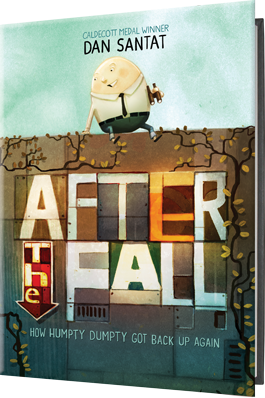
In After the Fall by Dan Santat, Humpty Dumpty has to come to terms with his own fear and anxiety after a great big fall. But that requires him to act opposite of what his fear tells him to.
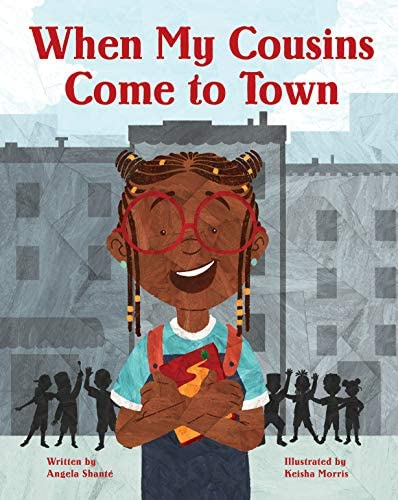
When my Cousins Come to Town by Angela Shanté and illustrated by Keisha Morris. Fitting in can be hard, but standing out isn’t easy either! Every summer a young girl eagerly waits for her cousins to come visit and celebrate her birthday. All her cousins are unique in their own ways and have earned cool nicknames for themselves… except for the girl. But this year things are going to be different. This year before summer ends, she’s determined to earn her own nickname!
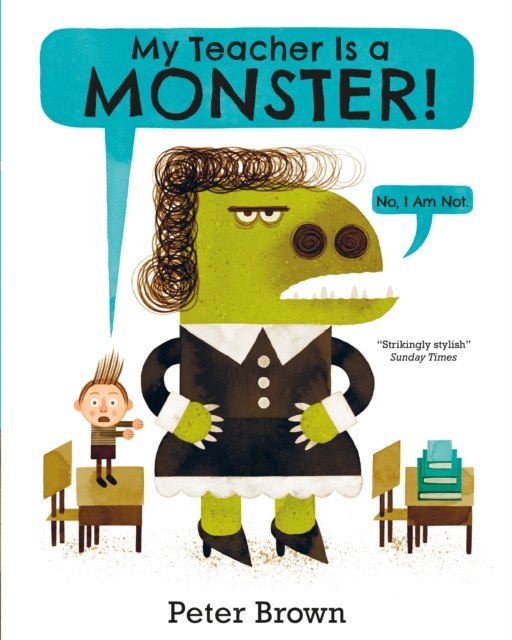
My Teacher is a Monster by Peter Brown. A young boy named Bobby has the worst teacher. She’s loud, she yells, and if you throw paper airplanes, she won’t allow you to enjoy recess. She is a monster! Luckily, Bobby can go to his favorite spot in the park on weekends to play. Until one day… he finds his teacher there! Over the course of one day, Bobby learns that monsters are not always what they seem.
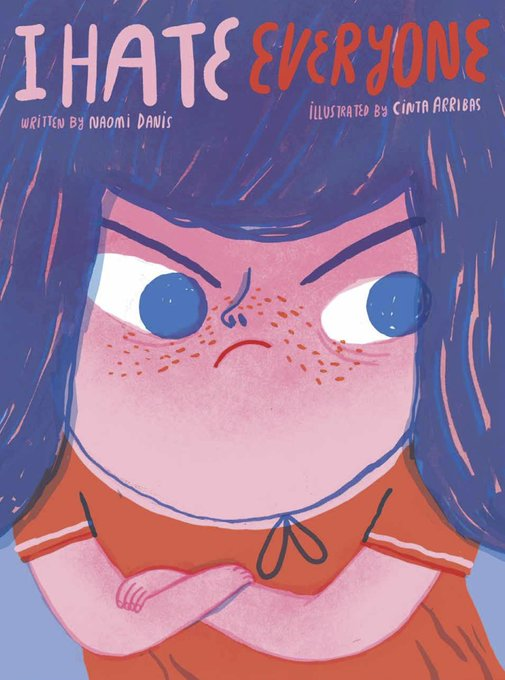
I Hate Everyone by Naomi Davis and illustrated by Cinta Arribas. “I hate everyone.” In your worst mood, it’s a phrase you might want to shout out loud, even if, deep down, you don’t really mean it. Set at a birthday party, this disgruntled, first-person story portrays the confusing feelings that sometimes make it impossible to be nice, even-or especially-when everyone else is in a partying mode.
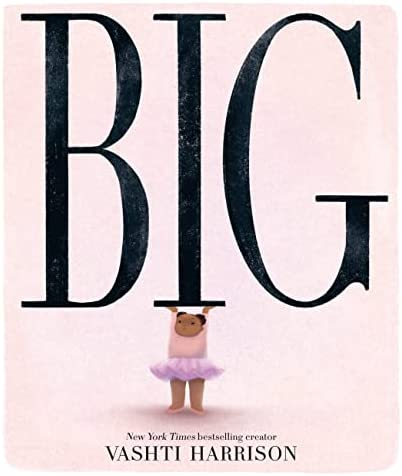
In Big by Vashti Harrison we follow our main character and she goes from loving herself, to feeling the direct pressure from society to fit in. Can she find herself and her strength again?
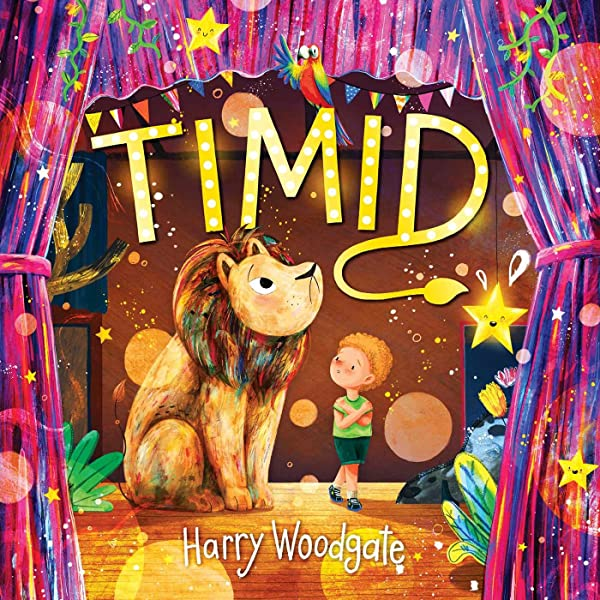
Timid by Harry Woodgate offers up the story of Timmy, who loves to perform even though they also have anxiety whenever they are asked to perform in front of others. While they want to overcome it, and nearly do, it turns out letting go of who you used to be is a lot harder than one might think.
In Francis Discovers Possible by Ashlee Latimer and illustrated by Shahrzad Maydani, Francis loves learning new words. At school, when her class is reviewing words that begin with the letter “F,” someone sneers “Fat, like Francis.” Francis always thought “fat” was a warm word—like snuggling with Mama or belly rubs for her puppy. But now “fat” feels cold, and Francis feels very small. After school, Baba takes Francis to the park. She chooses the bench instead of the swing set, and gets very quiet. But when Baba uses the word “possible,” Francis wants to know what it means.
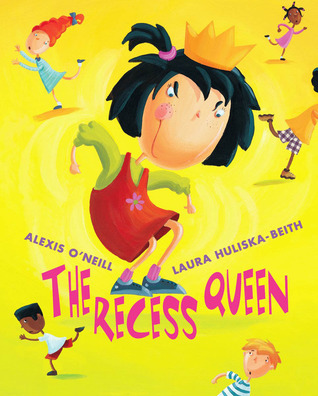
In The Recess Queen by Alexis O’Neill and Laura Huliska-Beith, Mean Jean was Recess Queen and nobody said any different. Nobody swung until Mean Jean swung. Nobody kicked until Mean Jean kicked. Nobody bounced until Mean Jean bounced. If kids ever crossed her, she’d push ’em and smoosh ’em, lollapaloosh ’em, hammer ’em, slammer ’em, kitz and kajammer ’em. Until a new kid came to school! With her irrepressible spirit, the new girl dethrones the reigning recess bully by becoming her friend in this infectious playground romp.
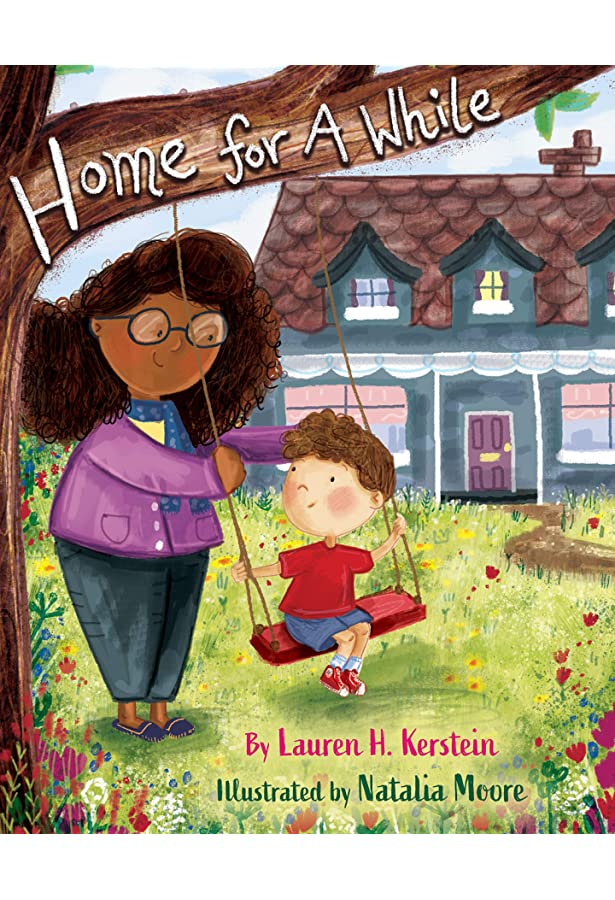
In Home for a While by Lauren H. Kerstein and illustrated by Natalie Moore, Calvin is in foster care, and he wants to trust someone, anyone, but is afraid to open his heart. He has lived in a lot of houses, but he still hasn’t found his home. When he moves in with Maggie, she shows him respect, offers him kindness, and makes him see things in himself that he’s never noticed before. Maybe this isn’t just another house, maybe this is a place Calvin can call home, for a while.
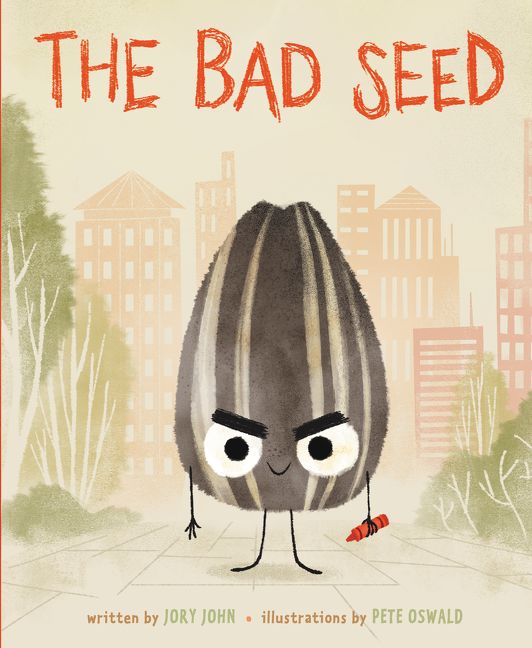
It’s like this picture book was written just for this lesson. The Bad Seed by Jory John and illustrated by Pete Oswald features two changes in character and also a powerful message about trauma and what can happen to you even after bad things happen.
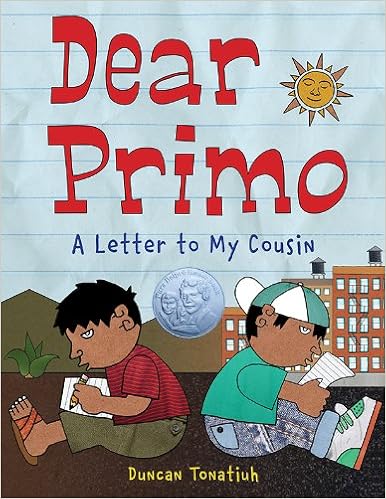
As two cousins write to each other, we see the contrast (and similarities) between their lives.
Tuesday by David Wiesner started us off in our discussions about contrasts and contradictions. This fantastic nearly wordless picture book is an easy entry into this discussion as it allows students to easily see how the magical event with the toads floating is in contrast to what frogs normally do.
With one of my classes I also used Rules of Summer by Shaun Tan, where the contrast lies in the rules being shared and the images. While this one was a little more advanced for the students, they greatly enjoyed the illustrations and discussing what they might mean.
The Invisible Boy by Trudy Ludwig and illustrated by Patrice Barton. Meet Brian, the invisible boy. Nobody in class ever seems to notice him or think to include him in their group, game, or birthday party . . . until, that is, a new kid comes to class.When Justin, the new boy, arrives, Brian is the first to make him feel welcome. And when Brian and Justin team up to work on a class project together, Brian finds a way to shine
Another contrast and contradiction text between self and society in Mr. Tiger Goes Wild by Peter Brown where Mr. Tiger just will not conform. When he tries to change his ways, he loses his real identity.
That Is Not A Good Idea by Mo Willems is another great example of a character changing and acting in a different way than we would expect. I do love this devious little tale.
What I love about Gaston by Kelly DiPucchio, illustrated by Christian Robinson, is that most of my students can relate to its message about being expected to fit in in a certain way. The contrast lies between the characters and how their upbringing has shaped them.
Any day I can use Pete and Pickles by Berkeley Breathed is a good day in our room. Here, we focus on the change that Pete the pig goes through as he meets Pickles. Great book also to use for character development and inferring.
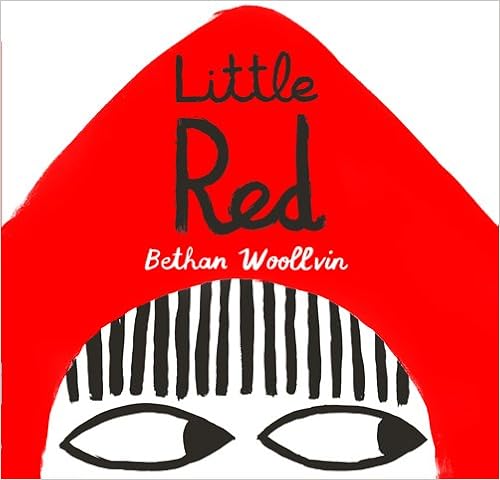
Little Red by Bethan Woolvin is wickedly funny, it follows the path of the regular story but with a twist at the end and it is that twist that provides our contract and contradiction.
Which books have you used for contrast and contradictions?
PS: Are you looking for coaching, in-person support, or virtual presentations? I am available and would love to support your work. Whereas I am physically located in Denmark now, I can travel if needed. In fact, I will be in the US and Canada in February 2023. If you would like me to be a part of your professional development, please reach out. I am here to help. For a lot more posts, resources, live and recorded professional development, please join my Patreon community where most of my sharing takes place these days.
I asked for suggestions for early reader chapter books to use for read alouds as I search for the 2023 Global Read Aloud titles and thanks to so many great suggestions, I now have a list of more than 70 excellent books geared toward the younger years of reading when kids are ready to dive into reading longer books but still need content that makes sense for where they are developmentally.
Many of these books are well-loved by my own kids all the way up until 10 years old showing once again that most books can appeal to a broad audience and not just whatever limited age range placed on it by the publisher or bookstores.
So if you teach younger ages these would make brilliant additions to your classroom or library collections.
PS: Are you looking for coaching, in-person support, or virtual presentations? I am available and would love to support your work. Whereas I am physically located in Denmark now, I can travel if needed. In fact, I will be in the US and Canada in February 2023. If you would like me to be a part of your professional development, please reach out. I am here to help. For a lot more posts, resources, live and recorded professional development, please join my Patreon community where most of my sharing takes place these days.
It has been seemingly endless days of rain in Denmark. A drizzle. A storm. A dusting. Sideways, straight down, diagonal to hit every part of you, relentless, endless.
Every time you go outside, the rain pelts you, the wind blows up your umbrella – you arrive just a little bit soggy. Your hair a mess. Grateful for the shoes you at least did think to wear, knowing that the ones you pined for would have left your feet a soggy mess. Layers, wool, and waterproof – such is the fashion these days.
The sun hides behind endless clouds giving us a slim 7-hour window of being greeted by it – we leave in the dark, we come home in the dark. The forecast meticulously studied, my body naturally gearing itself toward any windows that offers just the smallest bit of light. Has my seasonal depression phase started?
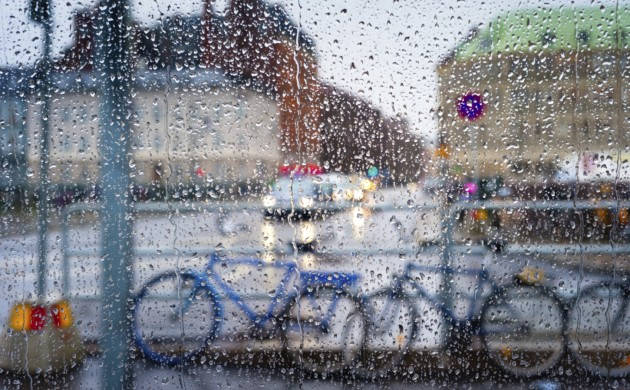
Image from the Copenhagen Post – my rainy images don’t look this nice
It is what I had warned my husband about. He who had only ever experienced the glory of Danish summers, the long nearly unending summer nights stretched ahead. He, who thought, we should take the chance offered us to build our life in a new country.
I tried to warn him. Doing the best I could to give him the absolute reality of what it means to live in a country where hygge originated. There is a reason for the lighting of all those candles after all. Did he really understand what a Danish winter would feel like after months of rain and wind? Was he sure he wanted to give up the pristine winter days in Wisconsin where, sure, the cold can kill you but the beauty also leaves you breathless? It might last longer but it had skiing, sledding, and surprise snow days. Not everyday drudging through the rain, not the wind in your face as a constant companion.
As I complained yesterday of how soaked I was after my bike ride to the train station, lamenting how the rain is wearing me out, he told me I had it all wrong. Had I considered how little it had rained? How few days we have truly been soaked through? How warm we have been for so many days?
That perhaps I could focus on other things while still feeling the rain?
That I had made him believe that the rain would be nonstop starting in October, soaking us until March, and instead we have had glorious fall-colored days. Had I forgotten how the sunshine beckoned us outside, the color of the leaves changing so slowly that they seemingly hung on for months?
Had I forgotten the days with snow? Where our winter-loving children bounded out the door to build a snowman before school. Where their red noses and glistening eyes told us all about the snowball fight they had at school – “…with permission, mom!”
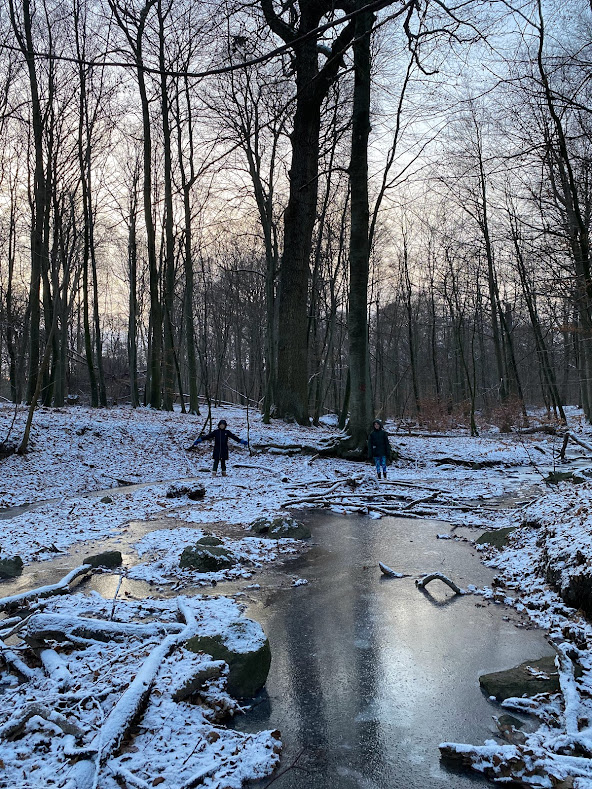
Or what about the days filled with ice? Our footsteps finding any small frozen-over puddle that we could just to hear the satisfying crack as the layer of ice broke by the force of our foot?
Or the days that already felt like spring, how the sun slowly is coming back but until then we light our candles, wear our wool-socks, and still continue to go outside, embracing this season that soaks the earth. Living in the moment, rain or not, breathing in the wonders of this season.
A difference in perception so grand that I don’t know how I missed all of the things he noticed?
It makes me think of teaching. Of how my relentless optimism finally ran out in the midst of the pandemic. How I started to see more rain than sun. How every new opportunity quickly felt like a challenge. How I mustered every day, slipping on my practiced smile, but cried so often in my kitchen.
How I so often heard only the complaints of the kids who hated what we were doing. How I so often focused on the few that clearly disliked me, our class, and our school. How in the season I was in, I only felt the rain because I couldn’t feel everything else, I didn’t have the energy to. I didn’t have anyone with power left telling me to look for the good because so many of us were drowning.
How I tried so hard to feel like I was enough to do all the things asked of me. And I just wasn’t. I am not sure anyone is right now.
And I tried to see all the good. I knew it was there. I knew I was lucky. But in a broken system that only demands more of you without taking anything away, we are made to feel as if we are the problem, rather than the system itself. And so often we are too afraid to say anything. After all, who wants their kid taught byt the teachers who complains?
But I wonder about the difference in perception from us to our students. Would they also say that these years have been the hardest years? Would they also say that the system is broken? What would they say if we asked them?
How often do we ask them?
I asked my students all the time what I could change, how I could grow, what else should we do? I am glad I did. After all, we cannot enact change if we don’t know what to change.
But I often forgot to ask them what we should keep? What they loved or liked? What worked for them? What did they see as positives?
And I wish I had. I wish we did it as a school. I wish parents did before they complain about what teachers are now doing.
I wish we offered educators up more true chances to take a moment and recognize the good. To be recognized for the good. For us to have a moment to breathe and relish that we are doing hard things every single day. That many kids do enjoy coming into our spaces. That many children do like being in our classes.
And not in a superficial way by giving us a donut, or a jean day, or some quickly written email. But by a full recognition of how despite the educational challenge being as hard as it is, we still show up. That despite all of the craziness surrounding education, we still come to teach every day, every kid.
And then we fight to keep the good. We fight to keep the components that make school meaningful; the plays, the assemblies, the read alouds, the contests, the time for creative writing, independent reading, experiments and experimental learning. The curriculum that asks us to think critcally and speak bravely. The texts that show us what humanity really looks like.
And we are protected by the administration. And by the community. And by the kids themselves.
Perhaps a dream, but a glorious one nevertheless.
And perhaps we recognize that yes, the rainy days will continue, the wind will continue to blow us back, but with others surrounding us, we will get to a new season. That within the rain and the wind, there will still be moments where we look up and marvel. Where we can stand in a moment and say that, yes, this is where we are meant to be. That for many kids we teach, this is not the worst season. And so we embrace those moments longer than we do the bad. We open our arms, tilt our faces to the sun and stand still knowing that this moment right here may not make it all worth it but it makes this day worth it.
And we take it day by day, sometimes hour by hour if we need to. And we fight, and we push back, and we raise our voices to reestablish the boundaries that have been wrestled from us.
And we plant our feet, squarely in the soaked earth, and we plant the seeds that the rain allows us to nourish, knowing that some day, the kids we teach will grow up to be teachers themselves, to be parents, and community members, administrators, school board members, and politicians, and that hopefully they saw us embrace what it meant to teach courageously. What it meant to set up boundaries. What it meant to fight for all kids to be safe within our spaces. And what it meant to weather the storm when we could but also walk away when we found ourselves alone.
I know the rain will continue even as we inch nearer to spring. I know the short reprieve we have right now as I write this is shortlived, after all I saw the forecast. But I will put on my trusty boots, I will continue with my day, and I will still go outside, better equipped, with a mind at peace with this moment in time. Knowing that while the rain soaks me it also soaks the seeds we have planted for a future we cannot see yet. How about you?










 Pernille Ripp