Be the change, being a student, being a teacher, student choice, Student dreams

The Worst Class in (X) Years

No child should be defined by the actions of a group. @pernilleripp

My last year as a 5th grade teacher we were warned, in a friendly way ,of course, as these warnings tend to be.  “Oh, you will have your hands full…”  Oh, THAT group is coming up.”  My team and I had seen these kids come up through the years, that is the beauty of elementary school.  Yes, we had seen the tantrums, the fighting, the crazy behavior that made many label this group as the worst in (insert however many) years.  But we also had seen the kindness, the energy, the fun that these kids projected and knew that while we may have our hands full, the year with them would be a year where we would always strive to look for the good, rather than the bad because although the bad was so easy to spot, it should not define a group of kids.  Sure there were days where we could not believe what was going on but what I remember most about that year was how incredible the kids were.  How much fun we had.  How there were these incredible lows but also days that were some of the best of my teaching career.  My team would agree with me on this.  Yes we had THAT group but also loved THAT group.

Every year since then I have taken that same pledge; to always look for the good first.  To always praise, to always point out how great of a group this group is.  To change the group narrative in some small way.   To always assume that this will be an incredible year no matter the reputation of a group.  I think it is so easy to fall prey to the notion of the worst class ever.  I think it is so easy to just want to get through a year as quickly as possible, I know there are days that seem never ending where we question everything we do.  Yet when we do, we forget something very important; not every kid is going to have a bad day every day.  Not every kid is going to have a bad class every class.  Sometimes it may seem like this is the toughest day yet, but that too shall pass and just like we hope for a better day tomorrow, so do the very kids we teach.

When we let the actions of a few define an entire group, we are dismissing the individuals that make up that group.  We are dismissing the kids that come to school hoping that today will be a good day.  Hoping that this is the year they can finally escape the reputation that seems to follow them.  As a parent I shudder at the thought of my own children’s class being labeled as the worst in however many years, because how do you ever change that?  How do you stop a child from believing that they are horrible when that is what they hear whispered?

So today, much like every day, I will look for the good.  I will praise the kids for all of the amazing things I see and yes, there may be ill decisions and tempers flaring, but those will be handled on an individual basis.  I will not let the actions of a few tell the tale of the whole.  And I will tell my kids, much like I do almost every day, that I have the best job in the world, that I cannot wait to come back tomorrow even if today was tough.  Because it is true.  We get to teach and teaching is only for those who can see the good in kids, no matter how much a child cannot see it themselves.  We get to teach, which means that we d believe that this is the year a new narrative can be written.  That this is not how a year will be.

No children should be told that they are a horrible group of kids.  They are kids period.  And we owe it to them to see beyond their reputation and re-invent their group identity. That is why we teach, that is why we have the best job in the world.

I am currently working on a new literacy book.  While the task is daunting and intimidating, it is incredible to once again get to share the phenomenal words of my students as they push me to be a better teacher.  The book, which I am still writing, is tentatively Passionate Readers and will be published in the summer of 2017 by Routledge.  So until then if you like what you read here, consider reading my book Passionate Learners – How to Engage and Empower Your Students.  Also, if you are wondering where I will be in the coming year or would like to have me speak, please see this page.

being a teacher, new year, talking

How to Have Better Student Discussions

Today was the sixth day of school.  It has been a whirlwind of reading habits, book shopping, learning how to email, and today; how to actually have a decent discussion.  This may seem really simple but year after year I find that many students lack confidence when it comes to discussions, even when previous teachers have had them engaged in their classes.  So this year rather than just try to teach them throughout the year, we decided to create a foundation for it now, so what did we do? We combined a few tried-and-true strategies.

We fishbowled to start with. 

I invited four volunteers to come up and discuss an unknown text with me.  I had to follow the same expectations as them.  For the first few classes we did a poem with mixed results, for the final three we did an op-ed piece on why tweens should not have cell phones with better results.

So what was the set up?

  • Everyone gets a copy of the text, one classroom set,  so they do not have to share.
  • Everyone gets two cards or two of something else.
  • Groups either sat at whiteboard tables (tables covered in whiteboard contact paper – they are brilliant) or had a two-dollar whiteboard (take a shower panel and get it cut down into six pieces, they cost $2 a piece, I have twelve of them for collaboration).
  • Everyone gets a “Bounce card.”
  • Everyone gets an expo marker.

Expo marker and whiteboard:  After the text has been read (typically by themselves not out loud so make the text accessible for all.  This is not a reading strategy lesson per say but rather a discussion lesson), every child should take a few moments to write down their reactions or questions before the discussion starts.  That way everyone has a moment to think before the conversation ensues.

Two cards:   We used the tried-and-true way to get everyone to speak.  When a person speaks, they put their card into the middle.  They cannot speak again then until everyone else has also spoken and put a card in the middle.  This is to help everyone actually add their voice. I do two cards so that they all have to participate at least twice.  After the cards are used up, they can speak as much as they would like.

Bounce card:  Again, not my idea but from the book Total Participation Techniques: Making Every Student an Active Learner via our awesome 8th grade team.  The Bounce card is a visual tool for kids to remember to “bounce” off each other’s ideas rather than just state their own opinions.  There are three different paths they can take, they can bounce, sum up, or inquire.  Having the card in front of them is a helpful reminder to how they should be discussing.  Here is what our cards look like.

Teacher role:  Coaching, not teaching after the fishbowl.  Our job is not to lad the conversation but to let the kids figure it out.

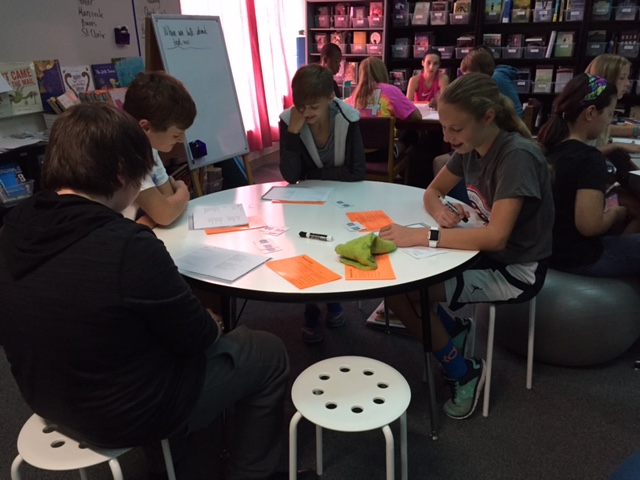
After the fishbowl, it was their turn.  I numbered students off so they would be in mixed groups and let them loose, all supplies were already set up for them.

img_1370

I did not give them any questions to discuss because I want them to start thinking about their own reactions to text.  My students wanted me to but I did not, at some point they have to start generating their own questions so why not start today?

We kept this trial run short, around 15 minutes to make sure they stayed on track.  It worked pretty well.   As I walked around I loved seeing how engaged the kids were, how they were trying to help each other out and add their voice, and how they asked for people to “bounce off” of their ideas.

At the end of the class, I asked them to please reflect on themselves.  We spoke about how often we reflect on how others do in a task but forget to look inward and that we are the ones we need to be concerned with, not how others do.

On Monday, our follow-up lesson will be six different tables set up with three different types of topics.  Two tables are set up with wordless picture books (Unspoken by Henry Cole and Bluebird by Bob Staake), two are set up with op-ed pieces (why kids should have homework and why schools should have uniforms), and finally two tables will have poems (Langston Hughes I, Too and The Abandoned Farmhouse by Ted Kooser).  Students will pick which table they would like to be at but then have to select the other two formats the two next days.  Therefore all students will get to try discussing all three types of formats.  I am excited to see how this foundational skill will play out this year.

I am currently working on a new literacy book.  While the task is daunting and intimidating, it is incredible to once again get to share the phenomenal words of my students as they push me to be a better teacher.  The book, which I am still writing, is tentatively Passionate Readers and will be published in the summer of 2017 by Routledge.  So until then if you like what you read here, consider reading my book Passionate Learners – How to Engage and Empower Your Students.  Also, if you are wondering where I will be in the coming year or would like to have me speak, please see this page.


being a teacher, being me, new year

Yet…

So much depends on the word "yet..."

It happens every year without fail.  We get a few days in, the year slowly starting, and all of a sudden it hits me; I am doing something wrong.  Whatever I thought I was good at, I am clearly not.   After all, how can anyone feel this exhausted and consider themselves good at anything?

Driving home today, I kept thinking about how far we still have to go.  How much these brand new kids don’t know.  How they don’t get me or us.  How hard it is to get them started with something, how even the smallest thing takes a long time.  How every day goes by in a flash yet seems so long.  How a new year is hard and you end up questioning every single thing you do because surely you must be doing something wrong because didn’t this go much better the year before?

But that’s it, isn’t it; it’s a new year. And we forget that when we compare these kids to the kids we just said goodbye to.  We forget just how far we came last year and how hard we worked to get there.   Those kids that we remember so fondly because of how much learning happened started out confused, unsure, and just a little bit rowdy as well.  We forget how much work it is to set up a well functioning classroom, to help kids read, to help kids write, to help kids feel safe, because last year now seems so far away.

So before we give up on ourselves and assume this year is doomed.  Before we beat ourselves up too much.  Before we wonder if we really know what we are doing, just remember this…

We haven’t figured each other out…yet.

We don’t know each other’s habits…yet.

We don’t have a bond…yet.

We haven’t established our routines…yet.

We haven’t accomplished much…yet.

We do not feel quite like a class…yet.

That takes time, and right now that is one of the biggest things we have.  So tomorrow if you go to school wondering if you really know what you are doing, remember this; every single thing you are doing right now is planting a seed for what your classroom will feel like later in the year.  So much like we wait to see seed grow into flowers, we also have to wait for our students to bloom.   Because the whole year is ahead, a whole year to make this year great, a whole year to have these kids become those kids that we remember fondly when we stand in despair the following year.  No matter how long we teach, we seem to always forget that starting a new year is hard, is exhausting, and yet is one of the best parts of the year.  After all, we don’t know each other yet, but we are starting to.


being a teacher, books

Some New (To Me) Must Add Middle Grade Novels

I love back to school; the excitement in the air, the untested new ideas, the fear, the thrill.  All of these things put a pep in my step.  And yet, there is one major downfall to back to school; less time to read.  I have luxuriated in books this summer.  Gone days with no TV where I could be found under the covers needing to read just one more page.  My books read display at school shares the tale of a summer filled with amazing reads that now I cannot wait to book talk.  So what have been some of the best middle grade novels I have read lately?

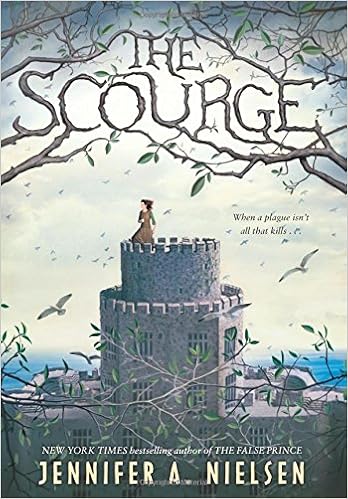
The Scourge by Jennifer A. Nielsen is a fantastic page turner.  Much like Jennifer made me fall in love with The False Prince (still one of our most loved series even in 7th), I too fell in love with Ani and Weevil and the trouble they cause.  This is an accessible book, many reading confidences will be able to get sucked in and stay sucked in as the action springs from page to page, and yet, it is also a book that speaks of human relationships, of deep commitments to each other.  My only disappointment with this book is that it is not a series; I would have loved for the story to keep on going because it is that good.

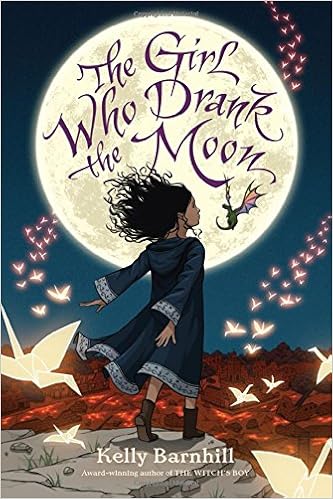
The Girl Who Drank the Moon by Kelly Barnhill was one of my last reads of the previous school year, and yet I still book talked and had one student read it in two days before the final day.  His face when he came back told me all I needed to know, “It was so good, Mrs. Ripp.”  And I agree.    With one of the best first chapters I have read in a long time and the most incredible language, this is a book you give to those kids that want to sink into a world of magic, destiny, and a quest.  Kelly’s storytelling is masterful and I would be incredibly surprised if this book does not end up on a lot of “best of…” lists.

I don’t read dog books, ask any of my students, and yet this year there have been an incredible slew of dog books to prove me wrong.  Lynn Plourde’s Maxi’s Secrets steals your heart from the very first chapter.  Just like Maxi quickly brings love and life back into the lives of the characters of the books, so does he for us.  I gave this book 5 stars when I read it and it still stands out as a 5 star book to me.  This is one of those books that make us thankful that there are writers out there that so gets what it means to be new, what it means to try to fit in and what it means to love something like a dog.

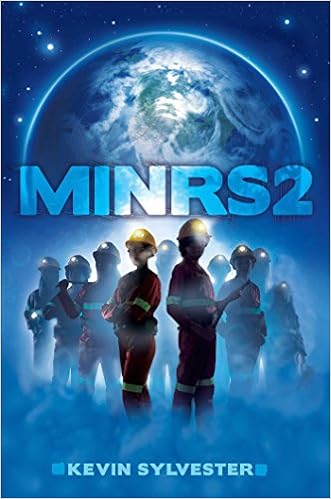
I have sung the praises of MiNRS by Kevin Sylverster since it came out lat year and so when I was lucky enough to receive an ARC of its sequel, MiNRS2, I knew this was a book I had to start right away.  I was not disappointed.  Kevin Sylvester masterfully picks up on the cliffhanger he left us on and takes this tale of kids surviving a devastating attack on a far away space colony to new heights.  This page turner is sure to have readers wanting to read just one more page and then much like me, eagerly await the third book.  Does it really have to be so far away?  This comes out October 11th.

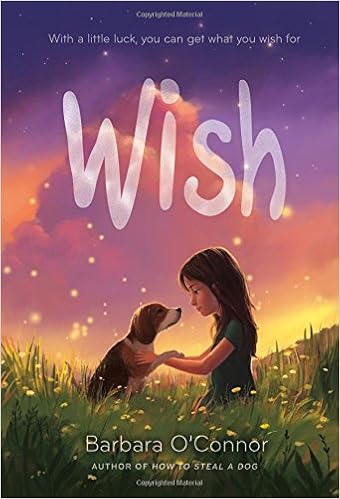
While I have not finished Wish by Barbara O’Connor yet, I know I will later today because I have to find out what happens to Charlie as she tries for a new start, albeit grudgingly.  The characters pull you right in as does the story.  How many of us can relate to feeling displaced?  To being angry?  To feeling all alone?  Barbara O’Connor is a master storyteller and shines in her latest book.

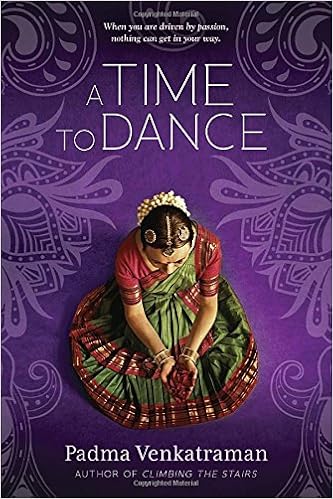
My students have been obsessed with free verse novels the past year.  It is hard not to be when some of the greatest books are being published in this format.  So when I was gifted a copy of A Time to Dance by Padma Venkatraman and noticed that this was not only a book written in free verse, but also represented  a cultural view that most of my students have not been exposed I knew I had to read it.  So I fell into the pages of the story of Veda and her dreams of becoming a dancer.  Wrapped in the beautiful world of India, I found myself reaching for my iPad as I read wanting to understood more fully all of the culture that was being shared in the pages.  It was a beautiful reading experience and one that I am thrilled I can pass on to my students.  One that I know will catch many of them too as they cheer for Veda and find connections between themselves and the story unfolding before them.  For too long my classroom library has not had enough multicultural diversity in its text, this books a small step toward rectifying that, and a beautiful one at that.

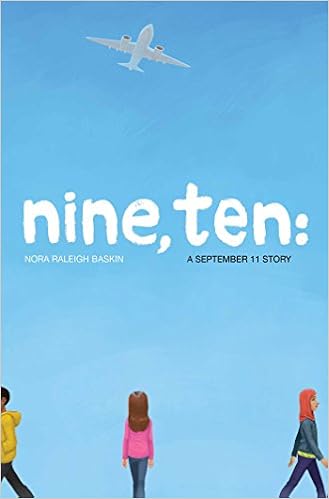
Nora Raleigh Baskin’s book Ruby on the Outside was a book that I said all libraries should own because it told a story that some our children live every day; a parent incarcerated.  Her latest book Nine, Ten: A 9/11 Story is another must own, must read, must share, must discuss.  Written delicately, yet honest, it follows four different children on the days leading up to what we know as 9/11.  The four stories means that we get four different perspectives of that day, of what it meant to be an American after the event.  I love the four different perspectives because they mirror so well how we felt as a country; fractured but together.  All with our own experiences coloring how we viewed the event.  This book is a must add to your library as we continue to try to teach such a historic and frail moment.  It is appropriate for young students, but my 7th graders also love it (I was gifted an advanced review copy).  I am grateful to the authors that are giving me the tools to make our future understand why we changed so much as a nation, why we are the way we are now.  How we came together as a country, even though these days, that seems like a long lost memory.  Perhaps books like this will help us remember how alike we all are, rather than how different.  One can only hope.

To see all of our other favorites, please go here 

being a teacher, Literacy, Reading, Reading Identity, student choice, Student dreams, student driven, Student Engagement, student voice, Student-centered

How to Create Empowered Readers – A Beginning

The sniffles started almost immediately.  Small choking noises came soon.  Then full out wails, tears, and gasps.  Theadora, our oldest daughter, was a mess as we drove home from Chicago today.  What had caused this sudden crying?  The end of Harry Potter Book seven.  The end of our 9 month journey accompanied by the ever amazing Jim Dale and the audio books of Harry Potter.  I was wistful myself to tell you the truth.  As I tried to console our distraught daughter,  I couldn’t help but feel slightly pleased, after all, isn’t this exactly the type of relationship that we hope our children, our students, have with books?  One that makes you want to cry, or laugh, or scream in frustration?  One that allows you to feel so intimately attached to something not created by yourself?  To feel the gratitude of brilliant writing and a long journey along with an author’s imagination?  To feel the loss of characters and of story as a book series finishes?

Yet, how many of our students have never experienced this type of sadness?  How many of our students have not experienced what is means to complete a series that one has become so invested in that it feels like the loss of a family member once the last page has been read?  How many years has it been for some, if at all, since they truly loved a book?  While we cannot change the past, we do have control over the now, over what happens in our classrooms. Over what happens from the moment they enter to the moment they leave.  And with that power comes an immense responsibility to empower our students, to offer them a chance at an incredible relationship with reading once again or for the very first time.  While it may start with having them choose their own books, this is not the only place students need more control to be empowered and passionate readers.

IMG_1281 (1).JPG

Book choice.  This fundamental right to choose what you read is one that is so often taken away from our students because we want to help them develop as readers.   Yet when a child is not a  allowed to choose the very text they are asked to engage with, we give them little room for an emotional attachment.  How many of us adults will willingly invest in something we have been told to read?  So while we can expose and recommend, we must create classrooms where student choice is the norm, not the exception.  Where we help students find that next great book in order for them to become independent book selectors so that they can leave our classrooms knowing that they do not need us.  Not in the same way as they did in the beginning.  Where wild book abandonment is the norm and not something you need permission for.  Where indifference rules when a book is given up because we know that a new book awaits.  If we truly want students to feel in control of their reading identities then giving them the choice over which book to read is the very least we must do.

Book truths.  If we do not know what we are up against, then we can never change their minds.  This has been a mantra of mine since I started asking my students all sorts of things about their education.  So every year, and throughout the year, we continuously discuss how we feel about reading (and writing).  I never dismiss their truths, nor try to correct them.  It is not my job to tell them how they should feel, but it is my job to hopefully create a better experience for them.  I cannot do that well if students do not trust me, trust the community, and trust themselves and also trust the fact that perhaps how they feel about reading right now, if it is negative in any way, is something that can be changed.  (Yes, growth mindset at work here).  So ask them how they really feel and then truly listen, because it is when we listen, we can actually do something about it.

IMG_1290 (1)
Student post-it’s cover our whiteboard, our very first discussion of why we like reading or not from Friday.


Book Tasks.  Just Friday I was asked how many book summaries we would do this year.  I must have looked perplexed, because another student quickly added, “You know, write a summary every time we finish a book?”  I assured them that while we would work on summarizing, it would not be on every book, nor even books mostly.  Instead we discussed what we want to do when we finish a book; discuss with others, pass it on, perhaps forget all about it.  We must give our students control over what they do with a book once it has been finished.  We must allow them to explore ways to communicate their emotions with a book and certainly still develop as thinkers.  I keep thinking how I want our students to have choices every few weeks as we advance our reading; review, conversations, written ponderings, perhaps a summary, perhaps a video.  The point is, I am not sure at this point what we shall do once we finish a book because it depends on what the students would like to do.  I do not ever want to implement a task that makes a child slow down their reading or stop it altogether just because the task attached to it is horrific in their eyes.  So when we plan our reading tasks make sure that the long-term effects are not unwanted.  Make sure that it actually plays into our bigger picture; students who actually like to read, and does not harm this.

Book Selection.  While choice is of utmost importance, so is the way books are selected.  Too often we schedule in book shopping time for when it is convenient to us, forgetting that all students need books at different times.  Selecting a book is a also something that must be taught, even in middle school, because many students still have a hard time finding a book.  We therefore discuss how to bookshop, which yes, includes, judging a book by its cover, and then we take the time it takes.  If we really want students to wander among great books then we must give them time for that wandering and we must embrace the social aspect that comes along with it.  After all it is this book loving community that should sustain student reading after they have left our classrooms.

IMG_1283 (1)
How many students would say the exact same thing?

Book Access.  While I cannot continue to purchase books at the rate I have been due to a change in our household, I know that one of the biggest reasons many of our students end up identifying as readers is because of the sheer volume of books they have access to both in our classroom library and in our school library.  Kids need books at their finger tips at all times.  Much like they must have time to book shop when they need it, they also need to be able to book shop right in our classrooms.  When a child is obviously lost, we or other classmates can jump in.  When a child is only pretending to bookshop we can offer guidance.  We cannot control how many books our students go home to, but we can make sure that whenever they are in our classrooms; the books are plentiful.

Book Time.  Providing students time to read in our classes is one of the biggest ways we can signal to students that reading really matters.  After all, it is what we give our time to that must be the most important.  So whether it is only 10 minutes, like I provide every day, our a longer amount of time; time for reading in class is essential.  Otherwise, how will we ever know that they are truly reading because anyone can forge a reading log.  The time for reading should be just that, not time for tasks or post-its.  Not time for partner discussions or writing.  Reading, in all its glorious quiet.  In all its glorious discovery.

IMG_1285


While the above areas may seem so commonsense, perhaps it is their commonsense-ness that makes us forget to implement them all.  It seems so obvious and yet… how many of us have told a child what to read (I have!).  How many of us have asked students to create task upon task after they finished a book (I have!).  How many of us have asked students to bookshop at a certain time and for a certain amount of time and wondered why they came up empty-handed (I have!).  The point is really that we have the choice to empower our students.  That we have the choice to show our students that their reading identity and developing it is a major part of our curriculum even if the standard does not cover it.  Even if the test does not measure it.  Because we know that at the end of the day we are not just teaching students that should be college and career ready, but instead are teaching human beings that should grow as human beings in our classrooms.  I may not be able to change every child’s mind when it comes to books and reading, but I will go in there every day trying, because my hope will always that they too will someday cry when they realize that a series has ended.

I am currently working on a new literacy book.  While the task is daunting and intimidating, it is incredible to once again get to share the phenomenal words of my students as they push me to be a better teacher.  The book, which I am still writing, is tentatively Passionate Readers and will be published in the summer of 2017 by Routledge.  So until then if you like what you read here, consider reading my book Passionate Learners – How to Engage and Empower Your Students.  Also, if you are wondering where I will be in the coming year or would like to have me speak, please see this page.
administration, being a teacher, new year, principal

A Letter from My Principal for the New School Year

If you have ever spoken to me about the amazing district I work for, Oregon School District in Wisconsin, chances are you will have heard tales of how amazing our principal, Shannon Anderson, is.  Shannon is a huge reason to why I am a seventh grade teacher, she is the reason many of us love our school, and she is also the type of principal that I wish every single educator could have.  The following blog is her welcome back letter to us, it moved me, I hope it will move you, and I am so grateful that she allowed me to share it here.

Twenty-two years ago I was a first year teacher at Verona Area High School. There was more than one occasion that first year when I paused during class in a moment of panic and thought to myself, “Why in the world did someone actually entrust me with this classroom full of students? I have no idea what I am doing!” I was teaching five different classes in four different classrooms. I was planning lessons the night before, I was afraid of parents, and I had crazy grading practices (Why not give extra credit for bringing in boxes of Kleenex? I needed Kleenex boxes!). I look back on that first year of teaching and cringe.

That same year Jacklyn Keller was a ninth grade student in my Art Foundations class. She drew with confidence and grace. I remember her maturity and inquisitive nature. Jacklyn took several classes with me while in high school, and she never ceased to amaze me with her artistic skills and insightful observations about art-making and life in general.  Sometimes when I stop to pause and reflect on my former life as a high school teacher, Jacklyn is one of the students that brings a smile to my face.

Several weeks ago, I was attending Literacy by the Lakes, a three-day conference for Wisconsin teachers sponsored by the University of Wisconsin-Madison. On the first day, I noticed a woman sitting in front of me that looked like Jacklyn. I tried to read her name tag every time she passed me, but I could not read it. Finally, I gathered up the courage to ask her if she ever attended school in Verona. Before the words were even out of my mouth, she exclaimed, “Ms. Roper, it is you! You were my favorite teacher in high school!” (Yes, Ms. Roper was my maiden name.) I was stunned for a minute. I was stunned because it was indeed Jacklyn. I was stunned because she actually remembered me. But I was even more stunned that I was her favorite teacher from high school. Sure, I remember having a good relationship with her when she was in high school, but I never thought I was her favorite.

Jacklyn, a former high school teacher, is now a elementary school librarian in Madison. During our short conversation, it was clear to me that she is passionate about the learners she serves and committed to making learning engaging and successful. As we ended our conversation, I was a bit overwhelmed with the sense of pride I felt. Jacklyn was no longer the amazing teenager I remembered; she is now a passionate and successful educator.

During the 2016-17 school year, you will touch the lives of hundreds of students like Jacklyn. The relationships you develop with them will likely last longer in their memories than the curriculum or lessons you teach them. Some students will let you know how much you mean to them, and some will not. In fact, in many cases you will likely never know the impact you will have on their lives. I think that is one of the most amazing things about dedicating your life to education: you can make a difference every single day and not even realize it. Something you do or say can change students’ thinking. You can inspire them to take risks. You can encourage them when they are ready to to give up. You can help them to see something within themselves they cannot yet see. You can expose them to new possibilities. You can help them turn mistakes into opportunities. But most importantly, you can show them you love and care for them.

Looking back, I acknowledge the fact that I did not have much of clue about curriculum, assessment, best practices, engaging lessons, or communication with parents that first year of teaching. However, my brief reunion with Jacklyn reminded me of Maya Angelou’s words: “At the end of the day people won’t remember what you said or did, they will remember how you made them feel.” Even though I had a lot to learn about teaching as a first year teacher, I was able to develop some positive relationships with my students that made a difference.

As we prepare to welcome students back into our learning spaces (at OMS), I want to thank you in advance for the impact you will have on their lives. You will make a difference every single day!