Be the change, being me, new year, rewards

Confessions of a Former Rewards Addict

When I moved this blog to WordPress some posts did not survive, so in an effort to move some of my favorite posts with me, I will be republishing them here.  This one was from 2010, as I first started my in my no rewards classroom.

I admit it.  Gold stars, super duper stickers, sticks, names on the board; I have done it all.  And when one reward system failed, another one took over.  Never one to sit and reflect that perhaps it was the system that was faulty and not just that the students grew tired of it.  After all, that carrot at the end of the stck was essential to my teaching success.  Those stickers meant I cared.  That Awesome board where A+ work was proudly displayed gave students something to strive for.  That certificate if you got an A on your math test meant that you were smart and that other students should look up to you.  Right?  Wrong again.

Oh, I thought I was clever.  I thought I knew how to motivate students and after all, what could a little reward do that would possibly hurt the child?  Well, after reading Alfie Kohn’s book “Punished by Rewards,” I realize just how wrong I have been.  Those papers on the awesome board did nothing to improve unity in my room.  Instead they acted as the great divide, highlighting the students that could from those that could not.  Those stickers I doled out for anything above 90%; not a cheerful way to celebrate achievement, but rather a glaring marker showing which students did the best in the room.  Those great “You did it” award certificates stapled to their math tests, not great posters of pride but instantaneous feedback on where a students falls within the grade hierarchy.  And yes, the students knew exactly where they fell within the classroom.

So this year I am throwing it all out.  Well, most of it anyway, I do like those stickers and will use them for good rather than evil.  And I am petrified.  After all, this is how I was taught to teach.  If a student does something good they should be rewarded and nothing says “Great job! I can tell you worked so hard” better than a smiley face sticker.  Except when it doesn’t.   A smiley face sticker says; “If you work hard, you will get a smiley face sticker.”  And when in life does that ever happen?  This year, I plan on talking to my students even more.  Telling them what was great, asking them what they thought was great and then peeling apart things that didn’t quite get there and figure out what went wrong.  We shall learn from our supposed mistakes, those will be our rewards.

So while I am excited for this new no-reward agenda, I do shudder a little bit at the implication it has.  No longer will I be the cool teacher with the Awesome board, the one you get to have pizza with if your stick doesn’t get moved, the one that doles out classroom parties as if they were clean socks.  Instead, I will be the one that shouts the praise the loudest to every kid.  The one that talks to all my students and highlights all the things they did right.  The one that creates more work for herself because talking rather than just placing a sticker takes more time, more effort, more thought.  And I can’t wait.  Will you join me?

H/T to this post from George Couros “The Impact of Awards

I am a passionate  teacher in Wisconsin, USA,  who has taught 4, 5th, and 7th grade.  Proud techy geek, and mass consumer of incredible books. Creator of the Global Read Aloud Project, Co-founder of EdCamp MadWI, and believer in all children. I have no awards or accolades except for the lightbulbs that go off in my students’ heads every day.  First book “Passionate Learners – Giving Our Classrooms Back to Our Students” can be purchased now from Powerful Learning Press.   Second book“Empowered Schools, Empowered Students – Creating Connected and Invested Learners” can be pre-ordered from Corwin Press now.  Follow me on Twitter @PernilleRipp.
Be the change, Student-centered, writing

So How Do We Create Passionate Writers?

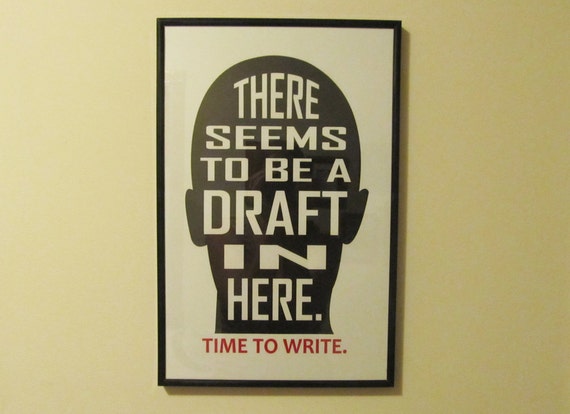
image from etsy

I started my reading transformation 2 years ago, realizing that I needed to create a sense of urgency and passion regarding books in my classroom.  I knew I should focus on writing, I knew I should dedicate more time to it, more energy to it, and yet… I just didn’t know where to begin.  It wasn’t that I was a bad writing teacher, after all, my students write a lot and often, but my passion just wasn’t there, in the classroom to urge the student so push themselves further.  To really find themselves as writers.  Yet, here I sit, the author of two books, a blog that is read by a global audience, and barely was that transferring into my classroom.  So where was the disconnect.  Why did I not turn my students into passionate writers as well as readers?

I knew I had obstacles; a determined curriculum that had us on a breakneck pace.  Students at such varying degrees of ability that there didn’t seem to be a middle ground.  Things that had to be taught no matter what.  And time, never forget time, and just how little we have of it. But still, there has to be a way, within our prescribed curriculums to create excitement and urgency in the craft of writing.  There had to be others who had better ideas.

So I turned to Voxer, I have a group there with people I really respect, and they started sharing their ideas.  So thank you group, here are some of the highlights for how we can create passionate writers:

Choice in process.  We cannot underestimate the power of choice in our writing curriculum and what it means for students to be able to explore their own true writing style.  Yet, within a prescribed curriculum, it can seem as if there is no choice.  I have found though that I can give students choice of how they write, greater engagement occurs.  Sure there is a process, but that process may look different from child to child based on what they prefer.  Some will want to type right away, some will stick to a pencil.  I have even had students dictate stories to others or to a Livescribe pen.  Let them discover how they write best and accomodate as much as you can, then at least they can focus on the writing, not the process,

Choice in topic.  Even within a curriculum that tells me what students should be creating, there are many ways to add choice in topic.  If the area of focus is argumentative essay, don’t limit what the students can write about.  Help them discover something they are passionate about and help them explore.

Choice in audience.  This was a great point brought up by Chris Wejr and something I had not considered.  I always assume that students want to share their work with as big of an audience as possible, but this may be far from the truth.  Students may want to only share with me or a trusted friend.  Students may want to publish it for the whole world to see.  What we need to do as teachers is figure out what each child would like and then honor that.  I would not have wanted the whole world to see my writing as a 13 year old, I bet I have students who don’t either.

Choice in partner.  I often have students write together but when I pair kids up I can sometimes stop their writing process.  Writing can be very personal, so I often think of what type of writing is occuring and match that to the relationship students need with their partner.  Sometimes having your most trusted friend as your writing partner can be a very good thing.

Authentic purposes.  Last year I was able to find more authentic purpose in our writing, so when we wrote our op eds, they were for the newspaper to be published, not just me.  When we wrote a non-fiction picture book, they were for our 1st grade buddies.  When students had a genuine audience and purpose for their writing, they felt more in control because they understood what the task at hand was.  They knew they had to write succinctly for the newspaper to publish their words, they knew they had to find an accessible voice for their 1st graders.

Passion.  Once again, we have to invest ourselves into writing, whether it be through modeling, discussion, or general excitement. Much like we share our passion for reading by thrusting books into the hands of students for them to have an incredible reading experience, what if we did the same with great writing emphasizing how spectacular it is?  What is we start telling students that we thought of them when we read something because it reminded us of their writing?

Minimizing our critique.  While I believe we have to teach students to be better writers, I think sometimes our eagerness to help can stymie the process.   So figuring out what the best process is for each child to support their growth without killing them with corrections.  Sometimes it is okay to just write for the sake of writing.  Sometimes it is even ok to share uneditied writing just to show off our ideas.  Not all writing has to be finished or polished.

Spontaneity.  This great point was brought up by Ben Gilpin and I couldn’t agree more.  We should look for the moments in our everyday where we are inspired to write and that does not just need to be within writing time.  I get ideas to write all of the time and then try to find the time to actually jot down my thoughts.  What if we created environments where journaling and small moment writing was a natural part of our day?

Sharing our writing life.  I tell my students all the time about the things I write, but how often do I show them?  How often do I write in front of them?  How often do I stop and write in the middle of the day because inspiration strikes me?  I think much like we showcase our books reads to create a reading community, we have to showcase our writing too.

What other ideas do you have?  What did I miss?

I am a passionate  teacher in Wisconsin, USA,  who has taught 4, 5th, and 7th grade.  Proud techy geek, and mass consumer of incredible books. Creator of the Global Read Aloud Project, Co-founder of EdCamp MadWI, and believer in all children. I have no awards or accolades except for the lightbulbs that go off in my students’ heads every day.  First book “Passionate Learners – Giving Our Classrooms Back to Our Students” can be purchased now from Powerful Learning Press.   Second book“Empowered Schools, Empowered Students – Creating Connected and Invested Learners” can be pre-ordered from Corwin Press now.  Follow me on Twitter @PernilleRipp.
Be the change, being a teacher, being me, new year, reflection, Uncategorized

Stop Labeling Different – It’s Time to Stop Teacher Bullying

image from icanread

I took a deep breath before I hit “publish” on my post “When Teachers Bully Teachers.”  I had decided that it was time to stand publicly behind the story, to claim my words, to face my fears, and yet with my fingers hovering over the button,  I couldn’t help but be afraid.  Afraid that nasty comments would follow, afraid that people would shun me, afraid that it would start all over again.

Within minutes the comments started coming.  At first, I opened each one with trepidation; would this be the comment that told me I was full of it?  That I had done it to myself?  That surely I deserved the treatment I had gotten?  Instead, it was story upon story of teachers sharing their experience, of teachers saying it had happened to them.  Then my inbox started filling up with private reach outs, then Facebook.  As I closed my computer that morning, I looked at Brandon and said, “There are so many of us and I thought it was just me.”

Teachers bullying teachers is real.  Principals bullying teachers is real.  Within our communities, where we try to teach children how to act as adults, there are many adults not living the words they teach.  Some are doing it on purpose like in my situation, others may not know the damage they are doing.  But it needs to end.  For me, hitting publish was the first step, but now I see that there is so much more must be done.

If you are being bullied:

  • Know you are not alone, unfortunately.  Look at my post and all of the comments it got. This is important, you are not alone, you are not the worst teacher in the world, you are not a horrible person, you do not deserve this.
  • Stop labeling yourself.  I was so good at coming up with excuses for why this was happening to me that I only made it worse.  I kept thinking how I was doing this to myself and it was all my own fault.  No one deserves to be treated poorly, not even someone who does things a little bit different or has a strong opinion.
  • Share your story and speak up.  Even if you are not ready to confront your bully, share your story with someone; an administrator, a colleague, the whole world like I did.  Reclaim your story to stop the process.
  • Then stand up for yourself or find a way out.  There are two ways to fix the situation because suffering through it is not one.  One is to confront your bully and try to put an end to the situation, however, when I tried to do this it didn’t do much.  SO then know it is okay to leave, to find another job, a better situation.  You are not a coward, nor are your running away.  You are saving your soul and that is important.
  • Make peace with yourself.  I still worry about what I did but it is time to let it go.  With each moment this summer I am allowing myself to put the past in the past.  We have to forgive ourselves and allow ourselves to heal.

To stop bullying at your school:

  • Be welcoming.  So much can be said for reaching out to new staff.  A friendly hello and introduction can go a long way, but don’t just do it in the beginning of the year, keep checking in.  Keep reaching out and making sure every person in the building feels they have someone to speak to.
  • Reach out to everyone.  Sure, my bullying started my first year, but there are others that have said it started later.  So make it your mission to make new connections every year, even with current staff, you never know who might be feeling lonely.
  • Be a nice person.  I know many of us assume we always are, but this is something we should all focus on.  Be nice, be kind, be open, be inviting.  Don’t put others down just because you disagree with them.
  • Don’t believe the talk.  I know many teachers at my old school were swayed by powerful words about me.  Instead, dismiss the talk completely or seek out the person who is being talked about to hear their story.  One teacher did that with me and it made a huge difference in how I saw her and our relationship.
  • Stop labeling different.  Too often the people we ostracize are those doing things differently.  Don’t be afraid of change, or at the very least, ask questions!  If someone has made a change in how they teach there is probably a reason for it, so ask them why, dig around a little bit, be open to new ideas.
  • Recognize your own behavior.  Too often we don’t see what we do as malicious or even bullying, but we need to be honest here.  How often have we slandered?  How often have we snickered?  How often have we excluded?  Take stock of yourself and see how you need to change.
  • Follow your own classroom rules.  We had one rule in our room, “Represent.” Whatever your rules are, make sure that you are following them too.  If the kids can do it, so can we.

We must say, “No more!” and share our stories.  Don’t be afraid like I was, don’t suffer in silence.  As a close colleague of mine told me when she read it, “I guess I knew you struggled, but I just never knew how severe it was.”  And that was my mistake.  I should have gone to administration with the union, or I should have gone higher up.  I should have stood up, but in the moment it was too hard, too scary, and so I kept my head down and suffered through it.  I will never make that mistake again.  Please help me stop the bullying.

I am a passionate  teacher in Wisconsin, USA,  who has taught 4, 5th, and 7th grade.  Proud techy geek, and mass consumer of incredible books. Creator of the Global Read Aloud Project, Co-founder of EdCamp MadWI, and believer in all children. I have no awards or accolades except for the lightbulbs that go off in my students’ heads every day.  First book “Passionate Learners – Giving Our Classrooms Back to Our Students” can be purchased now from Powerful Learning Press.   Second book“Empowered Schools, Empowered Students – Creating Connected and Invested Learners” can be pre-ordered from Corwin Press now.  Follow me on Twitter @PernilleRipp.

Be the change, being me, books, Student-centered

Oh Yes, I Wrote Another Book…

1532117_613725632010387_1673765340_n

People often ask me where I find the time to do what I do, and honestly, it is not that I have a magic wand.  I multi-task a lot, sometimes I am over-connected and need to find a better balance, sometimes it is late at night when I can’t sleep, and at one time it was sitting next to a little, tiny baby growing in the NICU.

My second book, published by Corwin, is coming out in September, and it was written in that little room, in the NICU at Meriter Hospital in Madison, Wisconsin.  I filled it with the hopes for Augustine and the type of school I wish for her when she gets to be 5.  I filled it with the dreams I have for the schools I work at, for the teachers I learn with, for the students I teach.  And so my second book is filled with empowerment.  A plea to transform our schools from top-down decision machines, to environments where there are many leaders, many ideas, and staff, as well as students, that feel that they are in control of their educational journey.

Much like my first book, “Passionate Learners – Giving Our Classrooms Back to Our Students,” this book is meant to be an idea book, a book that gives you things you can do right now to change your environment.  A book that will give you hope, hopefully strengthen your vision of what a learning environment can look like, and re-ignite your feeling of power in education.

So this book, “Empowered Schools, Empowered Students – Creating Connected and Invested Learners,” will hopefully end up on your to-read list.  It will hopefully change the way we do school, no longer relying on our old methods, but instead embracing all of the stakeholders, including the students, when we discuss what school should be like.  I hope together we make that change, not just for ourselves, but for all the kids we work with.  Just like Augustine at 6 months is realizing her own potential, we need to make sure that our schools support all students and all staff to leave their mark and change the world.

CCES-Ripp


To pre-order your copy, please go here.

I am a passionate  teacher in Wisconsin, USA,  who has taught 4, 5th, and 7th grade.  Proud techy geek, and mass consumer of incredible books. Creator of the Global Read Aloud Project, Co-founder of EdCamp MadWI, and believer in all children. I have no awards or accolades except for the lightbulbs that go off in my students’ heads every day.  First book “Passionate Learners – Giving Our Classrooms Back to Our Students” can be purchased now from Powerful Learning Press.   Second book“Empowered Schools, Empowered Students – Creating Connected and Invested Learners” can be pre-ordered from Corwin Press now.  Follow me on Twitter @PernilleRipp.

Be the change, being me, new year, Uncategorized

What’s Your Change this Summer?

image from icanread

One of my most favorite things about summer is that time to finally change something.  While I change a lot throughout the year, summer is like my new year.  The time where I have the energy to really think through practices, to get re-energized, to change something, big or small.  Because that’s the thing with change, it doesn’t have to be monumental to matter.  It can be just taking one step in a new direction, implementing one new idea, thinking one new thought.  And while I tend to binge change, I thought it only appropriate to share some ideas that may help you change.

How about reaching out for global collaboration?

There are so many ways to get connected and to have your students get connected these days, even with the strictest of district policies and the smallest amount of tech, there are so many ways.  The Global Read Aloud, a project I created in 2010, sets out to make it easy for you.  You read aloud the same book as teachers around the world at the same time and then make a connection with others reading it.  More than 150,000 students are signed up for this year so far.  Others ideas for connection is through blogging, Twitter, Skype, Projects by Jen, The Traveling Rhino, or making your own project.

How about reading a great book?

There is nothing quite like sitting down with a really well-written education book to inspire your own journey.  “The Book Whisperer” by Donalyn Miller did that for me a few years back, as well as “Awakened” by Angela Watson (a book study is about to begin on this great book!).    This year I am excited to finally take the time to read her second book “Reading in the Wild” and cannot wait to get inspired again.  Also, on my to read list is “This is Not a Test” by Jose Vilson, “Falling in Love with Close Reading” by Chris Lehman and Kate Roberts, and “Encouragement in the Classroom: How Do I Help Students Stay Positive and Focused” by Joan Young.  Finally, you can even read my book if you would like, it has been getting great reviews, “Passionate Learners – Giving Our Classrooms Back to Our Students.”

How about a challenge?

It is not too late to get involved with some of the many challenges floating around the internet this summer.  One of my favorites, and not just because the educator who is behind it all, Todd Nesloney, is a pretty awesome guy, but because it is so broad, is the Summer Learning Series.  While the challenge is on it’s 4th week this week, it is not too late to get caught up.  I have been doing some of the challenges mentioned and have been loving how I am getting connected.

How about learning a new tool?

This has been the summer of Voxer for me.  This great little walkie talkie app has brought me even closer to some of the people I connect with and introduced me to so many new people.  There is definitely something special about hearing people’s voices along with their ideas.  Connect with me if you want, my user name is pripp5439.  But that doesn’t have to be the tool you use, pick one, and make it your own.

How about learning a new skill that has nothing to do with education but then still does?  

I will be starting Yoga in two week and I cannot tell you how excited I am to finally realize this dream.  I just haven’t found the time before, but now I am making the time.  So what have you been stalling on that you know will help you have a better life?  Now is the time to start.

How about teaching someone something?

On July 24th, I get to lead a session on global collaboration through blogging here in Wisconsin, a subject near and dear to me, but it doesn’t have to be professional teaching to count.  I am also teaching my 21 month old twins, Ida and Oskar,  to go to the potty and Thea, my 5 year old, to ride a bike with no training wheels.  There is always an opportunity to help others.

How about becoming a passionate reader?

There is nothing better than a great book you cannot wait to share with others.  Some recent favorites of mine include:

  • The entire Mortal Instruments series by Cassandra Clare
  • The Desperate Adventures of Zeno and Alya by Jane Kelley
  • Noggin by John Corey Whalen
  • Words with Wings by Nikki Grimes
  • The Lunar Chronicles by Marissa Meyer

How about meeting someone new?

Whether you are at one of the many conferences this summer, moving to a new school like, or moving to a new city (also like me), what are you doing to meet new people?  I have been blessed with the opportunity to create a great new team and I cannot wait to get to know them.

How about whatever you feel like?  What is it you really want to take time to do?  Every step we take matters, why not take it in the direction of change?

I am a passionate  teacher in Wisconsin, USA,  who has taught 4, 5th, and 7th grade.  Proud techy geek, and mass consumer of incredible books. Creator of the Global Read Aloud Project, Co-founder of EdCamp MadWI, and believer in all children. I have no awards or accolades except for the lightbulbs that go off in my students’ heads every day.  First book “Passionate Learners – Giving Our Classrooms Back to Our Students” can be purchased now from Powerful Learning Press.   Second book“Empowered Schools, Empowered Students – Creating Connected and Invested Learners” can be pre-ordered from Corwin Press now.  Follow me on Twitter @PernilleRipp.
Be the change, behavior, being me, classroom management, reflection, students

So What’s My Problem With Public Behavior Charts?

image borrowed from Kimberley Moran – see her great post on how to move past behavior charts linked at the bottom of the post


The day starts out fine, you had your breakfast, you had your tea, you feel prepared, happy even.  You are off to school and ready to teach.  At the morning staff meeting you get so excited over an idea you lean over to your colleague to whisper in their ear.   After all, they really need to hear this.  “Mrs. Ripp, please move your clip.”  Shocked, you look around and feel every set of eyes on you.  You stand up, walk to the front, move your clip from the top of the chart to yellow or whatever other step down there is.  Quietly you sit down, gone is your motivation for the day, you know it can only get worse from here.

Ridiculous right?  After all, how many times as adults are we asked to move our name, our clip, our stick, or even write our name on the board so others can see we are misbehaving?  We don’t, and we wouldn’t if we were told to, after all, we demand respect, we demand common courtesy, we expect to be treated like, well, adults.  So us, moving sticks, yeah right…

Search for “Classroom behavior charts” on Pinterest and prepare to be astounded.  Sure, you will see the classic stop light charts, but now a new type of chart has emerged.  The cute classroom behavior chart, filled with flowers, butterflies, and smiley faces.  As if this innocent looking chart could never damage a child, as if something with polka-dots could ever be bad.   And sure, must of them have more than three steps to move down, but the idea is still the same; a public behavior chart display will ensure students behave better.  Why?  Because they don’t want the humiliation that goes along with moving ones name.  Nothing beats shaming a child into behaving.

The saddest thing for me is that I used to do it.  I used to be the queen of moved sticks, checkmarks, and names on the board.  I used to be the queen of public displays heralding accomplishments and shaming students.  I stopped when I realized that all I did was create a classroom divided, a classroom that consisted of the students who were good and the students who were bad.  I didn’t even have to tell my students out-loud who the “bad” kids were, they simply looked at our chart and then drew their own conclusions.  And then as kids tend to do, they would tell their parents just who had misbehaved and been on red or yellow for the day. Word got around and parents would make comments whenever they visited our room of just how tough it must be to teach such and such.  I couldn’t understand why they would say that until I realized it stared me in the face.  My punishment/behavior system announced proudly to anyone who the bad kids were, so of course, parents knew it too. So I took it down and never looked back.  No more public humiliation in my classroom ever again.

We may say that we do it for the good of the child.  We may say that it helps us control our classrooms.  We may say that public behavior charts have worked in our classrooms.  I know I used to.  And yet, have we thought of how the students feel about them?  Have we thought about the stigma we create?  Have we thought about the role we force students into and then are surprised when they continue to play it?

The fastest way to convince a child they are bad is to tell them in front of their peers.  So if that is what we are trying to accomplish, then by all means, display the cute behavior charts. Frame them in smiley faces, hearts or whatever other pinterest idea you stumble upon.  Start everyone in the middle so the divide becomes even more apparent when some children move up and others move down.  Hang those banners of accomplishment, make sure not everyone is on there.  Make sure everybody has been ranked and that everybody knows who is good and who is bad.  Create a classroom where students actions are not questioned, nor discussed, but simply punished.  And then tell them loudly and proudly to move their clip.  After all, if the whole class doesn’t know someone is misbehaving then how will they ever change?

To see one teacher’s journey of how she moved past public behavior charts, please read this post by Kimberley Moran “Moving Past Behavior Charts” 

PS:  As Patrick’s comment wonders, what are the alternatives?  I have blogged extensively about what to do instead, just click the links highlighted in the post or go to this page 

PPS:  More thoughts on this have been posted tonight 

I am a passionate  teacher in Wisconsin, USA,  who has taught 4th, 5th, and 7th grade.  Proud techy geek, and mass consumer of incredible books. Creator of the Global Read Aloud Project, Co-founder of EdCamp MadWI, and believer in all children. I have no awards or accolades except for the lightbulbs that go off in my students’ heads every day.  First book “Passionate Learners – Giving Our Classrooms Back to Our Students” can be purchased now from Powerful Learning Press.   Second book“Empowered Schools, Empowered Students – Creating Connected and Invested Learners” can be pre-ordered from Corwin Press now.  Follow me on Twitter @PernilleRipp.