being a student, being a teacher, inspiration, Student dreams

What Drives Your Instruction?


http---www.pixteller.com-pdata-t-l-359318Once in awhile I have the honor of having other educators visit our classroom, room 235D.  While it is always nerve-wracking to have strangers watch you teach and ask your students questions, it always leaves me feeling so very grateful for the district I teach in, for the colleagues I have, for the students I teach.   Yesterday was no different as I heard the students explain why we start with reading, why books matter to them, and what learning in this classroom looks like.

Later in conversation, I was asked what drives our instruction?  Having only 45 minutes to teach all of English, what is our ultimate goal?  How do we possibly fit it all in and feel like we are not just getting things done? Before I talked about the standards that shape our choices.  Before I talked about how our quarters are split up on their focus.  Before I talked about the power of choice when it comes to what we teach, before I talked about how we listen to the kids in order to make it about them again, I knew what the answer was.

What drives our instruction?  Helping kids fall in love with reading and writing (again).

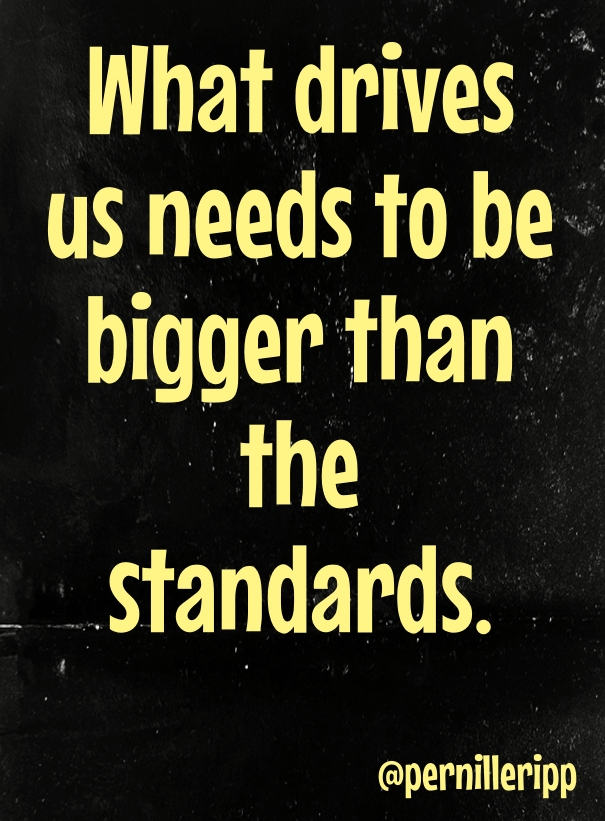
Not the Common Core.  Not the standards.  Not covering content or getting-things-done.  Not checklists, nor grades.  Not comprehension or skills.  Not things, nor projects.

Love.

And not just love for reading, for writing, for speaking, but for being immersed in an environment that focuses on learning for human development.  Not for test scores, next year, grades, or honor rolls.  Not for rankings or best of lists.  No.  What drives our instruction is much more simple, yet so much bigger.

Being a teacher isn’t just about teaching things, it is about teaching human beings, and those human beings need to know that what we do is bigger than a skill.  Bigger than a subject.  Bigger than getting through 7th grade.

So what drives your instruction?  What would the students say?

If you are wondering why there seems to be a common thread to so many of my posts as of late, it is because I am working on two separate literacy books.  While the task is daunting and intimidating, it is incredible to once again get to share the phenomenal words of my students as they push me to be a better teacher.  Those books will be published in 2017 hopefully, so until then if you like what you read here, consider reading my book Passionate Learners – How to Engage and Empower Your Students.  Also, if you are wondering where I will be in the coming year or would like to have me speak, please see this page.

being a student, books, Literacy

Great Books for Resistant Readers in Middle School and High School

I have been on the hunt as of late for books that I can hand to one of my hardest student groups; my resistant readers.  Not just reluctant readers, not just readers that may have forgotten how much they like reading, no, the students that really do not want to read and would rather fake read every single day of the year rather than actually read.  These are the kids I am book hunting for.  So what are some of the books that seem to be hooking not just my reluctant readers but even my resistant ones (and almost every other reader as well)?

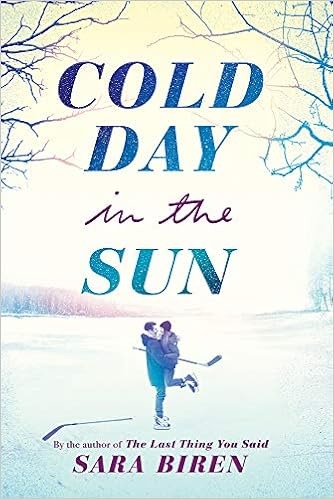
Handed Cold Day in the Sun by Sara Biren to one of my hockey players and she could not put it down.  Her word of mouth recommendation means that it is flying through the classroom, and kids who told me they hate reading are devouring it.

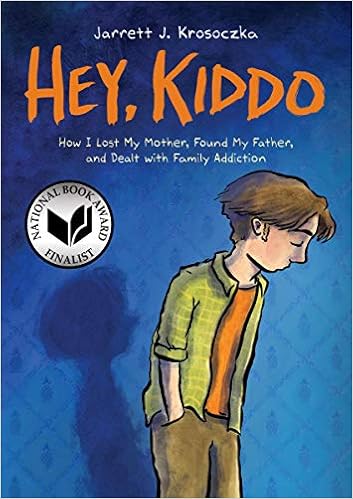
Image result for hey kiddo

Kids cannot believe that this is a graphic novel.  With its unflinching look at how addiction shaped his life and his talents, Hey, Kiddo by Jarret J. Krosoczka is flying through the room.

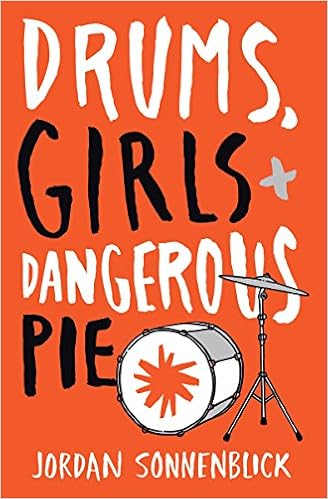
“Mrs. Ripp, I only want to read books like this one…” so said one of my most resistant readers this year, and it happens every year.  Jordan Sonnenblick’s Drums, Girls and Dangerous Pies is one of those books I can count on to be a great reading experience for almost every child I hand it to.
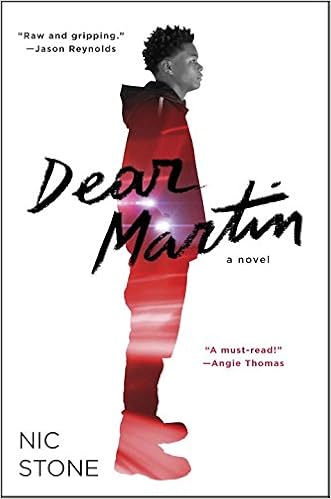
Dear Martin by Nic Stone is one of those books that takes you by the heart and then twists it painfully.  Unyielding in its honesty, this book stays with you long after the last page.
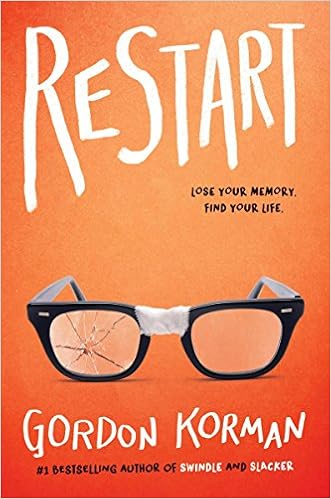
What happens when the alpha bully at a middle school hits his head and forgets everything about himself?  I think so many of my students can connect with Gordon Korman’s Restart for many different reasons.  It is fast-paced and Chases’ dilemma makes you want to read on; will he go back to how he was?
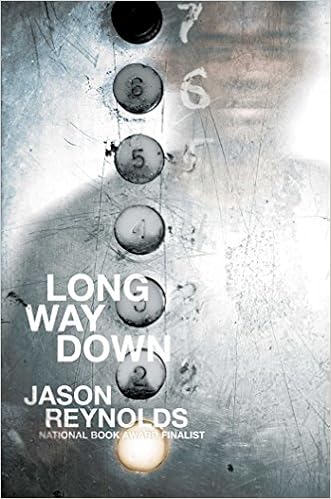
Jason Reynolds is a natural treasure and his latest free verse book Long Way Down is haunting.  Written in the aftermath of Will’s brother’s murder, this whole story is set in an elevator as he decided whether to follow the rules of the neighborhood and shoot the boy who killed his brother.
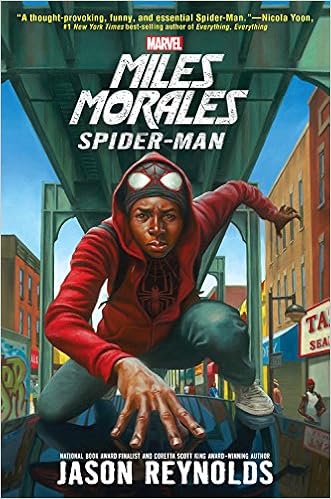
Also by Jason Reynolds, Miles Morales – Spiderman is the first full-length novel that features the comic book character Miles Morales as Spiderman.  Need I say more?

Orbiting Jupiter by Gary D. Schmidt has hands-down been the biggest game changer for a lot of my readers.  I have 7 copies circulating and none of them sit on the shelf for more than a day.  We have it on Audible as well for students who prefer to listen to their books.

Another frequently read book (and listened to as well) is All American Boys by Brendan Kiely and Jason Reynolds.  Masterful story telling and a gripping narrative means that this book has been flying off the shelves.

Noggin’ by John Corey Whaley is one that has been passed from student to student and is probably one of the most frequently book-talked books in our room.  The story is easily accessible to many levels of reading development and grips the students with its premise of cryogenics and what it means to be 16 in a a 21-year-old’s body.

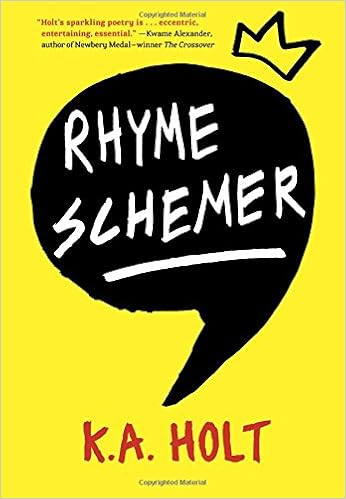
 Rhyme Schemer also by K.A. Holt is about a bully who becomes the victim.  I love how students relate to this story and often see this passed from kid to kid.

Who would think that our most resistant readers start to fall in love with reading through free verse?  What Kwame Alexander’s The Crossover has done for our reading life cannot be underestimated.  I have already had to replace my copies of this book this year and students are eagerly awaiting Booked on it’s arrival date of April 5th.

Reality Boy by A.S.King may have a very angry protagonist but I think the anger and “realness” of the books is what draws readers to it.  This is another book that is often recommended from student to student.

Another free verse book, this one is House Arrest by K.A. Holt has been making the rounds as well.  The discussions in class that this book leads to are powerful for many students.

When a resistant reader recommended this book to me I knew it had staying power in our classroom.  Carl Deuker’s Gym Candy is not your typical sports book and I think that is why it has been so popular with many resistant readers.  It is a little bit raw and a little bit unresolved, a perfect choice for many of my more picky readers.

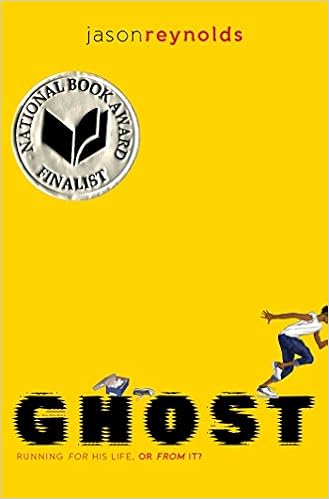
Another Jason Reynolds book, Ghost is book one in the Track series and left my students wanting to read the next book, Patina, right away.  Easily accessible langueg with a relatable character who does not have the easiest life, this was a book many kids declared as a favorite.  

Boost by Kathy Mackel was book talked last week and has not been in my classroom since, quickly passing hands from student to student.

For the first time ever, I used We Were Liars by e.lockhart (Emily Jenkins’ pen name for her YA books) and I was not disappointed.  It was clear that my group of readers quickly became absorbed as they begged for just one more minute of reading time.

It can come as no surprise that Monster by Walter Dean Meyers is a book many readers gravitate to.  I have loved the reflections and thoughtful dialogue that this book creates but even more so how many students have recommended to each other.

What are your must adds/must-reads that will hook resistant readers?

being a student, being a teacher, global

Audience Needed for Elephant & Piggie Performances

The students have been hard at work figuring out how to be better speakers and they are now ready to show the world.  Tomorrow my students will be performing Elephant & Piggie stories to their peers while I record them. We are looking for other classrooms to view some of these recorded performances and rate them using a simple form.  Classroom audiences can be any grade as these are picture books being performed so we would especially love K-3.  While students appreciate the feedback I give them, they really need a bigger audience than just their classmates and me to grow as real speakers.

If you are interested in perhaps viewing a few, please fill out the form below.  You can view just one or as many as you want, what matters is the feedback!  I will email you further details once the videos go live.  Thank you so much for considering helping out these amazing 7th graders.

being a student, being a teacher, being me, punishment

When We Don’t Just Punish

http---www.pixteller.com-pdata-t-l-317325

He stares at me in silence, eyes cutting through me like knives.  He turns his back, message sent loud and clear; conversation over, nothing resolved.    And I feel my heart beat faster, my judgment gets cloudy and part of me wants to punish.  Wants to give a consequence.  How dare you turn your back, how dare you refuse, how dare you not do as you are told.

I could send him out, I could call the principal.  I could take away, I could call home. I could punish, many probably would, yet I know that it wont solve, it wont make it better. I need a solution and that wont come from a phone call, a detention, public shaming through a behavior chart, or a lost privilege.  In fact, it won’t come from corporal punishment either although some states still seem to think so.  The answer doesn’t lie within the punishment. It hardly ever does.

So when we don’t punish a child, when we don’t force them into behaving, then what?  When we lose the easy way out, and trust me punishing a child is always the easy way out, then what do we do?  We worry, we reflect, we reach out to to others, and we don’t give up.  We search for answers that may not be easily found and we realize just how inherently human we are.  That it is hard to work with students who seem to take pleasure in finding every one of our buttons and then pushing them over and over.  Just waiting for our reaction, waiting for when we will give up and finally dole out a punishment.  That sometimes, even when you have been teaching for a while, you do not have all of the fixes and that when you are working with human beings there are no easy answers.

His back glares at me, seemingly waiting for my response, and so I clear my throat, clench my fist and say, “I am here if you need me” and I walk away.

That day I didn’t solve the problem.   Complicated situations always take more time.  In fact, I wonder if I ever will, but I know that if I had punished, if I had gone down my list of what to do that someone taught me in college, that child would not have changed.  He would have dug his heels in and fought me harder.  Because sometimes the kids that push us away.  Sometimes the kids that fight us the hardest.  Sometimes the kids that seem like they hate us with every fiber of their being are the ones that need us the most.  Even if they find the hardest way to show it.

So I will continue to take deep breaths, knowing that tomorrow brings a new day.  To realize that perhaps this is personal because it really is, because in the defiance is a test of relationship; how far can I push before the love is gone.  How far can I go before this teacher finally snaps.

I am only human but within my own humanity I find my answer; don’t give up.  Keep trying.  Stay the course.  Don’t punish but continue to be there.  Continue to try.  Sometimes simply not giving up is the only answer we need.

If you like what you read here, consider reading my book Passionate Learners – How to Engage and Empower Your Students.  Also, if you are wondering where I will be in the coming year or would like to have me speak, please see this page.
 

being a student, being a teacher, student choice, student voice

When We Forget to Ask – On Student Privacy and Sharing All the Good

http---www.pixteller.com-pdata-t-l-314014

I was schooled in student privacy the first time I asked to take my students online.  Protect, teach, and keep them safe were drilled into me as we connected and explored the online world.   I thought I pretty much  knew what I couldn’t share; all the sensitive or bad stuff, and thought I knew what I could share; all the good stuff.  I thought all of my students wanted to share their blogs.  That all of my students wanted their accomplishments made public.  That when they did well they, of course, they wanted the world to know.  After all, we are a culture driven by success stories.

Yet, year after year my thinking has been challenged.  First by a 4th grader who told me she had no need for a certificate stapled to her math test as it made something private public.  Then by a 5th grader that dared to ask why I assumed he would want his blog to be public.  And finally, last year by a 7th grader who told me to tell the world that no one else had the right to know that she was on the honor roll.

Every time a student has challenged me, I have learned something.  Every time they have stood up for their own privacy, I have been reminded of my own flippancy.  Every time, I feel the urge to share all of the good I remember that I do not automatically have the right, that the students also have the right to say no, that that is not just something we leave up to parents.

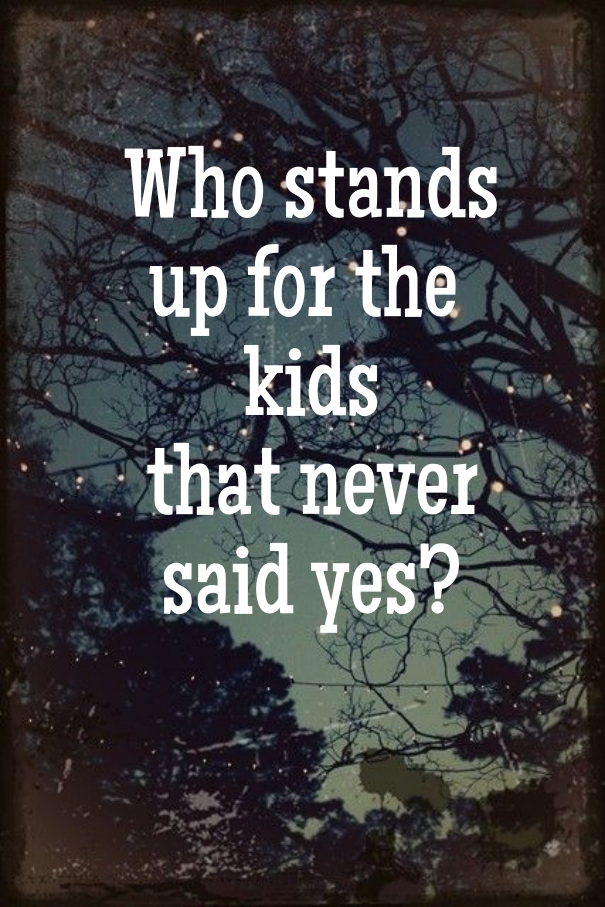
So I speak for my students who challenged me to rethink my stance in privacy.  I speak for those kids that asked me to think before I shared.  Not just for the parents who said no, but for the kids that never said yes.

So before you publish that honor roll.

Before you make that blog public.

Before you move their clip to the positive zone or give them that point (“Ding!”) or hand them that award.

Before you tweet that picture, or print it, or email it, or share it with the world.

Before you use that student example (name redacted of course).

Before you share that great learning moment with the world.

Before you share what a kid has done.  Even if it was amazing.

Please ask them if you may.

Please ask them if they would be alright with the whole world (potentially) seeing their thoughts, their work, their accomplishment.

Please ask them if they would like the attention that may come from it or if they would rather not be celebrated publicly.

And if they say no, respect it.

We assume that every kid wants to be praised in public.

We assume that every kid wants to be honored in public.

We assume that every kid wants to share their great grades in public.

But we don’t know every kid.

So ask them first.

Their answer may surprise you.

I know it certainly surprised me.

If you like what you read here, consider reading my book Passionate Learners – How to Engage and Empower Your Students.  Also, if you are wondering where I will be in the coming year or would like to have me speak, please see this page.


Be the change, being a student, being a teacher, projects

The 2030 UN Challenge – A Social Advocacy Project

In my district we are well aware of our demographics.  How we mostly teach one demographic students, and while these students span an enormous socioeconomic range, they look a lot like each other.  How sometimes our world can seem protected with only the biggest stories slipping through.  I also teach 7th grade where the rest of the world tends to slip away as the students are focused on their own social development and their own place in the world, rather than the world that surrounds them.  Yet, we try.  We constantly try to engage the students in projects that will bring the rest of the world in, start conversations, and ultimately lead to change.

When AJ Juliani first posted about the 2030 UN Challenge I didn’t much notice it.  He has a lot of great idea but this one slipped by until my awesome colleague , Reidun Bures, brought it up to me again.  We decided that this was the perfect opportunity to collaborate between our classes, but more importantly to simply make our students more aware of the major challenges that faces our world.

So for the past 3 weeks, we have combined classes and worked on the 2030 UN Challenge.  Students watched the video listing the 17 goals that the UN has set for the next 15 years (it came out in 2015) and then decided which goal they would focus their project on.

TheGlobalGoals_Logo_and_Icons

Once their “lens” had been chosen, they had to narrow their scope.  Where in the world would they focus their research knowing that they had to present their information in an infographic to the rest of the class.  Some chose to focus locally in our very county or state, while others went to far-flung regions that sought their attention.  Students then spent five 90-minute blocks, every other day, researching  their “problem.”  Examples were racial inequity in Dane County, water quality in the United States, gender inequity in education in Pakistan, the extinction of sharks due to shark fin soup, the gender pay gap in the United States and so many other projects.  We were blown away by the passion they had for their problem.

But we didn’t just want to them to become aware, we wanted them to realize that they could make a difference.  So part of their project became an advocacy piece as well; either highlight a group that is already working to solve the problem such as Black Lives Matter, the Water Project, or Second Harvest Food Bank, or come up with actual things that your fellow students can do.  It was amazing.

On the final day of the project, students had to present their infographic and their advocacy piece to the class.  As one student said, “Can I present more than once because I really want people to hear this.”  It was clear that many students were passionate about their project, wanted others to hear them, and wanted to make a difference.  But even more importantly the knowledge that crept into the consciousness of the minds of our students was unmatched.  They may not all go on to change the world but at least they have heard what some of the major challenges that affect us as a human race are.  At least they have had a window opened once again to the world, supporting what our other amazing teachers try to do, hopefully inspiring them become more aware.  It was more than once that a pair of students called us over to share a fact with us, disbelieving that it was true.

So why share?  Because this small projet has made a difference and has made an impact on us that we were not expecting.  So we hope you will take the pledge; do the 2030 UN Challenge in whichever way suits your kids and open up the world more.  Go here for more information or check out the original post from AJ Juliani.

Part of one student’s infographic.

Also if you are looking for another small global project, join the 1 School 1 World project on February 22nd, where classrooms around the world will share a picture of what their learning environment looks like using the hashtag #1S1W – for more information and to sign up, go here.

To see more of the how-to of what we did, go here.